Quick answer
Two days is enough because the city is twenty-five minutes across on foot. Stay between the Liffey and St Stephen’s Green, book Kilmainham Gaol weeks ahead, and leave the rental car until the morning you head west.
On this page
- Dublin 2 day itinerary at a glance
- Day 1, hour by hour
- Day 2, hour by hour
- The neighbourhoods the two days pass through
- The weekend version
- If it rains all weekend
- The north side, if you swap an afternoon
- What to cut if you are short of time
- What not to attempt in two days
- Getting around for two days
- Where to stay for two days
- Why this plan is only four things
- How the tickets work at each stop
- Which two days of the week work best
- Eating on a two-day visit
- Two evenings, two different nights
- Arriving and leaving
- Two days as part of a longer trip
- Two days in Dublin with children
- Two days in winter
- Two days for very little money
- Two days if you have been before
- The short version
- Frequently asked questions
Two days is the most common length of a Dublin visit and it is enough, because the city is small. Trinity College to the Guinness Storehouse is about twenty-five minutes on foot, and nearly everything a first visit wants sits between them.
Some links below are affiliate links. We may earn a commission if you book through them, at no extra cost to you. We do not rank hotels, and any prices on the map come live from the booking sites.
What follows is a two-day plan with the hours filled in, and a weekend version underneath it. For the longer and shorter versions, see our Dublin itinerary; for the question itself, how many days in Dublin.
Dublin 2 day itinerary at a glance
| Day | Morning | Afternoon | Evening |
|---|---|---|---|
| 1 | Trinity and the Book of Kells | National Museum, Dublin Castle, cathedrals | Dinner and a pub off Temple Bar |
| 2 | Kilmainham Gaol | Guinness Storehouse | Traditional music session |
That is the whole plan. The value of two days in Dublin is in doing those four things properly rather than adding a fifth.
Map shows live availability and prices. We may earn a commission on bookings made through it, at no extra cost to you.
Day 1, hour by hour
From opening. Trinity College and the Book of Kells, with a timed ticket. The manuscript dates from around 800 AD and the Long Room library above it is the room people photograph. First entry of the day is the difference between seeing it and queueing for it.
One thing has changed since most photographs of it were taken. Nearly all the books have been taken off the Long Room shelves for Trinity’s Old Library Redevelopment Project, and only the first few bays as you walk in are still full. The room is open and still worth seeing, but it is emptier than the pictures. Trinity sells two versions of the visit: the Book of Kells and Old Library on its own, which takes about 45 minutes, and the full Book of Kells Experience, which adds three digital galleries in the Red Pavilion and takes about 90. On a two-day plan the shorter one is enough.
Late morning. Out of the college gates and down Grafton Street to St Stephen’s Green, then east into Merrion Square and Fitzwilliam Square, the Georgian terraces with the painted doors and fanlights.
Early afternoon. The National Museum of Ireland – Archaeology on Kildare Street. Free, and an hour is enough for the bog bodies and the Iron Age gold.
Mid afternoon. Dublin Castle, then Christ Church Cathedral and St Patrick’s Cathedral, five and fifteen minutes away.
Evening. Walk through Temple Bar so you have seen it, then eat and drink a street away — Dame Street, South William Street or Camden Street.
Day 2, hour by hour
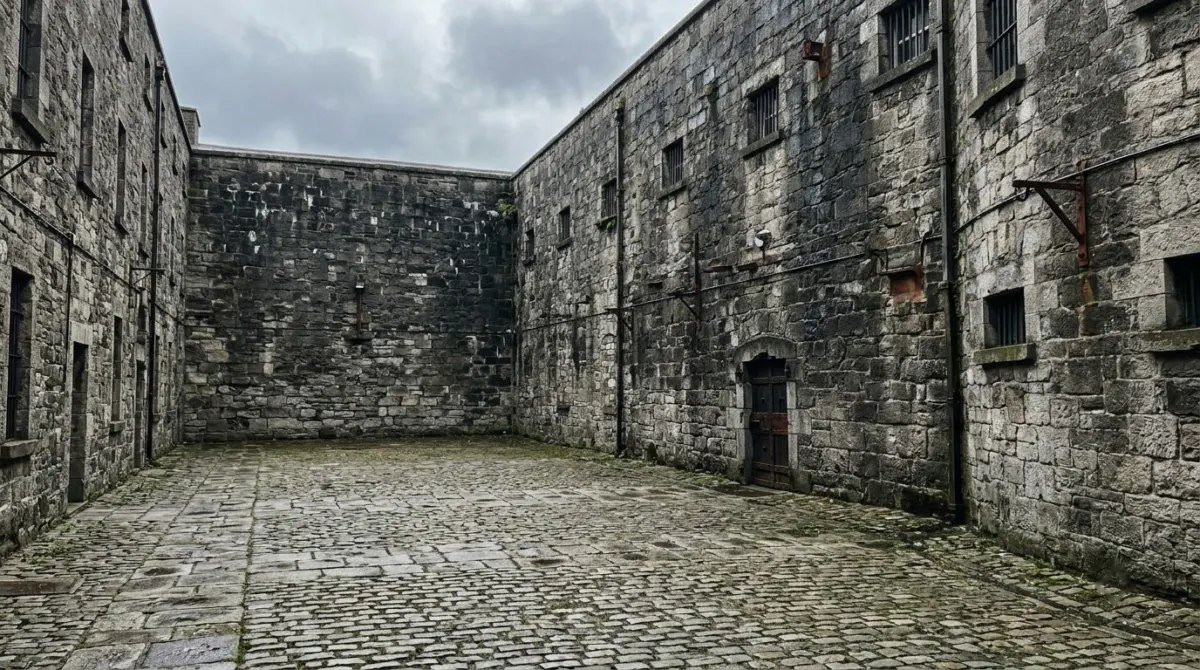
Morning. Kilmainham Gaol, on a slot booked weeks in advance. The tour runs about an hour and covers the prison where the leaders of the 1916 Rising were held and executed. Nothing else in Dublin explains the country as directly.
Early afternoon. The Guinness Storehouse, a little over twenty minutes’ walk away: seven floors inside the old fermentation plant, ending at the top-floor bar with a view across the city.
Late afternoon. Walk back along the quays, past the Jeanie Johnston famine ship, with EPIC The Irish Emigration Museum beside it if you have the energy.
Evening. A traditional session. They start late and are not advertised; the pubs around Capel Street and Smithfield are where to look.
The neighbourhoods the two days pass through
The plan crosses four parts of the city. Once you know which one you are standing in, the walking starts to make sense.
The Georgian south side. Trinity, Grafton Street, St Stephen’s Green and the squares east of it. This is the eighteenth-century city of brick terraces and the national institutions: the museum and the library on Kildare Street, and the gallery on Merrion Square. Day one is spent here, and it is the easiest part of Dublin to walk.
Temple Bar and the medieval core. West of Trinity, between Dame Street and the river, you find the castle, Christ Church and the oldest street pattern in the city. Temple Bar is the strip of cobbled lanes along the quays. It is busiest and loudest after dark, and quietest in the early morning, which is the best time to see it.
The Liberties. Southwest of the cathedrals, around Thomas Street. St Patrick’s Cathedral is here, and so is Marsh’s Library beside it, which opened to the public in 1707 and has barely changed in three centuries. The Guinness Storehouse is at the far end. Of the four areas, this one most feels like a place where people live and work rather than a district for visitors.
Smithfield and the north quays. Across the river from the Liberties. A wide cobbled square, the old Jameson distillery, and the pubs where the day-two session is most likely to be.
Kilmainham Gaol is the one stop outside all four, a little over twenty minutes on foot west of the Guinness Storehouse. That is why the two belong on the same morning.
The weekend version
Most two-day visits are actually a Friday evening to a Sunday afternoon, which is slightly less than two full days.
Friday evening: dinner and a pub, nothing more ambitious.
Saturday: day 1 above, complete.
Sunday: Kilmainham Gaol in the morning if you can get a slot, or the Guinness Storehouse if not, then the airport.
The casualty of the weekend version is always the second of those two, so decide in advance which matters more to you.
If it rains all weekend
It might, and the plan survives it — almost everything above is indoors. The exception is the walk through the Georgian squares, which can be replaced by two free museums.
The National Gallery of Ireland on Merrion Square holds the Irish collection alongside European work. The Chester Beatty Library, in the Dublin Castle gardens, holds manuscripts and sacred texts from across Asia and the Middle East and is the most under-visited good museum in the city.
The north side, if you swap an afternoon
Apart from the music, the plan stays south of the river. That leaves out the street where modern Ireland began. If the cathedrals or EPIC are the afternoon you would cut anyway, spend it north of the Liffey instead.
Start at the GPO on O’Connell Street, the post office the rebels held as their headquarters during the Easter Rising. The museum inside tells the story of 1916 and the years that followed it. It opens Monday to Saturday, with last admission an hour before closing, and tickets are cheaper online than at the door. It is closed on Sundays, so it cannot go in the Sunday half of a weekend.
From there, walk up O’Connell Street to the Garden of Remembrance on Parnell Square, then on to 14 Henrietta Street. This Georgian townhouse was built for the wealthy and ended up as a tenement. It is seen by guided tour only, about 75 minutes, from Wednesday to Sunday, and you should book because the groups are small.
If you pair the GPO with Kilmainham, you get both ends of 1916: the building where the Rising was fought and the prison where it ended. For anyone who came for the history, that makes a stronger second afternoon than the brewery.
What to cut if you are short of time
In order, the things that go first.
The cathedrals. Both are worth seeing and neither is essential on two days.
EPIC and the famine ship. A good museum, but it needs an hour you may not have.
The Guinness Storehouse, if you do not drink beer. The top-floor bar is the point of it.
What does not get cut is Kilmainham Gaol, which is the one thing people regret missing.
What not to attempt in two days
A day trip to the Cliffs of Moher. About three hours of driving each way, sold as a long coach day. It would take one of your two days and give you an hour at a cliff.
Belfast and the Giant’s Causeway. Belfast alone is two hours each way.
A hop-on bus. In a city you can cross in twenty-five minutes, it mostly buys you traffic.
Getting around for two days
Walking covers it. The only transport you are likely to need is the Luas tram towards Kilmainham, and the airport coach at each end, which takes about half an hour from the centre. There is no rail link to the airport.
A Leap Card works on the tram, the buses and the coastal DART, and caps what you spend in a day.
The TFI Leap Visitor Card is the other choice. It gives unlimited travel for a set period on Dublin city buses, the Luas, the DART and commuter rail, and it is sold at the airport. It does not cover the private airport coaches. On a plan built on walking you may barely use it. It starts to pay off if you add Howth or come in from the airport on a city bus.
Where to stay for two days
Between the Liffey and St Stephen’s Green, which puts both days on foot. On a short visit the arrival matters more than usual: staying on a street served by the airport coaches removes a taxi at each end, and our guide to where to stay in Dublin sets out which streets those are.
Why this plan is only four things
Two days in Dublin fail in a predictable way: the list grows, the day becomes a series of twenty-minute visits, and nothing is actually seen.
The four fixtures here each take real time. The Book of Kells and the Long Room need an unhurried hour. Kilmainham Gaol is a guided hour that cannot be shortened. The Guinness Storehouse takes two hours if you use the top-floor bar, which is the point of going. The National Museum needs an hour to be worth entering.
Add the walking between them and two days is full. Everything else in this guide is an alternative to one of those four, not an addition to all of them.
How the tickets work at each stop
Three of the four fixtures need tickets, and each one works differently. Check them before you fix the order of the two days.
Kilmainham Gaol. You can only go in on a guided tour, and every ticket has to be booked in advance. Some tickets are released 28 days ahead, at midnight Irish time, which is why the slots disappear weeks out. If your date shows nothing, the gaol’s own website puts cancellations and extra tickets on sale from 9.15am on the day. Tickets bought on resale sites are not accepted. The tour lasts an hour, and the museum afterwards takes most people another half hour.
The Book of Kells. Timed entry, booked online, and Trinity strongly recommends buying ahead. The ticket is non-refundable once bought, so pick the slot after you have fixed the gaol.
The Guinness Storehouse. Booked online for a date and time. It is the easiest of the three to move, so if the gaol slot forces a change, this is the one that shifts.
The National Museum on Kildare Street. Free, with no ticket. It opens at 10am from Tuesday to Saturday, but only from 1pm on Sundays and Mondays. That matters if your first day falls on either.
The order of buying follows from that: the gaol first, then the Book of Kells around it, then the brewery.
Which two days of the week work best
Opening days matter more on a short visit, because there is no third day to absorb a closure.
Tuesday to Saturday is the easy window. Everything in this guide is open, and the National Museum opens from 10am.
Sunday costs you the GPO museum, which is closed. It also pushes the free museums into the afternoon: the National Museum opens at 1pm and the Chester Beatty Library at noon. Trinity opens a little later than on weekdays but still in the morning, so Sunday is a good day for the Book of Kells.
Monday is the awkward one. The National Museum opens only in the afternoon, Marsh’s Library and 14 Henrietta Street are closed, and from November to February the Chester Beatty is closed too.
So if your two days include a Sunday or a Monday, give that day to Trinity and Kilmainham, and keep the museums for the other one.
Eating on a two-day visit
Keep lunch near where you are and walk away from the centre in the evening.
Around Trinity and Grafton Street the lunch places serve office workers, which keeps them quick and reasonable. On day two, the area around the Guinness Storehouse is thin for food, so eat before you go or wait until you are back in the centre.
In the evening, the streets Dubliners use are a few minutes from Temple Bar rather than inside it: South William Street, Camden Street, and Capel Street across the river.
Two evenings, two different nights
The plan leaves you two evenings, and they work best as two different kinds of night.
The first evening: one pub and an early night. If you landed that morning, the first evening will be short whatever you plan. Eat around South William Street or Camden Street, then stay in one pub instead of moving between several. Dublin pubs are built for staying put, and the conversation is better in the second hour than the first.
The second evening: music or a play. A traditional session is the obvious choice, and the pubs around Capel Street and Smithfield are where to look. Sessions rarely get going early, so there is time for dinner first. If you would rather have a seat, the Abbey Theatre on Abbey Street is Ireland’s national theatre and the Gate Theatre on Parnell Square is the city’s other long-established stage. Both are a few minutes’ walk north of the river. Check what is on before you fly, because a well-reviewed production sells out.
Avoid spending both evenings in Temple Bar. One walk through is enough to say you have seen it.
Arriving and leaving
Dublin Airport is about half an hour from the centre by coach, with frequent departures and no rail link. Taxis take a similar time and cost considerably more.
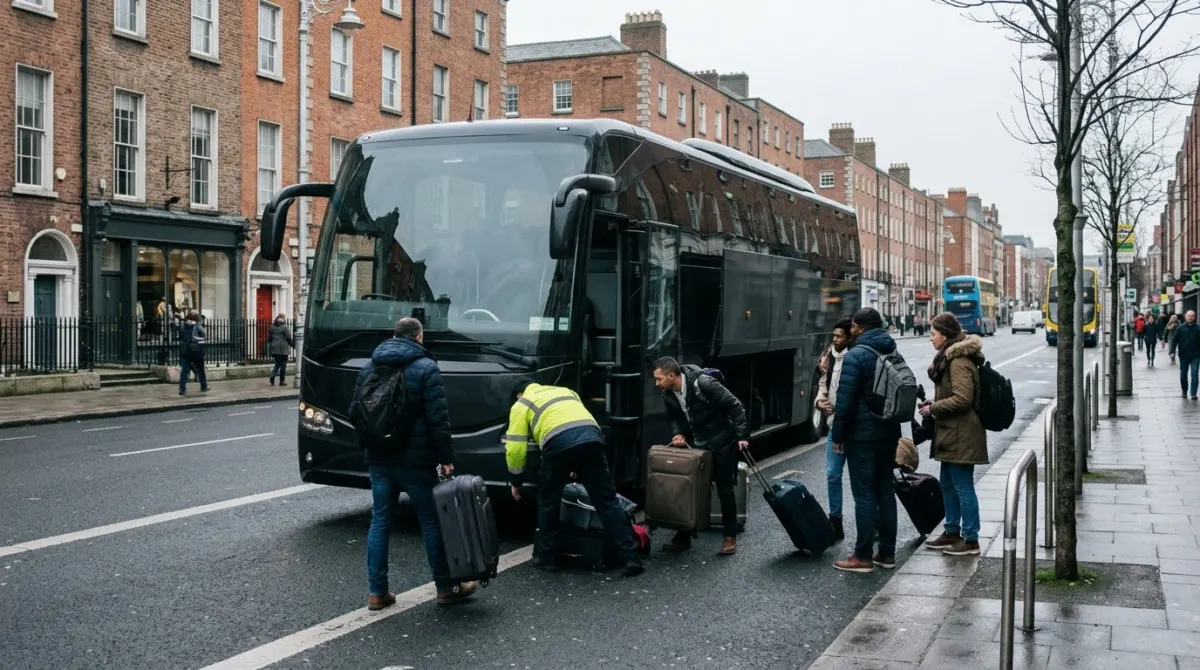
On a two-day visit this matters more than usual, because an hour lost at each end is a noticeable share of the trip. Staying on a street the airport coaches serve removes a taxi twice, which is the single most useful thing a hotel location can do for you here.
If your flight is early on day three, note that the first coaches run well before dawn — and that the airport hotels only earn their place for departures before about seven in the morning.
Which airport bus to take
All the options leave from outside Terminals 1 and 2. Dublin Express coaches run to more than fifteen stops in the centre, including Trinity College, Temple Bar, O’Connell Street and Heuston Station. Aircoach runs to the city and on to other parts of the county. Both are booked online. The cheapest choice is the ordinary TFI buses, including routes 16 and 41. They take a Leap card, but they are slower, they stop more often, and they have little room for luggage.
On two days with a suitcase, take a coach and find the stop nearest your hotel before you book the room.
Two days as part of a longer trip
Most two-day visits to Dublin are the opening of a longer Irish trip rather than the whole thing, and that changes one decision: when to collect the car.
Collect it on the morning of day three, not when you land. The city needs no car, central parking is expensive, and the drive west on the motorway is a far gentler introduction to driving on the left than the Dublin one-way system.
Our 7 day and 5 day Ireland itineraries both open with exactly these two days before heading west.
Two days in Dublin with children
The adult plan does not transfer, so swap two of the four fixtures.
Keep Trinity and the Book of Kells if your children will stand it, and replace the National Museum with the Natural History Museum — a Victorian museum preserved almost unchanged, full of cases of animals, and far stranger than it sounds.
Replace day two entirely with Dublin Zoo in Phoenix Park, which is a full day with small children, or with the DART out to Howth for the harbour, the seals and the cliff path.
Kilmainham Gaol works for older children and not for younger ones; the Guinness Storehouse admits under-18s with an adult, but the top-floor bar is the point of the visit.
Two days in winter
From November to February it is dark by about half past four, which removes the walk through the Georgian squares and anything on the coast.
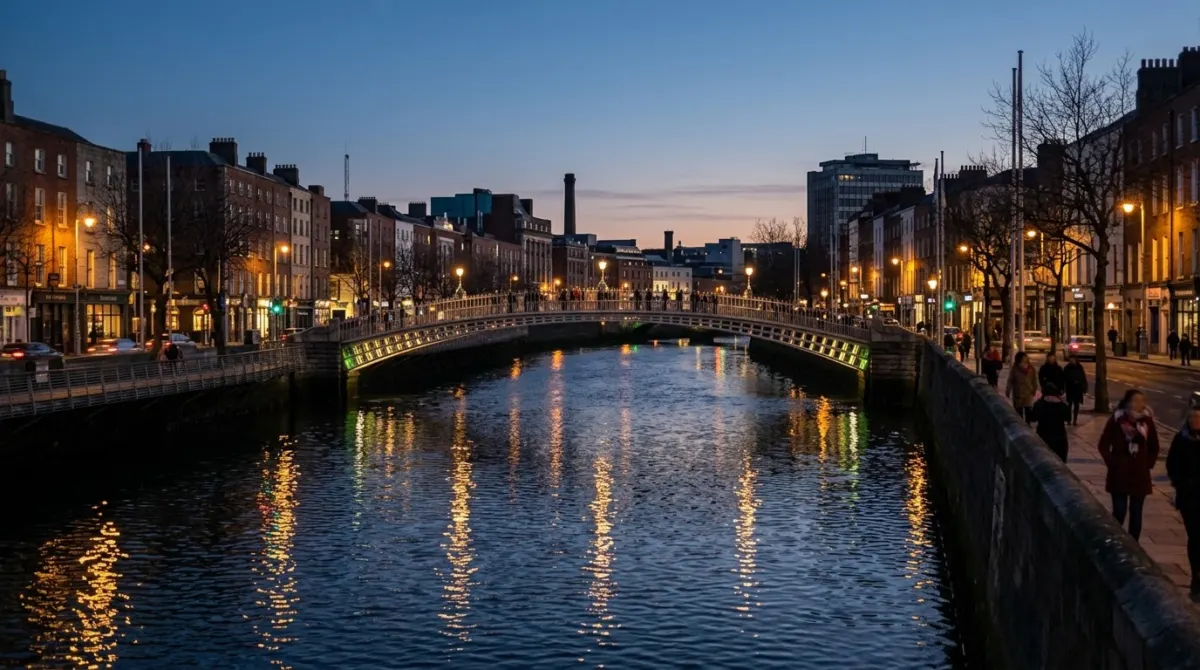
The plan survives, because the four fixtures are all indoors. What changes is the evening: it starts earlier, and the pubs are better for it. The free indoor list — the National Gallery of Ireland, the Chester Beatty Library and the Natural History Museum — fills any gap the weather creates.
Two winter days cover slightly less than two summer days, so if you are choosing dates and the list matters, that is a reason to come between April and September.
Two days for very little money
Dublin is not a cheap city to sleep in. It is a surprisingly cheap city to see, if you are willing to swap two of the four paid fixtures.
The free version of the plan looks like this. Day one: the Trinity campus (the grounds are open even if you skip the Book of Kells ticket), the National Museum of Ireland – Archaeology, the National Gallery on Merrion Square and the Georgian squares. Day two: the Chester Beatty Library in the castle gardens, the Natural History Museum, and an afternoon walking in Phoenix Park or out along the quays.
What you give up is Kilmainham Gaol and the Guinness Storehouse, and only the first of those is a real loss. If the budget stretches to one ticket, make it the gaol.
The other saving is transport. On a plan built on walking, the only fares you need are the airport bus at each end. The ordinary TFI buses cost much less than the private coaches, but they take longer.
Two days if you have been before
On a second visit, the four fixtures are the part you have already done, so the plan turns around. Spend the two days on the things a first visit always cuts.
Day one: the north side, starting with the GPO museum and 14 Henrietta Street, then Glasnevin Cemetery for the graves of most of the names you met at Kilmainham. Day two: the DART out to Howth for the cliff path, back in time for an evening on Capel Street.
Those two days show you a different city from the Georgian streets around Trinity: older, rougher, and more lived-in. For the full three-day version, with the coast as its own day, see our 3 day Dublin itinerary.
The short version
Four things over two days: the Book of Kells, the National Museum, Kilmainham Gaol and the Guinness Storehouse, with the cathedrals and the Georgian squares filling the walks between them. Book the gaol weeks ahead, eat a street away from Temple Bar, and leave the car until you head west.
Frequently asked questions
Is 2 days enough for Dublin?
Yes for the city centre. Trinity and the Book of Kells, the National Museum, the cathedrals, Kilmainham Gaol and the Guinness Storehouse all fit comfortably in two days, because the city is twenty-five minutes across on foot.
What can you do in Dublin in 2 days?
Day one: Trinity College and the Book of Kells, the Georgian squares, the National Museum, Dublin Castle and the cathedrals. Day two: Kilmainham Gaol in the morning and the Guinness Storehouse in the afternoon, with music in the evening.
Is a weekend enough for Dublin?
A Friday evening to Sunday afternoon is slightly less than two full days, so one of Kilmainham Gaol or the Guinness Storehouse usually goes. Decide which matters more before you book, because the gaol needs a slot weeks ahead.
What should I book for 2 days in Dublin?
Kilmainham Gaol first — it sells out weeks ahead. Then timed entry for the Book of Kells and the Guinness Storehouse online. Nothing else on a two-day plan needs reserving.
Can I visit the Cliffs of Moher in 2 days in Dublin?
Not sensibly. It is about three hours of driving each way and is sold as a long coach day, which would spend half your trip on a road. If the cliffs matter, base in Galway instead.
Do I need a car for 2 days in Dublin?
No. Walking covers the centre, the tram handles the trip towards Kilmainham, and the airport coach takes about half an hour. Central parking is expensive and you would not use the car.
How do I get from Dublin Airport to the city centre?
By coach or bus from outside Terminals 1 and 2. Dublin Express and Aircoach run to stops across the centre, and the ordinary TFI buses, such as the 16 and the 41, cost less but are slower. There is no rail link. The coach takes about half an hour.
Are the books still in the Long Room at Trinity?
Mostly not. Nearly all the books have been taken off the shelves for the Old Library Redevelopment Project, and only the first few bays at the entrance are still full. The Book of Kells and the Long Room itself are still on the visit, so it is still worth a ticket.
Keep planning Ireland
- Where to Stay in Kilkenny: On the Mile, or Beside the Station
- Where to Stay in Doolin: Book a Room You Can Walk Home To
- Where to Stay in Belfast: Four Quarters, Four Different Trips
- Where to Stay in Killarney: The Town, or the Lakes
- Where to Stay in Dingle: In Town, or Out Where the View Is
- Where to Stay in Ireland: Pick Three Bases, Not Seven
- Where to Stay in Galway: The Noise Decides It, Not the Distance
- Best Hotels in Dublin: What Each Kind of Building Gives You
Written and checked by
Triplarks Editorial
An editorial desk, not an invented persona: research, drafting and fact-checking are done by the same small team. Every number here carries the date it was read.