
Quick answer
Three bases is the ceiling for seven nights: Dublin, Galway and Kerry. Book the Galway and Kerry nights first — both towns are small and both sell out in summer — and leave the day trips flexible so they land on the clear mornings.
On this page
- 1 week Ireland itinerary: three versions, compared
- Week 1 — the classic west, with a car
- Week 2 — the no-car week
- Week 3 — one region, seven nights
- What a week does not stretch to
- How the week changes by season
- What to book before you fly
- Where to stay for each week
- Which week to choose
- What each week costs in driving
- The mistake that spoils a week
- Arriving and leaving
- Packing for an Irish week
- Which week suits which traveller
- Frequently asked questions
A week is the most common length for an Irish holiday, and there is more than one good way to spend it. This guide gives you three complete weeks — with a car, without one, and in a single region — so you can pick the one that matches how you want to travel.
Some links below are affiliate links. We may earn a commission if you book through them, at no extra cost to you. We do not rank hotels, and any prices on the map come live from the booking sites.
If you have already decided on the classic route and want it hour by hour, our 7 day Ireland itinerary is the day-by-day version. This one is about choosing between the weeks.
1 week Ireland itinerary: three versions, compared
| Week | Bases | Best for |
|---|---|---|
| The classic west | Dublin, Galway, Kerry | First trip, with a car |
| The no-car week | Dublin, Galway, Killarney | Not driving on the left |
| One region | Galway or Kerry | Second trip, or slow travel |
All three assume you land with most of day one left and fly out on day seven. If your flights are worse than that, treat it as six days.
Map shows live availability and prices. We may earn a commission on bookings made through it, at no extra cost to you.
Where to sleep on this route
Week 1 — the classic west, with a car
Two nights in Dublin on foot, three in Galway, two in Kerry.
Dublin covers Trinity College and the Book of Kells, the National Museum, Kilmainham Gaol and the Guinness Storehouse. Collect the car on the morning of day three and drive west, stopping at Clonmacnoise on the Shannon.
From Galway, the Cliffs of Moher and the Burren fill one day and Connemara another. Then south to Killarney, with the Dingle Peninsula on the last full day because it is shorter than the Ring of Kerry and leaves time for a flight.
Fly out of Shannon or Cork rather than driving back to Dublin. That single booking decision removes four hours from the last day.
Week 2 — the no-car week
This is the version most people do not realise works, and for nervous drivers it is the better week.
Days 1–2: Dublin, entirely on foot.
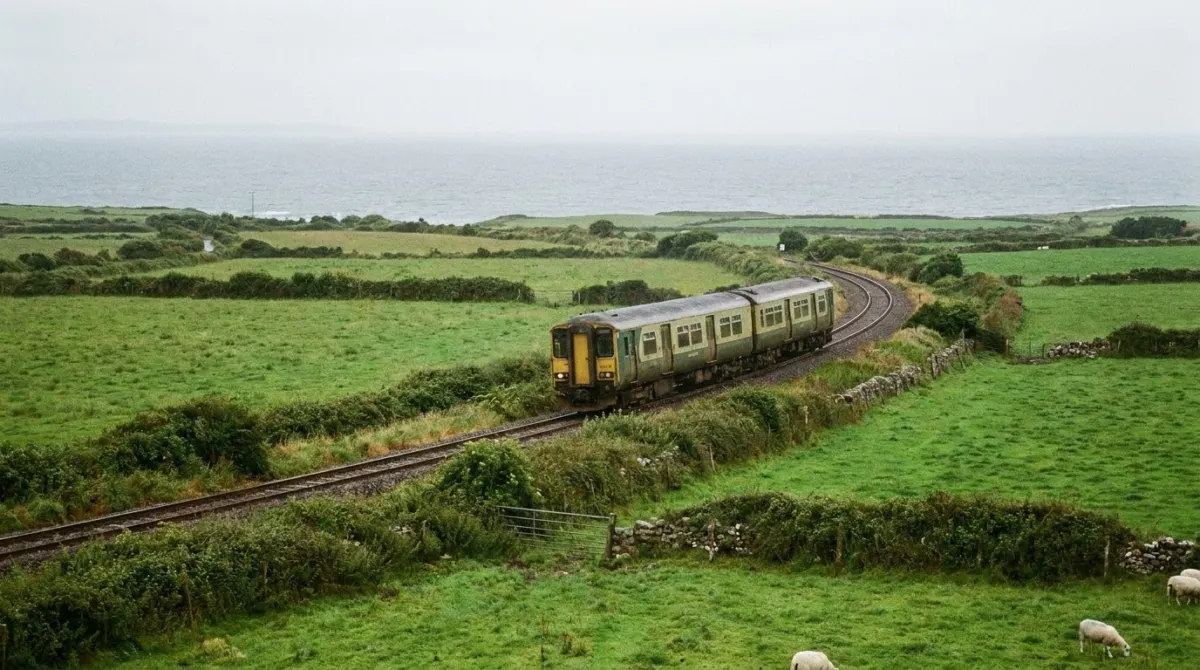
Day 3: train to Galway, about two and a half hours city centre to city centre.
Days 4–5: full-day coach tours from Galway — the Cliffs of Moher and the Burren on one, Connemara and Kylemore on the other. Both leave from beside Eyre Square.
Day 6: train or bus south to Killarney.
Day 7: a Ring of Kerry or Gap of Dunloe tour from the town, then the train out.
What you lose is stopping where you like. What you gain is never driving a narrow road on the wrong side for you, and never looking for parking.
Week 3 — one region, seven nights
The slow version, and the one experienced travellers often prefer.

Seven nights in Galway and County Clare gives you the Cliffs of Moher at dawn rather than at noon, the Burren on foot, a day on the Aran Islands with an overnight, Connemara properly rather than as a loop, and evenings in a city with music every night.
Or seven nights in Kerry: the Ring of Kerry, the Dingle Peninsula, the Beara Peninsula, Killarney National Park and the Gap of Dunloe, with walking days between them.
No transfer days at all, which on a week is worth roughly a day and a half of recovered time.
What a week does not stretch to
Four things people try to add and should not.
Northern Ireland and the Causeway Coast. Belfast is two hours from Dublin and the Causeway another ninety minutes beyond. It is a fortnight’s addition.
Both Kerry peninsulas and Connemara. That is three full days of driving loops in a week that only has four usable ones.
Four bases. Each move costs the middle of a day. Three is the ceiling for seven nights.
Donegal. Wonderful, and too far north to combine with Kerry in a week.
How the week changes by season
May, June and September give long days and manageable crowds: about fifteen to sixteen and a half hours of daylight in May, and still eleven and a half to thirteen and a half in September. This is when a week holds the most.
July and August have the longest evenings and the heaviest traffic, especially at the Cliffs of Moher between eleven and three. Accommodation in Galway, Killarney, Dingle and Doolin sells out months ahead.
December and January leave under eight hours of light. On week 1 that means cutting one loop; weeks 2 and 3 survive better, because tours and trains run to a timetable rather than to daylight.
What to book before you fly
- Kilmainham Gaol — the only sight in Ireland that reliably sells out weeks ahead.
- The Book of Kells — timed entry at Trinity College.
- Your Galway and Kerry nights — small towns, and both fill in summer.
- An automatic car, if you need one — manual is the default in Ireland and automatics are a smaller, pricier part of every fleet.
Where to stay for each week
The same three bases serve weeks 1 and 2: Dublin central and on foot, Galway a street back from the Latin Quarter, and Killarney in the town centre near the tour pick-ups.
For week 3, consider swapping a night or two out of the city: Doolin for the Cliffs of Moher early in the morning, or Dingle for the Slea Head drive.
Which week to choose
If it is your first trip and you are comfortable driving, take week 1. It covers the most ground and it is the week most people mean when they say a week in Ireland.
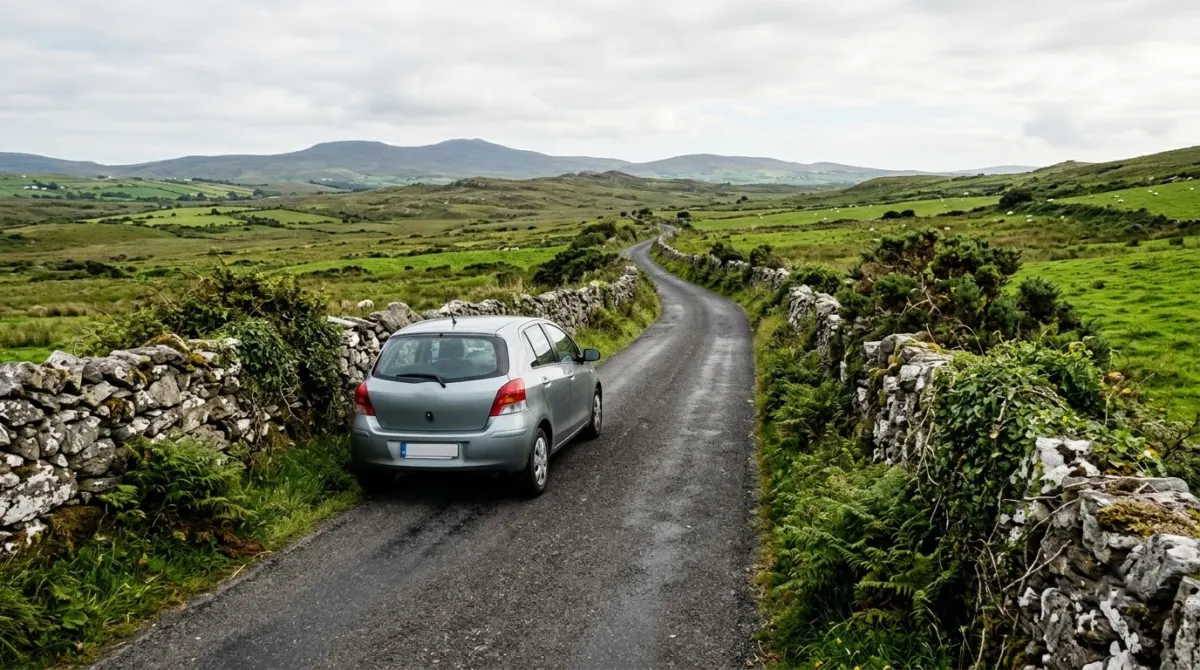
If driving on the left in a strange car on narrow roads sounds like a holiday you would rather not have, take week 2. It reaches the same three regions.
If you have been before, or you travel slowly by preference, take week 3. It is the only one of the three where you see a place twice, which is usually when it starts to mean something.
What each week costs in driving
The three weeks differ most in how much of them you spend behind a wheel, and it is worth seeing the numbers before choosing.
Week 1 covers roughly 900 kilometres: Dublin to Galway, two day loops, Galway to Kerry, and one more loop. That is about fifteen hours of driving spread over five days, which is manageable but noticeable.
Week 2 has none of it. Two train journeys and four coach days, all of which someone else drives.
Week 3 has the least actual mileage — two or three day trips from one base — and the most time on foot.
If you are travelling with someone who does not drive, or with small children, that difference matters more than any sight on the list.
The mistake that spoils a week
It is always the same: adding a fourth base.
A week looks like it holds Dublin, Galway, Kerry and the Causeway Coast, or Dublin, Galway, Kerry and Donegal. It does not. Checkout at eleven and check-in at three means every move costs the middle of a day, so a fourth base takes a full day of sightseeing out of seven and gives you a longer drive in exchange.
If a specific fourth place is the reason you are coming, drop one of the first three rather than adding to them. A week with Dublin, Galway and Donegal is a real trip. A week with all four is a car journey with photo stops.
Arriving and leaving
On a week, flights shape the itinerary more than the itinerary shapes the flights.

A morning arrival on day one gives you most of a day; an evening arrival makes it a six-day trip and the plans above should be shortened accordingly. The same applies at the end.
The booking that matters most is the departure airport. Shannon is about ninety minutes from both Galway and Kerry; Cork is about ninety minutes from Kerry; Dublin is four hours from Killarney. An open-jaw ticket into Dublin and out of Shannon or Cork usually costs little more than a return and buys back most of a day.
Packing for an Irish week
Three things make the difference, and none of them are unusual.
A waterproof jacket rather than an umbrella, because the rain tends to arrive sideways on the west coast. Shoes that handle wet grass, because the viewpoints at the Cliffs of Moher, in Connemara and across Kerry all involve a short walk off tarmac. And layers, since a single day can move between sun, wind and rain within an hour.
Nothing on any of these three weeks requires specialist equipment, including the clifftop walks, provided you are not trying to do them in trainers after a wet night.
Which week suits which traveller
First trip, confident driver, wants to see a lot: week 1. It reaches three regions and the two best day trips in the country.

First trip, would rather not drive: week 2. It reaches the same three regions on trains and organised tours, and it removes the single most common source of stress on an Irish holiday.
Second trip, or travelling slowly: week 3. One base, no transfer days, and the main sights at the hours when the coaches are elsewhere.
With small children: week 3, in a self-catering cottage. Fewer moves, a kitchen, and somewhere to go when the weather turns.
With limited mobility: week 2 or week 3, and base in the larger towns where modern hotels with lifts are easier to find than in the villages.
Frequently asked questions
Is one week enough for Ireland?
Enough for three regions at a steady pace: Dublin, the Galway area and Kerry. It is not enough to add Northern Ireland or Donegal, and four bases in seven nights turns the week into driving.
Can you do Ireland in a week without a car?
Yes. Trains link Dublin, Galway and Killarney, and full-day coach tours from Galway and Killarney cover the Cliffs of Moher, Connemara and the Ring of Kerry. You lose the ability to stop where you like and nothing else.
What is the best one week Ireland itinerary?
Two nights in Dublin, three in Galway and two in Kerry, flying out of Shannon or Cork. That covers the capital, the Cliffs of Moher, Connemara and one Kerry peninsula without a wasted day.
How many places should I stay in a week in Ireland?
Three at most. Checkout at eleven and check-in at three means each move costs the middle of a day, so a fourth base eats time you would rather spend at the coast.
Is it better to spend a week in one region of Ireland?
For a second trip, often yes. Seven nights in Galway and Clare, or in Kerry, removes every transfer day and lets you see the main sights at the hours when the coaches are not there.
Should I fly out of Dublin at the end of a week?
Only if you have to. Killarney to Dublin Airport is about four hours, while Shannon and Cork are both around ninety minutes from Kerry. An open-jaw ticket usually costs little more than a return.
Keep planning Ireland
- Where to Stay in Kilkenny: On the Mile, or Beside the Station
- Where to Stay in Doolin: Book a Room You Can Walk Home To
- Where to Stay in Belfast: Four Quarters, Four Different Trips
- Where to Stay in Killarney: The Town, or the Lakes
- Where to Stay in Dingle: In Town, or Out Where the View Is
- Where to Stay in Ireland: Pick Three Bases, Not Seven
- Where to Stay in Galway: The Noise Decides It, Not the Distance
- Best Hotels in Dublin: What Each Kind of Building Gives You
Written and checked by
Triplarks Editorial
An editorial desk, not an invented persona: research, drafting and fact-checking are done by the same small team. Every number here carries the date it was read.