Quick answer
The city centre around Donegall Square for a first visit — everything is within twenty minutes on foot, including the Cathedral Quarter at night. Remember that Belfast is in Northern Ireland and prices are in pounds, not euros.
On this page
- Where to stay in Belfast: the short answer
- City centre
- Cathedral Quarter
- Titanic Quarter
- Queen’s Quarter
- What changes because this is the UK
- What you are here for
- How many nights
- Getting here and around
- Where this fits in a trip
- Getting between Dublin and Belfast
- What the accommodation is like
- When Belfast fills up
- Belfast as a base for the north coast
- Is Belfast worth a stop?
- Safety, plainly
- The short version
- Frequently asked questions
First, the thing the search term hides: Belfast is in Northern Ireland, which is part of the United Kingdom. It is on the island of Ireland, but it is not in the Republic. That matters for your wallet — the currency is pound sterling, not the euro — and occasionally for your phone.
Some links below are affiliate links. We may earn a commission if you book through them, at no extra cost to you. We do not rank hotels, and any prices on the map come live from the booking sites.
With that out of the way: Belfast is a compact city, and the choice of where to sleep comes down to four quarters that each do something different. If Scotland is part of the same trip, see our Ireland and Scotland itinerary.
Where to stay in Belfast: the short answer
| If you are | Stay |
|---|---|
| Here two nights, first visit | City centre, around Donegall Square |
| Here for bars and live music | Cathedral Quarter |
| Here for the Titanic museum | Titanic Quarter |
| Wanting cafes and a student feel | Queen’s Quarter, around the university |
| Driving the Causeway Coast | City centre with parking, or north of the city |
One answer with no caveats: the city centre around Donegall Square. Everything is within twenty minutes on foot, including the Cathedral Quarter at night.
Map shows live availability and prices. We may earn a commission on bookings made through it, at no extra cost to you.
City centre
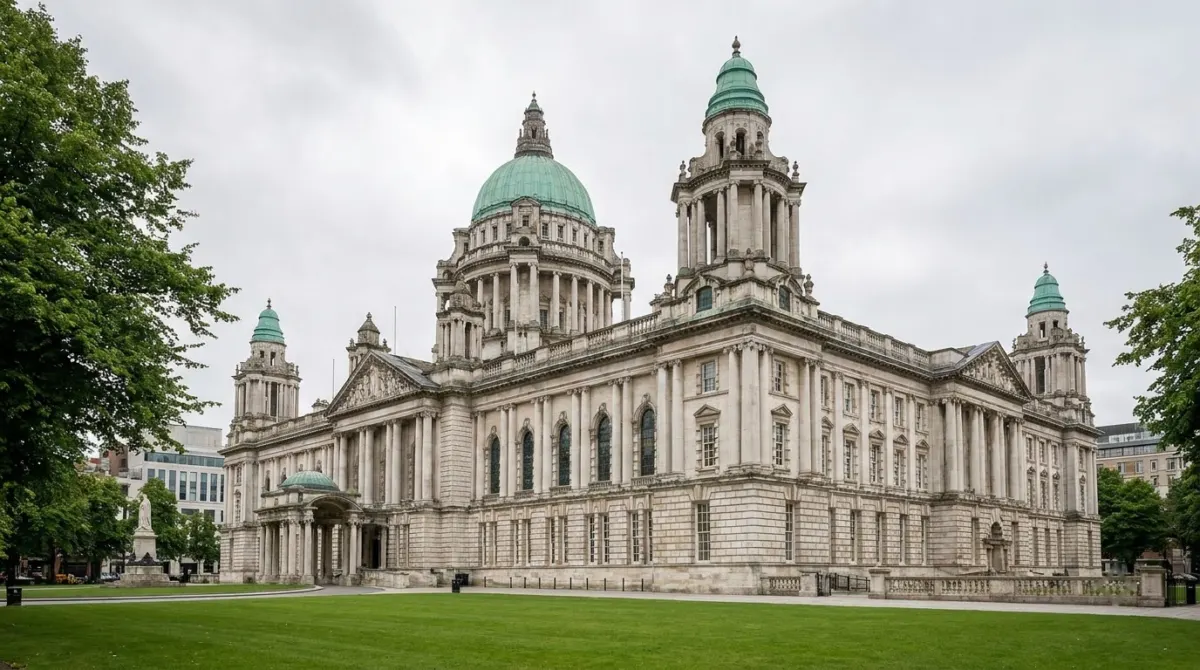
The centre is built around Donegall Square and the City Hall, and it is where the hotels, the shops and the transport are. The Grand Central Station hub sits on the western edge, with buses and trains to Dublin, Derry and the coast.
It is the practical choice for a short visit: walkable to everything, including the bars of the Cathedral Quarter ten minutes north and the Titanic Quarter twenty minutes east.
The trade is character. The centre is a shopping district, so it empties in the evening and the life moves elsewhere.
Cathedral Quarter
North of the centre around St Anne’s Cathedral, this is the oldest part of the city and the one with the nightlife: cobbled lanes, bars with live music, murals and restaurants.
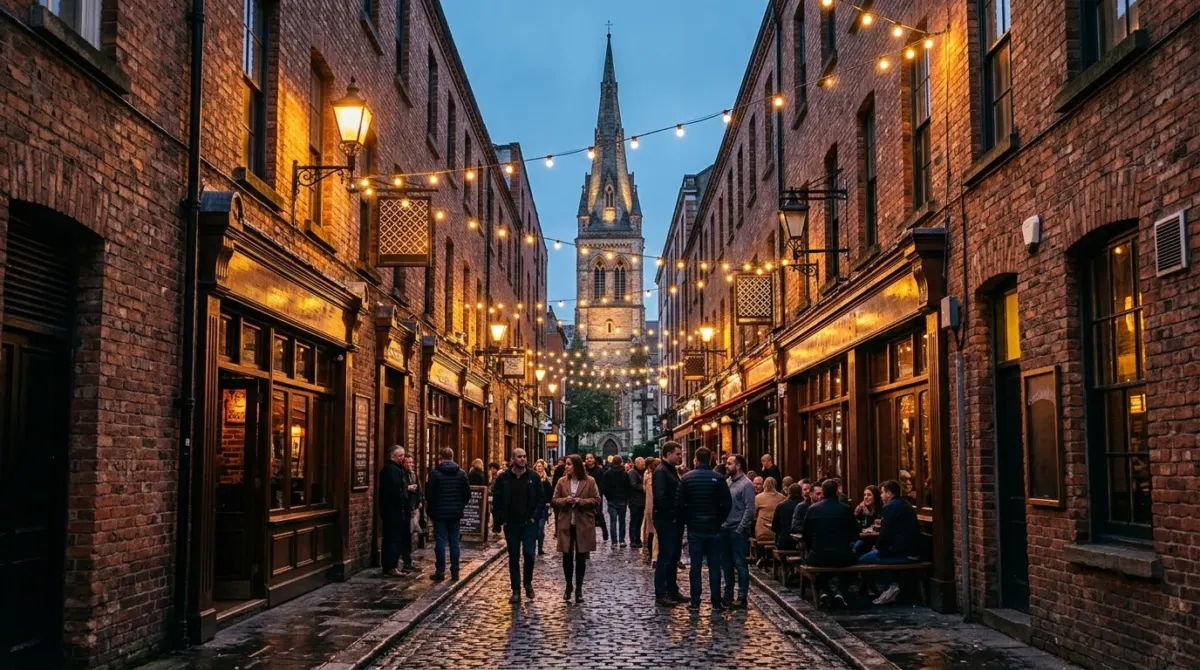
Staying here puts you in the middle of the evening rather than walking to it. It also puts you above it, so expect noise at weekends and choose a room away from the street if you are a light sleeper.
Titanic Quarter
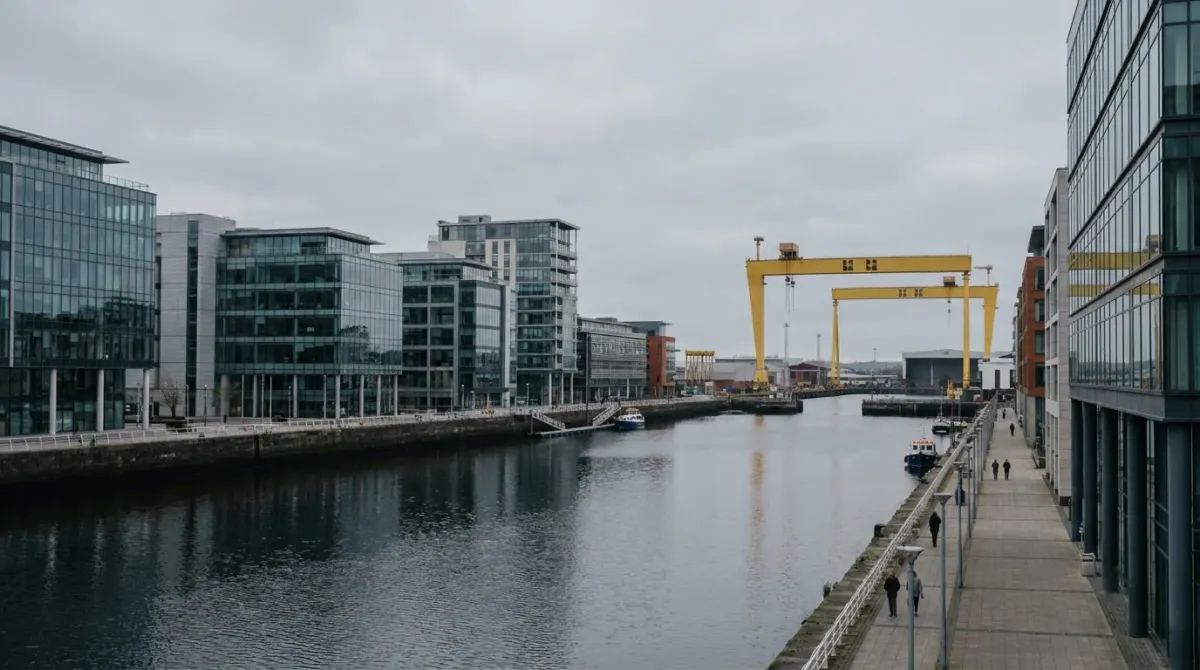
East across the river, on the slipways where the Titanic was built and launched, this is the newest part of Belfast: modern buildings, wide spaces and the Titanic Belfast museum at the centre of it.
The hotels here are newer and the rooms are larger than the city stock. The area is quiet in the evening, with few places to eat, so you will walk or take a taxi back into town for dinner.
It suits families, anyone who needs a modern accessible room, and anyone arriving by car.
Queen’s Quarter
South of the centre around Queen’s University, this is the leafy part of Belfast: Victorian terraces, the Botanic Gardens, the Ulster Museum and a long run of cafes and restaurants along the Lisburn Road and Botanic Avenue.
It is about twenty minutes’ walk from the City Hall, or a short bus ride. Accommodation is more guesthouse than hotel, and it is usually better value than the centre.
What changes because this is the UK
Four practical points if you are arriving from the Republic, after the paperwork: unless you are an Irish or British citizen or a legal resident of Ireland, you need a UK ETA to enter Northern Ireland, even though nobody checks at the border.
Currency. Pound sterling, not euro. Cards work everywhere, and Northern Irish banks issue their own sterling notes, which are legal but occasionally questioned in Great Britain.
Phone roaming. Your plan may treat Northern Ireland differently from the Republic. Check before you cross.
Car hire. Your agreement must permit cross-border driving. Most do; all state it explicitly.
Road signs. Distances change from kilometres to miles at the border, which is otherwise unmarked.
What you are here for
Three things carry most visits.
Titanic Belfast, on the slipway where the ship was built, is the city’s main attraction and takes two to three hours.
The political murals and the peace walls on the Falls and Shankill roads are usually seen on a black taxi tour, where the driver tells the history. It is the most honest introduction to the city’s recent past.
The Causeway Coast is the main reason many people base here: the Giant’s Causeway, the cliff road, the rope bridge at Carrick-a-Rede and the Glens of Antrim, roughly an hour and a half north. It is a full day by car or coach tour.
How many nights
Two nights covers the city itself: Titanic Belfast, a taxi tour, the Ulster Museum and an evening in the Cathedral Quarter.
Three nights is the right number if you want the Causeway Coast, because that is a full day on its own.
One night works only as a stop between Dublin and the coast, and it means choosing one of the three things above.
Getting here and around
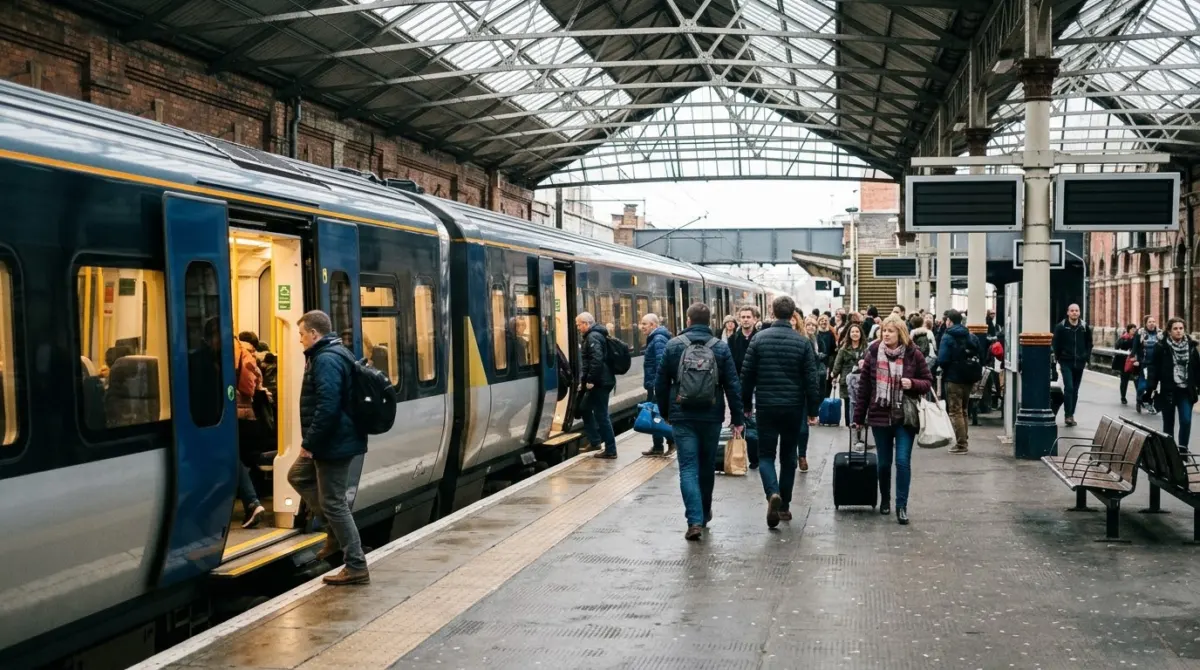
Belfast is about two hours from Dublin by motorway, and there are frequent direct trains and coaches. The city has two airports, one close to the centre and one further out.
Within the city you will walk. The quarters are all within twenty minutes of Donegall Square, and taxis cover the rest — including the tours out to the murals.
Where this fits in a trip
Belfast adds a northern leg to a fortnight in Ireland, or two nights on a route between Dublin and Donegal. Our guide to where to stay in Ireland sets out how it fits alongside Dublin, Galway and Kerry.
Getting between Dublin and Belfast
This is the journey most visitors make, and it is easier than its reputation.
By car it is about two hours on motorway for most of the way. The border is unmarked and has no passport checks, but unless you are an Irish or British citizen or a legal resident of Ireland, you still need a UK Electronic Travel Authorisation (ETA) before you cross. On the road itself, the change you will notice is signs switching from kilometres to miles.
By train there are several direct services a day, taking a little over two hours between the two city centres. It is comfortable, and it removes the question of cross-border car hire entirely.
By coach there are more departures than trains, usually a little slower and usually cheaper.
For a two-night visit to Belfast with a day on the Causeway Coast, taking the train and booking a coach tour for the coast is a common and sensible combination.
What the accommodation is like
Belfast’s stock is newer than Dublin’s, because much of the city centre and the whole Titanic Quarter have been rebuilt in recent decades.
In practice that means larger rooms, more lifts and more genuinely step-free properties than you find in a Georgian city — which makes Belfast the easier of the two for anyone with mobility needs or travelling with a family.
The Queen’s Quarter is the exception and the opposite: Victorian terraced guesthouses, usually better value, often with stairs and no lift.
When Belfast fills up
The city has a reasonable supply of rooms and a few predictable pressure points.
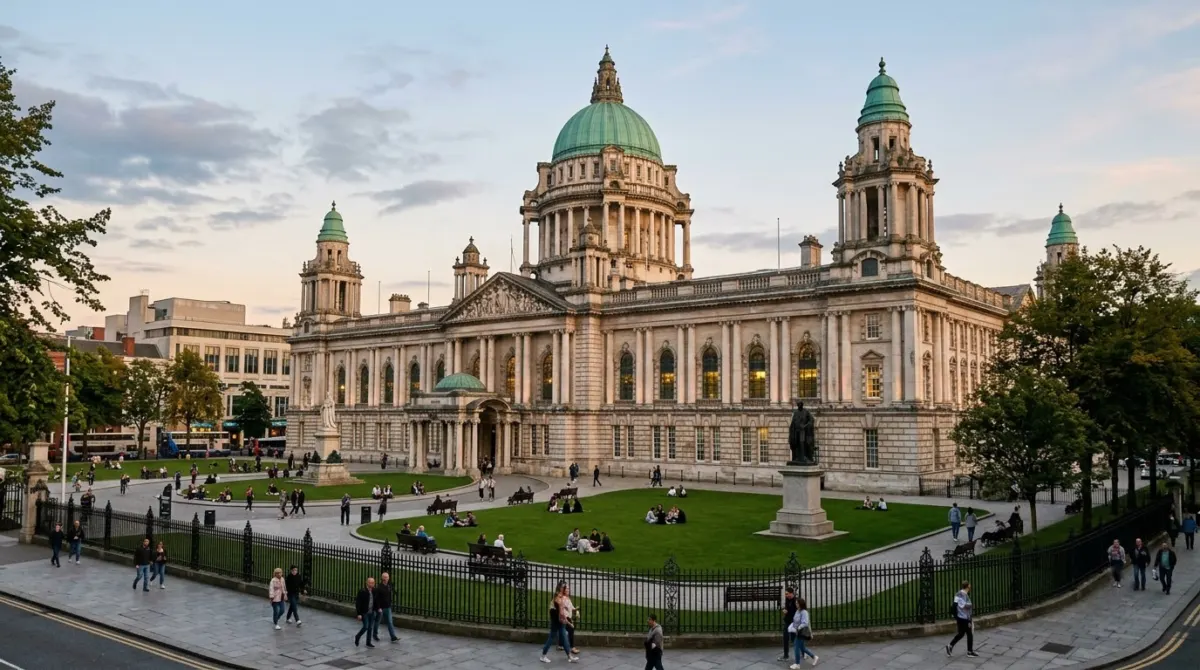
Weekends with a concert or a match at the main venues, the summer months, and the weeks around Christmas when the market is in the City Hall grounds. Festival weekends in the Cathedral Quarter fill that area first.
Outside those, a few weeks’ notice is usually enough, which is not true of Galway or Killarney in summer.
Belfast as a base for the north coast
The Causeway Coastal Route runs from the edge of the city up to Derry, and the stretch most people drive takes in the Glens of Antrim, the rope bridge at Carrick-a-Rede, the Giant’s Causeway and the ruins at Dunluce.
From Belfast that is a full day, roughly an hour and a half each way plus the stops. Coach tours cover it if you are not driving.
The alternative is to sleep on the coast itself, around Bushmills, Portrush or Ballycastle, which buys you the Causeway early in the morning before the coaches arrive. It costs you an evening in the city, and the accommodation up there is thinner and books out in summer.
Is Belfast worth a stop?
It is a different city from Dublin rather than a smaller version of it, and that is the argument for going.
The industrial history is visible in a way Dublin’s is not — the shipyard cranes still stand over the river. The recent political history is told directly, by people who lived through it, on the taxi tours of the Falls and Shankill roads. And the Victorian centre, built when Belfast was one of the great manufacturing cities of the United Kingdom, is on a scale the rest of the island does not have.
Against that, it is a two-hour detour from Dublin and the currency changes. On a first ten-day trip focused on the west, Belfast usually loses to Galway and Kerry. On a second trip, or a fortnight, it earns two nights easily.
Safety, plainly
Visitors ask, so it is worth answering directly. Belfast is an ordinary European city for visitors, with ordinary city-centre precautions and nothing more.
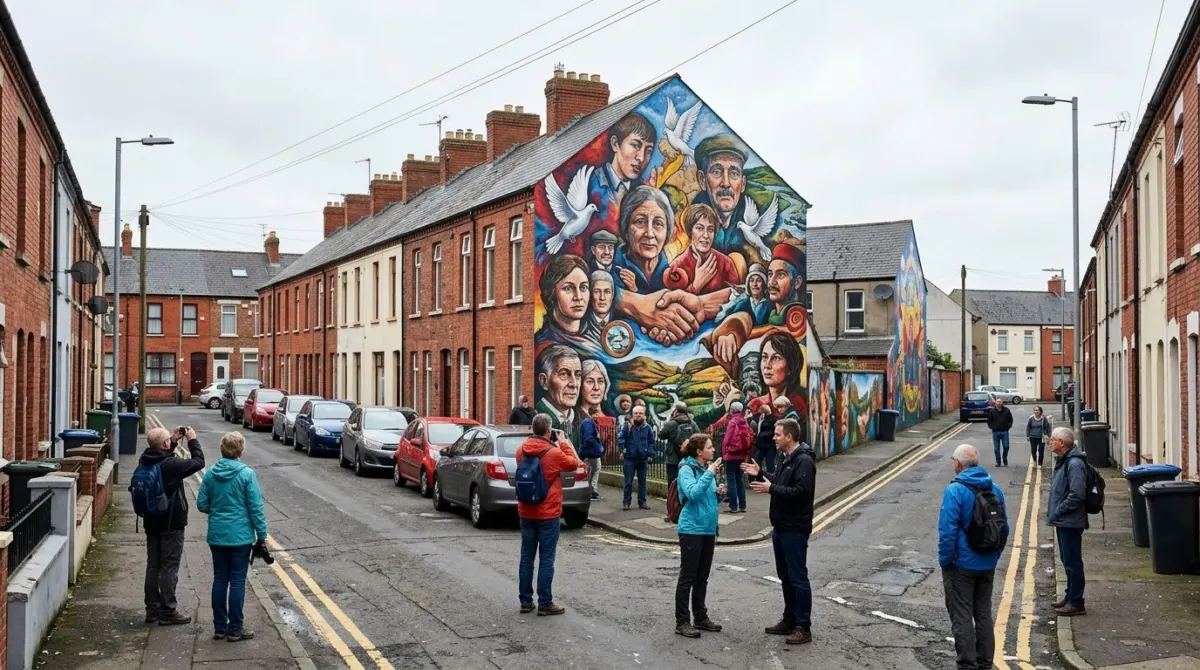
The murals, peace walls and flags are part of a political history that is still live for the people who live there, and the taxi tours exist precisely because local drivers explain it better than a guidebook. Treat it as somebody’s recent past rather than a photo opportunity, and you will find people are glad to talk about it.
Around the Twelfth of July the city is busier and some areas are given over to parades and bonfires, which is worth knowing when you book.
The short version
City centre around Donegall Square for a first visit, Cathedral Quarter for nightlife, Titanic Quarter for newer rooms and parking, Queen’s Quarter for value and cafes. Two nights for the city, three if you want the Causeway Coast. Bring pounds rather than euros, and check that your car hire allows cross-border driving.
Frequently asked questions
Is Belfast in Ireland or the UK?
Both descriptions are used and they mean different things. Belfast is on the island of Ireland, and it is the capital of Northern Ireland, which is part of the United Kingdom. The currency is pound sterling rather than the euro.
What is the best area to stay in Belfast?
The city centre around Donegall Square for a first visit — everything is within twenty minutes on foot. The Cathedral Quarter for nightlife, the Titanic Quarter for newer and larger rooms, and the Queen's Quarter for cafes and better value.
Is the Cathedral Quarter noisy at night?
At weekends, yes. It is the centre of Belfast's nightlife, with bars and live music on cobbled lanes. Stay there for the atmosphere, but ask for a room away from the street.
How many nights do you need in Belfast?
Two for the city: Titanic Belfast, a black taxi tour of the murals, the Ulster Museum and an evening out. Three if you want the Causeway Coast, which is a full day on its own.
Do I need pounds or euros in Belfast?
Pounds. Northern Ireland uses pound sterling. Cards are accepted everywhere, and local banks issue their own sterling notes, which are valid but sometimes queried elsewhere in the UK.
Is Belfast a good base for the Giant's Causeway?
Yes. The Causeway is about an hour and a half north, and it is a full day by car or on an organised coach trip from the city. Staying on the coast itself is the alternative if you want the early morning there.
Keep planning Ireland
- Where to Stay in Kilkenny: On the Mile, or Beside the Station
- Where to Stay in Doolin: Book a Room You Can Walk Home To
- Where to Stay in Killarney: The Town, or the Lakes
- Where to Stay in Dingle: In Town, or Out Where the View Is
- Where to Stay in Ireland: Pick Three Bases, Not Seven
- Where to Stay in Galway: The Noise Decides It, Not the Distance
- Best Hotels in Dublin: What Each Kind of Building Gives You
- Where to Stay in Dublin: The River, the Coach Stop and the Noise
Written and checked by
Triplarks Editorial
An editorial desk, not an invented persona: research, drafting and fact-checking are done by the same small team. Every number here carries the date it was read.