Quick answer
Stay on or just off the Medieval Mile between the castle and St Canice’s Cathedral, and the whole town is within ten minutes on foot. The John Street side by the station is quieter and usually better value, and the edge of town is where the parking is.
On this page
- Where to stay in Kilkenny: the short answer
- The Medieval Mile
- John Street and the station side
- The edge of town, and outside it
- Parking, which decides more than you expect
- What you are here for
- Day trips from Kilkenny
- How many nights
- When Kilkenny fills up
- Where this fits in a trip
- What the accommodation is like
- Kilkenny as a one-night stop
- Kilkenny with children
- Getting here and away
- Kilkenny in a day, if you are not staying
- The short version
- Frequently asked questions
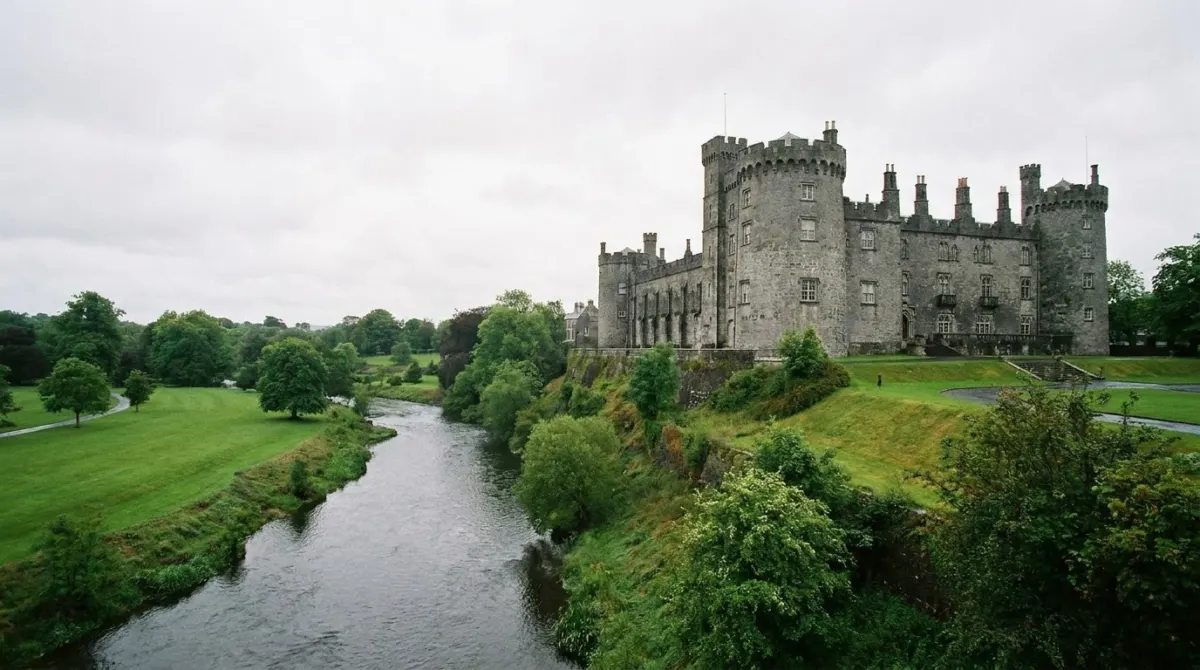
Kilkenny is the most walkable medieval town in Ireland: a castle at one end, a cathedral and round tower at the other, and a kilometre of narrow streets between them that the town markets as the Medieval Mile. You can cross it in fifteen minutes.
Some links below are affiliate links. We may earn a commission if you book through them, at no extra cost to you. We do not rank hotels, and any prices on the map come live from the booking sites.
That makes the accommodation question simple in one way and specific in another. Almost everywhere is central. What differs is noise, parking and how far you are from the railway station. For the other nights of an Irish trip, see where to stay in Dublin and our guide to where to stay in Ireland.
Where to stay in Kilkenny: the short answer
| If you are | Stay |
|---|---|
| Here one or two nights, first visit | High Street and Parliament Street, the Medieval Mile |
| Arriving by train | John Street, beside the station |
| Driving and touring the south-east | Edge of the centre, where parking is easier |
| Here for a weekend with a group | Anywhere, but ask about noise |
| Wanting quiet and grounds | Outside the town, towards Thomastown |
One answer with no caveats: on or just off the Medieval Mile, between the castle and the cathedral. Everything in the town is then within ten minutes on foot.
Map shows live availability and prices. We may earn a commission on bookings made through it, at no extra cost to you.
The Medieval Mile
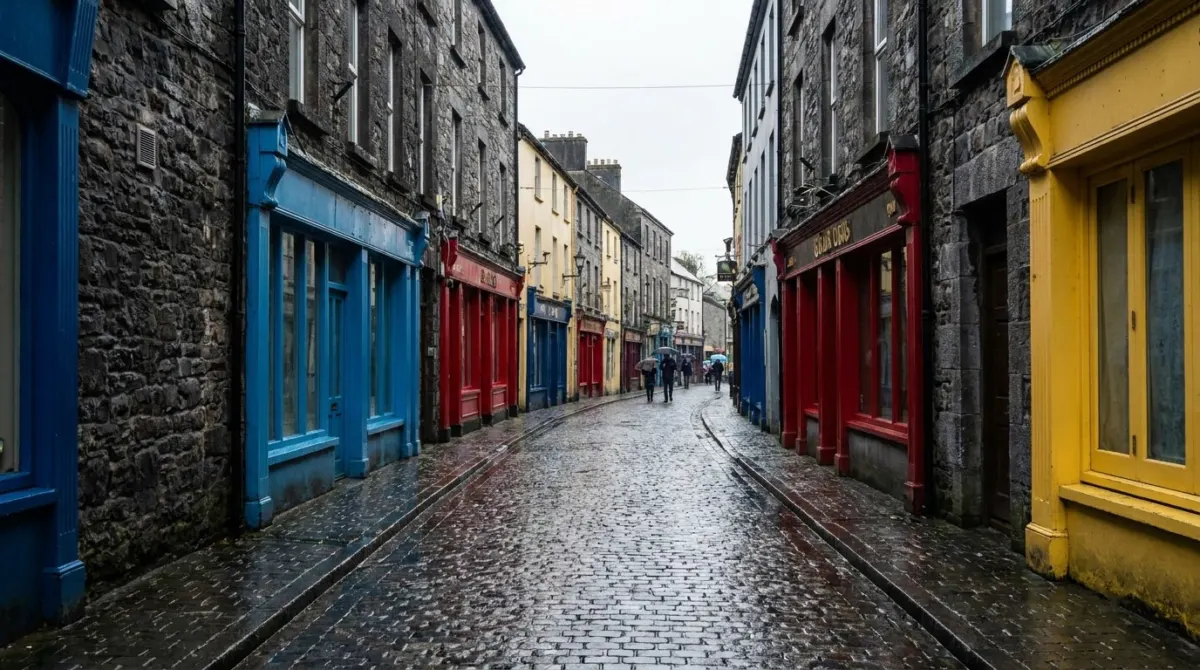
The spine of Kilkenny runs from Kilkenny Castle up through Parliament Street to St Canice’s Cathedral, and it is where the restaurants, the pubs and most of the hotels are.
Staying here means you walk to everything, including dinner and the pubs afterwards, which in a town this size is the whole point.
The trade is weekend noise. Kilkenny is a popular weekend destination within Ireland, and the streets are lively on Friday and Saturday nights. A room over a pub on Parliament Street will hear it; one street back will not.
John Street and the station side
Across the river from the castle, John Street runs up to MacDonagh Station, where the trains from Dublin and Waterford arrive.
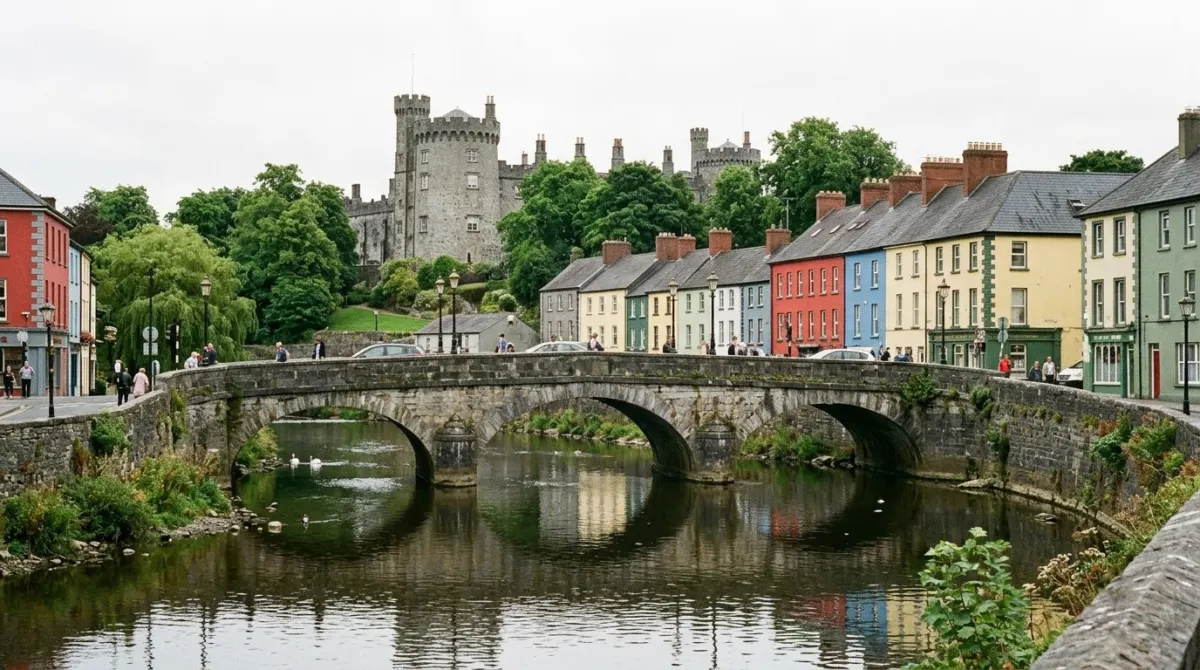
This side has a cluster of hotels and guesthouses, a five to ten minute walk from the castle across the bridge. It is quieter than the Medieval Mile, easier for arriving with luggage, and generally better value.
If you are coming by train for one night, this is the practical choice.
The edge of town, and outside it
Kilkenny’s larger hotels, with car parks, grounds and leisure facilities, sit on the roads out of the centre. They are ten to twenty minutes’ walk from the castle, or a short drive.
Further out, towards Thomastown and the Nore valley, there are country houses in grounds. These are quiet and comfortable and depend entirely on a car, including for dinner — which means deciding in advance who is not drinking.
For a touring trip through the south-east they work well. For a one-night stop, the town is better.
Parking, which decides more than you expect
The centre is medieval in layout: narrow, partly one-way, and short of space. There are public car parks and metered street parking, both of which fill on weekends and market days.
If you are driving, ask whether the property has parking and how many spaces — several central guesthouses have two or three for six or eight rooms. The hotels on the edge of town have proper car parks and are the easier choice.
If you are not driving, ignore all of this and stay in the middle.
What you are here for
Kilkenny Castle, rebuilt in the nineteenth century on Norman foundations, with parkland behind it that the town uses as its green space.
St Canice’s Cathedral and its round tower, which you can climb for the view over the roofs — the tower is one of only two in Ireland that visitors can go up.
The Medieval Mile Museum, in a former church, which holds the town’s medieval tombs and civic records.
The craft workshops in the castle yard, which are the reason Kilkenny has a reputation for design in Ireland.
Two hours covers the castle and the cathedral. A full day covers the town properly.
Day trips from Kilkenny
Kilkenny works as a base for the south-east, which is the argument for two nights rather than one.
Jerpoint Abbey, a ruined Cistercian monastery with unusually well-preserved carvings, is about twenty minutes south near Thomastown.
Kells Priory, fifteen minutes south-west, is a walled medieval monastery in a field, usually empty and free to walk into.
Waterford and the Greenway cycle route are under an hour away.
Glendalough and the Wicklow Mountains are about ninety minutes north, which makes Kilkenny a reasonable first night out of Dublin.
How many nights
One night is the common choice on a touring route, and it covers the castle, the cathedral and an evening in the pubs.
Two nights lets you add Jerpoint and Kells, or the Waterford Greenway, and is the right length if Kilkenny is a base rather than a stop.
Three is only worth it if you are walking or cycling the river valleys.
When Kilkenny fills up
The town has a strong domestic weekend trade and a busy festival calendar, so weekends are tighter than the size of the place suggests.
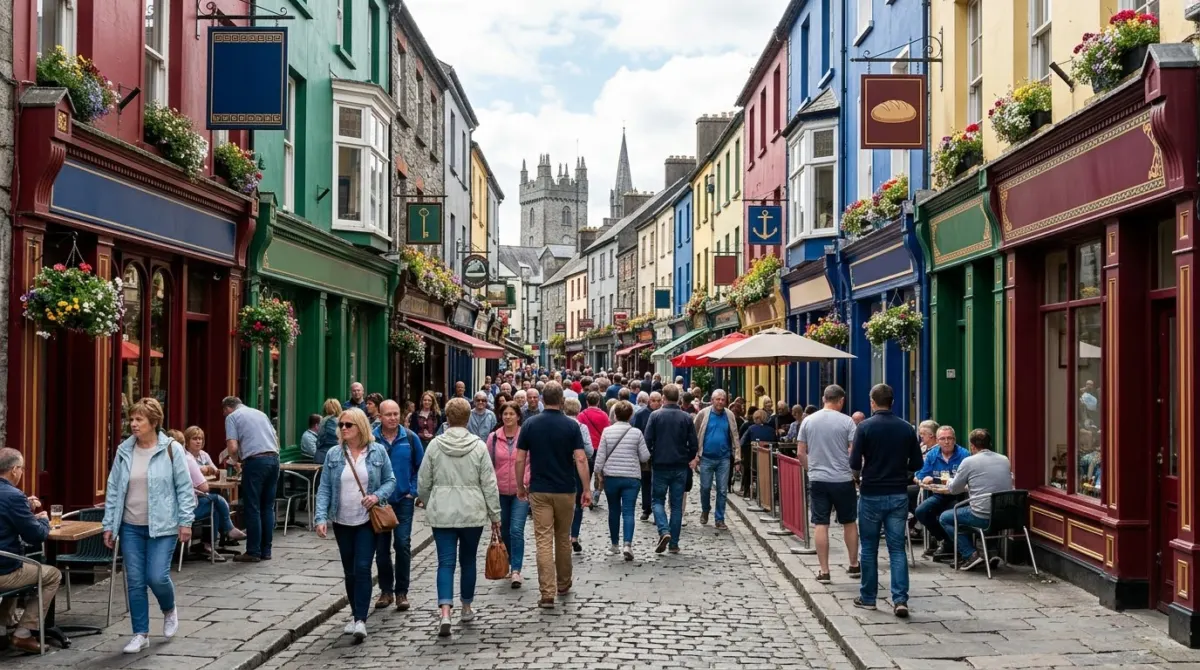
Summer weekends, bank holidays and the comedy and arts festivals fill the centre. Hurling matches at the county ground also take rooms, which visitors rarely anticipate.
Midweek outside summer, a week or two of notice is usually enough.
Where this fits in a trip
Kilkenny is the natural first stop south from Dublin, which is how our southern Ireland itinerary uses it — Glendalough on the way down, a night here, and on to Waterford and Cork the next day.
What the accommodation is like
Kilkenny has a wider range than most Irish towns of its size, because it draws a strong domestic weekend trade as well as international visitors.
Hotels on and around the Medieval Mile are mostly conversions of older buildings, so rooms vary in size and layout and lifts are not universal. They are the right choice for walking to everything.
The larger hotels on the edge of town have car parks, lifts, family rooms and leisure facilities, and are the practical choice for families and anyone who needs step-free access.
Guesthouses and bed and breakfasts cluster on John Street and the roads out of the centre, and are usually better value with breakfast included.
If stairs or a lift matter, ask the property directly rather than relying on a filter — the older buildings vary house by house.
Kilkenny as a one-night stop
Most visitors give Kilkenny one night, and it is worth doing that well.
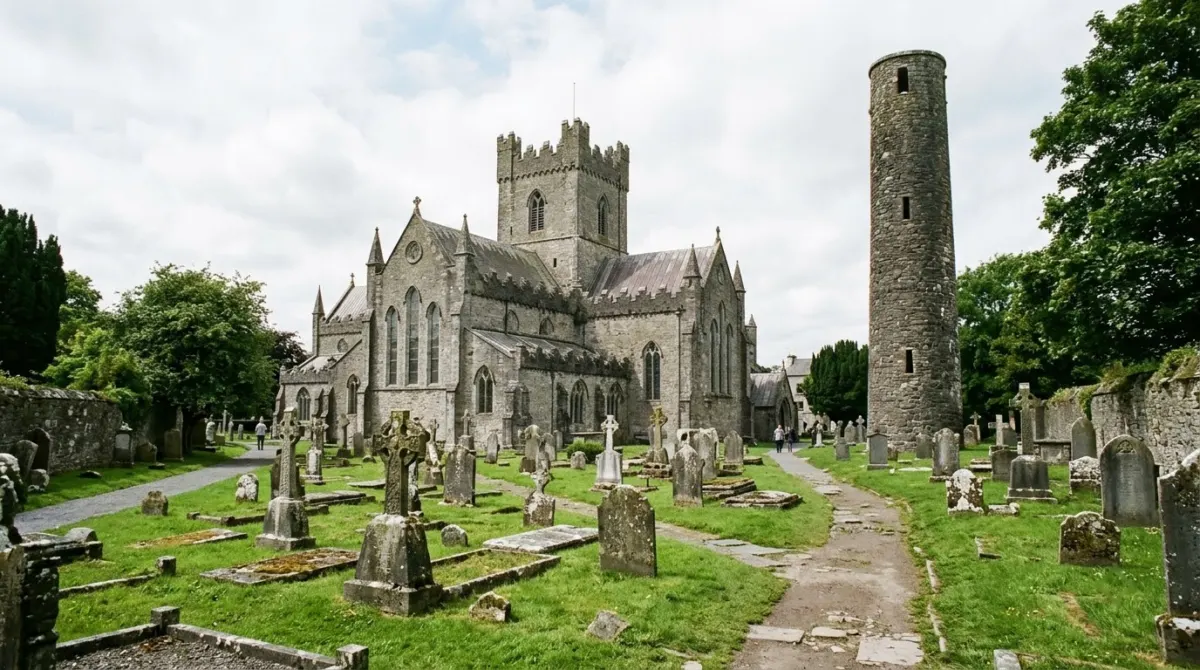
Arrive mid-afternoon and see the castle before it closes. Walk the Medieval Mile up to St Canice’s Cathedral and climb the round tower if the weather is clear — it is one of only two round towers in Ireland that visitors can go up, and the view takes in the whole town.
Eat on the Mile, and stay for the pubs, which is what the town does best. Leave after breakfast the next morning for Waterford or Cork.
That plan needs a room within ten minutes’ walk of the castle, which is the whole argument for staying central here.
Kilkenny with children
Better than most Irish towns for a family stop, for three reasons.
The castle parkland behind the building is open space in the middle of town, which is rare. The Medieval Mile is short, flat and mostly pedestrian-friendly, so a walk between sights does not turn into a march. And the larger hotels on the edge of town have family rooms and parking, which the central conversions often do not.
Dunmore Cave, about twenty minutes north, is the usual wet-weather option with children, and it is a genuine show cave rather than a filler.
Getting here and away
Kilkenny has a railway station with direct trains from Dublin in about ninety minutes, and services to Waterford. Buses run from Dublin, Waterford and Cork.
By car it is roughly ninety minutes from Dublin on the motorway, an hour from Waterford and about two hours from Cork. That combination — fast road and direct train — is what makes it the standard first stop south from Dublin, with or without a car.
Kilkenny in a day, if you are not staying
Plenty of people pass through rather than sleep here, and the town takes that well.
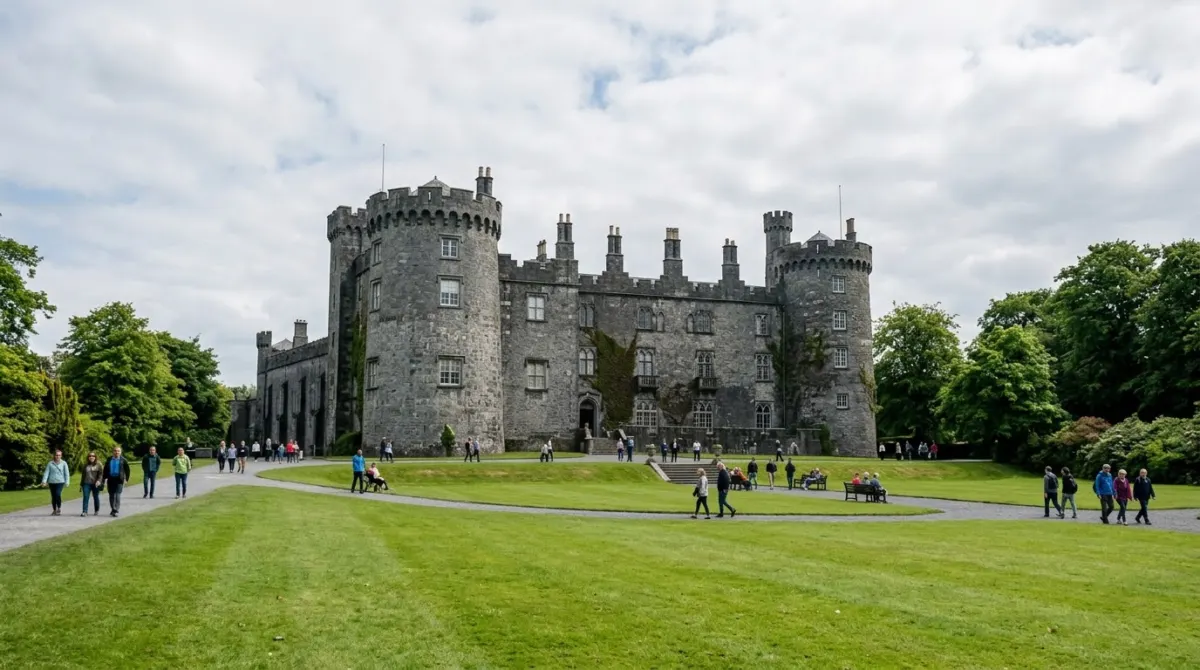
Park on the edge of the centre, start at the castle, walk the Medieval Mile up to St Canice’s Cathedral, and come back down through the lanes. Two hours covers both ends; four covers the Medieval Mile Museum and the craft workshops in the castle yard as well.
What you miss by not staying is the evening, which is the part of Kilkenny that locals come for. If your route allows a night anywhere between Dublin and Cork, this is the town to spend it in.
The short version
Stay on or just off the Medieval Mile between the castle and St Canice’s Cathedral, and everything in Kilkenny is within ten minutes on foot. Take the John Street side near the station if you are arriving by train or want somewhere quieter, and the edge of town if you are driving and want parking that is not a daily problem.
One night covers the town; two make it a base for Jerpoint, Kells Priory and the Waterford Greenway. Book ahead for summer weekends and festival dates, which fill faster than the size of the town suggests.
Frequently asked questions
Where is the best place to stay in Kilkenny?
On or just off the Medieval Mile between the castle and St Canice's Cathedral. Everything in the town is then within ten minutes on foot. If you are arriving by train, the John Street side near MacDonagh Station is quieter and usually better value.
Is Kilkenny noisy at night?
On Friday and Saturday it can be. Kilkenny is a popular weekend destination within Ireland and the pubs on Parliament Street and High Street are busy. One street back from the main run solves it.
How many nights should I spend in Kilkenny?
One night covers the castle, the cathedral and an evening out. Two if you want Jerpoint Abbey, Kells Priory or the Waterford Greenway, which makes Kilkenny a base rather than a stop.
Is Kilkenny worth visiting?
Yes, and it is the most walkable medieval town in Ireland. The castle, the round tower at St Canice's that visitors can climb, and the narrow streets between them cover a full day without a car.
Do I need a car in Kilkenny?
Not in the town, which takes fifteen minutes to cross. A car helps for Jerpoint, Kells Priory and the wider south-east. If you drive, check how many parking spaces your accommodation actually has.
Is Kilkenny a good base for the south-east of Ireland?
Yes. Waterford and the Greenway are under an hour, Jerpoint and Kells are twenty minutes away, and Glendalough is about ninety minutes north, which also makes it a sensible first night out of Dublin.
Keep planning Ireland
- Where to Stay in Doolin: Book a Room You Can Walk Home To
- Where to Stay in Belfast: Four Quarters, Four Different Trips
- Where to Stay in Killarney: The Town, or the Lakes
- Where to Stay in Dingle: In Town, or Out Where the View Is
- Where to Stay in Ireland: Pick Three Bases, Not Seven
- Where to Stay in Galway: The Noise Decides It, Not the Distance
- Best Hotels in Dublin: What Each Kind of Building Gives You
- Where to Stay in Dublin: The River, the Coach Stop and the Noise
Written and checked by
Triplarks Editorial
An editorial desk, not an invented persona: research, drafting and fact-checking are done by the same small team. Every number here carries the date it was read.