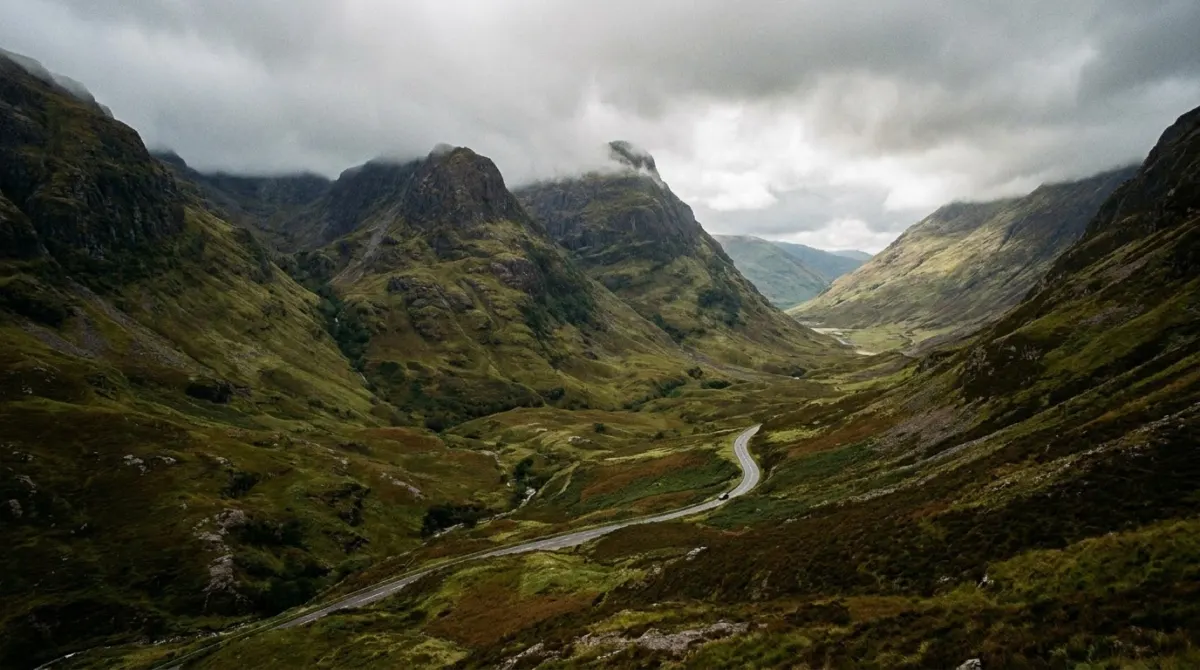
Quick answer
Four bases over ten days: Edinburgh three nights, Glasgow or Stirling one, Glencoe or Fort William two, Skye two, Inverness two. Book the Skye and Glencoe nights first — Highland accommodation is limited and sells out months ahead in summer.
On this page
- Scotland itinerary: the ten day route
- Days 1 to 3 — Edinburgh, without a car
- Day 4 — west, with a stop
- Days 5 and 6 — the west Highlands
- Days 7 and 8 — Skye
- Days 9 and 10 — Inverness and the way home
- Getting to Scotland, and which end to start from
- Planning a Scotland road trip: what the driving is really like
- Whisky, Oban and the Outlander question
- The seven day version
- The fourteen day version
- Driving in Scotland
- Midges, weather and when to go
- Rain-day swaps for each base
- What does not fit in ten days
- Island ferries: what to book and what to leave
- Doing Scotland without a car
- Half-day detours that need no extra night
- Where to stay on this route
- Camping, campervans and the access code
- Fuel, food and phone signal
- What it costs in driving time
- Common mistakes on a Scottish route
- The short version
- Frequently asked questions
Scotland is small on the map and slow on the ground. The distance from Edinburgh to Skye is about 350 kilometres and takes most of a day, because the last third is single-track road with passing places. Any itinerary that ignores that becomes a driving holiday.
Some links below are affiliate links. We may earn a commission if you book through them, at no extra cost to you. We do not rank hotels, and any prices on the map come live from the booking sites.
This is a ten-day route built on four bases, with seven-day and fourteen-day versions and an honest list of what does not fit.
Scotland itinerary: the ten day route
| Days | Base | Doing |
|---|---|---|
| 1–3 | Edinburgh | The city on foot, no car |
| 4 | Glasgow or Stirling | Collect car, castle or city |
| 5–6 | Fort William or Glencoe | The west Highlands |
| 7–8 | Skye | The island, two nights minimum |
| 9–10 | Inverness | Loch Ness, Culloden, then fly or train south |
Four bases over ten nights, and no day with more than about four hours of driving.
Where to sleep on this route
Days 1 to 3 — Edinburgh, without a car
Three nights, on foot. The castle, the Royal Mile down to Holyrood, the National Museum of Scotland, and Arthur’s Seat — an extinct volcano in the middle of the city with an hour’s climb and the best view of it.
Do not collect the rental car until you leave. Edinburgh’s centre is medieval and Georgian, parking is expensive and restricted, and you will not use it.
Our where to stay in Edinburgh guide covers the districts, and the 3 day Edinburgh itinerary has these days in detail.
Day 4 — west, with a stop
Collect the car and head west. Two good ways to spend the day.
Stirling is forty-five minutes away and holds the castle on its rock, the Wallace Monument and the Bannockburn battlefield — the densest concentration of Scottish history anywhere.
Glasgow is an hour, and it is a different city from Edinburgh in every respect: Victorian, industrial, bigger, and with better galleries, music and food. Our guide to where to stay in Glasgow covers it.
Either works. Stirling suits a touring route; Glasgow deserves a night of its own.
Map shows live availability and prices. We may earn a commission on bookings made through it, at no extra cost to you.
Days 5 and 6 — the west Highlands
North-west through Loch Lomond and Rannoch Moor into Glencoe, which is the most dramatic landscape in Britain and the place most people remember from a Scottish trip.
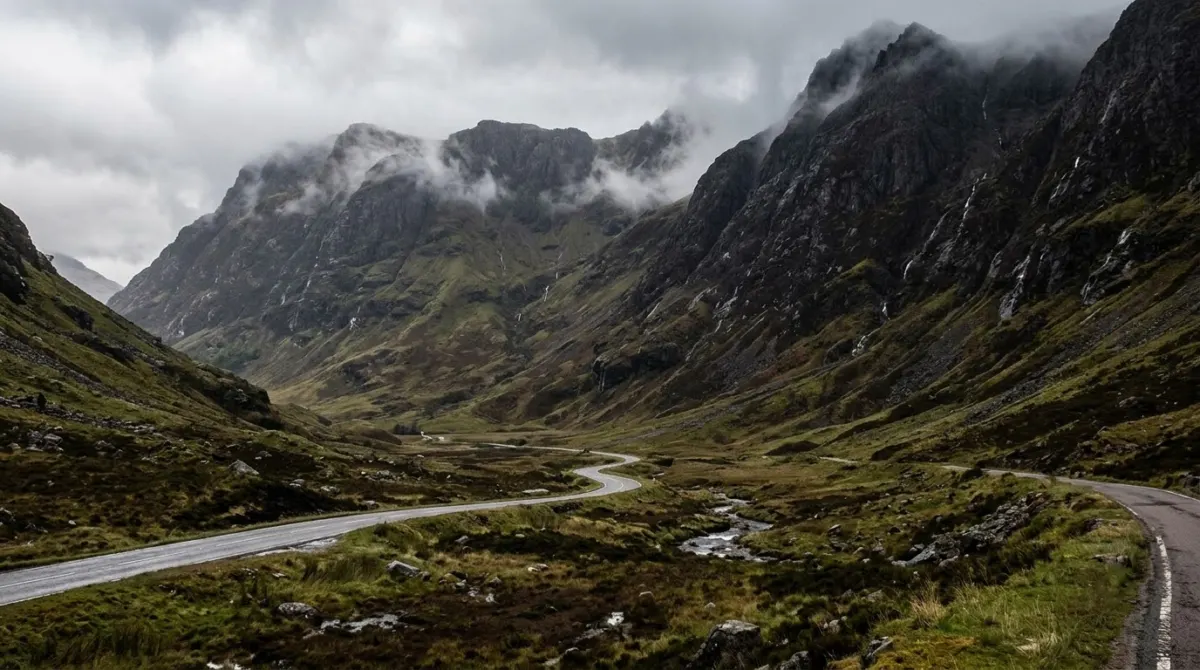
Base at Fort William or in Glencoe itself. From here: the Jacobite steam train over the Glenfinnan viaduct, Ben Nevis for walkers, and the road out to Mallaig along the coast.
Two nights is the minimum. The weather here changes within the hour, and a second day means a second chance at the view.
Days 7 and 8 — Skye
Over the bridge at Kyle of Lochalsh, or by ferry from Mallaig, onto the Isle of Skye.
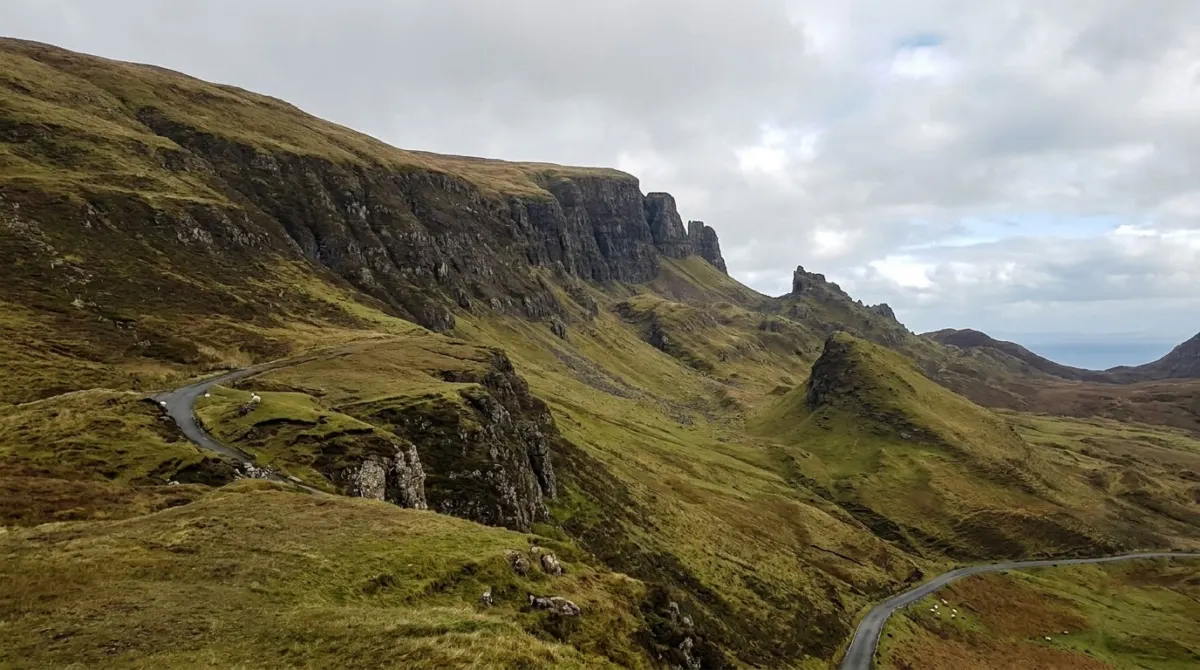
The island is bigger than it looks and the roads are slow: the Old Man of Storr, the Quiraing and the Fairy Pools are each a half day with the walking, and they are at opposite ends.
Two nights is the minimum and three is better. Accommodation on Skye is limited and books out months ahead in summer; if it is full, Kyle of Lochalsh and Plockton on the mainland are the fallbacks.
Timing matters more on Skye than anywhere else on the route. The car parks at the Storr and the Fairy Pools are paid and fill from mid-morning in summer, so start one of your two days early and leave the other famous stop for the evening light, when the coaches have gone.
If you come over from Mallaig, the CalMac ferry lands at Armadale in the south of the island, and vehicle space on summer sailings has to be reserved well ahead. The bridge needs nothing booked, which makes it the safer way back.
Days 9 and 10 — Inverness and the way home
East to Inverness, the capital of the Highlands and the practical end of the route: an airport, a railway station and the car hire desks.
On the way or from the town: Loch Ness and Urquhart Castle, the Culloden battlefield where the Jacobite rising ended in 1746, and the Cairngorms to the south if you have a spare day.
Fly home from Inverness, or take the train back to Edinburgh, which takes about three and a half hours and is a far better use of the last day than driving it.
Getting to Scotland, and which end to start from
The route starts in Edinburgh because most flights and the fastest trains from England arrive there. It runs just as well from Glasgow, and the choice is worth making before you book anything else.
By air. Edinburgh and Glasgow airports are about an hour apart by road, so compare fares into both and let the cheaper one decide. Inverness is the useful airport at the far end: flying out of it is what lets you drop the car in the north instead of spending the last day driving south.
By train from London. Daytime trains run from London King’s Cross to Edinburgh and from London Euston to Glasgow. The Caledonian Sleeper leaves Euston at night and reaches Scotland in the morning, with services to Edinburgh, Glasgow, Aberdeen, Inverness and Fort William. The Fort William train is the interesting one for this route: it delivers you straight into the west Highlands, so you can run the itinerary in reverse and finish with your three nights in Edinburgh.
From Ireland. Ferries cross from Belfast and Larne to Cairnryan in the south-west, a morning’s drive from Glasgow. Our Ireland and Scotland itinerary covers that combination in detail.
Starting in Glasgow shortens the first drive into the Highlands and puts Loch Lomond on the first morning. The cost is that Edinburgh moves to the end of the trip, when most people are tired of packing and unpacking. Whichever end you choose, book an open-jaw ticket so that you never drive the same road twice.
Planning a Scotland road trip: what the driving is really like
This 10 day route is a road trip for eight of its days, and the driving is the part people underestimate.
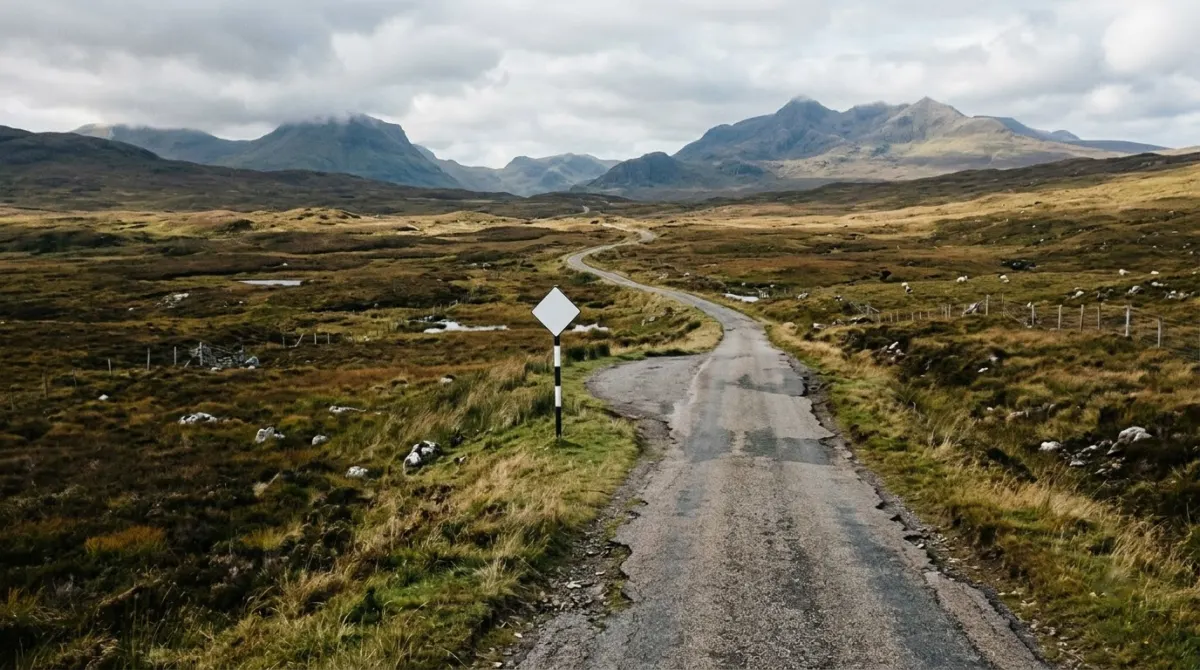
Single track roads with passing places are normal on Skye and through parts of the west Highlands. The rule is simple — pull into the passing place on your left, or stop opposite one on your right — and the pace is slower than the map suggests. Budget an extra third on every estimate west of Fort William.
Distances are short and the times are long. Nothing on this route is more than three hours of driving, but almost nothing is a motorway either.
Fuel thins out north and west. Fill up in Fort William, Portree and Inverness rather than assuming the next village has a pump.
If you would rather not drive at all, the seven day version below works on trains and tours.
Whisky, Oban and the Outlander question
Two themes send people to Scotland with a route already half-decided.
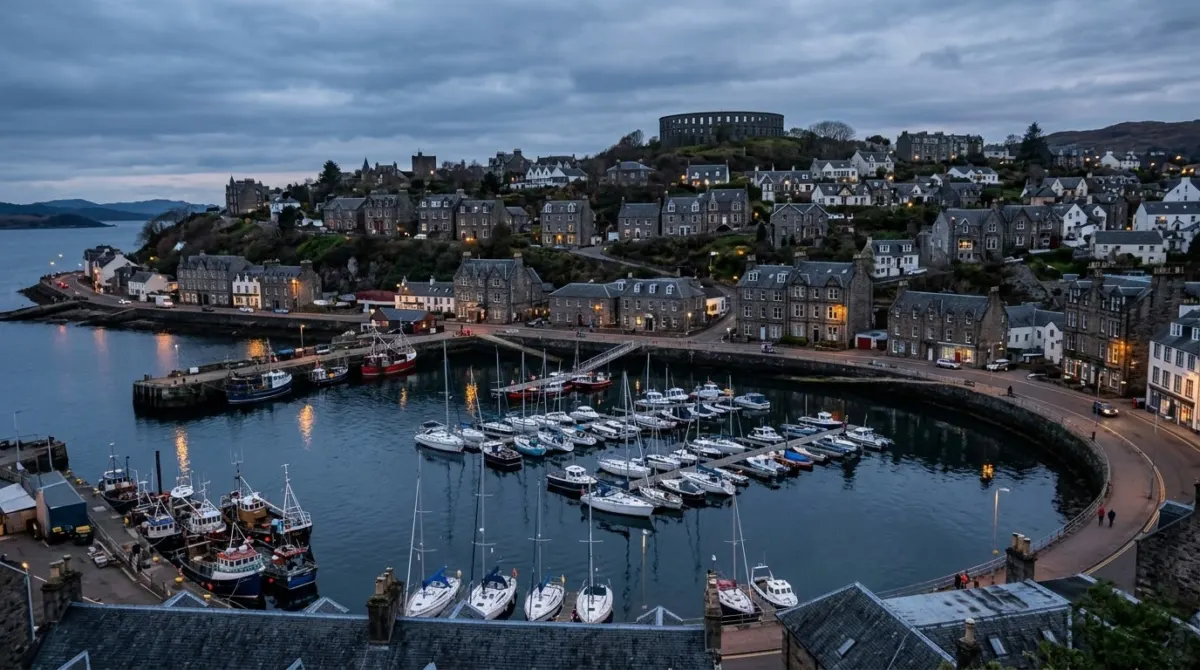
Whisky. A distillery tour fits naturally into day 4 or 5 on this route — Oban has one in the middle of the town, which is the easiest to add without a detour, and Speyside lies off the road between Inverness and the south if you are routing home that way. Islay, the island most associated with whisky, is a separate trip and does not fit ten days.
Outlander. The filming locations are scattered: Doune Castle near Stirling, Midhope near Edinburgh, Culross in Fife, and Glencoe for the landscape shots. Doune and Culross both sit close to the Edinburgh to Highlands leg, so one of them slots into day 4 without reshaping anything. Chasing all of them is a different itinerary from this one.
The seven day version
Drop Skye, which is the thing that costs the most time.
- Days 1–3: Edinburgh.
- Day 4: Stirling, then north to Pitlochry or Aviemore.
- Days 5–6: Glencoe and Fort William, with the Jacobite train or Ben Nevis.
- Day 7: Loch Ness and Inverness, then fly or take the train south.
This keeps the Highlands and loses the island, which is the right trade at this length.
The fourteen day version
Two weeks lets you add the north coast and the islands without rushing.
Add three nights on Skye instead of two, two nights in the far north — Durness, Thurso or along the NC500 — and two nights in Glasgow at the start or end.
The North Coast 500 is a 500-mile loop from Inverness around the northern Highlands. It is the best driving in Britain and it needs five days of its own, not two.
If the far north does not appeal, the other good use of the extra four nights is the islands: two nights on Mull from Oban, with a day for Iona and Staffa, and two on Harris and Lewis by the ferry from Uig at the end of your Skye stay. That version trades driving for sailing, and the ferries need reserving as early as the rooms.
Driving in Scotland
Scotland drives on the left, and the roads fall into three categories that behave very differently.
Motorways and A-roads in the central belt are fast and ordinary.
Highland A-roads are two lanes, scenic and slower than the limit suggests, with heavy traffic in summer.
Single-track roads with passing places are normal on Skye, the far north-west and the islands. The etiquette is to pull into a passing place on your left, or stop opposite one on your right, and to let faster traffic overtake. Passing places are not parking spaces.
Allow about two-thirds of the speed your navigation app predicts outside the central belt, and fill the tank when you can — petrol stations in the Highlands are far apart and many close in the evening.
Midges, weather and when to go
May, June and September are the best months. Long days, everything open, and fewer midges than high summer.
July and August bring the most traffic, the highest prices, the Edinburgh festival and the worst of the midges — biting insects that swarm on still, damp evenings in the west Highlands and are genuinely unpleasant.
October to March gives short days, closed attractions in the Highlands, and real weather on the roads. The cities work year-round; the islands largely do not.
Rain-day swaps for each base
Some days on this route will be wet. The useful plan is a substitute at each stop, not a better forecast.
Edinburgh: the National Museum of Scotland and the national galleries are free and big enough to fill a whole day.
Glasgow: Kelvingrove Art Gallery and Museum and the Riverside Museum of transport are both free, and either one rewards an afternoon.
Glencoe and Fort William: the Glencoe Visitor Centre explains the massacre of 1692 and how the glen was shaped by ice, and a wet day is a reasonable day for the Jacobite or the West Highland Line, since the view from a train window survives drizzle far better than the view from a summit does.
Skye: the Talisker distillery at Carbost is the obvious indoor stop, but the honest answer is to swap days: put the Quiraing or the Fairy Pools on the clearer one and keep a short coastal walk for the other.
Inverness: the Culloden visitor centre is largely indoors, and its exhibition is good enough to justify a wet morning by itself.
What does not work in rain is anything that depends on a view from height — Ben Nevis, the Storr, the Quiraing. That is the real reason this route gives two nights to each Highland region: it lets you move those to whichever day the cloud lifts.
What does not fit in ten days
The North Coast 500 as anything other than a trip of its own.
The Outer Hebrides, which need ferries and three or four days.
Orkney and Shetland, which are separate trips entirely.
Both Skye and the far north, in the same ten days.
Island ferries: what to book and what to leave
Almost every island beyond Skye means a ferry, and on the west coast that means CalMac, the publicly owned operator that runs most of the routes. Three groups of crossings matter for a trip built like this one.
- Mallaig to Armadale, the alternative way onto Skye and the best arrival if you are coming from Fort William along the Road to the Isles.
- Oban to Craignure, the crossing to Mull, and from there onward to Iona and Staffa.
- Uig on Skye to Tarbert on Harris, and Ullapool to Stornoway on Lewis, the two main routes into the Outer Hebrides.
Book vehicle space as soon as your dates are fixed if you travel between May and September. Foot passengers have far more flexibility, which is why many people leave the car in Oban and join an organized day trip to Mull and Iona rather than taking it across.
West coast sailings are delayed or cancelled in strong wind more often than visitors expect. Check the service status the evening before and again on the morning of a crossing, and never put a ferry on the same day as a flight home.
Orkney is served by a different operator, NorthLink, from Scrabster on the north coast and from Aberdeen, and it is better treated as a trip of its own.
Doing Scotland without a car
More of this is possible than people expect, with a different shape.
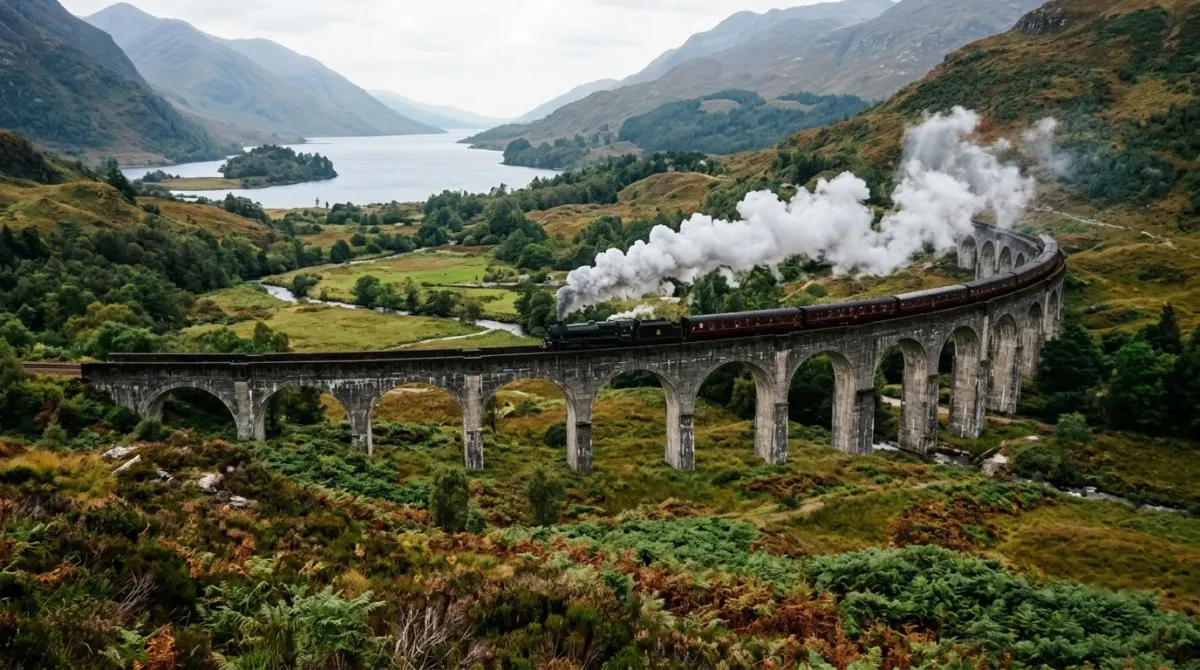
Trains link Edinburgh, Glasgow, Stirling, Fort William, Inverness and the west coast. The West Highland Line from Glasgow to Mallaig is one of the great railway journeys in Europe and runs over the Glenfinnan viaduct that the Jacobite steam train also crosses.
Coach tours from Edinburgh, Glasgow and Inverness reach Loch Ness, Glencoe, Skye and the North Coast. Multi-day small-group tours are a well-established way to see the Highlands without driving.
What you lose is the ability to stop at the viewpoint you just passed, which in the Highlands is a real loss. What you gain is not driving single-track roads in rain on your first day on the left.
Half-day detours that need no extra night
Each base on this route has something within an hour that most people drive past. None of them needs a new hotel.
From Edinburgh, on the way out: Linlithgow Palace, the roofless royal palace where Mary Queen of Scots was born, sits just off the motorway west. The Kelpies, two giant steel horse heads beside the canal at Falkirk, take half an hour and cost nothing to see from outside.
From Fort William: the road up Glen Nevis ends at a car park where a short gorge walk leads to Steall Falls, one of the highest waterfalls in Scotland. It is the best two hours in the area for anyone who will not climb Ben Nevis.
From Inverness: Clava Cairns, a cluster of Bronze Age burial cairns and standing stones a few minutes from Culloden, is free and almost always quiet. Fort George, a vast eighteenth-century fortress on the Moray Firth built after the Jacobite defeat, is still an army base and is a short drive east of the airport — useful on the morning you fly.
Where to stay on this route
Edinburgh: the New Town for space or the Old Town for atmosphere — see where to stay in Edinburgh.
Glasgow: the centre for convenience, the West End for everything else — see where to stay in Glasgow.
Glencoe and Fort William: book early. The accommodation in this area is limited and the demand is not.
Skye: book earlier still, months ahead in summer, and have Kyle of Lochalsh or Plockton as a fallback.
Inverness: the centre, near the station, since the day tours leave from there — see where to stay in Inverness.
Camping, campervans and the access code
Scotland has some of the most generous access rights in Europe, and they cover more than walking. Under the Scottish Outdoor Access Code, lightweight camping in a tent is allowed on most unenclosed land, in small numbers and for no more than two or three nights in one place.
The conditions are specific. Camp well away from buildings and roads, stay out of enclosed fields of crops or animals, and take everything away with you. Use a stove rather than an open fire, and do not light any fire in dry weather or near forests, farmland or peaty ground.
Two exceptions catch people out. In parts of Loch Lomond and the Trossachs National Park, seasonal byelaws mean camping is only allowed in campsites or with a permit, so check before you pitch on the first night of the drive north. And access rights do not extend to motor vehicles: a campervan is not covered by them, so where you can park overnight depends on the landowner and local restrictions. In practice the reliable answer is a campsite.
Popular Highland campsites are worth reserving ahead in July and August, for the same reason the hotels are.
Fuel, food and phone signal
Three practical points that matter more in the Highlands than almost anywhere else in western Europe.
Fill the tank when you can. Petrol stations are far apart in the north-west, many close in the evening, and some are closed on Sundays.
Eat earlier than you would at home. Rural kitchens often stop serving at eight or nine, and in the shoulder season the only place in a village may be shut.
Download maps offline. Mobile signal disappears for long stretches in the west Highlands and on parts of Skye.
What it costs in driving time
Honest numbers for the ten-day route, because the map lies.
Edinburgh to Glencoe is around three hours. Glencoe to Portree on Skye is about three hours. Skye to Inverness is two and a half to three. Inverness back to Edinburgh is three and a half.
That is roughly twelve hours of driving spread across four days, which is manageable. Adding the North Coast 500 adds another fifteen to twenty, which is why it does not fit.
Common mistakes on a Scottish route
Trying to see Skye in a day from Inverness. It is three hours each way before you have stopped anywhere.
Adding the North Coast 500 to a ten-day trip. It is a five-day route on its own.
Collecting a car at Edinburgh Airport on arrival. It then sits in an expensive city car park for three days.
Driving back south on the last day. Fly from Inverness or take the train and give the day to the Highlands instead.
The short version
Ten days on four bases: Edinburgh three nights, Glasgow or Stirling one, Glencoe or Fort William two, Skye two, Inverness two. Collect the car when you leave Edinburgh and drop it at Inverness rather than driving back. Allow two-thirds of the predicted speed outside the central belt, fill the tank when you can, and come in May, June or September if you can choose.
Check Inverness availability →
Short on time? Use the 5-day Scotland itinerary or the 6-day version.
Frequently asked questions
What is the best Scotland itinerary for 10 days?
Three nights in Edinburgh, one in Glasgow or Stirling, two in Glencoe or Fort William, two on Skye and two in Inverness. Four bases, and no day with more than about four hours of driving.
How many days do you need in Scotland?
Seven covers Edinburgh and the west Highlands. Ten adds Skye. Fourteen adds the far north or the islands. Below seven, stay in the central belt and treat the Highlands as a separate trip.
Do you need a car in Scotland?
For the Highlands, effectively yes, although coach tours from Edinburgh and Inverness cover the main sights. For Edinburgh and Glasgow a car is a liability, so collect it the morning you leave the city.
Is two nights enough on Skye?
It is the minimum. The island is larger than it looks and the roads are slow, so the Old Man of Storr, the Quiraing and the Fairy Pools are each a half day and they are at opposite ends. Three nights is better.
When is the best time to visit Scotland?
May, June and September: long days, everything open and fewer midges than July and August. Winter gives short days and closes much of the Highlands, though the cities work year-round.
What are midges and do they matter?
Tiny biting insects that swarm on still, damp evenings in the west Highlands between roughly June and August. They are a genuine nuisance for camping and evening walks, and repellent or a head net is worth carrying in those months.
Do you need a ferry to get to Skye?
No. The Skye Bridge at Kyle of Lochalsh connects the island to the mainland and needs nothing booked. The CalMac ferry from Mallaig to Armadale is the alternative arrival from Fort William, and vehicle space on it should be booked ahead in summer.
Keep planning Scotland
- Where to Stay in Glencoe: Inside the Glen, or Twenty Minutes Away
- Where to Stay on Skye: Portree, or Closer to What You Came For
- Where to Stay in Glasgow: Centre for Convenience, West End for Everything Else
- Where to Stay in Inverness: A Base, Not a Destination
- Where to Stay in Edinburgh: Two Cities, Five Minutes Apart
- How Many Days in Scotland? Seven for the Highlands, Ten for Skye
- How Many Days in Edinburgh? Three, and the Hills Count
- 6 Day Scotland Itinerary: Three Bases, or Two Done Properly
Written and checked by
Triplarks Editorial
An editorial desk, not an invented persona: research, drafting and fact-checking are done by the same small team. Every number here carries the date it was read.