Quick answer
Ask how many steps lie between the road and the door, whether there is a porter, whether a vehicle can reach it and whether it is open in your month. Positano is built down a cliff, so position matters more than the room.
On this page
- Best hotels in Positano: the three levels of the village
- The four things to check before booking
- What the money buys
- The balcony, which is most of what you are buying
- Where else to stay on this coast
- Getting there, which affects where you stay
- Driving, and why not to
- When Positano is open, and when it is full
- How many nights
- What a day in Positano actually looks like
- Beaches, and what they cost
- Eating in Positano
- How Positano fits a southern Italy trip
- Positano with limited mobility
- Arriving with luggage
- One night, two nights or three
- The short version
- Frequently asked questions
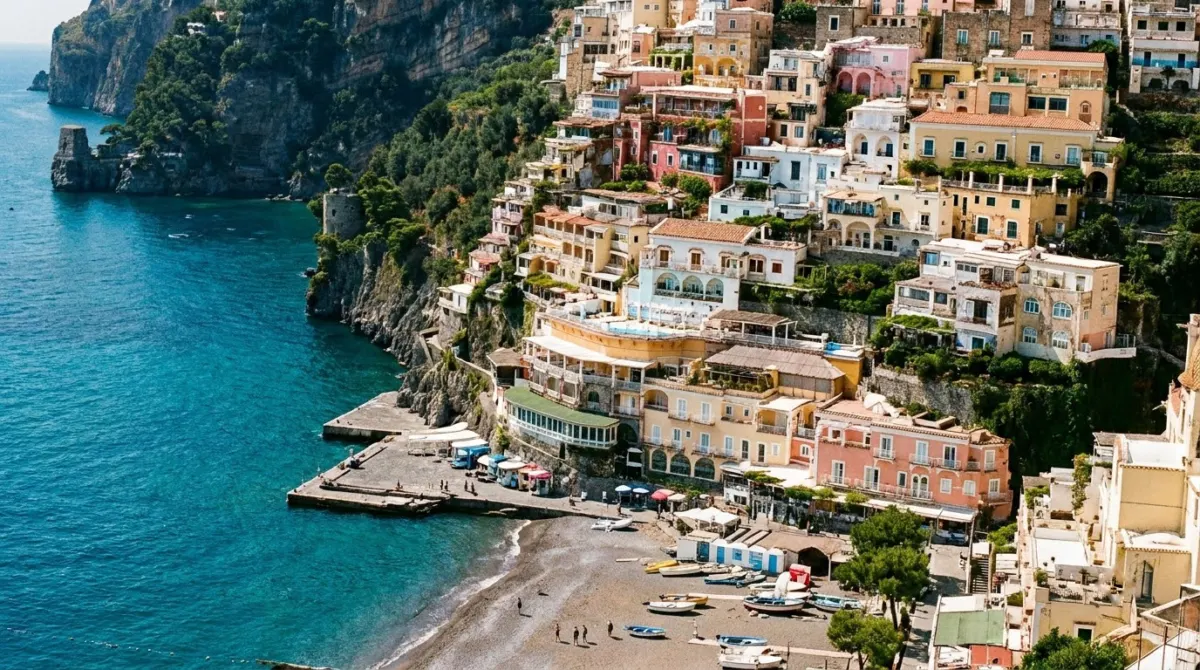
Positano is built down a cliff. That single fact decides everything about staying there: the village has hundreds of steps and almost no flat ground, the main road runs along the top, and the beach is at the bottom.
Some links below are affiliate links. We may earn a commission if you book through them, at no extra cost to you. We do not rank hotels, and any prices on the map come live from the booking sites.
So this guide is not a ranking of hotels. It is about what the different positions on that cliff actually mean, what the money buys, and the four things to establish before you book anything. For the area question first, see where to stay in Positano.
Map shows live availability and prices. We may earn a commission on bookings made through it, at no extra cost to you.
Best hotels in Positano: the three levels of the village
The top, along and just below the coast road, is where the buses stop and where most of the larger hotels are. Easiest to arrive at, furthest from the water.
The middle, around the church of Santa Maria Assunta with its majolica dome, is the centre of the village: shops, restaurants and the most photographed streets.
The bottom, at Spiaggia Grande, is the main beach with the restaurants along it and the ferry dock.
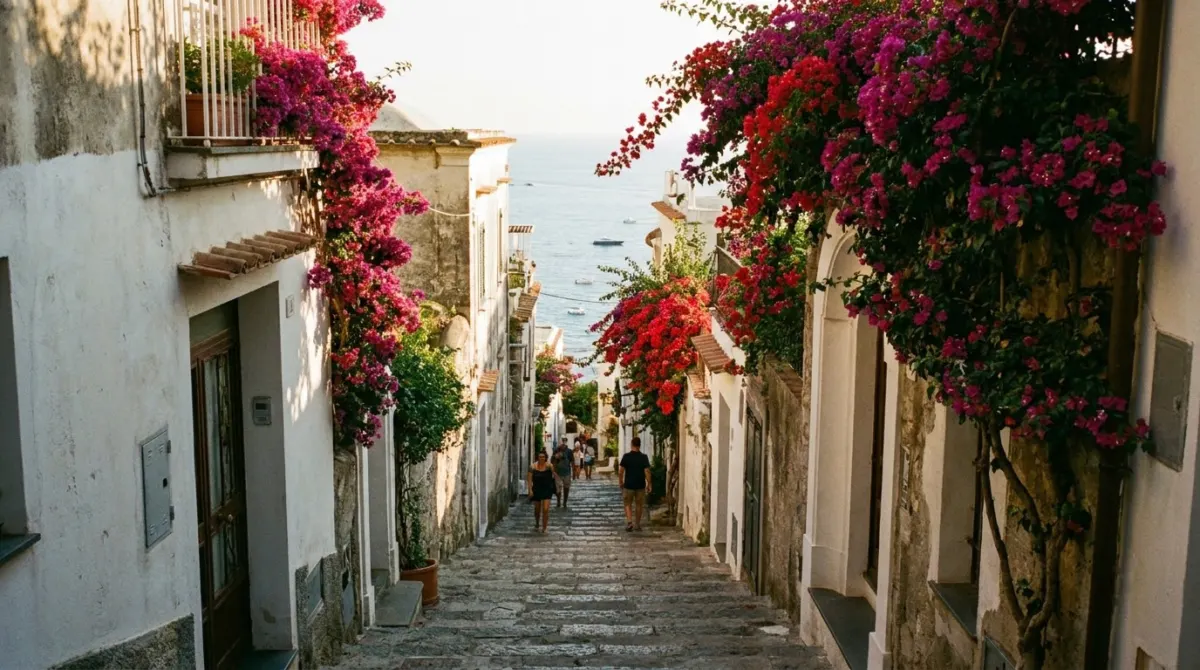
From top to bottom is a descent of several hundred steps. Going down is easy; coming back is the part to plan for.
The four things to check before booking
How many steps from the road to the door. This is the most important question in Positano and the one least often asked. Some properties are twenty steps from a drop-off point; others are two hundred.
Whether there is a porter service. Many hotels will carry luggage down from the road. Without it, you are carrying suitcases down steps in the heat.
Whether a vehicle can reach it. Taxis and hotel shuttles can reach some addresses and not others.
Whether it is open at all. A large share of Positano closes from November to March, including hotels, restaurants and ferries.
What the money buys
Positano is expensive by any measure, and the premium is for the view and the position rather than the room.
At the lower end you are usually higher up or set back, with a side view and more steps.
In the middle you get a terrace, a sea view and a lift inside the building, which in a vertical village is a significant feature.
At the upper end you are paying for a direct view down the cliff onto the village and the sea, a pool, and the service that makes the steps someone else’s problem.
The balcony, which is most of what you are buying
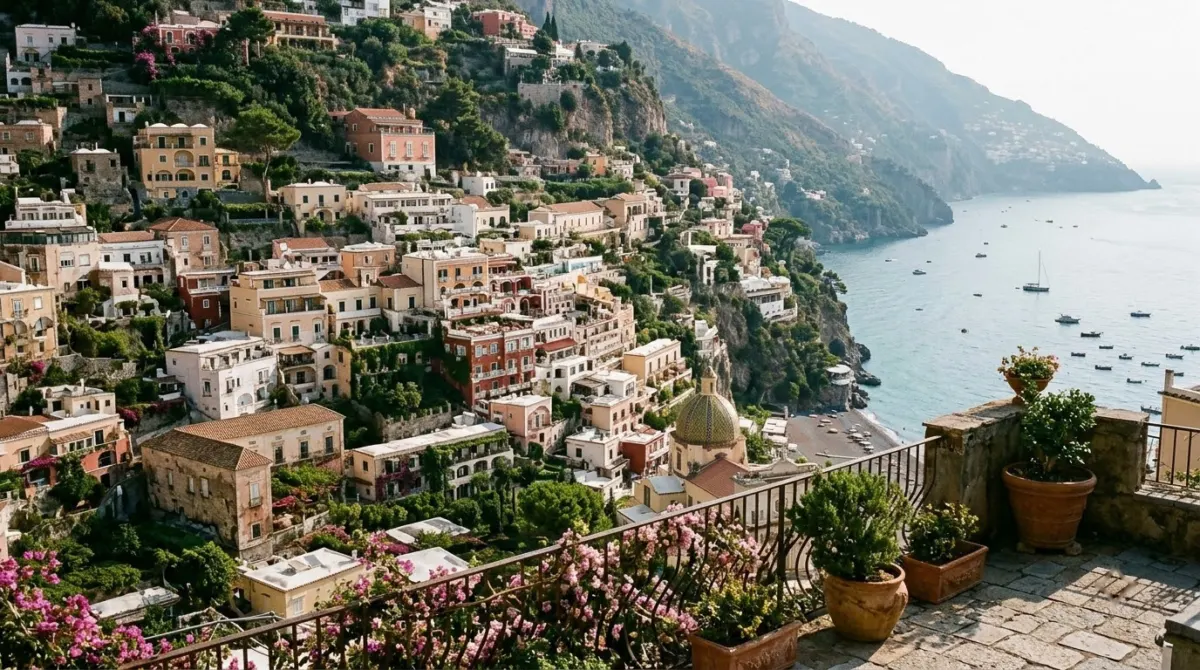
Positano is built down a cliff, so nearly every room faces outward and the balcony is the room’s main feature. It is worth being specific about it before you book.
What to ask. Whether the balcony is private or shared, whether it fits two chairs and a table or only one chair, and what it faces — the sea, the village, or the wall of the building next door. Listings describe all three as a view.
Where the balconies are best. The upper village and the road above it look straight down the pile of houses to the water, which is the view in every photograph of Positano. Lower down, closer to Spiaggia Grande, the view is wider but flatter, and you are looking along the beach rather than over the village.
The trade. The best balconies are the furthest from the beach and involve the most steps, in both directions, several times a day. That is the whole decision in Positano, and no amount of money removes it.
If Positano is one stop on a longer route, our Amalfi Coast itinerary sets out how the villages connect and how long each is worth.
Where else to stay on this coast
Three alternatives, all with the same views and lower prices.
Praiano, ten minutes east, is quieter and cheaper with the same cliff and sunsets.
Amalfi itself is flatter, larger and better connected by bus and ferry.
Sorrento, on the other side of the peninsula, is a proper town with a railway station, far more rooms and easier access to Naples, Pompeii and Capri.
Our guide to hotels on the Amalfi Coast compares the towns in detail.
Getting there, which affects where you stay
Positano has no railway station. You arrive by SITA bus along the coast road, by ferry from Sorrento, Amalfi or Naples in season, or by private transfer.
If you are arriving by ferry, a property near the bottom of the village saves a long climb with luggage. If you are arriving by bus or car, the top is easier.
That is a real trade-off, and it is worth deciding before you book rather than after.
Driving, and why not to
The SS163 coast road is narrow, cut into the cliff, and shared with full-size buses. Parking in Positano is scarce and expensive, and most properties have none.
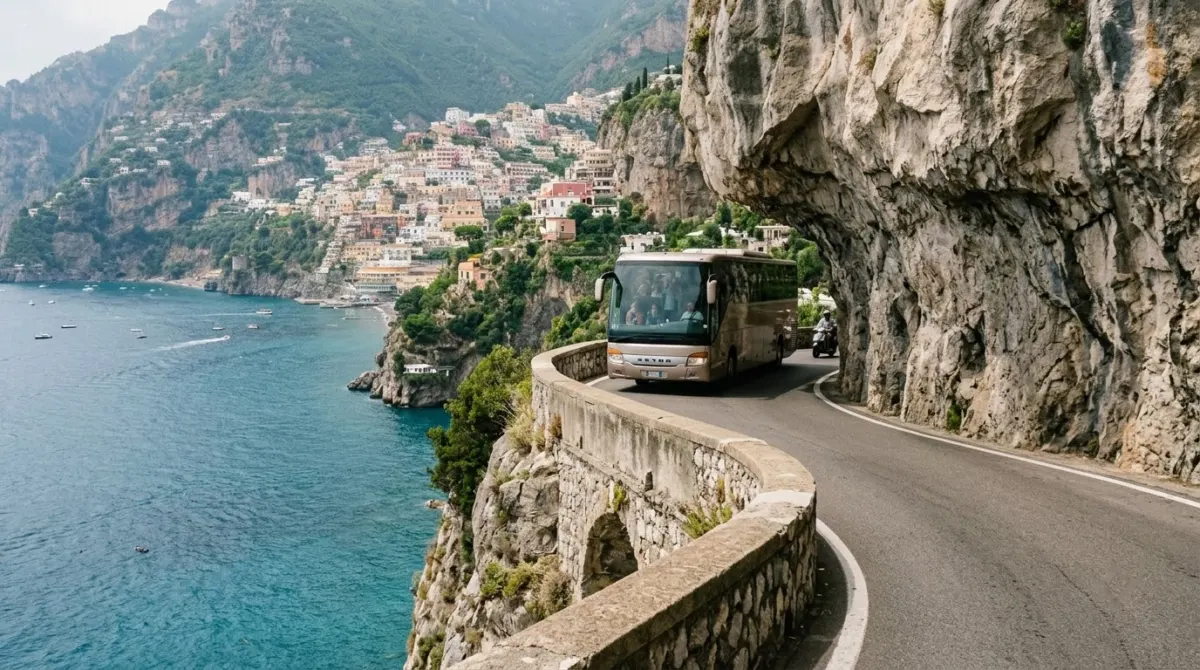
If you are touring southern Italy by car, the sensible pattern is to park it in Sorrento or Salerno and reach the coast by ferry or bus.
When Positano is open, and when it is full
May, June and September are the best months: warm, open and slightly less crowded than peak.
July and August are hot, extremely busy and the most expensive weeks of the year.
April and October are pleasant, with some places still closed or just reopening.
November to March is largely shut. Many hotels, restaurants and the ferries close for the season, and the village is quiet in a way that some people love and most visitors do not expect.
How many nights
Two nights is the minimum that justifies the journey and the steps.
Three is better: one for the village and the beach, one for a boat trip along the coast, and one for Amalfi and Ravello by bus.
More than four and most people are ready for somewhere with a railway station.
What a day in Positano actually looks like
Understanding the rhythm explains why position matters so much.
The village is quiet in the early morning. Day visitors arrive by bus and ferry from mid-morning and the main stepped street becomes a slow queue of people in both directions. By late afternoon the ferries leave, and by evening the village belongs to the people staying in it.
If your accommodation is near the top, you will do that descent and climb once a day rather than twice. If it is near the bottom, you will be at the beach in two minutes and climbing to the bus with luggage at the end.
Neither is wrong; they are different trips, and worth choosing deliberately.
Beaches, and what they cost
Spiaggia Grande is the main beach below the village, part free and part private beach club with sunbeds for hire.
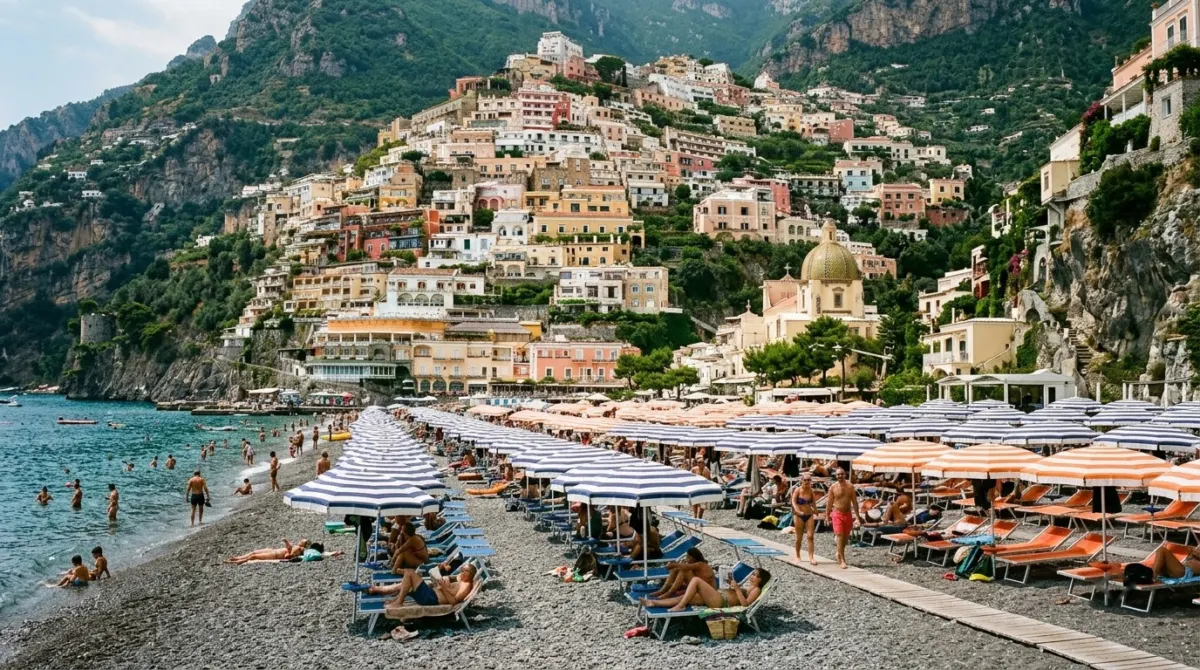
Fornillo, a few minutes west along a cliff path, is smaller and quieter.
Beaches along this coast are pebble rather than sand, and the private clubs charge by the day for two beds and an umbrella. The free sections are narrow and fill early in summer.
Boats from the beach reach smaller coves that cannot be walked to, which is the better way to swim in August.
Eating in Positano
Expensive, often very good, and concentrated in two places: along the beach, where you pay for the position, and in the upper village, where locals eat.
Book dinner in summer, including at your own hotel if it has a restaurant. In a village this small the tables run out.
If you are staying several nights, a day trip to Amalfi or Atrani by bus or ferry gives you cheaper and equally good food.
How Positano fits a southern Italy trip
Most visits are two or three nights inside a longer trip taking in Naples, Pompeii, Capri and sometimes Rome.
The practical shape is: Naples or Sorrento for the transport, two or three nights on the coast, and the ferry rather than the bus wherever possible. Our guide to the Amalfi Coast towns compares the alternatives.
What does not work is treating Positano as a base for the region. It has no train, limited parking and a slow road, so day trips cost more time than they do from Sorrento or Salerno.
Positano with limited mobility
Said plainly: Positano is difficult, and for some visitors it is not practical.
The village is built on a cliff with stepped streets and no level route between the road and the beach. There is a small internal bus that loops between the upper road and the lower village, which helps, and some hotels have lifts cut into the rock.
If steps are a problem, Amalfi is flat in its centre, Sorrento is flat throughout and both are on the same coast with the same ferries. That is a better answer than hoping a Positano hotel will work.
Arriving with luggage
Worth planning rather than improvising.
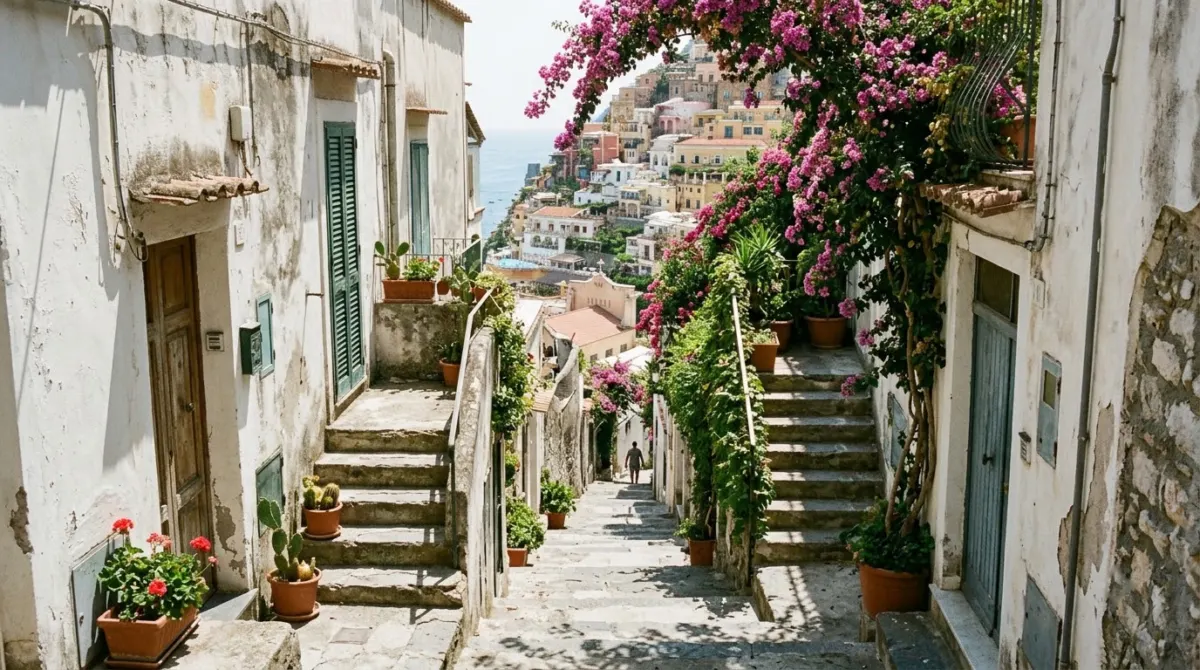
If you arrive by bus, you are dropped on the coast road at the top and walk down. If you arrive by ferry, you land at the beach and walk up. Either way there are steps, and in summer there is heat.
Most hotels will meet you or send a porter if you tell them your arrival time, and some have small electric vehicles that can use the narrow lanes. Ask when you book rather than on the day.
Travel light if you can. A hard suitcase on Positano’s steps is a memorable mistake.
One night, two nights or three
One night is enough to see the village and swim, and it means doing the steps twice with luggage for a single evening. Most people regret it.
Two nights is the sensible minimum: an afternoon on arrival, a full day for the beach and a boat, and a relaxed departure.
Three nights adds a day for Amalfi and Ravello by bus or ferry, and an evening with no plan at all, which in Positano is the point.
The short version
Before anything else, ask how many steps separate the road from the door, whether a porter will carry your bag, whether a vehicle can reach the entrance, and whether the place is open in your month. Pay for the position rather than the room, because the view is the product here. Two or three nights, arriving by ferry if you can, and Praiano, Amalfi or Sorrento if the price or the steps are the obstacle.
Frequently asked questions
What should I check before booking a hotel in Positano?
How many steps from the road to the door, whether there is a porter service, whether a vehicle can reach it, and whether it is open at all on your dates. The village is built down a cliff and a large share of it closes from November to March.
Is Positano difficult to walk around?
Yes. It is built down a cliff with hundreds of steps and almost no flat ground. Going down to the beach is easy and coming back is a climb, which is why the position of your accommodation matters more than the room.
Is Positano worth the price?
For two or three nights, if the setting is what you came for — there is nowhere else quite like it. For a longer stay, Praiano is quieter and cheaper with the same views, and Sorrento has a railway station and far more rooms.
When does Positano close for the season?
Roughly November to March. Many hotels and restaurants shut and the ferries stop, so check directly that your accommodation and a nearby restaurant are open on your dates rather than assuming.
Should I drive to Positano?
Not if you can avoid it. The coast road is narrow and shared with buses, parking is scarce and expensive, and most properties have none. Park in Sorrento or Salerno and arrive by ferry or SITA bus.
How many nights should I spend in Positano?
Two at minimum and three to do it properly — the village and beach, a boat trip along the coast, and a day for Amalfi and Ravello. Beyond four nights most people want somewhere with a train station.
Keep planning Italy
- Best Hotels in Taormina: The Town Is Up, the Sea Is Down
- Best Hotels on the Amalfi Coast: Pick the Town First
- Best Hotels in Florence: The ZTL Matters More Than the Stars
- Where to Stay in Verona: Inside the River Loop, or Outside It
- Where to Stay in Tuscany: You Are Choosing a Driving Radius
- Where to Stay in Puglia: Pick the Building, Not the Town
- Where to Stay in Cinque Terre: Ask About the Stairs First
- Where to Stay in Taormina: Up in the Town, or Down at the Beach?
Written and checked by
Triplarks Editorial
An editorial desk, not an invented persona: research, drafting and fact-checking are done by the same small team. Every number here carries the date it was read.