Quick answer
Choose the town before the hotel. Positano for the setting, Amalfi for transport and an easier stay, Ravello for quiet above the coast, Praiano for value, Sorrento or Salerno for a railway station and far more rooms.
On this page
- Best hotels on the Amalfi Coast: the towns compared
- Positano
- Amalfi
- Ravello
- Praiano and the smaller villages
- Sorrento and Salerno
- What the accommodation is like
- Four things to check before booking
- Getting around
- When to go
- How long to spend on the coast
- The boat trips worth taking
- Walking the coast
- Eating, and what the coast is known for
- Getting to the coast
- With children, and in peak season
- Ravello, and who it suits
- Atrani, the village nobody books
- What each town costs, relatively
- The short version
- Frequently asked questions
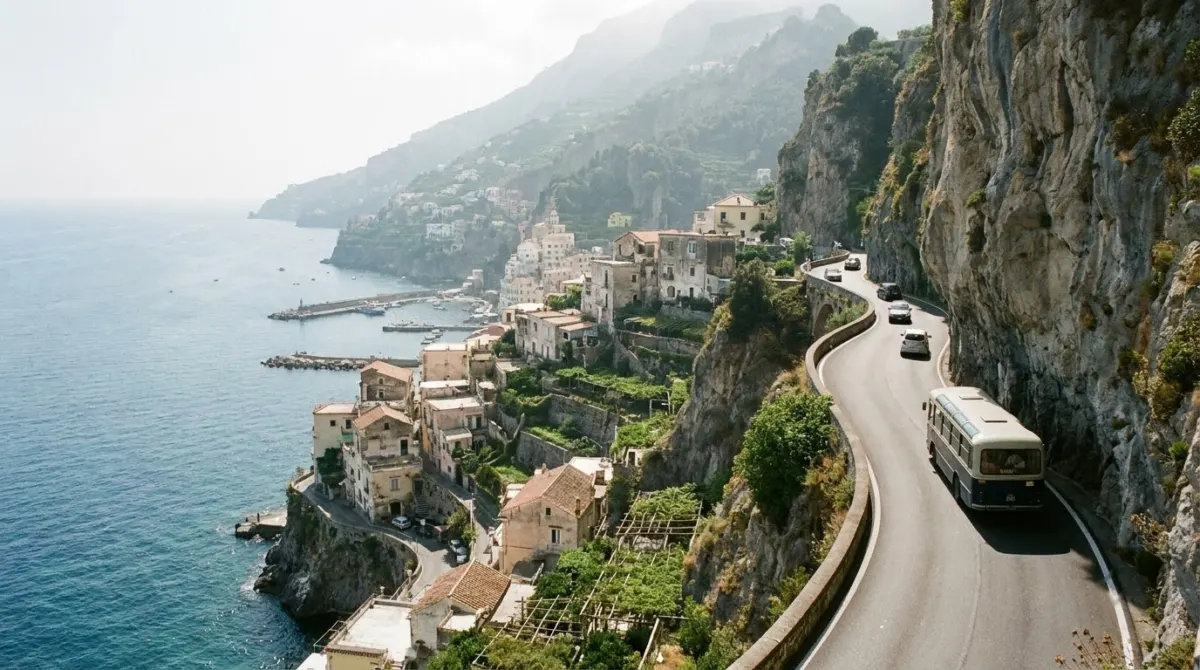
The Amalfi Coast is not one place. It is a string of villages along fifty kilometres of cliff, joined by one narrow road, and the town you choose changes the trip far more than the hotel does.
Some links below are affiliate links. We may earn a commission if you book through them, at no extra cost to you. We do not rank hotels, and any prices on the map come live from the booking sites.
This guide compares the towns, explains what the accommodation is actually like, and covers the practical constraints — steps, buses, ferries and seasonal closure — that decide whether a stay works. For the town question first, see which town to base in and where to stay in Positano.
Best hotels on the Amalfi Coast: the towns compared
| Town | Character | Best for |
|---|---|---|
| Positano | Vertical, photogenic, expensive | The view, two or three nights |
| Amalfi | Flat centre, a real town | Buses, ferries, families |
| Ravello | High above the coast, quiet | Gardens, music, calm |
| Praiano | Spread along the cliff, residential | Value and sunsets |
| Sorrento | Town with a railway station | Access to everything |
| Salerno | Working city, cheapest | Transport and budget |
Positano
The famous one, built down a cliff in tiers of pastel houses. The setting is extraordinary and the practical cost is steps — hundreds of them between the road and the beach.
Expensive, crowded in season, and worth two or three nights. See our guide to hotels in Positano.
Map shows live availability and prices. We may earn a commission on bookings made through it, at no extra cost to you.
Amalfi
The old maritime republic, with a flat centre around a cathedral at the top of a wide staircase. It is the transport hub of the coast: the SITA buses meet here and the ferries dock in the harbour.
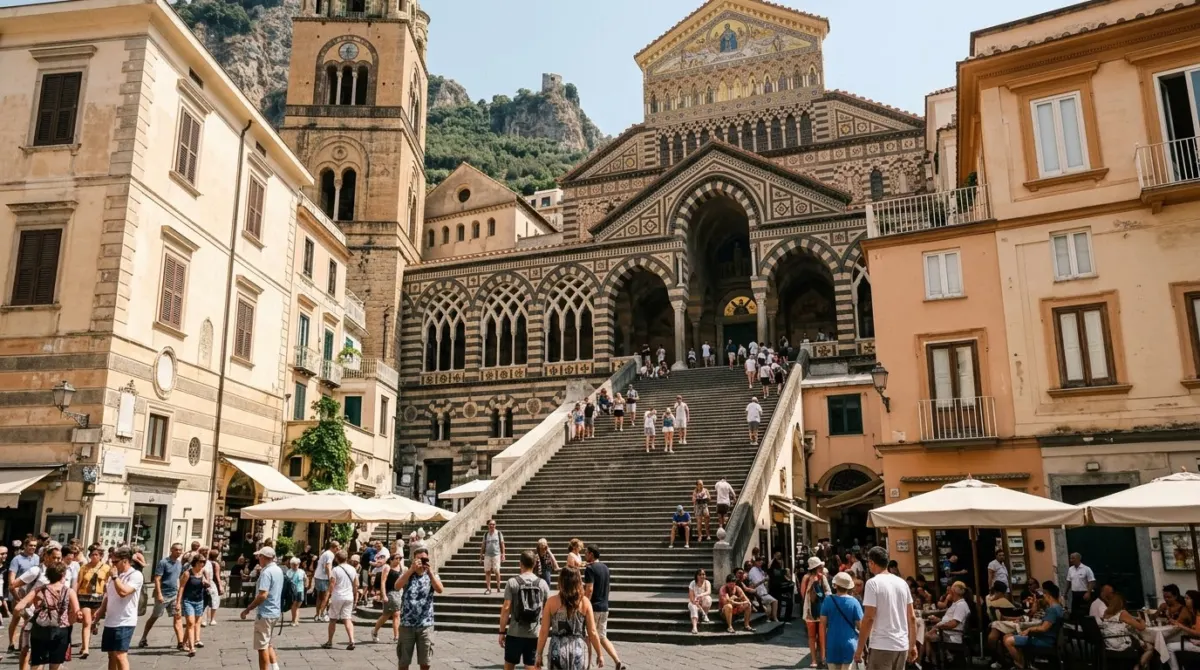
Less photogenic than Positano and much easier to live in, particularly with children or luggage.
Ravello
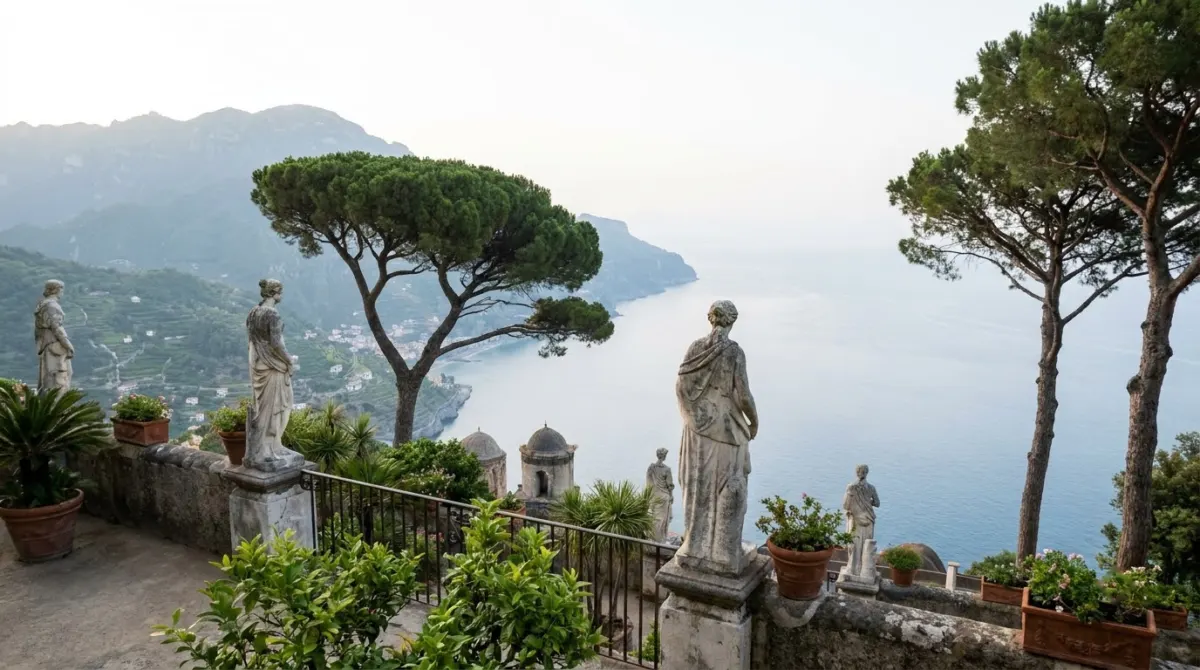
About 350 metres above Amalfi on a hairpin road, Ravello is quiet, cool in summer and famous for two garden villas and a summer music festival.
Staying here means you are away from the beaches and above the crowds. It suits people who want to read on a terrace rather than swim.
Praiano and the smaller villages
Praiano sits between Positano and Amalfi, spread along the cliff with no real centre. It is cheaper than either, it has the best sunsets on the coast, and it needs the bus for almost everything.
Furore, Conca dei Marini and Atrani are smaller still. Atrani in particular — a tiny village a few minutes’ walk from Amalfi — is the quiet alternative that keeps the convenience.
Sorrento and Salerno
Neither is on the Amalfi Coast proper, and both are sensible bases.
Sorrento has a railway station with trains to Naples and Pompeii, ferries to Capri and the coast, far more accommodation and lower prices. It is a town rather than a village.
Salerno, at the eastern end, is a working city with the cheapest rooms, a long seafront and fast trains to Naples and the south.
If this is a first visit and you want to see the whole coast rather than one village, either beats a cliff address.
What the accommodation is like
Cliff hotels are built in terraces, which means lifts inside the building and steps outside it. Rooms are often small and the terrace is the point.
Family-run pensioni survive in the smaller villages and are the best value on the coast.
Apartments are widespread and suit longer stays, particularly in Amalfi and Praiano.
Villas with pools exist above the coast road and need a car or a driver.
Four things to check before booking
Steps from the road. The single most useful question anywhere on this coast.
Porter service, if there are steps.
Parking, if you are driving — most properties have none and public parking is scarce and expensive.
Seasonal opening. Much of the coast closes from November to March, including ferries.
Getting around
SITA buses run the coast road and are the main public transport. They are crowded in summer and the road is slow.
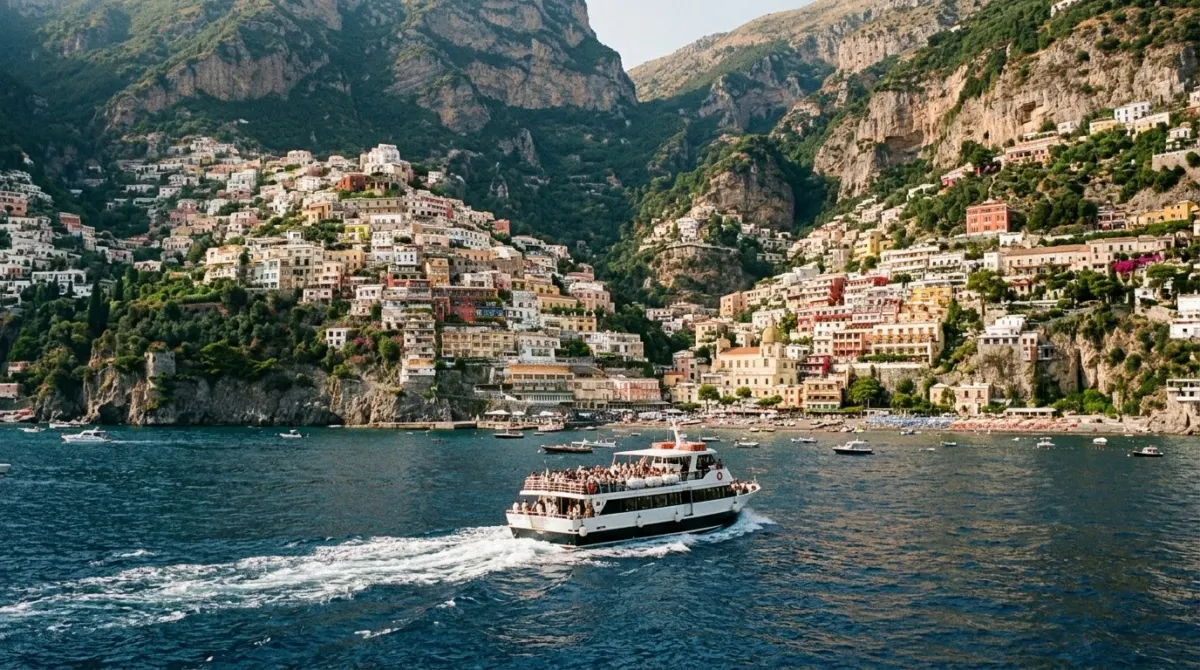
Ferries link Positano, Amalfi, Sorrento, Salerno and Capri from roughly April to October, and they are faster, cooler and more pleasant than the bus.
Driving the SS163 is spectacular and stressful: narrow, cut into the cliff, shared with full-size buses, with almost nowhere to park at the end.
When to go
May, June and September are the best months.
July and August are hot, very crowded and the most expensive.
April and October are quieter, with some places closed.
November to March is largely shut, and the coast ferries stop.
How long to spend on the coast
Three nights is the sensible minimum: one for your own town, one for a boat along the coast, one for Ravello and Amalfi.
Five nights lets you add Capri as a day trip by ferry, a walk on the Path of the Gods above Positano, and a day doing nothing.
A week is comfortable if you are swimming and eating rather than sightseeing, and if you accept that the coast is small and you will see it twice.
The boat trips worth taking
The coast looks better from the water than from the road, and the boat is also faster.
Scheduled ferries link Positano, Amalfi, Sorrento, Salerno and Capri from roughly April to October, and they double as sightseeing.
Small-boat tours from Positano and Amalfi reach coves and grottoes that have no road access, which in August is the only way to swim without a crowd.
Capri is a day from anywhere on the coast, and it is far better early or late than in the middle of the day when the cruise passengers arrive.
Walking the coast
The Amalfi Coast has a network of old mule paths connecting the villages up the slope, and they are the best thing here that costs nothing.
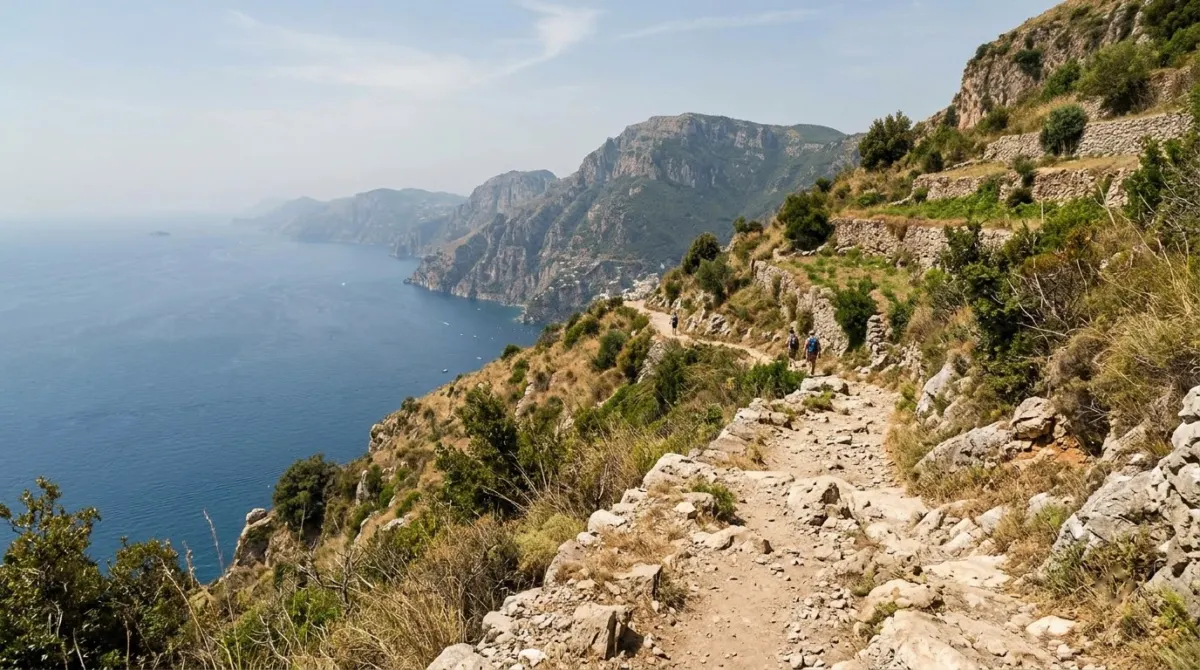
The Path of the Gods from Bomerano to Nocelle above Positano is the famous one: about seven kilometres, mostly downhill in that direction, with the coast below you the whole way.
Shorter sections connect Amalfi with Atrani, Ravello and the Valle delle Ferriere. Walking boots rather than sandals, and water, since the paths are exposed.
Eating, and what the coast is known for
Lemons, anchovies and buffalo mozzarella from the plain behind Salerno. The lemons are the Sfusato Amalfitano, which are enormous, and they turn up in everything from pasta to limoncello.
Prices are highest on the waterfronts in Positano and Amalfi and fall sharply one street back or one village along. Atrani, five minutes’ walk from Amalfi, is noticeably cheaper than Amalfi itself.
Book dinner in July and August everywhere.
Getting to the coast
The Amalfi Coast has no railway. Every arrival involves a change somewhere.
From Naples: train to Sorrento on the Circumvesuviana, then bus or ferry; or train to Salerno and ferry west along the coast.
From Rome: fast train to Naples or Salerno, then as above. Allow most of a day.
From Naples airport: direct buses run to Sorrento, and private transfers to the coast villages.
The ferry from Salerno is the most pleasant approach and the one that avoids the coast road entirely.
With children, and in peak season
Families do better in Amalfi, Sorrento or Praiano than in Positano or Ravello: flatter ground, easier beach access, and rooms with space.
In July and August the coast is at its most difficult: the road is slow, the buses are full, the beaches fill by mid-morning and the heat is serious. If you can only travel in those months, favour a place with a pool and use the ferries rather than the buses.
May, June and September are better in every respect except water temperature in May.
Ravello, and who it suits
Ravello is the outlier on this coast and worth understanding before dismissing it.
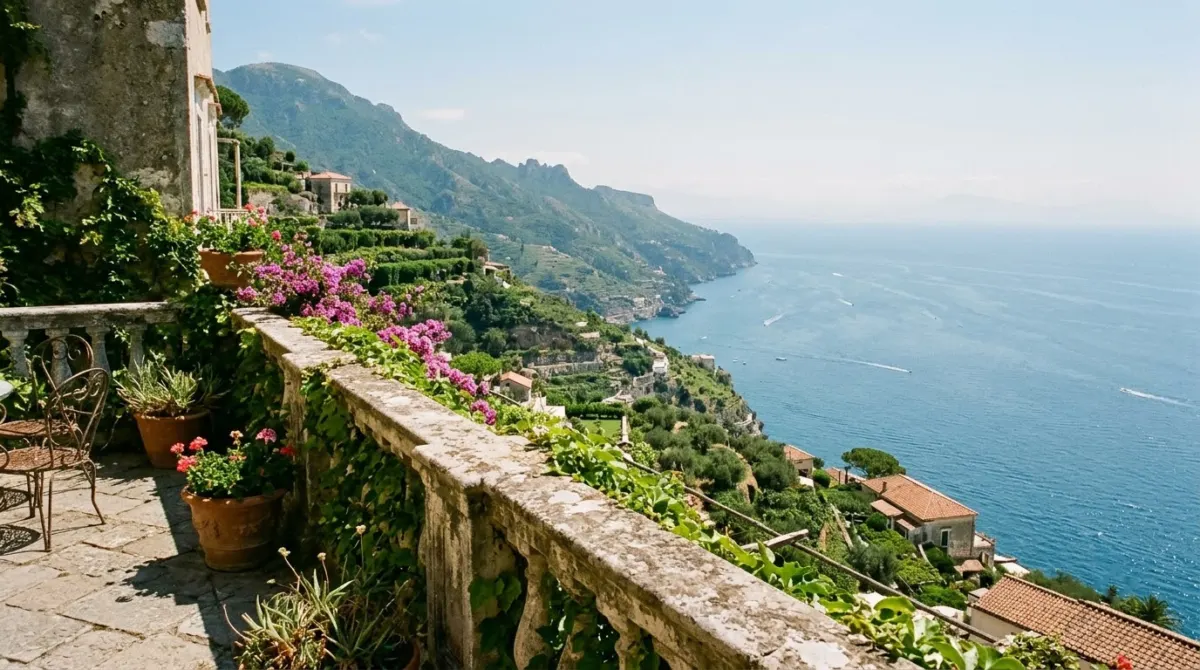
It sits about 350 metres above Amalfi on a hairpin road, which means no beach, cooler air in August, and a village that empties in the evening when the day visitors leave.
What it has instead: two garden villas with terraces that look straight down the coast, a summer music festival held outdoors above the drop, and quiet.
It suits people who want to read, eat well and look at a view, and it suits nobody who wants to swim before breakfast.
Atrani, the village nobody books
Atrani is a few minutes’ walk round the headland from Amalfi and is a separate village: a small square, a beach, a church, and almost no hotels.
It is quieter and cheaper than Amalfi while being close enough to use Amalfi’s buses and ferries, which makes it the best value address on the central coast. Accommodation is mostly apartments and small guesthouses, and it books out early because the supply is tiny.
What each town costs, relatively
The price gradient along this coast is steep and predictable.
Positano and Ravello are the most expensive, and Positano by a distance in high season.
Amalfi sits in the middle, with more rooms and therefore more range.
Praiano, Atrani and the smaller villages are noticeably cheaper for the same views.
Sorrento is cheaper again and has far more supply, which also makes it easier to book late.
Salerno is the cheapest by a wide margin and the least scenic to come back to.
The short version
Choose the town before the hotel: Positano for the setting, Amalfi for transport, Ravello for quiet, Praiano for value, Sorrento or Salerno for trains and lower prices. Check the steps, the porter, the parking and whether the place is open in your month. Use the ferries rather than the bus, and do not bring a car.
Frequently asked questions
Which town should I stay in on the Amalfi Coast?
Positano for the setting if you accept the steps and the price, Amalfi for transport and an easier stay, Ravello for quiet above the coast, Praiano for value. Sorrento or Salerno if you want a railway station and more rooms.
Is it better to stay in Positano or Amalfi?
Amalfi is flatter, better connected and easier with luggage or children; Positano is more beautiful and more expensive with hundreds of steps. For a first visit covering the whole coast, Amalfi is the practical base.
Should I stay in Sorrento instead of the Amalfi Coast?
If you want trains, ferries to Capri, more accommodation and lower prices, yes. Sorrento is not on the Amalfi Coast but it reaches all of it, plus Pompeii and Naples, which no coast village does.
Do I need a car on the Amalfi Coast?
No, and it is a liability. The coast road is narrow and shared with buses, parking is scarce and expensive, and most hotels have none. SITA buses and seasonal ferries cover the coast.
When does the Amalfi Coast close?
Roughly November to March, when many hotels and restaurants shut and the ferries stop running. Check directly that your accommodation and somewhere to eat are open on your dates.
What should I check before booking on the Amalfi Coast?
How many steps lie between the road and the door, whether there is a porter service, whether parking exists if you are driving, and whether the property is open at all in your month.
Keep planning Italy
- Best Hotels in Taormina: The Town Is Up, the Sea Is Down
- Best Hotels in Positano: Count the Steps Before the Stars
- Best Hotels in Florence: The ZTL Matters More Than the Stars
- Where to Stay in Verona: Inside the River Loop, or Outside It
- Where to Stay in Tuscany: You Are Choosing a Driving Radius
- Where to Stay in Puglia: Pick the Building, Not the Town
- Where to Stay in Cinque Terre: Ask About the Stairs First
- Where to Stay in Taormina: Up in the Town, or Down at the Beach?
Written and checked by
Triplarks Editorial
An editorial desk, not an invented persona: research, drafting and fact-checking are done by the same small team. Every number here carries the date it was read.