Quick answer
Bloomsbury for the best central balance, South Bank for modern rooms and the river, South Kensington for the museums, King’s Cross or Paddington for value and transport, and Shoreditch for the evening.
On this page
- Where to stay in London: the short answer
- Covent Garden and Soho
- Bloomsbury
- South Bank and Southwark
- South Kensington and Kensington
- King’s Cross and Paddington
- Shoreditch and the east
- Westminster and St James’s
- The City of London
- Victoria, Pimlico and Belgravia
- Chelsea, Knightsbridge and Earl’s Court
- Mayfair, Notting Hill and the west
- Islington, Angel and Clerkenwell
- Camden and Hampstead
- Greenwich and the river east
- Stratford and the Olympic Park
- Battersea and Nine Elms
- Richmond and Kew, for a slower stay
- Public transport, and what is walkable from where
- Zone 2, and why it is often the right answer
- What a London hotel room is like
- Apartments, aparthotels and the 90-night rule
- Getting in from the airports
- Where not to stay
- What London costs, and where the value is
- When London fills up
- Choosing by what you came for
- London with children: what changes the choice
- How many nights, and where they go
- Zones, lines and what actually matters
- Arriving with luggage
- Step-free London: choosing a base with limited mobility
- Arriving by car, and why to leave it
- Staying near a mainline station for day trips
- Concerts, matches and conferences: where to base yourself
- Marylebone and Fitzrovia
- The short version
- Frequently asked questions
London is enormous and its hotel rooms are small. Those two facts shape every accommodation decision here, and they pull in opposite directions: the central districts where you want to be have the oldest buildings and the tightest rooms, and the places with space are a long way out.
Some links below are affiliate links. We may earn a commission if you book through them, at no extra cost to you. We do not rank hotels, and any prices on the map come live from the booking sites.
The good news is that the Underground makes almost any zone 1 or inner zone 2 address workable. The question is which one. For the next city on a longer trip, see where to stay in Edinburgh or where to stay in Dublin.
Where to stay in London: the short answer
| If you are | Stay in | Why |
|---|---|---|
| Here three nights, first visit | Covent Garden, Bloomsbury or South Bank | Walk to a great deal of it |
| Here for the museums | South Kensington | Three major museums on one street |
| Wanting value and transport | King’s Cross or Paddington | Stations, airport links, cheaper |
| Here for bars and food | Shoreditch or Soho | The evening is outside the door |
| With family | South Kensington or Bloomsbury | Parks, museums, quieter streets |
| On a budget | Inner zone 2 on a tube line | Ten minutes in, a third less |
One answer with no caveats: Bloomsbury. Central, quieter than the West End, walking distance to the British Museum and Covent Garden, and on several tube lines with King’s Cross ten minutes away.
Covent Garden and Soho
The middle of the West End: theatres, restaurants, the opera house and the market.
Staying here means you can walk out of a show and be in bed in ten minutes, which is the main argument. It also means noise — Soho in particular is loud until the small hours — and the highest prices in the city for the smallest rooms.
Good for two or three nights of theatre and eating. Less good for sleep.
Bloomsbury
North of Covent Garden, Bloomsbury is Georgian squares, the university and the British Museum.
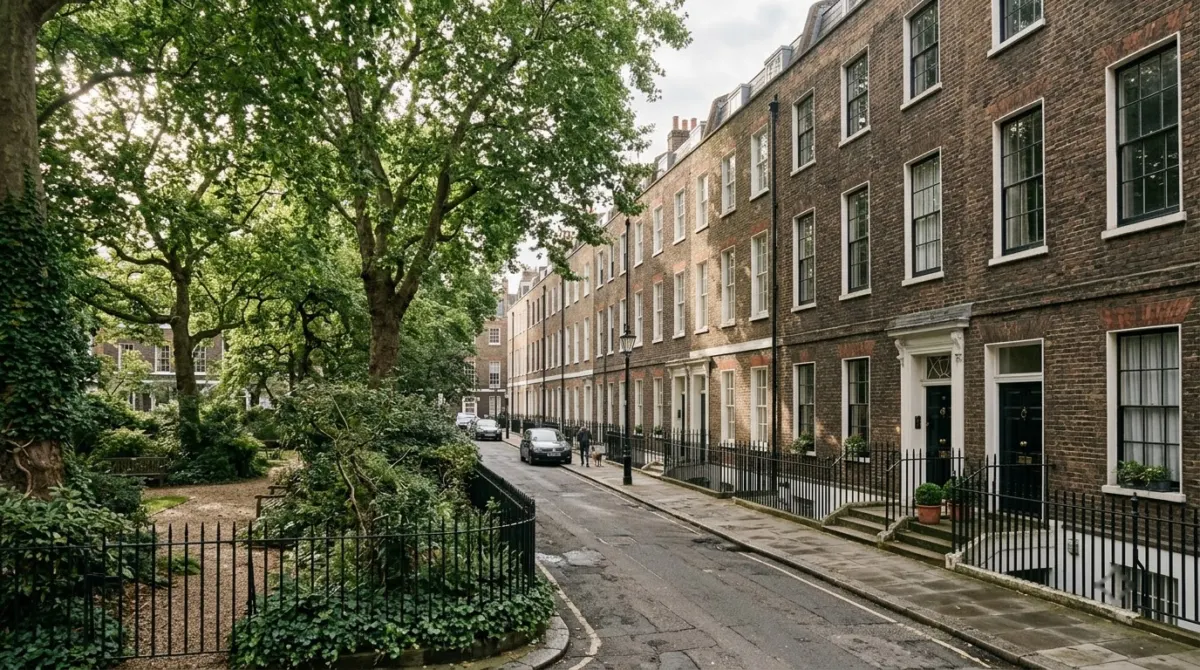
It is central without being in the entertainment district, the garden squares make it noticeably calmer, and it has a long tradition of mid-range hotels in converted townhouses.
For most visitors this is the best balance of position, quiet and price.
The transport is quietly excellent. Russell Square is on the Piccadilly line, which runs direct to Heathrow without a change; Holborn adds the Central line; and Tottenham Court Road, on the district’s western edge, has the Elizabeth line as well as the Central and Northern lines. Few areas give you all three of the city’s fastest east-west routes within a ten-minute walk.
South Bank and Southwark
The south side of the river between Westminster and Tower Bridge: the Tate Modern, the National Theatre, Borough Market and the walk along the Thames.
It is a short walk over a bridge to the West End and the City, and the riverside path is the best walking in central London.
Hotels here are mostly modern, which means larger rooms and reliable lifts — a genuine advantage in this city.
Check which end of the stretch your room is at, because the stations are at the ends. Waterloo has the Jubilee, Northern and Bakerloo lines plus trains to the south-west; London Bridge has the Jubilee and Northern lines and Thameslink trains direct to Gatwick. The middle, around Bankside and Tate Modern, is lovely on foot but a ten-minute walk from the nearest tube at Southwark or Blackfriars.
South Kensington and Kensington
West of the centre, this is the museum quarter: the Natural History Museum, the Science Museum and the V&A are all on one street, and all are free.
Hyde Park is five minutes north. The streets are white stucco terraces and the area is quiet at night.
It is twenty minutes by tube from the West End, which is the trade. For families it is the easiest central address in London.
South Kensington station has the Piccadilly, District and Circle lines, and the Piccadilly runs direct to Heathrow, so for a family arriving with luggage it is one of the few central districts with no change on the way in. A pedestrian tunnel from the station leads toward the museums, which helps on a wet morning, and the Royal Albert Hall is a short walk north.
King’s Cross and Paddington
Two station districts that have improved enormously and remain better value than the West End.
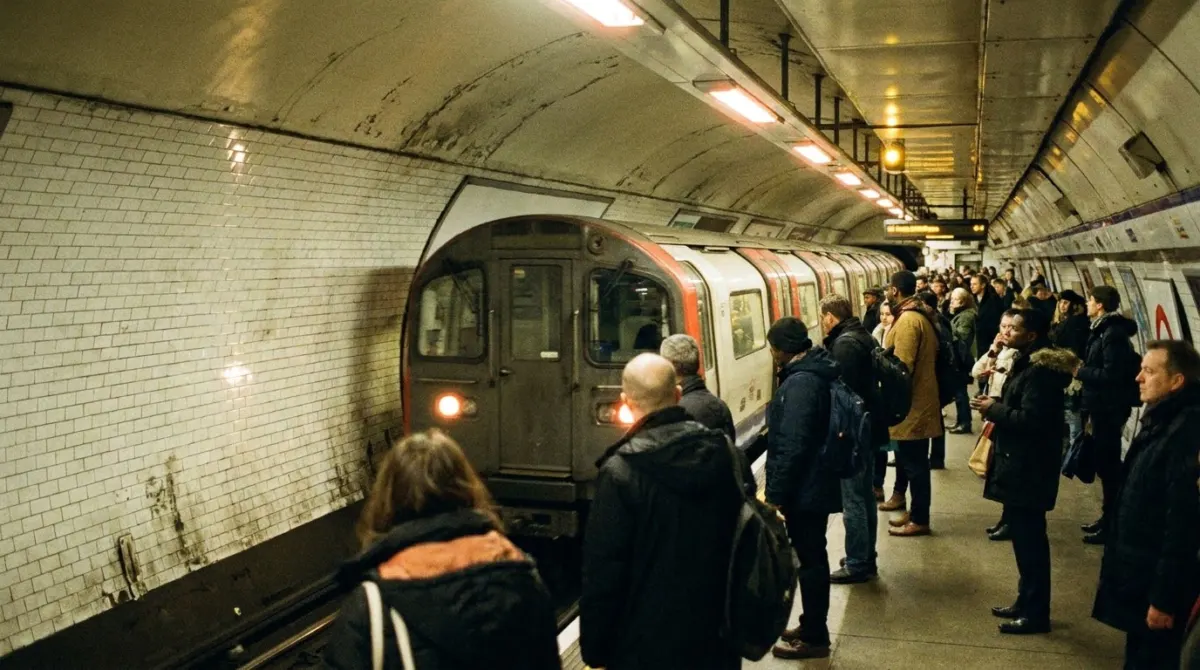
King’s Cross has the Eurostar, six tube lines, the British Library and a rebuilt canal-side quarter behind it.
Paddington has the Heathrow Express and the lines west, with Hyde Park five minutes away.
Both put you fifteen minutes from the centre and cost noticeably less. For a short trip with an early flight, either is sensible.
The airports favour both. From King’s Cross St Pancras, the Piccadilly line runs direct to Heathrow and Thameslink trains to Gatwick and Luton Airport Parkway; from Paddington, the Elizabeth line is the cheaper alternative to the Heathrow Express. Behind King’s Cross, Granary Square and Coal Drops Yard have turned the old goods yards on the Regent’s Canal into one of the better places in London to eat outdoors.
Shoreditch and the east
North-east of the City, Shoreditch is the nightlife and street-art district, with Spitalfields and Brick Lane beside it.
It is twenty minutes from the West End and it is where a large share of London’s eating and drinking actually happens.
Loud at weekends, cheaper than the centre, and the right choice if your evenings matter more than your mornings.
Shoreditch High Street station is on the London Overground, and Liverpool Street, a ten-minute walk south, has the Elizabeth and Central lines, which together reach the West End, Heathrow and Stratford. Weekends are when the area is at its best: Brick Lane and Old Spitalfields Market are busiest on Sundays, and the Columbia Road flower market fills a narrow street on Sunday mornings.
Westminster and St James’s
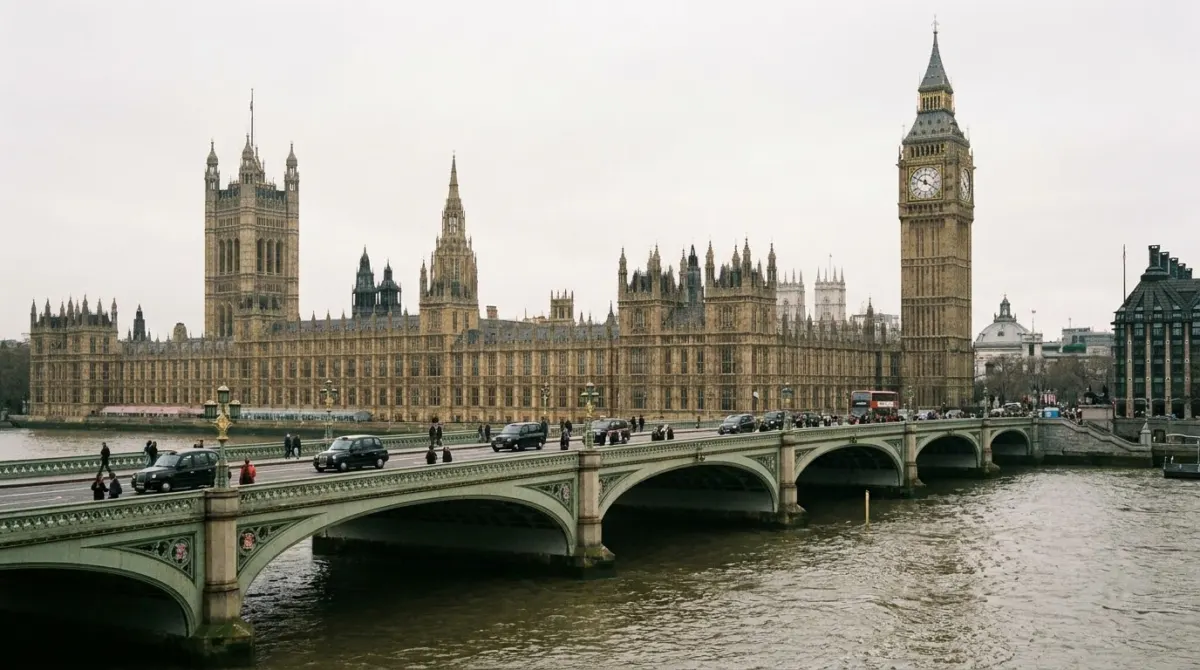
The postcard district: the Houses of Parliament and the Elizabeth Tower, Westminster Abbey, Whitehall and Horse Guards, St James’s Park, and Buckingham Palace at its far end. On a first visit you will spend at least a day here whichever district you book.
Staying here is a different question. Westminster is mostly government buildings, and once the offices empty, the streets around Parliament Square go quiet early, with fewer restaurants and pubs than anywhere else in zone 1. St James’s, north of the park, is quieter again: private members’ clubs, old shops on Jermyn Street, and expensive hotels between Pall Mall and Piccadilly.
The transport is excellent. Westminster station has the Jubilee, District and Circle lines; Green Park has the Victoria, Jubilee and Piccadilly lines; and the Jubilee line reaches London Bridge, the South Bank and Canary Wharf in minutes. Waterloo is a walk across Westminster Bridge.
It suits a short trip built around the royal and political sights, early risers who want the Abbey and the Changing of the Guard before the crowds, and anyone who values a quiet evening over a lively one. It suits less well if you want restaurants outside the door. Most visitors are better served by Covent Garden or the South Bank, ten to fifteen minutes’ walk away, with Westminster as a day out.
The City of London
The Square Mile is London’s financial district and its oldest part: the Roman and medieval city, now a mix of glass towers, Wren churches, St Paul’s Cathedral, the Tower of London on its eastern edge, Leadenhall Market and the Barbican.
Its character changes completely across the week. Monday to Thursday it is full of office workers, and hotel demand follows business travel. On Friday evening it empties, and at weekends many streets are almost silent, many cafes and pubs close, and room rates often drop because the business customers have gone home.
That rhythm makes the City an underrated choice for a weekend. You get a central base in a quiet street, a short walk to the Tower, St Paul’s and the Millennium Bridge over to Tate Modern. The Sky Garden, a public garden and viewing floor near the top of a tower on Fenchurch Street, is free but needs reserving ahead.
The transport is dense. Bank has the Central, Northern and Waterloo & City lines and the DLR. Liverpool Street and Farringdon have the Elizabeth line, which runs direct to Heathrow in one direction and to Canary Wharf and Stratford in the other. Tower Hill has the District and Circle lines.
The trade-off is that at weekends the evening has to be found elsewhere, usually in Shoreditch and Spitalfields just to the north, or across the river in Southwark. Midweek, the City is busy and practical; at weekends, it is one of the best-value central addresses in London.
Victoria, Pimlico and Belgravia
Three districts around one of London’s busiest stations, and very different from one another.
Victoria itself is a transport hub: the Victoria, District and Circle lines, the Gatwick Express and Southern trains to Gatwick and the south coast, and Victoria Coach Station for long-distance buses. The streets right by the station are busy and functional, with a large stock of mid-range chain hotels and small guest houses on the terraces to the south and west. Buckingham Palace is a ten-minute walk.
Pimlico, to the south-east toward the river, is a residential grid of white stucco terraces, quiet at night and reasonably priced for zone 1. It has its own station on the Victoria line, and Tate Britain on Millbank is free and rarely crowded.
Belgravia, to the west, is embassies, garden squares and some of the most expensive streets anywhere. It is very quiet and very central, almost entirely at the luxury end of the market, with Knightsbridge and Hyde Park beside it.
Victoria and Pimlico suit a first visit on a moderate budget, especially if you are flying from Gatwick or planning a day trip to Brighton by train. The Victoria line is one of the fastest on the network and reaches Green Park, Oxford Circus and King’s Cross in minutes. The trade-off is that the immediate station area has little charm, so choose a street a few minutes away rather than one facing the station.
Chelsea, Knightsbridge and Earl’s Court
The south-west of central London runs from the luxury of Knightsbridge to some of the best-value rooms in zone 1 at Earl’s Court, within a couple of miles.
Knightsbridge sits on the south side of Hyde Park, with the big department stores, and the V&A and the Natural History Museum a short walk west. It is on the Piccadilly line, which runs direct to Heathrow one way and to Piccadilly Circus and Covent Garden the other. Hotels here are mostly high-end.
Chelsea follows the King’s Road from Sloane Square, with garden squares, mews houses, the Saatchi Gallery and the Royal Hospital Chelsea, whose grounds host the RHS Chelsea Flower Show each May. Much of Chelsea is a long walk from the nearest tube, and Sloane Square on the District and Circle lines is the main station, so check the distance before you reserve.
Earl’s Court, further west, is the budget end: a long-established district of converted townhouses, small hotels and hostels, with the District and Piccadilly lines at its station and a direct run to Heathrow. It has no major sights of its own, but South Kensington’s museums are a couple of stops away.
The area as a whole suits travellers who want a calmer, residential base with Heathrow on a direct line. The trade-off is distance from the East End and the City, which are thirty minutes or more away, and an evening scene that is more restaurant than nightlife.
Map shows live availability and prices. We may earn a commission on bookings made through it, at no extra cost to you.
Mayfair, Notting Hill and the west
Three areas that come up constantly and suit quite different trips.
Mayfair is the grandest address in central London, between Hyde Park and Regent Street. It is quiet at night, walkable to Buckingham Palace and the Royal Academy, and almost entirely at the top of the market. What you are paying for is position and silence, not space.
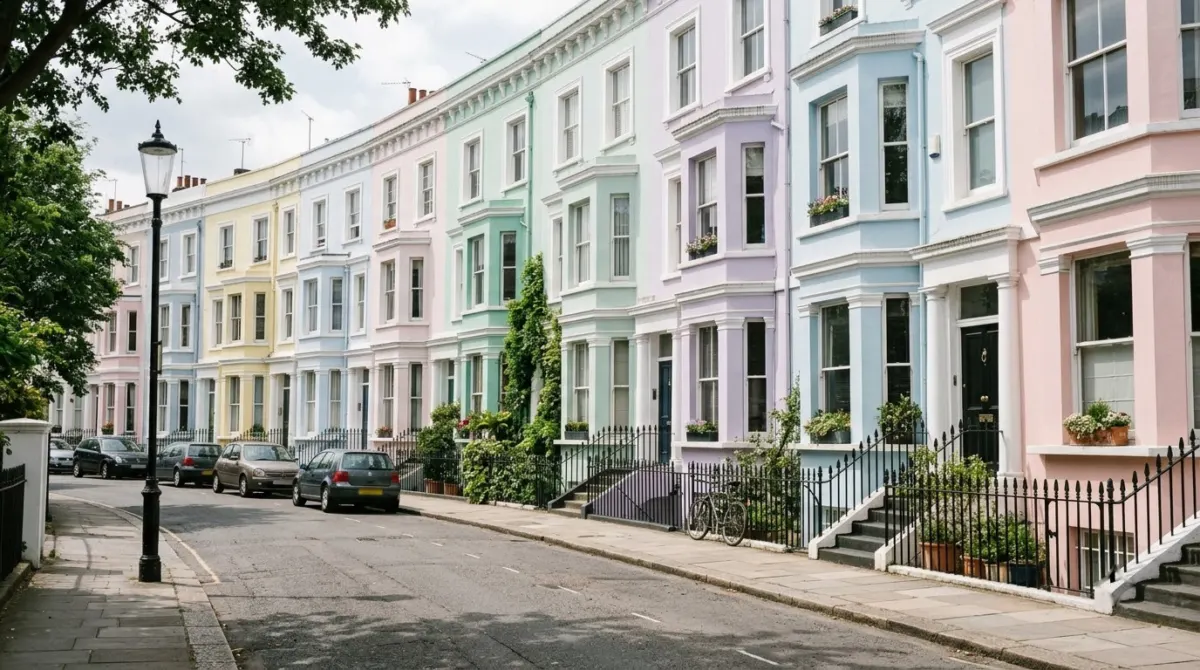
Notting Hill is residential, pastel-fronted and twenty minutes west on the Central line. Portobello Road market runs on Saturdays and the area empties of visitors by evening. It suits a second visit more than a first, because you commute in to everything.
Bayswater and Paddington sit between the two and are the value option on this side of the city, with the Heathrow train on the doorstep.
Further out, Camden is cheap, loud and good for music; Canary Wharf is modern, well connected and empty at weekends, which makes it a poor choice for a sightseeing trip and a reasonable one for a business stay.
Islington, Angel and Clerkenwell
North of the City and east of King’s Cross, these are the inner-London neighbourhoods where many Londoners would choose to live, and they suit a second visit, or a first one where food matters more than landmarks.
Islington centres on Upper Street, a long run of restaurants, pubs and small theatres from Angel up to Highbury Corner. Angel station is on the Northern line, one stop from King’s Cross and a few from the City; Highbury & Islington has the Victoria line and the London Overground. Georgian squares and the Regent’s Canal towpath give it a quieter side than its main street.
Clerkenwell, just to the south, is older and more compact, with the restaurants of Exmouth Market and the Smithfield area beside it. Its big advantage is Farringdon station, which has the Elizabeth line and Thameslink as well as the Underground, so Heathrow, Gatwick and Luton Airport Parkway are all on direct trains. Sadler’s Wells, the dance theatre, sits between the two districts.
Both are in or on the edge of zone 1, and rooms are generally better value than in the West End. Hotels are fewer and more scattered, though, and apartments are common. What you trade is a walk to the classic sights: the British Museum is about half an hour on foot from Angel, or a short tube ride.
Camden and Hampstead
Two north London districts a few stops apart on the Northern line, with almost nothing else in common.
Camden Town is markets, live music and a young crowd. Camden Market spreads along the Regent’s Canal at Camden Lock, the venues run late, and the High Street is loud from mid-morning to the small hours at weekends. The canal towpath, east to King’s Cross or west past Regent’s Park toward Little Venice, is one of the best free walks in the city. Rooms are cheaper than in the centre, and Euston and King’s Cross are a short ride away.
Hampstead, up the hill, is an old village of brick streets, independent shops and pubs on the edge of Hampstead Heath: nearly 800 acres of grassland, woods and ponds, with the long view over the city from Parliament Hill and Kenwood House, free to enter, at its northern edge. It is quiet, expensive and has very few hotels, so apartments are the usual choice.
Camden suits travellers who want music and markets and do not mind noise. Hampstead suits a longer stay or a repeat visit, when you want to live somewhere green and commute in. Neither is right for a first trip of three nights, because the classic sights are twenty to thirty minutes away, and the Northern line splits into branches at both ends: check the destination on the front of the train before you board.
Greenwich and the river east
Downriver from the City, Greenwich is the most rewarding place to stay outside the centre if you want a base with its own sights. Maritime Greenwich is a UNESCO World Heritage site: the Royal Observatory and the prime meridian, the Old Royal Naval College, the Queen’s House, the Cutty Sark and the National Maritime Museum, all set around Greenwich Park.
The town centre is small and walkable, with a covered market and riverside pubs, and it quiets down in the evening once the day visitors leave. Getting in is easy: the DLR from Cutty Sark station, mainline trains from Greenwich to London Bridge in a few minutes, and the river boats, which turn the commute into a sightseeing trip past the Tower and the South Bank.
Across the river, Canary Wharf is London’s second financial district, all glass towers and modern hotels, with the Jubilee line, the DLR and the Elizabeth line, which crosses the West End to Paddington and on toward Heathrow. As noted above, it empties at weekends, which keeps weekend rates down but leaves you travelling in for everything.
Greenwich suits a longer stay, families and repeat visitors who want character outside zone 1. It is less convenient for evenings in the West End, which is half an hour or more away, and the last DLR train or boat matters more than the last tube.
Stratford and the Olympic Park
East London’s biggest transport hub is a serious option for travellers who care more about price and connections than charm. Stratford has the Central, Jubilee and Elizabeth lines, the DLR and the London Overground, which makes it one of the best-connected stations in the city, and Stratford International next door has high-speed trains to Kent.
The area was rebuilt for the 2012 Olympics. Queen Elizabeth Olympic Park has the stadium, the aquatics centre, the ArcelorMittal Orbit and a long stretch of parkland along the River Lea, and Westfield Stratford City, one of the largest shopping centres in Europe, sits beside the station.
Hotels here are mostly large and modern, with the bigger rooms and reliable lifts that period buildings in the centre lack, and rates usually sit well below zone 1. The Elizabeth line reaches Liverpool Street in a few minutes and the West End in about a quarter of an hour.
What you give up is a neighbourhood. Stratford is a transport and shopping district more than a place to wander in the evening, and every classic sight is a train ride away. It suits a short, efficient trip, an event at the stadium, or travellers who would rather spend on the days than on the room.
Battersea and Nine Elms
The newest stretch of London’s riverfront. The old Battersea Power Station has been converted into shops, restaurants, offices and apartments, and the Northern line was extended in 2021 with two new stations, Nine Elms and Battersea Power Station.
The result is a run of modern hotels and serviced apartments on the south bank opposite Pimlico, with Battersea Park next door and river boats calling at the power station pier. The rooms are new and generally larger than in the centre, and the Northern line runs straight to Leicester Square and Tottenham Court Road without a change.
The trade-off is that the area is still settling in. Between the power station and Vauxhall it can feel like a building site with good restaurants, and evenings are quieter than in the older districts. It suits travellers who prefer a new building and a river view to period character, and families who want the space of an aparthotel with a large park on the doorstep.
Richmond and Kew, for a slower stay
At the far western end of the District line, Richmond is a riverside town that happens to be in London: a green, a stretch of the Thames lined with pubs, and Richmond Park, the largest of the Royal Parks, where herds of red and fallow deer roam free. Kew, one stop back toward the centre, has the Royal Botanic Gardens, a UNESCO World Heritage site.
It is in zone 4, and by the rule later in this guide that is too far out for a short trip. It suits a different kind of visit: a week or more, a repeat trip, or a stay built around gardens, walking and day trips west to Windsor and Hampton Court. South Western Railway trains reach Waterloo in around twenty minutes, faster than the District line, and the London Overground runs across north London from here.
Hotels are few, and guest houses and apartments are the norm.
Public transport, and what is walkable from where
London’s public transport is the reason you can stay outside the centre without losing your days, and the reason a bad address still costs you an hour.
Contactless pay-as-you-go caps automatically, so there is nothing to buy in advance. The tube is fastest, buses are slower and show you the city, and the river boats are the pleasant way to cover the Westminster to Greenwich stretch.
What is actually walkable. From Westminster you reach Buckingham Palace, St James’s Park and Trafalgar Square on foot. From Bloomsbury you walk to the British Museum, Covent Garden and Soho. From Southwark you walk to Tate Modern, Borough Market and St Paul’s Cathedral across the Millennium Bridge. Those three clusters hold most of the nearby attractions people come for.
Anywhere else, you are using public transport options to reach them, which is fine — but it is worth knowing which attraction cluster is on your doorstep before you book, because that is the one you will see in the evenings.
Zone 2, and why it is often the right answer
London’s hotel prices fall sharply outside zone 1, and the tube does not care.
Districts such as Hammersmith, Angel, Greenwich, Clapham and Stratford are ten to twenty minutes from the centre on a direct line, and rooms there are often a third less.
The rule is simple: pick somewhere on a tube line that serves where you will spend your days, and check the walk from the station rather than the distance from Trafalgar Square.
What a London hotel room is like
Smaller than you expect, particularly in period buildings in the centre.
Lifts are common in modern hotels and far from universal in Georgian and Victorian conversions, where a fourth-floor room can mean four flights.
Air conditioning is less common than in southern Europe and does matter in July and August, when the tube in particular is genuinely hot.
Apartments and aparthotels are widespread and are the sensible choice for families or stays over three nights. Family rooms in the usual sense — one room sleeping four — are scarce in central London and go early in school holidays; an apartment is usually the easier answer. Guest houses and small bed and breakfasts survive mainly in Paddington, Bayswater and the outer zones, and are the cheapest way to stay in a residential street rather than on a main road.
Apartments, aparthotels and the 90-night rule
London has a huge stock of short-let flats, and one law shapes it. Without planning permission from the local council, a whole home in London can be let for short stays for no more than 90 nights in a calendar year; beyond that, the owner needs consent for a change of use. City Hall’s stated aim is to protect housing for people who live here.
For a visitor, that has three practical consequences.
- A flat can stop accepting reservations part-way through the year. Airbnb applies the 90-night limit automatically to entire-home listings in Greater London, so an apartment that was available in spring may simply have no dates left by the autumn. Book early for a long stay, and do not assume a favourite flat from a previous trip will be there again.
- Aparthotels and serviced apartments are a different category. They are run as businesses, with a reception, cleaning and a kitchen in every unit, and they are common in the newer districts — Stratford, Canary Wharf, Battersea and around the big stations. For five nights or more they are often the best value in the city, and the most predictable.
- Check who you are renting from. Many London leases restrict short lets, and a flat in a building where the neighbours object makes for a tense stay. A listing with a clear check-in process, a full address and a long review history is the safer choice.
For a family, or for a week or longer, an apartment is still usually the right answer in London. Confirm the exact address and the nearest station before paying, because listing maps are often deliberately vague, and a flat described as “near” a district can be a bus ride from it.
Getting in from the airports
London has five, and they are not interchangeable.
Heathrow is on the Piccadilly line and the Elizabeth line, about forty-five minutes to the centre, with the faster Heathrow Express to Paddington.
Gatwick has trains to Victoria and London Bridge in about thirty minutes.
Stansted and Luton are further out, with train and coach links of about an hour.
London City Airport is the closest, on the DLR, and serves short-haul business routes.
Which airport you fly into is worth considering when choosing a district.
Where not to stay
Directly on a Soho bar street, unless you are out until it closes.
Zone 3 and beyond, where the saving stops being worth the journey.
Anywhere chosen without checking the nearest tube station, which in London matters more than the postcode.
What London costs, and where the value is
London is among the most expensive cities in Europe for accommodation, and the gap between districts is large.
Three reliable ways to reduce it. Stay in zone 2 on a direct line, where the same standard costs a third less. Avoid weekdays in the City, where business demand peaks Monday to Thursday. And consider an aparthotel, which in London is often the same price as a hotel room and twice the size.
What is free is a great deal of the sightseeing: the British Museum, the National Gallery, Tate Modern, the Natural History Museum, the Science Museum and the V&A all charge nothing.
When London fills up
The city is busy year-round, with a few predictable peaks.
Late spring and early autumn are the strongest months for visitors and conference traffic together.
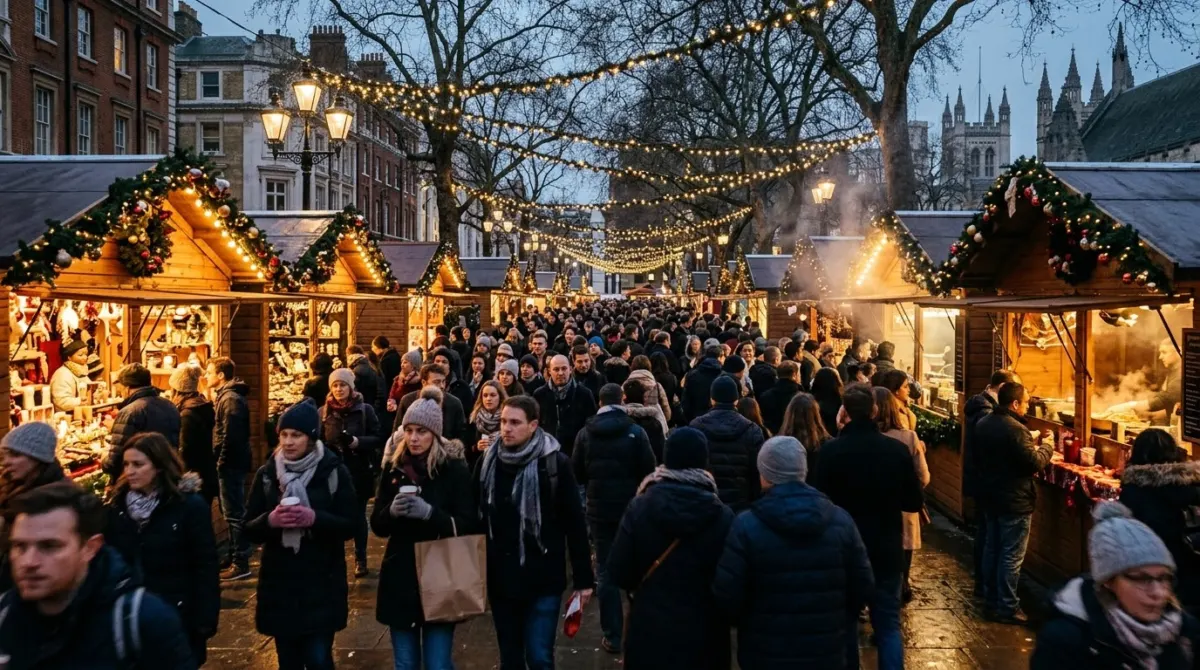
December fills for the Christmas markets and theatre season.
Major events — Wimbledon fortnight, large concerts, football matches and marathons — lift prices on specific dates that are invisible from abroad.
The dates worth checking before you book:
- The London Marathon, on a Sunday in spring, usually in April, runs from Greenwich through Canary Wharf to the finish on the Mall, closing roads along the route and filling hotels near the start and finish.
- The RHS Chelsea Flower Show in May fills Chelsea and the streets around Sloane Square.
- Wimbledon, from late June into July, lifts prices across the south-west, from Earl’s Court down the District line.
- Notting Hill Carnival, on the Sunday and Monday of the August bank holiday weekend, closes roads across Notting Hill and turns several nearby stations exit-only or shuts them for much of each day. Notting Hill, Ladbroke Grove and Westbourne Park are a poor base that weekend unless the carnival is why you came.
- New Year’s Eve: the fireworks over the Thames are ticketed, with viewing areas along the Embankment sold in advance and open to ticket holders only. Rooms with a river view sell out months ahead, and getting anywhere near Westminster that evening without a ticket is a slow business.
January and February are the cheapest and quietest months, and the museums are at their best then.
Choosing by what you came for
Theatre: Covent Garden or Bloomsbury, both walking distance from the West End.
Museums: South Kensington or Bloomsbury.
History: the City or Southwark, within walking distance of the Tower and St Paul’s.
Food and nightlife: Shoreditch, Soho or Borough.
Parks and quiet: Kensington, Marylebone or Hampstead.
An early flight: Paddington for Heathrow, Victoria for Gatwick, Liverpool Street for Stansted.
London with children: what changes the choice
The family answer in the table at the top is South Kensington or Bloomsbury. The reasons are worth spelling out, because a few London rules make the decision easier than it looks and can change which district is best value.
- Children under 11 travel free on the Tube, the DLR, the London Overground and the Elizabeth line when they are with a fare-paying adult, up to four children per adult, and free on buses and trams without any ticket at all. That makes a zone 2 base on a direct line much cheaper for a family than the same trip for four adults, and it takes the sting out of the daily journeys in. Older children pay, at a reduced rate if they have the right card, so check TfL’s young visitor options before you travel.
- Parks decide the afternoons. Kensington Gardens, beside the South Kensington museums, has the Diana Memorial Playground; Regent’s Park, between Marylebone and Camden, has London Zoo on its northern edge; and Greenwich Park has the Royal Observatory and room to run. A base within walking distance of one of them gives every day an easy ending.
- The free museums do the rest. The Natural History Museum and the Science Museum are each a full day with children and cost nothing, which is the strongest argument for South Kensington.
- Pushchairs and stairs. A hotel near an Elizabeth line or DLR station saves carrying a pushchair up and down deep stations twice a day; see the step-free advice above.
- Space in the evening. With children in bed by eight, a hotel room leaves the adults sitting in the dark. An aparthotel or apartment with a second room and a kitchen usually beats two hotel rooms on price and on comfort.
Avoid Soho, the streets immediately around Leicester Square and Camden at weekends as a family base. They are loud late into the night and crowded all day, and the pavements are hard work with a pushchair.
How many nights, and where they go
Two nights is a weekend: Westminster, a museum and a show.
Three is the sensible minimum for a first visit and covers the famous core.
Four or five adds the Kensington museums, Greenwich or a London village, and an evening that is not spent recovering.
Beyond five nights, London starts to reward a different kind of stay: an apartment in a residential district, a neighbourhood market at the weekend, and day trips to Windsor, Oxford or Bath. Our London itinerary sets out the first three days.
Zones, lines and what actually matters
London’s transport is priced by zone and organised by line, and the second is what should decide your booking.
A hotel in zone 1 on a line that does not serve where you are going is worse than a hotel in zone 2 on one that does. The Piccadilly, Central, Jubilee and Victoria lines between them cover almost everything a visitor wants.
Two further points. The Elizabeth line crosses the city east to west and is fast, modern and air-conditioned, which the deep tube lines are not. And the Night Tube runs on several lines at weekends, which changes how late you can stay out without a taxi.
The Night Tube runs on Friday and Saturday nights on the Victoria, Central, Jubilee, Northern and Piccadilly lines, with some outer branches left out, and the London Overground’s Windrush line runs a night service too. Everywhere else, night buses fill in. If late evenings are part of the plan, a room near one of those five lines is worth a small premium.
Arriving with luggage
Worth a thought, because London’s older stations have stairs.
Not all tube stations have lifts, and a change at a deep interchange with two suitcases is unpleasant. The transport authority publishes step-free information, and checking your arrival station before booking saves a bad first hour.
From Heathrow, the Elizabeth line is step-free and more comfortable than the Piccadilly line for the same journey.
Step-free London: choosing a base with limited mobility
For travellers using a wheelchair, a walking aid or a pushchair, the station matters more than the district, and London’s network is uneven. Some of it is among the most accessible in Europe; much of the Victorian Underground is not.
- The Elizabeth line is step-free from street to platform at every station. At Paddington, Bond Street, Tottenham Court Road, Farringdon, Liverpool Street, Whitechapel, Canary Wharf and Heathrow there is level access from the platform onto the train as well; elsewhere, staff put out a manual ramp, and carriage 5 has the dedicated wheelchair spaces. A hotel within a short, level walk of one of those central stations is the most accessible base in London, and it gives you a step-free route from Heathrow.
- The DLR is step-free throughout, which makes Greenwich, Canary Wharf and the Royal Docks easier than their distance from the centre suggests.
- Buses are low-floor, with a ramp and a wheelchair space, and for short hops in the centre they are often easier than a deep tube station with long passages.
- Much of the Underground is not step-free. Many central stations, especially on the older deep lines, have only stairs and escalators, and some that are step-free from street to platform still have a gap or a step onto the train. TfL publishes a step-free Tube map, and its journey planner and the TfL Go app show lift outages, so check both your arrival station and the station nearest the hotel before you book.
At the hotel, ask specifically. “Accessible room” can mean anything from a slightly wider door to a full wet room with a roll-in shower, and in the period buildings of Bloomsbury, Kensington and Bayswater the lift, where there is one, may be very small. Modern hotels in the station districts, on the South Bank, at Stratford and around Battersea are generally the safer choice, and it is worth asking for the room’s door width and bathroom layout in writing.
Arriving by car, and why to leave it
If London is one stop on a road trip, return the car before you arrive or leave it outside the city. Driving in central London is slow, parking is scarce and expensive, and few central hotels have parking of their own.
Two charges apply on top of that. The Congestion Charge covers central London during the day, weekends included, and it is the driver’s responsibility to pay it. The Ultra Low Emission Zone covers every London borough, 24 hours a day, every day except Christmas Day, and charges vehicles that do not meet its emissions standards. Most modern petrol cars comply, but check the registration on Transport for London’s website, and remember that a compliant car still pays the Congestion Charge.
The practical options are to collect a rental car on the way out of London, at Heathrow or another outer location, or to stay near a suburban station with parking and take the train in. For a London-only trip, a car is a liability from the first hour.
Staying near a mainline station for day trips
If the trip includes days outside London, the station you will leave from deserves as much thought as the district, because each of London’s main terminals serves a different direction.
- Paddington for the west: Bath, Bristol and Oxford, Windsor with a change at Slough, and the Heathrow Express.
- King’s Cross for the north-east: Cambridge, York and Edinburgh. St Pancras, next door, has the Eurostar and the high-speed trains to Kent.
- Euston for the north-west and Glasgow, and for the overnight Caledonian Sleeper to Scotland.
- Waterloo for the south-west, including Windsor & Eton Riverside, Hampton Court and Salisbury for Stonehenge.
- Victoria and London Bridge for Brighton and the south coast.
- Marylebone for a second route to Oxford and for Stratford-upon-Avon.
This is why King’s Cross and Paddington appear among the districts above. Bloomsbury is a short walk from King’s Cross, St Pancras and Euston together, which makes it the best base for a trip with several excursions north. On a short stay, an extra half hour crossing London before an early train is the thing to avoid.
Concerts, matches and conferences: where to base yourself
A big event changes the calculation. The usual advice — central, on a good line — still holds, but the line has to be the one that reaches the venue, and the last train back matters more than the view from the room. Hotels right beside the big venues are few, fill first and are often the least convenient for everything else you want to do.
- Wembley Stadium. Wembley Park, on the Jubilee and Metropolitan lines, is about a ten-minute walk from the stadium; Wembley Stadium station, one stop from Marylebone on Chiltern Railways, is closer. Wembley Park is only two stops from Baker Street on the Metropolitan line, so a base in Marylebone or around Baker Street is easier than staying at the stadium itself, and it leaves you in central London for the rest of the trip.
- The O2. North Greenwich station, on the Jubilee line, is about twenty minutes from central London, and the Uber Boat by Thames Clippers stops at a pier a few minutes’ walk from the entrance. Anywhere on the Jubilee line works — Bond Street, Westminster, Waterloo, Southwark, London Bridge — and Greenwich itself is close by river.
- ExCeL London. The conference centre in the Royal Docks has Custom House station, on the Elizabeth line and the DLR, at its west entrance, and Prince Regent on the DLR at its east entrance. The Elizabeth line runs direct to Liverpool Street, Farringdon, Tottenham Court Road and Paddington, so a base in the City, Clerkenwell or Stratford suits a conference week better than a hotel in the docks, where the evenings are quiet.
- Wimbledon. For the Championships, Southfields on the District line is the closest station, about fifteen minutes’ walk from the grounds; Wimbledon station, with fast trains from Waterloo, is about twenty. Earl’s Court and Fulham are on the same branch of the District line without a change, which makes them the obvious bases for a tennis week.
- Twickenham. South Western Railway trains from Waterloo reach Twickenham in around half an hour, and the stadium is a signposted walk of ten to fifteen minutes. The South Bank and Waterloo make the natural base, and Richmond is a few minutes away on the same line.
Three rules for any event. Book as soon as the date is announced, because the nearest hotels fill first and the rest of the city follows. Check the venue’s own travel page in the week before, since engineering works and event-day crowd control can close or restrict the nearest stations. And allow for the crowd afterwards: at the biggest events the wait to get onto a train can be longer than the journey home, which is one more argument for staying on a direct line rather than one that needs a change.
Marylebone and Fitzrovia
Two central districts that sit between the areas most visitors consider, and are quieter than either.
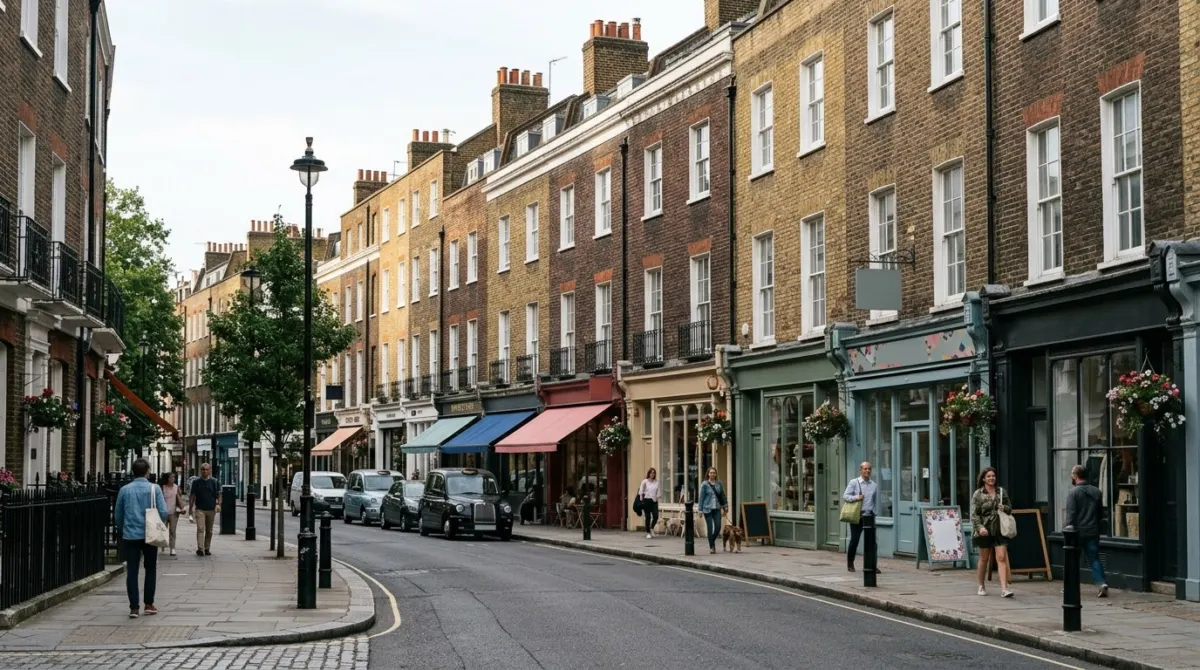
Marylebone runs north of Oxford Street towards Regent’s Park. It has a village high street, Georgian terraces, and the Wallace Collection, which is free and almost empty. Bond Street and Baker Street stations put the Jubilee, Central and Bakerloo lines within a few minutes, and Paddington for the Heathrow train is one stop west.
Fitzrovia lies between Oxford Street and the Euston Road, east of Great Portland Street. It is a ten-minute walk to both the British Museum and Soho, it has more restaurants per street than almost anywhere in central London, and it empties out at the weekend because much of it is offices.
Both are genuinely central and neither is a tourist district, which usually means a better room for the money than Covent Garden. The trade-off is that neither has a landmark on its doorstep, so you walk ten minutes to reach what you came for.
The short version
Bloomsbury for the best central balance, South Bank for modern rooms and the river, South Kensington for museums and families, King’s Cross or Paddington for value and transport, Shoreditch for the evening. Pick the tube line before the postcode, check whether the building has a lift, and look at zone 2 before paying zone 1 prices.
Not sure how long to stay? See how many days you need in London.
Frequently asked questions
What is the best area to stay in London?
Bloomsbury for most visitors: central, quieter than the West End, walking distance to the British Museum and Covent Garden, and on several tube lines. South Bank for modern rooms and the river, South Kensington for museums and families.
Is it worth staying in zone 2 in London?
Often, yes. Rooms in Hammersmith, Angel, Greenwich or Clapham are frequently a third cheaper and ten to twenty minutes from the centre on a direct line. Check the walk from the station rather than the distance from Trafalgar Square.
Are London hotel rooms small?
Yes, particularly in period buildings in the centre. Modern hotels on the South Bank and in the station districts have larger rooms and reliable lifts, which older Georgian conversions often do not.
Where should I stay in London with family?
South Kensington: three free major museums on one street, Hyde Park five minutes away, quiet stucco streets and a direct tube line. Bloomsbury is the central alternative.
Is Soho too noisy to stay in?
For most people, yes. It is the centre of London's nightlife and the streets are busy until the small hours. Covent Garden a few minutes away is lively without being that loud, and Bloomsbury is quieter again.
Which London airport should I fly into?
Heathrow is the best connected, with the Piccadilly and Elizabeth lines plus the Heathrow Express. Gatwick is about thirty minutes by train to Victoria. Stansted and Luton are an hour out, so factor that into the fare.
Is the City of London a good place to stay at weekends?
Often, yes. The financial district empties from Friday evening, so rooms that are full of business travellers midweek are frequently cheaper at weekends, and St Paul's and the Tower are on the doorstep. The catch is that many local cafes and pubs close, so evenings are spent in Shoreditch or across the river in Southwark.
Keep planning England
Written and checked by
Triplarks Editorial
An editorial desk, not an invented persona: research, drafting and fact-checking are done by the same small team. Every number here carries the date it was read.