
Puerto Viejo de Talamanca is the part of Costa Rica that does not feel like Costa Rica. The food is Jamaican, the music is reggae rather than reggaeton, the beaches face the Caribbean Sea, and the weather runs on the opposite calendar to the rest of the country — September and October, the wettest weeks on the Pacific, are the sunniest here.
Some links below are affiliate links. We may earn a commission if you book through them, at no extra cost to you. We do not rank hotels, and any prices on the map come live from the booking sites.
Quick answer: where to stay in Puerto Viejo. The town if you want to walk to bars, restaurants and the bus, though it is noisier at night. Playa Cocles for the beach without the town, Playa Chiquita for jungle lodges and quiet. Rates run roughly half of Guanacaste’s.
Check hotels in Puerto Viejo →Check Playa Cocles →See them on a map ↓
It is also the cheapest coastal base in the country, the flattest and most cyclable, and the one region that most first-time itineraries skip entirely. On any trip to Costa Rica this coast is the outlier. This guide covers the beaches, getting to Puerto Viejo, what there is to do, and who this coast suits.
Prices and transport details were read on 16 August 2026.
⚠ First: there are two Puerto Viejos in Costa Rica
This catches people out badly enough that it belongs at the top of the page rather than buried in a footnote.
- Puerto Viejo de Talamanca, in Limón province on the southern Caribbean coast, near the Panama border. This is the beach town, and this is the one this guide is about.
- Puerto Viejo de Sarapiquí, in Heredia province, four hours away and completely inland. It is a river and rainforest town with no beach at all.
Booking sites list both, sometimes just as “Puerto Viejo, Costa Rica”. Check the province before you pay for anything. If it says Limón or Talamanca you are in the right place; if it says Heredia or Sarapiquí you are not.
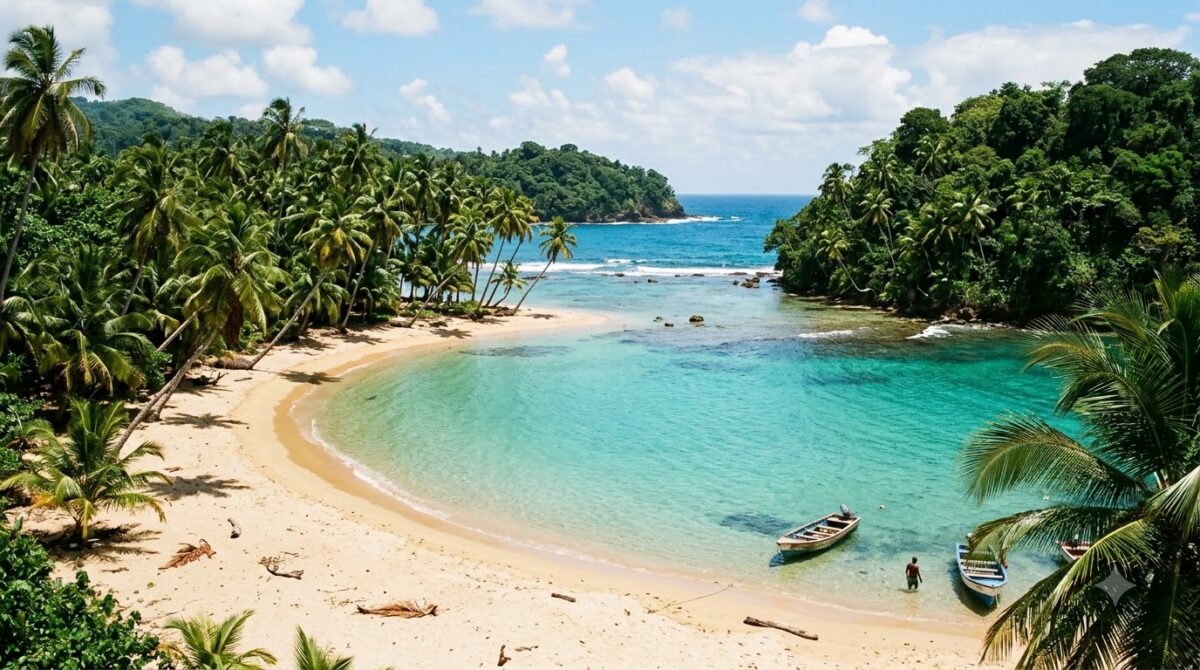
Where is Puerto Viejo de Talamanca, and what is it like?
Puerto Viejo sits on the southern Caribbean coast of Costa Rica, in Talamanca in Limón province, the southeastern corner of the country, about 200 kilometres from San José and 55 kilometres from the Panama border. The town itself is small — a handful of streets meeting the sea, a main road, and a string of beaches running south.
What makes this part of Costa Rica different comes down to history. The Caribbean coast was settled by Afro-Caribbean workers from Jamaica in the nineteenth century, and by the Bribri and Cabécar indigenous peoples long before that. Spanish is the official language but you will hear Mekatelyu, an English-based creole, and the cooking uses coconut milk and scotch bonnet rather than the seasoned-not-spiced approach of the Pacific side.
The town is properly known as Puerto Viejo de Talamanca, and visiting Puerto Viejo de Talamanca means a laid-back beach town in the genuine sense rather than the marketing sense. Things run late, close early, and nobody is in a hurry.
The most beautiful beaches, north to south
The best beaches here run in a line south from town along one flat coastal road, which is what makes this coast so easy to explore compared with the Pacific.
| Beach | Distance from town | What it is for |
|---|---|---|
| Playa Negra | North of Puerto Viejo, walkable | A black sand beach, long and quiet, good for a walk rather than a swim |
| Salsa Brava | In town | Not a swimming beach. A heavy reef break for experienced surfers only |
| Playa Cocles | 2 km south | The main surf beach, with lifeguards in high season. Strong currents when the swell is up |
| Playa Chiquita | 4 km south | A string of small coves, quiet, some good snorkelling spots at slack tide |
| Playa Punta Uva | 7 km south | The one. Warm calm water inside a reef, jungle overhanging golden sand. Best swimming on the coast |
| Manzanillo | 13 km south | A village at the end of the road south of Puerto Viejo, inside a wildlife refuge, with the best snorkelling |
Punta Uva and Manzanillo are the two that justify the trip. Punta Uva in particular is one of Costa Rica’s very few beaches where the water is genuinely calm enough for small children.
Getting to Puerto Viejo
There is no airport on this coast, so everything comes overland from San José. The drive to Puerto Viejo takes four to five hours.
- The bus from San José — the MEPE line runs direct from San José to Puerto Viejo several times a day, takes about 4.5 hours and costs roughly 6,500 colones, around US$12. It is the cheapest way into any Costa Rican beach town by a wide margin.
- Shared and private shuttles — a shuttle to Puerto Viejo from San José costs around US$55 to US$75 per person and takes four hours with hotel pickup. Shuttles to Puerto Viejo also run from La Fortuna and Tortuguero.
- Driving — straightforward by Costa Rican standards. The road is paved the entire way and no four-wheel drive is needed, which is unusual for this country.
- From San José international airport the bus terminal is a taxi ride across the city; most people going straight there take a shuttle instead.
⚠ Route 32 is the weak link
The road from San José crosses Braulio Carrillo National Park on Route 32, and that stretch closes with some regularity for landslides, fog and roadworks. When it shuts, the alternative adds two to three hours through Turrialba.
Practical consequence: do not schedule a same-day flight out of San José after a morning in Puerto Viejo. Give yourself a night in the capital or on the way.
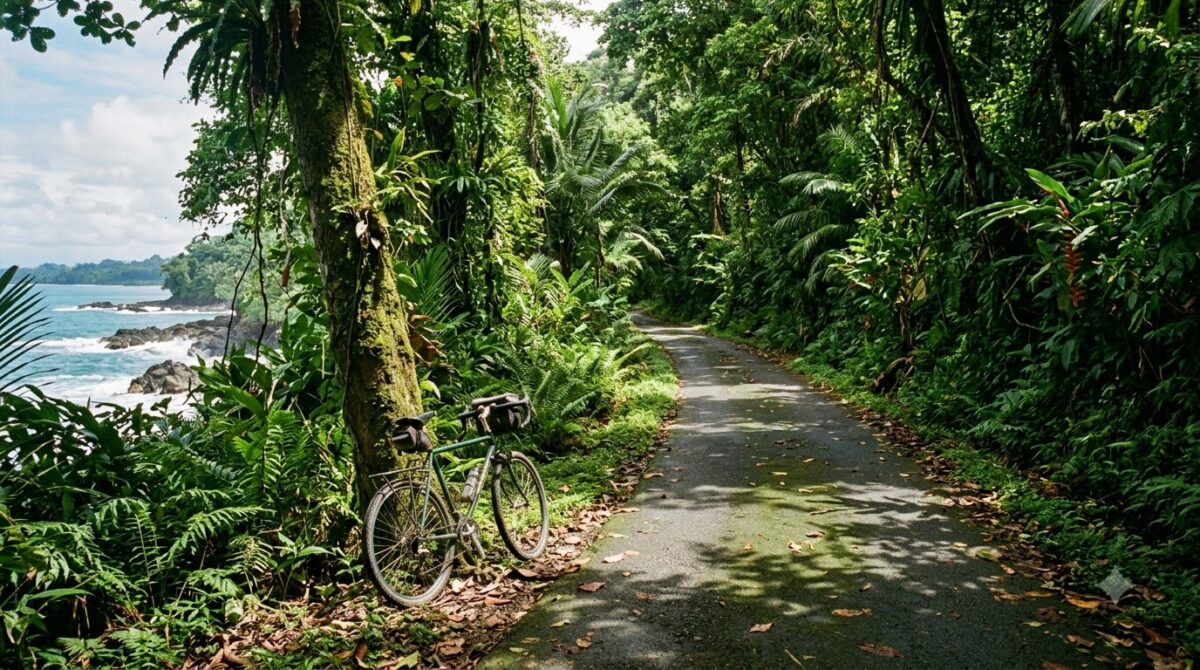
Getting around: rent a bicycle
This is the single best thing about the Puerto Viejo area. The coastal road south is flat, paved and shaded, and every beach is on it. Almost nobody rents a car here.
- Rent a bicycle for around US$5 to US$10 a day. Punta Uva is a comfortable 30-minute ride, Manzanillo about an hour.
- Take a taxi if you would rather not cycle — US$8 to US$15 to Punta Uva, a little more to Manzanillo.
- The local bus runs the Puerto Viejo to Manzanillo route several times a day for under a dollar.
- Bring a light if you are cycling back after dark. The road is unlit and the traffic does not expect you.
- Do not leave the bike unlocked at a beach. Bike theft is the most common annoyance here.
Things to do: Cahuita National Park and a chocolate tour
Cahuita National Park
Twenty minutes north, Cahuita National Park protects the best-preserved coral reef in Costa Rica and a flat coastal trail running seven kilometres through forest between two beaches. Sloths, howler monkeys, capuchins and raccoons are all routine along it.
Entry at the Kelly Creek entrance in Cahuita town is by voluntary donation, which makes it one of the best-value national parks in the country. The Puerto Vargas entrance charges a fixed fee. Snorkelling on the reef must be done with a guide.
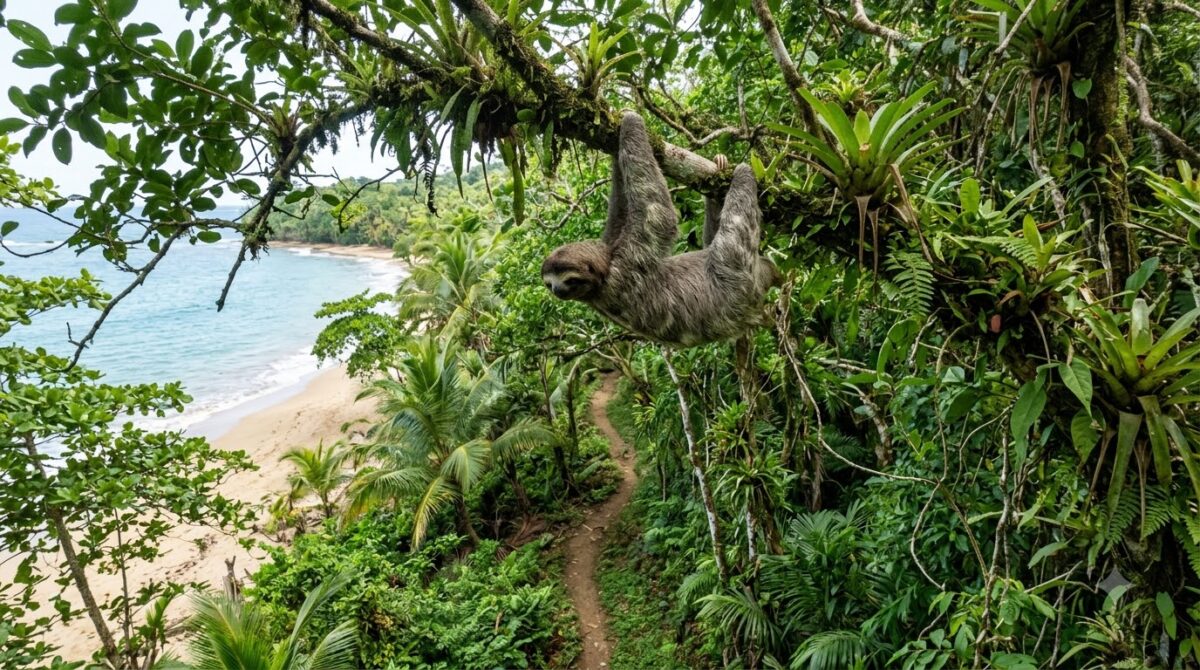
Gandoca-Manzanillo Wildlife Refuge
South of Manzanillo, the Gandoca-Manzanillo refuge protects rainforest, mangrove, reef and a nesting beach. A coastal trail leads from Manzanillo village to Punta Mona through some of the densest flora and fauna on this coast. Take a guide — the trail is not well marked and the wildlife is easy to walk straight past.
Snorkel the coral reef
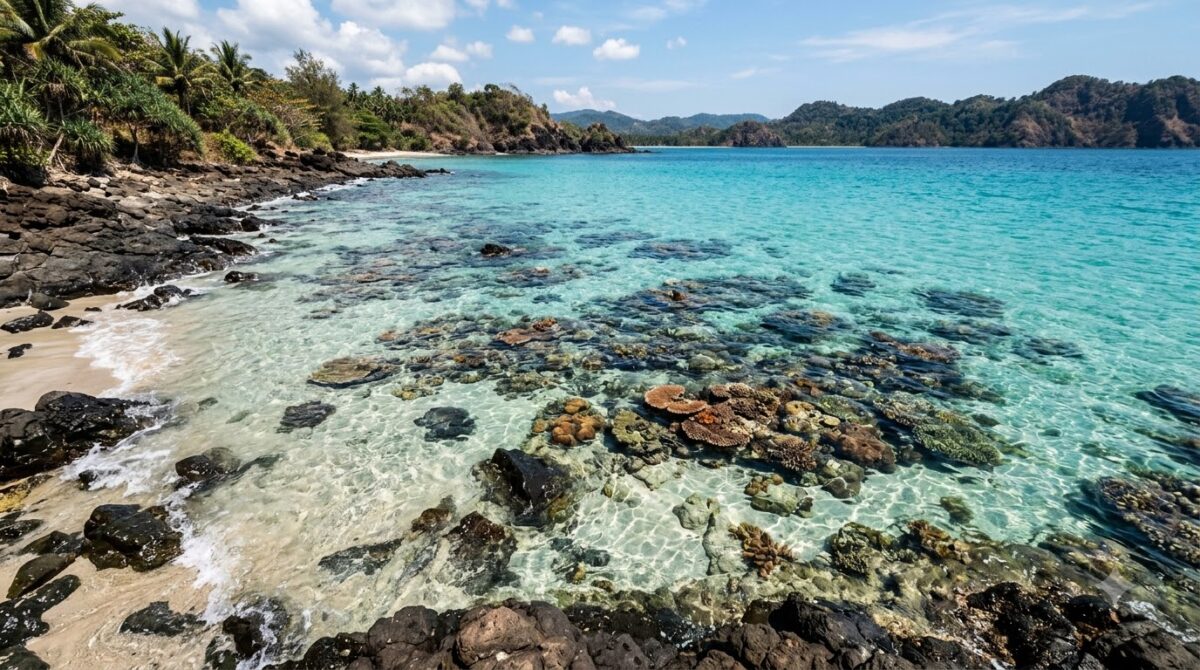
The coral reef off Manzanillo and Cahuita is the best snorkelling in Costa Rica, which is a low bar nationally but genuinely worth doing here. Visibility is best in the drier months of September, October, February and March, and worst after heavy rain when the rivers run brown. Guided trips cost around US$40 to US$60.
A chocolate tour on a working cacao farm
Cacao is native to this region and was cultivated by the Bribri long before Europeans arrived. Several small farms around Puerto Viejo run tours that take you from the pod to a cup, and they are among the more genuinely interesting tours in the country because the crop is real rather than staged. Expect US$25 to US$40 for two to three hours.
Visit the Bribri indigenous communities
The Bribri indigenous territory sits inland from the coast in the Talamanca mountains. Community-run tours cover cacao, medicinal plants and traditional building, and the money stays with the community rather than an operator. Book through the community associations rather than a booking site.
The Jaguar Rescue Center
A wildlife rescue and rehabilitation centre in Playa Chiquita, working mostly with sloths, monkeys and birds rather than jaguars despite the name. Tours run twice daily and cost around US$25. Booking ahead is sensible in high season.
Surfing
- Salsa Brava is the famous one — a fast, shallow reef break that produces the biggest wave in Costa Rica. It is genuinely dangerous and not a place to paddle out and see how it goes.
- Playa Cocles, next to the Koki Beach end of town, is the beach break where everyone else surfs, and where the lessons happen. Around US$50 to US$60 for a group lesson.
- Best swell is December to March, with a smaller second window in June and July.
Eating on the Caribbean side of Costa Rica
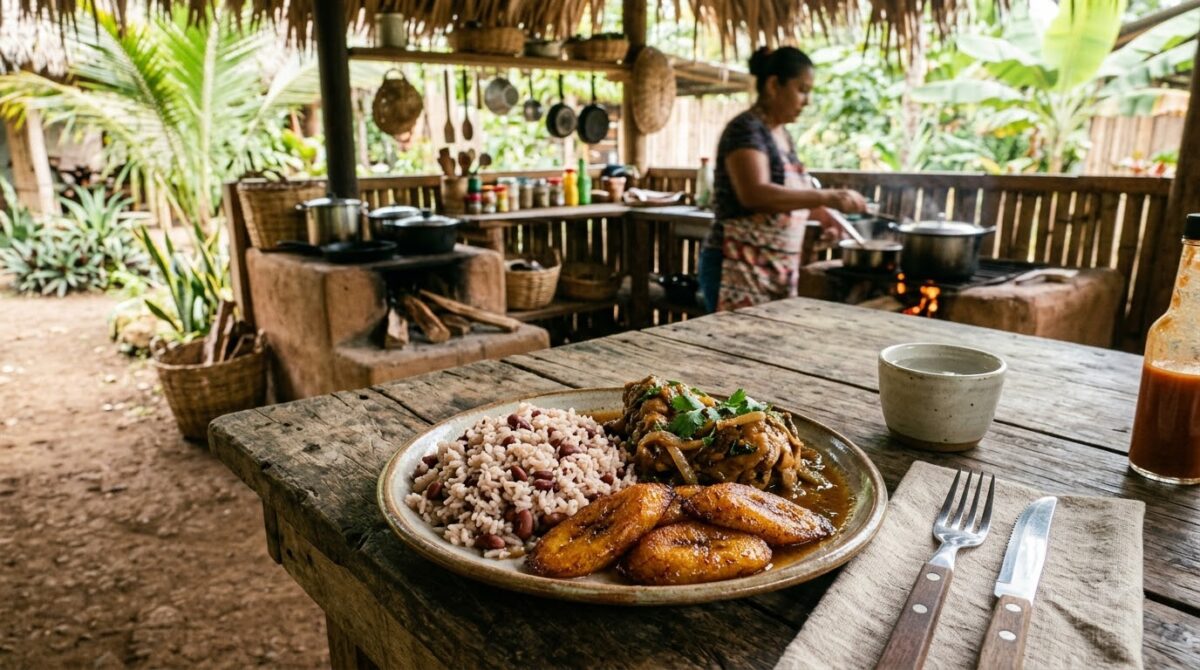
Food is one of the strongest reasons to come. This is the only part of Costa Rica with a distinct regional cuisine, and it is better than the national default.
- Rice and beans — not gallo pinto. Red beans cooked in coconut milk with thyme and a whole scotch bonnet. Order it with stewed chicken.
- Rondón — a seafood and root vegetable stew in coconut milk. Ask a day ahead at smaller places.
- Patí — a spiced meat pastry descended from the Jamaican patty, sold from windows and carts.
- Pan bon — dark, dense sweet bread with candied fruit.
- Agua de sapo — ginger, lime and unrefined cane sugar. Non-alcoholic and the right thing in this heat.
- Prices run US$7 to US$15 at local places and US$15 to US$25 at the restaurants on the main road. Cheaper than any Pacific beach town.
- Live music most nights along the seafront, and a genuinely good small bar scene without it turning into Tamarindo.
Where to stay in Puerto Viejo
| Area | Nightly rate | Suits |
|---|---|---|
| Puerto Viejo town | US$25–90 | Walk to bars, restaurants and the bus. Noisier at night |
| Playa Cocles | US$50–150 | Surfers and anyone who wants the beach without the town |
| Playa Chiquita | US$60–180 | Jungle lodges and small hotels. Quietest of the lot |
| Punta Uva | US$80–250 | Best swimming, but you need a bicycle for everything else |
| Manzanillo | US$40–120 | End of the road, very little around, superb snorkelling |
Rates here are roughly half what an equivalent place costs in Guanacaste, which is the strongest practical argument for this coast.
Map shows live availability and prices. We may earn a commission on bookings made through it, at no extra cost to you.
Best time to visit Puerto Viejo
This is where Costa Rica’s Caribbean coast diverges from the rest of the country, and it is worth planning around.
- September and October — the driest and sunniest weeks of the year here, and simultaneously the wettest on the Pacific side. If your dates land in the Pacific rainy season, come east.
- February and March — a second dry window, plus the best surf.
- December and January — peak dry season on the Pacific and often wet here. Counter-intuitive but true.
- May, June, November — mixed, with rain spread through the year rather than concentrated.
There is no month you have to avoid outright on this coast, because the rain arrives in bursts rather than settling in. Full detail in our month-by-month guide to the best time to visit Costa Rica.
Puerto Viejo and Cahuita: which one?
| Puerto Viejo | Cahuita | |
|---|---|---|
| Size | Bigger, more choice | Village. Two streets |
| Nightlife | Real, live music most nights | Almost none |
| Beaches | Six along one road south | Two, both good |
| National park | Gandoca-Manzanillo, needs a guide | Cahuita, free trail, walk from town |
| Cost | Low | Lower |
| Best for | Most people, longer stays | Quiet, wildlife, a night or two |
Many people do both: two nights in Cahuita for the park, then three or four in the Puerto Viejo area for the beaches south of town.
How Puerto Viejo fits into the rest of Costa Rica
Of all the regions of Costa Rica, this is the one that feels least connected to the others, and that is worth understanding before you slot it into a trip. The Caribbean side of Costa Rica has its own weather, its own cuisine and its own history, and the four-hour road separating it from everything else is not a formality.
- It is not a day trip. Nowhere else in the country is within a comfortable drive. Tortuguero, further north on the same coast, is the only neighbour.
- It rewards a longer stay. Puerto Viejo offers enough to fill five days without moving, which is unusual for a Costa Rican beach town.
- It is the cheapest coast. On a Caribbean vacation budget this side of the country goes roughly twice as far as Guanacaste.
- It is the counter-season option. When the Pacific is drowning in September and October, this is where the sun is.
- Outside Puerto Viejo itself there is very little infrastructure. Cahuita to the north and Manzanillo to the south are the limits.
Puerto Viejo and Manzanillo together make one of the best places in Costa Rica for a slow week — but it is a poor fit for a fast loop of the classic highlights, and trying to squeeze it into one is the most common mistake people make with this coast.
Is Puerto Viejo safe?
Broadly yes, with the same caveats as anywhere on the coast and a couple specific to here.
- Petty theft is the real issue — from unattended bags on beaches, from unlocked rooms and from bicycles. Violence against visitors is rare.
- Do not walk the beach alone late at night, particularly the unlit stretch between town and Playa Cocles.
- Drugs are openly offered on the main road. Declining politely is all that is needed and nothing follows.
- Rip currents at Playa Cocles and Playa Negra are genuine. Punta Uva and Manzanillo are the safe swimming options.
- Sand flies at dawn and dusk are worse here than anywhere else in the country. High-DEET repellent is the only reliable answer.
How many days in Puerto Viejo?
Four nights minimum, because the journey is half a day at each end and you would otherwise spend most of the trip on Route 32. Five to seven is right if you want to add Cahuita, a chocolate tour and a day in the Gandoca-Manzanillo refuge without rushing.
This is not a coast to visit on a tight ten-day loop of the country. It works best as a block of its own, or paired with Tortuguero, which is the only other place in this part of Costa Rica.
For the wider trip, see our guides to beaches on both coasts, Costa Rican food and things to do around the country.
Further up the same coast, Tortuguero has no road at all — canals, turtles and boats only.
Check hotels in Puerto Viejo →
Frequently asked questions
How do you get from San Jose to Puerto Viejo?
The MEPE public bus runs direct several times a day, takes about 4.5 hours and costs around 6,500 colones, roughly US$12. Shared shuttles cost US$55 to US$75 per person and take four hours with hotel pickup. Driving takes four to five hours on paved road with no four-wheel drive needed.
Is Puerto Viejo Costa Rica worth visiting?
Yes, if you want something different from the Pacific coast. It has the best food in the country, the best snorkelling, the calmest swimming beach at Punta Uva, and prices roughly half those of Guanacaste. It is not the place for resorts or reliable dry-season sun.
What is the best beach near Puerto Viejo?
Punta Uva, seven kilometres south, for warm calm water inside a reef and jungle overhanging the sand. Manzanillo at the end of the road has the best snorkelling, and Playa Cocles is the main surf beach.
When is the best time to visit Puerto Viejo?
September and October are the driest and sunniest weeks of the year on the Caribbean coast, which is the opposite of the Pacific side. February and March are a second dry window with the best surf.
Do you need a car in Puerto Viejo?
No. The coastal road south is flat and paved and every beach is on it, so almost everyone rents a bicycle for US$5 to US$10 a day. Taxis and a local bus cover the rest.
What is the difference between Puerto Viejo de Talamanca and Puerto Viejo de Sarapiqui?
They are two different towns four hours apart. Puerto Viejo de Talamanca is the Caribbean beach town in Limón province. Puerto Viejo de Sarapiquí is an inland river town in Heredia province with no beach. Check the province before booking.
Is Puerto Viejo safe for tourists?
Broadly yes. Petty theft from beaches, rooms and bicycles is the main risk rather than violence. Avoid the unlit beach stretch late at night, and swim at Punta Uva or Manzanillo rather than Playa Cocles or Playa Negra, where rip currents are real.
Fares, tour prices and accommodation rates read 16 August 2026. Route 32 closures are common — check road status before travelling.