
Three days in Rome works, and it works best if you accept one thing early: you are not going to see all of it. Rome has more to visit than any city in Europe, and a 3 day Rome itinerary is about choosing well rather than moving fast.
Some links below are affiliate links. We may earn a commission if you book through them, at no extra cost to you. We do not rank hotels, and any prices on the map come live from the booking sites.
Quick answer: where to stay for three days. With everything on foot, staying central is worth paying for. The historic centre or Monti puts day 3 on your doorstep and keeps days 1 and 2 to a short walk or one Metro ride.
Check hotels in Monti →Check all of Rome →See them on a map ↓
This itinerary for 3 full days splits the city the way it actually divides — ancient Rome, Vatican City, and the historic center — so you never cross the whole city twice in one day. Booking rules and opening patterns checked 6 September 2026.
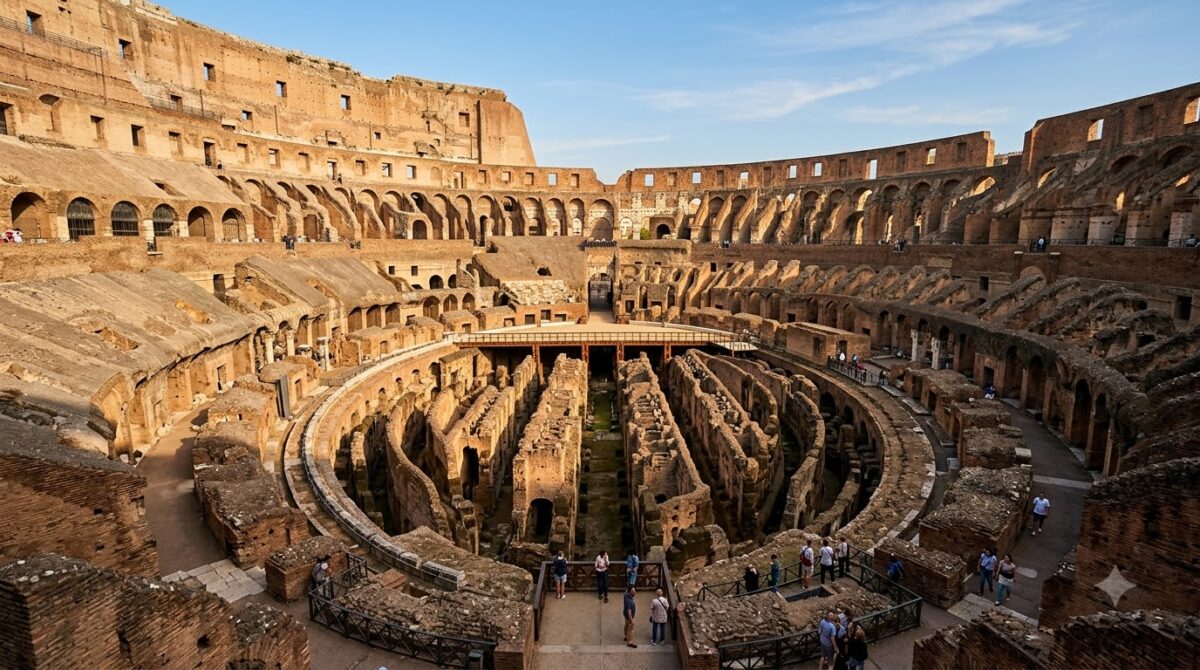
Three days in Rome at a glance
| Day | Area | Book ahead? |
|---|---|---|
| Day 1 | Ancient Rome: Colosseum, Roman Forum, Palatine Hill | Yes, essential |
| Day 2 | Vatican City: Vatican Museums, Sistine Chapel, St Peter’s Basilica | Yes, essential |
| Day 3 | Historic center, Trastevere, and a viewpoint | No, walk it |
The order matters more than people expect. Days 1 and 2 are ticketed, timed and tiring. Day 3 is free, flexible and unbooked, which makes it the right day to leave last — it absorbs bad weather, a late start, or anything you missed.
Book these two things before you fly: the Colosseum combined ticket and a Vatican Museums entry slot. In high season both sell out days ahead, and no plan survives standing in a three-hour line.
Day 1 in Rome: ancient Rome
Morning: Colosseum, Forum and Palatine Hill
These three share one combined ticket and one long morning. Enter at your timed slot, do the Colosseum first while you are fresh, then walk out into the Roman Forum and up Palatine Hill.
Take a guided tour of the Colosseum if you take one anywhere in Rome. The Forum in particular is a field of broken columns that means very little unsigned, and a guide turns it into a city. This is the single highest-value hour of the three days.
- Go early. The first slots are cooler and emptier, and the site has almost no shade.
- Underground and arena floor access are separate, more expensive tickets that sell out first. Worth it if you can get them, not worth reshaping the day around.
- Allow three to four hours for all three sites. People budget two and run out of time on the Palatine.
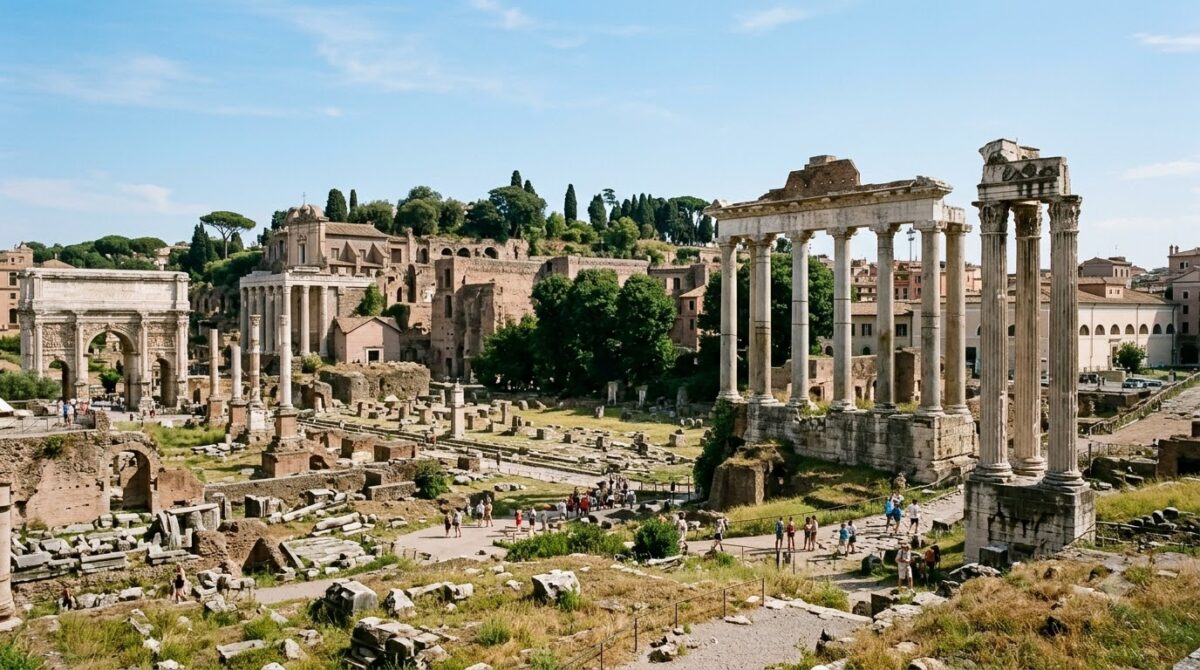
Afternoon: Capitoline Hill and the view
Walk up to Piazza del Campidoglio, designed by Michelangelo, and out to the terrace behind it for the best free view of the Forum you just walked through. The Capitoline Museums are here if you still have energy; most people do not, and that is fine.
Evening: Monti
Monti is the neighborhood immediately north of the Forum and the obvious place for the first dinner. Ten minutes on foot from where your day ended, and full of restaurants that serve people who live in Rome.
Day 2 in Rome: Vatican City
Morning: Vatican Museums and the Sistine Chapel
Take the earliest entry slot you can get. The Vatican Museums are one long one-way route that ends at the Sistine Chapel, and by late morning it is shoulder to shoulder with no way to turn back.
- Timed tickets are effectively compulsory in high season.
- The route is around three kilometers of galleries. It is a lot of walking on hard floors.
- No photographs in the Sistine Chapel, and guards enforce it.
- Closed on Sundays, except the last Sunday of the month when entry is free and the queue is enormous. Plan around it.
Midday: St Peter’s Basilica
Entry to the basilica itself is free, but there is a security line in the square that can be long. Some museum routes let you pass directly into St Peter’s at the end, which skips that line entirely — check whether your ticket includes it.
The dome climb is separate and ticketed. There is a lift for the first section and then a narrowing spiral staircase that leans with the curve of the dome. The view of Rome from the top is the best in the city.
Dress code is enforced at both sites: shoulders and knees covered, for everyone. People are turned away every day.
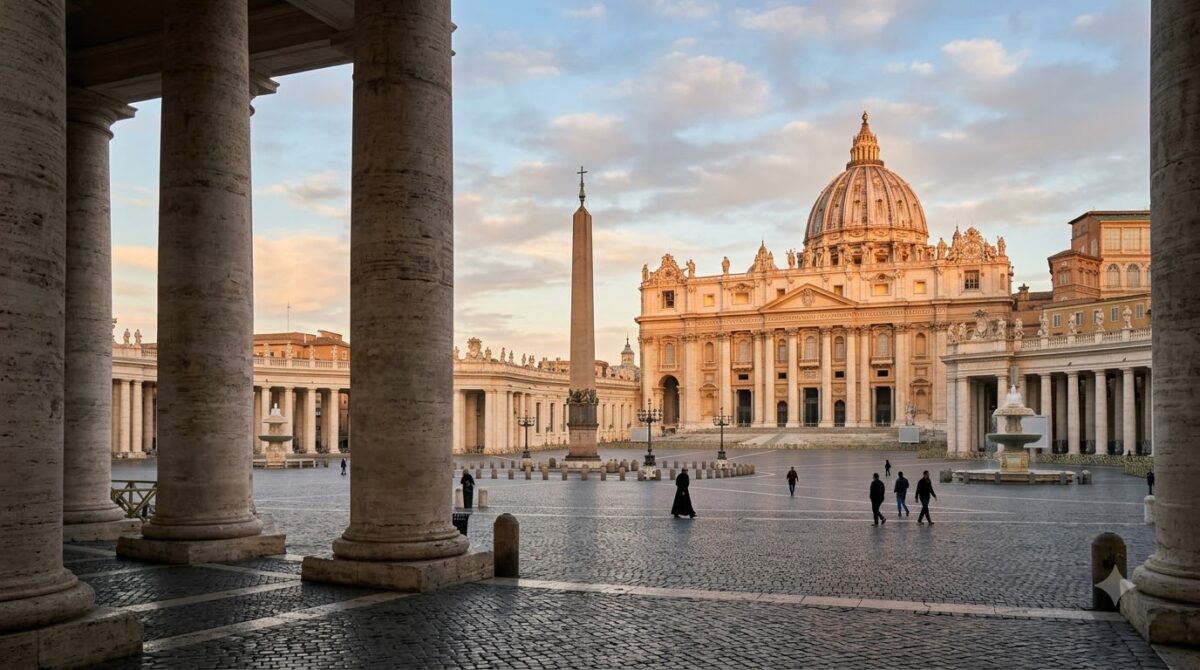
Afternoon: Castel Sant’Angelo and the river
Ten minutes from the Vatican, Castel Sant’Angelo is a Roman emperor’s tomb turned fortress turned papal escape route, with a terrace view back over the Tiber river. The bridge in front of it, lined with Bernini angels, is the best short walk in Rome.
Evening: Prati or back across the river
Prati, just north of the Vatican, is a residential district with good restaurants and no tourist pricing. If you would rather return to the center, the walk across the river takes about twenty minutes.
Day 3 in Rome: the historic center and Trastevere
No tickets, no timed slots, no queues. This is the day people remember, and it is entirely on foot.
Morning: the Spanish Steps, Trevi Fountain and the piazzas
String these together in roughly this order and the walk works itself out:
- The Spanish Steps — go early, and note that sitting on them is prohibited and fined.
- The Trevi Fountain — extremely crowded from mid-morning. Before nine or after ten at night is a different place entirely.
- The Pantheon — the best-preserved building of ancient Rome, with an open oculus in the dome. It now charges a small entry fee on most days.
- Piazza Navona — three fountains, and the shape of the Roman stadium it was built on.
- Campo de’ Fiori — a morning market, and a good lunch stop.
All five sit within about a kilometer of each other in the heart of Rome, which is why this day involves the least travel and the most walking.
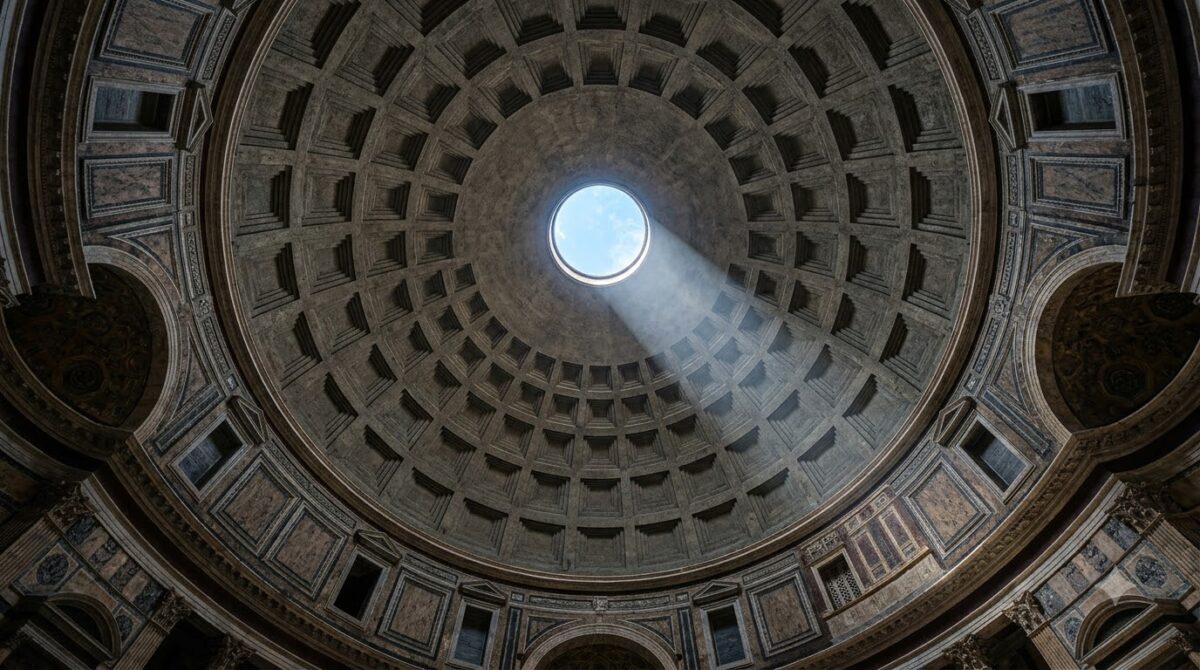
Afternoon: the Jewish Ghetto and across the Tiber river
The Jewish Ghetto is a small, quiet quarter with the best fried artichokes in Rome and a genuinely different atmosphere from the streets ten minutes north. Cross the river from there onto Tiber Island and into Trastevere.
Evening: Trastevere
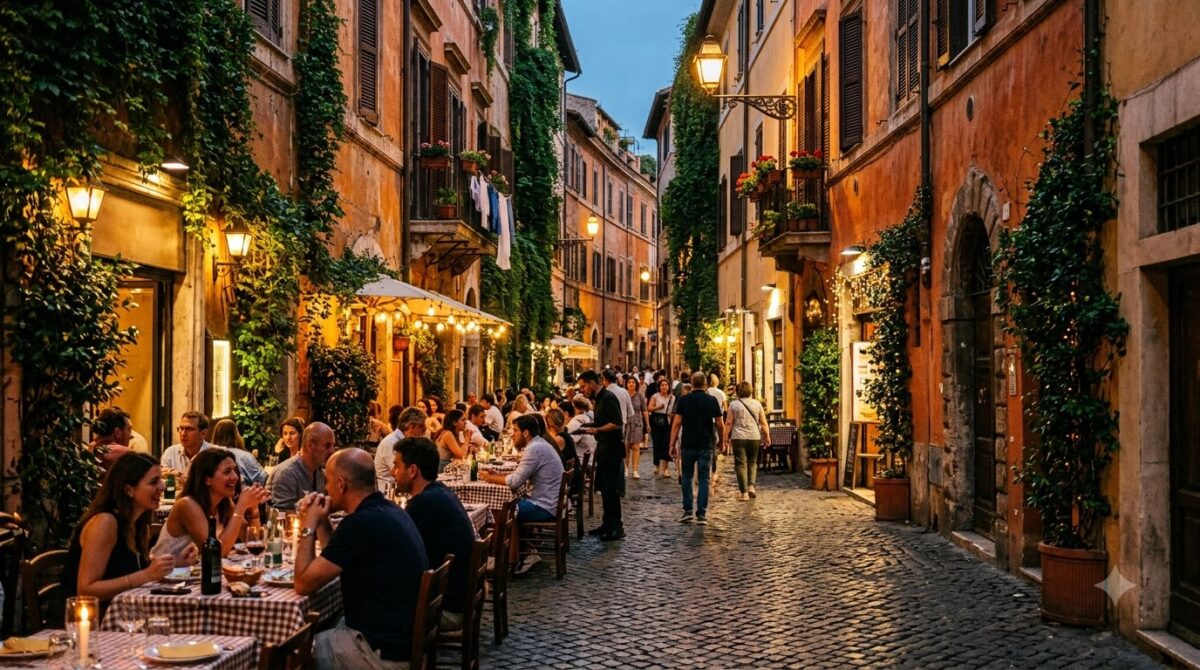
Trastevere is the right ending. Ivy on ochre walls, cobbled lanes, and the densest concentration of good restaurants in Rome. Santa Maria in Trastevere, one of the oldest churches in the city, has gold mosaics that are worth ten minutes before dinner.
If you still have energy afterwards, walk up the Janiculum Hill behind it for a night view of Rome. It is a climb, and it is the last good thing on the list.
Where to stay in Rome for 3 days
With three full days and everything on foot, staying central is worth paying for. The historic center puts day 3 on your doorstep and keeps days 1 and 2 to a short walk or one Metro ride.
Our guide to where to stay in Rome compares the Centro Storico, Monti, Trastevere and Prati, and explains why the area around Termini is cheap.
Map shows live availability and prices. We may earn a commission on bookings made through it, at no extra cost to you.
Getting around Rome in three days
- Walk almost everything. The historic center is about two kilometers across, and Rome is a city that only makes sense on foot.
- The Metro is small — two useful lines — but it links the Colosseum, Termini and the Vatican, which is exactly what you need.
- Take a taxi at night rather than walking back alone from Trastevere if you are tired. Use the official white taxis or an app.
- Do not rent a car. The historic center is a limited traffic zone monitored by cameras, and each unauthorised entry is a separate automatic fine that reaches you months later.
- Airport transfer: the Leonardo Express runs Fiumicino to Termini in about 32 minutes, and city taxis to the historic center are a fixed fare.
Day 4 in Rome, if you have extra time
- The Borghese Gallery — the best art in Rome, in a park. Entry is strictly by timed reservation and it sells out well ahead.
- Ostia Antica — a Roman port city, far less crowded than Pompeii and about forty minutes by train.
- The other papal basilicas in Rome — San Giovanni in Laterano, Santa Maria Maggiore and San Paolo fuori le Mura, all free.
- A day trip to Tivoli — two villas and their gardens, an hour out.
- The Aventine Hill — the orange garden, a quiet basilica, and the keyhole in the Knights of Malta gate that frames St Peter’s dome exactly. Twenty minutes from the center and almost empty.
- Villa Borghese gardens — the park itself is free and is the best green space in Rome, whether or not you get into the Galleria Borghese.
If Rome is the start of a longer trip to Italy, our 10 day Italy itinerary continues from here to Florence, Cinque Terre and Venice by train.
The must-see attractions in Rome for 3 days
If you strip the itinerary back to what you would regret missing, this is the list. Everything else on a Rome itinerary for 3 days is a bonus.
| Attraction | Day | Booking | Time needed |
|---|---|---|---|
| Colosseum | 1 | Essential | 1.5 hours |
| Roman Forum and Palatine Hill | 1 | Same ticket | 2 hours |
| Vatican Museums and Sistine Chapel | 2 | Essential | 3 hours |
| St Peter’s Basilica | 2 | Free, queue | 1 hour |
| Pantheon | 3 | Small fee | 30 minutes |
| Trevi Fountain | 3 | Free | 15 minutes |
| Piazza Navona and Spanish Steps | 3 | Free | 1 hour |
| Trastevere in the evening | 3 | Free | An evening |
That is roughly ten hours of sightseeing across three full days in Rome, which leaves the rest for walking, eating and sitting down — and those are not filler. A visit to Rome that is only ticketed attractions is a worse trip.
Tips for visiting Rome: the do’s and don’ts
Small things that change how three days in Rome go.
- Do carry a refillable bottle. Rome has around two thousand public drinking fountains, the nasoni, running cold and safe. In summer this matters more than any other tip.
- Do eat away from the sights. Two streets from any famous piazza the food improves and the price halves. Restaurants in Rome with photographs on the menu and someone outside inviting you in are the ones to walk past.
- Do stand at the bar for coffee. An espresso costs a fixed low price standing and several times that sitting at a table. Both are legitimate; know which you are choosing.
- Do get gelato where the color is dull. Bright green pistachio and neon banana are dyed. Real gelato is stored in covered metal tins, not piled in mounds.
- Do not sit on the Spanish Steps. It carries a fine, and it is enforced.
- Do not buy from anyone approaching you near the Colosseum or Trevi Fountain, including people offering to skip the line.
- Do not wear shorts or a vest to the Vatican or St Peter’s. Shoulders and knees covered, or you are turned away at security.
- Do not plan a big morning after a late night in Trastevere. The two do not combine, and day 2 starts early.
Where to eat, roughly
Rome divides by neighborhood for food as much as for sights, so plan dinner near where the day ended rather than crossing the city again.
- Monti after day 1 — ten minutes from the Forum, and it feeds people who live there.
- Prati after day 2 — residential, north of the Vatican, no tourist pricing.
- Trastevere after day 3 — the densest good eating in Rome.
- Testaccio if you have a spare lunch — the working food neighborhood, a covered market, and the classic Roman dishes done properly.
How to spend 3 days in Rome: the short version
If you want the whole 3 days in Rome itinerary in one paragraph: day 1 starts at the Colosseum in Rome with an early morning tour, then the Forum and Palatine. Day 2 you visit the Vatican at opening, then St Peter’s. Day 3, the final day, you explore Rome on foot with nothing booked at all.
That is the perfect 3 day shape, and almost every version of it that goes wrong goes wrong the same way: people try to visit Rome in reverse, leaving the ticketed sites until last, and then a sold-out slot on the final day breaks the trip.
Arriving in Rome from another city
Plenty of people reach Rome from another city in Italy rather than flying in, and it changes when the first day starts.
- Florence to Rome is about 1 hour 30 on the fast train, so a morning departure still leaves you afternoon time in Rome.
- Naples to Rome is a little over an hour.
- Venice to Rome is around 4 hours, which effectively costs you a half day.
If you arrive after lunch, do not waste the afternoon. Make the Pantheon your first stop, then walk the streets in Rome between it and Piazza Navona. Both are free, need no booking, and cost you nothing if you are tired. A 4 pm entry to almost any ticketed site is a poor use of a slot; save those for a full morning.
The other basilicas, if churches are your thing
Beyond St Peter’s there are three more papal basilicas in Rome, all free, all far quieter, and any of them is a better hour than a second museum.
- Santa Maria Maggiore — fifth-century mosaics, ten minutes from Termini.
- San Giovanni in Laterano — the cathedral of Rome, and older in status than St Peter’s.
- Basilica di San Paolo fuori le Mura — the quietest of the four, on the Metro line south.
Exploring the historic churches is the cheapest thing you can do with spare time in Rome, and several hold work by Caravaggio and Michelangelo with no ticket and no line.
Only have 48 hours? The Rome 2 day itinerary sets out which block to cut and why.
Still deciding the length? See how many days you need in Rome and what each extra day buys.
Frequently asked questions
Is 3 days in Rome enough?
Yes for the essentials. Three full days covers ancient Rome, Vatican City and the historic center at a reasonable pace, with an evening in Trastevere. It is not enough for the Borghese Gallery, Ostia Antica or a day trip, which is what a fourth day buys you.
What should I book in advance for 3 days in Rome?
Two things: the Colosseum combined ticket, which also covers the Roman Forum and Palatine Hill, and a timed entry slot for the Vatican Museums. Both sell out days ahead in high season. If you add the Borghese Gallery, book that further ahead still, because entry is strictly by reservation.
What is the best order for a 3 day Rome itinerary?
Ancient Rome first, the Vatican second, and the historic center last. Days 1 and 2 are ticketed and timed, so they need fixed dates. Day 3 has no bookings, which makes it the natural buffer for bad weather, a late start or anything you did not finish.
Can you see the Colosseum and the Vatican on the same day?
You can, and it is a poor idea. They are on opposite sides of the city, both take at least half a day properly, and both involve several kilometers of walking. Combining them means rushing the two things most people came to Rome for.
Do I need a guided tour in Rome?
For the Roman Forum, yes, more than anywhere else in the city. It is an unsigned field of ruins that means very little without someone explaining what each foundation was. The Vatican Museums benefit from a guide too. The historic center on day 3 needs nothing but a map.
How much walking is a 3 day Rome itinerary?
A lot. Expect fifteen to twenty thousand steps a day, much of it on uneven cobbles and marble. The Vatican Museums route alone is around three kilometers indoors. Bring shoes you have already broken in, not new ones.
Is the Pantheon free in Rome?
No longer. The Pantheon now charges a small entry fee on most days, having been free for centuries. It remains one of the best value sites in Rome and the best preserved building of the ancient city, with an open oculus in the dome.