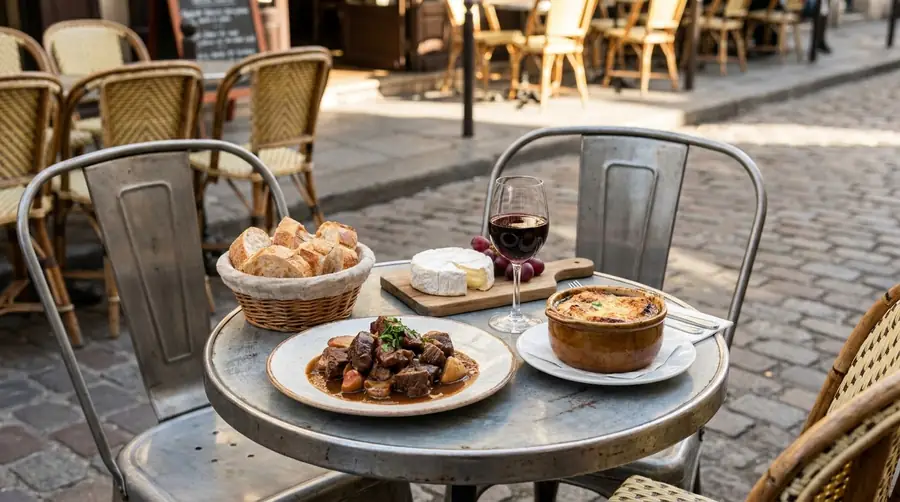
Where to stay to eat well in France
Pick the region by the food. Paris for a first trip and bistro classics, Lyon for the richest cooking in France, Marseille and Nice for Mediterranean seafood.
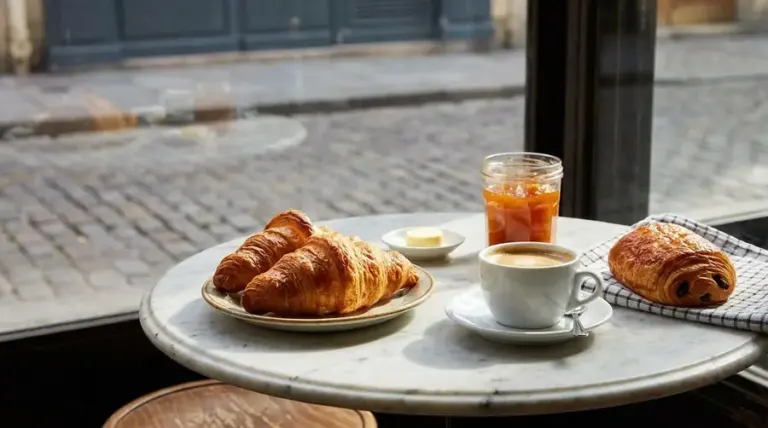
Illustration Check hotels in Parisor compare on AgodaFirst trip
Paris
Croissants, bistro classics and dishes from every region, with the sights between meals.
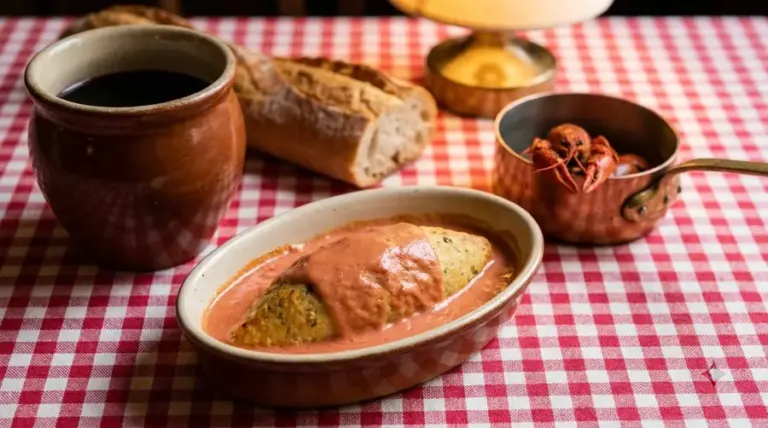
Illustration Check hotels in Lyonor compare on AgodaBest for food
Lyon
Quenelles, bouchons and the richest regional cooking in France.
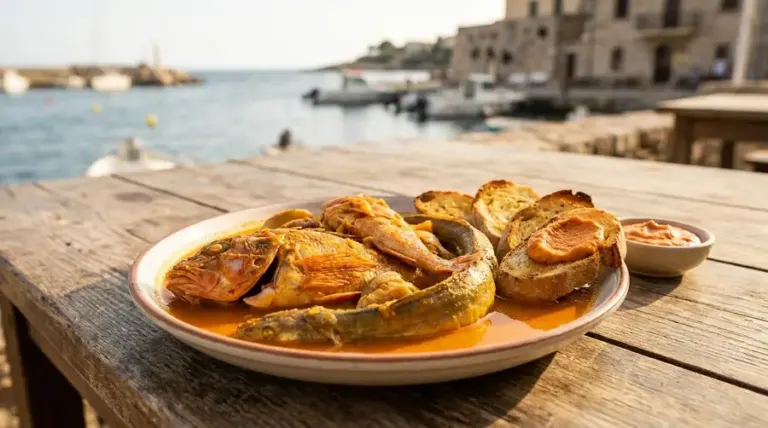
Illustration Check hotels in Marseilleor compare on AgodaBest for seafood
Marseille
Bouillabaisse by the Old Port, with Provence and the coast close by.
On this page
- Traditional French food by region: the menu
- Where to eat traditional French dishes, region by region
- Paris food: croissants, French onion soup, steak frites and the bistro classics
- Normandy: Camembert, cider, Calvados, mussels in cream and sole meunière
- Brittany: galettes, crêpes, kouign-amann and Cancale oysters
- Alsace: choucroute garnie, tarte flambée, baeckeoffe and kougelhopf
- Burgundy: boeuf bourguignon, coq au vin, escargots and Dijon mustard
- Lyon: quenelles, saucisson brioché and the bouchon lyonnais
- Nice, Provence and the French Riviera: socca, salade niçoise, ratatouille and pissaladière
- Marseille: bouillabaisse, aïoli, panisse and pastis
- Bordeaux and the South-West: entrecôte, canelés, Arcachon oysters, duck confit and cassoulet
- How French cuisine works: the menu, the formule and the courses
- More French dishes everyone should try in France
- French bread, French cheese and the bakery
- French desserts: from crème brûlée to tarte Tatin
- French drinks: wine, cider and the aperitif
- French dishes that are not French
- When to eat what: French food by season
- Ordering words
- When the French eat
- Hotels near the food in Lyon, with live prices
- Famous French food: FAQ
French cuisine is regional before it is national. Food in France is part of French culture in a way few countries match, and the famous French dishes most travellers know, boeuf bourguignon, coq au vin, bouillabaisse, quiche lorraine, choucroute, all carry the name of a region or a city, and they taste best where they were born. In 2010, UNESCO added the gastronomic meal of the French to its list of intangible cultural heritage, and the baguette followed in 2022, but the meal changes completely as you travel. The north cooks with butter, cream and apples; the east with pork, sauerkraut and white wine; the south with olive oil, garlic and tomatoes. A traditional French meal in Normandy has little in common with lunch in Nice. This guide is for travellers, not cooks: it is not a cookbook of easy French recipes to make at home, but a list of classic French dishes and the places to eat them. First comes the menu, with each famous French dish and the region it belongs to. Then we go region by region, from Paris to Normandy, Brittany, Alsace, Burgundy, Lyon, Nice and Provence, Marseille and Bordeaux, with what to order there, when it is in season, and where to stay so dinner is a short walk home. If you are still planning the route through the south, our southern France itinerary connects Lyon, Provence and the Riviera.
Some links below are affiliate links. We may earn a commission if you book through them, at no extra cost to you. We do not rank hotels, and any prices on the map come live from the booking sites.
Short answer
- Eat each dish where it belongs: boeuf bourguignon in Burgundy, quenelles in Lyon, bouillabaisse in Marseille, galettes in Brittany.
- Lunch is the bargain: a formule or plat du jour costs far less than the same food at dinner.
- Kitchens close between about 2 pm and 7 pm outside big cities, so plan meals around the hours.
Triplarks · France
Traditional French food by region: the menu
Each famous French dish and the region or city where it is best.
Classic French main dishes: stews, roasts and bistro plates the plat principal
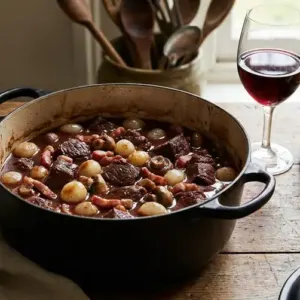
Boeuf bourguignonBurgundy
Beef braised slowly in red Burgundy wine with lardons, mushrooms and small onions.
Coq au vinBurgundy
Chicken (traditionally a rooster) braised in red wine with bacon, mushrooms and onions.
Steak fritesParis
Steak with French fries and a sauce such as béarnaise or pepper, the bistro standard.
Steak tartareParis
Raw chopped beef mixed with capers, shallots, mustard and an egg yolk, served with fries.
Blanquette de veauParis, everywhere
Veal simmered in a white stock finished with cream, served with rice.
Pot-au-feuEverywhere
Beef and vegetables simmered for hours; the broth is served first, then the meat with mustard.
Hachis parmentierEverywhere
Minced beef under mashed potato, the French cousin of cottage pie.
Poulet de BresseBresse, Lyon
The only French chicken with its own appellation, granted in 1957; roasted or cooked in cream.
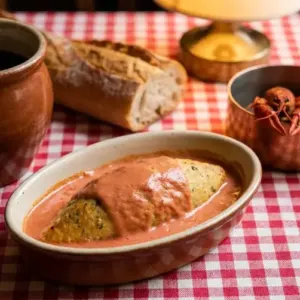
Quenelles de brochetLyon
Light dumplings of pike and choux paste, baked in a crayfish (Nantua) sauce.
Saucisson briochéLyon
A Lyon pork sausage baked inside brioche and served in thick slices.
AndouilletteLyon, Troyes
A coarse sausage of pork tripe, grilled with mustard; strong and not for everyone.
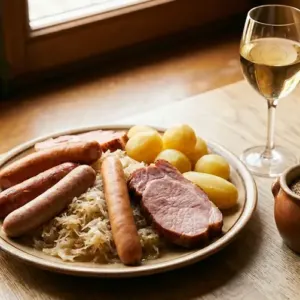
Choucroute garnieAlsace
Sauerkraut cooked in white wine and topped with sausages, smoked pork and potatoes.
BaeckeoffeAlsace
Lamb, pork and beef marinated in white wine and baked with potatoes in a sealed pot.
CassouletToulouse, Castelnaudary
White beans baked slowly with duck confit, sausage and pork.
Confit de canardSouth-West
Duck legs salted and cooked slowly in their own fat, then crisped and served with potatoes.
Entrecôte à la bordelaiseBordeaux
Rib-eye steak with a sauce of red wine, shallots and bone marrow.
Daube provençaleProvence
Beef stewed in red wine with orange peel, olives and herbs.
Pré-salé lambMont-Saint-Michel
Lamb raised on the salt marshes of the bay, with a protected designation.
French starters, bread, cheese and street food the entrée, the bakery and the cheese course
French onion soupParis
Onions cooked slowly in beef stock under toasted bread and melted cheese, gratinée.
Escargots de BourgogneBurgundy
Snails baked in their shells with garlic and parsley butter.
GougèresBurgundy
Cheese puffs of choux pastry and Comté or Gruyère, served with a glass of wine.
Oeufs en meuretteBurgundy
Poached eggs in a red wine sauce with bacon and croutons.
Foie grasSouth-West, Alsace
Duck or goose liver served as a terrine with toasted brioche.
Quiche lorraineLorraine
A savoury tart of eggs, cream and smoked bacon, without cheese in the classic recipe.
Tarte flambéeAlsace
Very thin dough topped with crème fraîche, onions and lardons, baked in a wood oven.
Croque-monsieurParis
A toasted ham and cheese sandwich with béchamel; with a fried egg on top, a croque-madame.
Jambon-beurreParis
Ham and butter in a baguette, the simple French sandwich sold in every bakery.
BaguetteEverywhere
The long French bread, on UNESCO’s list of intangible cultural heritage since 2022.
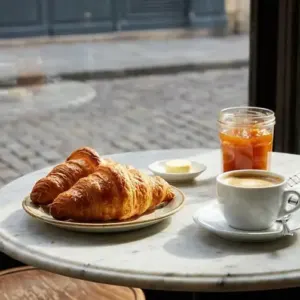
CroissantParis, everywhere
A flaky, buttery pastry eaten at breakfast with coffee.
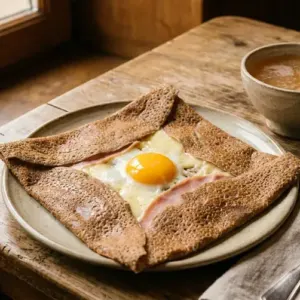
Galette complèteBrittany
A buckwheat pancake folded around ham, cheese and an egg.
SoccaNice
A thin chickpea pancake cooked on a wide iron pan and eaten hot with black pepper.
PissaladièreNice
An onion tart topped with anchovies and black olives.
Salade niçoiseNice
Tomatoes, eggs, olives, anchovies or tuna and raw vegetables, dressed with olive oil.
RatatouilleNice, Provence
Aubergine (eggplant), courgettes, peppers and tomatoes stewed in olive oil.
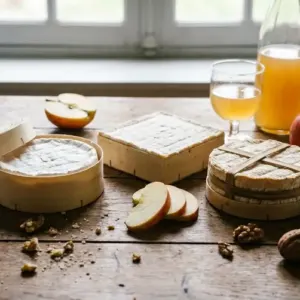
Camembert de NormandieNormandy
The soft, raw-milk cheese of Normandy, with protected status.
Comté and ÉpoissesJura, Burgundy
Comté is a hard mountain cheese; Époisses a strong, soft cheese washed in marc.
French fish and seafood the Atlantic, the Channel and the Mediterranean
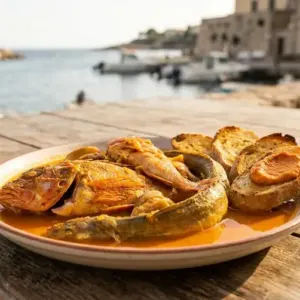
BouillabaisseMarseille
A saffron fish stew of rockfish, served as broth and fish with rouille and croutons.
Moules marinièresNormandy, Brittany
Mussels steamed with white wine, shallots and parsley; in Normandy, often with cream.
OystersCancale, Arcachon
Eaten raw with lemon or shallot vinegar, bread and salted butter.
Plateau de fruits de merBrittany, Paris
A tiered platter of oysters, prawns, crab, whelks and langoustines on ice.
Sole meunièreNormandy, Paris
Whole sole dusted in flour, fried in butter and finished with lemon and parsley.
Le grand aïoliProvence, Marseille
Salt cod, boiled vegetables and eggs with a strong garlic mayonnaise.
Brandade de morueNîmes, Provence
Salt cod beaten with olive oil and milk, served with toast.
Coquilles Saint-JacquesNormandy, Brittany
Scallops, in season in winter, seared or baked in their shells.
French desserts, pastries and French drinks the dessert, the pâtisserie and the glass
Crème brûléeEverywhere
A baked vanilla custard under a thin layer of burnt sugar.
Tarte TatinLoire Valley, everywhere
An upside-down apple tart of caramelised apples, served warm with crème fraîche.
Mousse au chocolatEverywhere
Dark chocolate mousse, the classic bistro dessert.
CrêpesBrittany, everywhere
Thin wheat pancakes with butter and sugar, salted caramel or chocolate.
Kouign-amannDouarnenez, Brittany
A Breton butter cake of laminated dough, butter and sugar, caramelised in the oven.
Paris-BrestParis
A ring of choux pastry filled with praline cream.
MacaronsParis
Two almond meringue shells with a filling of ganache, buttercream or jam.
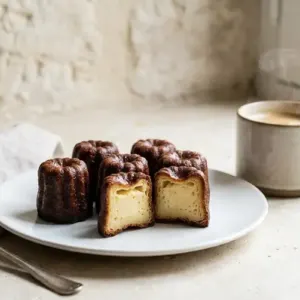
CaneléBordeaux
A small fluted cake with a dark caramelised crust and a soft rum and vanilla centre.
KougelhopfAlsace
A ring-shaped brioche with raisins and almonds, eaten at breakfast or with wine.
Tarte aux pralinesLyon
A bright pink tart of sugar-coated almonds cooked in cream.
Cider and CalvadosNormandy, Brittany
Dry apple cider with galettes, and Calvados, the apple brandy of Normandy.
PastisMarseille, Provence
An anise drink diluted with water, the aperitif of the south.
KirDijon, Burgundy
White Burgundy wine with blackcurrant liqueur, named after a mayor of Dijon.
French wineBordeaux, Burgundy, Alsace
Each region pours its own: red Bordeaux, Pinot Noir in Burgundy, Riesling in Alsace.
Seasonal dishes come and go, so check what is on the day.Dish photos are illustrations.
Where to eat it
Where to eat traditional French dishes, region by region
- 1Paris
Bakeries · bistros · cheese shops
Where to eat ↓Hotels in Paris → - 2Honfleur
Butter and cream · apple orchards · Channel seafood
Where to eat ↓Hotels in Honfleur → - 3Saint-Malo
Crêperies · salted butter · oysters
Where to eat ↓Hotels in Saint-Malo → - 4Strasbourg
Winstubs · sauerkraut · white wine
Where to eat ↓Hotels in Strasbourg → - 5Beaune
Red wine sauces · snails · Époisses
Where to eat ↓Hotels in Beaune → - 6Lyon
Bouchons · Bresse chicken · Les Halles
Where to eat ↓Hotels in Lyon → - 7Nice
Olive oil · street food · markets
Where to eat ↓Hotels in Nice → - 8Marseille
Fish stew · Old Port · anise
Where to eat ↓Hotels in Marseille → - 9Bordeaux
Wine country · duck · Atlantic oysters
Where to eat ↓Hotels in Bordeaux →
Region 1 of 9
Paris food: croissants, French onion soup, steak frites and the bistro classics
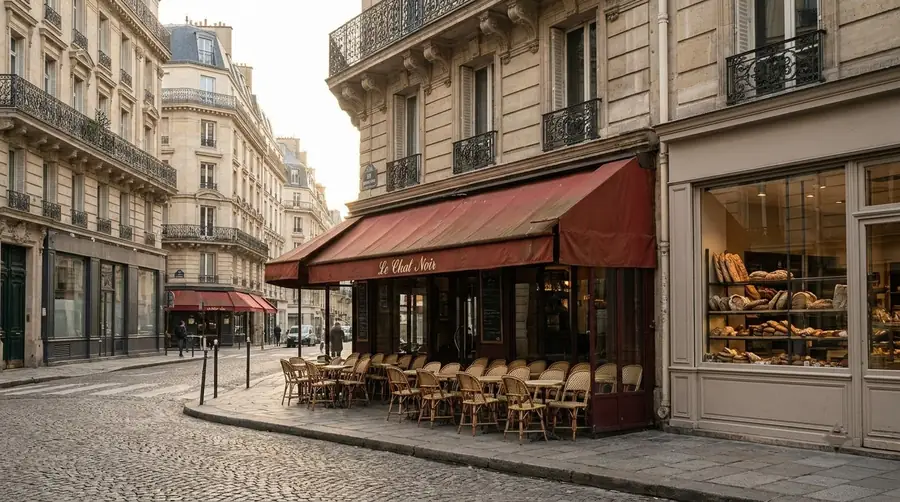
The French capital has no single regional dish, but it is where most visitors eat their first traditional French food, and it gathers dishes from every region of France. The day starts at a bakery, the boulangerie, with a croissant or a pain au chocolat and a café crème at the counter of a café. The croissant is usually traced to the Austrian kipferl and to the Viennese bakers who worked in Paris in the 1800s, which is why croissants and brioches are still called viennoiseries. Lunch is a jambon-beurre, ham and butter in a fresh baguette and the quintessentially French snack, or the plat du jour in a bistro. The classic bistro menu is the same across the city: French onion soup, the old night-time soup of the Les Halles market, then steak frites, steak tartare, blanquette de veau or a croque-monsieur, and crème brûlée or mousse au chocolat to finish. Paris is also the capital of French pastry: macarons, éclairs and the Paris-Brest, a ring of choux pastry with praline cream named after a cycle race. Buy cheese from a fromagerie and eat it in a park, or join one of the food tours of the Marais and Saint-Germain to taste your way through the streets of Paris. For named restaurants, see our best restaurants in Paris.
Order hereCroissantFrench onion soupSteak fritesCroque-monsieurMacarons
Region 2 of 9
Normandy: Camembert, cider, Calvados, mussels in cream and sole meunière
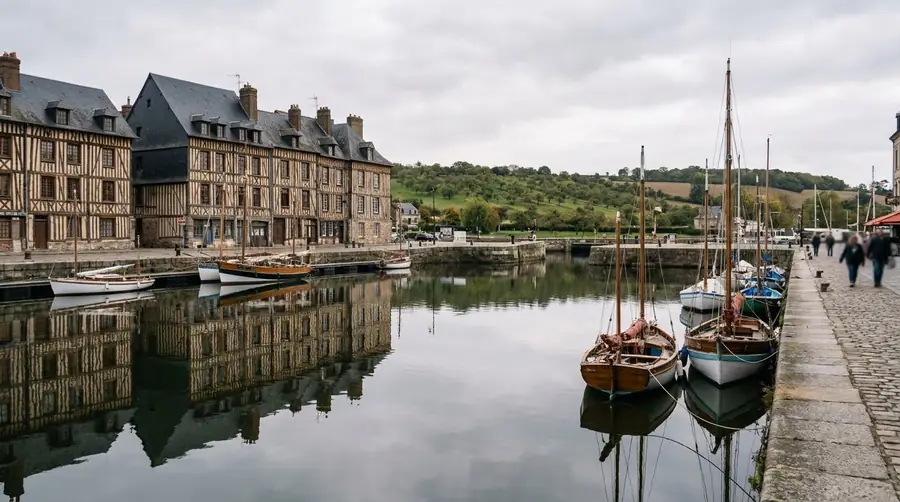
Normandy is the dairy and apple region of northern France, and its cooking is built on butter, cream and apples. It is the home of Camembert de Normandie, a soft raw-milk cheese with protected status, and of two more famous cheeses, Pont-l’Évêque and Livarot; ask for all three on a cheese board. Apples are made into dry cider and Calvados, an apple brandy with its own appellation and the classic digestif, and a small glass of Calvados between courses is an old Normandy custom called the trou normand. Dishes cooked à la normande come with cream, cider or apples: moules marinières finished with crème fraîche, chicken in cider, pork with apples. The Channel coast gives sole, which Normandy cooks claim for sole meunière, and scallops, coquilles Saint-Jacques, in season through the winter. Near Mont-Saint-Michel, look for pré-salé lamb, raised on the salt marshes of the bay and protected by its own designation. Honfleur is the prettiest base on the coast, a harbour town of tall slate-fronted houses full of seafood restaurants, and the cheese villages and cider farms of the Pays d’Auge are a short drive inland.
Order hereCamembertMoules à la crèmeSole meunièreCider and CalvadosPré-salé lamb
Region 3 of 9
Brittany: galettes, crêpes, kouign-amann and Cancale oysters
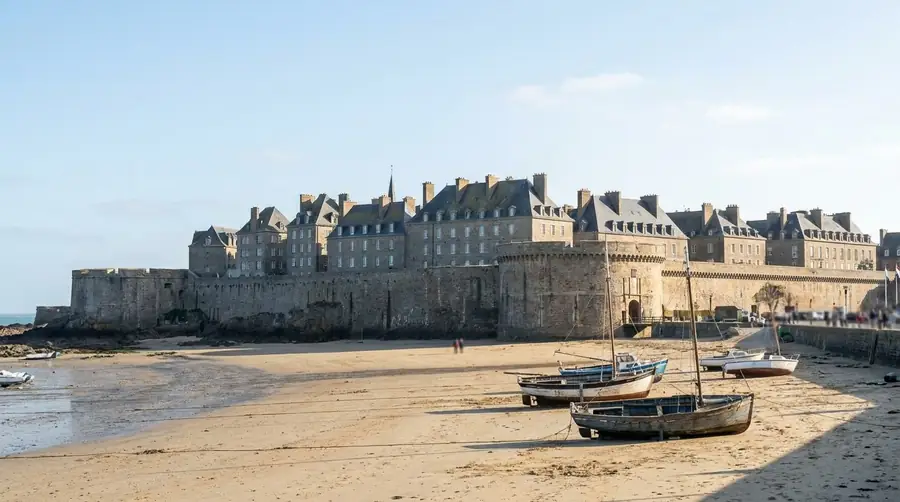
Brittany is the Atlantic peninsula of the north-west, and its food is simple, salty and very good. Breton butter is salted, and salted caramel is the local flavour. The meal everyone eats here is a galette, a savoury buckwheat pancake, followed by a sweet crêpe made with wheat flour, washed down with dry cider poured into a ceramic bowl. Order a galette complète, with ham, cheese and an egg, and a crêpe with butter and sugar or salted caramel. The great pastry of Brittany is the kouign-amann, whose name means butter cake in Breton: layers of dough, butter and sugar that caramelise in the oven. It is credited to a baker in Douarnenez, on the west coast, in about 1860. The coast supplies the seafood. Cancale, a short drive from Saint-Malo, is an oyster town where you can buy oysters at stalls by the harbour and eat them on the sea wall, and seafood restaurants serve a plateau de fruits de mer, a tiered platter of shellfish on ice. In the south, Guérande is known for its hand-harvested sea salt and fleur de sel. Saint-Malo is the base: a walled port town with crêperies on every street.
Order hereGalette complèteCrêpesKouign-amannCancale oystersSeafood platter
Region 4 of 9
Alsace: choucroute garnie, tarte flambée, baeckeoffe and kougelhopf
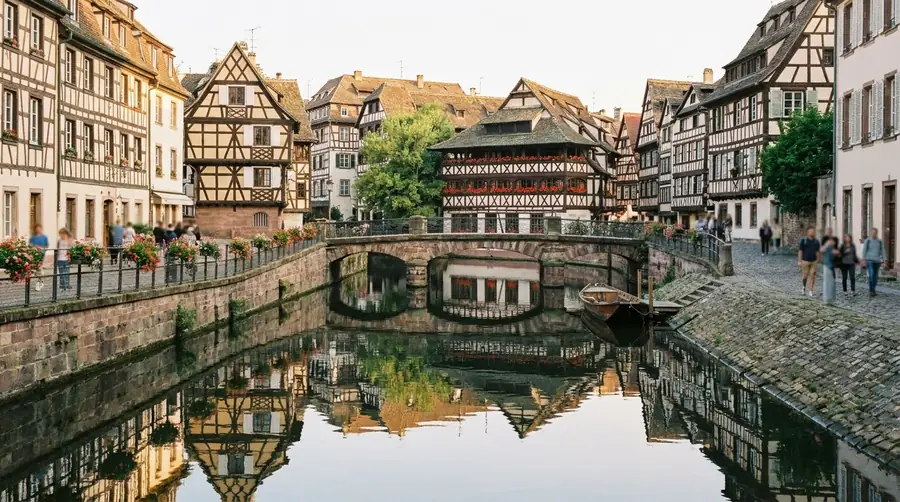
Alsace sits on the German border, and its food shows it: pork, sauerkraut, dumplings and white wine, served in a cosy wine tavern called a winstub. The famous dish is choucroute garnie, sauerkraut cooked in Riesling and topped with sausages, smoked pork and boiled potatoes; the cabbage itself, choucroute d’Alsace, has carried a protected geographical indication in the EU since 2018. The other must-try is tarte flambée, or flammekueche, a very thin dough spread with crème fraîche, onions and lardons and baked in a hot wood oven, eaten with your hands and shared at the table. On cold days, order baeckeoffe, a casserole of lamb, pork and beef marinated in white wine and baked with potatoes in a pot sealed with dough. Strasbourg also makes foie gras, and bakeries sell kougelhopf, a ring-shaped brioche with raisins and almonds, and spiced gingerbread in winter. The wines are white and named by grape, Riesling, Gewurztraminer and Pinot Gris, and the Alsace Wine Route runs through half-timbered villages such as Colmar, Riquewihr and Eguisheim. Strasbourg’s Christmas market is the busiest time of year.
Order hereChoucroute garnieTarte flambéeBaeckeoffeKougelhopf
Region 5 of 9
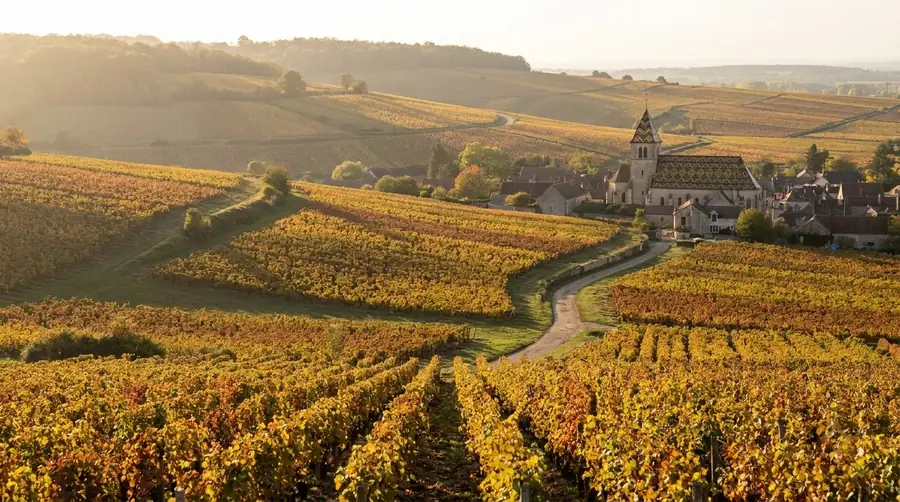
Burgundy: boeuf bourguignon, coq au vin, escargots and Dijon mustard
Burgundian cooking gave France two of its best-known dishes, and both are cooked in red wine. Boeuf bourguignon is a hearty dish of beef from the local Charolais cattle, cheaper cuts of meat braised for hours in red Burgundy with lardons, mushrooms and small onions, and coq au vin is chicken cooked the same way. Even eggs come in red wine sauce here, as oeufs en meurette. Start a meal with escargots de Bourgogne, snails baked in garlic and parsley butter, or with gougères, warm cheese puffs served with a glass of white wine. The cheese is Époisses, soft, orange and strong, washed in marc, a local brandy. Dijon gave its name to mustard, but the name Dijon mustard is not protected and the seed mostly comes from Canada; for mustard grown and made in the region, look for moutarde de Bourgogne, which has a protected geographical indication. Dijon also gave its name to kir, white wine with blackcurrant liqueur, named after Félix Kir, a mayor of the city. Beaune is the wine town at the heart of the Côte d’Or, with wine cellars to visit, a weekly market and a famous charity wine auction at the Hospices de Beaune each November.
Order hereBoeuf bourguignonCoq au vinEscargotsOeufs en meuretteKir
Region 6 of 9
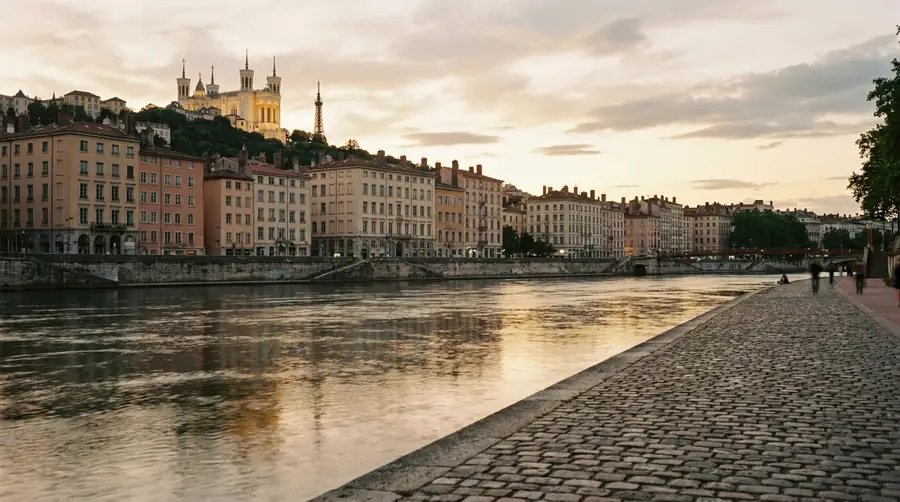
Lyon: quenelles, saucisson brioché and the bouchon lyonnais
Lyon is often called the food capital of France, and it eats richly. The place to eat local food is a bouchon, a small, crowded restaurant with checked tablecloths and a short menu of Lyonnaise dishes, wine served in a heavy pot. Order quenelles de brochet, light pike dumplings baked in a pink crayfish sauce; saucisson brioché, sausage baked in brioche; salade lyonnaise with bacon, croutons and a poached egg; and cervelle de canut, a soft cheese mixed with herbs, shallots and garlic. Andouillette and tripe dishes are here for adventurous eaters. Dessert is a bright pink tarte aux pralines. Lyon’s cooking was shaped by the mères lyonnaises, women cooks who ran the city’s restaurants, and one of them, Eugénie Brazier, held three stars in the Michelin Guide at two restaurants at once in 1933. Paul Bocuse, who trained with her, later took Lyon cooking into haute cuisine. North of the city, the Bresse region raises poulet de Bresse, the only French chicken with its own appellation, granted in 1957. Les Halles de Lyon Paul Bocuse, the covered food market named after the city’s most famous chef, is the place to buy cheese, charcuterie and oysters. The wines are Beaujolais and the Côtes du Rhône.
Order hereQuenellesSaucisson briochéPoulet de BresseAndouilletteTarte aux pralines
Region 7 of 9
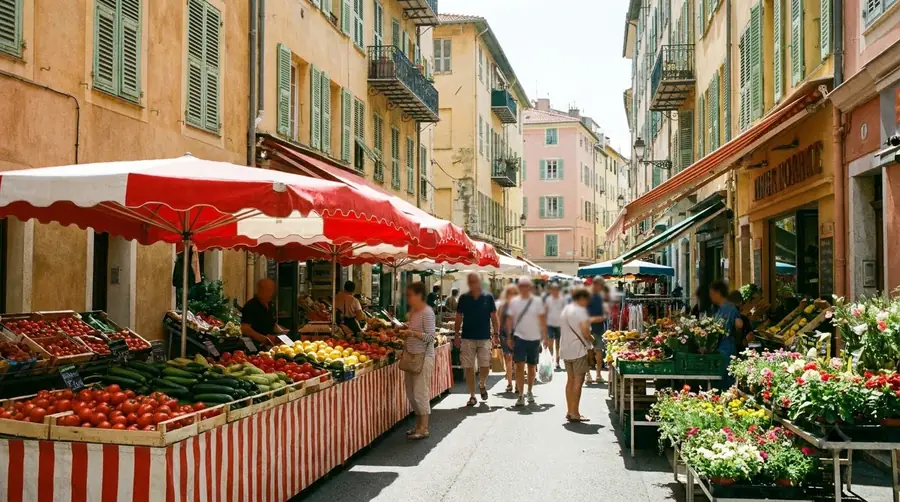
Nice, Provence and the French Riviera: socca, salade niçoise, ratatouille and pissaladière
On the Mediterranean, French cooking changes completely: butter and cream give way to olive oil, garlic, tomatoes and herbs. Nice was part of the Kingdom of Sardinia until 1860, and its food is close to that of Italy, with gnocchi, stuffed vegetables and Niçoise ravioli filled with leftover daube. The street food is socca, a thin chickpea pancake cooked on a wide iron pan in a wood oven and eaten hot with black pepper, and pissaladière, an onion tart with anchovies and black olives. Salade niçoise is the local salad; in Nice it is made with raw vegetables, eggs, olives and anchovies or tuna, and cooks argue about whether boiled potatoes and green beans belong. Pan bagnat is the same salad in a round bread roll. Ratatouille, a stew of fresh summer vegetables, aubergine, courgettes, red peppers and tomatoes, comes from Nice, and petits farcis are vegetables stuffed with meat and baked. Inland, Provence adds daube provençale, a beef stew with orange peel, tapenade and lavender honey. This is summer dining at its best: simple ingredients, vegetables and herbs, olive oil and a glass of rosé on the French Riviera. The Cours Saleya market in the old town sells fruit, vegetables and flowers each morning except Monday. Our southern France itinerary links Nice with Provence and Marseille.
Region 8 of 9
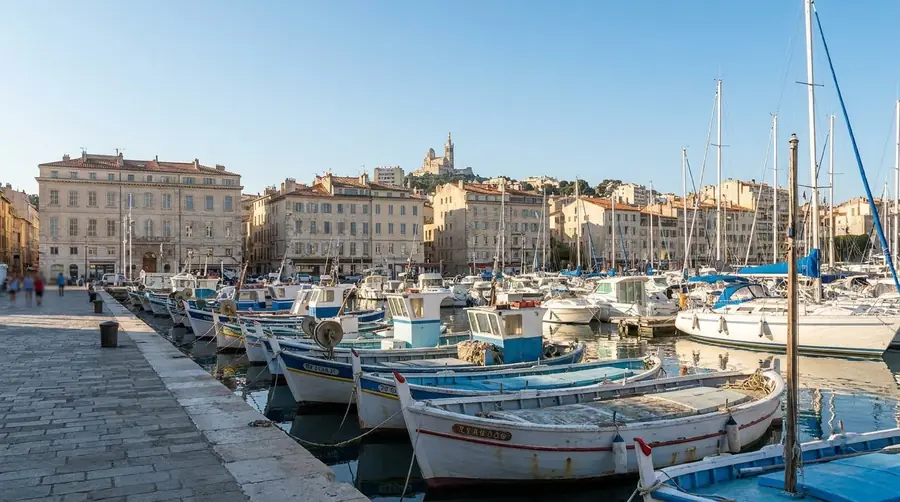
Marseille: bouillabaisse, aïoli, panisse and pastis
Marseille, often called the oldest city in France, is its great port, and its signature dish is bouillabaisse. It began as the fishermen’s stew made with the unsold rockfish of the day, cooked with saffron, fennel, garlic, tomato and olive oil. A proper bouillabaisse is served in two parts: first the broth, with toasted bread and rouille, a garlic and saffron sauce, then the fish, cut at the table. In 1980 a group of Marseille restaurateurs signed a bouillabaisse charter to set out what the dish must contain, and some restaurants still display it; expect it to be expensive, and in many places you must order a day ahead. Le grand aïoli is the Provençal feast of salt cod, boiled vegetables and eggs with a strong garlic mayonnaise, traditionally on a Friday. Street food is panisse, chickpea chips fried until crisp. Marseille’s biscuit is the navette, boat-shaped and scented with orange flower water, and its drink is pastis, the anise aperitif that turns cloudy when you add water. The North African and Armenian communities make Marseille one of the best cities in France for couscous and spices, too.
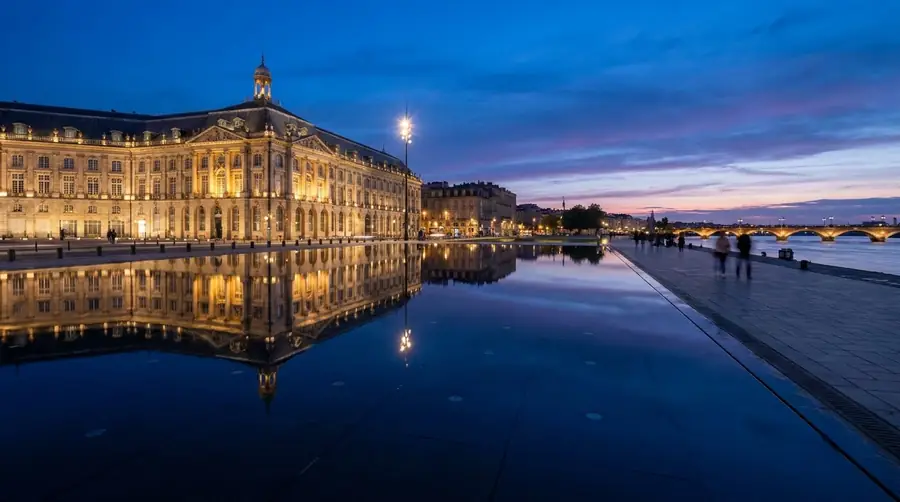
Region 9 of 9
Bordeaux and the South-West: entrecôte, canelés, Arcachon oysters, duck confit and cassoulet
Bordeaux is wine first, and the food is made to go with it. The local steak is entrecôte à la bordelaise, rib-eye in a sauce of red wine, shallots and bone marrow, sometimes grilled over vine cuttings. The city’s pastry is the canelé, a small fluted cake with a dark caramelised crust and a soft centre flavoured with rum and vanilla; the story usually told links it to the egg yolks left over when winemakers used egg whites to clear their wine, but nobody knows for sure. An hour west, the Bay of Arcachon is one of the main oyster areas in France, and Bordeaux eats Arcachon oysters with a glass of white Entre-Deux-Mers and, locally, a small grilled sausage on the side. Further into the South-West, the Dordogne and Gascony are duck country: confit de canard, magret, and foie gras. Around Toulouse and Castelnaudary, the dish is cassoulet, white beans baked slowly with duck confit, sausage and pork; Castelnaudary, Carcassonne and Toulouse each claim the true recipe. Bordeaux’s market at the Marché des Capucins is a good place for oysters and a glass of wine on a Saturday morning.
Order hereEntrecôte bordelaiseCaneléArcachon oystersDuck confitCassoulet
How French cuisine works: the menu, the formule and the courses
French meals have a fixed order, and knowing it makes any menu easy to read. Most restaurants offer a set menu at lunch, the formule, with two or three courses at a set price, and a dish of the day written on a blackboard. The words that confuse visitors most are on the first line: in France, the entrée is the starter, not the main course.
- Apéritif
- A drink before the meal: a glass of Champagne, a kir or pastis, with olives or nuts.
- Entrée
- The starter: soup, a salad, a terrine or escargots.
- Plat principal
- The main course, usually meat or fish with vegetables or fries.
- Fromage
- The cheese course, served before dessert, not after it.
- Dessert and café
- Dessert, then a small black coffee, an espresso. Milky coffee after a meal is unusual.
More French dishes everyone should try in France
These popular French dishes are made across the country, so you can order them in almost any French restaurant or brasserie. They are the core of French cooking, simple French food done carefully, and every family has its own version.
French onion soup
Soupe à l’oignon gratinée is onions cooked slowly until brown and sweet, simmered in beef stock, then topped with toasted bread and grated cheese, usually Gruyère or Comté, and grilled until the cheese is gooey and bubbling, with a crusty top. It was the late-night soup of the porters and night workers at Les Halles, the old Paris market, and brasseries still serve it late.
Boeuf bourguignon and coq au vin
Both are Burgundy stews braised slowly in red wine with bacon, mushrooms and small onions, one made with beef and the other with chicken. A good boeuf bourguignon, a classic dish of Burgundy, is cooked the day before and reheated; it is served with boiled potatoes, pasta or bread to soak up the sauce.
Ratatouille
Ratatouille is a vegetable stew from Nice of aubergine (eggplant), courgettes (zucchini), red bell peppers, onions and tomatoes cooked in olive oil with garlic and herbs. Purists cook each vegetable separately before combining them. It is served hot or at room temperature, as a side dish or a light main course. The neat layered version from the animated film Ratatouille is a confit byaldi, a modern restaurant dish.
Quiche lorraine
Quiche comes from Lorraine, next to Alsace, where the classic version has only eggs, cream and smoked bacon in a shortcrust pastry, without cheese. Bakeries all over France sell it by the slice for lunch, often with cheese added.
Cassoulet
Cassoulet is the great bean dish of the South-West, named after the earthenware pot, the cassole, it is baked in. White beans are cooked slowly with duck or goose confit, Toulouse sausage and pork until a crust forms on top. It is heavy food for cold weather, and best eaten in the Languedoc rather than from a tin.
Confit de canard
Duck legs are salted, then cooked slowly in duck fat, an old way of preserving meat in the South-West. Before serving, the legs are crisped in a pan or oven and served with potatoes fried in the same fat, pommes sarladaises, with garlic and parsley.
Steak frites and steak tartare
Steak frites, steak with French fries, is on almost every bistro menu. Order it saignant (rare) or à point (medium rare); well done is bien cuit. Steak tartare is raw chopped beef mixed with capers, shallots, mustard and an egg yolk, a classic of Paris brasseries, served with a tangy mustard dressing.
French bread, French cheese and the bakery
Bread and cheese are part of every French meal, and the bakery is part of every French street.
The baguette and French bread
The baguette is bought fresh at least once a day and served free with every meal; there is no side plate, and you put your bread on the tablecloth. A baguette tradition is made with only flour, water, salt and yeast, and is worth the few extra cents.
French cheese
France makes hundreds of cheeses, and dozens have protected designations. A good cheese board moves from mild to strong: a soft Camembert or Brie, a hard mountain Comté, a blue Roquefort, then a washed-rind cheese such as Époisses or Munster. Cheese comes before dessert, with bread and red wine.
Croissants and viennoiseries
Croissants and pains au chocolat are breakfast food, sold in the morning and rarely eaten after lunch. In bakeries, a croissant au beurre is made with butter, which is the one to order.
French desserts: from crème brûlée to tarte Tatin
French desserts fall into two families: the simple bistro desserts and the fine pastries of the pâtisserie.
Crème brûlée
An indulgent vanilla custard baked in a shallow dish, chilled, then covered with sugar that is burnt with a hot iron or torch until it sets into a thin crust you crack with a spoon.
Tarte Tatin
An upside-down tart of apples cooked in butter and sugar under the pastry, then turned out so the caramelised apples are on top. The story goes that it was first made in the late 19th century at the Hôtel Tatin in Lamotte-Beuvron, in the Loire Valley, by the Tatin sisters. It is served warm with crème fraîche.
Chocolate soufflé
A soufflé rises in the oven on beaten egg whites and is served at once, with a light, airy texture that falls within minutes. Order it at the start of the meal, as it is baked to order. The French word soufflé means blown up.
Crêpes, mousse au chocolat and profiteroles
Crêpes come from Brittany but are sold from street stands everywhere. Mousse au chocolat and profiteroles, cream puffs of choux pastry filled with ice cream under hot chocolate sauce, are the classic bistro desserts. A café gourmand is a coffee with three or four small desserts, good when you cannot choose.
French drinks: wine, cider and the aperitif
Each French region has its own drink, and ordering the local one is half the pleasure. Wine is ordered by the glass, the carafe or the bottle; a carafe of house wine, the vin de la maison, is cheap and usually good.
French wine by region
Burgundy makes Pinot Noir and Chardonnay, Bordeaux red blends of Cabernet Sauvignon and Merlot, Alsace dry white Riesling and Gewurztraminer, and Provence pale rosé. Champagne comes only from the Champagne region east of Paris, and Beaujolais is drunk young and cool in Lyon.
Cider and Calvados
Normandy and Brittany do not grow grapes; they make cider from apples, served in a bowl with galettes, and in Normandy Calvados, an apple brandy aged in oak.
Pastis and kir
Pastis, an anise spirit mixed with five parts cold water, is the aperitif of Marseille and Provence. Kir, white wine with blackcurrant liqueur, is the aperitif of Burgundy; with Champagne it becomes a kir royal, the best-known French cocktail.
French dishes that are not French
Some foods called French outside France are rarely eaten there, or go by another name.
French toast
In France it is pain perdu, lost bread: stale bread soaked in milk and egg and fried, served as a dessert rather than breakfast.
French fries
Frites are eaten all over France with steak or mussels, but Belgium claims to have invented them, and the name French fries came from English speakers.
French dressing
The orange American dressing is unknown in France. A French salad comes with a vinaigrette of oil, vinegar and Dijon mustard.
When to eat what: French food by season
French cooking follows the market, and menus change with the seasons. Look for the dish of the day and order what is in season.
- Spring (March to May): asparagus, spring lamb at Easter, strawberries, and the first goat’s cheeses.
- Summer (June to August): tomatoes, melons, apricots and peaches in Provence, salade niçoise and ratatouille, mussels on the Atlantic coast.
- Autumn (September to November): the grape harvest, mushrooms and game, apples and cider in Normandy, and the Hospices de Beaune wine auction in November.
- Winter (December to February): oysters and scallops at their best, foie gras and Champagne at Christmas, choucroute and cassoulet, and the galette des rois in January.
Ordering words
- Formule
- A set menu of two or three courses at a fixed price, usually at lunch.
- Plat du jour
- The dish of the day.
- Entrée
- The starter, not the main course.
- Saignant, à point, bien cuit
- Rare, medium rare, well done.
- Une carafe d’eau
- A jug of tap water, free with every meal.
- Un café
- A small black coffee, an espresso.
- L’addition, s’il vous plaît
- The bill, please. Waiters will not bring it until you ask.
- Bon appétit
- Enjoy your meal.
When the French eat
Meal times are stricter than in most countries. Restaurants serve lunch from about noon to 2 pm and dinner from about 7.30 pm, and outside big cities the kitchen closes in between. Brasseries and cafés serve food all day.
A typical day
- BreakfastAbout 7–10 amCoffee and a croissant or bread with butter and jam.
- LunchAbout 12–2 pmThe formule or plat du jour; the main meal in the countryside.
- ApéritifAbout 6–7 pmA drink with olives or nuts before dinner.
- DinnerAbout 7.30–10 pmLater in Paris and the south.
Typical times, not opening hours. Check each place.
Live prices
Hotels near the food in Lyon, with live prices
Prices appear on the pins once dates are set. We pre-fill a week about a month ahead; change the dates on the map to see yours.
Famous French food: FAQ
What is the most famous French food?
The croissant and the baguette are the best-known French foods, and the most famous French dishes include boeuf bourguignon, coq au vin, French onion soup, ratatouille, bouillabaisse, quiche lorraine and crème brûlée. Each is at its best in the region it comes from.
What is the national dish of France?
France has no official national dish. Pot-au-feu, beef and vegetables simmered in broth, is the one most often named, along with boeuf bourguignon and steak frites.
What is traditional French food?
Traditional French food is regional cooking built on local produce: butter, cream and apples in Normandy, pork and sauerkraut in Alsace, red wine stews in Burgundy, olive oil and vegetables in Provence, and duck in the South-West.
What do French people eat for breakfast?
Breakfast is light: coffee with bread, butter and jam, or a croissant or pain au chocolat. A cooked breakfast is not a French custom.
Which French city has the best food?
Lyon is the usual answer, for its bouchons, quenelles and Les Halles market. Paris has the widest choice, and Marseille is best for bouillabaisse and Mediterranean seafood.
Is it rude to ask for the bill in France?
No. In France the table is yours for as long as you like, so the waiter will not bring the bill until you ask for it: say l'addition, s'il vous plaît.
What is impolite to do in France when eating?
Say bonjour when you walk in, do not call the waiter garçon, keep your hands on the table rather than in your lap, and do not ask for the bill to be split item by item in a small restaurant. Asking to change a dish on the menu is also less common than in many countries.
Do you tip in restaurants in France?
Service is included in French restaurant prices by law. Leaving a few euros or rounding up for good service is common but not expected.
Where should I stay in France for food?
Paris for a first trip, Lyon if food is the main reason to travel, and Marseille or Nice for Mediterranean cooking. Beaune and Strasbourg are smaller cities with very good regional food.
Keep planning France
- Where to Stay in Lyon: Pick Your River, Pick Your Century
- Where to Stay in Bordeaux: Choose the Tram Line, Not the Street
- Where to Stay in Nice: Count the Streets Back from the Sea
- Where to Stay in Paris: Read the Number and You Have Your Answer
- South of France Itinerary: Coast by Train, Inland by Car
- Best Restaurants in Paris: Where to Eat, Neighbourhood by Neighbourhood
Written and checked by
Triplarks Editorial
An editorial desk, not an invented persona: research, drafting and fact-checking are done by the same small team. Every number here carries the date it was read.