
Four days. Three if you are tight, and a week if you want day trips as well — but four is the number that fits.
Some links below are affiliate links. We may earn a commission if you book through them, at no extra cost to you. We do not rank hotels, and any prices on the map come live from the booking sites.
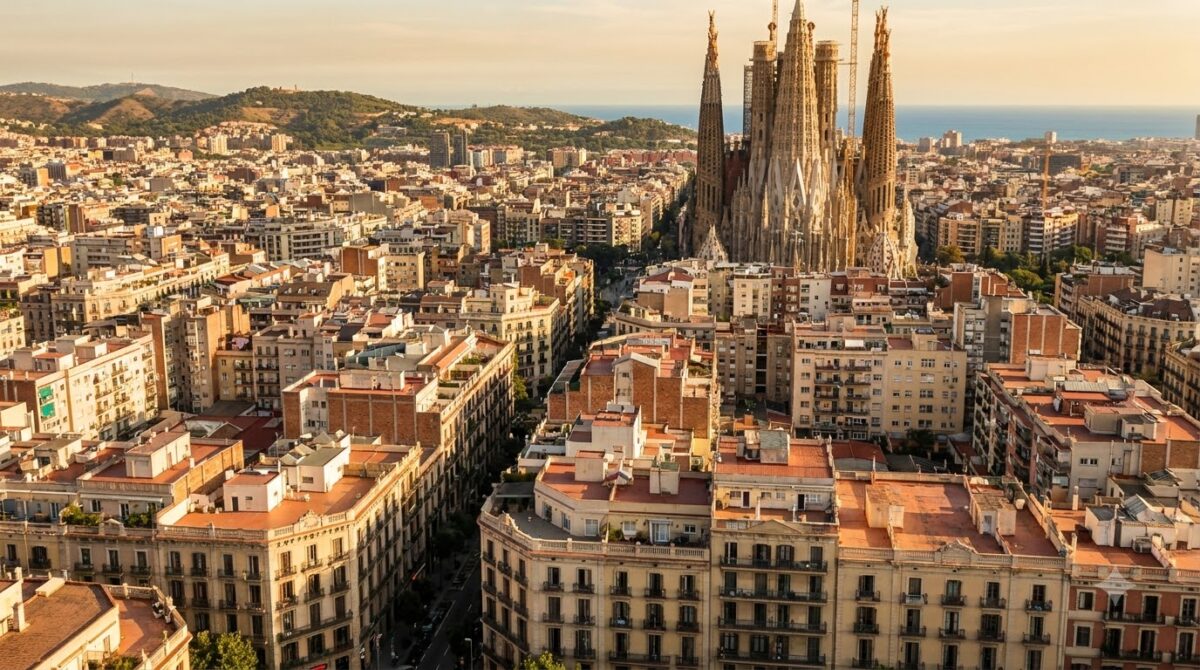
Quick answer: where to stay. The Dreta de l’Eixample, between Passeig de Gracia and the Sagrada Familia: central, safe, quiet at night and walkable to almost everything. El Born if you want the old streets on your doorstep.
Check hotels in Eixample →Check El Born →See them on a map ↓
The reason is not the size of the city. Barcelona is compact and you can walk most of it. The reason is that almost everything you came to see is timed-entry and sells out days ahead: the Sagrada Família, Park Güell, Casa Batlló, Casa Milà, the Picasso Museum.
So a Barcelona trip gets shaped by ticket slots rather than by geography, and there is much to see that you simply need to book. Two big timed entries a day is the realistic ceiling, and the main sights come to about six or seven of them.
Planning a trip here means booking before you fly, not after you land. Opening patterns, booking rules and transport connections checked 7 September 2026.
How many days in Barcelona do you need? The short answer
| Length | What it covers | Verdict |
|---|---|---|
| 2 days | Sagrada Família, Gothic Quarter, one Gaudí house | A stopover, not a visit |
| 3 days | Adds Park Güell, Montjuïc, the beach | Enough, but full |
| 4 days | Adds a slow day and the museums | The right answer |
| 5–6 days | Adds one or two day trips | Ideal if you have the time |
| 7 days in Barcelona | City plus Montserrat, Girona and the coast | Not too long, if you use the trains |
The honest version: you can see in Barcelona all of the main sights in three days and not enjoy much of it. There is time to see them, but no time to sit down. Spend three days and you are moving constantly. The fourth day is the one where the city stops being a checklist.
Day 1: the Gothic Quarter and La Rambla
Start on foot in the oldest part of Barcelona, because it needs no tickets and it orients you.
- The Gothic Quarter — a dense knot of medieval lanes between the cathedral and the port. Get lost in it deliberately.
- Barcelona Cathedral, a Gothic basilica with a cloister of thirteen geese, one for each year of Saint Eulalia’s life. Start your day here before the lanes fill.
- La Rambla once, end to end, and then the streets either side of it, which are better. Las Ramblas is a thoroughfare rather than a destination.
- La Boqueria, the covered market off La Rambla. Go before eleven or after four; the middle of the day is unbearable.
- El Born in the evening, for the best tapas bar density in the old city.
A free walking tour of the Gothic Quarter on your first day in Barcelona is genuinely useful here, because the layout makes more sense with someone explaining it.
Day 2: Antoni Gaudí, the Sagrada Família and Passeig de Gràcia
This is your Antoni Gaudí day, and the one that needs the most planning.
- The Sagrada Família in the morning. The stained glass windows on the east side are the reason to go early, and one of the towers is worth the extra for views of the city. Under construction since 1882 and still unfinished. You need to book tickets in advance — days ahead in low season, weeks in summer.
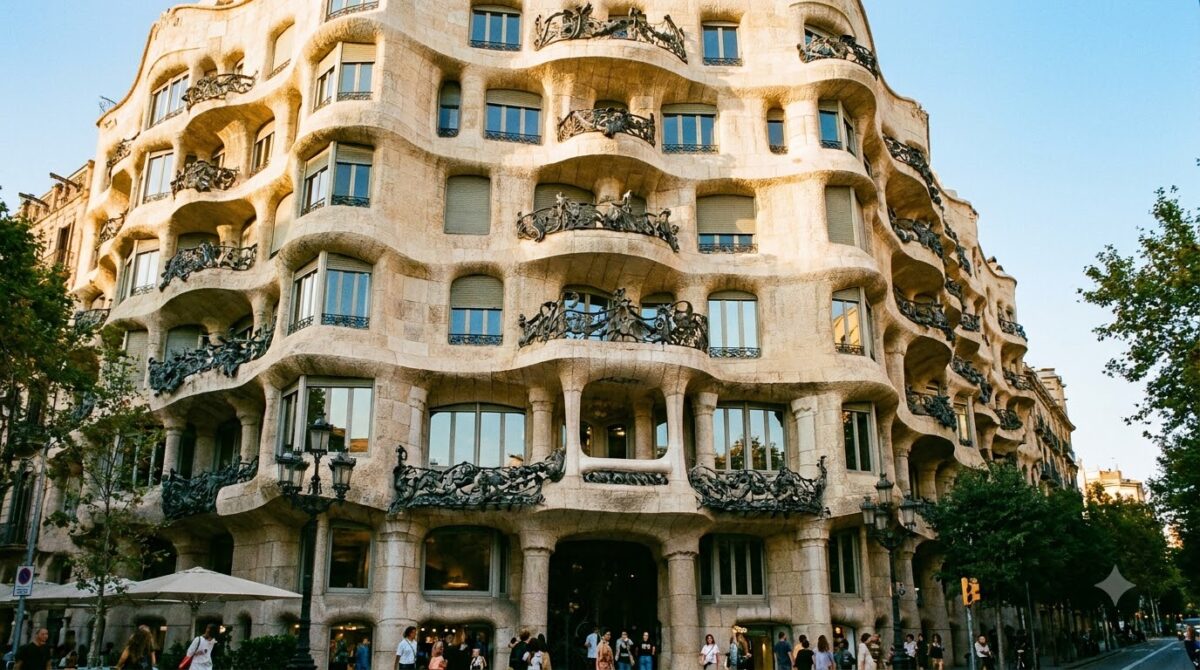
- Passeig de Gràcia in the afternoon, where Casa Batlló and Casa Milà stand a few blocks apart. Both are worth going inside; if you only do one, Casa Batlló.
- Casa Vicens, Gaudí’s first house, is a short walk north and far quieter than the other two.
Two timed entries is the honest maximum for one day, and it is why the Gaudí buildings cannot be compressed further.
Day 3, the third day: Park Güell, Montjuïc and Barceloneta
The third day spreads out from the center of Barcelona, and it is the day a good day itinerary starts to breathe. This side of Barcelona is where the views are.
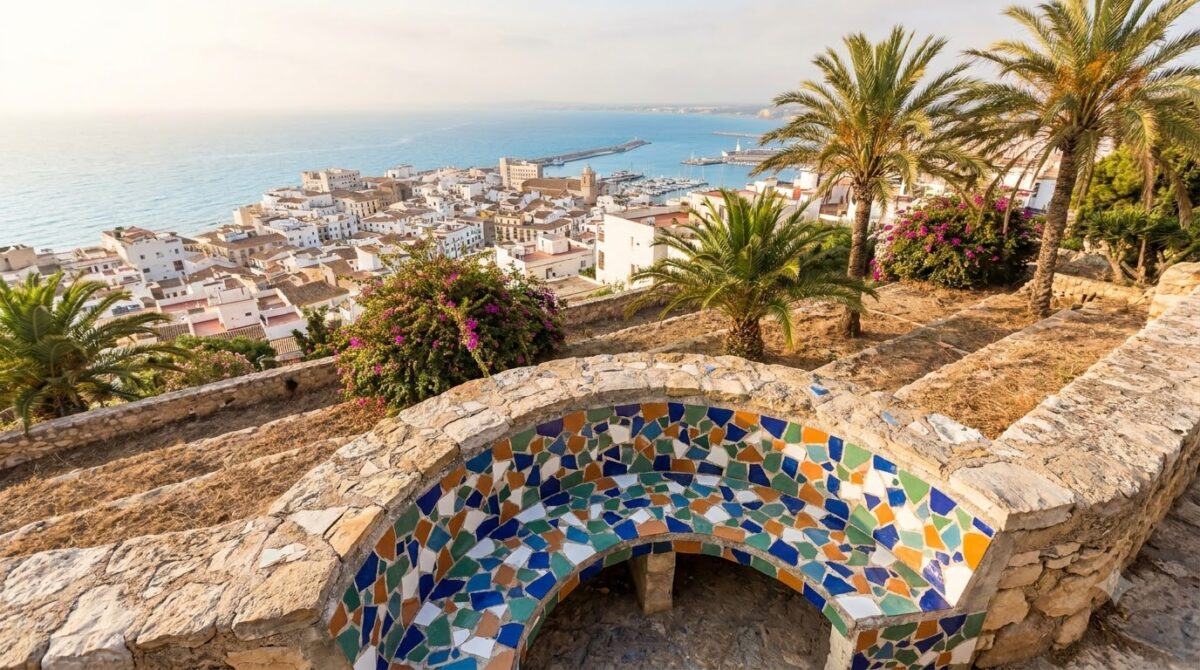
- Park Güell in the morning. The monumental zone with the mosaic terrace is ticketed and timed; the rest of the park is free and large. It is uphill from the metro, so take the escalators on Baixada de la Glòria.
- Montjuïc in the afternoon — the hill above the port, reached by cable car or funicular. Montjuïc Castle sits at the top, with the Joan Miró foundation and the Olympic ring on the way, and the best wide views of Barcelona from anywhere in the city.
- Barceloneta at the end of the day. The beach is ten minutes on foot from the Gothic Quarter, which still surprises people.
Map shows live availability and prices. We may earn a commission on bookings made through it, at no extra cost to you.
The fourth day: what a 4th day in Barcelona buys you
This is the day that makes the trip, and the one most three-day visitors regret skipping.
- The Museu Picasso in El Born, which holds his early work rather than the famous later paintings, and is the better for it. A 4th day is when most people finally get to it.
- Gràcia, north of the Eixample, a former separate village of small squares that still feels like one.
- Sant Antoni, Barcelona and El Raval — the two neighborhoods where the city has changed most in the last decade, full of boutique shops and good, cheap food.
- The Camp Nou tour, if FC Barcelona means anything to you. It is a half day and it is out west, away from everything else.
- The Palau de la Música Catalana, a modernist concert hall that is a UNESCO World Heritage Site and better than any photograph of it.
- Or nothing. Sit in a square. You could easily spend an afternoon doing that and it counts as exploring Barcelona.
Day trips: 5 to 7 days in Barcelona
Once you are past four days, the city of Barcelona is best used as a base. All of these run on trains from Sants train station or Passeig de Gràcia, both on the rapid transit network, and we would recommend a day trip on any trip of five days or more.
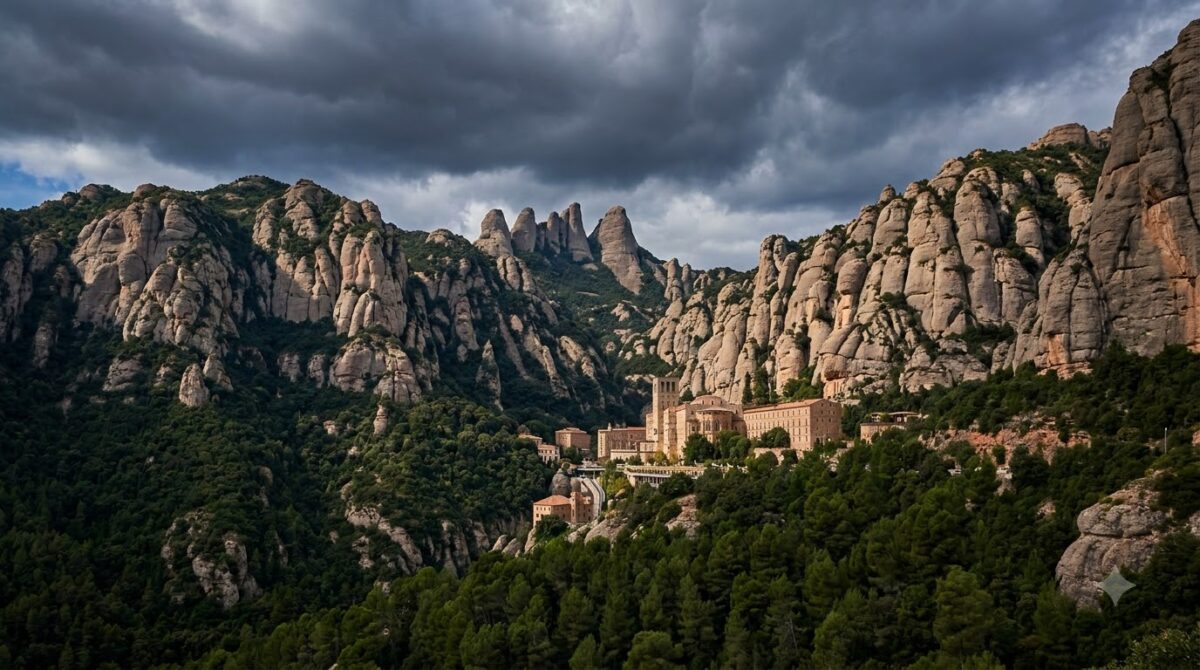
- Montserrat — a monastery built into a mountain of rounded rock pillars, an hour inland by train and rack railway. The best day trip from Barcelona and worth a full day.
- A day trip to Girona — 38 minutes on the high-speed train. A walled medieval town with the best-preserved Jewish quarter in Spain and colored houses along the river. A day in Girona pairs well with Figueres, and a trip to Girona is the easiest full day out of the city.
- Figueres — the Dalí Theatre-Museum, designed by Salvador Dalí himself, twenty minutes further than Girona.
- Sitges — a beach town forty minutes south, and the easiest half-day escape. Tourism here is heavy in August and pleasant either side of it. A day in the city followed by an afternoon here is a good combination.
- Tarragona — a Roman amphitheater on the sea, an hour south.
- Cadaqués and the Costa Brava — the prettiest stretch of Catalonia’s coast, but it needs a car and really a night.
Is 3 days enough in Barcelona?
Yes, if you accept that it is a highlights trip. 3 days in Barcelona covers the Sagrada Família, the Gothic Quarter, one or two Gaudí houses, Park Güell and an evening on the beach. Your last day in Barcelona will be the rushed one.
What you lose is the museums, the neighborhoods away from the centre, and any day trip. You also lose the margin for a queue running long or a ticket slot falling awkwardly, and in a city this dependent on timed entries that margin matters.
Is 7 days too long in Barcelona?
No, provided you use the trains. A week in Barcelona split as four days in the city and three on day trips is one of the better ways to see Catalonia, and it costs nothing in hotel changes.
Seven days spent entirely inside the city limits, on the other hand, is too long for most people. Barcelona is dense but it is not Rome; you will run out of things you actively want to see around day five.
Barcelona or Madrid: where to spend more time?
- Barcelona for a first trip to Spain. Gaudí, the Gothic Quarter, Barcelona, a beach and a compact centre make it the easier city to enjoy quickly.
- Madrid for the museums, the food and the nightlife, and as a base for Toledo and Segovia.
- If you are doing both, give Barcelona four nights and Madrid three. The high-speed train between them takes two and a half hours.
- Prettiest city in Spain is a different question again, and most people who have seen all three say Seville or Granada in Andalusia rather than either of these. Madrid also has Toledo, Spain within half an hour, which Barcelona has no equivalent of.
A full Spain itinerary that includes both cities plus Seville runs to about ten days, and adding Lisbon on the end turns it into three weeks.
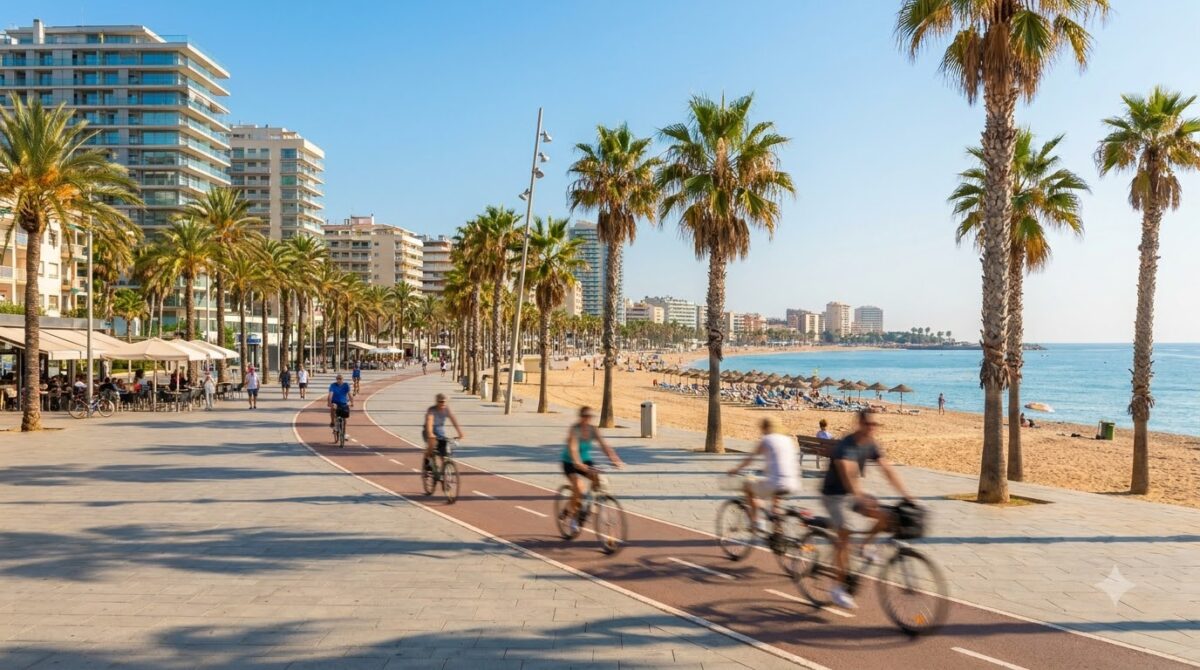
Planning your Barcelona itinerary: notes on the perfect Barcelona itinerary
- Buy tickets in advance for everything Gaudí. This is the single most common way a trip to Barcelona goes wrong.
- The city is walkable, and the rapid transit metro covers the rest cheaply. A taxi is rarely needed, and renting a car is a mistake.
- From the airport, the Aerobús takes 35 minutes to Plaça Catalunya, and the train from the airport train station is cheaper and slower.
- Catalan is the local language, alongside Spanish, and the culture of Spain looks different from here — Catalonia has its own. Both languages are used everywhere and English is widely spoken.
- Pickpocketing is real on La Rambla, Barcelona, on the metro and around the main attraction sites. Nothing worse, but be alert.
- Lunch runs late and dinner later. Kitchens rarely start before nine.
- Best months are May, June, September and October. August is hot, crowded and half the good restaurants close.
For where to base yourself, see our guide to where to stay in Barcelona.
What to consider when deciding how long to spend
Two people can both be right about how long a Barcelona trip should be, because they are optimising for different things. These are the factors that actually move the number.
- How much you need to book. If you want the Sagrada Família towers, Casa Batlló, Casa Milà and the Museu Picasso, that is four separate slots and you need to book them well ahead. Two a day means at least two full days before anything else.
- Whether you want day trips. Taking the train for a day to Girona or Montserrat adds a day each, and neither works as a half day.
- Your pace. Some people want a memorable day and a change of pace afterwards; others want to spend the day moving. The first kind needs five days for what the second does in three.
- Time to visit. In July and August queues are longer and the middle of the day is too hot to walk, which effectively costs you a few hours daily.
- Beach time. If you plan to spend the evening or a whole afternoon at Barceloneta, that is a day you are not sightseeing.
- Renting a car. You do not need one for the city or for Montserrat, Girona or Sitges. A car only earns its cost if you are driving up the Costa Brava.
The perfect amount of time for most first visits is four days, and that is what you need in Barcelona to leave without a list of regrets. Add a fifth and a sixth if you want day trips; drop to three only if the trip is fixed and you accept a highlights run.
Frequently asked questions
How many days are ideal for a first-time trip to Barcelona?
Four. That covers the Gothic Quarter, the Sagrada Família, the Gaudí houses on Passeig de Gràcia, Park Güell, Montjuïc and the beach, with one day left loose for museums and neighborhoods. Three days works but leaves no margin, which matters in a city where the main sights are all timed-entry.
Is 3 days enough time to spend in Barcelona?
Yes, as a highlights trip. Three days covers the Sagrada Família, the Gothic Quarter, one or two Gaudí houses, Park Güell and an evening at Barceloneta. You lose the museums, the outer neighborhoods and any day trip, and you have no slack if a ticket slot falls awkwardly.
Is 7 days too long to spend in Barcelona?
Not if you use it as a base. Four days in the city plus three day trips to Montserrat, Girona and Sitges makes a full week worthwhile with no hotel changes. Seven days spent entirely inside the city is too long for most people, since you will have seen what you actively wanted by day five.
How many days do you need to see the highlights of Barcelona?
Three full days, at two major timed-entry sights per day. The constraint is not distance — Barcelona is compact and walkable — but opening slots. The Sagrada Família, Park Güell, Casa Batlló, Casa Milà and the Museu Picasso all require booked entry times, and two a day is the realistic ceiling.
Should I spend more time in Barcelona or Madrid?
Barcelona, for a first trip to Spain. It has Gaudí, the medieval centre, the beach and a compact layout, which makes it easier to enjoy in a few days. Madrid rewards a longer or a second visit with better museums, better food and day trips to Toledo and Segovia. Doing both, four nights in Barcelona and three in Madrid is the usual split.
Are day trips from Barcelona worth adding to a short stay?
Not on a trip of three days or fewer — the city itself will absorb all of it. From five days onward they are the best use of the extra time. Montserrat and Girona are the two strongest, both under an hour and a half by train, and neither requires a car.
What is the prettiest city to visit in Spain?
Most people who have seen several say Seville or Granada rather than Barcelona or Madrid. Seville has the Alcázar, the cathedral and the Barrio Santa Cruz; Granada has the Alhambra. Barcelona’s appeal is different — it is modernist architecture and a working port city rather than a preserved historic centre.