
Spain is a train country. The AVE gets you from Madrid to Seville in two and a half hours, and for most of the country a rental car is a liability rather than an asset.
Some links below are affiliate links. We may earn a commission if you book through them, at no extra cost to you. We do not rank hotels, and any prices on the map come live from the booking sites.
Quick answer: where to stay in southern Spain. In Seville, Santa Cruz for a first time, or Triana for lower prices and a local feel. In Granada, the Albaicín for the view, the centre for convenience. Córdoba works as a day trip.
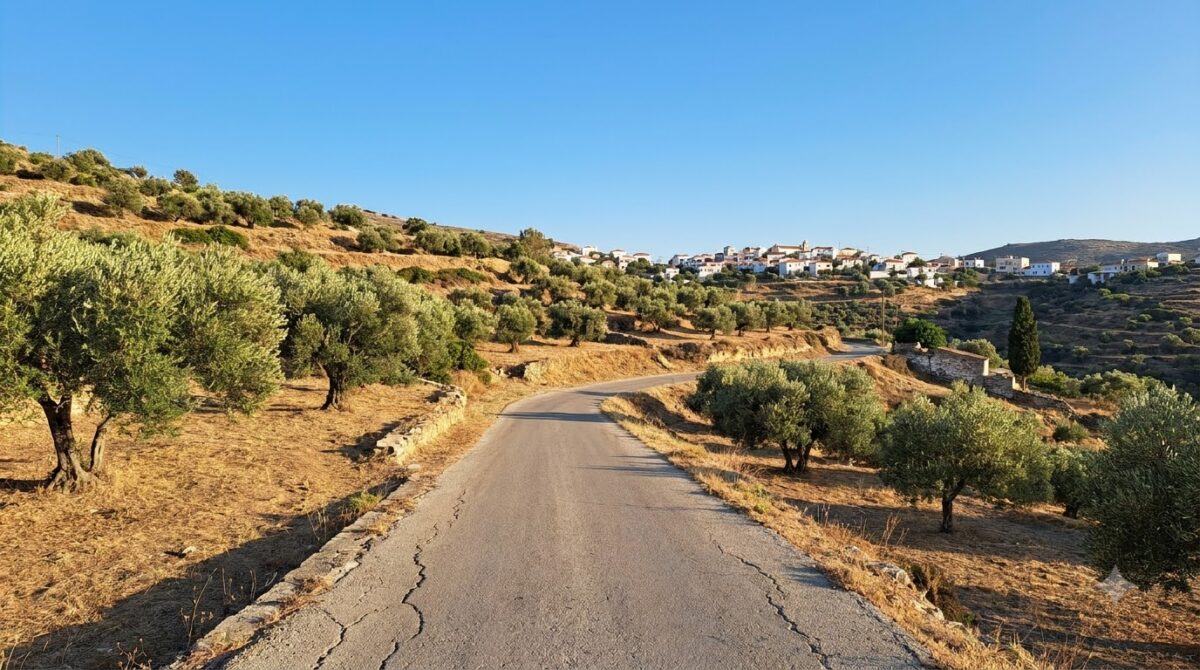
Andalusia is the exception, and it is worth understanding why. The high-speed train serves Seville, Córdoba and Málaga perfectly well. What it does not serve is everything between them — Ronda, Vejer de la Frontera, Zahara de la Sierra, Arcos, the whole white-village country that is the actual reason people come south.
So a southern Spain travel itinerary splits cleanly: trains for the three big cities, a rental car for the middle. This Andalucía itinerary is built that way, with 7 day, 10 day and two-week versions of the same route.
Driving times, booking rules and transport connections checked 7 September 2026.
How many days do you need for a trip to Andalucía?
| Length | Covers | Car needed? |
|---|---|---|
| 5 days | Seville and Córdoba, or Seville and Granada | No — train is fine |
| 7 days | All three cities plus Ronda | Two days of it |
| 10 days | Adds the white villages and the coast | Yes |
| 2 weeks | Adds Jerez, Cádiz, Nerja and time to stop | Yes |
Seven days is the shortest trip that feels like a trip to Andalucía rather than a run between three cathedrals. Ten is better, because the villages need unhurried time and there is no way to rush a mountain road.
The 7 day southern Spain itinerary: one week southern Spain
One week southern Spain, flying into Seville and out of Málaga, with a car picked up on day four.
Days 1–3: Seville
Sevilla is the capital of Andalusia and the right place to start, because it is the most concentrated.
- The Alcázar of Seville — a royal palace built by the Moors for Christian kings, still used by the royal family, and a UNESCO World Heritage Site. Buy tickets in advance; it sells out days ahead.
- Seville Cathedral, the largest Gothic architecture church in the world, with the Giralda — a converted minaret you climb by ramp rather than stairs.
- Barrio Santa Cruz, the old Jewish quarter, a maze of narrow streets and orange trees.
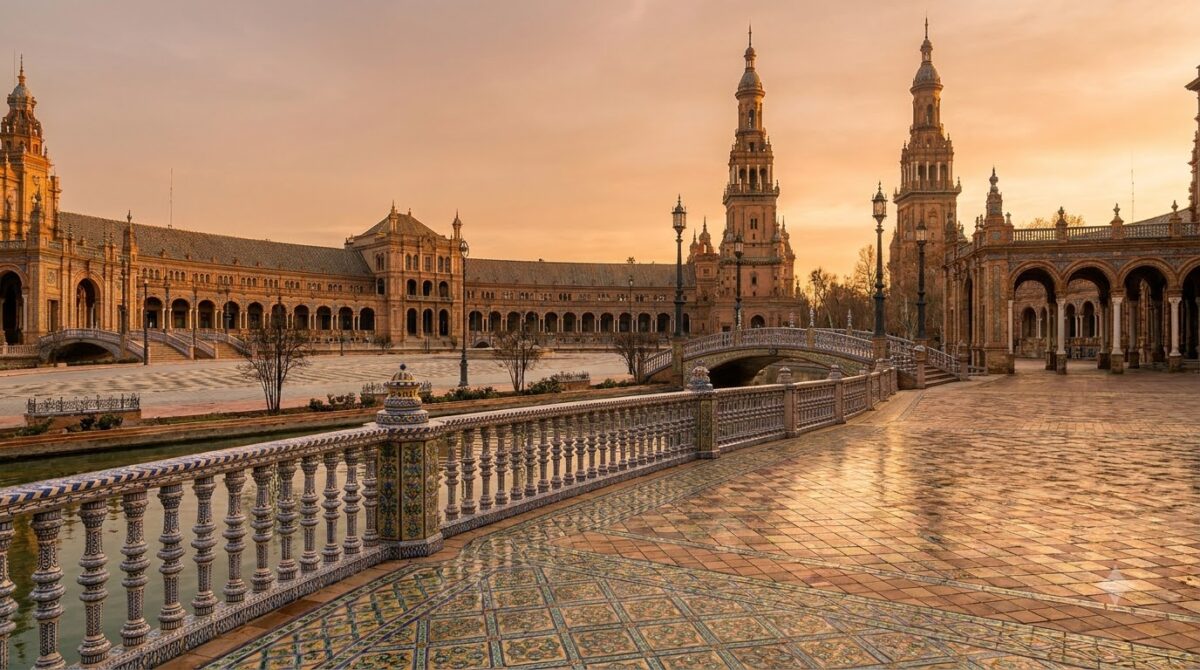
- Plaza de España, the tiled semicircle built for the 1929 exposition, best in late afternoon.
- Triana, across the river, for tapas bars away from the centre and the flamenco that came out of this neighbourhood. The walk along the river at dusk is the best free thing in the city.
- A flamenco show in a small venue rather than a dinner theatre. Seville is where you should see it.
Day 4: Córdoba as a day trip
Forty-five minutes from Seville on the high-speed train, which makes Córdoba, Spain the easiest day of the week.
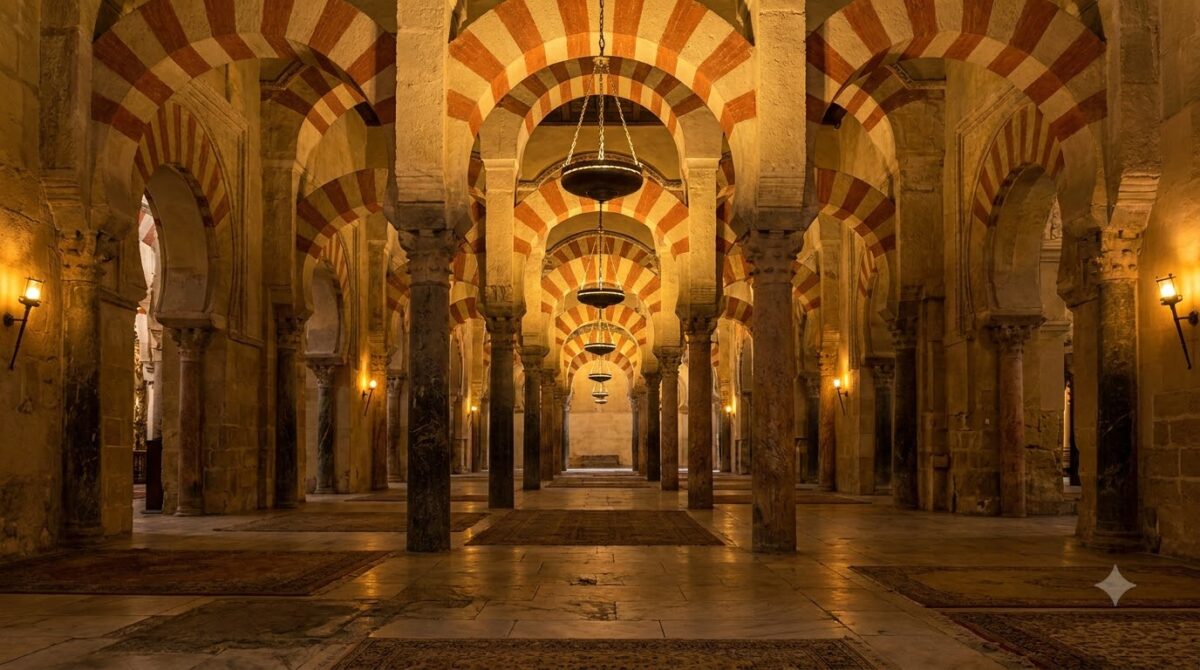
- The Mezquita — a mosque with a cathedral built inside it, a forest of red and white arches under a Renaissance nave. There is nothing else like it in Europe. Free entry for the first hour on weekday mornings.
- The old Jewish quarter, the Judería, and the Roman bridge over the Guadalquivir.
- Plaza de la Corredera, the only rectangular arcaded plaza in Andalusia, for lunch at a coffeehouse under the arches.
- In May, the patio festival opens private courtyards across the old town, and it is the best time to be here.
Day 5: pick up the car, drive to Ronda
This is where the trip changes. Collect a rental car in Seville and drive south-east into the Sierra.
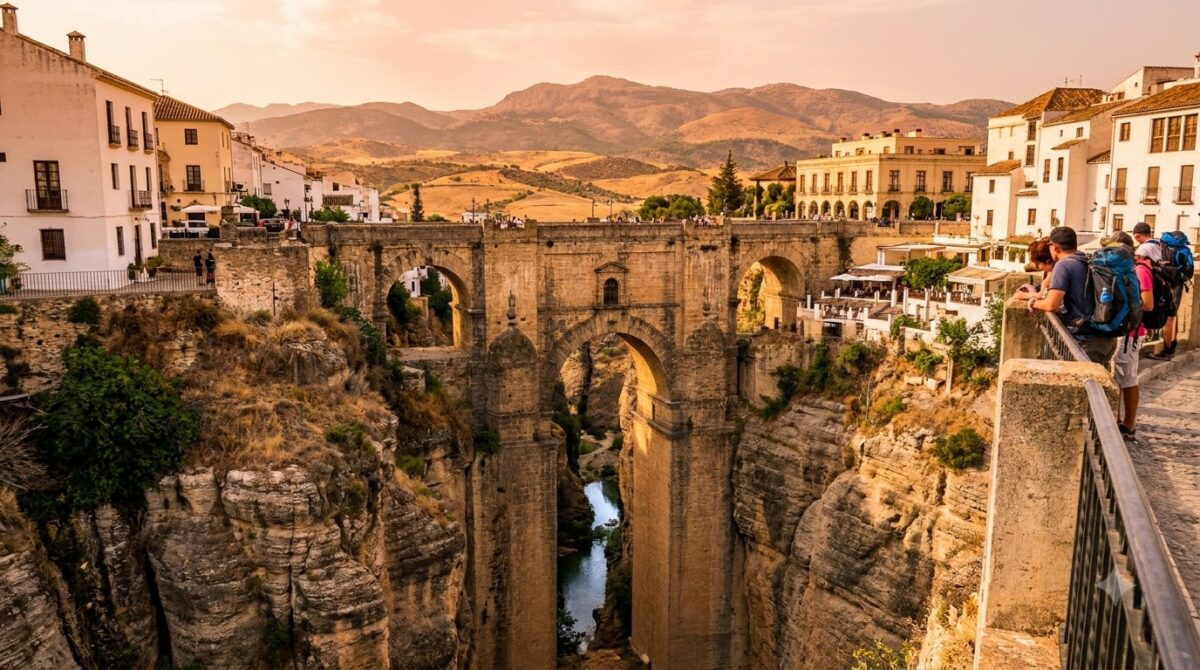
- Ronda sits astride a gorge 100 metres deep, crossed by the Puente Nuevo. It has the oldest bullfighting ring in Spain and a view down the Tajo that no photograph handles well.
- Stay 2 nights if you can. Ronda empties after the day-trip coaches leave and it is a different town in the evening. It is also the classic day trip from Malaga, which is why it is crowded from eleven to five.
- Setenil de las Bodegas, twenty minutes away, is a village built into a cave overhang, with houses under a shelf of rock.
Days 6–7: Granada
Two and a half hours east from Ronda, and the last stop of the week.
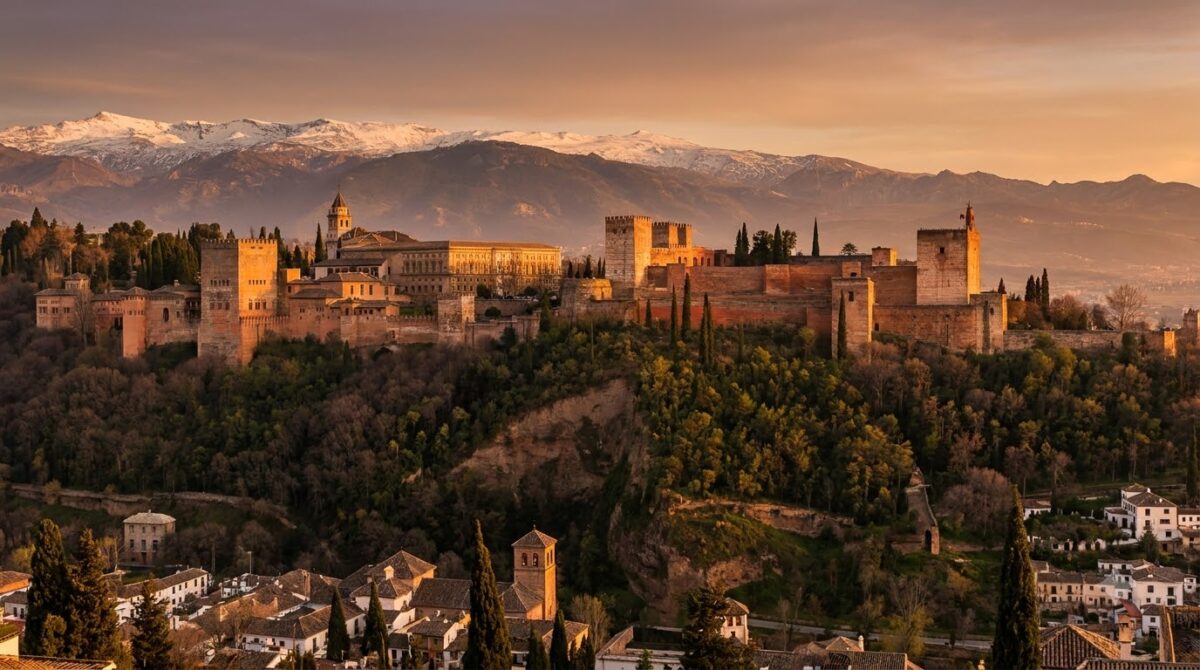
- The Alhambra — the palace and fortress of the Emirate of Granada, the last Moorish state in Spain, and the most visited monument in the country. Book tickets in advance, weeks ahead in season. This is not advice you can ignore; entry is capped and it sells out.
- The Albaicín, the old Moorish quarter of white houses on the hill opposite, with the Mirador San Nicolás looking straight across at the palace.
- Sacromonte, the cave district above it, where flamenco is performed in the caves themselves.
- Free tapas — Granada is the one city in Spain where a drink still comes with food included, and it is worth building an evening around.
The 10 day Andalusia itinerary: adding the white villages
Ten days lets you do the thing the seven-day trip skips, which is drive slowly through the pueblos blancos with no fixed plan.
- Zahara de la Sierra — a white village under a castle on a rock, above a turquoise reservoir. The drive from here over the Puerto de las Palomas is the best road in Andalusia.
- Grazalema — in a natural park, and the wettest place in Spain, which is why it is green when everything around it is not.
- Arcos de la Frontera — the largest of the white towns, built along a cliff edge.
- Vejer de la Frontera — a hilltop town near the Atlantic coast, the prettiest of them all and the one most worth an overnight.
- Jerez de la Frontera — sherry bodegas, the Andalusian horse school, and the third corner of the flamenco triangle with Seville and Cádiz.
- Cádiz — a 3,000-year-old port on a spit of land, surrounded by sea on three sides, and the least touristy city in the region.
Four or five nights spread across these, moving every night or two, is the shape of a proper Andalusia road trip.
Two weeks: the beach and the coast
If you can spend two weeks, the extra time goes to the coastline rather than more towns.
- Nerja — on the Costa del Sol east of Málaga, with a cliff promenade over the Mediterranean Sea and the Caves of Nerja, a cave system holding the largest stalagmite in the world.
- Málaga itself — badly underrated, with a Roman theatre, a Moorish fortress and a Picasso museum of Spanish art in the city where Pablo Picasso was born. Málaga Airport is also the cheapest way into the south of Spain from most of Europe.
- Marbella and the resort coast, if that appeals; the old town is better than the reputation.
- The Cabo de Gata, further east in Almería, for the emptiest beaches in mainland Spain.
- Tarifa and Gibraltar — the southern tip, where you can see Morocco across the strait on a clear day, fourteen kilometres away.
Relax on the beach for the last three days rather than the middle ones. The cities are tiring, and driving along the coast with nothing booked is the right way to finish. You can also take a day trip inland from anywhere along it if the weather turns.
The UNESCO World Heritage Sites on this route
Andalusia holds an unusual density of them, and four sit directly on the route above. It is a useful way to sanity-check a southern Spain travel itinerary: if you are hitting these, you are not missing the best of southern Spain.
- The Alcázar of Seville, the cathedral and the Archivo de Indias — listed together as one site. The Alcázar is the finest surviving Mudéjar architecture anywhere, built by Moorish craftsmen under Christian rule.
- The Mezquita and the historic centre of Córdoba — the mosque-cathedral plus the Judería around it.
- The Alhambra, Generalife and Albaicín in Granada — the last stronghold of the Moors in Spain.
- Antequera’s dolmens, an hour from Málaga, which almost nobody stops for and which predate the pyramids.
Vejer de la Frontera
Worth singling out because it is the one most trips leave out and most people wish they had not. Vejer de la Frontera sits on a hill in the Province of Cádiz, ten minutes inland from the Atlantic, and it is a compact white town of Moorish streets with no through traffic and a view over the coast to Africa on a clear day.
It works as a base for the whole southern tip — the beaches at Bolonia and Zahara de los Atunes, the Roman ruins at Baelo Claudia, and Tarifa — and it is a far better place to sleep than anything actually on the coast there. Give it two nights.
Map shows live availability and prices. We may earn a commission on bookings made through it, at no extra cost to you.
Southern Spain road trip: do you need a car rental?
For the cities, no. For the villages, yes, and there is no way around it.
- Seville, Córdoba, Málaga and Granada are all connected by high-speed train or good bus and train services. Between them a car is pure cost.
- Ronda has a train, on a slow scenic line, but the villages around it have nothing.
- Vejer, Zahara, Grazalema and Setenil are reachable only by car, or by infrequent local buses that will eat the day.
- The practical answer is to train between cities and take a car rental for the three or four days you are in the countryside. Picking up in Seville and dropping at Málaga Airport is standard and usually cheap.
Two warnings about driving here. Historic centres are camera-enforced restricted zones, so use a parking lot outside the walls and walk in — fines arrive months later at your home address. And do not leave anything visible in the car, anywhere.
When to go
- April, May, early June and October are the best months, and April is the peak of it — green hills, wildflowers, and Semana Santa and the Feria in Seville.
- July and August are genuinely difficult. Seville and Córdoba pass 40 degrees regularly and the sights have no shade. If you must come then, go coastal and sightsee at eight in the morning.
- Winter is mild, cheap and quiet, with the Sierra Nevada open for skiing an hour from Granada. Some coastal resorts shut.
- Book Semana Santa and the Feria months ahead. Seville fills entirely.
Where to stay on an Andalucía itinerary
- Seville — Santa Cruz or El Arenal for the first time, Alameda or Triana for lower prices and a local feel.
- Granada — the Albaicín for the view and the atmosphere, the centre for convenience. Both involve hills, and a room with a view of the Alhambra costs a premium worth paying for one night.
- Córdoba — the Judería, if you stay at all; most people do it as a day trip.
- Ronda — anywhere on the old-town side of the bridge.
- The villages — small family-run hotels and converted houses, often with parking outside the walls. Book ahead; supply is tiny.
For the city itself, see our guide to where to stay in Seville. If you are building a wider trip, the Spain itinerary covers Madrid and Barcelona as well.
Same idea one country east: our south of France itinerary also splits into a train half and a car half.
Stopping in Granada? See where to stay in Granada — your Alhambra ticket time decides the neighbourhood.
Working out the split? See how many days in Granada before fixing the dates.
Frequently asked questions
How many days are needed to see southern Spain?
Seven days covers Seville, Córdoba, Ronda and Granada. Ten days adds the white villages and time to drive slowly, which is the point of the region. Two weeks lets you finish on the coast at Nerja or Cádiz. Five days is enough for two cities by train and no more.
Do I need to rent a car for a southern Spain itinerary?
Only for part of it. Seville, Córdoba, Málaga and Granada are linked by high-speed train and a car between them is a liability. But Ronda’s surroundings and the white villages — Zahara de la Sierra, Grazalema, Vejer de la Frontera, Setenil — have no useful rail service. The standard approach is to train between cities and rent a car for three or four days in the countryside.
What is the best month to visit southern Spain?
April, May, early June or October. April is the best of them, with green hills and Semana Santa in Seville, though that week books out months ahead. July and August regularly pass 40 degrees inland and the major sights have no shade. Winter is mild, cheap and quiet.
Can I visit southern Spain in 7 or 10 days?
Yes to both, and they are different trips. Seven days is three cities plus Ronda, moving every two or three nights. Ten days adds four or five nights among the white villages and the Sierra de Grazalema, which is what most people who have done both say they would repeat.
What are the best places to visit in southern Spain?
The Alhambra in Granada, the Mezquita in Córdoba and the Alcázar in Seville are the three that justify the trip on their own, and all three are UNESCO listed. After those, Ronda’s gorge, Vejer de la Frontera, Cádiz and the drive through the Sierra de Grazalema are the ones people remember.
What is the best way to get around southern Spain?
High-speed train between Seville, Córdoba and Málaga, and a rental car for everything else. Buses reach most towns the trains miss but cost you half a day each way. Within cities, walk — the historic centres are small, and they are restricted traffic zones with camera enforcement anyway.
Where should I stay in southern Spain?
Base yourself in Seville for the first three nights, since it is the most concentrated city and connects onward to everything. Then Ronda for two, and Granada for two. On a ten-day trip add a night in Vejer de la Frontera and one in the Sierra de Grazalema. Village accommodation is limited, so book earlier than you would for the cities.