
Seville’s old town is a Moorish medina. The lanes are narrow because narrow lanes hold shade, and they were laid out that way a thousand years ago in a city that regularly passes 40 degrees.
Some links below are affiliate links. We may earn a commission if you book through them, at no extra cost to you. We do not rank hotels, and any prices on the map come live from the booking sites.
Quick answer: where to stay in Seville. Barrio Santa Cruz if it is your first time and you want to walk out of the door into it. Centro or El Arenal for the same convenience with more space, Triana across the river for value.
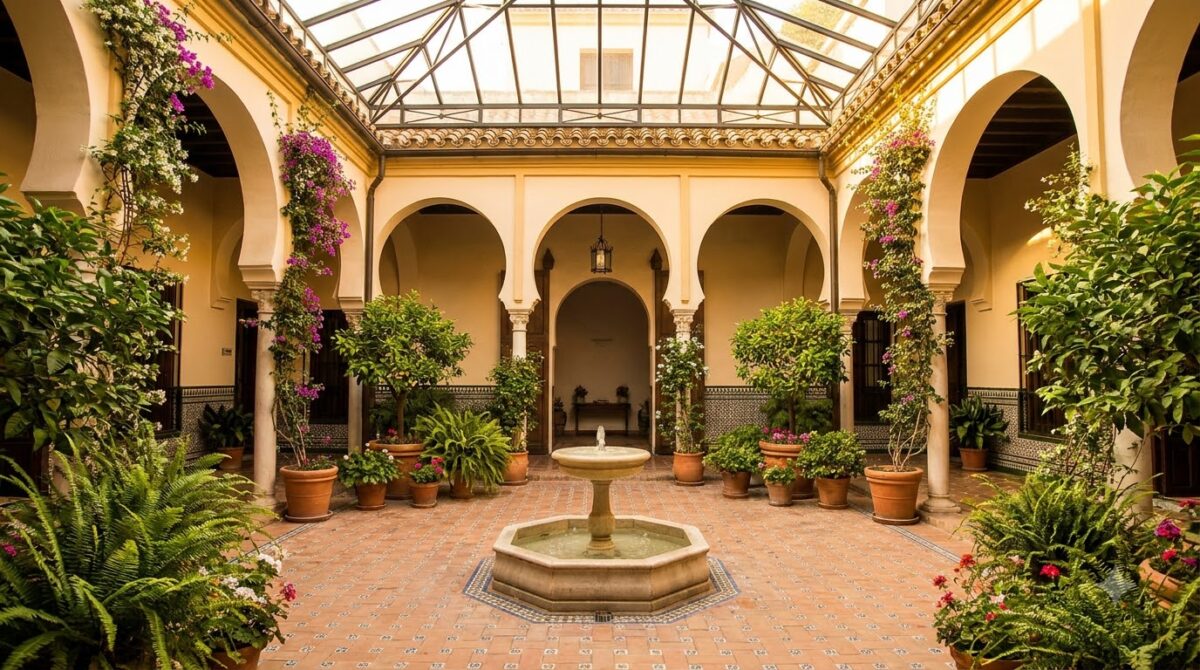
That has one consequence that decides where to stay in Seville. There are almost no views. The prettiest room in Barrio Santa Cruz looks at a wall three metres away. What a good hotel in Seville has instead is a patio — an interior courtyard, tiled and planted, often with a fountain — or a rooftop.
So you are choosing a courtyard, not an outlook. The other thing worth knowing is that distance barely matters: the cathedral to Triana is fifteen minutes on foot, and everything in this guide is within walking distance of everything else.
Walking times, neighbourhood boundaries and transport checked 7 September 2026. Rates change constantly, so check current prices yourself.
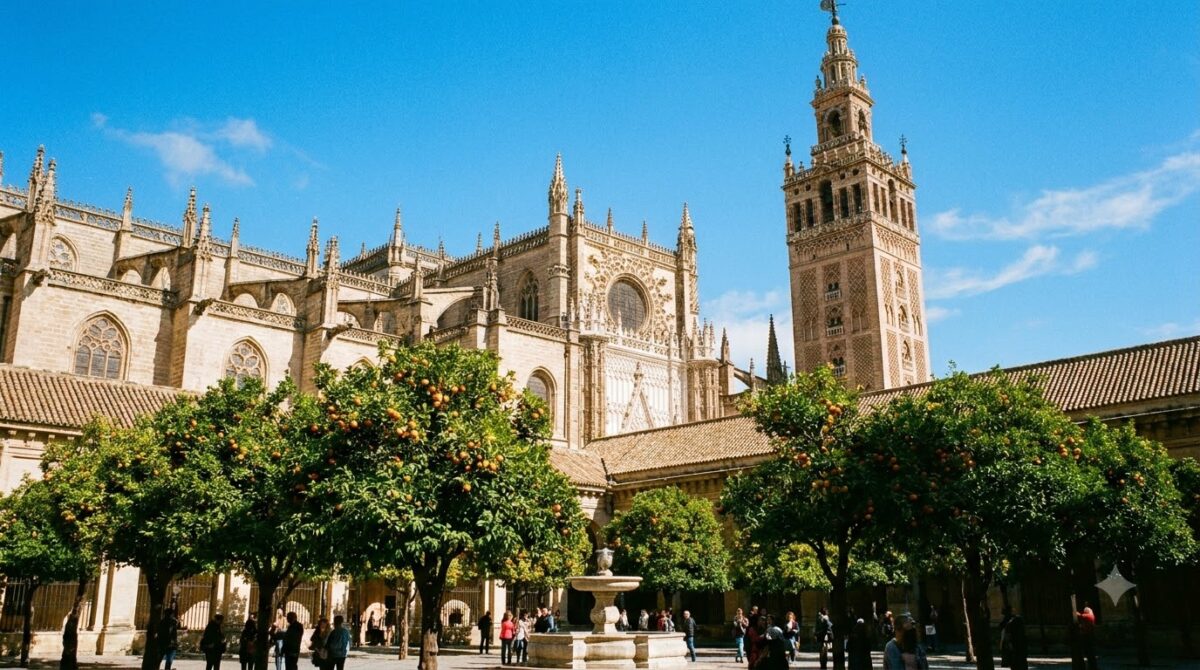
The best area to stay in Seville: an overview of the best neighbourhoods
| Neighbourhood | Walk to cathedral | Price | Best for |
|---|---|---|---|
| Barrio Santa Cruz | 0–5 min | High | First visits, atmosphere |
| El Arenal | 5 min | Moderate–high | Quiet, central, the river |
| Centro and Alfalfa | 5–10 min | Moderate | Tapas, shops, all-round value |
| La Alameda | 15 min | Moderate | Nightlife, local atmosphere |
| Triana | 10–15 min | Lower | Less touristy, flamenco, value |
| Macarena | 20 min | Lowest | Budget, residential |
| Los Remedios | 25 min | Lower | Feria week, families, quiet |
The short answer: the perfect place to stay is Barrio Santa Cruz if it’s your first time and you’re looking to walk out of the door into it. Centro or El Arenal if you want the same convenience with more space and fewer people. Triana if you’re on a budget or coming back a second time.
Barrio Santa Cruz: the best place to stay in Sevilla for a first visit
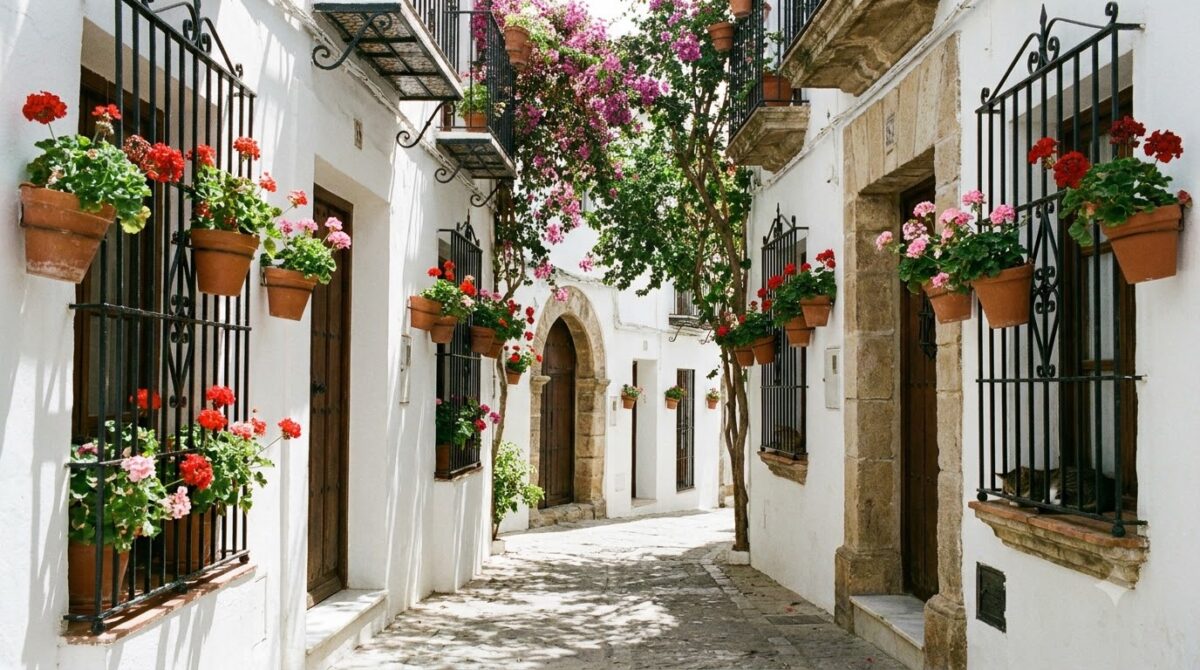
The old Jewish quarter, wrapped around the Alcázar of Seville and the cathedral. This is the postcard: whitewashed walls, iron grilles, orange trees, and lanes too narrow for a car.
- You are inside the top attractions. The Alcázar, Seville Cathedral, the Giralda and the Archivo de Indias are all a few minutes away, and it is one of the most famous quarters in Spain.
- Accommodation is mostly small — converted Andalusian houses built around a courtyard, ten to thirty rooms.
- It is the busiest part of Seville in the daytime, and quiet by eleven at night since there is little nightlife inside it.
- Getting a taxi to the door is often impossible. Confirm how close a car can get before you book, especially with luggage.
Staying in Santa Cruz, in the Santa Cruz neighborhood proper, makes sense if you are visiting Seville for two or three nights and want the atmosphere to be the point. Nowhere else feels like Seville like this does. Accept that you will pay for it and that your room will not have a view.
Map shows live availability and prices. We may earn a commission on bookings made through it, at no extra cost to you.
El Arenal: central and quieter
El Arenal, Seville sits between Santa Cruz and the river, around the Plaza de Toros de la Maestranza bullring and the Torre del Oro. Santa Cruz and El Arenal together are what most people mean by the center of Seville.
- Wider streets, which means larger hotels, real pavements and taxis that can reach you.
- Five minutes from the cathedral and right beside the Guadalquivir.
- Quieter at night than Santa Cruz or Alfalfa, and a good choice for light sleepers.
- The Maestranza (Seville) is the oldest bullring in Spain still in use, and the building and its museo are worth a look whatever you think of the sport.
Centro and Alfalfa: the best value in the city center
North of the cathedral, around Plaza Nueva, Calle Sierpes and the Alfalfa. This is where Seville shops and eats, and it is the best all-round area of Seville for a stay of three nights or more.
- Excellent tapas at the highest density in the city — it’s right in the center of everything — and the bars locals actually use rather than the ones on the cathedral square.
- It’s right in the middle — ten minutes from the cathedral, ten from Las Setas, ten from La Alameda.
- Better value than somewhere like Barrio Santa Cruz for the same standard of room.
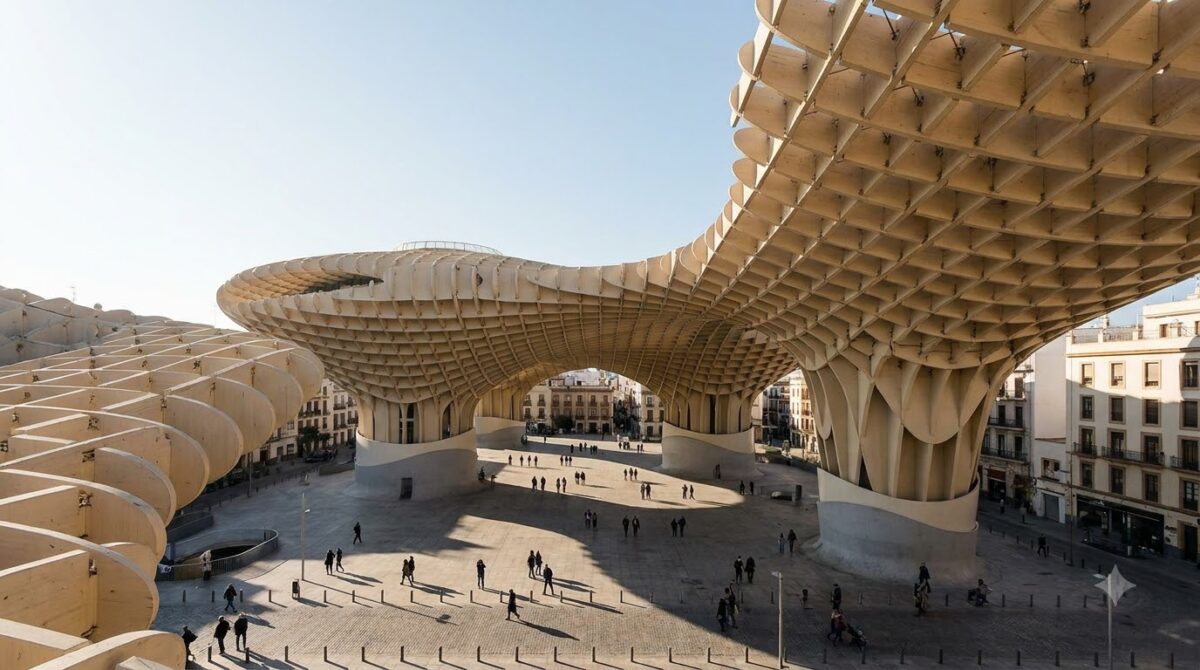
- Las Setas, the Metropol Parasol, is at the northern edge — a huge undulating wooden structure with a walkway on top and the best wide view of the city.
La Alameda de Hércules: nightlife and local atmosphere
Fifteen minutes north of the cathedral, exploring Seville after dark means the Alameda de Hércules — a long tree-lined square that is the centre of the city’s nightlife and its most mixed neighborhood in Seville.
- Bars and restaurants along the whole square, busy from ten at night until very late.
- Less touristy than anywhere south of it, and priced accordingly.
- Good for a longer stay or a second visit, and one of the best neighborhoods for anyone who is not looking to be near the monuments.
- It is one of the noisiest places in the city on the square itself. A street back is the compromise.
Triana: across the river
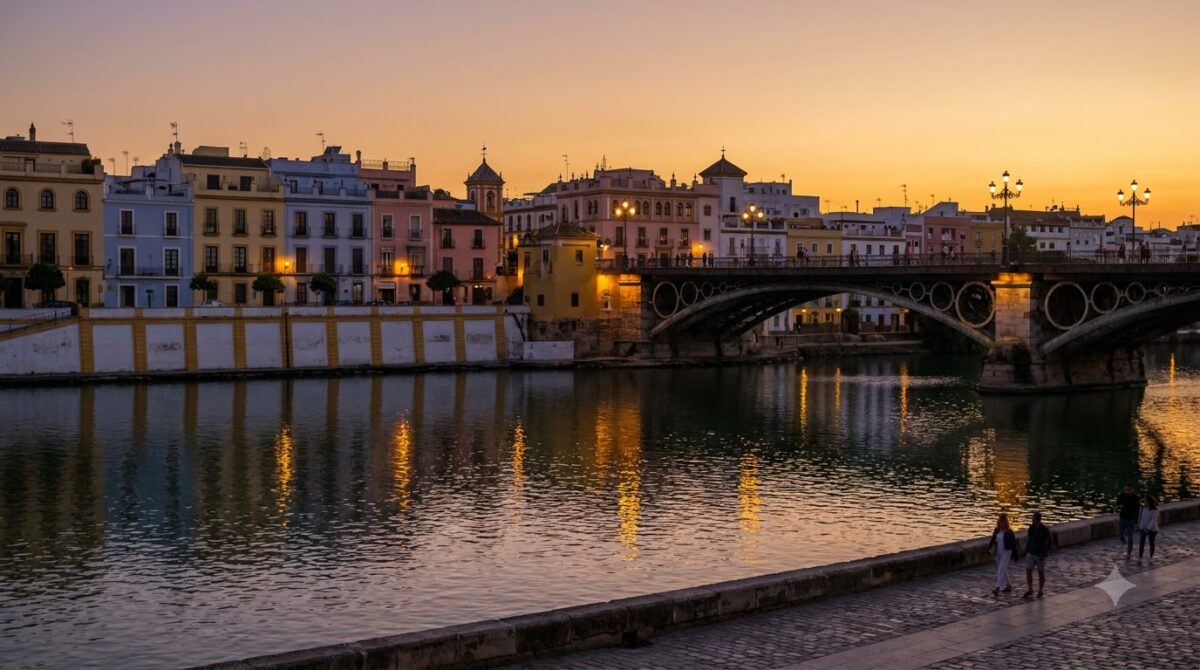
Across the Puente de Isabel II, Triana was a separate town until the nineteenth century and still behaves like one. It is the home of Sevillian flamenco and the ceramic tile industry.
- Ten to fifteen minutes on foot to the cathedral, across the Guadalquivir river on a flat bridge.
- Noticeably cheaper for the same room, and this gap is the single largest in the city.
- Calle Betis, the riverfront terrace strip, has the best evening outlook in Seville — back across the water at the old town.
- The Mercado de Triana and the streets behind it are where you eat well for local prices.
Triana, Seville is the value answer, and the one most people who have stayed in both would pick the second time.
Macarena and Los Remedios: the best neighborhoods further out
- Macarena, Seville — twenty minutes north of the cathedral, residential, with the Basilica de la Macarena and a long stretch of Almohad city wall. The cheapest central-ish option and perfectly safe.
- Los Remedios (district) — south of Triana, a 1960s grid with no sights at all. It matters for one week a year, because the Feria de Abril is held on its edge, and it is a sensible family base with apartments and space.
What areas to avoid
Very few, and none in the tourist centre. Seville is a safe city and the practical advice is narrow.
- Polígono Sur and Tres Mil Viviendas, well south-east of the centre, are genuinely deprived and there is no reason for a visitor to be there.
- Anything more than a 25-minute walk out is a false economy. The saving is small and you lose the city’s best feature, which is that you can walk everywhere.
- Rooms directly on La Alameda or Calle Betis if you are a light sleeper, for noise rather than safety.
- Ground-floor rooms on lanes in Santa Cruz can be dark all day. Ask which floor.
Booking a hotel in Seville: the best hotels by landmark
Listings are hard to place because a Seville address rarely tells you which barrio it is in. These are the properties used as reference points, described by position and type only. Check rates and availability yourself rather than trusting any guide, including this one.
Hotel Alfonso XIII
The grand hotel of the city, built for the 1929 exposition in a neo-Mudéjar palace style, between the Alcázar and the university. It is a Luxury Collection hotel now, and the reference point at the top of the market. It is the landmark people orient by at the luxury end, and its courtyard is open to non-guests for a drink.
The best boutique hotels: a hotel boutique in a converted house
The dominant category, concentrated in Santa Cruz, Centro and El Arenal. A hotel boutique here typically means a restored Andalusian house of fifteen to forty rooms built around a patio, sometimes with a small rooftop pool. Properties like H10 Casa de la Plata and Querencia de Sevilla in Centro, Hotel Casa del Poeta and Hotel Casa 1800 in Santa Cruz, and Plácido y Grata Boutique Hotel are all this type — the differences between them are which barrio and how many stairs.
Riverside and Triana
Hotel Kivir sits on the Triana side of the Guadalquivir, which is where the rooftop pools with an actual outlook are, since the old town has nothing tall enough. Hotel Rey Alfonso X is on the Centro side near the cathedral, in the same rooftop category.
Apartments and Airbnb
Apartment supply is large in Triana, La Alameda and Macarena, and it is the better answer for stays over four nights or for families. In Santa Cruz apartments are scarce and expensive, since the buildings are small and protected.
The right area to stay in Seville, by type of traveller
Seville is small enough that every option here works. These are the places in the city that suit each kind of trip if you want to know exactly where to stay without reading the whole guide. A quiet, central place to stay in Seville is easier to find here than in most European cities.
| You are | Stay in | Why |
|---|---|---|
| Here for the first time | Barrio Santa Cruz | Steps from the cathedral and the Alcázar |
| Only in the city for a day | Santa Cruz or El Arenal | If you’re only in the city briefly, nothing is wasted on transit |
| Looking for value | Triana | An affordable place to stay without breaking the bank |
| Here to eat | Centro and Alfalfa | Excellent tapas, and the bars locals use |
| Here for the nightlife | La Alameda | The heart of the city after midnight |
| Solo travelers | Centro or La Alameda | Hostels, walkable, easy to meet people |
| A family or a long stay | Triana or Los Remedios | Apartments and space |
| Here for luxury | El Arenal and Santa Cruz | Where the luxury hotels and palace conversions are |
If you want to be close to everything and are only choosing once, Santa Cruz and El Arenal are the two safest picks. Many of the city’s best-known hotels sit in that strip, including the palace conversions in the luxury collection category, and you can see Seville without ever needing transport.
Is Seville walkable, and do you need a car?
Extremely walkable, and a car is worse than useless.
- The whole historic centre is flat and about two kilometres across. Walking is the default and usually the fastest option.
- Most of Santa Cruz is pedestrian, and much of Centro is restricted traffic with camera enforcement.
- Parking is expensive and scarce. If you are on a southern Spain road trip, use a garage on the edge and leave the car until you go.
- The tram and buses cover the few longer distances; the metro is one line and mostly irrelevant to visitors.
- From the airport, the EA bus runs to the centre in about 35 minutes, and a taxi is a fixed fare.
Tips for planning your stay
- Ask about the patio and the rooftop before booking. In Seville these are the amenities that matter, not the room.
- Ask which floor and which side. Interior rooms are dark and quiet; street rooms are brighter and louder.
- Book Semana Santa and the Feria de Abril months ahead. Prices multiply and the city fills entirely.
- Avoid July and August if you can — 40 degrees is normal and air conditioning becomes the deciding factor in a hotel.
- Three nights is right. Two covers the Alcázar, Seville Cathedral and one evening; three adds Triana, Las Setas and Plaza de España, Seville to your list of places to visit without rushing.
- Check current rates directly. Seville swings enormously between April and August, and no guide can be current on that.
Building the wider trip? See our southern Spain itinerary for how Seville fits with Córdoba, Ronda and Granada.
Checking current rates in Seville
Everything above is about position — which area suits which kind of trip. What it deliberately does not do is quote prices, because rates in Seville move a long way by season, by day of the week and by how far ahead you book, and any figure printed in a guide is out of date the week after it is written.
These searches show live availability and current prices, so you can check them against the areas described above:
These are affiliate links. If you book through one we may earn a commission, at no extra cost to you. It does not affect which areas we recommend above — nobody pays to be listed here.
Heading east? Our where to stay in Granada guide covers the next stop on the Andalusia route.
Frequently asked questions
What is the best part of Seville to stay in?
Barrio Santa Cruz for a first visit, since it wraps around the Alcázar and the cathedral and is the most atmospheric part of the city. Centro and El Arenal give you the same walking distances with more space and better value. Triana, across the river, is the cheapest of the central options and the one repeat visitors tend to choose.
Where should I stay in Seville for the first time?
Barrio Santa Cruz or Centro. Both put you within ten minutes of every major attraction on foot, and Seville is small enough that the difference between them is atmosphere rather than convenience. Santa Cruz is prettier and more expensive; Centro has more tapas bars and more space in the rooms.
What areas should I avoid staying in Seville?
Nothing in or near the historic centre. Polígono Sur, well to the south-east, is genuinely deprived and no visitor has a reason to be there. The more practical warning is against staying more than about 25 minutes’ walk out to save money, since Seville’s main advantage is that you can walk everywhere.
Is 3 days enough time to spend in Seville?
Yes, and it is the right length. Two days covers the Alcázar, the cathedral and the Giralda with one evening for tapas. A third day adds Triana, Las Setas, Plaza de España and a flamenco show without rushing. More than four days and most people take a day trip to Córdoba or Cádiz.
Is Seville a walkable city, and do I need a car?
It is one of the most walkable cities in Spain and a car is a liability. The historic centre is flat and about two kilometres across, most of Santa Cruz is pedestrian, and much of Centro is a camera-enforced restricted traffic zone. If you arrive by car on a road trip, park in a garage at the edge and leave it there.
What are the best areas to stay in Seville on a budget?
Triana first, then Macarena. Triana is ten to fifteen minutes from the cathedral over a flat bridge and noticeably cheaper for the same room, with better everyday food. Macarena is twenty minutes north, residential and cheaper again. Both are safe, and both beat staying somewhere genuinely far out.
What is the most popular area of Seville?
Barrio Santa Cruz, by a wide margin. It is the old Jewish quarter around the Alcázar and the cathedral, and it holds most of the boutique hotels and nearly all of the photographs people have seen before arriving. That popularity is also why it is the busiest part of the city between eleven and six.