
Three days in Madrid covers the city properly. Five is the better answer, and the reason is the thing most travel guide advice skips.
Some links below are affiliate links. We may earn a commission if you book through them, at no extra cost to you. We do not rank hotels, and any prices on the map come live from the booking sites.
Quick answer: where to stay. Barrio de las Letras: five minutes from Sol, five from the Prado, full of restaurants and quiet enough to sleep in. Sol and Centro suit a short first trip.
Check Barrio de las Letras →Check all of Madrid →See them on a map ↓
Madrid is the easiest major city in Spain to visit, because almost nothing here needs booking weeks ahead. The Prado Museum, the Royal Palace of Madrid and the Reina Sofía all hold same-day capacity. Barcelona is the opposite — every Gaudí building is timed-entry and sells out — which is why a Barcelona trip has to be planned and a Madrid trip does not.
What decides how many days you need in Madrid is the day trips. Toledo is 33 minutes away by high-speed train and Segovia about 30. Both are UNESCO-listed and both are full days. No other city in Spain has two of that quality that close.
This Madrid itinerary is built around that. Rail times, opening patterns and transport connections checked 7 September 2026.
How many days do you need in Madrid? The itinerary at a glance
| Length | Covers | Verdict |
|---|---|---|
| 1 day | Prado, Plaza Mayor, one evening | A stopover |
| 2 days in Madrid | Adds the Royal Palace and Retiro Park | Enough, but tight |
| 3 days in Madrid | Adds the neighborhoods and a second museum | The city, properly |
| 4 days | Adds a day trip to Toledo | The best value |
| 5 days | Adds Segovia, and a slow day | Ideal |
The honest framing: three full days in Madrid is enough time to see the city of Madrid itself. That is a good amount of time for a first visit, and how long most people should spend in Madrid. Everything past that buys you Castile, not more Madrid, and Castile is worth it.
Day 1: your first day in Madrid, around the city center
Start your day in the old centre and keep it on foot. Madrid is flat, the heart of Madrid is small, and walking around the center of the city is the whole first day.
- Plaza Mayor, Madrid — the enclosed seventeenth-century town square that anchors the old centre of the city, with a statue of Philip III in the middle. It is free to visit and it is where every walking tour starts.
- Mercado de San Miguel beside it — the covered iron Market of San Miguel. Touristy and expensive, and still the simplest first meal in Spain.
- Puerta del Sol, kilometre zero, from which every road in Spain is measured.
- Chocolatería San Ginés for churros. Open since 1894 and open very late.
- Plaza de Santa Ana in the evening, in the Barrio de las Letras, for terraces and tapas. This is the most charming part of Madrid to end a first day in.
Eat late. Lunch runs from two, dinner from nine or ten, and a restaurant busy at seven is a restaurant full of visitors.
Map shows live availability and prices. We may earn a commission on bookings made through it, at no extra cost to you.
Day 2: the museum day, Retiro Park and Barrio de las Letras
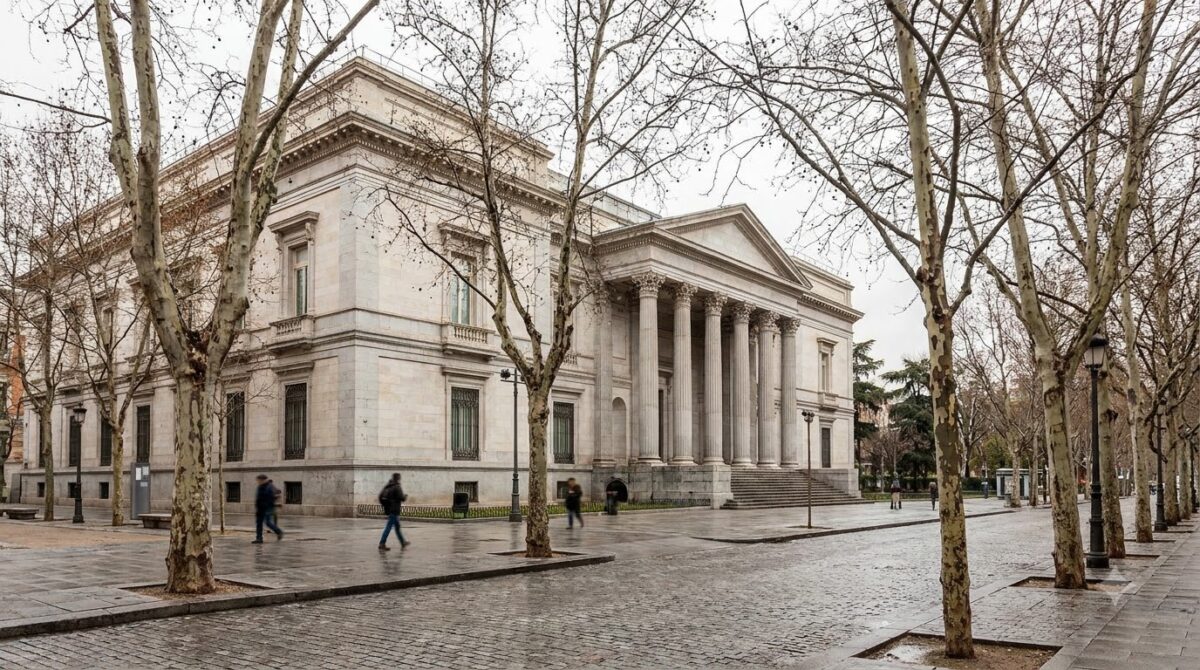
The Paseo del Prado holds three world-class collections within ten minutes of each other, and the park is at the top of it.
- The Museo del Prado — Velázquez, Goya, Bosch, and the Spanish royal collection. Three hours is right; six is a mistake.
- The Museo Nacional Centro de Arte Reina Sofía, ten minutes south, for Guernica. If you do one museum, the Prado; if two, this.
- The Thyssen-Bornemisza is the third, and the most forgiving if you are tired of galleries.
- Parque del Buen Retiro, Madrid in the afternoon — 125 hectares with a boating lake, and the Palacio de Cristal, a glass pavilion built for a Philippines exhibition in 1887. Free to visit and open late.
- Also in Retiro Park: a genuine Egyptian temple, the Templo de Debod, moved from Egypt in 1968 and re-erected just west of the palace. It is the best sunset spot in Madrid.
Day 3, the third day: the Royal Palace and 3 neighborhoods
The third day is when Madrid stops being a list and starts being a city.
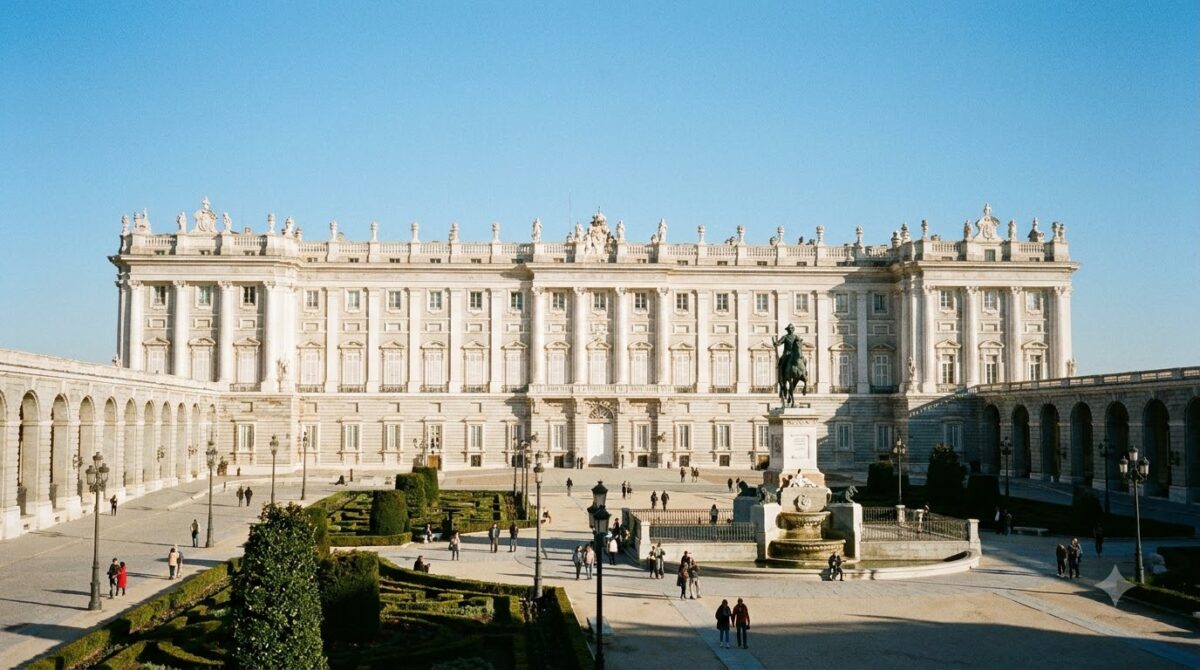
- The Royal Palace of Madrid — the largest functioning royal palace in Europe by floor area. The state rooms take about two hours.
- Almudena Cathedral next door, and the Sabatini gardens behind it.
- Plaza de Cibeles and the walk up the Gran Vía, which is the most dramatic street in the city.
- Malasaña and Chueca in the afternoon, around Plaza del Dos de Mayo — the part of the city where Madrid actually lives.
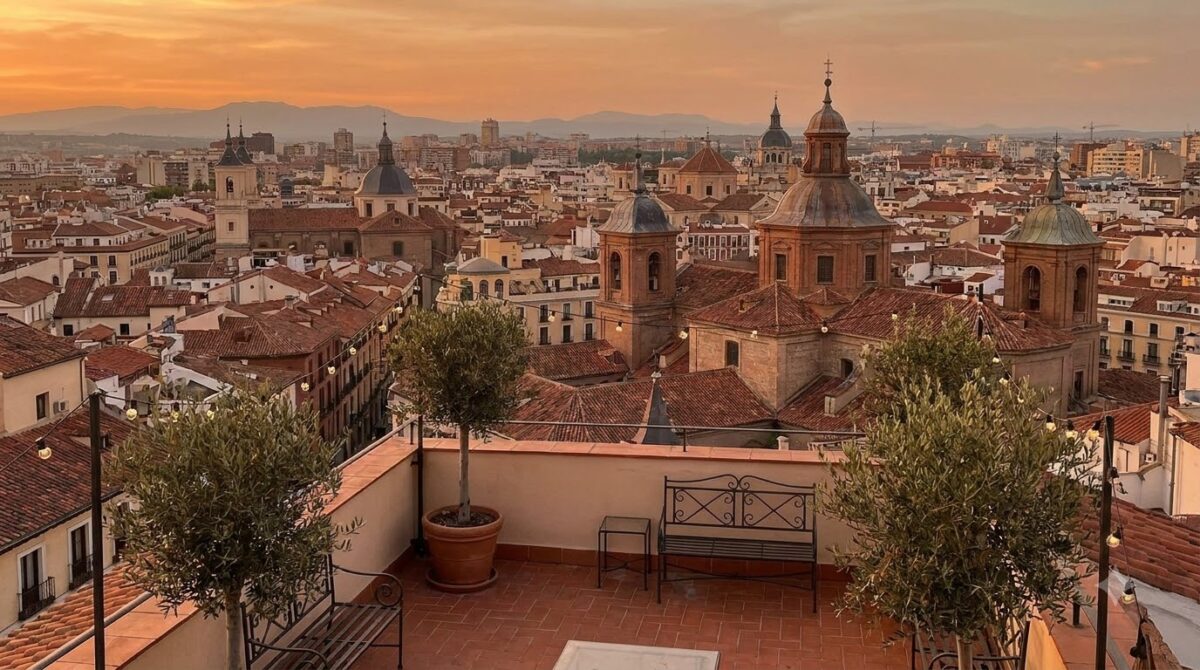
- A rooftop bar at sunset. Madrid has more of them than anywhere in Spain and they are the real evening attraction.
- Real Madrid at the Bernabéu, if football interests you; the stadium tour of the Royal Madrid club takes a half day and runs day or night.
Day 4: a day trip from Madrid to Toledo
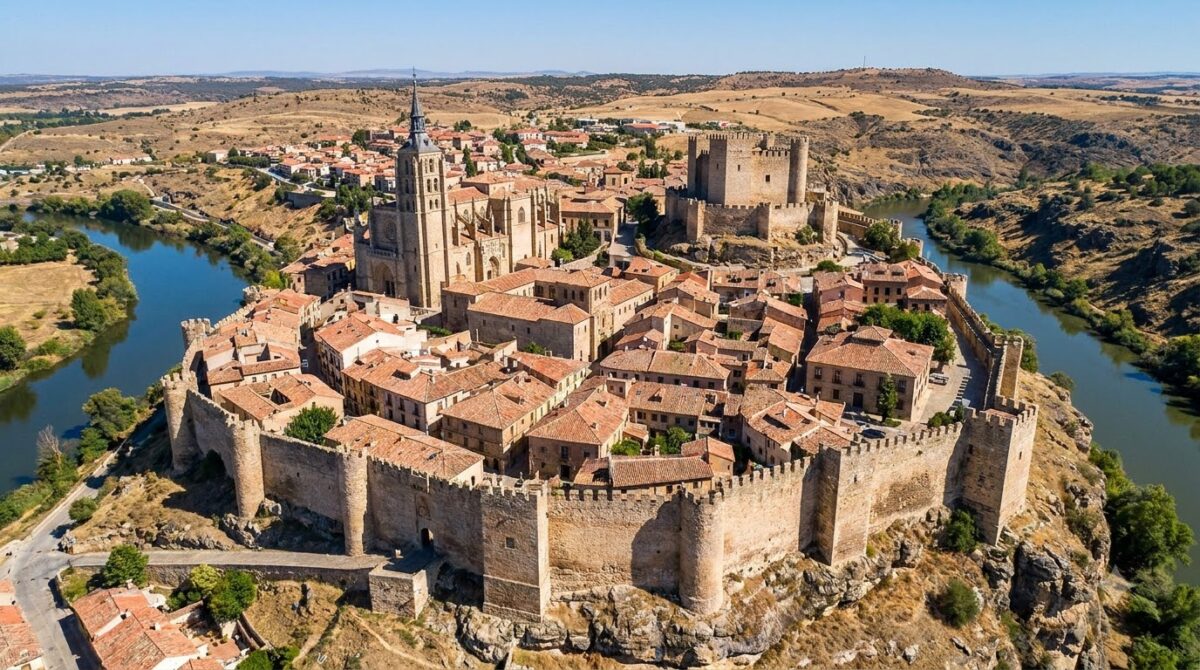
Toledo, Spain is 33 minutes from Atocha on the high-speed train, and it is the single best day trip from Madrid.
- The whole walled city is UNESCO listed — a former Spanish capital on a rock inside a river bend, where Christian, Jewish and Muslim quarters survive side by side.
- Toledo Cathedral, one of the great Gothic cathedrals of Europe, and the Alcázar fortress above the town.
- The mirador across the gorge for the view back, which is the photograph everyone recognises.
- Book the return train. The late afternoon services fill, and the trip from Madrid is popular year-round.
Day 5: Segovia, or a slow day around Madrid
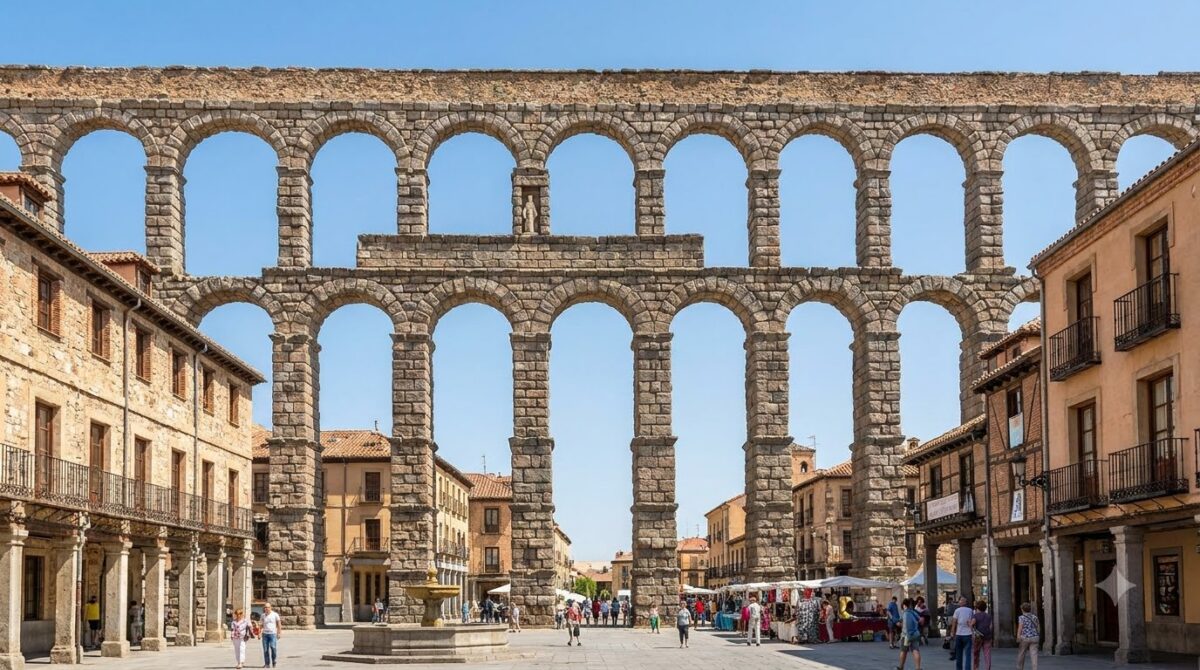
- Segovia — about 30 minutes by high-speed train. A Roman aqueduct 28 metres high runs through the middle of town, built without mortar and still standing after two thousand years. There is also a fairytale castle and roast suckling pig.
- El Escorial — the vast monastery-palace of Philip II, an hour north-west, with a working community of nuns and monks nearby, and easily combined with the Valle de los Caídos.
- Alcalá de Henares — forty minutes east, a UNESCO university town and Cervantes’ birthplace, and the quietest of the three.
- Or stay put. A day exploring the flea market at El Rastro, the Matadero arts centre and the Manzanares riverside park is a better use of a fifth day than a third day trip.
A shorter days in Madrid itinerary: 1 or 2 days in Madrid
- One day — the Prado in the morning, Plaza Mayor and the center of Madrid in the afternoon, tapas in La Latina in the evening. Skip the palace. This is a one day itinerary, not a visit.
- 2 days in Madrid — add the Royal Palace and Retiro Park on the second day, and see the Templo de Debod at sunset. This covers the main sights and nothing else.
- Neither leaves room to take a day trip, which means you miss the strongest argument for coming to Madrid at all.
Madrid, Barcelona and Seville on one trip to Spain
These come up constantly when people plan a trip to Spain with limited time.
- Madrid and Barcelona — Barcelona for a first visit to Spain, because Gaudí, the Gothic Quarter and a beach are easier to enjoy quickly. Madrid rewards a second visit with better museums, better food and better day trips. Four nights in Barcelona and three in Madrid is the usual split, and the train between them takes two and a half hours.
- Madrid and Seville — Seville is prettier and more atmospheric, Madrid is bigger and better for museums and eating. Most 10-day trips take in Barcelona and Seville alongside Madrid, and Madrid is the one people underrate before arriving. Granada is the usual fourth.
- If you only have four days in Spain, one city is the right answer. Madrid is the best of them for a first-time visitor who wants variety, because the day trips are so close.
Madrid travel basics: the metro and getting around
- Walking is the default. The centre is flat and about two kilometres across, and every barrio around the city center is twenty minutes from Puerta del Sol.
- The metro is excellent — twelve lines, trains every few minutes, and cheap. Use it for the airport, Salamanca and the Bernabéu.
- The airport connects by metro with one change, about forty minutes, or by a fixed-fare taxi.
- Madrid Atocha railway station is where the trains to Toledo, Seville and Valencia leave from, at the southern end of the museum boulevard.
- Do not rent a car. Central Madrid is a camera-enforced low-emission zone.
The best time to visit Madrid
- April to June and September to October are the best months. Warm days, cool evenings, and everything open.
- July and August are hot and empty. The city clears out, and while the weather is dry rather than humid, 38 degrees is 38 degrees.
- Winter is cold — Madrid sits at 650 metres on a plateau — but clear, cheap and pleasant if you dress for it.
- Prices spike around Semana Santa, Pride in early July, and big football fixtures.
Where to stay in Madrid
Short version: Barrio de las Letras for a first visit, Sol or Centro to be at the exact middle, La Latina for tapas, Malasaña for nightlife, Salamanca for quiet. Everything central is within twenty minutes on foot of everything else.
The full breakdown is in our guide to where to stay in Madrid. If you are building a wider route, see the Spain itinerary and, for the south, the southern Spain itinerary.
Is one extra day in Madrid worth it? A travel guide answer
This is the question behind the question, and it has a clean answer. An extra day in Madrid is worth more than an extra day in almost any other Spanish city, and it is worth less than an extra day almost anywhere if you spend it indoors.
- Spend 3 days on the city. The first two days are the monuments and the museums; the third is the charming part of Madrid that people remember, which is the neighborhoods rather than the sights.
- One extra day should go to Toledo, not to a fourth museum. Spending 3 days on the centre and one on a day trip is the best-balanced version of a 3-4 days in Madrid plan.
- A second extra day goes to Segovia, El Escorial or Alcalá de Henares, the university town where Cervantes was born.
- Do not add more time in museums. The Prado alone will absorb a whole day if you let it, and almost nobody enjoys the sixth hour.
The trap to avoid is treating Madrid as a one-night stop between Barcelona and Seville. It is the capital of Spain, it holds the country’s best museums, and it is the only city here with two UNESCO towns half an hour away.
Eating in Madrid, day or night
Food is a large part of the Madrid experience and it runs on a schedule that surprises visitors from the United States and northern Europe.
- Lunch from two, and it is the big meal. The menú del día is a fixed three courses at good value.
- Dinner from nine or ten. Kitchens barely start before then.
- A bocadillo de calamares — a fried squid sandwich — eaten standing near Plaza Mayor, Madrid. It sounds like a tourist trap and is genuinely the local snack.
- Cocido madrileño, the city’s chickpea stew, served as three separate courses. Paella is Valencian, not Madrid, though you will be offered it everywhere.
- A drink almost always comes with something, though not on the Granada scale where the tapa is free and substantial.
- Plaza de la Villa and Plaza del Dos de Mayo are two squares worth eating on, the first medieval and the second the heart of Malasaña.
Frequently asked questions
How many days are ideal for visiting Madrid?
Three days for the city and five if you want the day trips, which are the strongest reason to base yourself here. Three full days in Madrid covers the Prado, the Royal Palace, Retiro Park and the neighborhoods. A fourth day buys Toledo and a fifth buys Segovia, both about half an hour away by high-speed train.
Is 3 days in Madrid enough to see the main sights?
Yes, comfortably. Madrid is flat, compact and unusually flexible because almost nothing needs booking weeks ahead — the Prado, the Royal Palace and the Reina Sofía all hold same-day capacity. Three days covers all of them plus Retiro Park, the Templo de Debod and two evenings of tapas.
What can I do with 1, 2, 4 or 5 days in Madrid?
One day is the Prado, Plaza Mayor and an evening in La Latina. Two days adds the Royal Palace and Retiro Park. Four days adds a day trip to Toledo, and five adds Segovia or El Escorial. The jump from three to four is the one that changes the trip most, because it turns Madrid into a base rather than a stop.
What are the best day trips from Madrid?
Toledo first, at 33 minutes by high-speed train — a UNESCO-listed walled city on a rock in a river bend. Segovia second, about 30 minutes, for the Roman aqueduct and the castle. El Escorial, the monastery-palace of Philip II, is an hour north-west and the strongest third option.
Should I spend more time in Madrid or Barcelona?
Barcelona on a first trip to Spain, Madrid on a second. Barcelona has Gaudí, the medieval centre and a beach in a compact layout. Madrid has the better museums, the better food and far better day trips, and it is more flexible because its sights rarely sell out. Four nights in Barcelona and three in Madrid is the common split.
Should I spend more time in Madrid or Seville?
Seville is the prettier city and three days there is plenty. Madrid is larger and rewards more time, mostly through its museums and its day trips to Toledo and Segovia. On a ten-day trip to Spain, three nights in Seville and four in Madrid is a sensible balance.
What is the best time of year to visit Madrid?
April to June and September to October. July and August are hot and the city empties out, though the heat is dry rather than humid. Winter is cold because Madrid sits at 650 metres on a plateau, but it is clear, cheap and quiet. Avoid Semana Santa and early July for prices.