Quick answer where to stay in Puglia
A masseria in the Valle d’Itria for the first half of the trip and Lecce for the second. Ostuni suits a first visit; Monopoli or Polignano a Mare if you would rather be on the water.
On this page
- Where to stay in Puglia at a glance
- The three kinds of place to stay in Puglia
- The best towns to stay in Puglia
- Luxury hotels in Puglia: Fasano, Savelletri and Borgo Egnazia
- The best places to stay in Puglia for the beach, from Torre Lapillo north
- Spa resorts, sea views, and staying near Matera
- Driving in Puglia, and what a car costs you
- How to decide where to stay in Puglia
- Booking notes for Puglia accommodation
- Checking current rates in Puglia
- Frequently asked questions
Everywhere else in Italy, choosing where to stay means choosing a neighbourhood. In Apulia it means choosing a kind of building, and the three options give you three genuinely different holidays in the same region.
Some links below are affiliate links. We may earn a commission if you book through them, at no extra cost to you. We do not rank hotels, and any prices on the map come live from the booking sites.
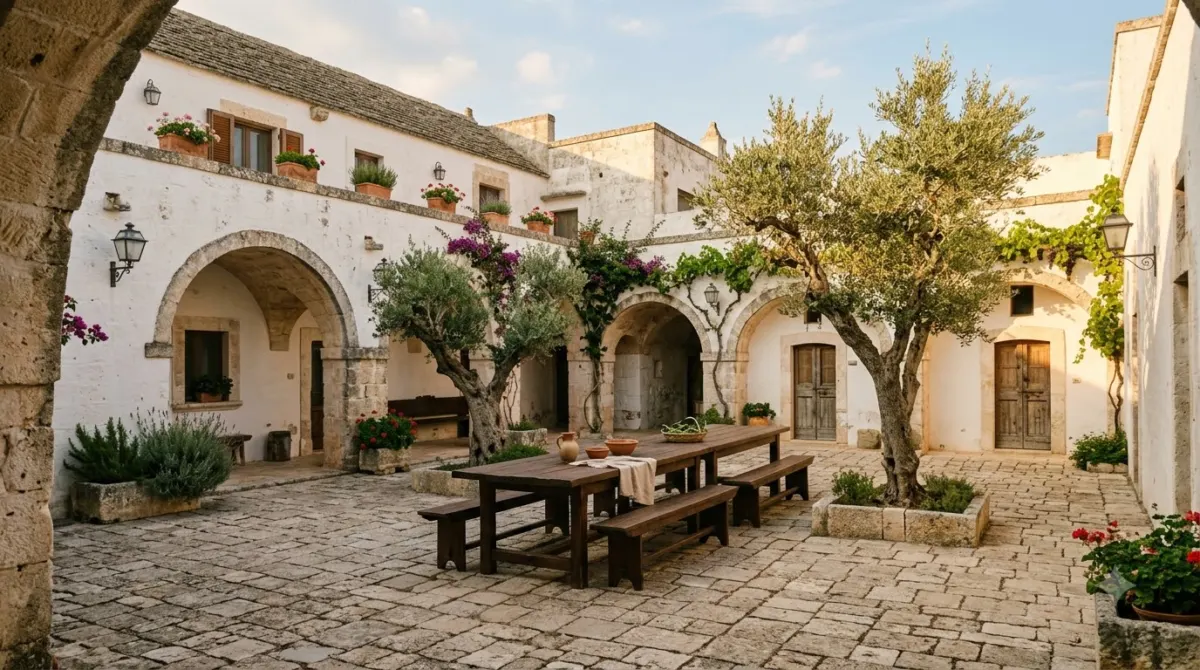
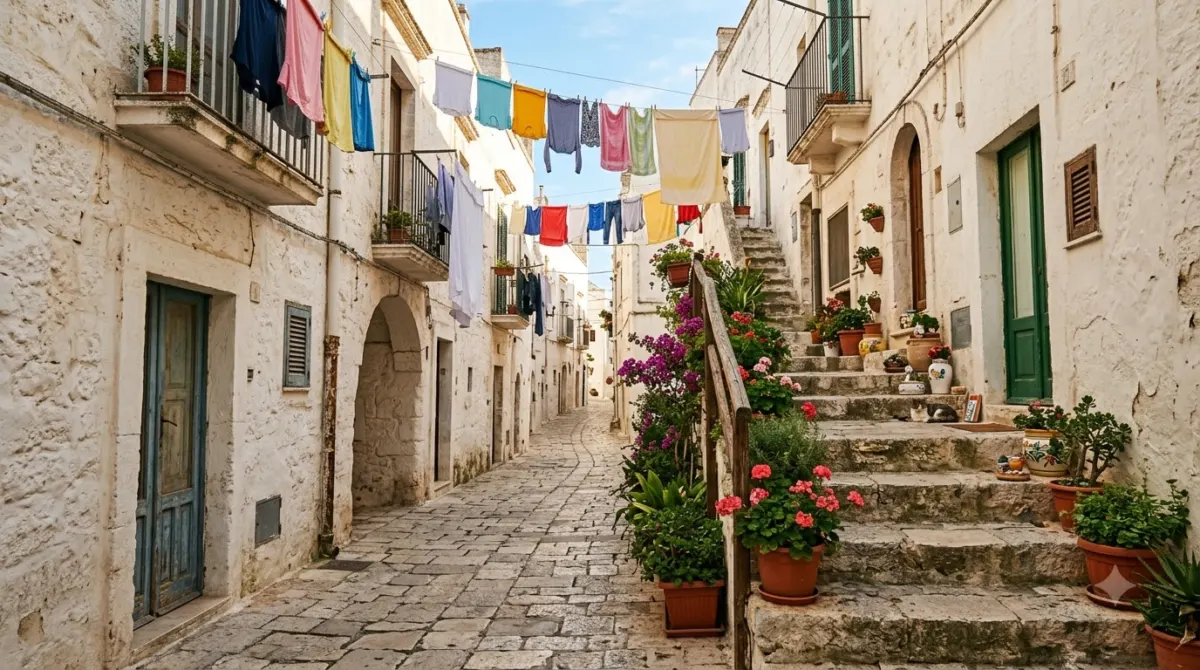
A masseria is a fortified farmhouse in the countryside, usually with a pool, usually down a dirt track, and it does not work without a car. A trullo is a cone-roofed stone house, cool in August, charming, small and dark. A room in a town puts a bar and a bakery on your doorstep and gives you no pool and nowhere to park. For the rest of the country, see our 10-day Italy itinerary.
Decide that first. The town in Puglia matters second, and for a lot of the best hotels in the region there is no town at all — the address is a track between olive groves, and what counts is the drive time. Anyone who has visited Puglia will tell you the same thing.
Town positions, distances and property types checked 9 September 2026. Rates move a long way by season here, so check current prices yourself.
Where to stay in Puglia at a glance
| Base | Suits | Car needed |
|---|---|---|
| Valle d’Itria countryside | Masseria or trullo, pool, quiet | Essential |
| Ostuni | First visits, views, walkable old town | Yes, for day trips |
| Locorotondo or Martina Franca | Small towns, central location | Yes |
| Monopoli or Polignano a Mare | Coastal towns, walkable, sea | Helpful |
| Fasano and Savelletri | Luxury hotels and spa resorts | Yes |
| Lecce | Baroque city, food, no car needed | No |
| Salento coast | Best sandy beaches, summer | Essential |
| Bari | Arrivals, budget, trains | No |
If you want one answer: a masseria in the Valle d’Itria for the first half of the trip and Lecce for the second. That covers much of Puglia without moving more than twice, and it is the right shape for a Puglia trip of a week.
Book by area
The three kinds of place to stay in Puglia
Masseria: the characteristic Puglian stay
- A masseria is a working farmhouse built to defend itself — thick walls, a courtyard, one gate — converted into a hotel. Most sit alone in the olive groves.
- They almost all have a pool, which matters more than it sounds in July, and many have a spa.
- They range enormously. Some are simple farm stays with six rooms; others are full resorts with rooms and suites, restaurants and a golf course, closer to a seaside resort than a farmhouse.
- You will drive to dinner. That is the trade, and it catches people out.
- Best for couples, families and anyone who wants to stop moving for a few days in the heart of Puglia.
Trulli: the ones people book for the photograph
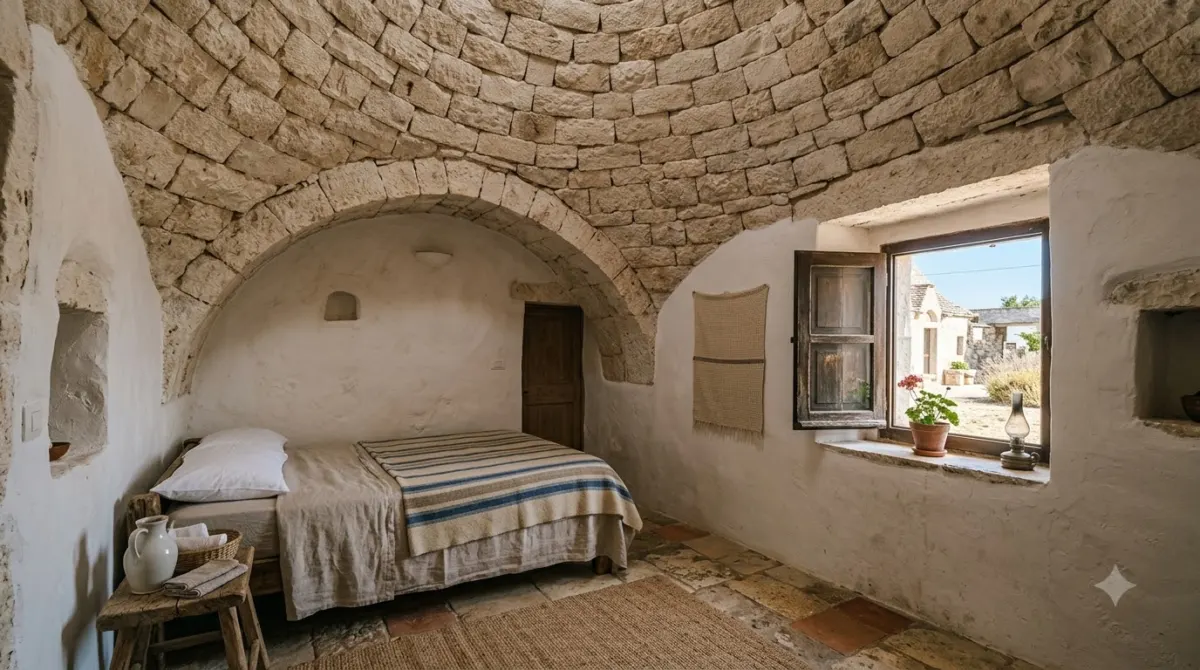
- A trullo is a dry stone house with a conical roof, built without mortar, and the countryside around Alberobello is full of them.
- The walls are very thick, so they stay cool in summer, which is a real advantage in a region that hits the high thirties.
- They are small and dim inside. Windows are few because the structure does not allow many. Look at the photographs carefully.
- Converted clusters joined together are the comfortable version. Almapetra Trulli Resort, in the countryside near Locorotondo, is an example of the type, built around a group of restored trulli.
- Best for two people for two or three nights, rather than a week.
A boutique hotel or a room in a town: the version without a car
- Old town apartments, guest houses and bed and breakfast rooms in Ostuni, Lecce, Monopoli or Polignano a Mare.
- You can walk to dinner, which sounds small and changes the trip completely.
- No pool, and parking is outside the walls. Historic centres are closed to traffic.
- Best if you are visiting Puglia without a car, or for the second half of a trip after a few slow days in the countryside.
The best towns to stay in Puglia
Ostuni: the best base for a first trip to Puglia
- The white town on a hill, visible across the olive groves from a long way off, with a maze of an old town and a cathedral at the top.
- A great base for the north — Alberobello, Locorotondo, Cisternino and Martina Franca are all within half an hour.
- The coast is ten minutes away, with beach clubs on low limestone rocks.
- The widest choice of places to stay in Puglia outside the cities, from boutique hotels in the old town to masserie in the surrounding countryside.
- It is steep. The old town is built up a hill and the lanes are stepped.
Locorotondo and Martina Franca: the Valle d’Itria central location
- Locorotondo is a small circular white town on a rise with a view over the whole Itria Valley. It is the prettiest of the inland towns and very quiet at night.
- Martina Franca is larger, baroque, with a grand main square and more restaurants.
- They are ten minutes apart and in the middle of everything, which makes this the most central location in northern Puglia.
- Nowhere near a beach — twenty-five minutes to the coast.
- Best for a car-based trip where you want a town at night and countryside by day.
Monopoli and Polignano a Mare: the coastal towns
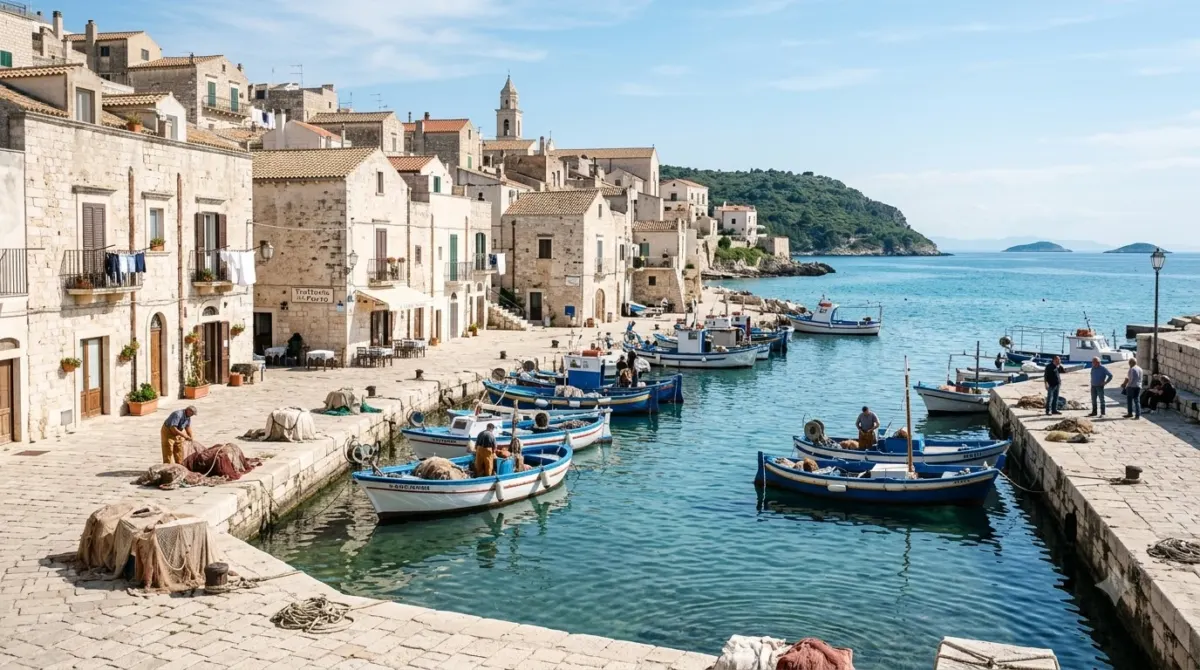
- Monopoli is a working port with a genuine old town, a harbour full of blue boats and far fewer visitors than its neighbour.
- Polignano a Mare is the famous one, built on a cliff above a small pebble cove, and it is busy in a way Monopoli is not.
- Both are on the train line from Bari, so this is where to stay in Puglia if you are not renting a car.
- Rooms with balconies overlooking the sea exist here and almost nowhere else in the region.
- The swimming is off rocks, not sand. Beaches nearby are small.
Lecce, Otranto and Gallipoli: the Salento bases
- The baroque city of the south, carved out of soft golden limestone. The baroque architecture here is the reason to come, and it is a real working city rather than a preserved one.
- No car needed inside the city, and it is on the main railway line.
- The best food and the best evenings in Puglia, and the passeggiata is worth planning around.
- Forty minutes from either sea — the Adriatic at Otranto, the Ionian at Gallipoli, Apulia. Both are good places in Salento to stay for a few nights in their own right.
- Best base for the southern half of the region, and the natural second stop after the Valle d’Itria.
Map shows live availability and prices. We may earn a commission on bookings made through it, at no extra cost to you.
Luxury hotels in Puglia: Fasano, Savelletri and Borgo Egnazia
The high end clusters in one small area, which is useful to know if that is what you are looking for or if it is what you want to avoid.
- Fasano and Savelletri, on the coast between Monopoli and Ostuni, hold most of the region’s luxury hotels and spa resorts.
- Borgo Egnazia at Savelletri is the landmark, a large resort built to look like a Puglian village, with a golf course and a spa. It is well known internationally, partly because Justin Timberlake and Jessica Biel married there.
- Masseria Torre Maizza and Masseria San Domenico sit on the same stretch, both converted estates near the sea.
- Masseria Amastuola Wine Resort, inland near Massafra, is a converted estate set in a sculpted vineyard, and the clearest example of the farm-turned-hotel architecture.
- Masseria Cervarolo and Masseria Montenapoleone, in the countryside near Ostuni, are the smaller and more rustic end of the same idea.
These are listed as landmarks, not recommendations. Nobody here has stayed in them and we do not print rates, because rates in Puglia swing hard between June and August. Check current prices and availability yourself before booking anything.
The best places to stay in Puglia for the beach, from Torre Lapillo north
The two coasts are different, and this decides a summer trip more than anything else.
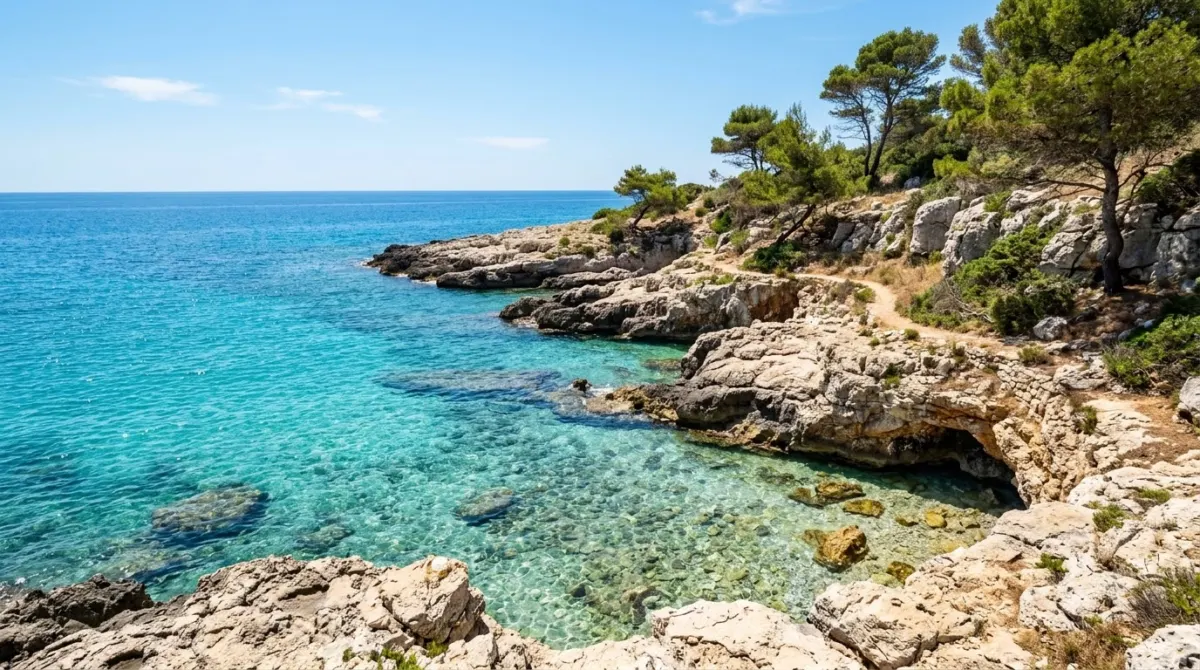
- The Adriatic Sea side, north of Brindisi, is low limestone rock and very clear water, with beach clubs rather than sand. Beaches on the Adriatic are small and rocky.
- The Ionian Sea side, south and west of Gallipoli, has the best sandy beaches in Puglia and the long shallow stretches families want.
- Southern Puglia in general is where to base yourself for a beach holiday, and Gallipoli, Otranto and Santa Maria di Leuca at the tip of Puglia are the obvious towns.
- Torre Guaceto and Torre Lapillo are protected stretches on either coast, and the water shows it.
- The far north, the Gargano peninsula around Vieste, has pine forest, cliffs and sand, and almost no foreign visitors.
Spa resorts, sea views, and staying near Matera
Three things people ask for specifically, and none of them are evenly spread across the region.
- A spa comes with the larger masserie rather than with town hotels, and almost all of them sit in the triangle between Fasano, Savelletri and Ostuni.
- Actual sea views are rarer than the photographs suggest. Most masserie face inland over olive groves. For a room steps from the sea, look at Polignano a Mare, Monopoli, Otranto or a seaside town in Salento.
- Matera is over the border in Basilicata, about an hour and a quarter from the Itria Valley, and staying a night in a cave hotel there is one of the better things a traveller can do on this trip.
- Castro and the eastern Salento coast have small cliff-top places with balconies overlooking the sea and almost no international visitors.
- Bougainvillea over a whitewashed wall is the image everyone books for, and it is real, but it belongs to the countryside rather than the towns.
Driving in Puglia, and what a car costs you
Since most of the best places in Puglia are rural, car rental is part of the accommodation decision rather than separate from it.
- You need a car to get around the Valle d’Itria and much of Puglia beyond the railway line. There is no way around this.
- Check what the insurance covers before you drive down a farm track. Gravel and stone walls do most of the damage here.
- Country roads are unlit, so the first drive back from dinner is slower than you expect.
- Parking at a masseria is free and easy. Parking in a town in Puglia means leaving the car outside the walls.
- Southern Puglia is further than it looks. From the tip of Puglia at Santa Maria di Leuca back to Bari is well over two hours.
How to decide where to stay in Puglia
Puglia is a big region, roughly 400 kilometres end to end, so one base does not cover it. Two does.
- A week in Puglia — split it. Three or four nights in the Valle d’Itria, then three in Salento or Lecce.
- Three or four nights — one base in the Valle d’Itria, and skip the south entirely.
- First time in Puglia — Ostuni or a masseria near it, which puts most of the famous sights within half an hour.
- Without a car — stay in a seaside town on the railway line, so Bari, Monopoli, Polignano a Mare or Lecce, and treat the countryside as out of reach.
- With a rental car — base yourself in Puglia’s countryside and enjoy the fact that nothing in that half of the region is more than forty minutes away.
- Should you stay in Bari? For a night on arrival or departure, yes. As a base for the region, no. It is a big port city and the good parts of Puglia are elsewhere.
For the route itself, see our Puglia itinerary, which explains why the region needs two bases and a car.
Booking notes for Puglia accommodation
- Book months ahead for July and August. Italians holiday here in August and the good masserie sell out first.
- Check the drive time to a town, not the distance. Country roads here are slow and unlit at night.
- Ask whether the pool is heated if you are travelling in April, May or October. Many are not.
- Air conditioning is not universal in trulli and older conversions, and it matters in August.
- Half board is common at rural masserie, and it is usually worth taking, because the alternative is a twenty-minute drive each way.
- Many properties close from November to March. The region genuinely shuts down out of season.
Checking current rates in Puglia
Everything above is about position — which area suits which kind of trip. What it deliberately does not do is quote prices, because rates in Puglia move a long way by season, by day of the week and by how far ahead you book, and any figure printed in a guide is out of date the week after it is written.
These searches show live availability and current prices, so you can check them against the areas described above:
These are affiliate links. If you book through one we may earn a commission, at no extra cost to you. It does not affect which areas we recommend above — nobody pays to be listed here.
Not sure which area to book? See where to stay in Tuscany.
Frequently asked questions
What is the best base for visiting Puglia?
Two bases, not one. Puglia is about 400 kilometres long. Use the Valle d’Itria for the northern half, staying in or near Ostuni, Locorotondo or Martina Franca, then move to Lecce or the Salento coast for the southern half. Ostuni is the single best base if you only have time for one.
What is a masseria and should I stay in one?
A masseria is a fortified farmhouse converted into a hotel, usually standing alone in the olive groves with a courtyard and a pool. It is the characteristic place to stay in Puglia and the reason many people come. The catch is that you need a car and you will drive to dinner, so it suits a slow few days rather than a touring trip.
Where should I stay in Puglia without a car?
On the railway line. Bari, Monopoli, Polignano a Mare, Ostuni and Lecce are all served by trains, so a coast and cities trip works well. What you cannot reach is the Valle d’Itria countryside, where most of the masserie and trulli are, because those are connected only by small roads.
Which part of Puglia has the best beaches?
Salento, in the south. The Ionian Sea side around Gallipoli and Torre Lapillo has the best sandy beaches and the shallow water families want. The Adriatic side north of Brindisi is low limestone rock with very clear water and beach clubs rather than sand, which some people prefer and families usually do not.
Is it worth staying in a trullo?
For two or three nights, yes. A trullo is a dry stone house with a conical roof, and the thick walls keep it genuinely cool in summer. They are small and dim because the structure allows few windows, so look at the photographs carefully. Converted clusters of several trulli joined together are the comfortable version.
Should I stay in Bari?
For a night on arrival or departure, yes. Bari has the main airport, the railway hub and a good old town. As a base for exploring the region, no. It is a large port city and everything people come to Puglia for is an hour or more away.
Is Ostuni or Lecce better?
They serve different halves of the region. Ostuni is a hill town in the north with the trulli, the Itria Valley and the Adriatic coast around it. Lecce is a baroque city in the south, forty minutes from either sea, with the better food and the livelier evenings. On a week-long trip, stay in both.
Keep planning Italy
- Best Hotels in Taormina: The Town Is Up, the Sea Is Down
- Best Hotels on the Amalfi Coast: Pick the Town First
- Best Hotels in Positano: Count the Steps Before the Stars
- Best Hotels in Florence: The ZTL Matters More Than the Stars
- Where to Stay in Verona: Inside the River Loop, or Outside It
- Where to Stay in Tuscany: You Are Choosing a Driving Radius
- Where to Stay in Cinque Terre: Ask About the Stairs First
- Where to Stay in Taormina: Up in the Town, or Down at the Beach?
Written and checked by
Triplarks Editorial
An editorial desk, not an invented persona: research, drafting and fact-checking are done by the same small team. Every number here carries the date it was read.