Quick answer where to stay in Tuscany
Chianti: the only area that reaches both Florence and Siena comfortably, and proper countryside rather than a compromise. The Val d’Orcia for the landscape and wine, Siena for one base without needing a car in town.
On this page
- The best places to stay in Tuscany at a glance
- Chianti: the best place to stay in Tuscany for a first trip
- The Val d’Orcia: Pienza, Montepulciano, Montalcino and Bagno Vignoni
- Siena: one base for the whole region
- Florence: only if the trip is about art
- The best towns to stay in Tuscany: medieval hilltop towns and villages
- Where to stay in Tuscany for wine
- Tuscany luxury: where the spa and luxury hotel options cluster
- Agriturismo, villa or borgo: the kinds of hotel in Tuscany
- Tuscany travel: white roads, distance and the things nobody warns you about
- Where to stay in Tuscany without a car
- Northwest Tuscany, the coast and the little towns people forget
- Choosing the best base for your Tuscany trip
- Checking current rates in Tuscany
- Frequently asked questions
Nearly every town in Tuscany is a hilltop town, and from a distance the towns in Tuscany all offer the same thing: stone, a bell tower, and views of the Tuscan countryside. Choosing between them on charm is nearly impossible, because the charm is evenly distributed.
Some links below are affiliate links. We may earn a commission if you book through them, at no extra cost to you. We do not rank hotels, and any prices on the map come live from the booking sites.
What actually differs is what falls within forty-five minutes of your front door. Chianti reaches both Florence and Siena. The Val d’Orcia reaches Montalcino, Montepulciano and Pienza but cannot reach north. Siena reaches both halves but you sleep in a city rather than in a vineyard.
So pick the centre of the circle you want, then pick the building. Tuscany is large, and deciding where to stay is a question about radius, not about which village is prettiest. Different parts of Tuscany reach entirely different sets of towns to visit.
Town positions, drive times and property types checked 9 September 2026. Rates move a long way by season, so check current prices yourself.
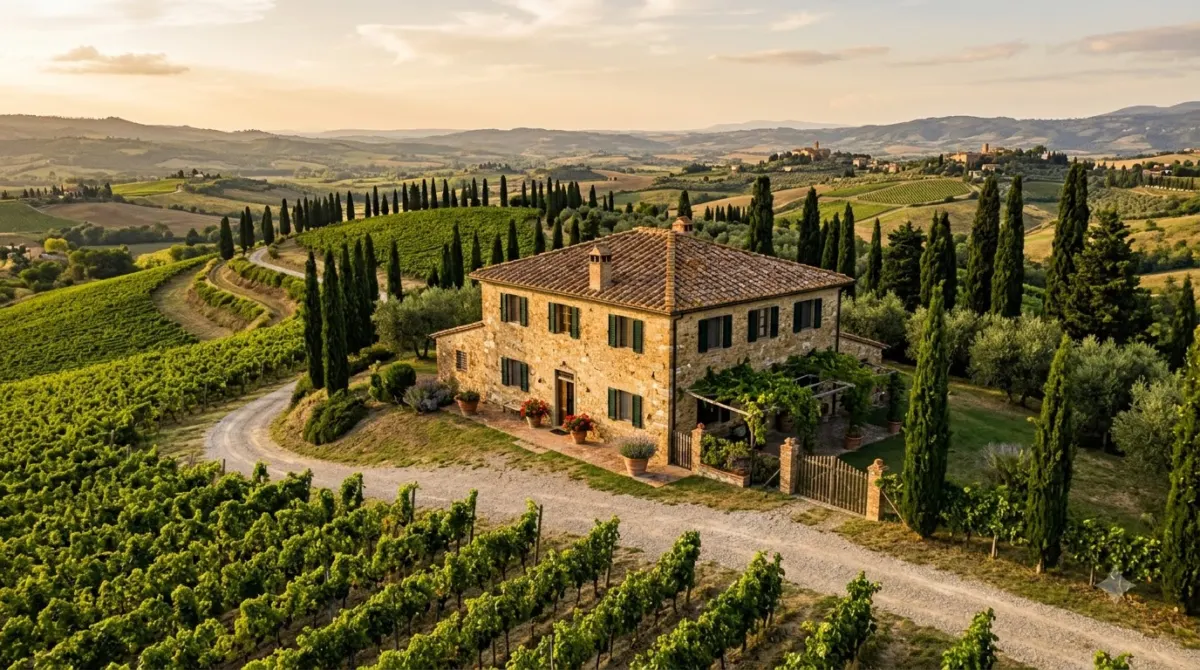
The best places to stay in Tuscany at a glance
| Area | Reaches in 45 min | Best for |
|---|---|---|
| Chianti | Florence, Siena, San Gimignano | Best of both worlds, first trips |
| Val d’Orcia | Pienza, Montepulciano, Montalcino | The landscape, wine, quiet |
| Siena | Chianti, San Gimignano, Volterra | One base, no car needed in town |
| Florence | Chianti only | Art, no car, city living |
| San Gimignano area | Volterra, Siena, Pisa | Western hill towns |
| Lucca, northwest Tuscany | Pisa, the coast, Cinque Terre | Quiet, cycling, no crowds |
| Maremma coast | Beaches, hot springs | Summer, families |
If you want one answer: Chianti. It is one of the best places to base yourself in Tuscany because it is the only area that reaches both Florence and Siena comfortably, and it is proper countryside rather than a compromise.
Chianti: the best place to stay in Tuscany for a first trip
The hills between Florence and Siena, greener and more wooded than the south, and the one part of Tuscany that gives you the best of both worlds. If you want to stay somewhere that offers the best access to everything, this is it.
- Forty minutes from Florence and thirty from Siena, which no other countryside area manages.
- Greve in Chianti, Radda in Chianti and Castellina in Chianti are the three main towns, all small and close together.
- Gaiole in Chianti is quieter still, and the surrounding hills hold most of the wine estates.
- Chianti Classico is the wine, and Castello di Fonterutoli near Castellina is the landmark estate for tastings.
- Borgo Vescine near Radda is a restored medieval hamlet turned hotel, and Hotel Le Fontanelle sits near Pianella, in Castelnuovo Berardenga. Both are landmarks for the area rather than recommendations.
- Best for a first trip to Tuscany, for anyone who wants to see the cities and sleep in the country. It is the quintessential Tuscany people picture when they choose to stay outside a city.
The Val d’Orcia: Pienza, Montepulciano, Montalcino and Bagno Vignoni
Southern Tuscany, open and bare and gold, and the postcard. This is the heart of Tuscany for most people who have visited Tuscany more than once. It is also two hours from Florence, which is the trade.
- Pienza, Montepulciano and Montalcino are the three towns, each about twenty-five minutes from the next.
- Brunello di Montalcino is the serious wine, and Castiglion del Bosco is the large estate near the towns of Montalcino that most people have heard of. A winery visit here is a proper wine tasting.
- Palazzo Carletti in Montepulciano is the landmark inside a town rather than in the fields, if you would rather walk to dinner.
- Bagno Vignoni has a thermal pool where its piazza should be, and several places to stay built around the springs.
- Nothing north is reachable. Florence and San Gimignano are day-long round trips from here, so do not plan them.
- Best for a second visit, or for anyone whose whole reason to stay is a room that overlooks the countryside.
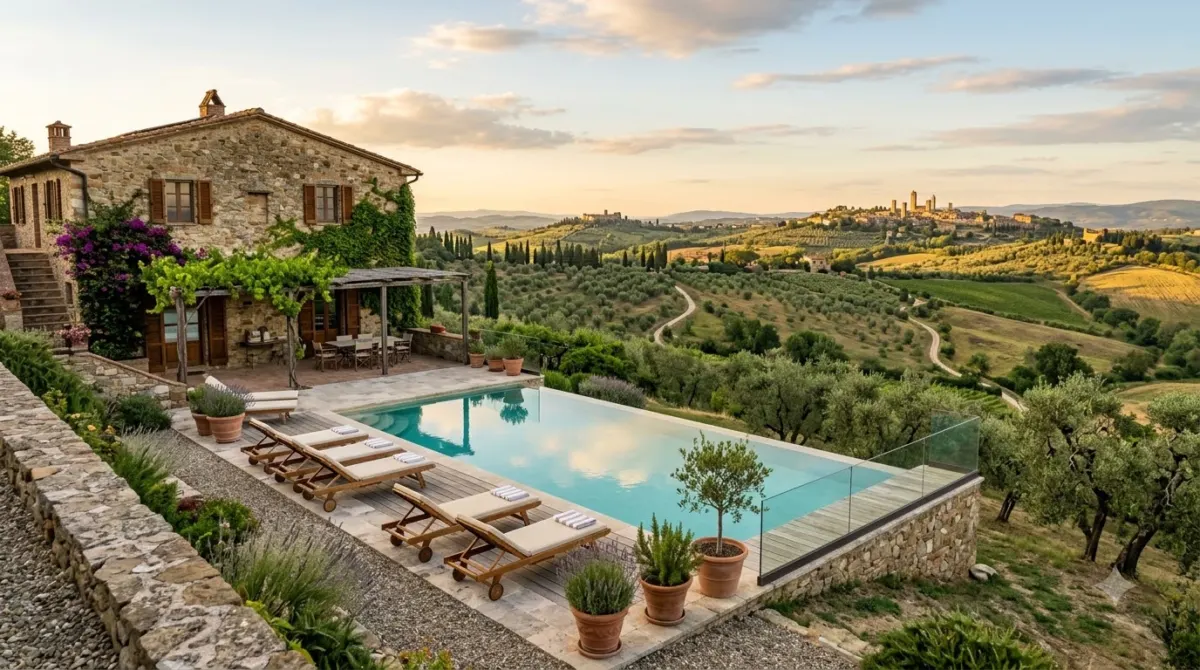
Siena: one base for the whole region
- The most central location in the Tuscany region, sitting between Chianti to the north and the Val d’Orcia to the south, which is why it works as a single base for moving around Tuscany.
- You do not need a car inside Siena, and the old city is closed to traffic, so park outside and walk.
- It empties in the evening when the day trippers leave, which Florence never quite does.
- Half an hour to Chianti, an hour to Montalcino, forty minutes to San Gimignano.
- What you give up is waking up with a view over a vineyard, which for a lot of people is the whole point.
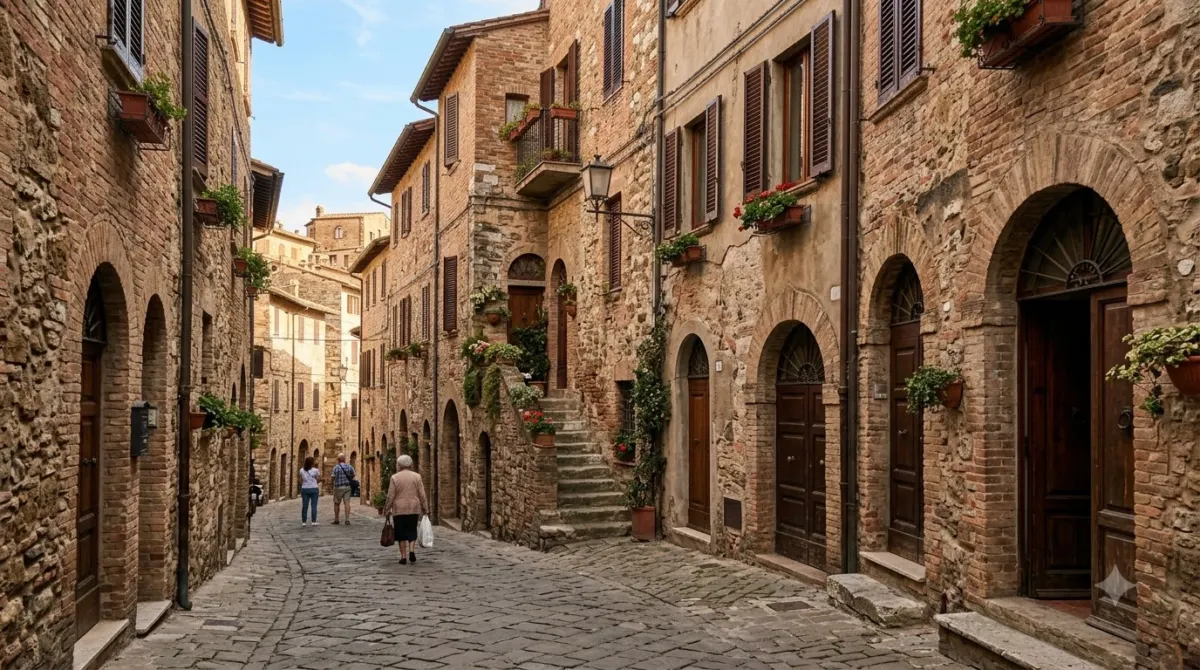
Florence: only if the trip is about art
- Stay in Florence for the museums, the food, the restaurants and the fact that you need no car at all. It is the obvious base if this is your first city in Italy.
- Its radius is small. Chianti is reachable, Siena is about an hour and a quarter by rapid bus, and everything else is a long day.
- Do not base a countryside trip here. The Val d’Orcia is two hours each way.
- Split the trip instead — three nights in Florence, then three somewhere with a pool.
- Fiesole, on the hill above the city, is the compromise, with a view over Florence and a bus down into it.
The best towns to stay in Tuscany: medieval hilltop towns and villages
If you would rather choose a town than one of the areas to stay above, these are the best towns in Tuscany to sleep in rather than only visit, from San Gimignano south.
- Montepulciano — the best of the towns to stay in Tuscany if you want the Val d’Orcia on your doorstep and a real street of restaurants and wine bars at night.
- Pienza — smaller, and the terrace along its southern wall may be the single best place to overlook the countryside anywhere in the region.
- San Gimignano — among the best known towns in Tuscany and heavily visited by day. Stay the night and you get the towers to yourself.
- Greve, Radda and Castellina — the little towns of Chianti, all small, all within fifteen minutes of each other.
- Volterra and Cortona — quieter, older, cheaper small towns, and both great places to stay if you have already visited Tuscany once. Give yourself a full evening to visit the town properly.
- Lucca and Arezzo — proper small cities rather than villages in Tuscany, with the practical advantage of a railway station.
Any of these towns will also do as a base on a trip to Tuscany. The question is only what the surrounding radius reaches, and whether you want to walk to dinner or drive to it.
Where to stay in Tuscany for wine
If a wine tasting a day is the plan, two areas offer the best access and they are not the same.
- Chianti for volume and ease. Estates line the SR222, most take visitors without an appointment, and the towns of Greve and Castellina are surrounded by them.
- Montalcino for seriousness. Brunello di Montalcino is among the world’s best known Italian reds, and the towns of Montalcino and Montepulciano are half an hour apart.
- Stay near a winery rather than in one unless you want to eat there every night. Many estates rent rooms and a few are full hotels.
- Olive oil comes from the same farms, and a tasting usually includes it.
- Book a driver for one day. The one genuine problem with a wine trip in Tuscany is that somebody has to drive back.
Map shows live availability and prices. We may earn a commission on bookings made through it, at no extra cost to you.
Tuscany luxury: where the spa and luxury hotel options cluster
- A luxury hotel in Tuscany is almost always a converted estate — a castle, a monastery or a hamlet — with a pool, a spa and a restaurant that most guests never leave.
- Chianti and Montalcino hold most of them, along with the hills immediately south of Florence.
- The Belmond hotel above Florence, Villa San Michele at Fiesole, is a former monastery with a view down over the city, and is the landmark for that end of the market.
- Thermal spas are separate and concentrated at Bagno Vignoni and Saturnia, where the water is the attraction.
- These are landmarks, not recommendations. Nobody here has stayed in them and we do not print rates. Check current prices yourself.
Agriturismo, villa or borgo: the kinds of hotel in Tuscany
- An agriturismo is a working farm with rooms, often with a pool, and it is the characteristic hotel in the countryside. Prices are moderate and breakfast usually comes off the farm.
- A villa is the whole house, which makes sense for a family or two couples and rarely for two people.
- A borgo is a restored hamlet — several stone buildings around a courtyard, run as one property — and it is the most quintessential Tuscan thing on the market.
- A boutique hotel in a hill town means you can walk to dinner, which is worth more than it sounds after three nights of driving to eat.
- The best hotels cluster around Montalcino and Chianti, and a spa attached to a converted estate is the usual shape of Tuscany luxury.
- An apartment in Florence or Siena is the budget option and works well for a week.
Tuscany travel: white roads, distance and the things nobody warns you about
Two practical points that decide how much you enjoy where you stay.
- The strade bianche are unpaved. Many beautiful properties sit at the end of a white gravel road, and some car rental agreements exclude them. Ask before booking.
- Drive times are longer than the map says. These are winding hill roads, so add a third to any estimate.
- A gorgeous place twenty-five minutes down a track is a destination, not a base. You will stop going out, which is a fine holiday but a different one.
- If you want to walk to dinner, stay inside a town. If you want a pool and silence, stay outside one. You cannot have both.
- Check the parking at any hotel inside town walls, because the historic centres are restricted zones.
Where to stay in Tuscany without a car
- Florence, Siena, Lucca, Pisa and Arezzo are all on the rail or bus network and work perfectly well without renting a car.
- Siena is the best of them for a car-free trip, because guided tours into Chianti and the Val d’Orcia leave from there.
- San Gimignano needs a bus change at Poggibonsi and is a slow but real day trip.
- The countryside is out, unless you book somewhere that collects you from a station.
- A cooking class or a wine tour is the practical way to see a vineyard without driving to one.
Northwest Tuscany, the coast and the little towns people forget
- Lucca, in northwest Tuscany, sits inside intact Renaissance walls wide enough to cycle around, and it is the most liveable small city in the region.
- Pisa is twenty minutes from Lucca, which makes Lucca the better base for anyone who wants to see the leaning tower and then leave.
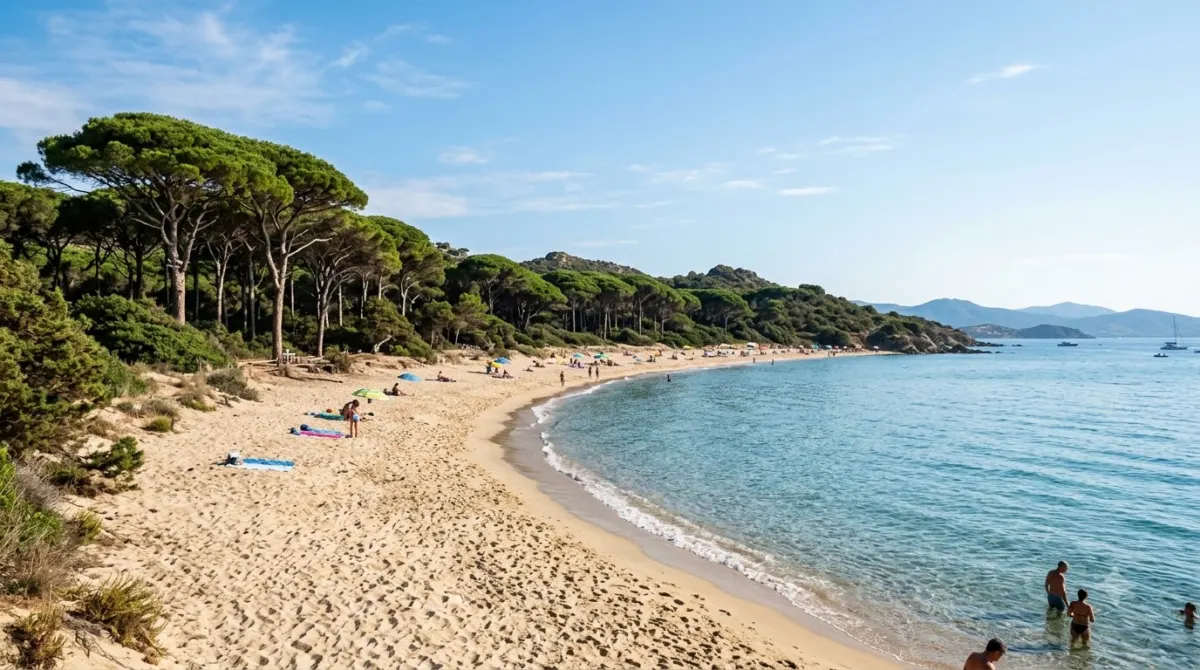
- The Maremma, on the southern coast, has beaches backed by pine forest, hot springs at Saturnia, hiking in the hills behind, and almost no international visitors. It is the most underrated area to visit in Italy.
- Cortona and Arezzo, in the east towards Umbria, are quieter and cheaper than the Chianti towns.
- Best for a second or third trip, when you have already done the famous circuit and want time to enjoy somewhere rather than tick it off.
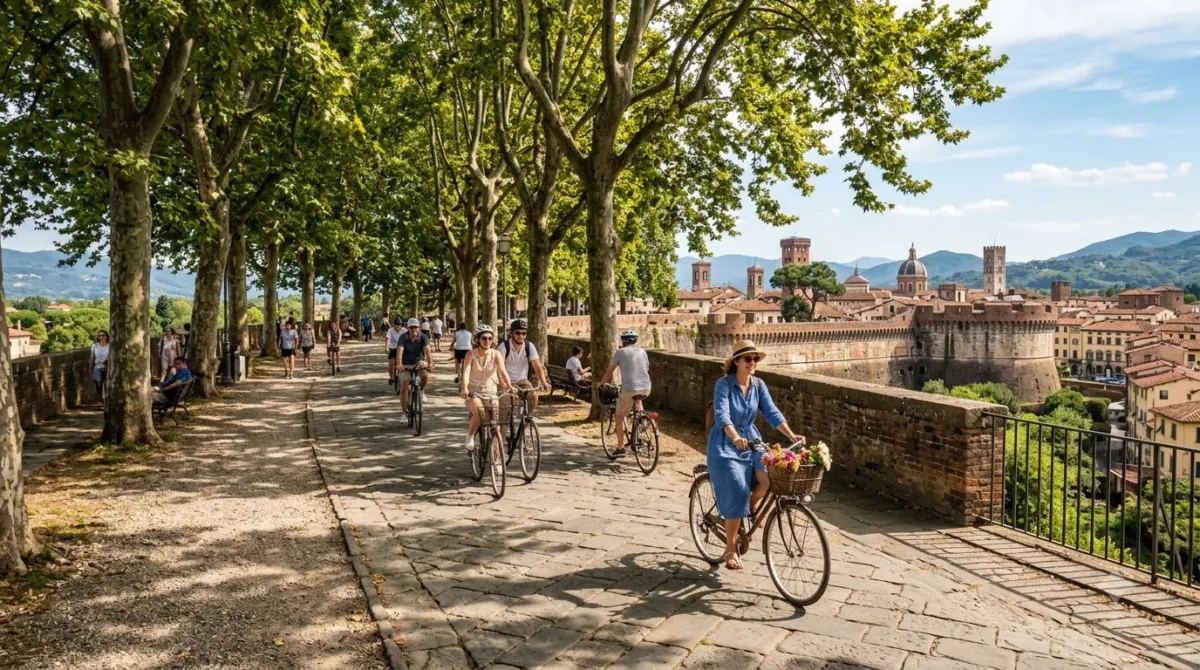
Choosing the best base for your Tuscany trip
| You want | Stay in |
|---|---|
| A first trip covering everything | Chianti |
| The classic landscape | Val d’Orcia |
| One base, no repacking | Siena |
| Art and no car | Florence |
| Wine above all | Montalcino or Chianti |
| A beach with the hills | Maremma |
| Quiet and good value | Lucca or Cortona |
| A family with children | An agriturismo with a pool in Chianti |
For the route itself, see our Tuscany itinerary. Our where to stay in Florence guide covers the city half of the trip, and doubles as a Tuscany travel guide to the best neighbourhoods there.
Checking current rates in Tuscany
Everything above is about position — which area suits which kind of trip. What it deliberately does not do is quote prices, because rates in Tuscany move a long way by season, by day of the week and by how far ahead you book, and any figure printed in a guide is out of date the week after it is written.
These searches show live availability and current prices, so you can check them against the areas described above:
These are affiliate links. If you book through one we may earn a commission, at no extra cost to you. It does not affect which areas we recommend above — nobody pays to be listed here.
Not sure which area to book? See where to stay in Puglia.
Frequently asked questions
What is the best area to stay in Tuscany?
Chianti, for most people. It is the only countryside area within about forty minutes of Florence and thirty of Siena, so it reaches both cities and the hill towns without long drives. The Val d’Orcia is more beautiful and much further south, and it cannot reach the northern half of the region.
Should I stay in Florence or the Tuscan countryside?
Split it. Florence for the art, on foot, with no car, then the countryside with one. Florence has a small radius: Chianti is reachable, Siena takes about an hour and a quarter by rapid bus, and the Val d’Orcia is two hours each way. Three nights in each is the shape that works on a week-long trip.
What is an agriturismo?
A working farm that also rents rooms, usually with a pool and often with breakfast from the farm itself. It is the characteristic place to stay in the Tuscan countryside and generally better value than a hotel. The trade is that you need a car and you will drive to dinner most evenings.
Is Siena a good base for Tuscany?
It is the most central one. Siena sits between Chianti and the Val d’Orcia, so both are within an hour, and it needs no car inside the walls. Guided tours into the wine country leave from here too, which makes it the best base for anyone not renting a car. What you lose is the vineyard view from your window.
Can you stay in Tuscany without a car?
Yes, in the cities. Florence, Siena, Lucca, Pisa and Arezzo are all connected by train or bus and would fill a week. The countryside is effectively out of reach without a car, so if the rolling hills are the reason you are going, either rent one for part of the trip or base yourself in Siena and take tours.
Which Tuscan hill town is best to stay in?
It depends on the radius you want. Montepulciano and Pienza put you in the middle of the Val d’Orcia. Greve, Radda and Castellina put you in Chianti with both cities in reach. San Gimignano is striking but small and busy by day. All of them are beautiful, so choose on what you can reach rather than on looks.
How long should I stay in one place in Tuscany?
Three nights minimum. Tuscany punishes repacking, because every move costs a morning of driving and a new set of directions down a gravel road. On a week-long trip, use two bases at most: one city and one stretch of countryside.
Keep planning Italy
- Best Hotels in Taormina: The Town Is Up, the Sea Is Down
- Best Hotels on the Amalfi Coast: Pick the Town First
- Best Hotels in Positano: Count the Steps Before the Stars
- Best Hotels in Florence: The ZTL Matters More Than the Stars
- Where to Stay in Verona: Inside the River Loop, or Outside It
- Where to Stay in Puglia: Pick the Building, Not the Town
- Where to Stay in Cinque Terre: Ask About the Stairs First
- Where to Stay in Taormina: Up in the Town, or Down at the Beach?
Written and checked by
Triplarks Editorial
An editorial desk, not an invented persona: research, drafting and fact-checking are done by the same small team. Every number here carries the date it was read.