Quick answer where to stay in Verona
The Città Antica, a few streets back from Piazza Bra: the whole old town is within walking distance and you are far enough from the arena to sleep. Veronetta, across the river, is the cheapest central option.
On this page
- The best places to stay in Verona at a glance
- Città Antica and the centro storico: the best place to stay in Verona
- Piazza Bra and the arena: the opera question
- Veronetta: across the river, and the cheapest central option
- Borgo Trento and Valdonega: quiet and residential
- San Zeno, Porta Nuova, Borgo Milano and Borgo Venezia
- The best hotels in Verona, and what a luxury hotel here means
- Things to do in Verona, and how close they are to each bed
- How to decide: the best areas to stay in Verona
- Verona as a base for northern Italy
- Checking current rates in Verona
- Frequently asked questions
The Adige river bends almost the whole way around the old town of Verona, so the centro storico is effectively a peninsula joined to the rest of the city by a handful of bridges. That shapes every decision about places to stay in Verona.
Some links below are affiliate links. We may earn a commission if you book through them, at no extra cost to you. We do not rank hotels, and any prices on the map come live from the booking sites.
That single fact answers most of the question. Inside the loop, everything is a ten to fifteen minute walk: Piazza Bra, the Roman arena, Piazza delle Erbe, Juliet’s balcony, Castelvecchio. Outside the loop you cross a bridge, and the distance feels much further than the map suggests.
The second thing to know is the arena. Verona’s opera festival runs through the summer, performances finish close to midnight, and tens of thousands of people leave Piazza Bra at once. A room on that square is either the best decision you make or the worst, depending on your dates.
Neighbourhood positions, bridge crossings and walking distances checked 9 September 2026. Rates and opera dates change, so check both yourself before travelling to Verona.
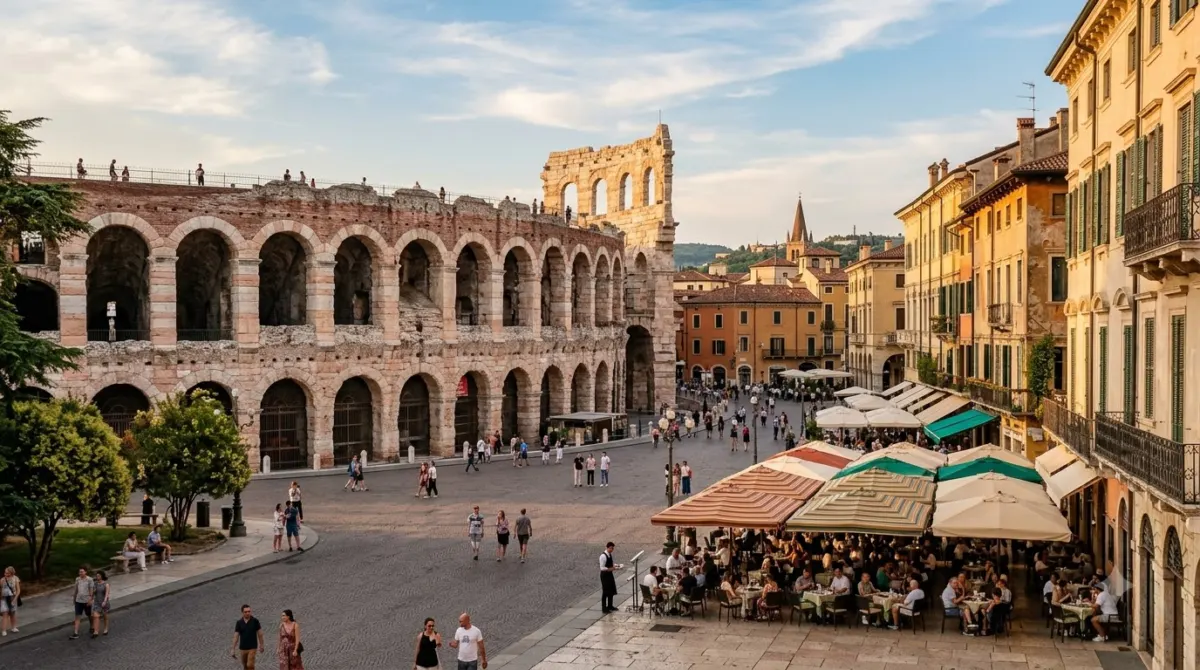
The best places to stay in Verona at a glance
| Area | Position | Best for |
|---|---|---|
| Città Antica | Inside the river loop | First visits, everything on foot |
| Piazza Bra and the arena | Southern edge of the old town | Opera, arriving by car |
| Veronetta | Across the Adige, east | Budget, students, bars |
| Borgo Trento | Across the river, north | Quiet, residential, families |
| San Zeno | West, inside the walls | Local feel, the basilica |
| Porta Nuova | By the train station | Early trains, business |
| Borgo Milano and Borgo Venezia | Outer suburbs | Cheapest, parking |
If you want one answer: the Città Antica, a few streets back from Piazza Bra. You get the whole old town within walking distance and you are far enough from the arena to sleep.
Città Antica and the centro storico: the best place to stay in Verona
The historic centre inside the river bend, largely pedestrian-only, and the reason people come to Verona in the first place.
- Everything is within walking distance — the arena, Piazza delle Erbe, the Torre dei Lamberti, Castelvecchio and Juliet’s house are all inside ten or fifteen minutes.
- Piazza delle Erbe, Verona’s old market square, is ringed by frescoed Renaissance buildings and is the liveliest place in the city for bars and restaurants.
- Piazza Erbe hosts a monthly flea market and a daily stall market, which is worth knowing if you want a quiet window.
- Accommodation is mostly small: boutique hotels in converted palazzi, and a lot of one and two-bedroom apartments.
- Hotel Gabbia d’Oro and Hotel Due Torri are the landmark old hotels here, the second beside the church of Sant’Anastasia. Hotel Aurora looks straight onto Piazza delle Erbe.
- The drawback is cars. The centro storico is a restricted zone, so if you are driving, check the hotel can register your plate.
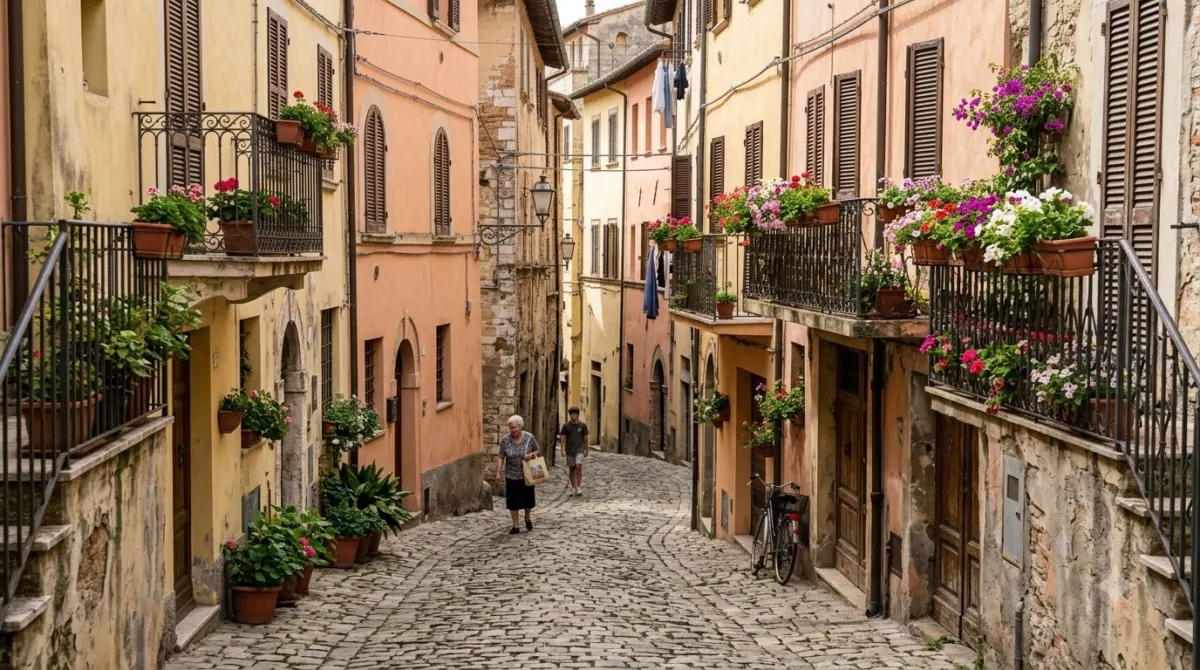
Piazza Bra and the arena: the opera question
- Piazza Bra is the largest square in Verona and holds the Roman arena, a run of cafes and the main approach from Porta Nuova.
- Staying here in opera season means walking twenty metres to your seat and twenty metres back afterwards, which is a genuine luxury.
- Staying here in opera season also means a very large crowd dispersing past your window at midnight. Both things are true.
- Outside the festival it is simply convenient, and quieter than you would expect for a central location.
- Hotel Bologna sits just off the square and is the usual landmark for this stretch.
- Ask for a courtyard-facing room if you are here between June and September.
Veronetta: across the river, and the cheapest central option
- East across the Adige, reached by Ponte Pietra or Ponte Nuovo, and about ten minutes on foot from Piazza delle Erbe. Ponte Pietra is Roman at its base and the prettiest crossing in the city.
- This is the university district, which means cheaper rooms, cheaper food and an osteria on most corners.
- The Roman theatre sits on this bank below the hill, and it is older than the arena and far less visited.
- Walk up to Castel San Pietro for the view back over the rooftops and the river bend. It is the best free thing in the city.
- Best for a budget stay that is still walkable, and for anyone who wants bars where locals actually go.
Map shows live availability and prices. We may earn a commission on bookings made through it, at no extra cost to you.
Borgo Trento and Valdonega: quiet and residential
- North across the river, a nineteenth and twentieth century district of tree-lined streets and apartment buildings.
- About twenty minutes on foot to the old town, or a short bus ride.
- The Valdonega area climbs the hill behind it and is the smart residential address, with views over the city.
- Best for families and longer stays, where a two-bedroom apartment and a supermarket matter more than being on a piazza.
- Borgo Trento Residence is the landmark for apartment-style stays on this side.
San Zeno, Porta Nuova, Borgo Milano and Borgo Venezia
- San Zeno lies west inside the old walls, built around the Basilica of San Zeno, a Romanesque church with bronze doors that is the best building in Verona after the arena. Residence Antico San Zeno is the landmark here.
- It is about fifteen minutes from Piazza Bra and feels like a neighbourhood rather than a set piece.
- Porta Nuova is the area around the main train station, a fifteen minute walk south of the arena. Practical, not pretty, and the right choice for an early train.
- Cittadella sits between Porta Nuova and Piazza Bra and is the quiet compromise between the two.
- Borgo Milano and Borgo Venezia are outer residential boroughs with the cheapest rooms and easy parking, and a bus ride into the centre.
The best hotels in Verona, and what a luxury hotel here means
- Small is the norm. Most hotels in Verona are twenty to forty rooms in a converted century building rather than chains, though there is a Marriott out towards the fair grounds.
- A luxury boutique hotel here usually means a restored palace with frescoed ceilings and a courtyard, and several of the best hotels in the city are exactly that, inside the loop. Breakfast is normally included.
- A relais is the Italian term for a small upscale country or town house hotel, and you will see it in listings such as Il Relais dell’Abbazia outside the city.
- Relais Balcone di Giulietta is beside Juliet’s balcony, and Palazzo Verona is another central palazzo conversion.
- Serviced apartments from operators like Limehome, plus a hostello or two, cover the budget end. Hotel Giulietta e Romeo near the arena is the mid-range landmark.
- These are landmarks, not recommendations. Nobody here has stayed in them and we do not print rates. Check current prices yourself.
Things to do in Verona, and how close they are to each bed
The main sights sit close together, which is why the area you pick matters less here than in a bigger city. It still matters a little.
- The Verona Arena is a Roman amphitheatre older than the Colosseum and still in use. It stands on Piazza Bra.
- Piazza delle Erbe, Verona’s old market square, is five minutes north, with the Torre dei Lamberti above it for the view.
- Juliet’s balcony, in a courtyard off Via Cappello, is a twentieth-century addition to a fourteenth-century building. Romeo and Juliet were not real, the corte is small, and people queue anyway.
- Castelvecchio and the Castelvecchio Bridge were built by the Scaliger family who ruled the city, and the bridge is the best walk in Verona at sunset.
- The Scaliger Tombs and the church of San Fermo are the quieter Gothic and Renaissance stops, along with San Nazaro east of the river.
- The whole city centre is a UNESCO World Heritage site, which is worth remembering when a plain-looking century building turns out to be six hundred years old.
All of that fits into a day and a half on foot. Visiting Verona does not require a central address so much as a short bridge crossing.
How to decide: the best areas to stay in Verona
- Two nights or fewer — stay inside the Citta Antica and walk everywhere. On a short trip to Verona that is the only answer worth considering.
- Coming for the opera — stay near Piazza Bra, and accept the midnight crowd.
- On a budget — Veronetta, which is across one bridge and much cheaper.
- With children or for a week — Borgo Trento, for space and a normal neighbourhood.
- Driving — stay outside the restricted zone, or confirm your hotel can register the car.
- Using Verona as a base — anywhere near Porta Nuova, because the trains are the point.
Verona as a base for northern Italy
Verona is one of the better connected cities in Italy, which makes it a sensible base rather than only a stop.
- Lake Garda is about thirty minutes by train or bus to Peschiera del Garda, which makes it an easy half day.
- Venice is roughly seventy minutes, Padua under an hour, Milan about eighty minutes.
- Valpolicella, the wine country, starts fifteen minutes north of the city and is the reason to rent a car for one day.
- The Dolomites are reachable in around two hours, which surprises people.
- Verona is a safe city by the standards of Italian cities, and the centre is comfortable to walk at night, which matters if you are staying across a bridge.
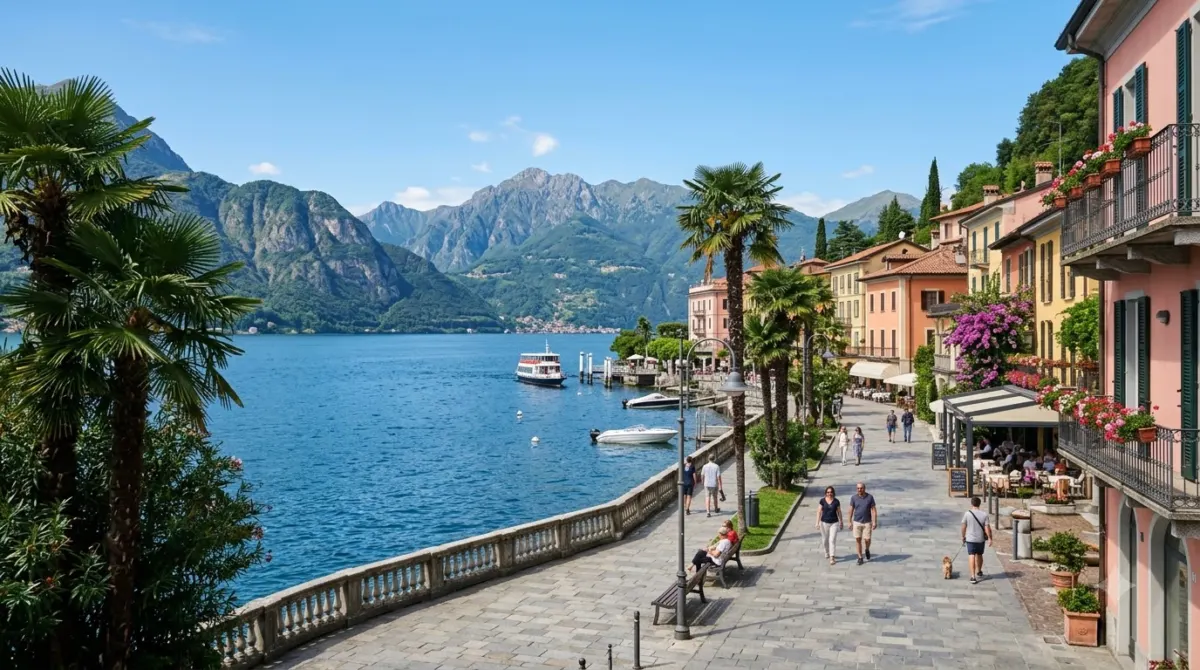
Planning the wider trip? See our how many days in Venice guide and our 10 day Italy itinerary.
Checking current rates in Verona
Everything above is about position — which area suits which kind of trip. What it deliberately does not do is quote prices, because rates in Verona move a long way by season, by day of the week and by how far ahead you book, and any figure printed in a guide is out of date the week after it is written.
These searches show live availability and current prices, so you can check them against the areas described above:
These are affiliate links. If you book through one we may earn a commission, at no extra cost to you. It does not affect which areas we recommend above — nobody pays to be listed here.
Not sure which area to book? See where to stay in Puglia.
Frequently asked questions
What is the best area to stay in Verona?
The Città Antica, the historic centre inside the loop of the Adige river. The old town is effectively a peninsula, so everything inside it — the arena, Piazza delle Erbe, Castelvecchio, Juliet’s balcony — is within a ten to fifteen minute walk. A few streets back from Piazza Bra is the sweet spot.
Should I stay near the Verona Arena?
It depends on the season. During the summer opera festival a room on Piazza Bra means walking a few metres to your seat, and it also means a very large crowd leaving the square close to midnight. Outside the festival it is simply a convenient and reasonably quiet central location. Ask for a room facing the courtyard if you are visiting between June and September.
Is Veronetta a good place to stay?
Yes, for value. Veronetta sits across the Adige from the old town, about ten minutes on foot over Ponte Pietra, and it is the university district. Rooms and food are cheaper, the bars are used by locals, and the Roman theatre and the walk up to Castel San Pietro are on that side of the river.
How many nights do you need in Verona?
Two nights is right for the city itself, which is small and walkable. Add a third if you want Lake Garda or the Valpolicella wine country, both of which are short trips out. Many people give Verona one night on the way between Venice and Milan, which works but does not leave time for an evening in the squares.
Is it better to stay in Verona or Lake Garda?
Verona if you want a city, restaurants and the arena, and Lake Garda if you want water, mountains and a slower few days. They are about thirty minutes apart by train to Peschiera del Garda, so you can stay in one and see the other. For a short trip, base yourself in Verona.
Where should I stay in Verona without a car?
Anywhere inside the old town or in Veronetta. Verona’s centre is pedestrian-only in large parts and everything is walkable, and Porta Nuova station is fifteen minutes from Piazza Bra on foot. A car is a liability here because the historic centre is a restricted traffic zone monitored by camera.
Is Verona expensive to stay in?
Less than Venice or Florence, more than the surrounding towns. Prices rise sharply during the opera festival in summer and around the Vinitaly wine fair in spring, when the city fills completely. Veronetta and the outer boroughs of Borgo Milano and Borgo Venezia are the cheapest options.
Keep planning Italy
- Best Hotels in Taormina: The Town Is Up, the Sea Is Down
- Best Hotels on the Amalfi Coast: Pick the Town First
- Best Hotels in Positano: Count the Steps Before the Stars
- Best Hotels in Florence: The ZTL Matters More Than the Stars
- Where to Stay in Tuscany: You Are Choosing a Driving Radius
- Where to Stay in Puglia: Pick the Building, Not the Town
- Where to Stay in Cinque Terre: Ask About the Stairs First
- Where to Stay in Taormina: Up in the Town, or Down at the Beach?
Written and checked by
Triplarks Editorial
An editorial desk, not an invented persona: research, drafting and fact-checking are done by the same small team. Every number here carries the date it was read.