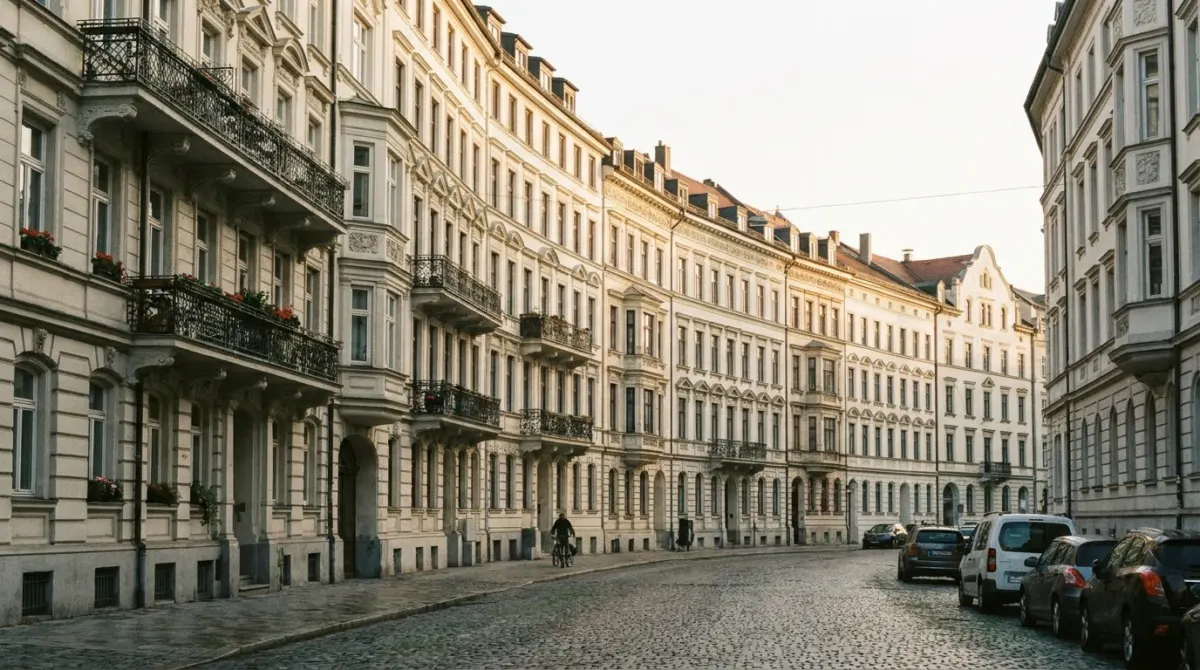
Quick answer
Decide the district first, then the format: modern mid-range for reliability, a Gasthof for value, an apartment for three nights or more. Check air conditioning, a lift, whether breakfast is included and the nearest U-Bahn — then check whether your dates collide with Oktoberfest or a trade fair.
On this page
- Best hotels in Munich: the five kinds of place to stay
- What the extra money actually buys
- The things worth checking before you book
- Oktoberfest changes everything
- The other dates that fill the city
- Where the good-value rooms are
- Accessibility, honestly
- Booking windows
- How many nights, and where this fits
- Hotels versus apartments in Munich
- What to expect from a German hotel breakfast
- Noise, and which streets to avoid
- Cancellation and the Oktoberfest trap
- Booking as a group
- What to ignore when comparing hotels
- Which area to stay in Munich, by kind of trip
- What luxury and boutique mean in a Bavarian city
- The short version
- Frequently asked questions
This is not a ranked list of hotels, because a ranking that does not know your dates, your budget or which part of the city you want is worth very little. What follows is more useful: what the different kinds of Munich accommodation actually get you, what changes as the price rises, and when the same room costs three times as much.
Some links below are affiliate links. We may earn a commission if you book through them, at no extra cost to you. We do not rank hotels, and any prices on the map come live from the booking sites.
For the question of which district to pick, see our guide to where to stay in Munich.
Best hotels in Munich: the five kinds of place to stay
Grand city hotels. Mostly along the ring and around the Altstadt, these are large nineteenth- and twentieth-century buildings with a lobby, a bar the city actually uses, and full service. You are paying for the ground floor as much as the bedroom.
Modern mid-range hotels. Post-war or new buildings, reliable rooms, lifts, air conditioning more often than not, breakfast buffets. The bulk of Munich’s stock, and the easiest thing to book well.
Gasthof and Pension. The German guesthouse formats: a handful of rooms, often above a restaurant, usually family-run, breakfast included. Best value in the city and more common in the outer districts than the centre.
Apartments. Widespread, and the obvious answer for families or any stay over three nights, particularly given what eating out costs in central Munich.
Hostels. Concentrated near the Hauptbahnhof, and most now offer private rooms as well as dorms.
What the extra money actually buys
Munich does not have a genuinely cheap end, and the curve is steeper here than in Berlin.
At the lower end you are buying location and nothing else: a small room, a shower cubicle rather than a bathroom, breakfast as a paid extra, and possibly a building without a lift.
In the middle the change is space and breakfast. Rooms become large enough to open a suitcase, the building has a lift, and a substantial breakfast is usually included, which in Munich is worth more than it sounds.
At the upper end you are buying the building and the service: a lobby worth sitting in, a restaurant locals book, a concierge who can get you a table during Oktoberfest. The bedrooms improve less than the public rooms do.
The things worth checking before you book
Four details that change a Munich stay more than star ratings do.
Air conditioning. Not universal, and July and August in Munich can be genuinely hot. Older buildings in particular often have none.
Lift. Common in modern hotels, far from certain in Pensionen and converted buildings. Ask directly if stairs are a problem.
Breakfast included. German hotel breakfasts are substantial, and the difference between included and extra is a real daily cost.
Distance to a U-Bahn station. More useful than distance to Marienplatz, because the network is fast and frequent.
Oktoberfest changes everything
For roughly sixteen days from late September to the first Sunday in October, Munich’s accommodation market stops behaving normally.
Rates across the entire city rise several times over, minimum-stay requirements appear, and availability disappears months in advance. This applies to every category, including hostels and apartments, and to districts nowhere near the festival grounds.
Two practical consequences. If you are coming for the festival, book as early as you can and treat the price as part of the cost of the event. If you are not, check the dates before you book flights — moving a trip by two weeks can change what you pay for a room by a factor of three.
The other dates that fill the city
Oktoberfest is the famous one, but it is not alone.
Munich is a major trade fair city, and large fairs at the Messe fill business hotels across the city and push up rates midweek. The Christmas markets from late November fill weekends. Large football matches and concerts do the same on specific dates.
If your dates are fixed and prices look strange, a fair is usually the explanation, and shifting by a few days can help.
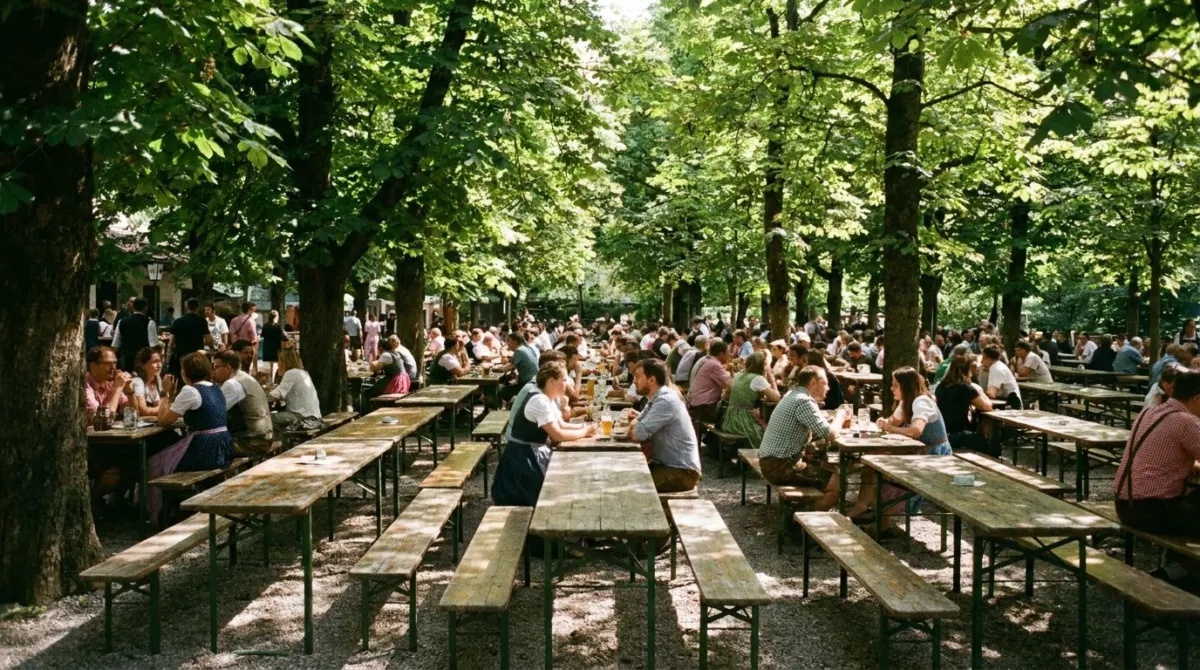
Map shows live availability and prices. We may earn a commission on bookings made through it, at no extra cost to you.
Where the good-value rooms are
Three patterns hold consistently.
One or two stops out. Haidhausen, Schwabing and Neuhausen all give you a larger room for less money, five to ten minutes from the centre by U-Bahn.
Gasthof format. The traditional guesthouse above a restaurant is the best value in Munich and is largely invisible to visitors who only search hotel brands.
Sunday to Thursday, outside fairs. Munich’s weekday pricing is driven by business travel, so a fair-free midweek is often cheaper than a weekend, which is the opposite of most tourist cities.
Accessibility, honestly
Munich is better than most older European cities for this, because so much of the stock was rebuilt after 1945 and the public transport is comparatively modern.
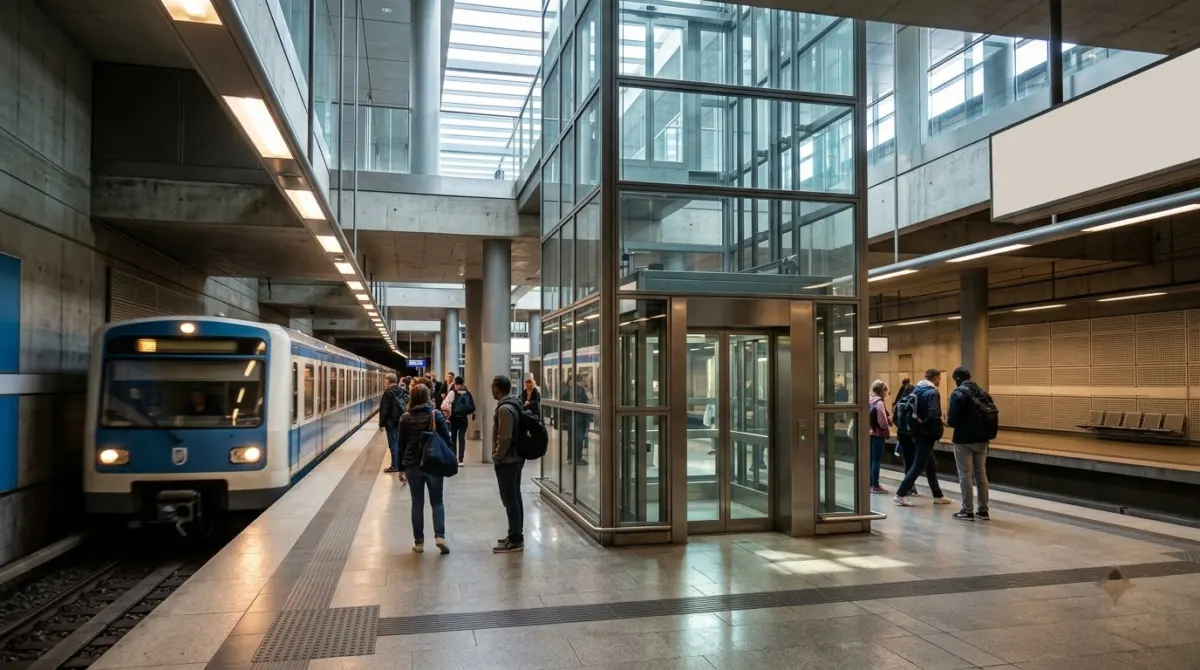
Modern hotels in the centre and around the station are generally step-free with lifts. The U-Bahn has lifts at most stations, though not all, and the S-Bahn to the airport is accessible.
Where it gets unreliable is the Pension and Gasthof format, and converted buildings in Schwabing and Haidhausen, where “accessible” is used loosely. Confirm specifics with the property rather than with a filter.
Booking windows
Outside the dates above, Munich is not a difficult city to book. A few weeks is usually enough for a midweek stay, and a month or two for a weekend in summer.
The exceptions are absolute: Oktoberfest, the Christmas market weekends, and any week with a major trade fair. For those, months rather than weeks.
How many nights, and where this fits
Two nights for the Altstadt, three to add the museums or a day trip, four or more if you are using the city as a base for Neuschwanstein, Salzburg, Dachau or the mountains.
Our guide to how many days in Munich goes through each length, and the Germany itinerary shows where Munich sits in a longer trip.
Hotels versus apartments in Munich
The choice turns on the length of your stay and on what you intend to eat.
For one or two nights, a hotel wins: breakfast is included at most mid-range places, reception handles luggage before check-in and after checkout, and you are not managing keys and cleaning.
From three nights the apartment case gets strong, particularly for families or groups. Central Munich is expensive for eating out, and a kitchen changes the daily cost more than the nightly rate does. Apartments here are also noticeably larger than hotel rooms at the same price.
The compromise, common in Munich, is the aparthotel: a serviced apartment with a reception, which covers most of both arguments.
What to expect from a German hotel breakfast
Worth its own section, because it affects what a room is actually worth.
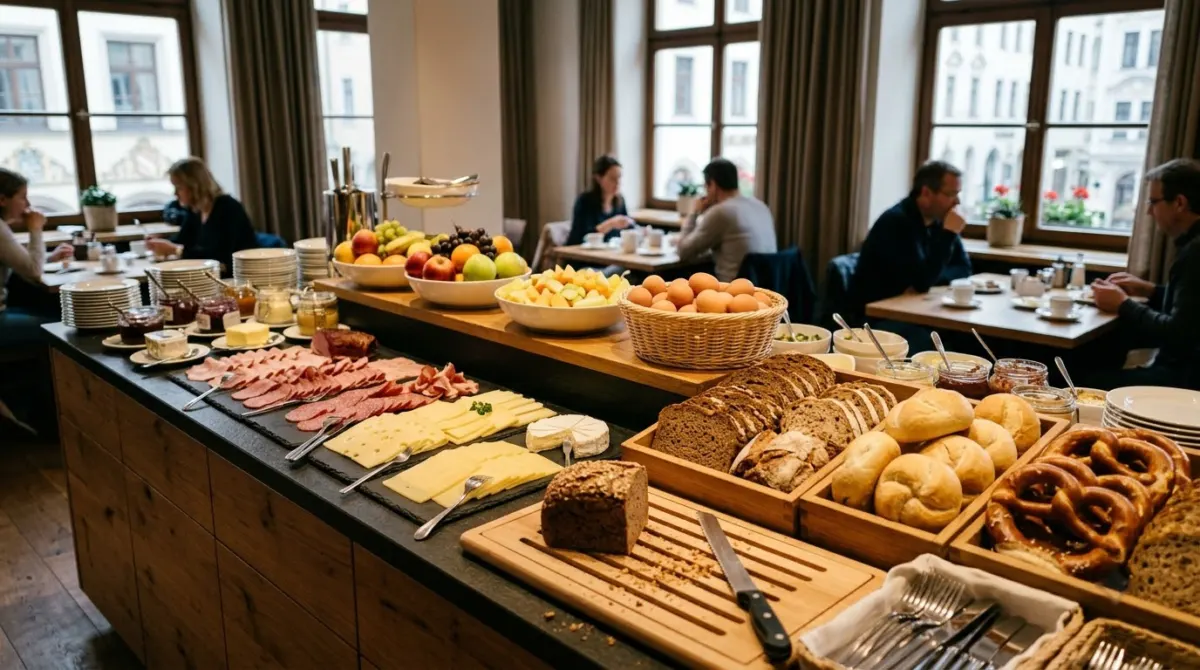
A German hotel breakfast is a buffet: cold meats, cheeses, several breads, boiled eggs, yoghurt, fruit, and usually something hot. It is substantial enough to replace lunch, and at mid-range hotels it is normally included in the rate.
At the budget end it is frequently charged separately, and at the top end it is included but no better. When comparing two rooms at similar prices, breakfast included is often the deciding difference.
Noise, and which streets to avoid
Munich is a quiet city by European standards, with two exceptions worth knowing about.
Around the large beer halls in the Altstadt, particularly on Friday and Saturday, groups move through the streets late. A room facing one of those streets will hear it.
Near the Hauptbahnhof, the usual station noise continues through the night, and some streets immediately around it are busy in a way that is more unpleasant than dangerous.
In both cases, the fix is the same as anywhere: ask for a courtyard-facing room, or book one street back from the main run.
Cancellation and the Oktoberfest trap
One booking detail that catches people out specifically in Munich.
During Oktoberfest and major trade fairs, a large share of the available rooms are sold on non-refundable rates with minimum stays, often three or four nights. If your plans are not fixed, that is a real risk rather than a theoretical one.
If you must book early for those dates, look for a flexible rate even at a premium, or book a refundable room first and replace it later. Rooms do not get cheaper as the festival approaches.
Booking as a group
Munich is awkward for groups of three or more in hotels, because triple and quadruple rooms are scarce and most hotels solve it with a cot or a sofa bed rather than a real third bed.
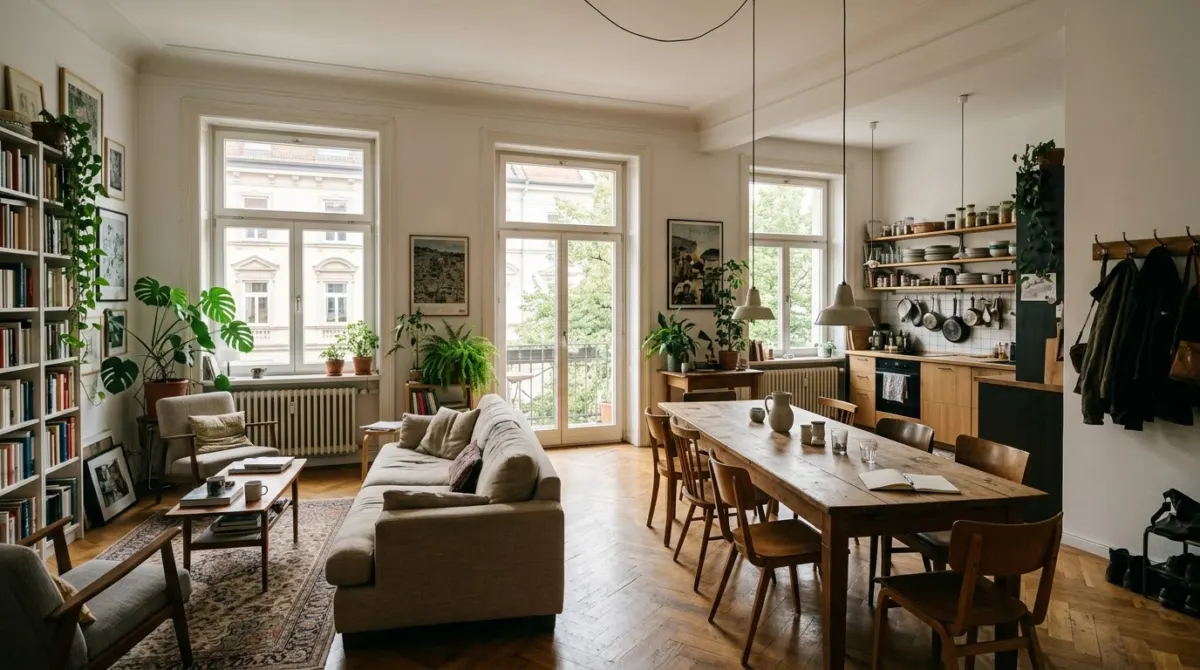
Apartments are the answer, and they are plentiful in Haidhausen, Schwabing and Neuhausen. For a group of four or more, an apartment one U-Bahn stop out is almost always both cheaper and more comfortable than two hotel rooms in the Altstadt, and it comes with a kitchen in a city where eating out adds up quickly.
What to ignore when comparing hotels
Three things that look like signals and are not.
Star ratings. German hotel classification is partly self-declared and measures facilities rather than quality, so a four-star can be worse to sleep in than a well-run three.
Distance to Marienplatz in metres. Less useful than distance to a U-Bahn station, because the network is fast and the walk across the Altstadt is short anyway.
Review scores without dates. A Munich hotel’s reviews during Oktoberfest describe a different property from the same hotel in February, because the staff are stretched and the guests are different.
Which area to stay in Munich, by kind of trip
Munich’s districts sort themselves neatly by what you came for.
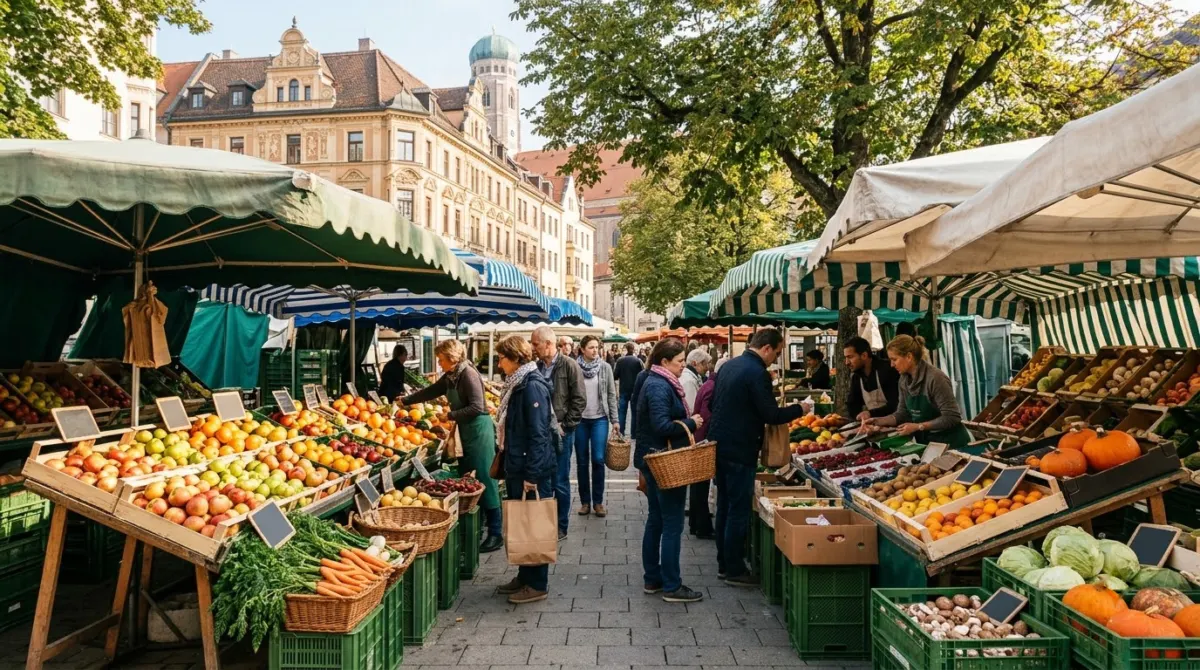
The Altstadt, the old town, puts the Marienplatz, the Residenz and the Viktualienmarkt outside the door. It is the most expensive postcode and the one to pick for a short first visit.
Maxvorstadt is the museum quarter — the three Pinakotheken, the university, and a student population that keeps the eating cheap. It is a ten-minute walk into the old town and the best balance in the city.
Ludwigsvorstadt, around the Hauptbahnhof, is where the mid-range rooms are and the shortest walk to the Oktoberfest grounds.
Schwabing and the Englischer Garten edge suit a longer stay, with the park and the beer gardens that go with it.
What luxury and boutique mean in a Bavarian city
The categories behave differently here from Italy or Spain.
The grand hotels cluster around the Residenz and the opera, in nineteenth-century buildings built for the purpose, with the space and the service that implies.
Boutique in Munich usually means a design hotel in a converted office or townhouse rather than a historic palazzo — the city lost much of its old fabric in the war, so the characterful small hotels are mostly modern interiors behind rebuilt facades.
The traditional Bavarian option is the Gasthof: an inn with a restaurant on the ground floor and rooms above, more common in the outer districts and the villages around the city than in the centre. It is the cheapest way to sleep somewhere with character, and the one most visitors never consider.
During Oktoberfest all three categories price alike, which is to say steeply, and the distinction stops mattering.
The short version
Decide the district first, then the format: modern mid-range for reliability, Gasthof for value, apartment for three nights or more, grand hotel if the building is the point. Check air conditioning, a lift, whether breakfast is included, and the nearest U-Bahn. Then check whether your dates collide with Oktoberfest or a trade fair, because that matters more than all of the above.
Frequently asked questions
What is the best hotel area in Munich?
Inside the Altstadt ring for a short first visit, Maxvorstadt for museums and better value, Haidhausen or Schwabing for larger rooms a stop or two out, and the Hauptbahnhof area if you have an early flight or are taking day trips by train.
How much do hotels cost in Munich?
It depends overwhelmingly on the date rather than the hotel. During Oktoberfest and major trade fairs, rates across the whole city rise several times over. Outside those weeks Munich is expensive but not exceptional for a large German city.
Do Munich hotels have air conditioning?
Not all of them, and it matters in July and August when the city can be genuinely hot. Modern hotels usually have it; older buildings, Pensionen and converted apartments often do not. Check rather than assume.
What is a Gasthof?
A traditional German guesthouse, typically a handful of rooms above a restaurant, family-run and with breakfast included. It is usually the best value accommodation in Munich and is more common in the outer districts than the centre.
When should I book a hotel in Munich?
A few weeks ahead for a normal midweek stay. Months ahead for Oktoberfest, Christmas market weekends, or any week with a large trade fair — on those dates both price and availability change sharply.
Is it cheaper to stay outside Munich city centre?
Yes, and you do not have to go far. Haidhausen, Schwabing and Neuhausen are five to ten minutes from the centre by U-Bahn and noticeably cheaper. The far suburbs save little more and cost you a long ride.
Keep planning Germany
- Where to Stay in Cologne: One Street Back From the Cathedral
- Where to Stay for Oktoberfest: Buy the Walk Home
- Where to Stay in Frankfurt: The City, the Station or the Airport
- Where to Stay in Berlin: Pick a District, Not a Hotel
- Where to Stay in Munich: Inside the Ring, or One Stop Out
- How Many Days in Berlin? Four, and Why It Needs More Than Munich
- How Many Days in Munich? Three, and Four If You Use It as a Base
- 10 Day Germany Itinerary: Five Bases, Four Trains
Written and checked by
Triplarks Editorial
An editorial desk, not an invented persona: research, drafting and fact-checking are done by the same small team. Every number here carries the date it was read.