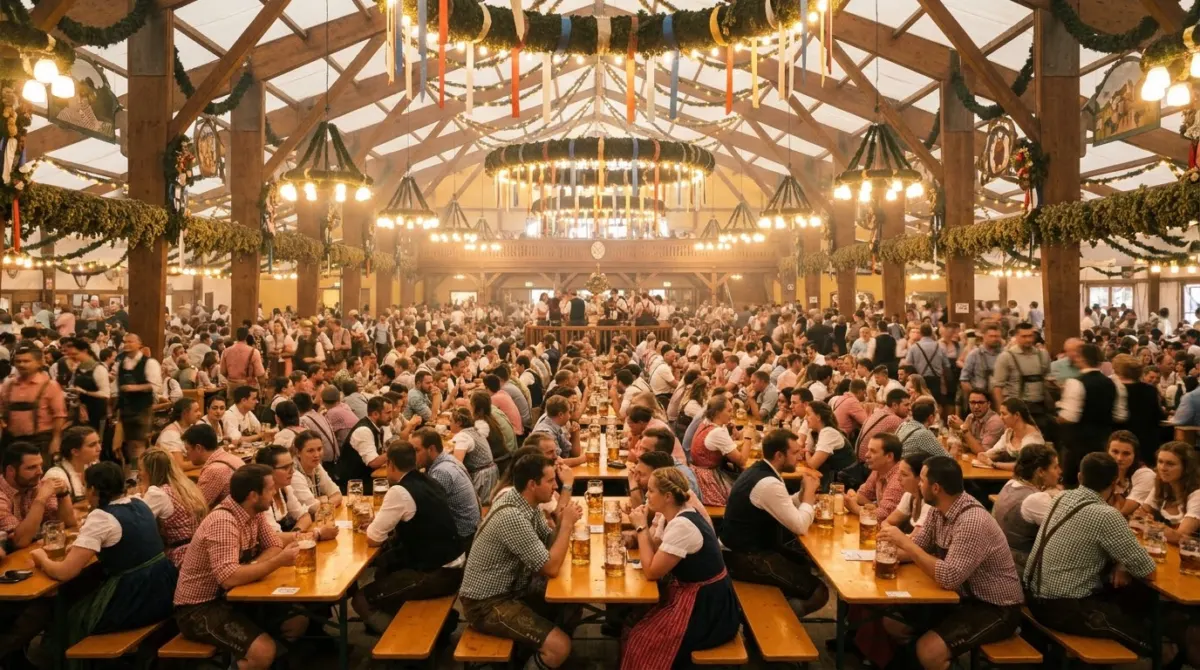
Quick answer
Book within walking distance of the Theresienwiese, and book as early as you can — a year ahead for the opening weekend is not excessive. If Munich is full, the S-Bahn towns and Augsburg still have rooms, and the last train is your only constraint.
On this page
- Where to stay in Germany for Oktoberfest: the short answer
- Why walking distance matters so much
- Ludwigsvorstadt and the station area
- The Altstadt
- Staying outside Munich
- What it costs, and why
- Which days are busiest
- Practical notes
- If you are not here for the festival
- Getting to the Theresienwiese
- Reserving a table, and whether you need to
- The other Munich festival
- What to expect, practically
- If you cannot get a room at all
- Oktoberfest with a family, or without drinking
- The short version
- Frequently asked questions
Oktoberfest runs for about sixteen days, starting in late September and ending on the first Sunday in October, on a field called the Theresienwiese about fifteen minutes’ walk south-west of Munich’s old town.
Some links below are affiliate links. We may earn a commission if you book through them, at no extra cost to you. We do not rank hotels, and any prices on the map come live from the booking sites.
Where you sleep during those two weeks is a different question from where you would stay in Munich at any other time, because the city sells out, rates multiply, and the thing that matters most is how you get home at one in the morning. For hotels outside the festival dates, see the best hotels in Munich.
Where to stay in Germany for Oktoberfest: the short answer
| If you are | Stay | Why |
|---|---|---|
| Going to the tents most days | Ludwigsvorstadt, near Theresienwiese | Walk home |
| Here for the city as well | Altstadt | Twenty minutes’ walk to the grounds |
| Booking late | A town on the S-Bahn | Rooms still exist out there |
| On a budget | Augsburg or Ingolstadt | Thirty to forty minutes by train |
| In a group of four or more | An apartment, anywhere central | Cheaper than rooms, and nobody waits |
One answer with no caveats: within walking distance of the Theresienwiese, in Ludwigsvorstadt or the southern Altstadt. The walk home is the single most useful thing you can buy during Oktoberfest.
Why walking distance matters so much
Every night of the festival, several hundred thousand people leave the grounds within a short window.
The U-Bahn and trams run and they are extremely full. Taxis queue. Ride-hailing surges. And a proportion of the crowd is in no condition to navigate a connection.
If your accommodation is a fifteen-minute walk away, none of that is your problem. If it is three stops and a change, it is your problem every single night.
This is why Ludwigsvorstadt — the district between the Hauptbahnhof and the Theresienwiese — sells out first despite being the least charming part of central Munich.
Map shows live availability and prices. We may earn a commission on bookings made through it, at no extra cost to you.
Ludwigsvorstadt and the station area
The streets south of the Hauptbahnhof run down towards the festival grounds, and this is the closest concentration of hotels to them.
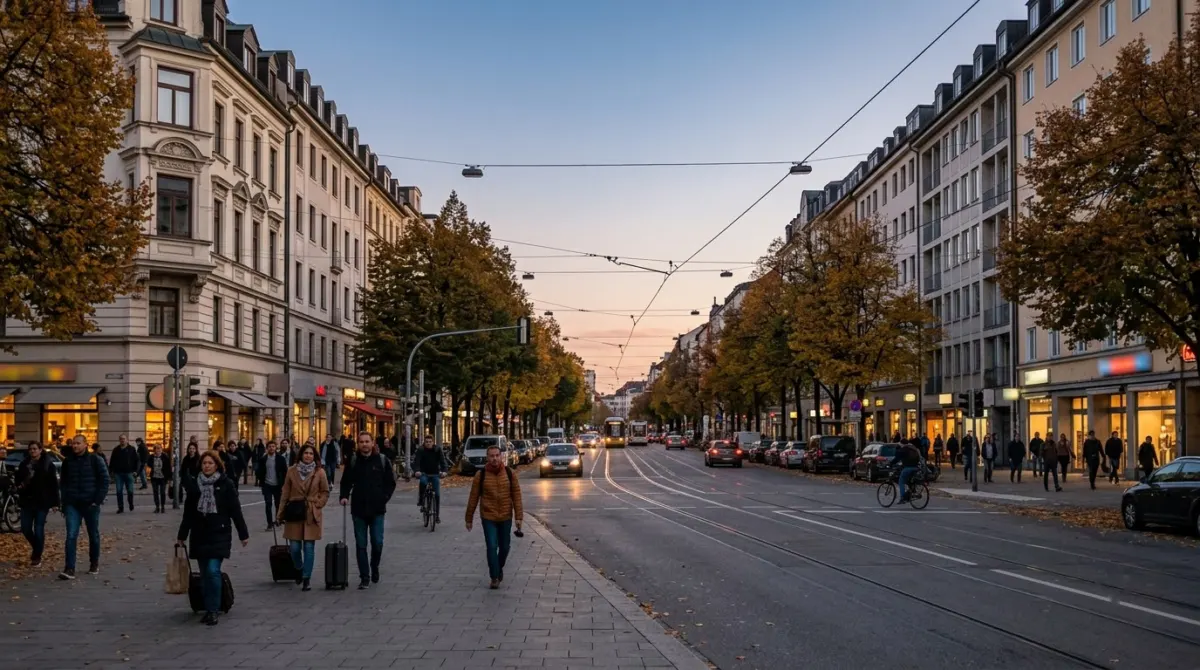
It is a functional district rather than a pretty one, with the usual large-station mix at night. During the festival that is largely irrelevant, because the entire area is full of people doing the same thing you are.
The practical advantages are decisive: walk to the tents, walk back, and the main station on your doorstep for the airport train and for day trips.
The Altstadt
The old town is about twenty minutes’ walk from the Theresienwiese, which is still walkable at the end of a night.
Staying here means you get Munich as well as Oktoberfest — Marienplatz, the Viktualienmarkt, the museums — and the city’s own beer halls, which during the festival are an alternative to the tents rather than a poor substitute.
It is the most expensive area in the most expensive fortnight of the year. Book early or accept the number.
Staying outside Munich
If you are booking late, this is the realistic option, and it is not a bad one.
The S-Bahn network reaches well beyond the city, and towns such as Dachau, Freising, Starnberg and Erding have rooms when Munich has none. Journeys run twenty to forty minutes, and the trains run late during the festival.
Augsburg, about forty minutes by regional train, is a proper city with its own old town and considerably cheaper rooms. Ingolstadt and Landshut work the same way.
The cost is the last train. Check the final departure for your line before you go out, and know that it is the one constraint on your evening.
What it costs, and why
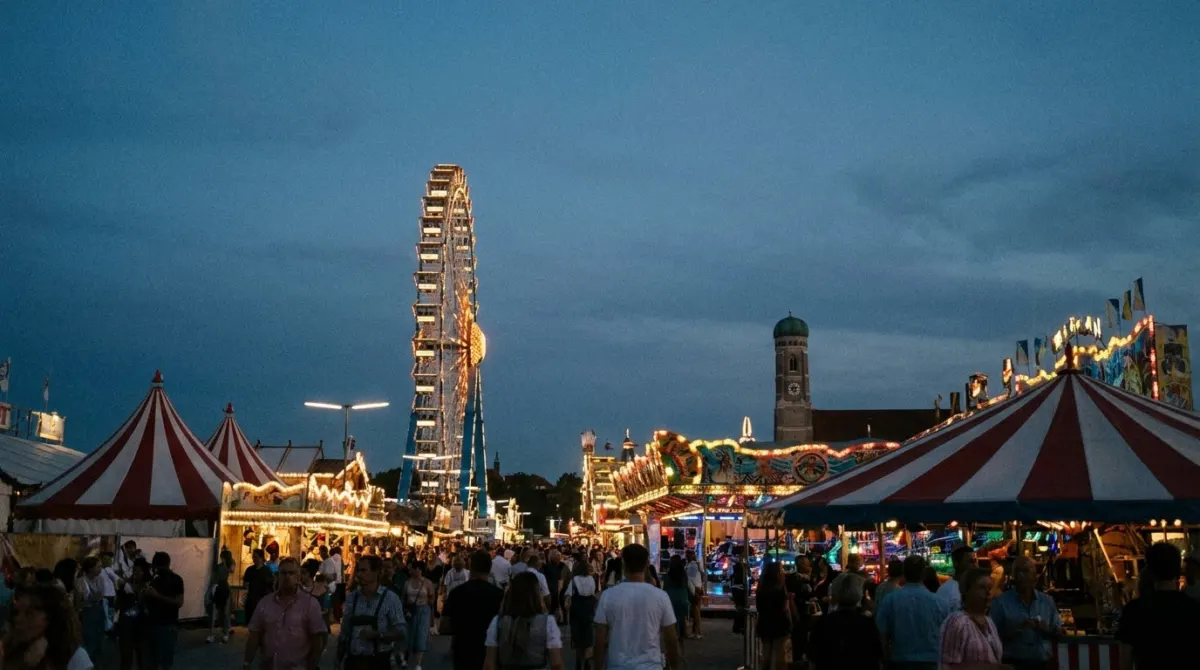
During the festival, accommodation rates across Munich rise several times over, minimum stays of two to four nights appear, and non-refundable rates become the norm.
This applies to every category — hostels and apartments included — and to districts nowhere near the grounds, because demand exceeds supply across the whole city.
Two consequences. Book as early as you can, ideally close to a year ahead for the first weekend. And if your dates are flexible by even a week, moving outside the festival changes what you pay for the same room by a factor of three.
Which days are busiest
Not all sixteen days are the same, and this affects both booking and the experience.
The opening weekend and the final weekend are the busiest and the most expensive.
Weekends generally are considerably busier than weekdays, and the tents fill in the morning.
Weekday afternoons are the easiest time to get a seat without a reservation, which matters because tables in the large tents are reserved far in advance.
If your aim is to get into a tent rather than to be there at peak, a Tuesday or Wednesday is worth more than a Saturday.
Practical notes
Entry to the grounds and the tents is free. What costs is what you drink and eat, and a reserved table, which is normally sold as a package.
Tents close when full, often by late morning at weekends. There is no queue-jumping.
Dress is Tracht or not, and nobody minds either way, but it is a real part of the atmosphere.
The festival is family-friendly during the day, with a fairground alongside the tents and quieter family afternoons mid-week.
If you are not here for the festival
Check the dates before booking flights. A trip to Munich in the first week of October will be considerably more expensive and more crowded than the same trip two weeks later, and the city’s hotels, restaurants and transport are all stretched.
If you cannot move the dates, our guide to where to stay in Munich covers the quieter districts, and how many days in Munich explains how the day trips give you somewhere else to be.
Getting to the Theresienwiese
The grounds sit between the Hauptbahnhof and the Sendlinger Tor, about fifteen minutes’ walk from the old town and ten from the main station.
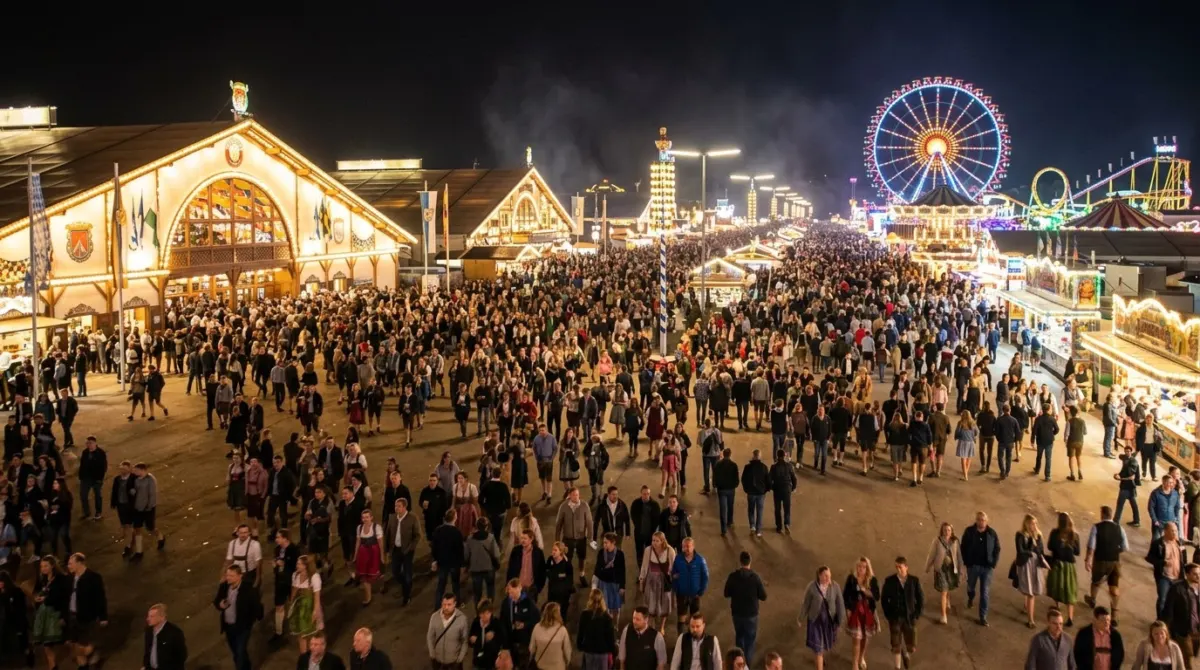
The U-Bahn has its own station at Theresienwiese, with additional services during the festival, and trams run along the edge of the grounds. All of them are extremely full at the end of the evening.
Walking is consistently the fastest way out, which is the practical reason the surrounding streets are the ones to book.
Reserving a table, and whether you need to
The large tents take reservations, usually sold as packages including food and drink vouchers, and the good slots are gone months in advance.
You do not need one to get in. Entry to the grounds and the tents is free, and unreserved areas exist in every tent — but at weekends they fill in the morning and the tent then closes to new entry.
The practical approach without a reservation: go on a weekday, arrive before midday, and be flexible about which tent. The smaller tents are easier and in many ways better.
The other Munich festival
If your dates miss Oktoberfest, Munich has a spring version on the same ground, usually in April and May, with the same tents and fairground on a smaller scale and a fraction of the visitors.
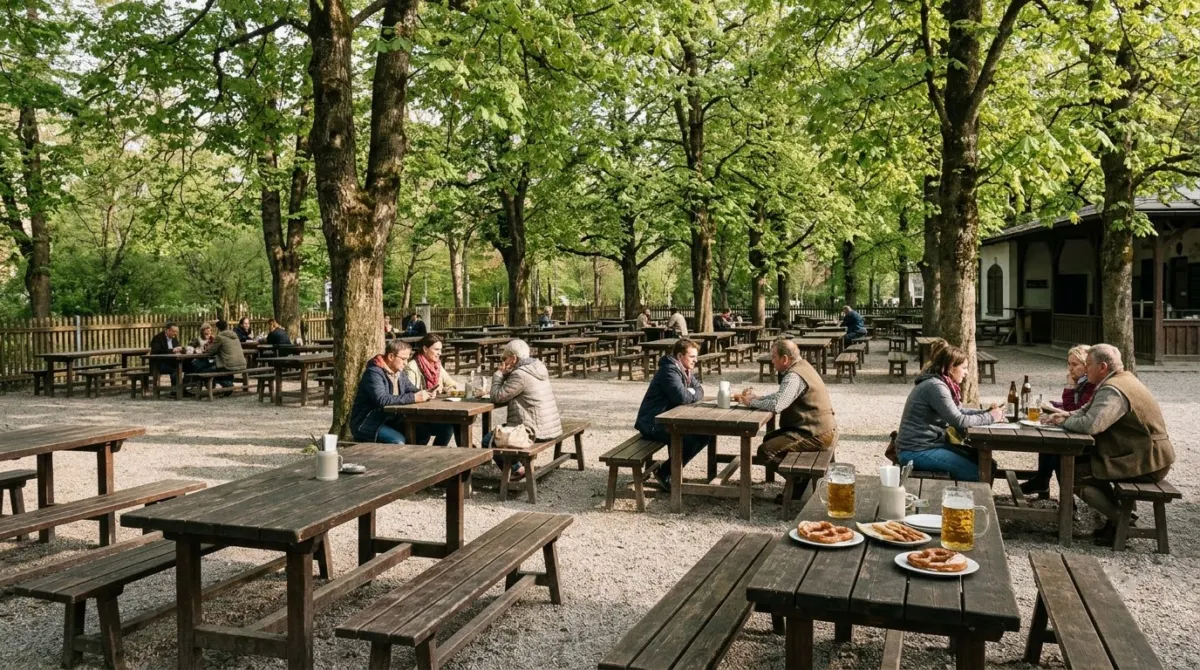
It is a genuinely good alternative for anyone who wants the atmosphere without the prices or the crowds, and accommodation across the city stays at normal rates.
There is also a strong beer garden season from spring onwards, which costs nothing and requires no planning at all.
What to expect, practically
Days are long. The tents open in the morning and run into the evening, and most people underestimate how much of a day this is.
It is a family event by day. There is a fairground beside the tents, and quieter family afternoons mid-week.
Cash is useful. Card acceptance has improved but is not universal across the stalls.
Leave the car. There is no parking, drink-driving limits are strictly enforced, and the public transport is the only sensible option.
If you cannot get a room at all
Three fallbacks, in order of usefulness.
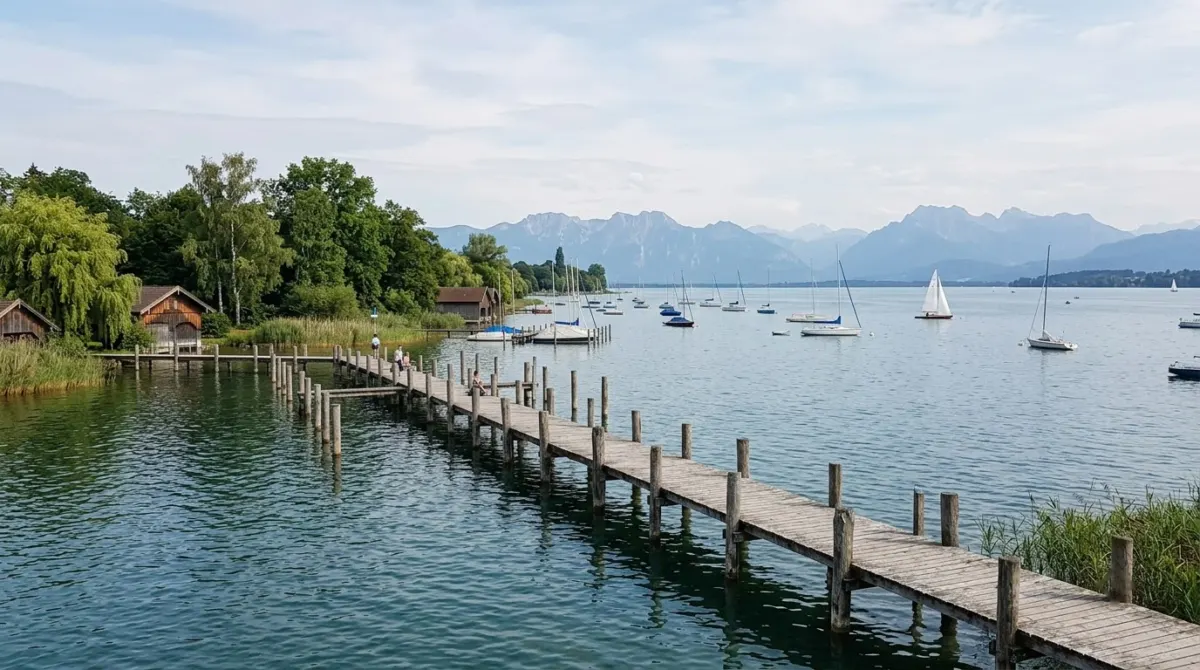
S-Bahn towns — Freising, Erding, Dachau, Starnberg — twenty to forty minutes out, with the last train the only constraint.
Regional cities — Augsburg, Ingolstadt, Landshut — thirty to fifty minutes by train, cheaper and with something to do during the day.
A different fortnight. Munich outside the festival is a better city to visit and a third of the price, and the beer gardens are open from spring to autumn.
Oktoberfest with a family, or without drinking
Both are more common than the photographs suggest, and both work.
The grounds are a fairground as much as a beer festival: rides, stalls and food fill the space between the tents, and there are designated quieter family afternoons mid-week when the music is turned down in the tents.
If you are not drinking, the food is the reason to go — roast chicken, pretzels, the ox tent — and the tents serve non-alcoholic drinks. The atmosphere in the afternoon is completely different from the atmosphere at nine in the evening, and the afternoon is the one that suits anyone who is not there to drink.
Where you stay matters less in that case, because you are not leaving at midnight with half a million other people.
The short version
Book within walking distance of the Theresienwiese and book early — a year ahead for the opening weekend is not excessive. If Munich is full, the S-Bahn towns and Augsburg still have rooms, and the last train is your only constraint. Go on a weekday afternoon if you want a seat without a reservation, and check the festival dates before booking flights if you are not coming for it at all.
Frequently asked questions
Where should I stay for Oktoberfest?
Within walking distance of the Theresienwiese — Ludwigsvorstadt or the southern Altstadt. Several hundred thousand people leave the grounds within a short window each night, and a fifteen-minute walk home is worth more than any other feature of a room.
How far in advance should I book for Oktoberfest?
As early as you can, and close to a year ahead for the opening weekend. Rates across the whole city multiply, minimum stays of two to four nights appear, and most rooms are sold on non-refundable terms.
Can you stay outside Munich for Oktoberfest?
Yes, and it is the realistic option if you book late. S-Bahn towns such as Freising, Erding and Dachau are twenty to forty minutes out, and Augsburg is about forty minutes by regional train with much cheaper rooms. Check the last train before you go out.
Is Oktoberfest expensive to attend?
Entry to the grounds and the tents is free. The cost is accommodation, which rises several times over across the city, plus food, drink and any reserved table, which is normally sold as a package booked months ahead.
What are the quietest days at Oktoberfest?
Weekday afternoons, particularly Tuesday and Wednesday. The opening and closing weekends are the busiest, and at weekends the tents often close to new entry by late morning.
When is Oktoberfest?
It runs for roughly sixteen days, beginning in late September and ending on the first Sunday in October, so a large share of early-October trips to Munich fall inside it. Check the exact dates for your year before booking flights.
Keep planning Germany
- Where to Stay in Cologne: One Street Back From the Cathedral
- Where to Stay in Frankfurt: The City, the Station or the Airport
- Best Hotels in Munich: What the Money Actually Buys
- Where to Stay in Berlin: Pick a District, Not a Hotel
- Where to Stay in Munich: Inside the Ring, or One Stop Out
- How Many Days in Berlin? Four, and Why It Needs More Than Munich
- How Many Days in Munich? Three, and Four If You Use It as a Base
- 10 Day Germany Itinerary: Five Bases, Four Trains
Written and checked by
Triplarks Editorial
An editorial desk, not an invented persona: research, drafting and fact-checking are done by the same small team. Every number here carries the date it was read.