Quick answer
Three bases and one decision: Skye or Loch Ness, not both. Book the Highland nights first — Glencoe, Fort William and Skye all have small supply and long waiting lists in summer — then fit Edinburgh around them.
On this page
- Scotland 7 day itinerary: three versions, compared
- Week 1 — the classic Highlands
- Week 2 — the Skye week
- Week 3 — the no-car week
- Rail passes and tickets for the no-car week
- What a week cannot do
- Driving notes
- Where to stay on a week
- What a week costs in driving
- The mistake that spoils a Scottish week
- Arriving and leaving
- Packing for a Scottish week
- What a week leaves out
- Adding an eighth and ninth day
- Which week suits which traveller
- Reserving the Jacobite steam train
- When to go
- The short version
- Frequently asked questions
A week in Scotland forces one decision, and everything else follows from it: Skye or the north. There is not time for both, and trying is how a week becomes a drive.
Some links below are affiliate links. We may earn a commission if you book through them, at no extra cost to you. We do not rank hotels, and any prices on the map come live from the booking sites.
This guide gives you three complete weeks — the classic Highlands route, the Skye version and the no-car version — and is honest about what each one costs. For the reasoning behind the bases, see our Scotland itinerary, which is built around ten days.
Scotland 7 day itinerary: three versions, compared
| Week | Bases | Best for |
|---|---|---|
| Classic Highlands | Edinburgh, Glencoe, Inverness | First trip, with a car |
| The Skye week | Edinburgh, Glencoe, Skye | If the island is the point |
| No car | Edinburgh, Fort William, Inverness | Trains and tours |
Map shows live availability and prices. We may earn a commission on bookings made through it, at no extra cost to you.
Where to sleep on this route
Week 1 — the classic Highlands
Days 1–3: Edinburgh. The castle, the Royal Mile and the National Museum; Holyrood and Arthur’s Seat; then Leith or the Water of Leith. No car.
Use those three days to see the city on foot rather than to recover from the flight: the castle on the first timed slot, the closes off the Royal Mile, and Arthur’s Seat on whichever morning is clearest. Our 3 day Edinburgh itinerary sets the days out hour by hour.
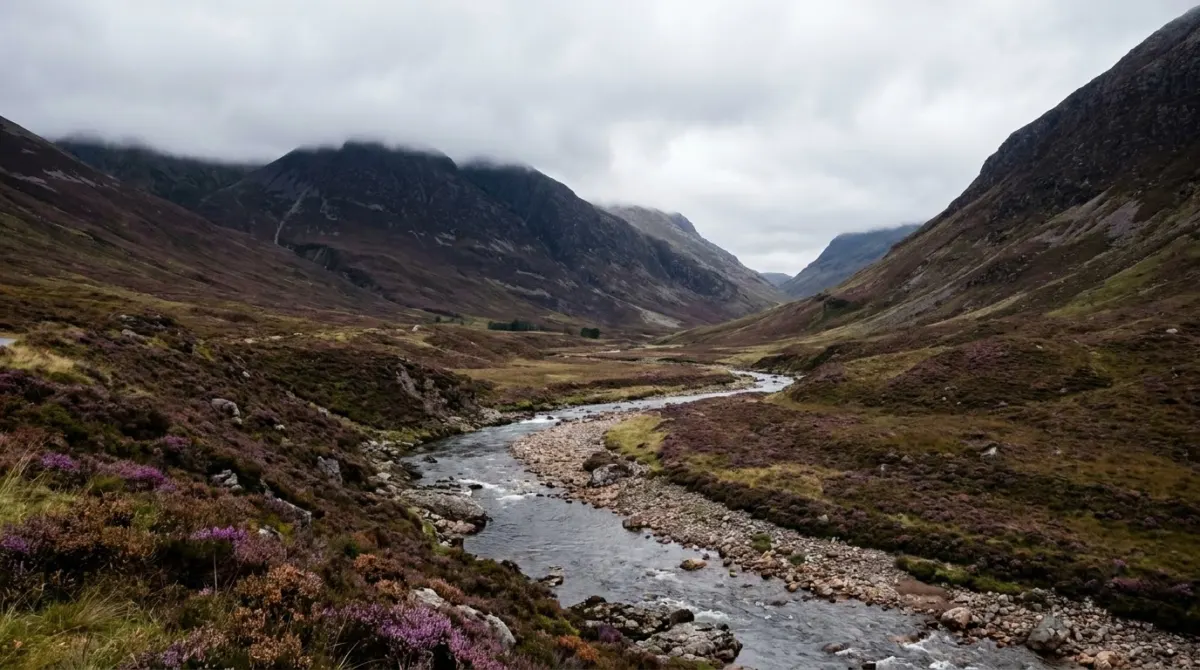
Day 4: collect the car, drive west through Stirling or Loch Lomond, over Rannoch Moor into Glencoe.
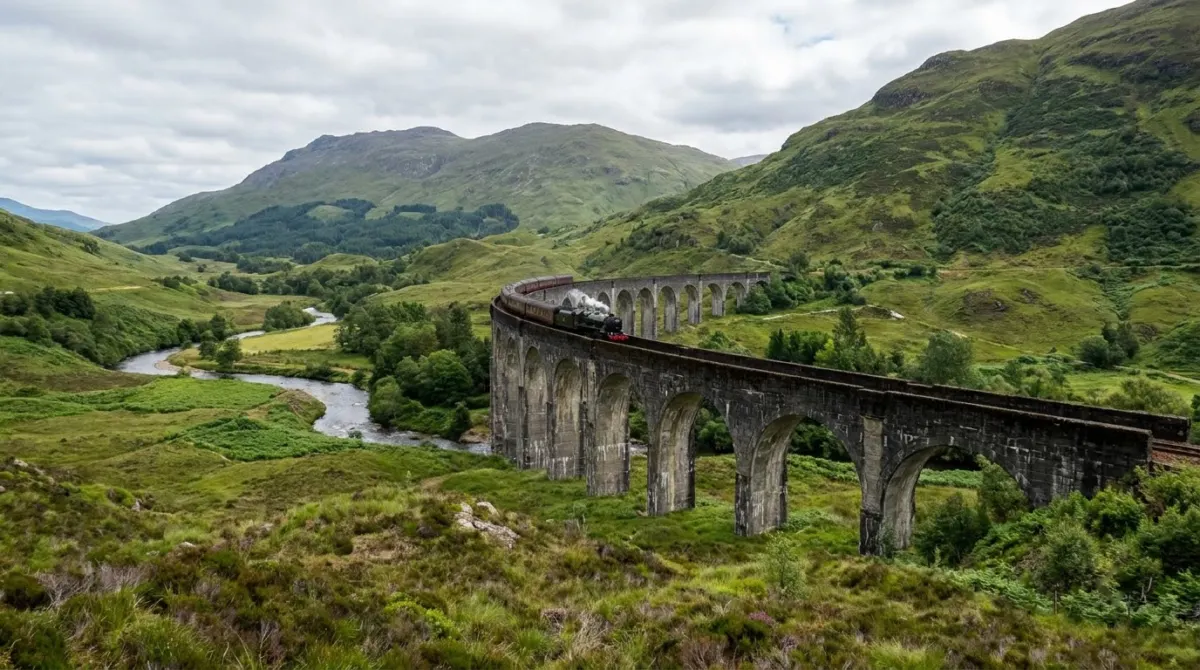
Day 5: Glencoe and Fort William — the Jacobite steam train over the Glenfinnan viaduct, or Ben Nevis if you walk.
Day 6: north to Inverness along the Great Glen, with Loch Ness and Urquhart Castle on the way.
Day 7: Culloden in the morning, then fly from Inverness or take the train south.
Three bases, about nine hours of driving, and the two best-known Highland landscapes.
Week 2 — the Skye week
Swap Inverness for the island, and accept a longer drive.
Days 1–2: Edinburgh, shortened to two nights.
Day 3: west to Glencoe or Fort William.
Day 4: on to Skye, with Eilean Donan Castle on the way.
There is a second way onto the island. From Fort William, the Road to the Isles runs west past Glenfinnan and the white beaches of Morar to Mallaig, where the CalMac ferry crosses to Armadale in the south of Skye. It turns a transfer into a sightseeing day, with the viaduct on the way, but vehicle space on summer sailings has to be reserved well ahead. Cross by ferry and return by the bridge, and Eilean Donan then falls naturally on the drive east.
Days 5–6: Skye — the Quiraing and the Old Man of Storr one day, the Fairy Pools and the Cuillin the next.
Day 7: east to Inverness for a flight, or back south.
The cost is a day in Edinburgh and the whole Loch Ness section. The gain is two full days on the island rather than a rushed one.
Week 3 — the no-car week
Scotland without driving works better than most people expect.
Days 1–3: Edinburgh on foot, with a day trip to Glasgow or Stirling by train.
Day 4: the West Highland Line from Glasgow to Fort William, which is one of the great railway journeys in Europe.
Day 5: the Jacobite steam train to Mallaig, or a day tour into Glencoe.
Days 6–7: coach along the Great Glen to Inverness — there is no direct train from Fort William — then a Loch Ness tour and Culloden by local bus.
You lose the glens between the stations. You gain not driving single-track roads in rain on the wrong side.
Rail passes and tickets for the no-car week
Week 3 runs on several train journeys and at least one coach, and that is roughly the point at which a pass deserves a look.
ScotRail’s Spirit of Scotland Travelpass comes in two versions: four days of travel within eight, or eight within fifteen. It covers train travel across Scotland, including the West Highland Line to Fort William and Mallaig and the main line north to Inverness, and gives discounts on selected coach routes, among them Scottish Citylink services, which should be reserved in advance even with the pass. On a single week, the four-in-eight version is usually the one that fits.
Three things it does not cover. The Jacobite steam train is run by a private operator and needs its own ticket. CalMac ferries are no longer included, so buy those separately. And passholders face a weekday restriction on early-morning trains on many routes, so read the conditions before planning a seven o’clock departure.
Whether it pays depends on the fares for your dates. Price the individual journeys first, then compare; the pass wins most clearly when the long legs — Glasgow to Fort William, the trip north to Inverness — fall on separate days.
What a week cannot do
Said plainly, because these are the plans that fail.
Skye and Loch Ness and the islands. Pick one island region.
The North Coast 500. It is a five-day route on its own.
Edinburgh, Glasgow, Skye and Inverness with four bases. Each move costs the middle of a day, and a week has only four usable ones after the cities.
The Outer Hebrides. Ferries and three or four days.
Driving notes
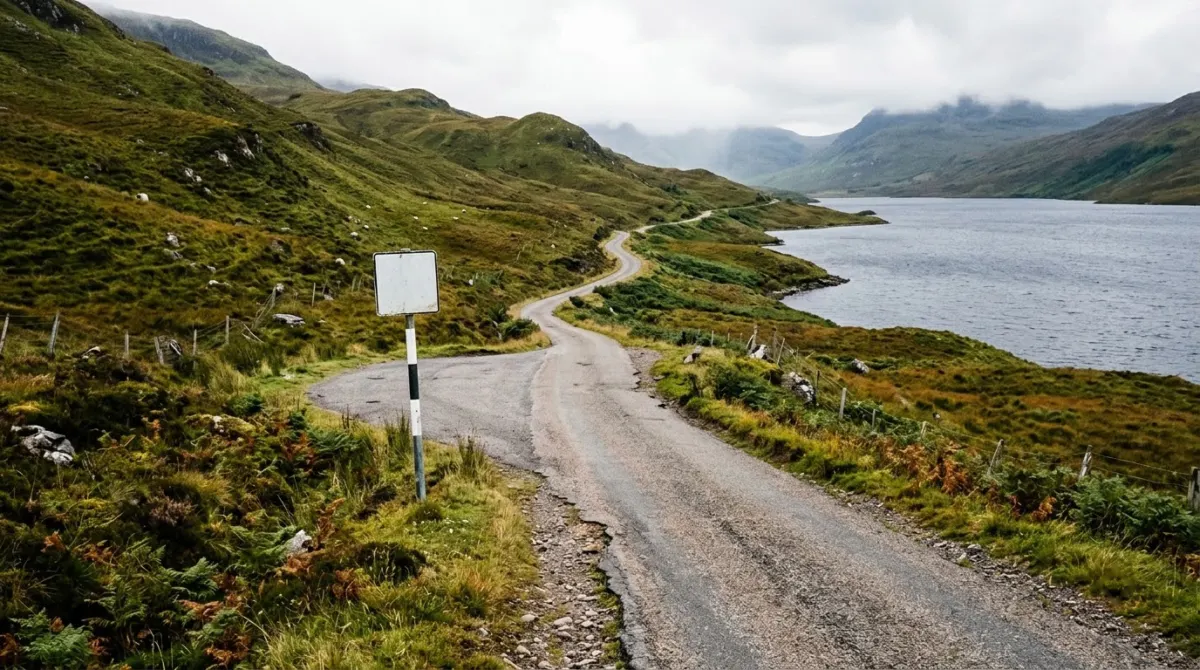
Allow about two-thirds of the speed your navigation app predicts once you leave the central belt. Highland A-roads are winding, and the roads on Skye and the north-west are often single track with passing places — pull in on your left, or stop opposite a passing place on your right, and let faster traffic through.
Fill the tank when you can, since stations are far apart and many close in the evening, and do not plan to arrive anywhere unfamiliar after dark on your first Highland day.
Where to stay on a week
Edinburgh: the New Town for space, the Old Town for atmosphere — see where to stay in Edinburgh.
Glencoe or Fort William: book early, because the supply here is small and the demand is not.
Skye: Portree for a first visit, and months ahead in summer — see where to stay on Skye.
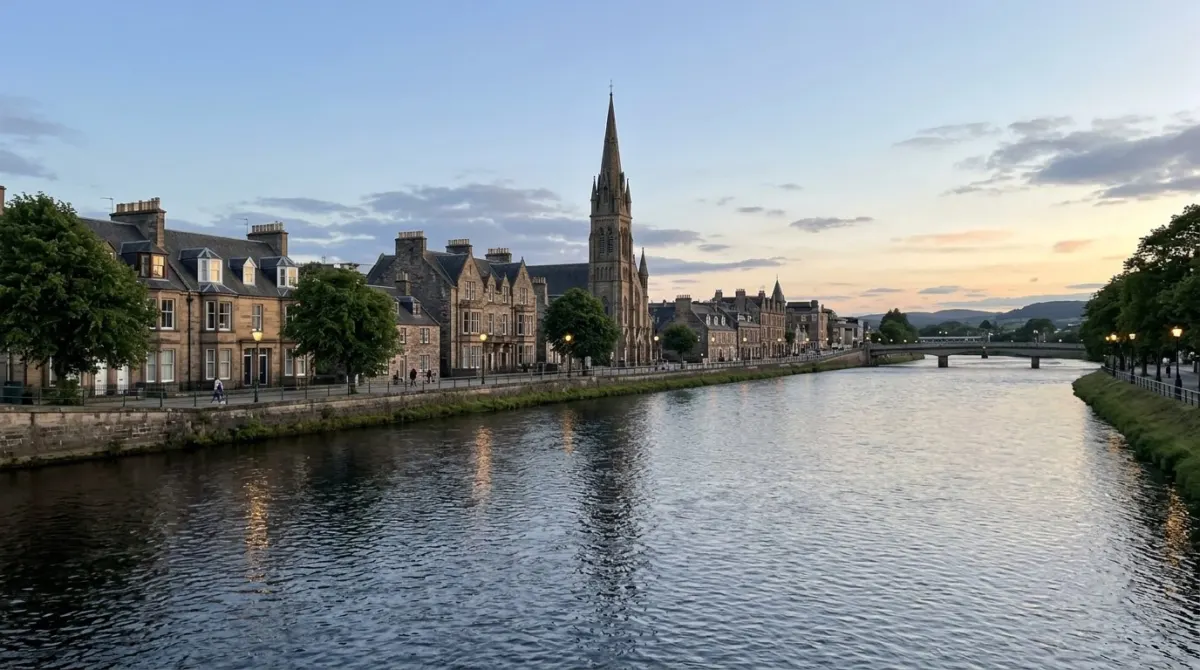
Inverness: the centre, near the station, because the tours leave from there — see where to stay in Inverness.
What a week costs in driving
Honest numbers, because this is what decides between the three weeks.
Week 1 is about nine hours: Edinburgh to Glencoe three, Glencoe to Inverness two and a half, plus local driving.
Week 2 is closer to twelve, because Skye adds three hours out and three back.
Week 3 is none, with train and coach journeys and two tour days instead.
If you are travelling with someone who does not drive, or you would rather not learn single-track etiquette on holiday, week 3 is not a compromise. It reaches the same regions.
The mistake that spoils a Scottish week
Adding a fourth base.
A week looks like it holds Edinburgh, Glasgow, Skye and Inverness. It does not. Each move costs the middle of a day, and a seven-night trip has four usable days once the cities and the transfers are counted.
If a specific fourth place is the reason you are coming, drop one of the first three rather than adding to it. A week with Edinburgh, Skye and Inverness is a real trip; the same week with Glasgow added is a car journey with photo stops.
Arriving and leaving
The departure airport matters more than the arrival one.
Driving from Inverness back to Edinburgh costs three and a half hours of your last day. Inverness airport has flights to several UK cities, and an open-jaw ticket into Edinburgh and out of Inverness usually costs little more than a return.
On the Skye week, Glasgow is the better arrival, because it is closer to the west coast and avoids crossing the central belt twice.
From London, the Caledonian Sleeper is the third option. It leaves Euston at night and arrives in the morning, with services to Edinburgh, Glasgow, Aberdeen, Inverness and Fort William. On week 3 that means you can wake up in Fort William on day one and run the week in reverse, ending with the Edinburgh nights, and on week 1 the Inverness train can bring you home from the far end without a flight. A night on the train saves a hotel night and most of a travel day, which on a seven-day trip is worth more than it sounds.
Packing for a Scottish week
Three things make a difference and none are specialist.
A waterproof jacket rather than an umbrella, because the wind on the ridges and the coast makes umbrellas useless. Boots or shoes that cope with wet ground, since the Storr, the Quiraing and most Highland viewpoints involve a walk off tarmac. And midge repellent between June and August in the west, which is not optional on still evenings.
Layers rather than a heavy coat: a Highland day can move between sun, wind, rain and sun again inside an hour.
What a week leaves out
Four things, each of which is a reason to come back rather than a flaw in the plan.
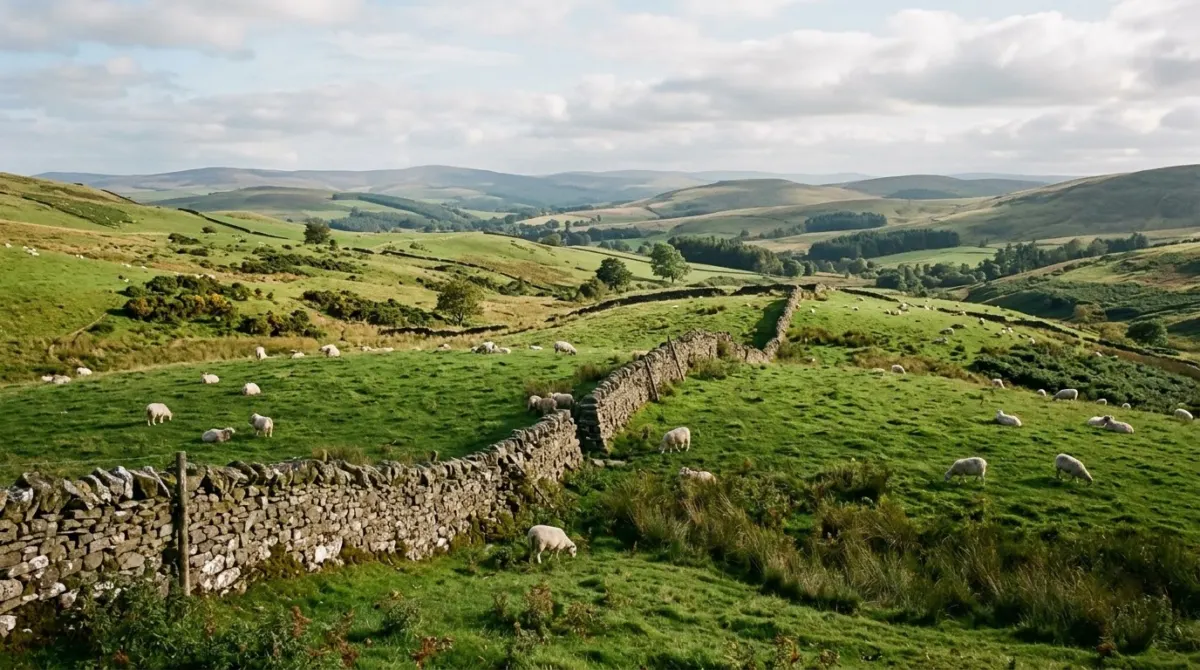
The North Coast 500, a 500-mile loop from Inverness around the far north, which needs five days of its own.
The Outer Hebrides, reached by ferry from Skye or Ullapool and needing three or four days for Lewis and Harris alone.
Orkney, with Neolithic sites older than Stonehenge, two or three days including the crossing.
The Borders and Galloway in the south, which are an hour from Edinburgh and which almost nobody visits.
Adding an eighth and ninth day
If the week stretches, the most valuable additions in order.
Day 8: a second night wherever you felt rushed — usually Skye on week 2, or Glencoe on week 1.
Day 9: a new region, which at this length means either Ullapool and the north-west or a night in Oban with a day on Mull.
At ten days the trip changes shape entirely, and our 10 day Scotland itinerary is the version where Skye and Loch Ness both fit.
Which week suits which traveller
First trip, confident driver: week 1. It covers the capital and the two best-known Highland landscapes with the least driving.
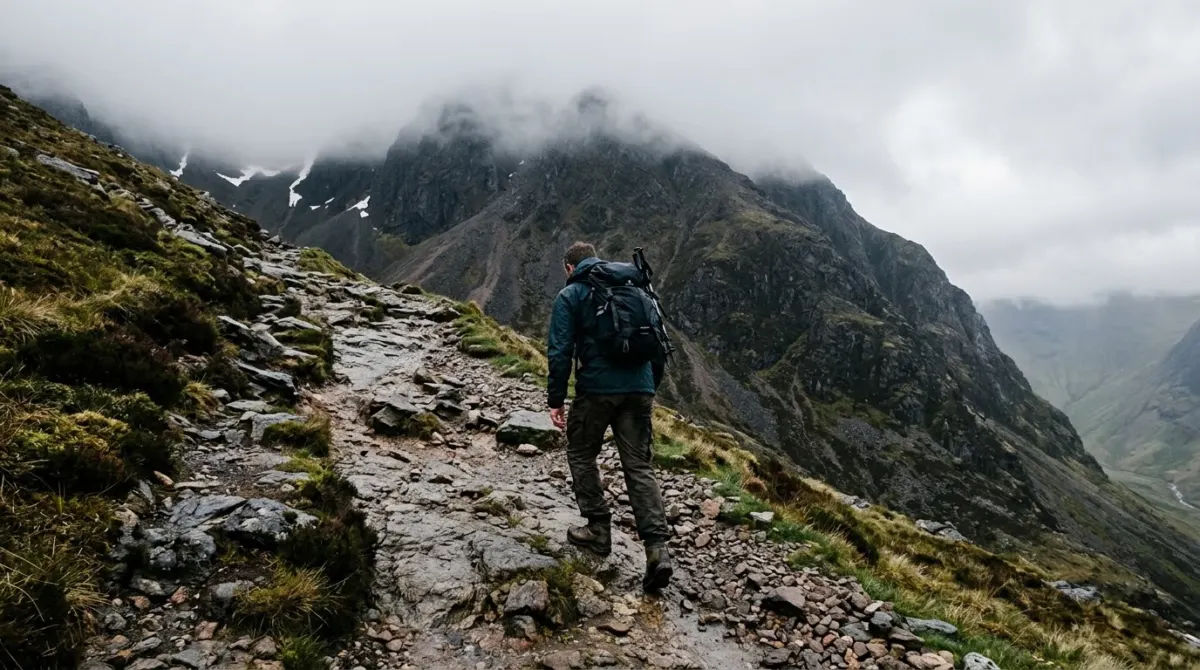
Skye is the reason you are coming: week 2, and accept losing Loch Ness.
Not driving, or not wanting to: week 3. Trains and tours reach the same regions, and the West Highland Line is a highlight rather than a compromise.
Walking: week 1 or 2 with an extra night in Glencoe, which puts Ben Nevis or the Aonach Eagach within reach without sacrificing a region.
With young children: week 1, with the Jacobite steam train as the fixed point — it is the one thing on any of these routes that children reliably remember.
Reserving the Jacobite steam train
It appears in all three weeks, and it is the one ticket on any of them that sells out.
The Jacobite runs from Fort William to Mallaig and back, 84 miles in all, over the Glenfinnan viaduct and along the coast. In 2026 the morning train runs daily from 1 June to 23 October, and a second, afternoon service runs from 10 June to 25 September. There is about an hour and a half in Mallaig before the return journey.
Reserve as soon as your Fort William nights are fixed. A few seats are sometimes sold at Fort William station on the day, for cash only, but they are not guaranteed and a week this tight cannot be built around them.
Two caveats. In very hot weather, at times of high fire risk or when a locomotive fails, the train may be hauled by a diesel instead of steam. And it takes most of a day, so on week 1 it is day 5 and nothing else.
If it is full, the ordinary ScotRail service runs the same line to Mallaig over the same viaduct, with no reservation needed, and outside the steam season it is the only option.
When to go
May, June and September are the best weeks: long daylight, everything open, and fewer midges than high summer.
July and August bring the Edinburgh festivals, which multiply city accommodation prices, plus the heaviest road traffic and the worst midges in the west.
October to March leaves about seven hours of Highland daylight, which on a week means dropping a region or accepting that one long drive will use most of a day.
A winter week also changes the details. The Jacobite does not run, ferry timetables thin out, and some Highland cafes and attractions close until spring, so check opening dates for anything you plan a day around. Week 3 holds up best, because the trains keep running and the West Highland Line in snow is spectacular from a warm carriage.
The short version
Three bases, and one decision: Skye or Loch Ness. Classic week is Edinburgh, Glencoe and Inverness; the Skye week trades a night in the capital and the whole Loch Ness section for two days on the island; the no-car week does the same regions by train and tour. Book the Highland nights first, allow two-thirds of the predicted speed, and fly home from Inverness rather than driving back.
For the best bases along this route, read where to stay in Scotland.
Frequently asked questions
Is 7 days enough for Scotland?
Yes, for three bases: Edinburgh, the west Highlands and either Inverness or Skye. It is not enough for both Skye and the Loch Ness route, and it is nowhere near enough for the North Coast 500.
What is the best 7 day Scotland itinerary?
Three nights in Edinburgh, one or two in Glencoe or Fort William, and two in Inverness, with Loch Ness and Culloden at the northern end. Swap Inverness for Skye if the island is the reason you are coming.
Can you do Skye in a week in Scotland?
Yes, by dropping a night in Edinburgh and the Loch Ness section. That gives two full days on the island, which is the minimum that justifies the drive to reach it.
How many bases should a week in Scotland use?
Three. Each move costs the middle of a day, and a seven-night trip has only four usable days once the cities and the transfers are counted.
Can you do a week in Scotland without a car?
Yes. Trains link Edinburgh, Glasgow, Fort William and Inverness, the West Highland Line is a sight in itself, and day tours from Fort William and Inverness cover Glencoe, Loch Ness and even Skye. You lose the glens between the stations.
How much driving is a week in Scotland?
About nine hours spread over three or four days on the classic route, and closer to twelve if you include Skye. Allow two-thirds of the predicted speed outside the central belt.
Do you need to reserve the Jacobite steam train in advance?
Yes. It runs from Fort William to Mallaig between June and October and sells out in summer, and only a few cash seats are sometimes sold on the day. If it is full, ordinary ScotRail trains cover the same line over the Glenfinnan viaduct.
Keep planning Scotland
- Where to Stay in Glencoe: Inside the Glen, or Twenty Minutes Away
- Where to Stay on Skye: Portree, or Closer to What You Came For
- Where to Stay in Glasgow: Centre for Convenience, West End for Everything Else
- Where to Stay in Inverness: A Base, Not a Destination
- Where to Stay in Edinburgh: Two Cities, Five Minutes Apart
- How Many Days in Scotland? Seven for the Highlands, Ten for Skye
- How Many Days in Edinburgh? Three, and the Hills Count
- 6 Day Scotland Itinerary: Three Bases, or Two Done Properly
Written and checked by
Triplarks Editorial
An editorial desk, not an invented persona: research, drafting and fact-checking are done by the same small team. Every number here carries the date it was read.