
Uvita is a small town on the south Pacific coast of Costa Rica with one very unusual feature: a sandbar shaped like a whale’s tail that appears at low tide, in a marine national park that humpback whales visit for roughly eight months of the year. The coincidence is so neat that it sounds invented, and it is the reason Costa Rica is known for whale watching on this particular stretch of coast.
Some links below are affiliate links. We may earn a commission if you book through them, at no extra cost to you. We do not rank hotels, and any prices on the map come live from the booking sites.
Quick answer: where to stay in Uvita. Near the highway and the beach you can walk to shops and the park entrance. Up in the hills you get cooler air and the ocean views, but you will drive everywhere. Ojochal is quieter and has the restaurants.
Uvita offers waterfalls, empty beaches, one of the longest whale watching seasons on the planet and a food scene that has no business existing in a town this size. This travel guide to Uvita covers the best things to do, how to get to Uvita, where to stay and eat, and the one piece of timing that decides whether your visit works.
Fees and prices were read on 16 August 2026.
Where Uvita Costa Rica is, and the Costa Ballena region
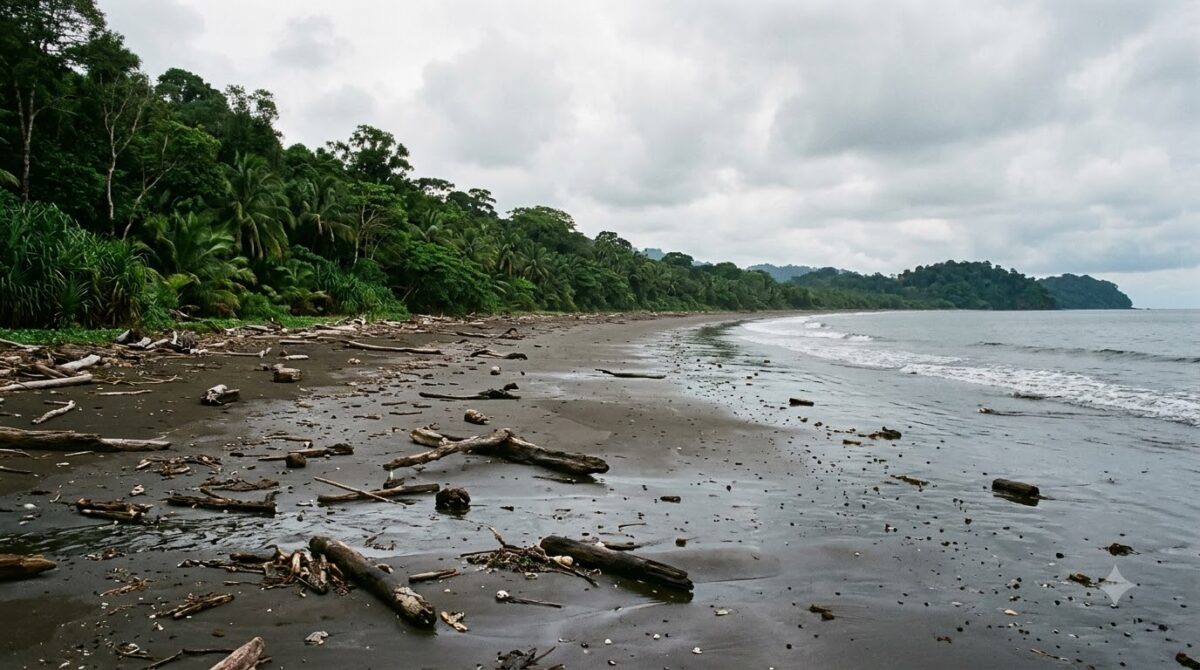
Uvita is a small town in Puntarenas province on the Pacific coast of Costa Rica, about 45 minutes south of Manuel Antonio and roughly four hours from San José. It sits in the middle of the Costa Ballena — the Whale Coast — which is a stretch of about 40 kilometres covering three quite different places.
| Town | Where | What it is |
|---|---|---|
| Dominical | 20 min north of Uvita | A surf town with a real beach break and a young crowd. Strong rip currents |
| Uvita | The middle | The practical base. Marino Ballena, supermarkets, the widest choice of accommodation |
| Ojochal | 15 min south of Uvita | A village of a few hundred people with an improbable concentration of French, Belgian and Indonesian restaurants |
Most people base themselves in Uvita and treat the other two as short drives. This part of Costa Rica only became easy to reach when the Costanera coastal highway was completed, which is why it still feels less developed than the coast further north.
Marino Ballena National Park and the Whale Tail
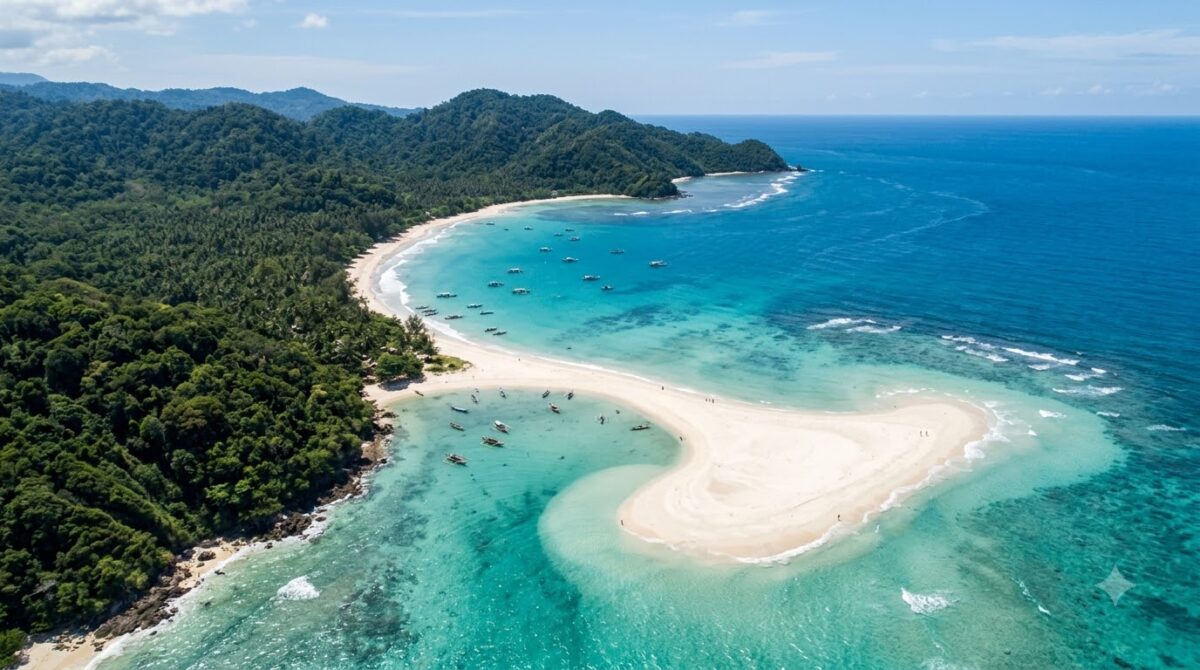
Uvita beach — Playa Uvita — sits inside Marino Ballena National Park, and at low tide a sandbar extends several hundred metres out from the beach, widening at the end into a shape that is unmistakably a whale’s tail. You walk out along it with the ocean on both sides.
⚠ The tide is the whole thing
This is the single most important sentence in this guide: the Whale Tail only exists at low tide, and it disappears when the tide comes in. Arrive at high tide and there is nothing to see. Walk out on a rising tide and you can find yourself wading back.
- Check a tide table before you go and aim to arrive about an hour before low tide. Any hotel will have one, and the park entrance staff will tell you.
- You get roughly two to three hours of comfortable walking either side of low water.
- Do not linger at the tip once the tide has turned. The water comes back across the bar from both sides at once.
- Wear something on your feet. The bar is rock and shell in places, not soft sand.
- Low tide also opens up tide pools along the rocks at the base of the formation.
Practicalities
- Entry to Marino Ballena National Park is around US$6 for non-residents, which is one of the cheapest national park fees in Costa Rica.
- There are four entrances — Playa Uvita, Playa Colonia, Playa Ballena and Playa Piñuela. Playa Uvita is the one for the Whale Tail.
- Playa Colonia and Playa Chaman are the quieter beaches inside the park and are usually close to empty.
- Rip currents are real along this coast. Swim near the sandbar rather than at the open ends of the beaches.
Whale watching: the longest season in the world
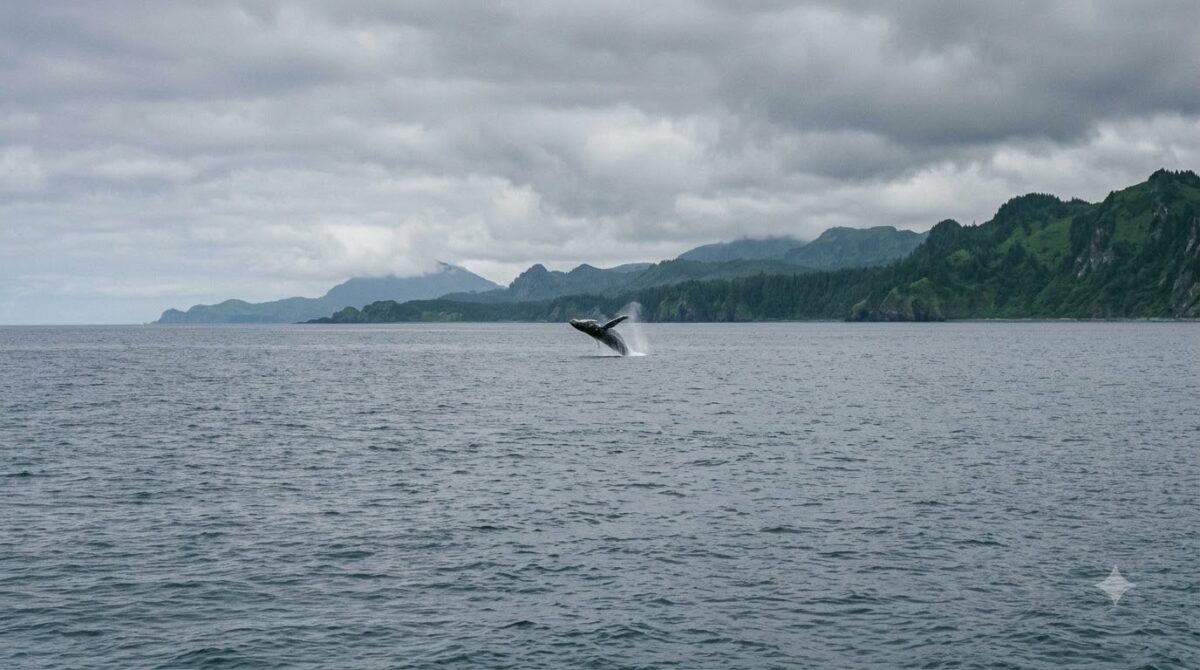
Uvita has an unusual claim, and it is a genuine one. Two entirely separate humpback whale populations migrate to this bay to calve — one from the northern hemisphere, one from the southern. They arrive at different times of year, which gives this stretch of coast one of the longest humpback seasons anywhere in the world.
- July to October — the southern population, arriving from the waters off Antarctica. This is the bigger and more reliable season.
- December to March — the northern population, arriving from Alaska and California.
- Boat tours run around US$60 to US$90 per person for three to four hours, leaving from Playa Uvita or Playa Colonia.
- Dolphins are close to guaranteed on any trip, whales or not.
- Tours are only permitted at set distances and boat numbers around a whale are regulated. A good operator will tell you this before you ask.
The waterfalls: Nauyaca and Catarata Uvita
Nauyaca Waterfall
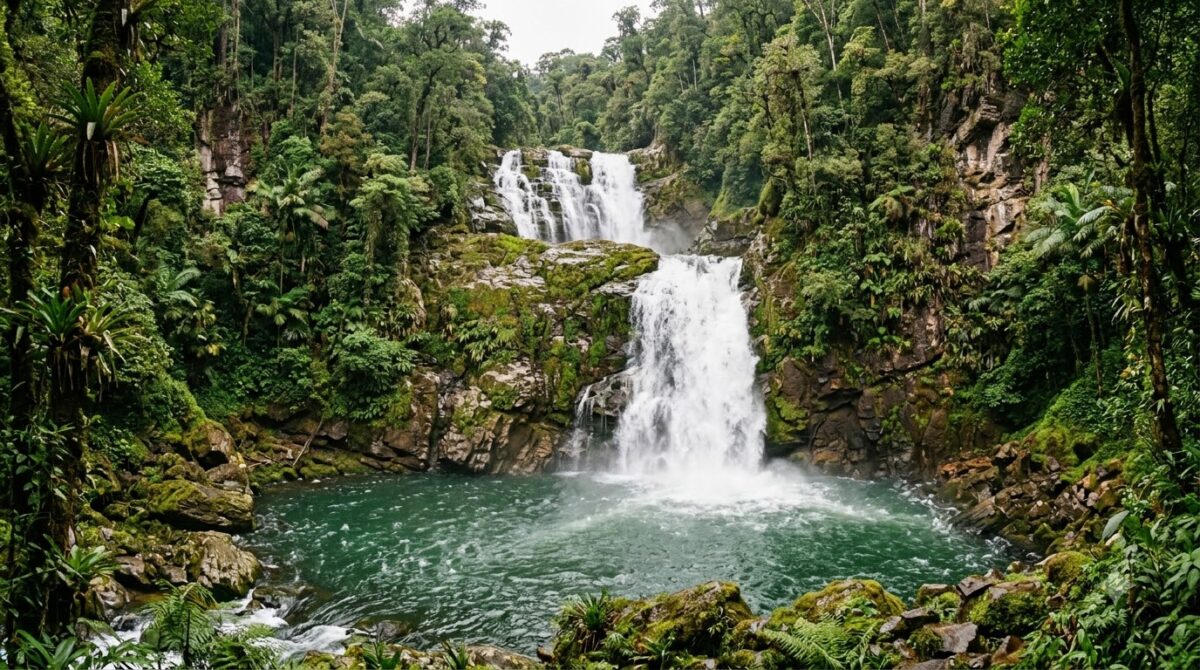
Nauyaca Waterfall, inland from Dominical, is the best-known waterfall on this coast — two tiers dropping into a large green pool you can swim in. It is not a roadside stop.
- Getting there means a 4×4 truck ride, a horse, or a walk of about four kilometres each way. There is no ordinary-car access to the falls themselves.
- Truck transport costs roughly US$40 to US$50 per person including entry; horseback tours run US$70 to US$90.
- Hiking in is cheaper, around US$10 to US$12 entry, but it is hot and the return climb is steep.
- Go early. Both the light and the crowds are better before ten.
Catarata Uvita
The Uvita waterfall, or Catarata Uvita, is a much smaller fall right in Uvita itself, five minutes from the main road. It has a natural rock slide worn smooth by the river, which is the reason to go, plus a pool at the bottom. Entry is a few dollars.
It is a half-hour stop rather than an outing, and it is the best thing to do in Uvita in the hour before dinner.
Things to do in Uvita: Caño Island, Dominical and Corcovado
- Caño Island day trip — the best snorkelling and diving in the country, out towards the Osa Peninsula. Around US$130 to US$170 from Uvita including lunch and park fees. Long day, worth it.
- Corcovado day tour — possible from here, though it is a very long day and staying nearer is better. Around US$180 to US$230.
- Surfing at Dominical — the nearest proper break, 20 minutes north. Lessons around US$50 to US$70. The currents are strong and there is a community-funded lifeguard service for good reason.
- Horseback riding in the hills behind town, roughly US$60 to US$80.
- Kayaking the mangroves at Playa Ballena or Sierpe, around US$50 to US$70.
- Manuel Antonio from Uvita is a 45-minute drive, which makes a national park day trip easy if you want sloths and monkeys on a flat trail.
- Chocolate and pineapple farm tours in the hills, small operations rather than polished attractions.
Beaches in Uvita and the best beaches near Dominical
The best beaches in the Uvita area are all within twenty minutes, and none of them are crowded. This is one of the reasons the southern part of Costa Rica keeps turning up as a favourite place in Costa Rica among people who have already done the north.
| Beach | Where | What it is for |
|---|---|---|
| Playa Uvita | The park entrance in Uvita | The Whale Tail. Calm water beside the sandbar, and the only busy beach here |
| Playa Colonia | Second park entrance | Wide, shallow and usually empty. Best for families |
| Playa Chaman | Between Uvita and Ballena | Backed by jungle, almost never anyone on it |
| Playa Ballena | 10 min south | Long, wild, good at low tide |
| Playa Hermosa | Between Uvita and Dominical | A quiet stretch of dark sand. Note this is a fourth Costa Rican beach with the name |
| Playa Dominical | 20 min north | The surf beach. Strong rip currents and a lifeguard service |
The best of Uvita in three days
If you only have a short stop, this is the order that works. It is built around the tide rather than around distance, which is the trick with Uvita.
- Day 1 — arrive, check the tide table, and take Catarata Uvita in the afternoon. Dinner in Ojochal.
- Day 2 — whale watching tour in the morning, then the Whale Tail timed to low water. One of the best things you can do on this coast, and both happen from the same beach.
- Day 3 — Nauyaca Waterfall early, then Dominical for the afternoon, or Caño Island if you have a full day.
Uvita and Dominical work best treated as one destination in Costa Rica rather than two. Traveling to Costa Rica without a stop somewhere on this coast means skipping the part that still feels unfinished, and it is a genuine loss.
How to get to Uvita: San Jose to Uvita by car, bus and shuttle
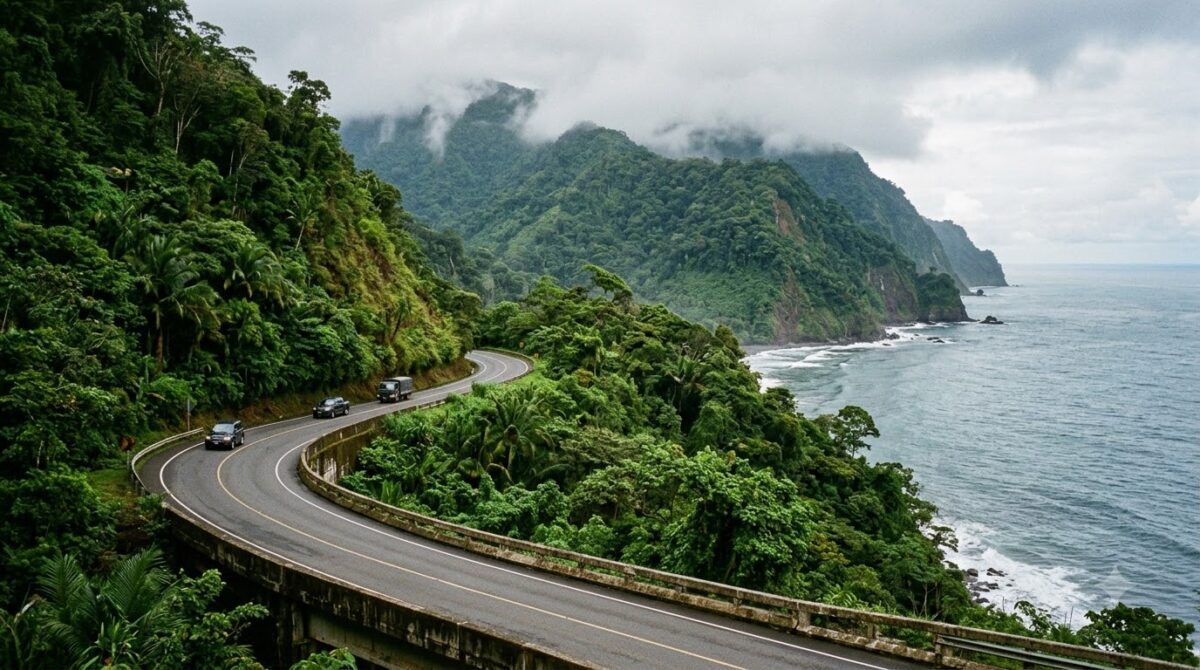
- Driving from San José to Uvita takes about four hours on the Costanera, all paved. This is the easiest route.
- The Uvita bus from San José takes five to six hours and costs around 6,000 colones, roughly US$11. Tracopa runs it several times daily.
- Shuttles from San José airport cost US$60 to US$90 per person.
- Flying — the nearest airstrips are Quepos, 50 minutes north, and Palmar Sur, an hour south. Both take Sansa flights from San José.
- Rent a car. Renting a car in Costa Rica makes far more sense here than on most of the coast, because the waterfalls, the three Costa Ballena towns and the park entrances are all spread out. Budget the mandatory insurance at US$30 to US$45 a day on top of the advertised rate.
Getting around Uvita
The town of Uvita is strung along the highway with a few side roads, and almost nothing is walkable to anything else. Without a car you are relying on taxis, which cost US$5 to US$15 for local trips, or on tours that include pickup. It is doable but it constrains you.
Hotels in Uvita and where to stay
Accommodations in Uvita divide into two: down near the highway and beach, or up in the hills with an ocean view. The hills are cooler and the views are the reason people fall for this coast, but you will drive everywhere.
| Area | Nightly rate | Notes |
|---|---|---|
| Uvita town / near the highway | US$30–90 | Hostels and small hotels. Walkable to shops and restaurants |
| Near Playa Uvita | US$60–180 | Closest to the park entrance and the Whale Tail |
| The hills above town | US$120–400 | Jungle villas with ocean views. Oxygen Jungle Villas is the best-known |
| Ojochal | US$70–250 | Quiet, and where the restaurants are |
| Dominical | US$25–150 | Surf hostels and lodges. Younger crowd |
Map shows live availability and prices. We may earn a commission on bookings made through it, at no extra cost to you.
The best restaurants in Uvita and Ojochal
Pura vida is worn thin as a phrase, but the food scene here earns something like it. For a town this size the eating in Uvita is disproportionately good, and the reason is Ojochal — a village down the road settled by French and Belgian expatriates in the 1990s that now has one of the highest concentrations of serious restaurants in Costa Rica.
- In Uvita itself, the range runs from sodas to decent international places. Café Vivo Uvita, Dolce Uvita and the cluster along Calle Uvita are where most visitors end up.
- For traditional Costa Rican food, use the sodas along the highway. A casado costs around 4,000 colones, roughly US$7.50.
- For a proper dinner, drive 15 minutes to Ojochal. French, Belgian, Indonesian and Mediterranean, at US$20 to US$40 a head. Book ahead in high season and note many close on Sundays and through the low season.
- Farmers market in Uvita on Saturday mornings, which is the best place to buy fruit and meet people who live here.
Best time to visit Uvita
- December to April — the dry season, plus the northern humpback whales. Busiest and most expensive.
- July to October — the southern whale season, which is the better one, plus green forest, full waterfalls and low prices. It rains in the afternoon.
- September and October — the wettest weeks, and also the peak of the whale season. A genuine trade-off.
- May, June, November — quiet, green, no whales.
Unusually for Costa Rica, the best wildlife season here overlaps with the wet season. Full detail in our month-by-month guide.
A few travel tips before you visit Uvita
- Bring cash. Card acceptance is patchy at park entrances and small places, and Costa Rican colones go further than dollars at sodas.
- Watch where you step on forest trails. The fer-de-lance, Bothrops asper, is present throughout this region. Closed shoes on waterfall hikes, and do not put hands where you cannot see.
- It is humid. This is the wetter half of the Pacific coast and it shows.
- Nights in Uvita are quiet. There is essentially no nightlife. Dominical has a little.
- Three nights is the minimum that makes the drive worthwhile — one for the Whale Tail and a waterfall, one for whales or Caño Island, one spare for weather.
Is Uvita one of the best places in Costa Rica?
Uvita is one of Costa Rica’s best bases for anyone who wants nature without the crowds of Manuel Antonio or the effort of the Osa Peninsula. It sits between the two, both geographically and in terms of difficulty, and on a Costa Rica itinerary heading south it is the obvious stop.
It is not the place for nightlife, for a walkable beach town, or for anyone who wants everything within reach without a car. Uvita is a base rather than a paradise postcard in itself, and understanding that before you arrive is most of what makes it work.
For the wider trip, see our guides to the Osa Peninsula, beaches on both coasts and things to do in Costa Rica.
Twenty minutes north, Dominical is the surf town at the other end of the Costa Ballena.
Frequently asked questions
When can you walk out on the Whale Tail at Uvita?
Only at low tide. The sandbar is submerged at high tide and there is nothing to see. Check a tide table, arrive about an hour before low water, and you get roughly two to three hours either side. Do not stay at the tip once the tide turns.
How much does Marino Ballena National Park cost?
Around US$6 for non-residents, one of the cheapest national park fees in Costa Rica. There are four entrances; Playa Uvita is the one for the Whale Tail.
When is whale watching season in Uvita?
Two seasons, because two separate humpback populations come here. July to October brings the southern population and is the bigger season. December to March brings the northern population. Tours cost US$60 to US$90 for three to four hours.
How do you get from San Jose to Uvita?
About four hours by car on the paved Costanera highway. The Tracopa bus takes five to six hours and costs around 6,000 colones, roughly US$11. Shuttles run US$60 to US$90 per person.
Do you need a car in Uvita?
Effectively yes. The town is strung along the highway, and the waterfalls, park entrances and the restaurants in Ojochal are all separate drives. Taxis and tour pickups work but limit what you can do.
How do you get to Nauyaca Waterfall?
By 4×4 truck ride at US$40 to US$50 per person including entry, on horseback at US$70 to US$90, or on foot about four kilometres each way for a US$10 to US$12 entry fee. There is no ordinary-car access to the falls.
How many days do you need in Uvita?
Three nights minimum — one day for the Whale Tail and a waterfall, one for whale watching or Caño Island, and one spare for weather. Longer if you want Corcovado or Manuel Antonio as day trips.
Park fees, tour prices and transport costs read 16 August 2026. Tide times change daily — check a current table before visiting the Whale Tail.