
Quick answer
Two days in the city and one out of it. Stay inside the Altstadt ring so days one and two are on foot, and keep the Hauptbahnhof within reach, because every day-three trip leaves from there.
On this page
- 3 day Munich itinerary at a glance
- Day 1 — the old town
- Day 2 — museums and the park
- Day 3 — out of the city
- Variant: three days in the mountains
- Variant: three days with children
- Variant: three days in winter
- What to book in advance
- Where to stay for this plan
- How long each thing takes
- Getting around in three days
- Eating across three days
- What three days cannot do
- Where this fits in a longer trip
- Munich in the rain
- Arriving and leaving
- The short version
- Frequently asked questions
Three days is the right length for Munich: two for the city and one for the mountains, the castle or the memorial site outside it. The old town is small enough to cover in a morning, and what makes the city worth three days is everything within ninety minutes of its main station.
Some links below are affiliate links. We may earn a commission if you book through them, at no extra cost to you. We do not rank hotels, and any prices on the map come live from the booking sites.
This is the plan hour by hour, with variants. For the question of length itself, see how many days in Munich.
3 day Munich itinerary at a glance
| Day | Morning | Afternoon | Evening |
|---|---|---|---|
| 1 | Marienplatz and the old town | Residenz or the Viktualienmarkt | Beer garden |
| 2 | One Pinakothek, or the Deutsches Museum | Englischer Garten | Schwabing or the Altstadt |
| 3 | Day trip: Neuschwanstein, Salzburg or Dachau | Back in the city | |
Map shows live availability and prices. We may earn a commission on bookings made through it, at no extra cost to you.
Where to sleep on this route
Day 1 — the old town
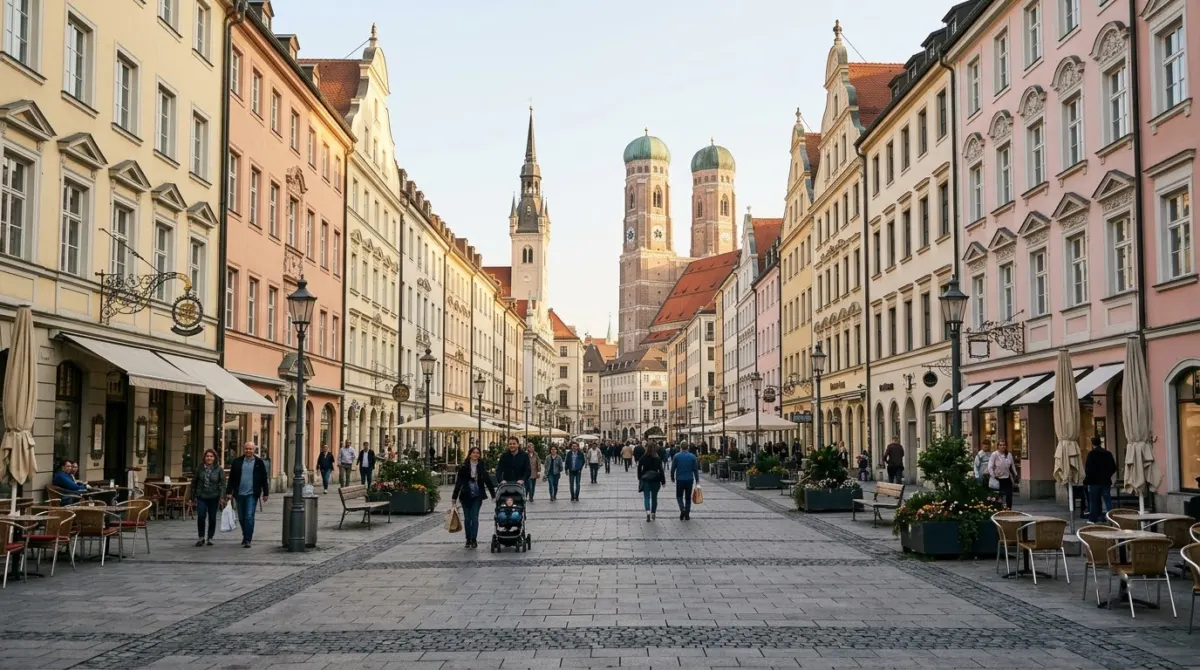
Morning. Start at Marienplatz. The glockenspiel in the Neues Rathaus tower performs at set times in the late morning and midday, and it is exactly as slow as everyone says, which is part of the charm.
Walk to the Frauenkirche, the brick cathedral with the two domed towers that no building in the old town is allowed to exceed, then through the pedestrian streets to the Viktualienmarkt, the permanent food market, where lunch is a stall and a bench.
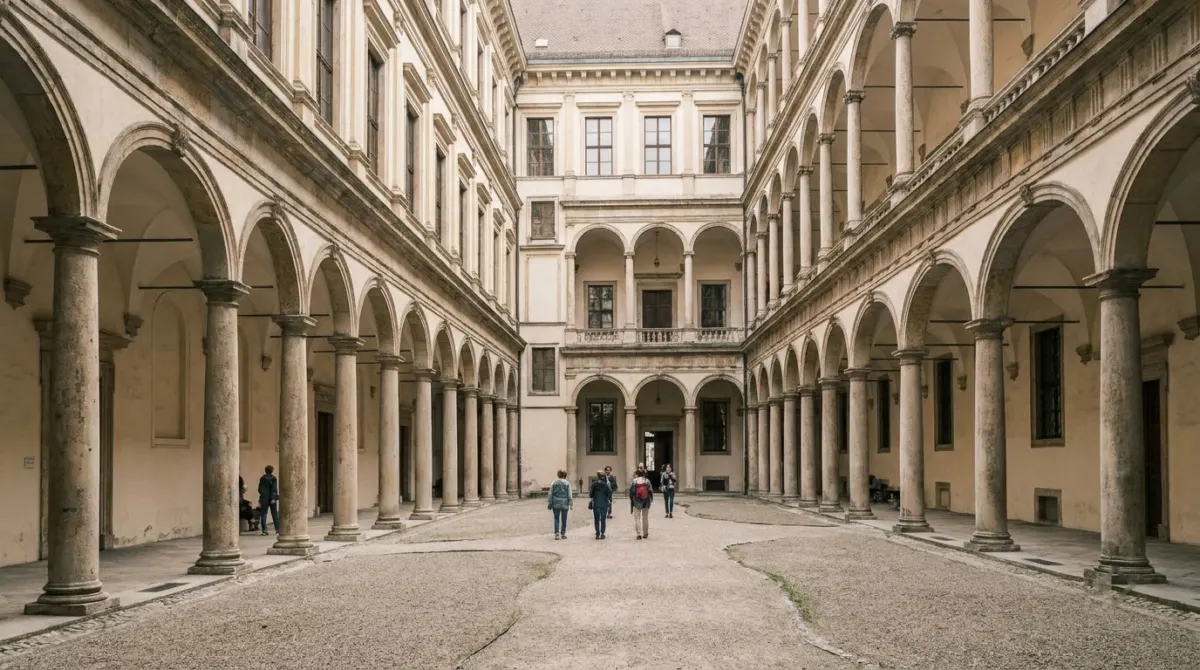
Afternoon. The Residenz, the palace of the Bavarian rulers, which is far larger inside than it looks from the street and takes two hours for the state rooms alone.
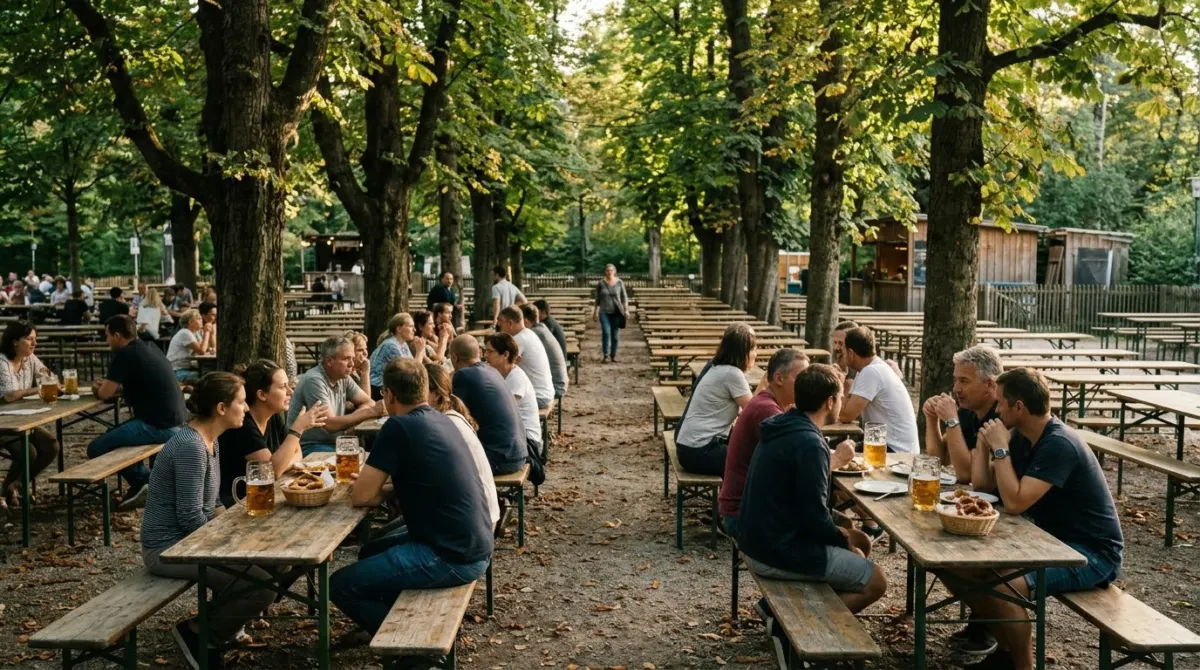
Evening. A beer garden. The one in the Englischer Garten around the Chinese Tower is the famous one; the smaller gardens south of the centre are quieter.
Day 2 — museums and the park
Morning. Choose by interest. The Alte Pinakothek for old masters, the Pinakothek der Moderne for twentieth-century art and design, or the Deutsches Museum for science and machinery on a scale that will take your whole day if you let it.
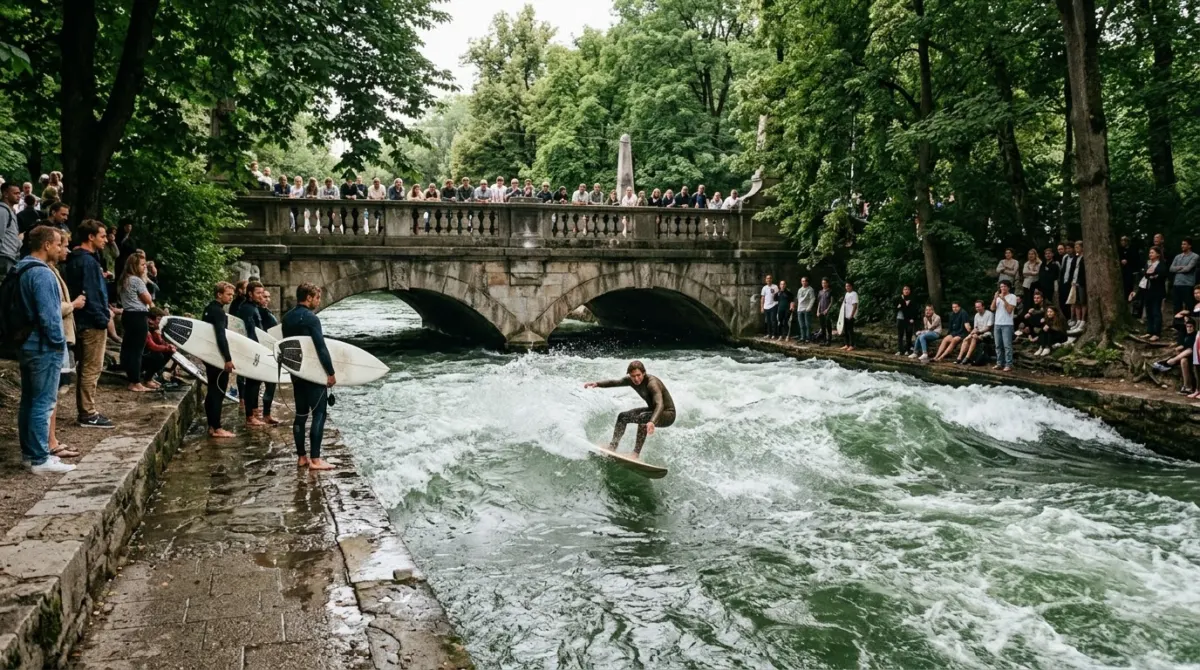
Afternoon. The Englischer Garten, one of the largest city parks in Europe. Enter at the southern end to see the surfers on the standing wave of the Eisbach, then walk north for as long as you like.
Evening. Schwabing, on the park’s western edge, for restaurants without a tourist menu.
Day 3 — out of the city
Three options, all by train from the Hauptbahnhof, all full days.
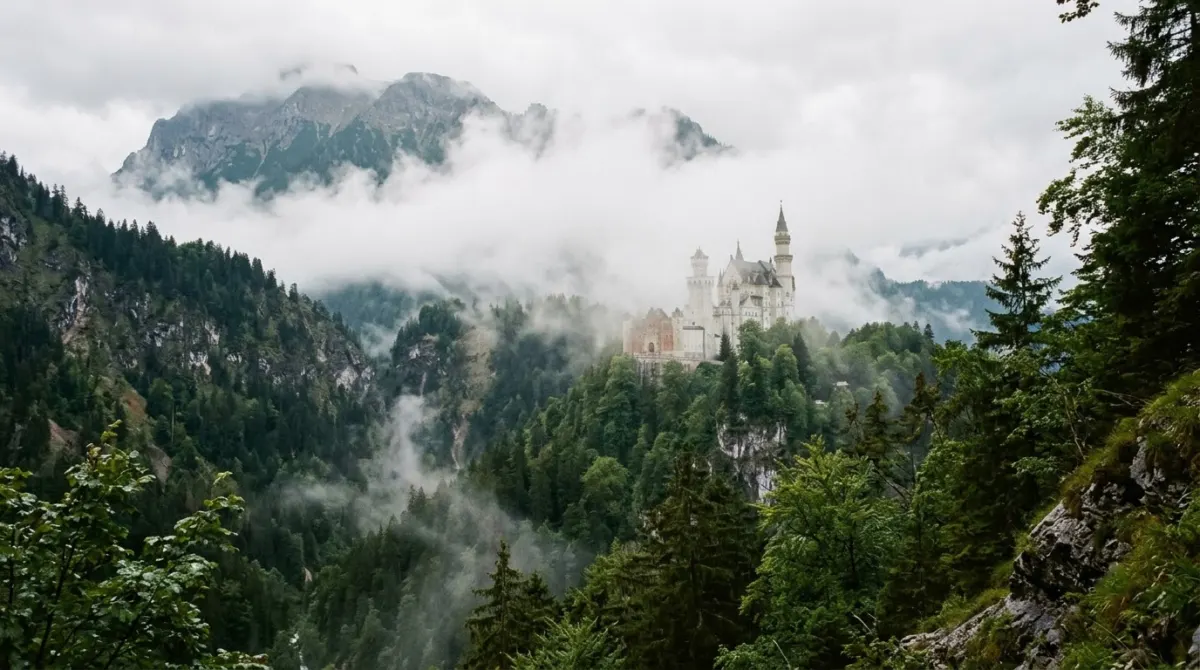
Neuschwanstein — roughly two hours each way by train and bus to the castle in the foothills. The visit is a timed guided tour and the slots sell out, so book in advance. The view from the Marienbrücke bridge is the photograph; the bridge closes in bad weather.
Salzburg — about ninety minutes each way across the Austrian border, for a compact baroque old town, a fortress on a hill and the easiest international day trip in central Europe.
Dachau — forty minutes each way by S-Bahn and bus to the memorial site at the first Nazi concentration camp. Half a day on site, and most visitors find it takes the rest of the day as well. Do not pair it with an evening out.
Variant: three days in the mountains
If the Alps are why you are coming, swap day 3 for Garmisch-Partenkirchen, about ninety minutes by train, where a cog railway and cable car run to the summit of the Zugspitze, Germany’s highest mountain.
It is weather-dependent in a way the other trips are not: in cloud you pay for a view of fog. Check the mountain webcams before you commit the day.
The Partnachklamm gorge, a walkable ravine near the station, is the alternative when the summit is closed in.
Variant: three days with children
Day 1: Marienplatz and the Viktualienmarkt, then the Englischer Garten and the Eisbach surfers.
Day 2: the Deutsches Museum, which has mines, aircraft and working machines, or Nymphenburg Palace and its park.
Day 3: Neuschwanstein, which works well with children, or the Tierpark Hellabrunn, the city zoo.
Dachau is not a day for young children.
Variant: three days in winter
From late November the Christmas markets run across the city, the main one on Marienplatz and better ones in the surrounding squares. They are evening affairs, which suits the short daylight.
Days are museum days: the Pinakotheken, the Residenz and the Deutsches Museum are all indoor. The mountain trip becomes unreliable, and Neuschwanstein in snow is beautiful but the bridge viewpoint is often shut.
What to book in advance
- Neuschwanstein tour slots — the one thing around Munich that reliably sells out.
- A transport day ticket is worth buying on arrival rather than single fares.
- Accommodation, if your dates fall during Oktoberfest or a trade fair — see where to stay for Oktoberfest.
Where to stay for this plan
Anywhere inside the Altstadt ring puts days 1 and 2 on foot, and being within reach of the Hauptbahnhof matters for day 3, since every trip above leaves from there.
Our guides to where to stay in Munich and best hotels in Munich cover the districts and the booking.
How long each thing takes
Planning the two city days is easier with durations than with a list.
Marienplatz and the glockenspiel: half an hour, timed to the performance.
The Viktualienmarkt: an hour, longer if you eat.
The Residenz: two hours for the state rooms, three with the treasury.
One Pinakothek: two to three hours.
The Deutsches Museum: half a day at minimum.
The Englischer Garten: as long as you like, with an hour as a reasonable southern loop.
Two large items per day plus something small is comfortable. Three is a march, and Munich is not a city that rewards marching.
Getting around in three days
The Altstadt is walkable end to end in twenty minutes, so days one and two need almost no transport.
Day three is different: every trip leaves from the Hauptbahnhof, and the regional day tickets that cover Bavaria for a day are considerably cheaper than individual fares, particularly for two or more people travelling together.
Within the city, buy a day ticket rather than singles. A single zone covers everything in this itinerary except the airport and Dachau.
Eating across three days
Three patterns that work in Munich specifically.
Lunch at the Viktualienmarkt, from a stall, at a shared bench. It is the cheapest good meal in the centre.
Dinner in a beer garden, where the tradition at many of them allows you to bring your own food and buy only the drinks. Look for the unserved tables.
At least one Wirtshaus meal — the Bavarian tavern format — away from the Altstadt, in Schwabing or Haidhausen, where the prices are lower and the rooms are full of locals.
What three days cannot do
Said plainly, because these appear on a lot of three-day plans.
Two day trips. Neuschwanstein and Salzburg are each a full day, and doing both means no city at all.
Berchtesgaden and the Eagle’s Nest. Further than Salzburg and seasonal; it needs an overnight.
The Romantic Road. A driving route, not a day trip, and it needs a car and two days.
A serious walk in the Alps. Garmisch is reachable, but a proper mountain day means staying there.
Where this fits in a longer trip
Munich is the southern anchor of almost every German itinerary, and three days here is the standard allocation.
On a ten-day route it sits in the middle, about four hours from Berlin on the fast line, with Rothenburg and the Rhine to the north-west. On a shorter trip it pairs with Salzburg and Vienna for a Bavaria and Austria route, since Salzburg is only ninety minutes away.
Our 10 day Germany itinerary shows the first version and the Germany itinerary covers the alternatives.
Munich in the rain
It rains in Munich, and the plan survives it better than most.
Days one and two are largely indoors already: the Residenz, the Pinakotheken and the Deutsches Museum are all full wet-weather days. The Viktualienmarkt has covered stalls and the beer halls are the original indoor option.
Day three is the one that suffers. Neuschwanstein in rain is still worth going to, since the castle interior is the tour; the bridge viewpoint is what you lose. Salzburg works in any weather. The Zugspitze does not — in cloud you pay for fog, so check the webcams and swap to Salzburg if the mountain is closed in.
Arriving and leaving
The airport is about forty minutes from the Hauptbahnhof on the S1 or S8, which means a midday flight still leaves you a morning and an afternoon arrival still gives you an evening.
If your three days are really an afternoon, two full days and a morning, the shape to use is: old town on the afternoon you arrive, the day trip in the middle, a museum on the final morning. That keeps the one thing that cannot be shortened — the day trip — on the day with the most hours in it.
The short version
Day one for the Altstadt, the Viktualienmarkt and a beer garden. Day two for one museum and the Englischer Garten. Day three out of the city, to Neuschwanstein, Salzburg or Dachau, all of which leave from the Hauptbahnhof. Book the Neuschwanstein slot in advance, buy day tickets rather than singles, and do not try to fit two day trips into three days.
Frequently asked questions
What is the best 3 day Munich itinerary?
Two days in the city and one out of it: the old town and a beer garden on day one, a museum and the Englischer Garten on day two, and Neuschwanstein, Salzburg or Dachau on day three.
Can you do Neuschwanstein as a day trip from Munich?
Yes, and it is a full day — roughly two hours each way by train and bus. The castle is a timed guided tour and slots sell out, so book before you travel rather than on the day.
Is Dachau worth visiting from Munich?
If you want to understand what the city and the country lived through, yes. It is forty minutes each way by S-Bahn and bus, takes half a day on site, and most visitors find it occupies the rest of the day emotionally. Do not plan an evening out afterwards.
How long do you need in Munich's old town?
A morning covers Marienplatz, the Frauenkirche and the Viktualienmarkt on foot. Add two hours for the Residenz if you want the interior, which is larger and more impressive than the street frontage suggests.
Is 3 days in Munich too long?
Not if one of them leaves the city. Munich's real strength is as a base — the castle, Salzburg, Dachau and the Alps are all inside ninety minutes — and a third day spent only in the centre is the one that would feel long.
What should I skip in Munich?
Nothing essential, but be realistic about combining: the Deutsches Museum alone can fill a day, and pairing Dachau with anything cheerful does not work. Two large things per day is a march rather than a plan.
Keep planning Germany
- Where to Stay in Cologne: One Street Back From the Cathedral
- Where to Stay for Oktoberfest: Buy the Walk Home
- Where to Stay in Frankfurt: The City, the Station or the Airport
- Best Hotels in Munich: What the Money Actually Buys
- Where to Stay in Berlin: Pick a District, Not a Hotel
- Where to Stay in Munich: Inside the Ring, or One Stop Out
- How Many Days in Berlin? Four, and Why It Needs More Than Munich
- How Many Days in Munich? Three, and Four If You Use It as a Base
Written and checked by
Triplarks Editorial
An editorial desk, not an invented persona: research, drafting and fact-checking are done by the same small team. Every number here carries the date it was read.