Quick answer
Stay a street or two back from the Latin Quarter, within five minutes of Eyre Square. You are beside the pubs and beside the day-trip pick-ups without being above a music session. Salthill suits families and anyone with a car; the Westend across the river is quieter and still ten minutes’ walk from the centre.
On this page
- Where to stay in Galway: the short answer
- Understanding the map in two minutes
- The Latin Quarter: the thing you came for, at full volume
- Eyre Square: for anyone taking day trips
- Salthill: the sea, and the trade you make for it
- The Westend: where the city carries on
- Driving, and where the car actually goes
- What a Galway hotel room is like
- The weeks when Galway fills completely
- How many nights
- Where not to stay
- Getting to Galway, and what it means for your first night
- How long each day trip really takes
- Staying in Galway, or staying out where the scenery is
- Lifts, family rooms and the limits of old buildings
- Frequently asked questions
Galway is small. From the train station at Eyre Square to the Spanish Arch on the river is about ten minutes on foot, and the whole city centre fits inside a rectangle you can cross in twenty. That makes the usual neighbourhood question almost irrelevant here, and leaves two decisions that actually change the trip.
Some links below are affiliate links. We may earn a commission if you book through them, at no extra cost to you. We do not rank hotels, and any prices on the map come live from the booking sites.
The first is noise. The centre of Galway is a dense run of pubs with live music seven nights a week, and the streets above them are where the hotels are. The second is what you are using Galway for. Most people are not here only for the city — they are here for the Cliffs of Moher, the Burren and Connemara, and every one of those day trips leaves from beside Eyre Square. For the route that puts Galway in a week, see our one-week Ireland itinerary, and for a night nearer the cliffs, where to stay in Doolin.
Where to stay in Galway: the short answer
| If you are | Stay | Walk to Eyre Square |
|---|---|---|
| Here for two nights and the pubs | The Latin Quarter, or one street back | 5 min |
| Taking day tours to Connemara or the Cliffs | Beside Eyre Square | 0–3 min |
| Travelling with a car | Edge of the centre, or Salthill | 10–30 min |
| Here with children | Salthill, on the seafront | 30 min or a short bus |
| Wanting quiet and a local street | The Westend, across the river | 10 min |
| Arriving late by train or bus | Eyre Square | 0 min |
One answer with no caveats: a street or two back from the Latin Quarter, within five minutes of Eyre Square. You get the city on your doorstep, the tour pick-ups beside you, and a wall between you and the music.
Map shows live availability and prices. We may earn a commission on bookings made through it, at no extra cost to you.
Book by area
Understanding the map in two minutes
Galway sits where the River Corrib runs into the bay, and the layout follows from that.
Eyre Square is the open centre, with Ceannt Station — trains and intercity buses — on its south-east corner. Almost every organised day trip leaves from here or within a block of it.
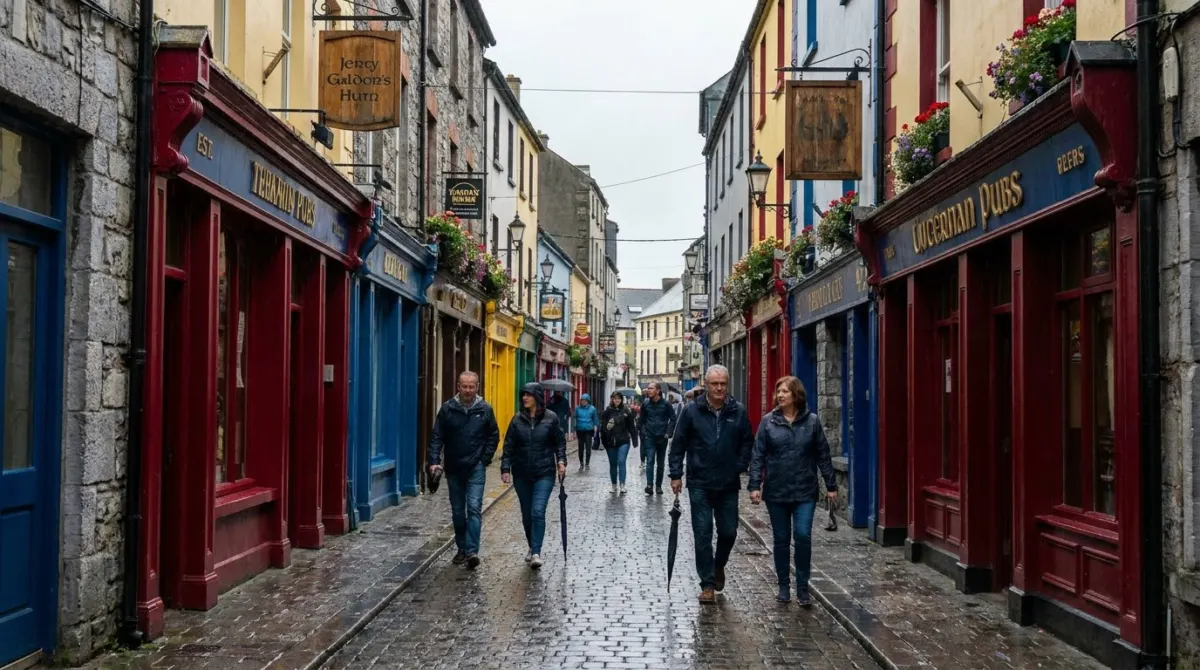
The Latin Quarter runs from the square down Shop Street and Quay Street to the river. Pedestrianised, stone-paved, and the reason people come: buskers, pubs, restaurants, and the Spanish Arch at the bottom.
The Westend is across the Corrib, around Dominick Street. The same kind of bars and food, fewer visitors, more residents.
Salthill is the seaside suburb, west along the bay. A long promenade, a beach, and a view across to County Clare.
Everything above is within half an hour’s walk of everything else. The decision is character, not distance.
The Latin Quarter: the thing you came for, at full volume
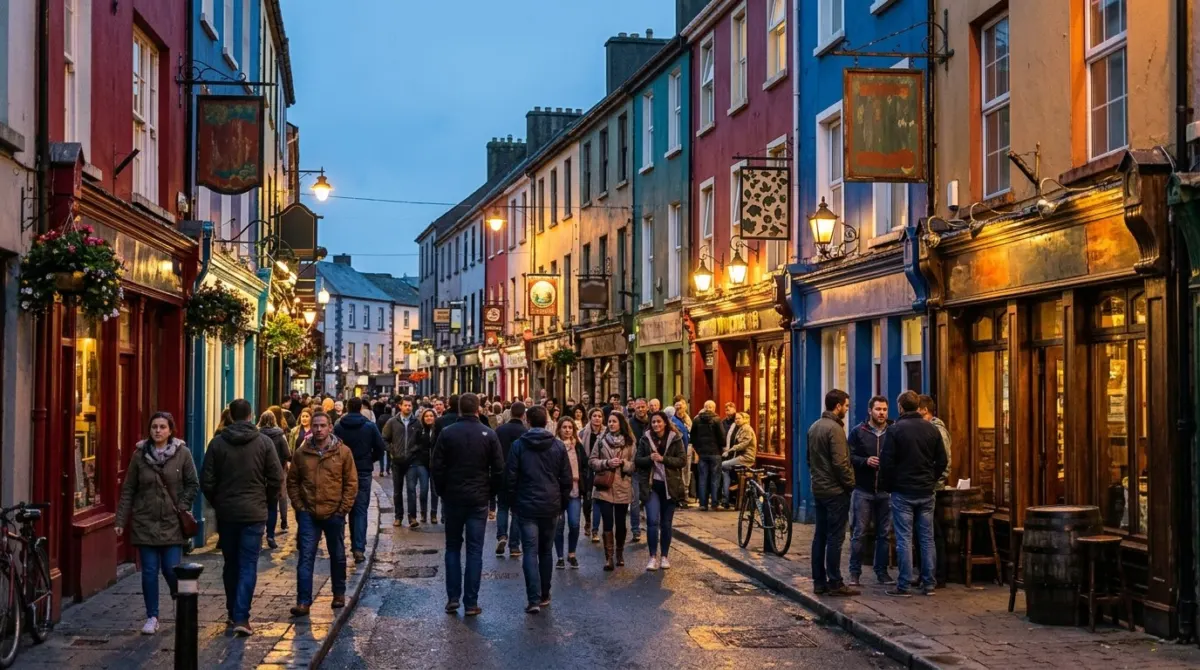
This is the postcard Galway: narrow streets, painted shopfronts, traditional music coming out of several doors at once. Staying in it means you are thirty seconds from all of that.
It also means the music is thirty seconds from you. The pubs run live sessions most nights, the streets are stone and they carry sound, and groups move through them well after closing. Rooms above or beside a pub are loud in a way that no amount of charm compensates for at two in the morning.
The fix is the same as in every city with a nightlife quarter: stay one or two streets back. Around Eyre Square, upper Abbeygate Street or the streets towards the cathedral, you are three minutes’ walk from the sessions and out of earshot of them.
Eyre Square: for anyone taking day trips
If your plan involves Connemara, the Cliffs of Moher, the Burren or the Aran Islands ferry, look at Eyre Square first.
Coach tours for all of those leave from the square or the streets around it, and most start early. The difference between a hotel on the square and one fifteen minutes away is the difference between leaving your room at 8:50 and walking across a cold city at 8:30 with a coffee you did not have time to drink.
The square is also where you arrive: trains from Dublin and buses from everywhere pull into Ceannt Station on its corner.
Salthill: the sea, and the trade you make for it
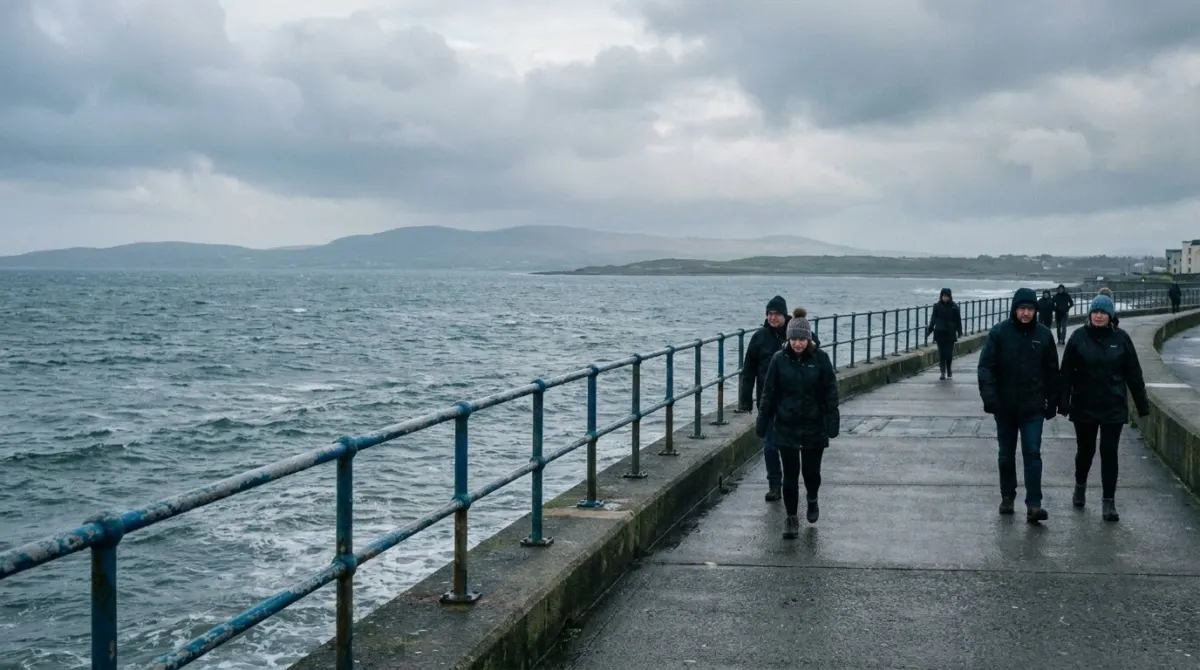
Salthill runs west along the bay from the edge of the city. It has the long promenade that Galway walks on Sunday, a beach, and hotels with water views that the centre cannot offer.
The trade is the walk. From the far end of Salthill to Eyre Square is around half an hour on foot along the shore, or a short bus ride. In the evening that distance decides whether you go into town for dinner or eat where you are.
It suits families, anyone with a car — parking is far easier out here — and anyone who would rather wake up to the bay than to a street.
The Westend: where the city carries on
Cross the Corrib at the Wolfe Tone Bridge and the character changes within a hundred metres. Dominick Street and the lanes around it have the same mix of bars, music and food, with a higher proportion of people who live here.
Accommodation is thinner on this side — more guesthouses and apartments than hotels — and that is part of the appeal. It is ten minutes’ walk from the Latin Quarter, and it is quieter at night without being far from anything.
Driving, and where the car actually goes
If you are touring the west, you will arrive in Galway with a car and immediately have a problem with it.
The centre is medieval in layout and largely pedestrianised. Street parking is scarce and metered; hotel parking in the centre is limited and often charged separately. Salthill and the outer edge are where parking stops being an issue.
The practical approach for a two-night stay is to park once and leave the car there. Galway is a walking city, and both of the big day trips — Connemara and the Cliffs — can be driven or taken as a coach from the square, which removes the parking question entirely for the day.
What a Galway hotel room is like
The building stock explains the pattern. Hotels in the centre are conversions of older buildings on narrow plots, so rooms are small and layouts are odd. The larger, more standard hotels are on the edge of the centre, around the station, and in Salthill.
Guesthouses and B&Bs are a genuine strength here and are often better value than hotels of a similar price, particularly for breakfast. They cluster along the roads out to Salthill and in the residential streets north of the centre.
If you need a lift, a large room or parking, look at the edge rather than the middle.
The weeks when Galway fills completely
Galway is a small city with a large events calendar, and several weeks a year it has no rooms at any price:
- The Galway International Arts Festival in July, when the whole centre becomes a venue.
- The Galway Races in late July and early August, which fill the city and the towns around it.
- The Galway International Oyster Festival in September.
- Bank holiday weekends through the summer, when Dublin comes west.
If your dates fall on one of these, book months ahead or stay in a town outside the city and come in for the day.
How many nights
Two nights covers the city itself comfortably: an evening in the Latin Quarter, a morning walk to the Spanish Arch and the Claddagh, and one day trip. Three nights is the number that stops the day trips competing with each other, because Connemara and the Cliffs of Moher are in opposite directions and each is a full day.
Four nights turns Galway into a base rather than a stop, which is what it is best at. Our Ireland itinerary builds the whole west-coast section around exactly that.
Where not to stay
Two honest exclusions.
Directly above a music pub, unless you intend to be in it until closing. This is the single most common complaint about Galway accommodation and it is entirely avoidable.
The retail parks and roadside hotels on the ring road, which look close on a map and are a bus ride and a dual carriageway from anything worth walking to.
Getting to Galway, and what it means for your first night
Galway has no commercial airport, so everyone arrives by road or rail, and how you arrive should decide where the first night is.
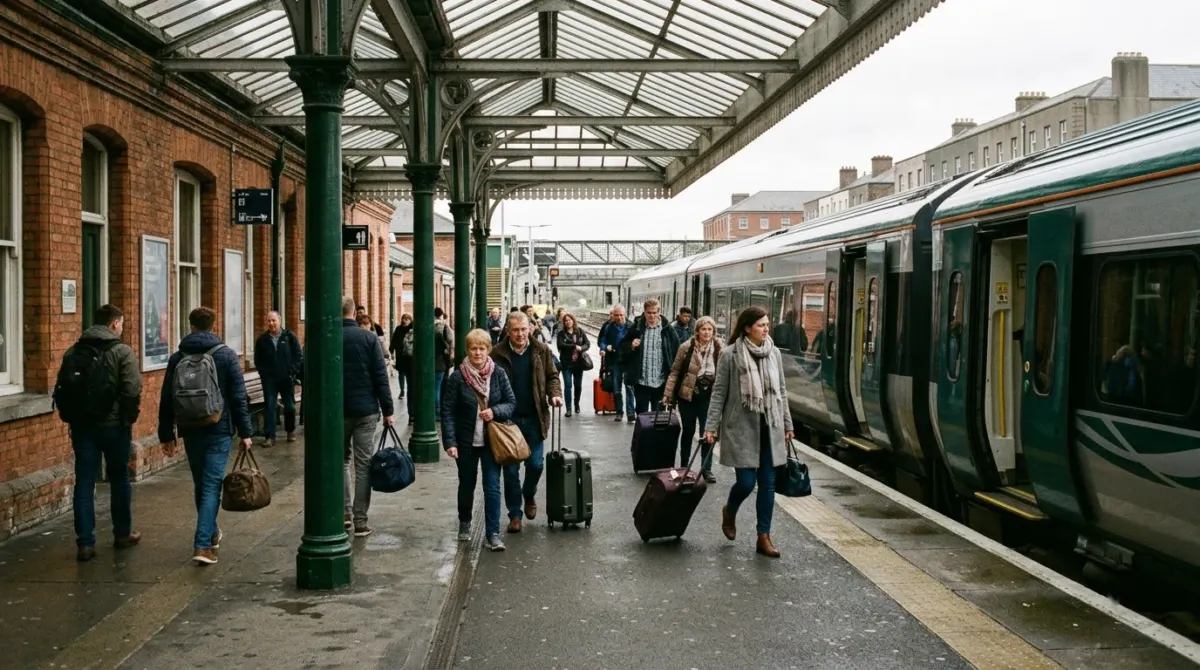
By train from Dublin takes a little over two hours and ends at Ceannt Station on Eyre Square. If you are coming this way, a room within five minutes of the square means you walk to it with your luggage and never think about transport again.
By bus there are more departures than there are trains, including direct coaches from Dublin Airport that skip the city centre entirely — useful if Galway is your first stop rather than Dublin. These also arrive at or beside Eyre Square.
By car from Shannon Airport is around an hour and a half, and from Dublin Airport around two and a half hours, motorway for most of it. Arriving with a car points you towards the edge of the centre or Salthill, where parking is not a daily problem.
How long each day trip really takes
This is the part itineraries understate, and the reason the location of your hotel matters more here than the room does.
The Cliffs of Moher and the Burren is a full day. The cliffs are roughly an hour and a half south of Galway each way, and the Burren, Doolin and the coast road fill what is left. Coach tours leave from the square and run around nine hours door to door.
Connemara and Kylemore Abbey is also a full day, in the opposite direction — north-west through the mountains and the lakes. Similar length, completely different landscape, and the main reason two nights in Galway is tight.
The Aran Islands is the long one. The ferry leaves from Rossaveel, about forty minutes west of the city, and tours include the shuttle out to it. Allow the whole day, and accept that you will see one island rather than three. Staying overnight on Inis Mór is the better version if you have the time.
All three leave early, all three return in the evening, and two of them cannot be combined with anything else the same day.
Staying in Galway, or staying out where the scenery is
There is a real alternative to basing in the city, and for some trips it is the better one.
Doolin, in County Clare, is twenty minutes from the Cliffs of Moher, has traditional music pubs of its own, and is a summer ferry port for the Aran Islands. Staying there lets you reach the cliffs early or late, when the coaches are not there.
Clifden, in the middle of Connemara, puts you inside the landscape instead of driving out to it. It is a small town with a limited number of rooms, and it needs a car.
The honest comparison: the city gives you restaurants, music every night and organised transport. The villages give you the landscape at the hours when it is empty, and a short list of places to eat. A good three-night split is two nights in Galway and one in Doolin or Clifden.
Lifts, family rooms and the limits of old buildings
Three practical constraints follow from the age of the buildings in the centre.
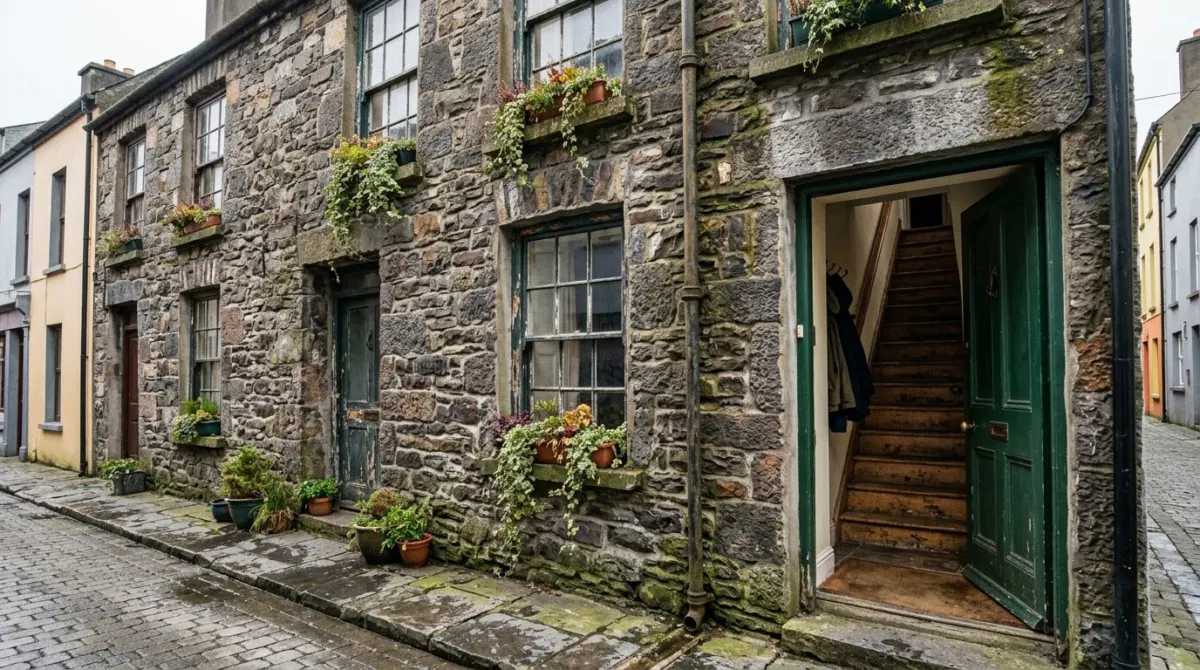
Lifts are not universal in the small central hotels and guesthouses, and where they exist they may not reach every floor. If stairs are a problem, ask the property directly rather than trusting a filter.
Rooms for three or four are scarce, because the rooms themselves are small. Families often do better in an apartment, or in a larger hotel at the edge of the centre or in Salthill.
Parking and a central location rarely come together. Where a hotel in the middle of town has parking, it is usually a handful of spaces that need reserving in advance.
Frequently asked questions
What is the best area to stay in Galway?
A street or two back from the Latin Quarter, within five minutes of Eyre Square. You are beside the pubs and the tour pick-up points without being above a music session. Salthill suits families and drivers, and the Westend across the river is quieter while still being ten minutes' walk from the centre.
Is it noisy staying in the Latin Quarter?
Yes, and that is not a criticism of the hotels. The pubs run live music most nights, the streets are stone and carry sound, and people are out late. Rooms above or beside a pub are loud. Two streets back solves it completely.
Should I stay in Galway city or Salthill?
City for two nights and evenings out; Salthill for the sea, for families, or if you have a car and want easy parking. Salthill is about thirty minutes' walk or a short bus from Eyre Square, which mostly matters after dinner.
Do I need a car in Galway?
Not in the city, which is walkable end to end. A car helps for Connemara and the Burren, but both can also be done as coach day trips from Eyre Square. If you arrive with a car, park once and leave it, and consider staying at the edge of the centre or in Salthill where parking is easier.
How many nights should I spend in Galway?
Two for the city and one day trip. Three if you want both Connemara and the Cliffs of Moher, because they lie in opposite directions and each takes a full day.
When is Galway fully booked?
The Arts Festival in July, the Galway Races in late July and early August, the Oyster Festival in September, and summer bank holiday weekends. On those dates rooms disappear across the whole city.
Keep planning Ireland
- Where to Stay in Kilkenny: On the Mile, or Beside the Station
- Where to Stay in Doolin: Book a Room You Can Walk Home To
- Where to Stay in Belfast: Four Quarters, Four Different Trips
- Where to Stay in Killarney: The Town, or the Lakes
- Where to Stay in Dingle: In Town, or Out Where the View Is
- Where to Stay in Ireland: Pick Three Bases, Not Seven
- Best Hotels in Dublin: What Each Kind of Building Gives You
- Where to Stay in Dublin: The River, the Coach Stop and the Noise
Written and checked by
Triplarks Editorial
An editorial desk, not an invented persona: research, drafting and fact-checking are done by the same small team. Every number here carries the date it was read.