Quick answer where to stay on this route
Three bases in ten days, not six: Dublin for the first two nights, Galway for the west, Killarney for Kerry, plus Kilkenny or Cork at the end. Book the west coast early for June to August.
On this page
- The itinerary at a glance
- Why driving time, not distance, sets the plan
- Days 1 to 3: Dublin
- Day 4: Dublin to Galway, the slow way
- Days 4 to 6: Galway and the west
- Days 7 to 9: Kerry
- Day 10: the south, or back to Dublin
- Adding Northern Ireland
- Where to stay on this route
- What to book before you fly
- The Heritage Card, and whether it pays
- Renting a car, and the insurance question
- When to go
- The 7 day version, day by day
- The 5 day version
- Driving on the left, and the roads nobody warns you about
- Doing this without a car
- What this itinerary leaves out
- Frequently asked questions
Most Ireland itineraries are built from a map, and the map lies. The distances look small — Dublin to Galway is about 200 kilometres, Galway to Killarney about the same — so the itinerary gets six or seven stops in ten days. Then the trip happens, and half of it is spent in the car.
Some links below are affiliate links. We may earn a commission if you book through them, at no extra cost to you. We do not rank hotels, and any prices on the map come live from the booking sites.
The reason is the road network. Ireland’s motorways radiate out from Dublin like spokes: to Belfast, to Galway, to Limerick, to Cork, to Waterford. Travel along one of them and you move quickly. Travel between two places on the west coast and you are on national roads through towns, behind tractors and tour coaches, at an average speed that bears no relation to the number on the map. For a shorter trip, see how to spend three days in Ireland; if Scotland is on the same trip, see our Ireland and Scotland route.
So the honest version of an Ireland itinerary has fewer bases than you expect, and that is the point of this guide.
The itinerary at a glance
| Length | Bases | What it covers |
|---|---|---|
| 5 days | Dublin, Galway | The capital, the Cliffs of Moher, the Burren, Connemara |
| 7 days | Dublin, Galway, Killarney | Adds the Dingle Peninsula or the Ring of Kerry |
| 10 days | Dublin, Galway, Killarney, Kilkenny or Cork | Adds the south coast and the inland heritage towns |
| 14 days | The above plus Belfast and the Causeway Coast | Adds Northern Ireland and the north coast |
Three bases in ten days sounds conservative. It is the version where you see things rather than drive past them.
Where to sleep on this route
Why driving time, not distance, sets the plan
A few patterns are worth knowing before you draw any route:
The motorways go to Dublin, not across the country. Dublin to Galway or Dublin to Cork is fast. Galway to Killarney is not, because there is no motorway joining them.
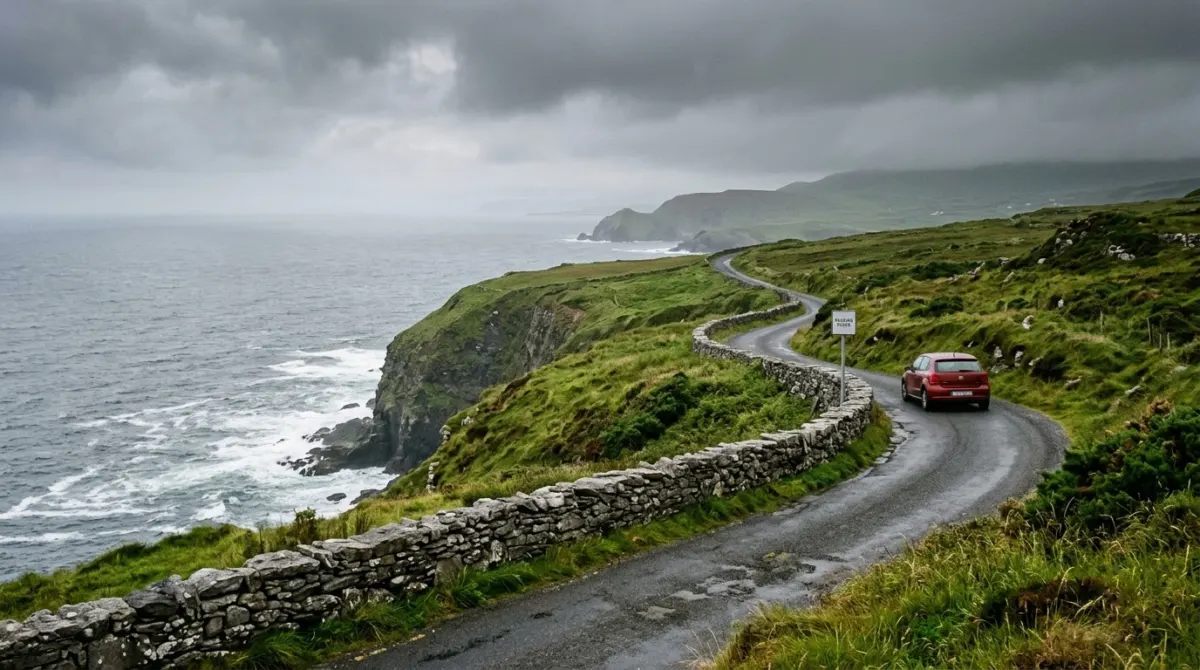
Coastal roads are slow by design. The Wild Atlantic Way follows the shape of the coast. That is the reason to drive it, and it is also why a hundred kilometres can take three hours with stops.
Towns are on the road, not beside it. National roads run through the middle of towns, and each one costs you minutes.
Summer adds coaches. On the narrow loops — the Ring of Kerry, parts of the Dingle Peninsula, the road to the Cliffs of Moher — tour coaches set the pace in high season, and passing places are few.
Plan on roughly two-thirds of the speed your satellite navigation suggests once you leave the motorway network, and the itinerary stops breaking.
Days 1 to 3: Dublin
Start here, because almost every flight does and because Dublin needs two full days rather than one. The Book of Kells and Trinity College, the Georgian squares and a museum on the first day; Kilmainham Gaol or the Guinness Storehouse and an evening in the pubs on the second.
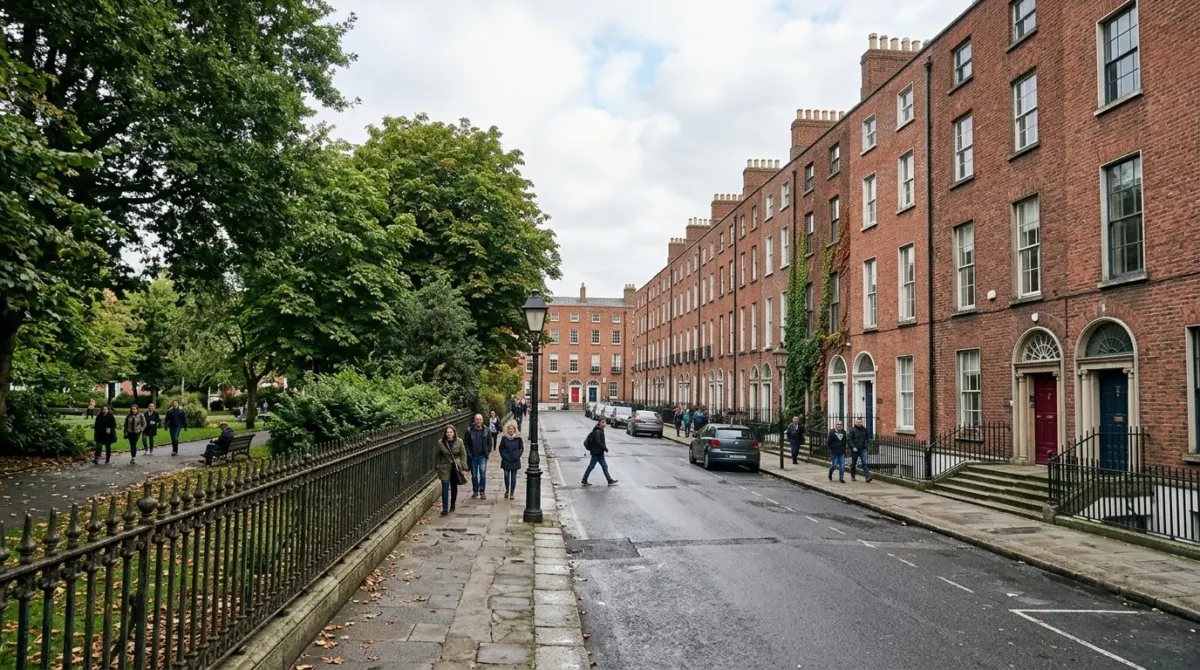
Do not collect the rental car until you leave. Central Dublin parking is expensive and the city is walkable; a car sitting in a hotel garage for two days is money spent to create a problem. Our guide to where to stay in Dublin covers which side of the river to sleep on, and why the airport coach stop matters more than the neighbourhood.
Day 4: Dublin to Galway, the slow way
The motorway does it in a little over two hours. That is the wrong way to spend the day.
Take the longer route through the midlands instead: Clonmacnoise, the monastic site on the Shannon, is roughly halfway and is one of the most complete early Christian sites in the country. Athlone, a few minutes further, has a castle on the river and a pub that claims to be among the oldest in Europe. You arrive in Galway in the late afternoon with the day already spent well.
Days 4 to 6: Galway and the west
Galway is a small city you can walk across in twenty minutes, and it works as a base for two very different day trips.
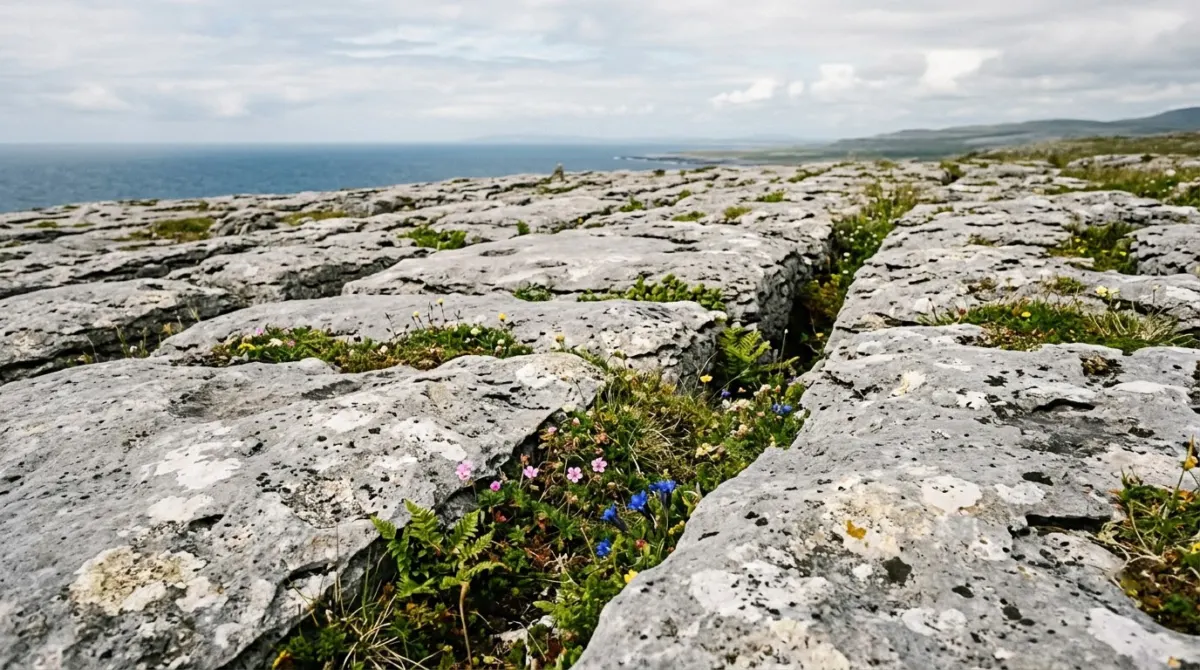
South is the Burren and the Cliffs of Moher: limestone pavement, tiny roads, and the cliffs themselves, which are busiest in the middle of the day and quietest early and late.
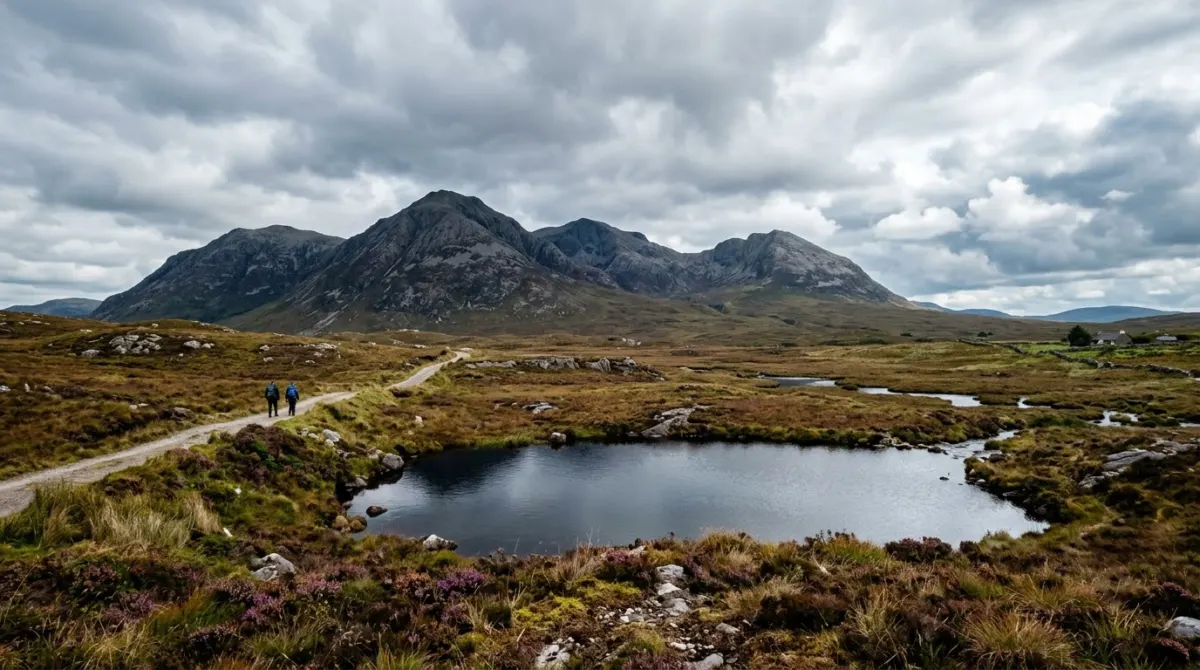
North-west is Connemara: bog, mountains, Kylemore Abbey on its lake, and the coast road out through Clifden. This is a full day and it is the one most people remember.
Two nights is the minimum here. Three turns the day trips from a schedule into a choice.
Map shows live availability and prices. We may earn a commission on bookings made through it, at no extra cost to you.
Days 7 to 9: Kerry
South from Galway the drive is long for the distance, through Limerick and down. Killarney is the usual base, and from it two famous loops leave in opposite directions.
The Ring of Kerry is the larger one, a full day’s circuit with mountains, beaches and villages. The Dingle Peninsula is shorter, narrower and, for many people, better: the Slea Head drive takes half a day and holds more in less distance.
If you have one day, take Dingle. If you have two, take both, and do the Ring on the day the forecast is clearest, because in low cloud the viewpoints give you nothing.
Day 10: the south, or back to Dublin
From Kerry there are two sensible endings. Cork and the south coast — Kinsale, Cobh, the harbour towns — add a day of a different character. Or cut inland through Cashel, where the Rock of Cashel stands over the plain, and on to Kilkenny, which is the most walkable medieval town in the country and an easy final night before the airport.
Adding Northern Ireland
With fourteen days, the north is worth the time. Belfast is two hours from Dublin on the motorway, and from Belfast the Causeway Coast — the Giant’s Causeway, the rope bridge, the cliff road — is a day trip or an overnight.
Two practical notes. Northern Ireland is part of the United Kingdom, so the currency changes from the euro to the pound, and your phone may change network. Check that your rental car agreement allows cross-border driving; most do, but it is stated in the contract rather than assumed.
Where to stay on this route
Four bases cover the whole loop:
- Dublin — south of the river for a first visit.
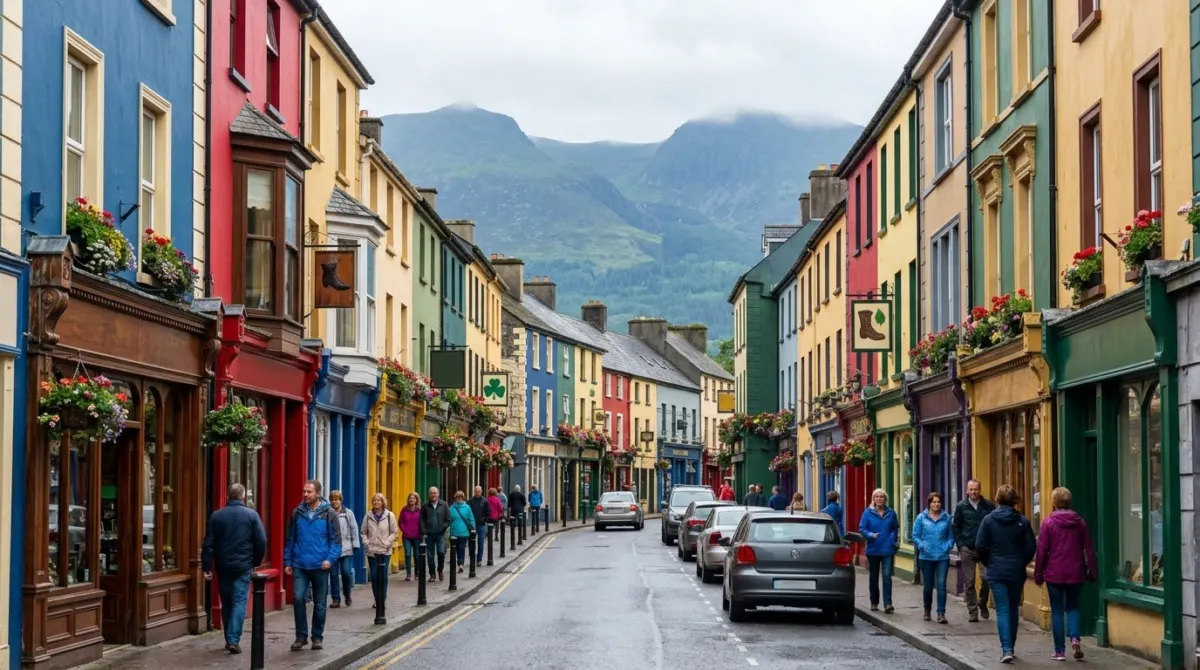
- Galway — in or beside the small centre, so the evening is on foot.
- Killarney — the town itself for restaurants and tour pick-ups, or a quieter place outside it if you have the car.
- Kilkenny or Cork — for the last night, depending on which ending you take.
Book the west coast well ahead for June, July and August. Supply in Galway and Killarney is finite and the season is short.
What to book before you fly
Most of this route needs no reservations beyond beds and a car. A handful of things do, and they are the ones that go wrong when you turn up on the day.
Kilmainham Gaol. Entry is by guided tour only and must be pre-booked, and the museum’s own website is the only valid place to buy tickets; tickets bought through resellers are not accepted. Tours are released in advance, and extra tickets and cancellations go online on the morning of each day, so if your date shows as full, check again then.
The Cliffs of Moher. The visitor centre sells tickets online and prices them lower outside the peak hours. The cliffs face due west, which is one more reason to come in the evening rather than at midday.
Skellig Michael. If you are in Kerry during the summer landing season, the island monastery off the Iveragh Peninsula is reached only with permitted boat operators from Portmagee, Valentia, Ballinskelligs or Derrynane. Boats depend on the weather, children under twelve cannot land, and the climb is 618 steep, uneven steps. Book it, but treat it as a day you may lose rather than one the rest of the trip depends on.
The Heritage Card, and whether it pays
Many sites on this route are run by the Office of Public Works: Kilmainham Gaol and Dublin Castle in Dublin, Clonmacnoise on the drive west, Ross Castle in Killarney, and the Rock of Cashel and Kilkenny Castle on the way back. The Glendalough visitor centre joins the list if you add Wicklow.
The OPW Heritage Card gives free admission to all its fee-paying sites for a year from first use. It can be bought online before the trip or at any fee-paying OPW site, and it has to be signed before the first visit. Whether it pays depends on how many of these sites you will actually enter, so count your stops and compare the card with the individual admissions before buying.
Two limits are worth knowing. The card does not give fast-track entry or guarantee a place at busy sites in high season, so Kilmainham still has to be booked; some sites offer a Heritage Card option when you reserve online. And parking is charged separately. The Cliffs of Moher and the Guinness Storehouse are not OPW sites, so the card does not cover them.
Renting a car, and the insurance question
You need a car for this route. Public transport joins the cities competently and reaches the peninsulas poorly.
The part that catches people out is insurance. Car hire in Ireland has its own rules, and credit card collision cover that works elsewhere in Europe is frequently not accepted here; many visitors end up buying the rental company’s cover at the desk regardless of what their card provides. Read the excess and the cover terms before you arrive rather than at the counter, and budget for the possibility.
Also: book an automatic early if you need one. Most of the fleet is manual, and automatics sell out first in summer.
When to go
May, June and September are the best balance of daylight and crowds. July and August have the longest evenings and the heaviest traffic on exactly the narrow roads this route uses. Winter days are short enough to cut your driving window in half, which changes how many bases are realistic.
Rain is not seasonal. It is simply part of the trip, and the itinerary should assume it rather than plan around it.
The 7 day version, day by day
If you have a week rather than ten days, cut the south and keep the west:
- Days 1 and 2: Dublin, on foot, no car.
- Day 3: collect the car, drive to Galway through Clonmacnoise and Athlone.
- Day 4: the Burren and the Cliffs of Moher, early or late to avoid the middle of the day.
- Day 5: Connemara and Kylemore, a full loop from Galway.
- Day 6: drive south to Killarney, and use the afternoon for Muckross and the national park rather than starting a loop.
- Day 7: the Dingle Peninsula, then back to Dublin or out of Shannon or Cork.
Flying into Dublin and out of Shannon or Cork removes a four-hour drive from the end of this trip. It is the single most useful booking decision on a seven-day route.
The 5 day version
Two bases, and no attempt at Kerry: two nights in Dublin, then three in Galway, using them for the Cliffs of Moher and the Burren on one day and Connemara on another. The country you miss is real, but the trip works.
What does not work in five days is Dublin plus Kerry plus Galway. That is three long drives in five mornings, and the itinerary spends more time moving than stopping.
Driving on the left, and the roads nobody warns you about
Ireland drives on the left, and most visitors adapt within a day. The roads themselves take longer to get used to.
Regional and local roads are narrow. On the peninsulas, two cars meeting means one reverses to a wider spot. Hedges and stone walls come to the edge of the tarmac, so there is no margin on either side.
Speed limits are optimistic. Since February 2025 the default limit on rural local roads is 60 kilometres per hour, and on a single-track lane that is the legal maximum, not a suggested speed.
Animals use the road. Sheep on open mountain sections are normal rather than unusual.
Rural junctions are often unmarked. Signposts may give Irish and English names, and the Irish form may be the only one on some signs in Gaeltacht areas, including parts of Connemara and west Kerry.
None of this is dangerous at a sensible pace. All of it explains why the driving time is longer than the map suggests.
Doing this without a car
It can be done, with a different shape. Trains link Dublin to Galway, Limerick, Cork and Belfast quickly and comfortably, and Killarney has a station. What trains and buses do not do is the coastal loops, which is where the day tours come in: full-day coach trips run from Galway to Connemara and the Cliffs of Moher, and from Killarney around the Ring of Kerry.
The result is a trip built on three city bases with organised days out from each. You lose the ability to stop where you like, and you gain not having to drive the narrow roads at all.
What this itinerary leaves out
Said plainly, because every honest route leaves something:
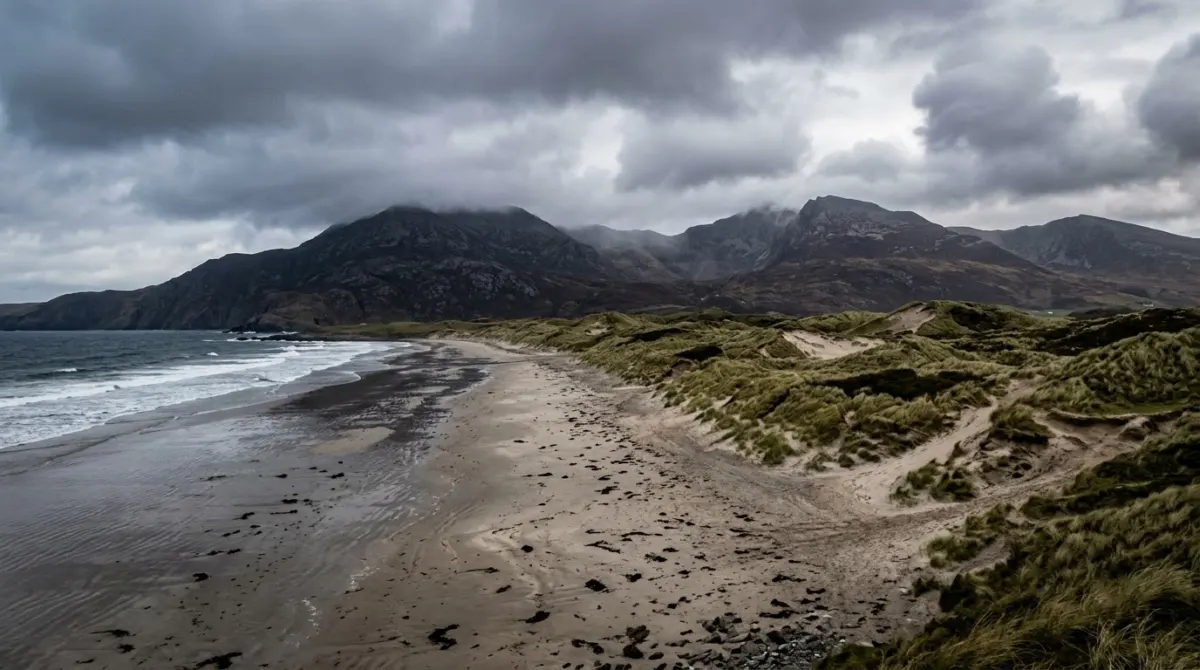
Donegal and the north-west — wilder than Kerry and far less visited, and too far from this loop to add without two more days.
The Aran Islands — a ferry from Galway and a day each way in practice, more if you stay overnight, which is the better way to do it.
Wicklow — Glendalough and the mountains are an hour from Dublin and work as a day trip at either end of the trip, if you have the car that day.
The midlands and the inland lakes — which most itineraries skip entirely, and which this one only clips at Clonmacnoise.
Frequently asked questions
How many days do you need in Ireland?
Seven is the working minimum for Dublin plus the west coast, and ten is the length that stops feeling rushed. Five days works if you accept two bases, Dublin and Galway. Fourteen lets you add Northern Ireland and the Causeway Coast without adding pressure.
Is 10 days in Ireland enough to see the whole country?
No, and trying is the most common mistake. Ten days covers Dublin, the west around Galway, Kerry and one ending in the south. The north-west, the midlands and most of the north are a separate trip.
Do you need a car in Ireland?
For this route, yes. Trains and buses link the cities well but reach the peninsulas and the coastal roads poorly, and those are the reason most people come. Pick the car up when you leave Dublin, not when you arrive.
Should I drive the Ring of Kerry or the Dingle Peninsula?
With one day, Dingle: the Slea Head drive packs more into half the distance. With two days, do both, and save the Ring of Kerry for the clearer forecast, because its viewpoints are worthless in low cloud.
How long does it really take to drive across Ireland?
On the motorways that radiate from Dublin, about as long as the map suggests. Between west-coast towns, assume roughly two-thirds of the speed your navigation predicts, because the roads are national routes running through towns, with coaches on them in summer.
What is the best month for an Ireland road trip?
May, June or September. The days are long enough for the driving, and the narrow coastal roads are not yet at their summer worst. Rain should be expected in any month.
Keep planning Ireland
- Where to Stay in Kilkenny: On the Mile, or Beside the Station
- Where to Stay in Doolin: Book a Room You Can Walk Home To
- Where to Stay in Belfast: Four Quarters, Four Different Trips
- Where to Stay in Killarney: The Town, or the Lakes
- Where to Stay in Dingle: In Town, or Out Where the View Is
- Where to Stay in Ireland: Pick Three Bases, Not Seven
- Where to Stay in Galway: The Noise Decides It, Not the Distance
- Best Hotels in Dublin: What Each Kind of Building Gives You
Written and checked by
Triplarks Editorial
An editorial desk, not an invented persona: research, drafting and fact-checking are done by the same small team. Every number here carries the date it was read.