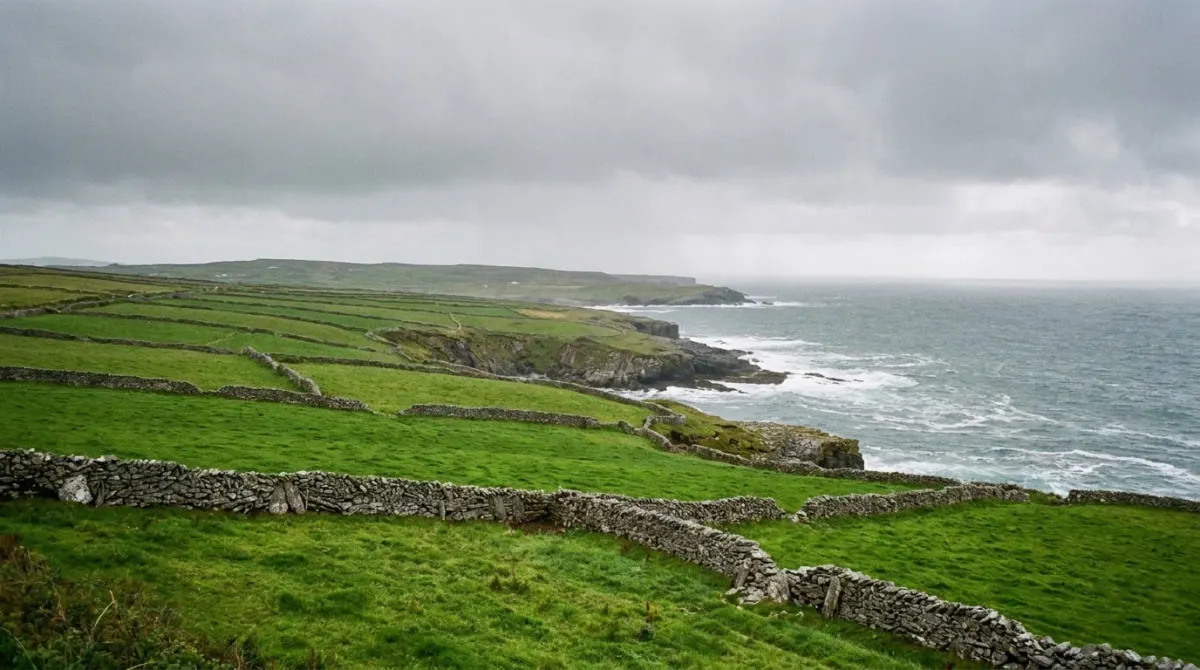
Quick answer
Four days means one base, not two. Dublin for the city and the east, Galway for the Cliffs of Moher and Connemara, or Killarney for Kerry. Book all four nights before you leave — a trip this short has no room to improvise.
On this page
- 4 day Ireland itinerary: pick your four days
- Route 1 — Dublin and the east, no car
- Route 2 — the west, from Shannon
- Route 3 — Kerry, from Cork
- Planning the two day trips on Route 1
- Swapping a day on Route 2 for the Aran Islands
- Killarney National Park on Route 3, in more detail
- A fourth option: Belfast and the Causeway Coast
- What will not fit in four days
- If you must have Dublin and the west
- Routes 2 and 3 without a car
- Driving, if you are driving
- When to go on a short trip
- Where to go when it rains on each route
- What to book before you fly
- Is the OPW Heritage Card worth it on four days?
- How to choose between the three routes
- What four days feels like on the ground
- Where to stay on each route
- Is four days worth the flight?
- Arriving and leaving on four days
- What four days costs in effort
- The short version
- Frequently asked questions
Four days in Ireland buys you one region, properly. It does not buy you the country, and the trips that try end up as three long drives with sightseeing squeezed in between.
Some links below are affiliate links. We may earn a commission if you book through them, at no extra cost to you. We do not rank hotels, and any prices on the map come live from the booking sites.
So this guide gives you three separate four-day routes — Dublin and the east, the west from Shannon, and Kerry from Cork — and tells you which to pick. For longer trips, our 5 day and 7 day Ireland itineraries add the second and third base.
4 day Ireland itinerary: pick your four days
| Route | Fly into | Best for |
|---|---|---|
| Dublin and the east | Dublin | First trip, no driving, city and history |
| The west from Shannon | Shannon | Cliffs of Moher, the Burren, Connemara |
| Kerry from Cork | Cork or Shannon | Landscape and coastal driving |
All three assume you arrive on day one with most of the day left and leave on day four. If your flights are worse than that, treat it as three days.
Where to sleep on this route
Route 1 — Dublin and the east, no car
Day 1. Arrive and walk: Trinity College and the Book of Kells, Grafton Street, St Stephen’s Green, the Georgian squares. Evening off Temple Bar rather than in it.
Day 2. Kilmainham Gaol in the morning, booked before you flew, then the Guinness Storehouse. Traditional music in the evening around Capel Street or Smithfield.
Day 3. Out of the city. Glendalough in the Wicklow Mountains is about an hour south — a sixth-century monastic site in a glacial valley with two lakes and a round tower. Coach tours run daily if you have no car.
Day 4. The coast at Howth on the DART, or Brú na Bóinne to the north, where the passage tombs at Newgrange and Knowth were built around 3200 BC — older than the pyramids at Giza. Then fly out.
This is the only one of the three routes that works entirely without a car.
Map shows live availability and prices. We may earn a commission on bookings made through it, at no extra cost to you.
Route 2 — the west, from Shannon
Day 1. Land at Shannon, collect the car, drive to Galway in about an hour and a half. Evening in the Latin Quarter.
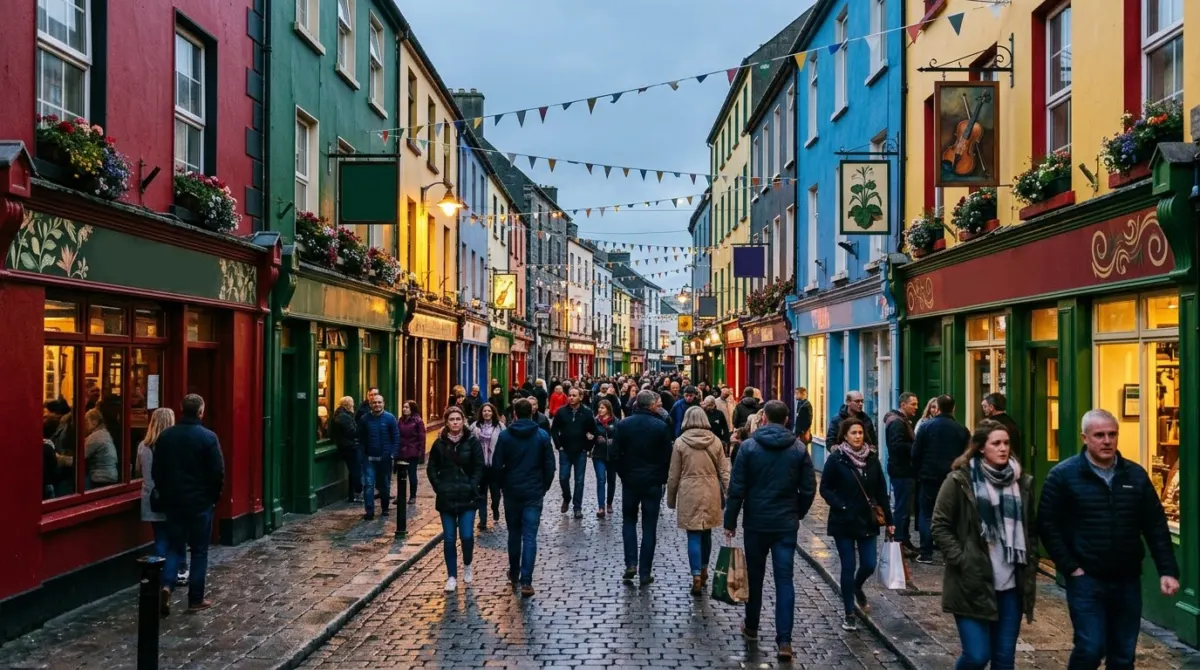
Day 2. The Cliffs of Moher and the Burren, with lunch in Doolin. Early or late at the cliffs; the coaches fill the middle of the day.
Book the Cliffs of Moher visitor experience online before you go. The operator prices tickets bought ahead lower than turning up, and a booked time is a useful discipline: it is the easiest way to make sure you arrive early or late rather than with the midday coaches. The cliff-top coastal walk beyond the visitor centre has its own safety notice on the official site, so read it before setting out along the edge.
Day 3. Connemara — Kylemore Abbey, Killary Harbour and the coast road through Clifden. A full day.
Day 4. Galway in the morning, then back to Shannon.
One base, three days of landscape, and no transfer days at all. For most people this is the best four days in Ireland.
Route 3 — Kerry, from Cork
Day 1. Land at Cork or Shannon and drive to Killarney or Kenmare.
Day 2. Killarney National Park: Muckross House, Torc Waterfall, the lakes, and the Gap of Dunloe by boat and on foot if the weather holds.
Day 3. The Ring of Kerry, counter-clockwise, leaving by half past eight.
Day 4. The Dingle Peninsula and Slea Head on the way out, or Kinsale and the harbour if you are flying from Cork.
Planning the two day trips on Route 1
Route 1 depends on two days out of the city, and they need opposite kinds of preparation.
Glendalough needs almost none. The monastic site is open all year except the week of Christmas, and the visitor centre estimates an hour to an hour and a half for the exhibition and the ruins. There are two car parks, one at the visitor centre and one at the Upper Lake. The Upper Lake is where St Kevin’s Bed is, and it is where the walking trails head into the valley. If you take a coach tour, check how long it stops. The ruins fill an hour, and the lakes need longer.
Brú na Bóinne needs a ticket before anything else. You cannot drive to Newgrange and walk in. Every visit starts at the visitor centre, on a guided tour, with a shuttle bus out to the tombs. Advance tickets are essential, and every visitor, including children, needs a ticket. From April to the start of November, tickets go on sale 30 days ahead, at midnight Irish time. In November, December, January and February they are released only seven days ahead.
So build Route 1 around the Brú na Bóinne slot. Then put Glendalough on whichever remaining day has the better forecast, because it is the one that suffers in the rain.
Swapping a day on Route 2 for the Aran Islands
Route 2 spends its third day in Connemara. If you would rather have an island, swap it for Inis Mór, the largest of the Aran Islands. It is the only change to the four routes that is worth a whole day.
Ferries sail all year from Rossaveal in Connemara, and the crossing takes about forty minutes. A daily shuttle bus from Galway city connects with the sailings, so you do not need the car. In season there are also sailings direct from Galway city, which take about an hour and a half.
The reason to go is Dún Aonghasa, a great stone fort about seven kilometres west of the harbour at Kilronan, built on the edge of a sheer sea cliff. The visitor centre is at the start of a one-kilometre path over rough rock to the fort. At the top there is no fence or barrier at the edge of an 87-metre drop. Wear proper shoes and take care on the way down. The fort is open all year, with shorter hours in winter.
Seven kilometres each way is too far to walk comfortably on a day trip, so plan on wheels from the pier, and leave enough time for the climb to the fort and the last ferry back.
Killarney National Park on Route 3, in more detail
Day two of Route 3 is a single line in the plan above. In practice it is the richest day of the four, because the park starts at the edge of Killarney town.
It was Ireland’s first national park, created when the Bourn Vincent Memorial Park was given to the state in 1932. UNESCO now lists it as a Biosphere Reserve, and its red deer are the last native herd in Ireland.
Ross Castle, about two kilometres from town, is the first stop. You can only see inside on a guided tour, on a first-come, first-served basis, with a maximum of fifteen people per tour. It is open from early March to early November, so on a winter trip you will see it from the outside only.
Muckross House and gardens are the park’s best-known house, with the Traditional Farms beside them. Torc Waterfall is a short walk from the lower car park; the small car park closest to it is kept for visitors with limited mobility.
The Gap of Dunloe is the mountain pass to the west. Lord Brandon’s Cottage, an open-air café, sits at its southern end near the Black Valley, and is where the walk through the pass and the boat trip back across the lakes meet. Save the Gap for the best-weather day of your four, because it is the one that rewards clear skies.
A fourth option: Belfast and the Causeway Coast
The three routes above stay in the Republic. If the thing you want from Ireland is the north coast, there is a fourth way to spend four days. It does not start in Dublin with a long drive north. It starts with a base in Belfast, or with a flight into Belfast if one suits you.
Day 1. Arrive and spend the afternoon in Belfast. The city centre and the old shipyard district where the Titanic was built are both on foot or a short ride from the centre.
Day 2. The Causeway Coast. You can walk to the stones at the Giant’s Causeway for free. The National Trust’s Visitor Experience ticket covers what the free walk does not: reserved parking on site, the exhibition, audio guides in eleven languages and an hourly guided tour. The site has four marked trails over about five kilometres of cliff and shore. Carrick-a-Rede, the rope bridge to a small island, is seven miles along the coast. Advance tickets are essential, and the bridge is about a kilometre’s walk from the car park, with steps and uneven ground.
Day 3. The Glens of Antrim and the coast road south, or a slower second day on the Causeway Coast if the weather took the first one.
Day 4. Belfast in the morning, then out.
Two practical points. Northern Ireland is part of the United Kingdom, so prices are in pounds sterling. Most visitors who are not British or Irish citizens now need a UK Electronic Travel Authorisation. That includes visitors crossing the land border from the Republic, even though nobody checks at the border itself. Apply before you travel.
What will not fit in four days
Said plainly, because this is where four-day plans fail.
Dublin and the Cliffs of Moher. It is about three hours of driving each way, sold as a long coach day. Most of the day is the road.
Dublin and Kerry. Four hours each way. That is two of your four days.
Dublin and Belfast and the Causeway. Belfast alone is two hours each way; the Causeway is another hour beyond it.
Two bases. On four days, one transfer costs you a quarter of the trip.
If you must have Dublin and the west
There is one version that works, and it depends on an open-jaw flight: two nights in Dublin, then the train to Galway on the morning of day three, two nights there, and fly home from Shannon.
The train takes about two and a half hours city centre to city centre, which is far less painful than the same journey by car with a pick-up and drop-off. From Galway, day tours cover the Cliffs of Moher or Connemara.
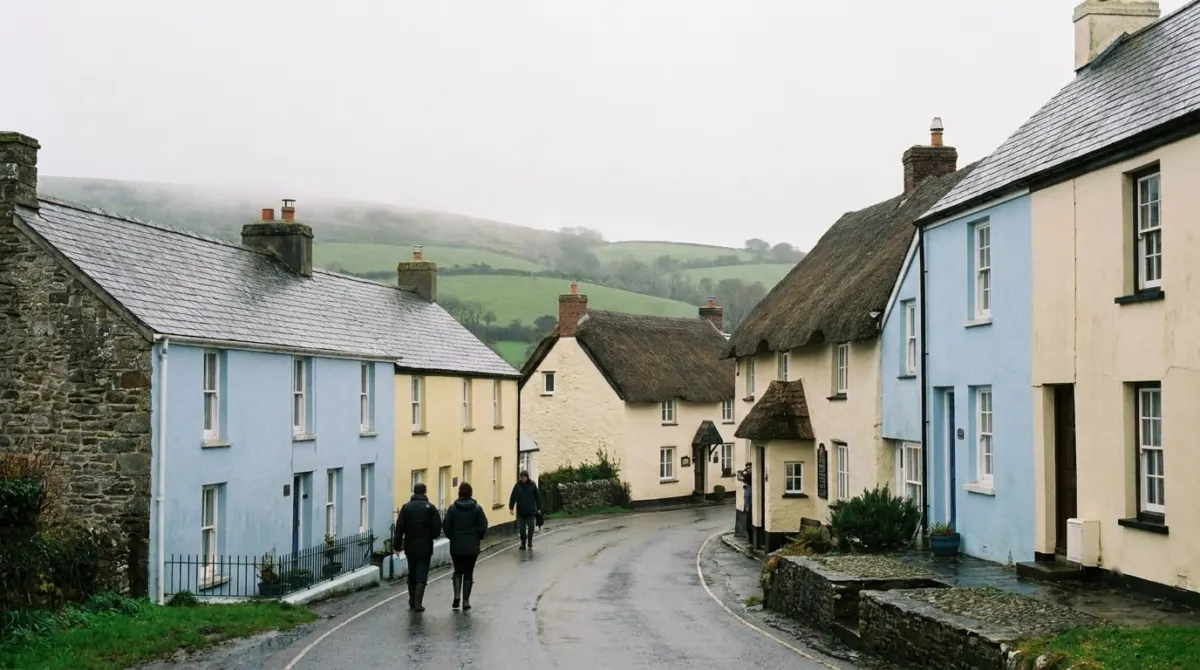
Routes 2 and 3 without a car
Route 1 is the only route designed for no car, but the other two can be done without one, as long as you accept organized tours.
Route 2 by public transport. The train from Dublin Heuston to Galway takes about two and a half hours. From Galway, day tours to the Cliffs of Moher and the Burren and to Connemara leave from near Eyre Square, and the Aran Islands ferry has its own shuttle bus from the city. That covers the whole route except a fly-in at Shannon.
Route 3 by public transport. Killarney has a railway station in the town. Many trains from Dublin need a change at Mallow, so check the timetable before you book a day around it. Once you are in Killarney, the national park starts at the edge of town and can be explored on foot or by bike. The Ring of Kerry and Dingle are covered by coach tours that leave from the town.
What you lose without a car is the timing. Coach tours reach the Cliffs of Moher in the middle of the day, which is exactly when the plan above tells you to avoid them. If the timing matters more to you than the driving bothers you, hire the car.
Driving, if you are driving
Ireland drives on the left. On a four-day trip you have no spare day to recover from a bad start, so collect the car mid-morning rather than at dawn, take the motorway first if there is one, and do not plan to arrive anywhere unfamiliar after dark.
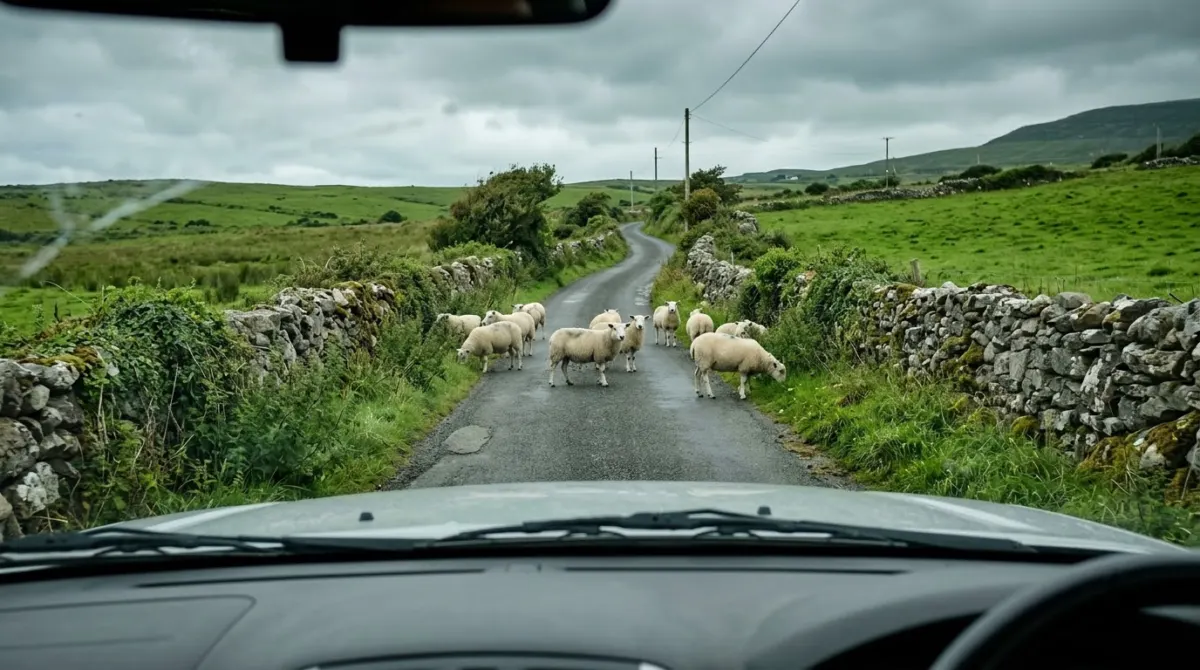
Off the motorway, allow about two-thirds of the speed your navigation app predicts. Regional roads are narrow with stone walls at the edge and no verge.
When to go on a short trip
Season matters more on four days than on fourteen, because one wet day is a quarter of the trip.
May, June and September give long days and manageable crowds. July and August have the best daylight and the worst traffic at the Cliffs of Moher. November to February leaves about eight hours of light, which on routes 2 and 3 means dropping a day’s driving.
There is no dry season. Pack for rain in any month.
Where to go when it rains on each route
On four days you cannot wait out a wet day, so it helps to know each route’s indoor fallback before you arrive.
Route 1. Dublin is the easiest place in Ireland to be rained on. The National Museum on Kildare Street, the National Gallery and the Chester Beatty Library are all free and all genuinely worth the time. Swap Glendalough for the museums and keep the coast for a dry morning.
Route 2. The Galway City Museum beside the Spanish Arch is free and open from Tuesday to Saturday. The Cliffs of Moher in low cloud are not worth the drive, because you can see nothing from the edge. If the forecast clears in the afternoon, go late.
Route 3. Muckross House is the indoor anchor, and Ross Castle’s guided tour works in any weather during its season. A wet Ring of Kerry is a long drive in cloud, so if one day of the four looks bad, give it to the park and save the Ring for the clearer day.
What to book before you fly
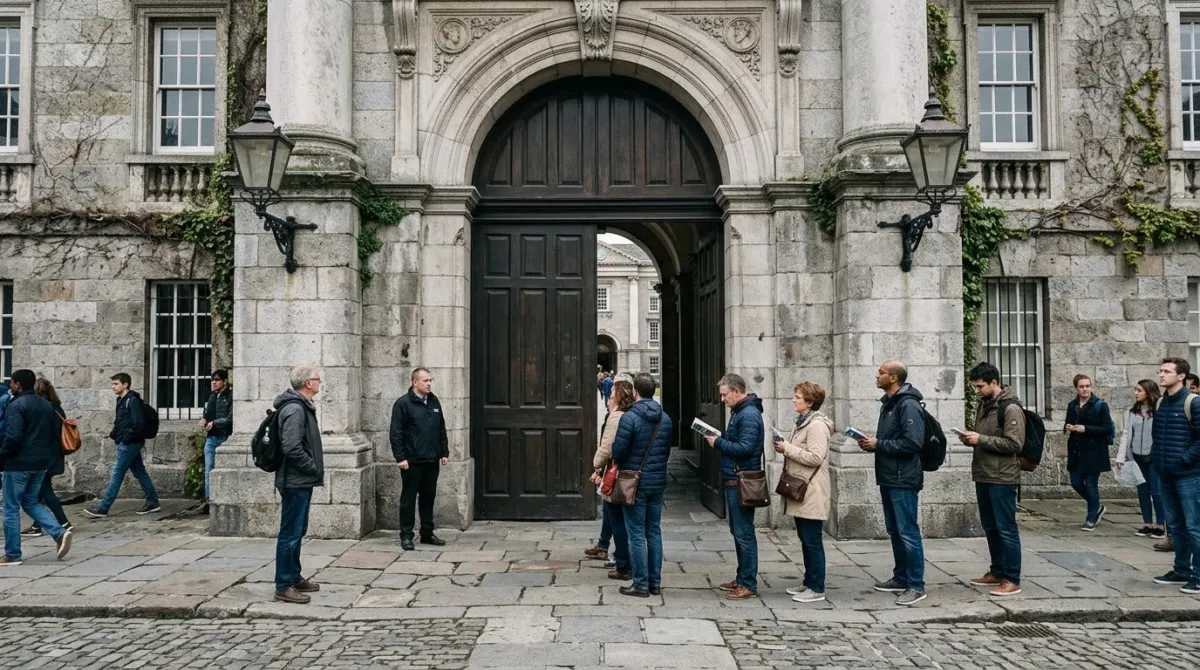
- Kilmainham Gaol, if Dublin is in your plan — it sells out weeks ahead.
- The Book of Kells, timed entry.
- Your accommodation, all of it. Four days has no room to improvise.
- An automatic car, if you need one. Manual is the default here.
On the northern option, add three more: the Carrick-a-Rede rope bridge, where advance tickets are essential; the Giant’s Causeway Visitor Experience, if you want the parking and the tour; and a UK Electronic Travel Authorisation for anyone in your group who is not a British or Irish citizen. On Route 1, add the Brú na Bóinne tour, which goes on sale 30 days ahead in season.
Is the OPW Heritage Card worth it on four days?
The Office of Public Works runs many of the state’s heritage sites, and its Heritage Card gives free entry to all of the fee-paying ones for a year from first use. On a short trip, whether it pays off depends almost entirely on which route you take.
Route 1 is where it earns its place. Kilmainham Gaol, Dublin Castle, the Glendalough Visitor Centre and the Brú na Bóinne Visitor Centre are all on the list. Four paid OPW sites in four days is the pattern the card is built for.
Routes 2 and 3 use it less. The Cliffs of Moher, Kylemore Abbey and Muckross House are run by other bodies, so the card does not cover the biggest sights in the west. Check the current list against your own plan before you buy.
Three conditions catch people out. The card does not guarantee entry or give fast-track access, so Kilmainham and Brú na Bóinne still need their slots booked; some sites’ ticketing systems have a Heritage Card option. Online sales to the United States have been suspended, so visitors from there buy the card at the first fee-paying OPW site they reach. And it is for individual travellers, not organized groups.
How to choose between the three routes
Work backwards from what you want to remember.
If it is the landscape — cliffs, bog, mountains and empty roads — take route 2 or route 3. Both put you in it on the afternoon you land, and neither has a transfer day.
If it is the history — the 1916 Rising, the Georgian city, the monastic sites — take route 1. Dublin holds more of that in twenty-five walkable minutes than the rest of the country holds in a week.
If you are not confident driving on the left, route 1 removes the question entirely, and it is the only one of the three that does.
If flights decide it, let them. Four days is short enough that a convenient flight into Shannon or Cork is worth more than a preference about which region you see.
What four days feels like on the ground
Three things surprise people on a first short trip.
Distances are short and slow. Galway to the Cliffs of Moher is about 70 kilometres and takes an hour and a half with the coast road and the villages.
The weather changes within the hour rather than within the day, which means a wet morning is not a wet day and a plan built around one viewpoint is fragile.
Towns close earlier than you expect outside the cities, particularly for food in the shoulder season. Eat before nine, or check in advance.
Where to stay on each route
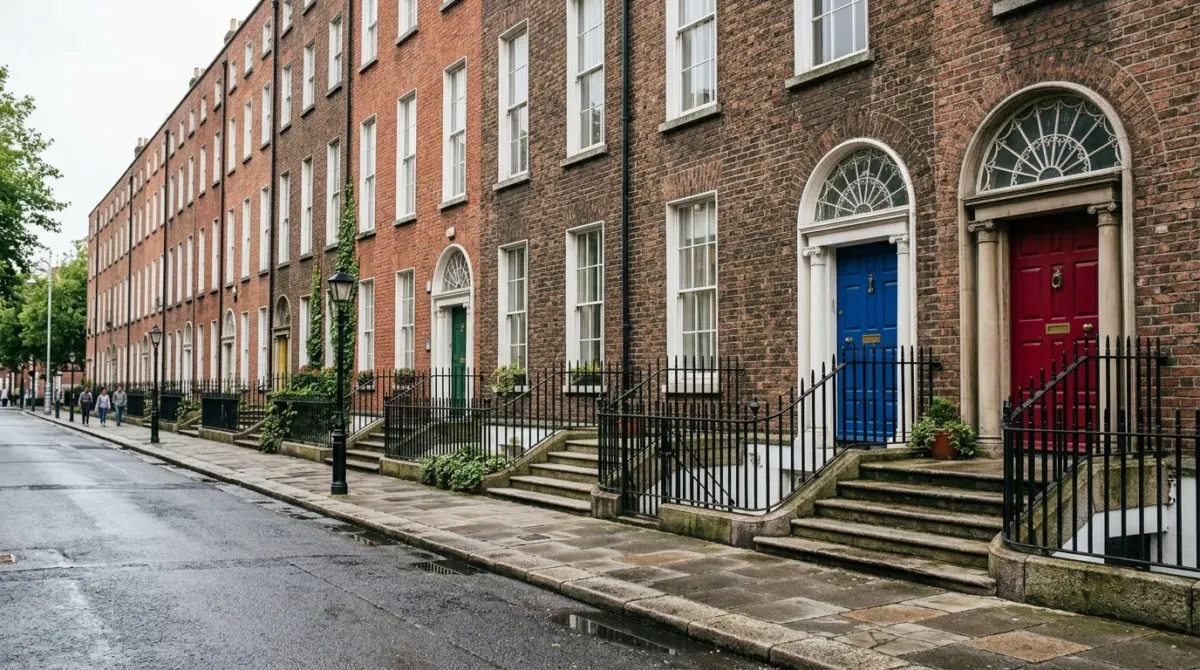
Route 1: one base in Dublin, between the Liffey and St Stephen’s Green, which puts the whole city on foot. See where to stay in Dublin.
Route 2: one base in Galway, a street back from the Latin Quarter and near Eyre Square where the day tours leave. See where to stay in Galway.
Route 3: Killarney for tours and transport, or Kenmare for a quieter town — where to stay in Killarney works through the difference.
For the northern option, one base in Belfast works for all four days, because the Causeway Coast is a day trip from the city. Our guide to where to stay in Belfast covers which part of the city suits a car.
In all three cases the point is the same: one base, no transfer day, and a room you do not have to leave at eleven.
Is four days worth the flight?
From within Europe, yes. From further away it depends on what else the trip includes, because two of your four days are shaped by long-haul flights and the time change.
If Ireland is a single stop on a longer journey, four days in one region is a real visit. If it is the whole purpose of a long-haul trip, the honest answer is that seven days is the length that justifies the flight — our 7 day Ireland itinerary is that version.
Arriving and leaving on four days
On a short trip the flights shape the itinerary more than the itinerary shapes the flights, so book them with the route in mind.
A morning arrival on day one gives you most of a day; an evening arrival turns four days into three. The same applies in reverse: an early departure on day four means day four does not exist. If the choice is between a cheaper flight and a usable day, the usable day is worth more on a trip this short.
For routes 2 and 3, flying into Shannon or Cork rather than Dublin saves two or three hours of driving at each end, which on four days is the difference between a trip and a transfer.
What four days costs in effort
One practical warning. A four-day trip with a car means collecting and returning a rental, learning to drive on the left, and navigating unfamiliar roads, all inside a window that leaves no margin.
If any of that sounds like more friction than you want, route 1 removes it entirely, and the train-to-Galway variant removes most of it while still reaching the west.
The short version
Four days is one region. Dublin and the east if you want history and no car; Galway and Clare from Shannon if you want the landscape; Kerry from Cork if you want the coastal driving. Pick the one your flights favour, book all four nights before you leave, and resist the second base — on four days a single transfer costs a quarter of the trip.
Frequently asked questions
Is 4 days enough for Ireland?
Enough for one region done properly — Dublin and the east, the west from Shannon, or Kerry from Cork. It is not enough for the country, and adding a second base costs a quarter of the trip.
What is the best 4 day Ireland itinerary?
For most people, the west from Shannon: one base in Galway, with the Cliffs of Moher and the Burren on one day and Connemara on another. No transfer days, and the landscape people come for.
Can you visit the Cliffs of Moher from Dublin in 4 days?
You can, as a long coach day of about three hours' driving each way, and most of that day is the road. If the cliffs matter, fly into Shannon and base in Galway instead.
Should I rent a car for 4 days in Ireland?
For the west or Kerry, yes. For Dublin and the east, no — that route works entirely on foot, the DART and day tours, and the car would spend four days parked.
Can I do Dublin and Galway in 4 days?
Yes, with the train. Two nights in Dublin, the two-and-a-half-hour train to Galway on day three, two nights there, and an open-jaw flight home from Shannon.
Is 4 days in Ireland worth it?
Yes, if you treat it as one region rather than a tour of the country. Four days in Galway and Clare, or in Kerry, is a real trip. Four days spent driving between Dublin, Galway and Kerry is not.
Do I need anything extra to visit Northern Ireland on a 4 day trip?
Most visitors who are not British or Irish citizens need a UK Electronic Travel Authorisation, including when they cross the land border from the Republic. Northern Ireland also uses pounds sterling rather than euros, and your car hire agreement must allow cross-border driving.
Keep planning Ireland
- Where to Stay in Kilkenny: On the Mile, or Beside the Station
- Where to Stay in Doolin: Book a Room You Can Walk Home To
- Where to Stay in Belfast: Four Quarters, Four Different Trips
- Where to Stay in Killarney: The Town, or the Lakes
- Where to Stay in Dingle: In Town, or Out Where the View Is
- Where to Stay in Ireland: Pick Three Bases, Not Seven
- Where to Stay in Galway: The Noise Decides It, Not the Distance
- Best Hotels in Dublin: What Each Kind of Building Gives You
Written and checked by
Triplarks Editorial
An editorial desk, not an invented persona: research, drafting and fact-checking are done by the same small team. Every number here carries the date it was read.