Quick answer
Stay inside the Altstadt ring within ten minutes of Marienplatz for a first visit, Maxvorstadt if the museums are the point, or Haidhausen one stop out for a larger room. Check the Oktoberfest dates before booking anything — for those sixteen days, rates across the whole city multiply.
On this page
- Where to stay in Munich: the short answer
- Altstadt — the old town
- Maxvorstadt — the museum quarter
- Haidhausen and the east
- Around the Hauptbahnhof
- Schwabing and Glockenbachviertel
- Oktoberfest, and what it does to prices
- Ludwigsvorstadt, Sendling and the cheaper south
- What makes Munich feel Bavarian, and where
- Getting around
- What the accommodation is like
- How many nights
- Where not to stay
- Munich with children
- Munich in winter
- Day trips, and where to sleep for them
- The short version
- Frequently asked questions
Munich is a compact city with a ring road where the walls used to be, and almost everything a visitor wants sits inside it or a few U-Bahn stops beyond. That makes the decision less about distance than about what kind of street you want to walk out onto — and, twice a year, about whether your dates collide with something that doubles the price of every room in the city.
Some links below are affiliate links. We may earn a commission if you book through them, at no extra cost to you. We do not rank hotels, and any prices on the map come live from the booking sites.
Where to stay in Munich: the short answer
| If you are | Stay in | Why |
|---|---|---|
| Here two nights, first visit | Altstadt, around Marienplatz | Everything on foot |
| Here for the museums | Maxvorstadt | The art quarter, quieter streets |
| Here with family, or for longer | Haidhausen | Residential, good food, one stop out |
| Arriving late or leaving early | Near the Hauptbahnhof | Trains and airport link |
| Here for Oktoberfest | Anywhere with a booking | The city sells out months ahead |
| Here for nightlife | Glockenbachviertel | Bars and restaurants, walkable to the centre |
One answer with no caveats: inside the Altstadt ring, within ten minutes of Marienplatz. You walk to the old town, the markets and the Englischer Garten, and the U-Bahn reaches the rest. If Munich is one stop of several, see our Germany itinerary.
Map shows live availability and prices. We may earn a commission on bookings made through it, at no extra cost to you.
Altstadt — the old town
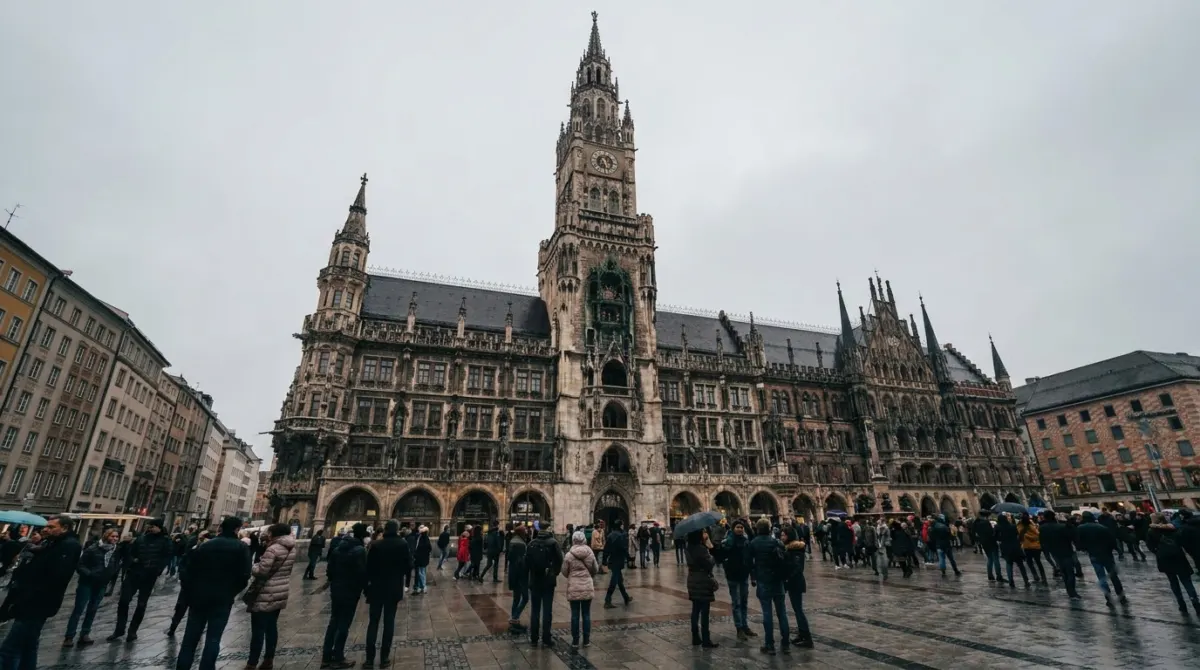
The Altstadt is the historic centre, bounded by the ring road that follows the line of the medieval walls. Marienplatz is its square, with the Neues Rathaus and its glockenspiel on one side, and the Viktualienmarkt food market two minutes away.
Staying here means you walk to nearly everything: the Residenz, the Hofbräuhaus, the Frauenkirche, the shopping streets and the southern edge of the Englischer Garten, which is one of the largest city parks in Europe.
The trades are price and quiet. The Altstadt is the most expensive part of Munich to sleep in, and the streets around the big beer halls are loud into the night, particularly at weekends. One street back from the main runs solves the second problem and not the first.
Maxvorstadt — the museum quarter
North-west of the Altstadt, Maxvorstadt is where the universities and the major galleries are: the Alte Pinakothek, the Neue Pinakothek, the Pinakothek der Moderne and the Egyptian museum, all within a few streets of each other.
It is a student district, so the streets have cheap and good places to eat, and it is calmer at night than the Altstadt without being far from it — fifteen minutes on foot to Marienplatz, or two stops.
For anyone whose Munich is about art rather than beer halls, this is the better base and usually the better value.
Haidhausen and the east
Across the Isar, Haidhausen is the residential alternative: nineteenth-century streets, squares with cafes, and the Ostbahnhof station for trains out of the city.
It is one or two U-Bahn stops from the centre, or a twenty-five minute walk through the park. Rooms are larger and cheaper than in the Altstadt, and the evening belongs to people who live there rather than to visitors.
This is the area to pick for a longer stay, for an apartment, or if you want to eat somewhere that is not aimed at you.
Around the Hauptbahnhof
The main station sits just west of the Altstadt, and the streets around it hold a dense cluster of hotels at every price.
The argument for it is purely practical: the S1 and S8 trains to the airport leave from here, taking about forty minutes, and so do the intercity trains and most day-trip departures. If you are arriving late, leaving before dawn, or using Munich as a hub for Neuschwanstein and Salzburg, a room here saves real time.
The argument against is that the immediate station surroundings are the least pleasant part of central Munich, with the usual mix any large European station has at night. Two or three streets north or east and that changes completely.
Schwabing and Glockenbachviertel
Schwabing, north of Maxvorstadt, is the leafy district along the Englischer Garten — nineteenth-century apartment buildings, long cafe streets and a calmer pace. Good for a stay of several nights, slightly further from the sights.
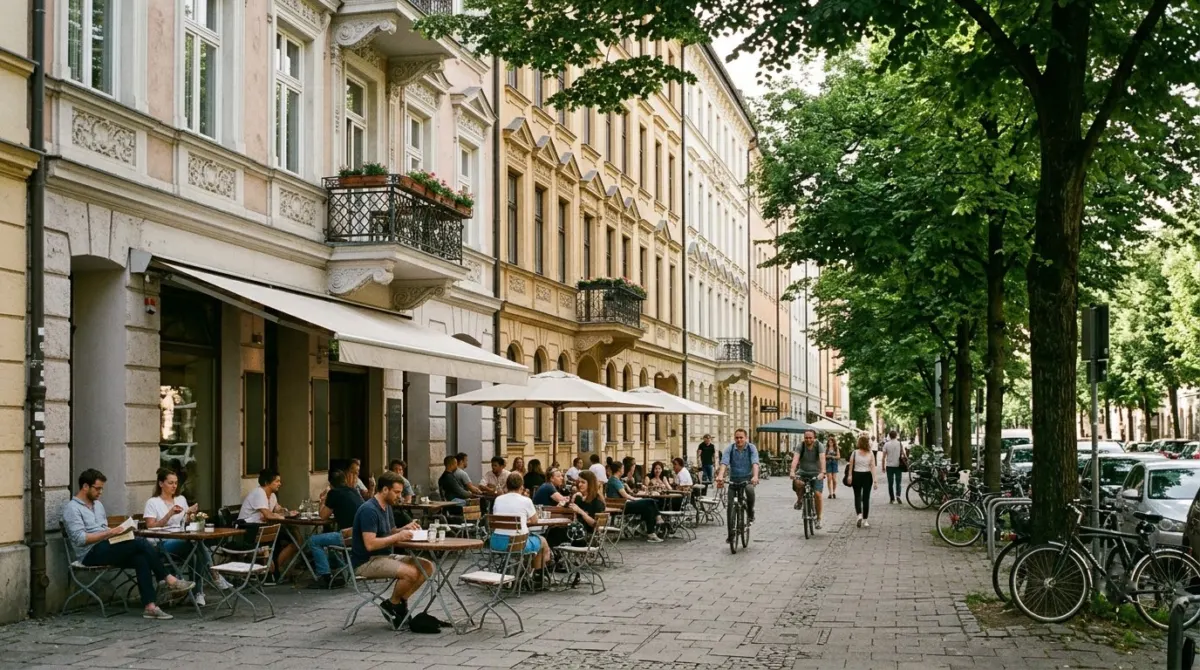
Glockenbachviertel, south of the Altstadt, is the nightlife quarter: bars, restaurants, independent shops and the centre of the city’s gay scene. Ten minutes’ walk to Marienplatz, and louder at weekends.
Oktoberfest, and what it does to prices
This is the single most important thing to know about booking Munich.
Oktoberfest runs for roughly sixteen days, starting in late September and finishing on the first Sunday in October — so a large share of “October” trips land inside it. During those weeks the city is full, room rates multiply several times over, and minimum-stay rules appear.
If you are coming for the festival, book as far ahead as you possibly can and expect to pay accordingly. The grounds are at Theresienwiese, west of the Altstadt, and staying within walking distance of it matters more than usual because taxis and trams are overwhelmed late at night.
If you are not coming for the festival, check the dates before booking flights. The same room in mid-October costs a fraction of what it costs two weeks earlier.
Ludwigsvorstadt, Sendling and the cheaper south
The districts immediately south and west of the Hauptbahnhof are where the value is, and where most visitors never look.
Ludwigsvorstadt wraps around the main station and runs down to the Theresienwiese, the field Oktoberfest is held on. It has the densest concentration of mid-range rooms in the city and the shortest walk to the festival grounds. The streets immediately behind the station are the rough edge; two blocks south they are ordinary.
Sendling is further out and genuinely residential: a weekly market, a few beer gardens, and the Isar river at the end of the street. It is fifteen minutes from the Marienplatz on the U-Bahn and costs noticeably less than anywhere inside the ring.
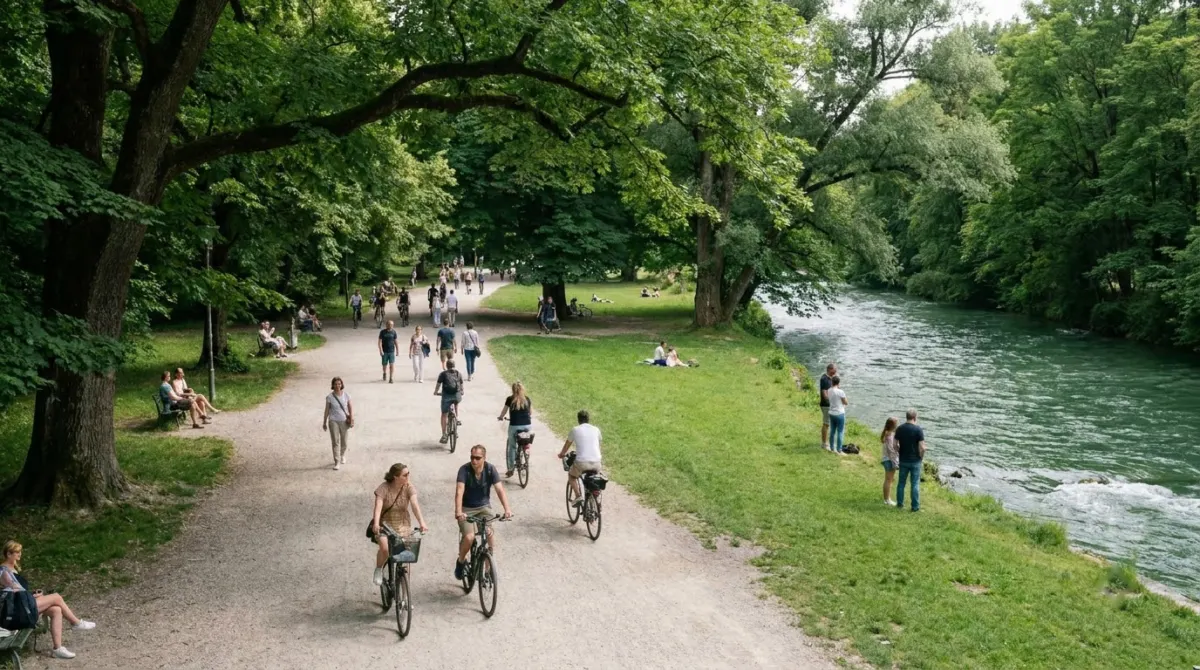
Along the Isar generally is the part of Munich that surprises people — a green corridor running the length of the city where locals swim and barbecue in summer.
What makes Munich feel Bavarian, and where
Munich is the capital of Bavaria and leans into it, but not evenly across the city.
The Altstadt is where the Bavarian stereotype is concentrated: the Hofbräuhaus, the Viktualienmarkt, the dirndl shops. Enjoyable once, and busiest at midday.
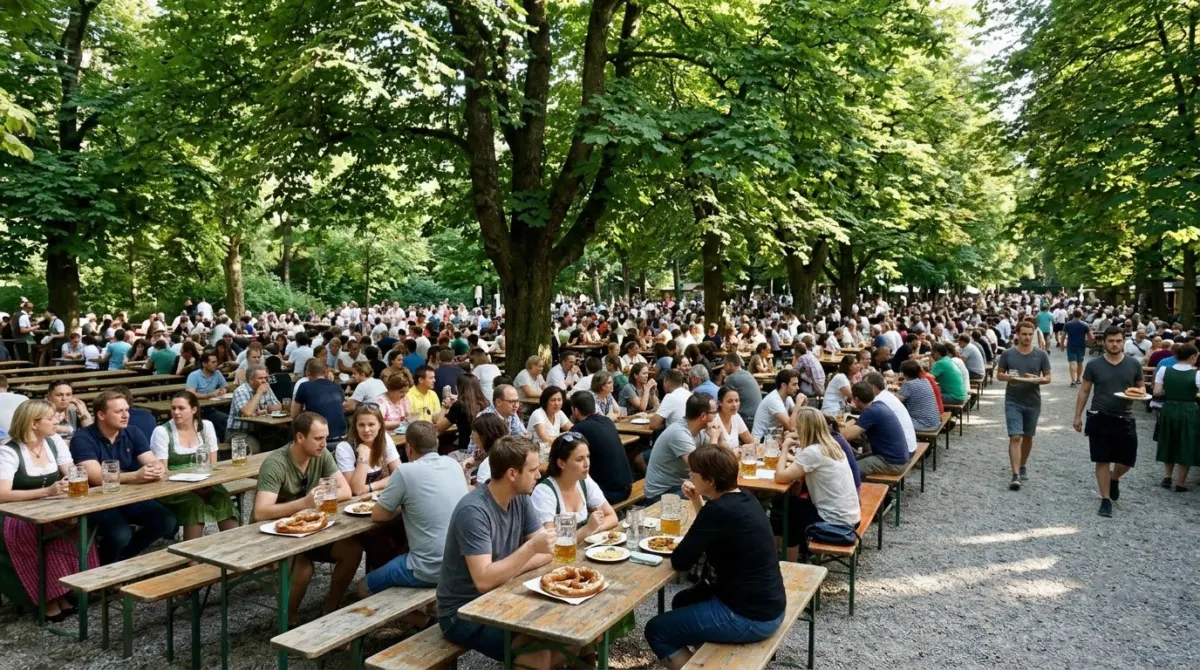
The beer gardens are the real version, and the big ones are in the English Garden — one of the largest city parks in Europe, with a river running through it that people surf on. Staying in Schwabing or Maxvorstadt puts you at its edge.
If a Bavarian evening is the point of the trip, that matters more than the postcode: the Altstadt for the famous version, the English Garden and Haidhausen for the one locals use.
Getting around
Munich has U-Bahn, S-Bahn, trams and buses on one ticket system, and a single fare zone covers the centre and most of what you will do.
The airport is connected by the S1 and S8 lines, around forty minutes to the Hauptbahnhof. There is also an express bus. Taxis take a similar time and cost considerably more.
Within the ring, walking is usually faster than working out a connection. Outside it, the U-Bahn is quick and frequent, which is what makes Haidhausen and Schwabing viable bases rather than compromises.
What the accommodation is like
Munich’s hotel stock is mostly post-war, because much of the city was rebuilt after 1945. In practice that means lifts, standard room sizes and reliable plumbing — fewer of the charming-but-awkward conversions you get in older European centres.
Apartments are widespread and are the sensible choice for families or stays over three nights.
Gasthof and Pension rooms, the German guesthouse formats, survive in the outer districts and are the best value in the city, usually with breakfast included.
Air conditioning is not universal and matters in July and August, when Munich can be genuinely hot. If you are coming in summer, check rather than assume.
How many nights
Two nights covers the Altstadt, one museum and an evening in a beer garden. Three is the right number, because it adds either the museums properly or a day trip.
Four or more makes Munich a base rather than a stop, which is what it is best at: Neuschwanstein, Salzburg, Dachau and the mountains at Garmisch are all day trips by train from the Hauptbahnhof.
Our guide to how many days in Munich works through that in detail, and best hotels in Munich covers what the different kinds of room actually get you.
Where not to stay
Two honest exclusions.
The airport hotels, unless you have a flight before about seven in the morning. The S-Bahn makes the city reachable for everything else.
The far outer suburbs, which look cheap and are a long ride from anything. Munich is small enough that one or two stops out — Haidhausen, Schwabing, Neuhausen — already gives you most of the saving without the commute.
Munich with children
The city handles families well, and three things carry most of a trip.
The Englischer Garten is the obvious one: a park larger than several city centres, with open grass, a stream that children paddle in, and the surfers on the Eisbach wave at the southern end, which is free to watch and reliably entertaining.
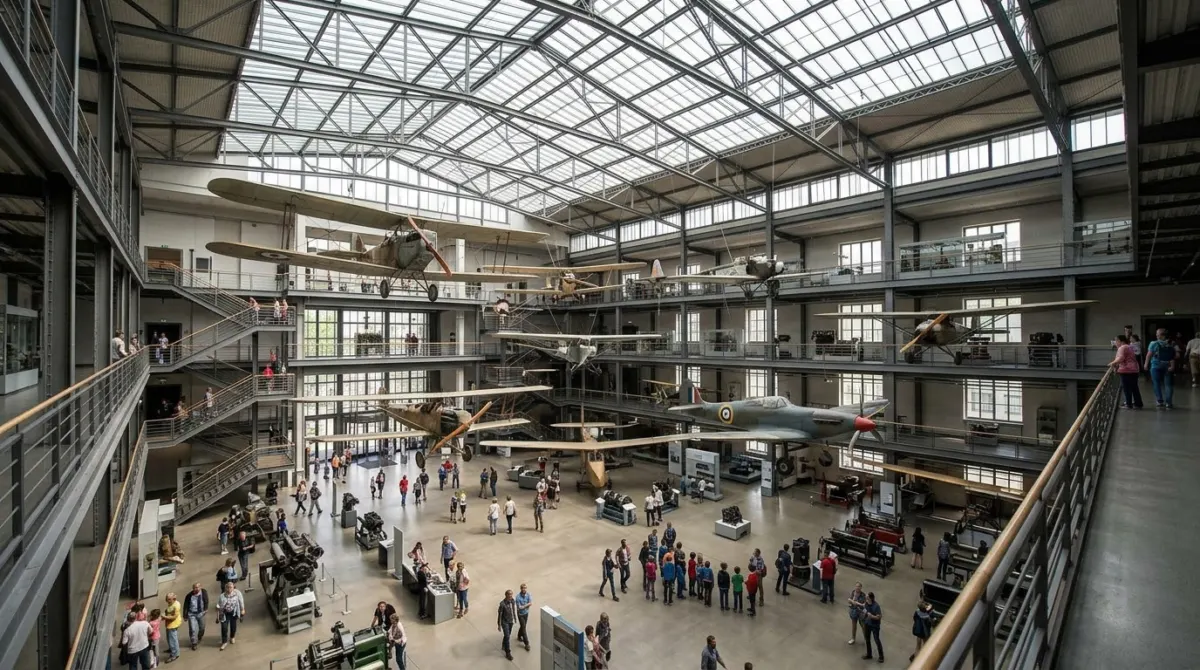
The Deutsches Museum is a science and technology museum on a scale that holds older children for a full day, with mines, aircraft and working machinery.
Nymphenburg Palace and its park, west of the centre, gives space to run and a palace that does not require a guided tour to enjoy.
For a family stay, Haidhausen or Neuhausen usually works better than the Altstadt: larger rooms, apartments rather than hotels, and streets that are quiet at night.
Munich in winter
From late November the Christmas markets open across the city, with the main one on Marienplatz and smaller, better ones in the surrounding squares and in Schwabing. They are an evening activity, which suits the short daylight.
Weekends in December are busy and accommodation tightens, though not to Oktoberfest levels. Midweek in early December is the sweet spot.
Beyond the markets, winter in Munich is a museum city: the Pinakotheken, the Residenz and the Deutsches Museum are all indoor days, and the beer halls are at their best when it is cold outside.
Day trips, and where to sleep for them
Munich’s real strength is as a base, and all the main trips leave from the Hauptbahnhof or Ostbahnhof.
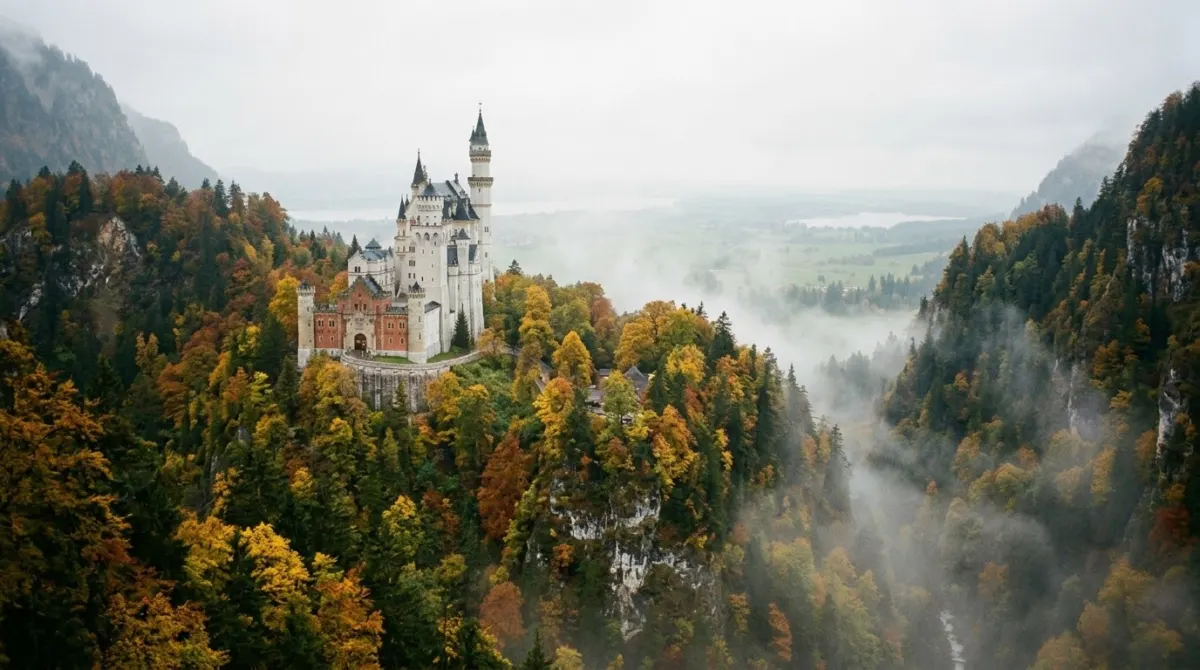
Neuschwanstein is roughly two hours each way by train and bus. Salzburg is about ninety minutes each way. Dachau is forty minutes. Garmisch and the Zugspitze are ninety minutes, and Nuremberg an hour on the fast train.
If two or more of those are in your plan, the practical consequence is to favour accommodation within easy reach of the Hauptbahnhof — which means the Altstadt, Maxvorstadt or the station district rather than the eastern suburbs.
The short version
Stay inside the Altstadt ring within ten minutes of Marienplatz for a short first visit. Choose Maxvorstadt if the museums are the point, Haidhausen or Schwabing for a larger room one stop out, and the Hauptbahnhof area if you have an early flight or several day trips planned. Check the Oktoberfest dates before you book anything.
Frequently asked questions
What is the best area to stay in Munich?
The Altstadt inside the ring road, within ten minutes of Marienplatz, if you are here for two or three nights. Maxvorstadt is better for museums and value, Haidhausen for a quieter residential stay, and the Hauptbahnhof area for early flights and day trips.
Is it worth staying near Marienplatz?
Yes for a short first visit, because everything in the old town is then on foot. It is the most expensive part of the city and the streets near the large beer halls are loud at night, so look one street back from the main runs.
Where should I stay in Munich for Oktoberfest?
Anywhere you can actually book, as early as you can. Within walking distance of Theresienwiese is the most useful, since trams and taxis are overwhelmed late at night. Rates across the whole city multiply for those two weeks.
Is the area around Munich Hauptbahnhof safe?
It is an ordinary large European station district: busy, a little rough at night, and fine with normal city sense. Two or three streets north or east the character changes completely, and the trains to the airport leaving from here save real time.
How many nights do you need in Munich?
Two for the old town and a beer garden, three to add the museums or a day trip. Four or more if you are using Munich as a base for Neuschwanstein, Salzburg, Dachau or the mountains.
Is Munich expensive to stay in?
It is one of the more expensive German cities, and during Oktoberfest it is in a category of its own. Outside those weeks, Maxvorstadt, Haidhausen and the Gasthof format in the outer districts bring the cost down noticeably.
Keep planning Germany
- Where to Stay in Cologne: One Street Back From the Cathedral
- Where to Stay for Oktoberfest: Buy the Walk Home
- Where to Stay in Frankfurt: The City, the Station or the Airport
- Best Hotels in Munich: What the Money Actually Buys
- Where to Stay in Berlin: Pick a District, Not a Hotel
- How Many Days in Berlin? Four, and Why It Needs More Than Munich
- How Many Days in Munich? Three, and Four If You Use It as a Base
- 10 Day Germany Itinerary: Five Bases, Four Trains
Written and checked by
Triplarks Editorial
An editorial desk, not an invented persona: research, drafting and fact-checking are done by the same small team. Every number here carries the date it was read.