Quick answer
Five bases over ten days, all reachable by train: Berlin, Dresden, Munich, a Romantic Road town and the Rhine. Book long-distance train tickets in advance for the saver fares, and book Berlin and Munich nights before the smaller towns.
On this page
- Germany itinerary: the ten day route
- Days 1 to 3 — Berlin
- Day 4 — Dresden
- Days 5 to 7 — Munich and Bavaria
- Day 8 — the Romantic Road or Nuremberg
- Days 9 and 10 — the Rhine and Cologne
- Travelling around Germany by train
- What this Germany itinerary leaves out
- The seven day version
- The two week version
- Travelling by train
- Driving instead
- When to go
- The regional alternatives
- Where to stay on this route
- What this itinerary leaves out
- Practical notes
- Where the long days are
- The short version
- Frequently asked questions
Germany is large, flat in the north and mountainous in the south, and joined together by the best train network in Europe. That last fact shapes every itinerary here: for most routes, the train is faster, cheaper and less stressful than driving, and it is the default this guide assumes.
Some links below are affiliate links. We may earn a commission if you book through them, at no extra cost to you. We do not rank hotels, and any prices on the map come live from the booking sites.
Below is a ten-day route, a seven-day version, and a two-week version, with the regional alternatives for people who have been before.
Germany itinerary: the ten day route
| Days | Base | Doing |
|---|---|---|
| 1–3 | Berlin | Mitte, the Wall, the museums |
| 4 | Dresden | The rebuilt old town, on the way south |
| 5–7 | Munich | The Altstadt, a museum, one day trip |
| 8 | The Romantic Road | Rothenburg ob der Tauber or Nürnberg |
| 9–10 | The Rhine, or Cologne | The river valley and the cathedral |
Five bases over ten nights. Everything on this route is reachable by train, and the longest leg — Berlin to Munich — takes around four hours on the fast line.
Where to sleep on this route
Days 1 to 3 — Berlin
Three nights is the realistic minimum, because Berlin’s sights are spread across a very large city.
Day one for Mitte: the Brandenburg Gate, the Reichstag — the glass dome is free but needs registering in advance — the Holocaust Memorial and Unter den Linden. Day two for the twentieth century: the Berlin Wall Memorial on Bernauer Straße, the Topography of Terror, and the East Side Gallery. Day three for Museum Island and a district — Prenzlauer Berg or Kreuzberg — where the city actually lives.
Check which Museum Island museums are open on your dates; the complex is in a long renovation programme and major parts close for years at a time. Our guide to where to stay in Berlin explains why the district matters more here than the hotel.
Day 4 — Dresden
Two hours south of Berlin by train, Dresden is the stop that breaks the long leg to Munich and earns its own day.
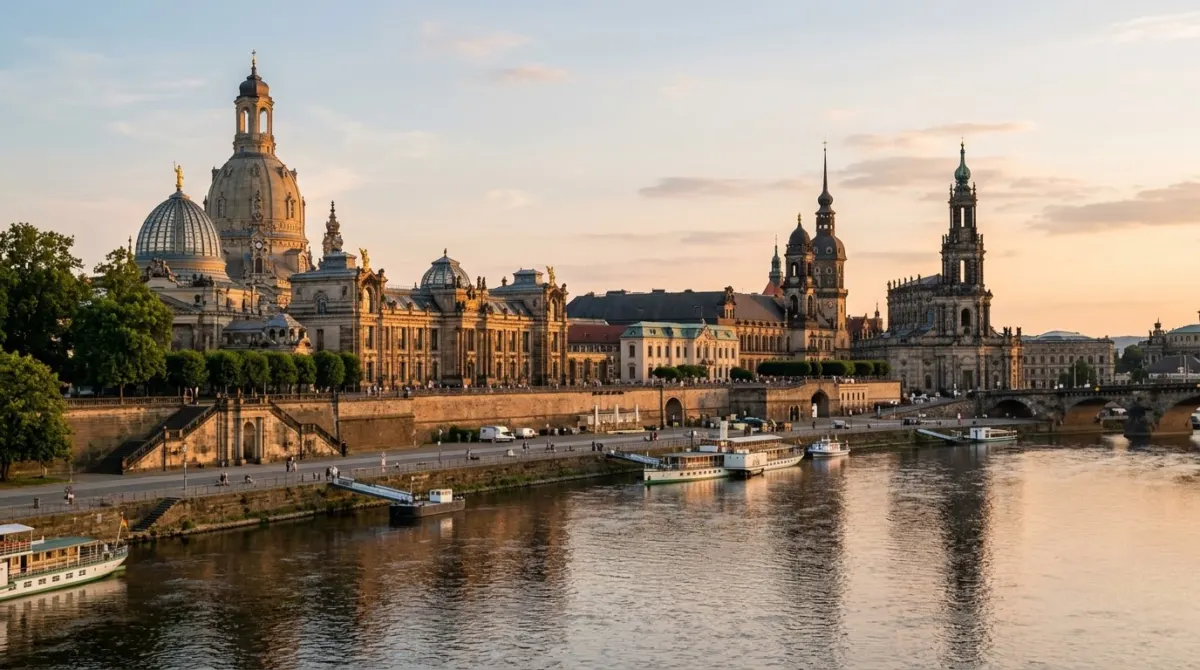
The baroque old town was destroyed in 1945 and rebuilt over decades, most famously the Frauenkirche, reconstructed from the rubble and completed in 2005. The Zwinger palace complex and the terrace along the Elbe fill the rest of a day.
If you would rather not stop, Berlin to Munich direct is about four hours and the day is yours in Munich instead.
Map shows live availability and prices. We may earn a commission on bookings made through it, at no extra cost to you.
Days 5 to 7 — Munich and Bavaria
Two days for the city and one for a day trip is the standard shape.
The city means Marienplatz, the Viktualienmarkt, the Residenz, one of the Pinakothek museums and an evening in a beer garden. The day trip means Neuschwanstein, Salzburg across the Austrian border, or the Dachau memorial site, which is forty minutes out by S-Bahn.
Our guides to where to stay in Munich and how many days in Munich cover this half of the trip in detail.
Day 8 — the Romantic Road or Nuremberg
Heading north-west from Munich, there are two good ways to spend the day.
Rothenburg ob der Tauber is the best-preserved walled medieval town in Germany and the highlight of the Romantic Road. It is small, extremely pretty and busy with coaches in the middle of the day, so staying the night is the way to see it properly.
Nuremberg is the larger alternative: a reconstructed old town, the imperial castle, and the documentation centre at the former Nazi party rally grounds, which is the most substantial site of its kind in the country.
Days 9 and 10 — the Rhine and Cologne
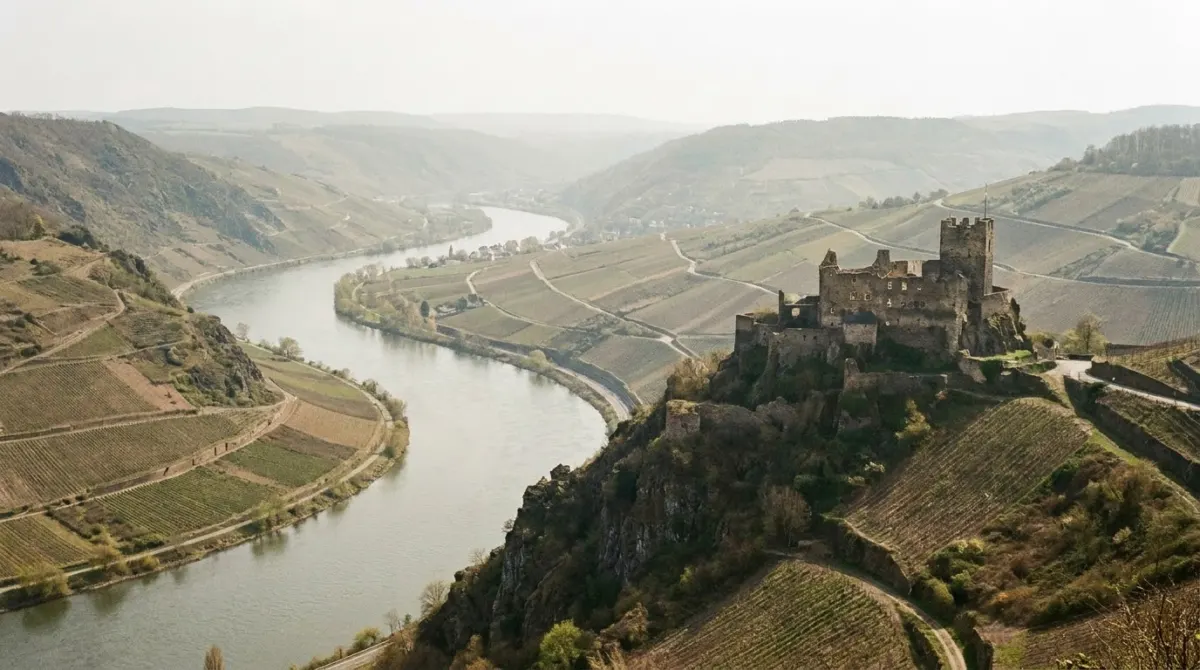
The Rhine Gorge between Bingen and Koblenz is a sixty-kilometre stretch of river with castles on the hills and vineyards on the slopes, and the best way to see it is from a boat or the train that runs along the bank.
Base in Bacharach or St Goar for a night in a river town, then finish at Cologne, where the cathedral stands directly outside the main station and is worth the stop even on the way to an airport.
Travelling around Germany by train
This route runs on the railway, and understanding two things about it saves most of the trouble.
Fast trains and regional trains are different products. The ICE links the big cities at speed and costs more the later you book. Regional trains cover everything else, cost a flat fare, and need no reservation — which is what makes the small-town legs of this itinerary easy.
The main station is the centre. In almost every German city the Hauptbahnhof sits a short walk or one tram stop from the old town, so arriving by train puts you where you want to be without a transfer. Trams and U-Bahn cover the rest and run on the same ticket.
A Germany trip of ten days needs no car at all on this route. A car only starts to pay once you leave the rail corridors for the Romantic Road or the Black Forest.
What this Germany itinerary leaves out
Ten days through Berlin, Munich and the Rhine covers the famous spine. Several things worth the detour sit just off it.
Neuschwanstein Castle is a long day trip from Munich in southern Germany, and the single most photographed building in the country.
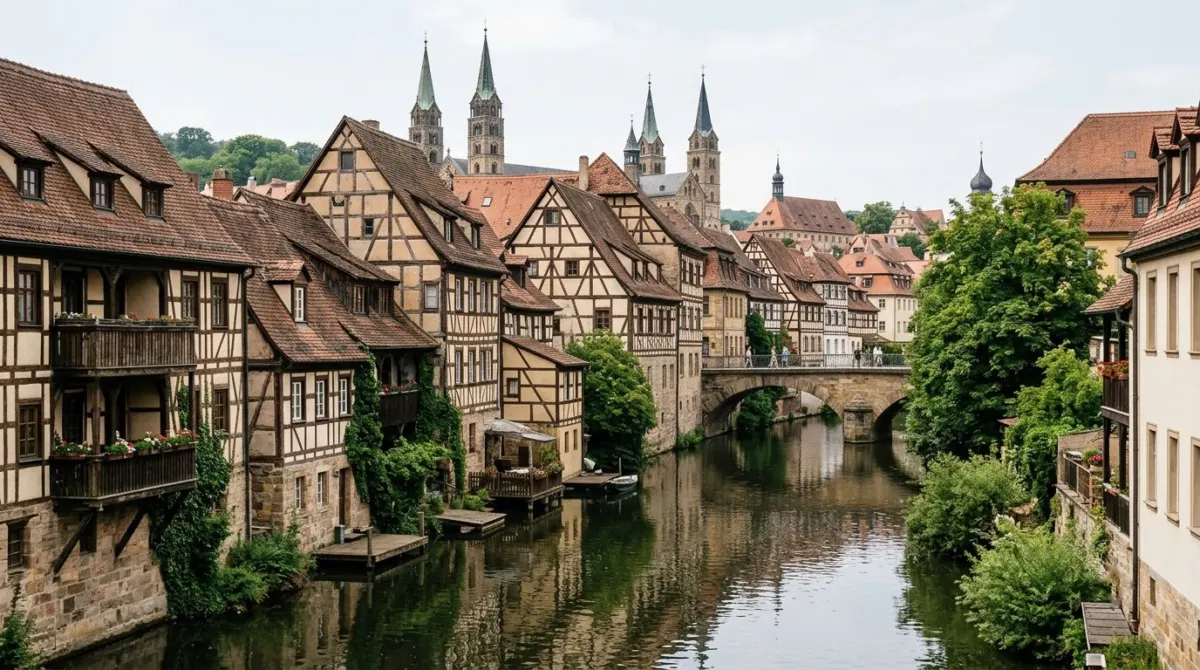
Bamberg and Regensburg are small UNESCO World Heritage old towns between Berlin and Munich, both reachable by regional train and both better than the better-known stops they sit between.
The Elbe around Dresden and the Saxon Switzerland sandstone hills are an eastern alternative to the Rhine river leg.
In Berlin itself, Checkpoint Charlie and the Memorial to the Murdered Jews of Europe are both central and both frequently cut from short itineraries. A guided walking tour of the centre covers them in half a morning and is the single best-value thing to book in the city.
The seven day version
Drop the Rhine and keep the two cities.
- Days 1–3: Berlin.
- Day 4: train to Munich, with Dresden or Nürnberg as a stop if the timing allows.
- Days 5–6: Munich and one day trip.
- Day 7: fly out of Munich.
Two bases, one train journey, and the two cities that are least like each other. For a first visit this is the strongest week.
The two week version
Fourteen days lets you add the north and the south-west without rushing.
Add Hamburg for two nights at the start — a port city with a very different character, two hours from Berlin — and the Black Forest or Heidelberg for two nights at the end, before flying from Frankfurt.
That gives Berlin 3, Hamburg 2, Dresden 1, Munich 3, Rothenburg 1, the Rhine 2 and Heidelberg 2, which is a full fortnight on trains with no long day.
Travelling by train
The German rail network is the reason this itinerary works, and three things are worth knowing.
Book long-distance tickets in advance for the saver fares; walk-up prices on the fast lines are considerably higher.
Regional day tickets cover a whole state for a day and are cheap for groups, which makes day trips from Munich particularly good value.
Delays happen. The network is dense and punctuality on long-distance services is not what its reputation suggests, so leave margin before flights.
Driving instead
A car makes sense for exactly two parts of this route: the Romantic Road between Würzburg and Füssen, and the Black Forest. Both are rural, both are about the journey, and both are poorly served by rail.
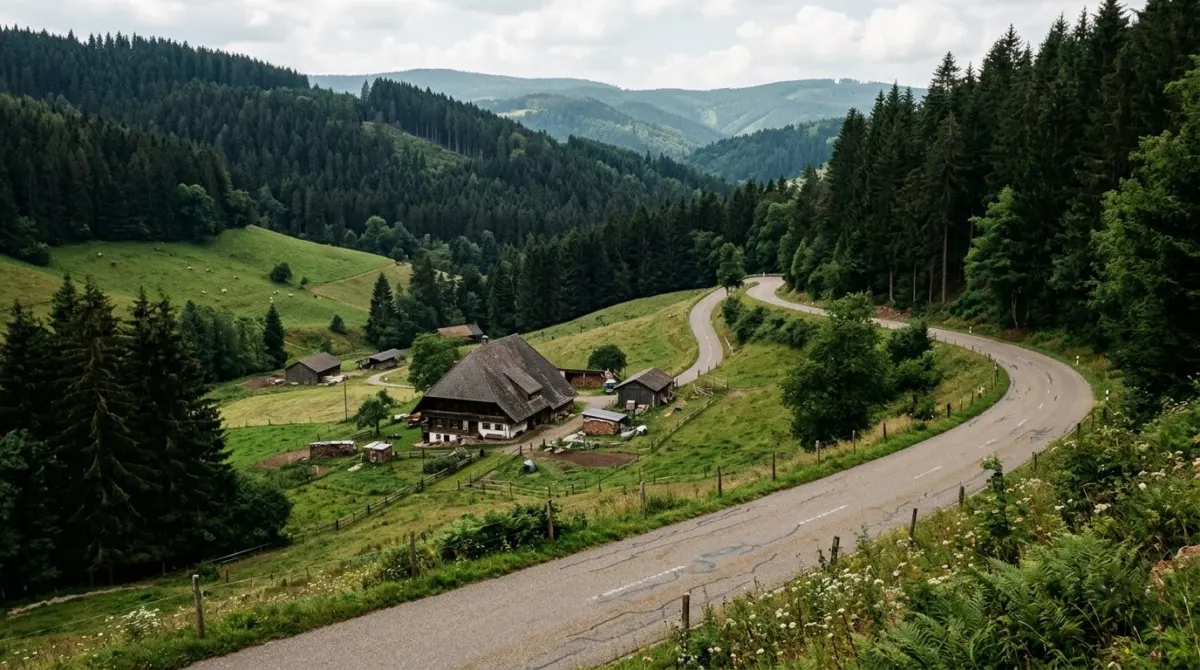
Everywhere else the train is faster door to door, and city parking in Berlin and Munich is expensive and unnecessary. The sensible pattern is to travel by train and hire a car for two or three days in the middle.
When to go
May, June and September are the best months: long days, open attractions and manageable crowds. July and August are hot in the south and busy everywhere, and air conditioning is not universal. Late November and December bring the Christmas markets, which are a genuine reason to visit and fill the cities on weekends. January to March is cold and short on daylight, but the cities and museums all work.
One date to check whatever your plans: Oktoberfest in Munich runs for about sixteen days from late September to the first Sunday in October, and it changes accommodation prices across the whole city.
The regional alternatives
If you have been to Berlin and Munich, Germany has several regions that carry a full week on their own.
The Baltic coast — Lübeck, Wismar, Stralsund and the island of Rügen — is brick gothic towns and long beaches, and it is where Germans holiday rather than where visitors go.
The Black Forest is walking, spa towns and the road through the hills, best done with a car for two or three days.
Saxony beyond Dresden takes in Leipzig and the sandstone landscape of Saxon Switzerland, which is an hour from the city and looks like nowhere else in the country.
The Mosel valley is the quieter alternative to the Rhine: tighter bends, steeper vineyards, fewer coaches.
Where to stay on this route
Five bases, and the decisions differ in each.
Berlin: choose a district rather than a hotel, and check the nearest U-Bahn station — see where to stay in Berlin.
Munich: inside the ring for a short stay, or one stop out for value — see where to stay in Munich.
Dresden, Rothenburg and the Rhine towns are all small enough that anywhere central works. In Rothenburg specifically, staying inside the walls is the whole point, because the town empties in the evening when the coaches leave.
What this itinerary leaves out
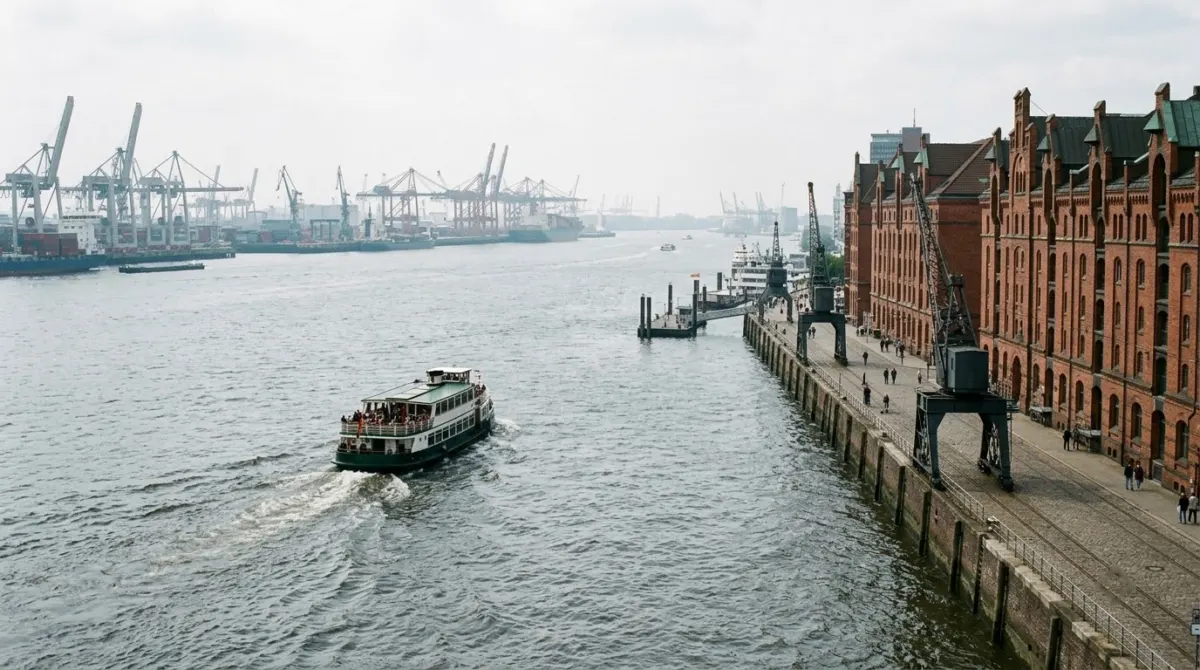
Hamburg, which is two hours from Berlin and a genuinely different city — a port, with water through the middle of it.
Cologne beyond the cathedral, which deserves a night rather than a stop.
The Baltic coast and the east beyond Dresden.
Frankfurt, which most itineraries pass through at the airport and few stay in — reasonably, since it is a business city, though the museum embankment is better than its reputation.
Practical notes
Three things that make a German trip easier.
Cash still matters. Card acceptance has improved but small restaurants, bakeries and bars may still be cash only, particularly in the east.
Sunday closing is real. Shops and supermarkets shut, with exceptions at main stations. Buy food on Saturday.
Book trains early. Advance fares on the fast lines are a fraction of walk-up prices, and the cheapest tickets are tied to a specific train.
Where the long days are
Two legs on this route are longer than they look, and both are worth planning around.
Berlin to Munich is about four hours on the fast line, and the stop at Dresden turns it into two comfortable halves rather than one long sitting. Munich to the Rhine is a similar length, which is why Rothenburg or Nuremberg sits between them in the ten-day version.
Everything else on this itinerary is under two hours, which is the reason five bases in ten days is reasonable here when it would not be in Ireland or Scotland.
The short version
Seven days: Berlin and Munich, joined by one four-hour train. Ten days: add Dresden, the Romantic Road and the Rhine. Fourteen: add Hamburg at the start and Heidelberg or the Black Forest at the end.
Travel by train and hire a car only for the Romantic Road and the Black Forest. Book long-distance tickets in advance, carry some cash, buy food before Sunday, and check the Oktoberfest dates before you fix anything in Bavaria.
Frequently asked questions
What is the best Germany itinerary for first timers?
Berlin for three nights and Munich for three, joined by a four-hour train with Dresden or Nuremberg as a stop. That covers the two cities least like each other and needs only one long journey.
How many days do you need in Germany?
Seven covers Berlin and Munich properly. Ten adds the Romantic Road and the Rhine Valley. Fourteen adds Hamburg in the north and Heidelberg or the Black Forest in the south-west without any long days.
Is it better to travel Germany by train or car?
Train for nearly all of it — it is faster city to city and city parking is expensive. A car is worth hiring for two or three days for the Romantic Road and the Black Forest, which are rural and poorly served by rail.
How far is Berlin from Munich?
About four hours on the fast train, or two hours to Dresden and another two and a half on from there. Driving takes longer and gives you nothing useful at either end.
Is the Rhine Valley worth visiting?
If you have ten days or more, yes. The stretch between Bingen and Koblenz has castles on the hills and vineyards on the slopes, and it is best seen from a boat or from the train that runs along the bank.
When is the best time to visit Germany?
May, June and September for long days and manageable crowds. Late November and December for the Christmas markets. Check the Oktoberfest dates before booking, because they change accommodation prices across Munich and the surrounding region.
Keep planning Germany
- Where to Stay in Cologne: One Street Back From the Cathedral
- Where to Stay for Oktoberfest: Buy the Walk Home
- Where to Stay in Frankfurt: The City, the Station or the Airport
- Best Hotels in Munich: What the Money Actually Buys
- Where to Stay in Berlin: Pick a District, Not a Hotel
- Where to Stay in Munich: Inside the Ring, or One Stop Out
- How Many Days in Berlin? Four, and Why It Needs More Than Munich
- How Many Days in Munich? Three, and Four If You Use It as a Base
Written and checked by
Triplarks Editorial
An editorial desk, not an invented persona: research, drafting and fact-checking are done by the same small team. Every number here carries the date it was read.