Quick answer
Four days for a first visit, three at an absolute minimum. The sights are spread across a very large city with no single old town, so pick accommodation by its U-Bahn station rather than by how central it looks on a map.
On this page
- How many days in Berlin: what each length gets you
- Why Berlin takes longer than you expect
- Three days, properly used
- What the fourth day adds
- The fifth day: Potsdam
- One day in Berlin
- What two days actually covers
- Which days of the week matter
- How the season changes the answer
- When you need more than four days
- Fitting Berlin into a German trip
- A day-by-day four day plan
- Arrival and departure days
- Getting around, and how much time it costs
- Berlin on a budget of days, not money
- Berlin with a longer stay
- What to book before you arrive
- Day trips that earn an extra day
- Coming back for a second visit
- Berlin compared with other European capitals
- The short version
- Frequently asked questions
Three nights at an absolute minimum, four for a first visit, and five if the twentieth century is the reason you are coming. Berlin needs more days than German cities of comparable fame, and the reason is geography rather than quantity: the sights are spread across a very large city, and getting between them takes real time.
Some links below are affiliate links. We may earn a commission if you book through them, at no extra cost to you. We do not rank hotels, and any prices on the map come live from the booking sites.
How many days in Berlin: what each length gets you
| Days | What fits | Who it suits |
|---|---|---|
| 2 | Mitte and the Wall, rushed | A stopover |
| 3 | Mitte, the Wall sites, one museum day | The practical minimum |
| 4 | The above plus a district and a palace or lake | Most first visits |
| 5 | Adds Potsdam as a full day | History, or a slower pace |
| 6+ | Adds the outer districts and the lakes | Returning visitors |
Where to sleep on this route
Why Berlin takes longer than you expect
Three reasons, and they compound.
The distances are real. Charlottenburg to Friedrichshain is about twelve kilometres. Even within Mitte, the walk from the Brandenburg Gate to Alexanderplatz is a solid half hour.
There is no single old town. Berlin was divided for twenty-eight years and bombed flat before that, so the sights are scattered rather than clustered the way they are in Munich, Prague or Vienna. For comparison, see how many days in Munich.
The history needs time rather than tickets. The Wall memorial, the Topography of Terror and the Jewish Museum are places to read and think in, not places to photograph and move on from.
Map shows live availability and prices. We may earn a commission on bookings made through it, at no extra cost to you.
Three days, properly used
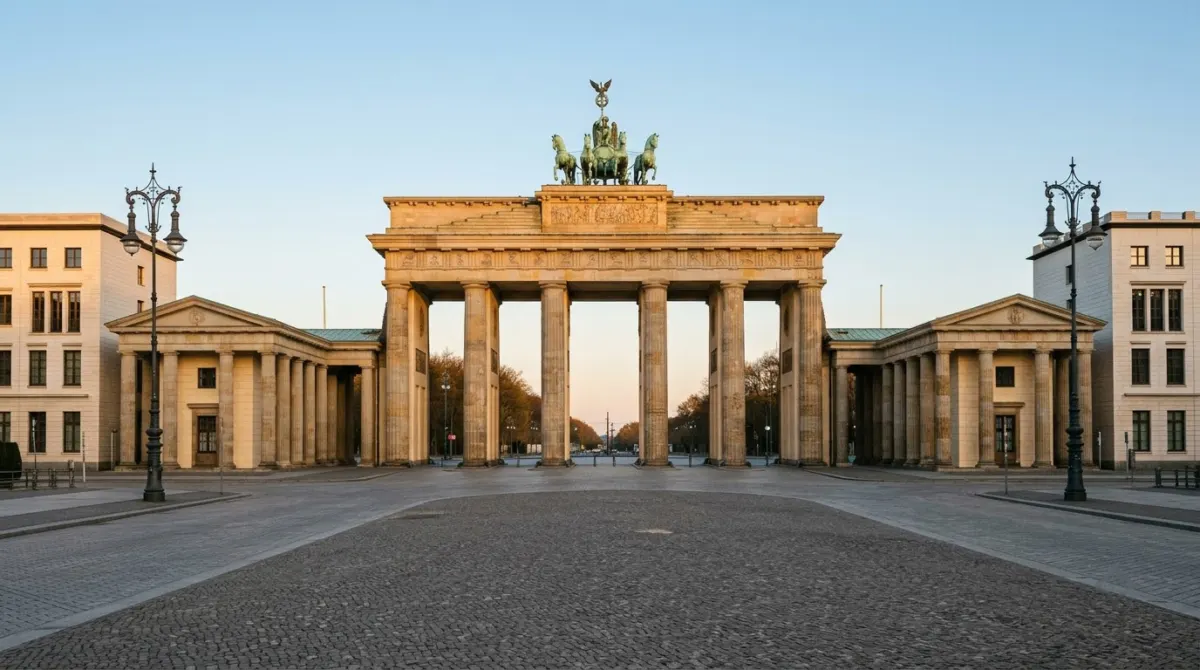
Day 1 — Mitte. The Brandenburg Gate, the Reichstag dome (free, but registration is required in advance), the Holocaust Memorial, Unter den Linden and Gendarmenmarkt.
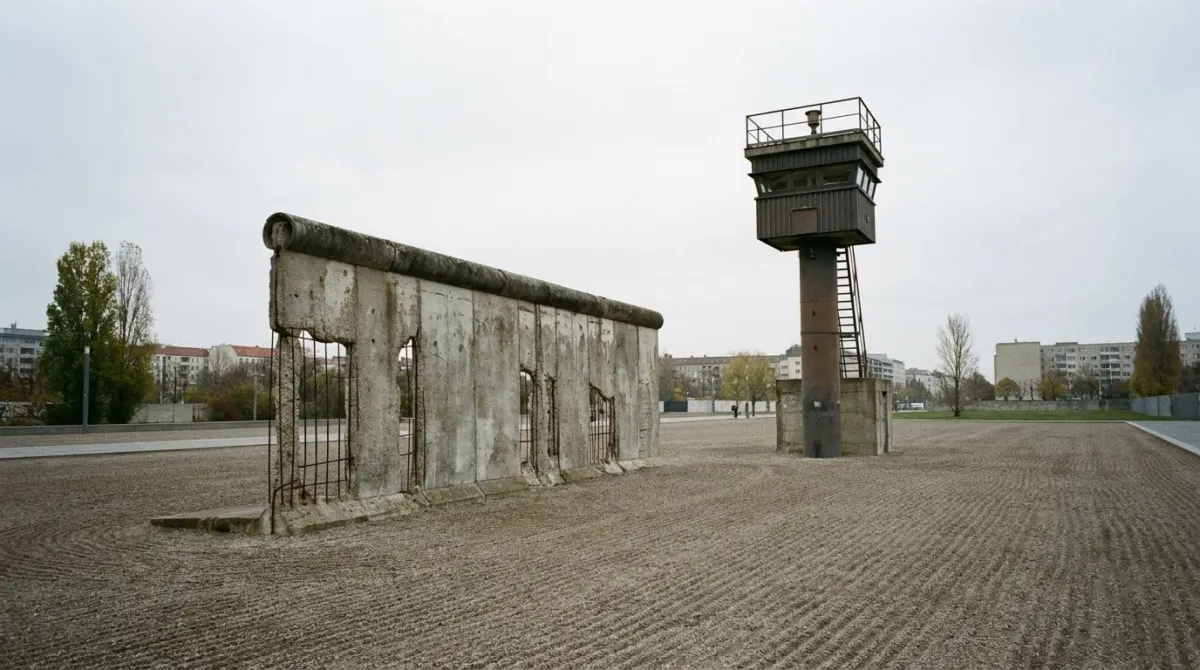
Day 2 — the twentieth century. The Berlin Wall Memorial on Bernauer Straße, which preserves a full section with the death strip and is far more informative than Checkpoint Charlie. Then the Topography of Terror, and the East Side Gallery in the afternoon.
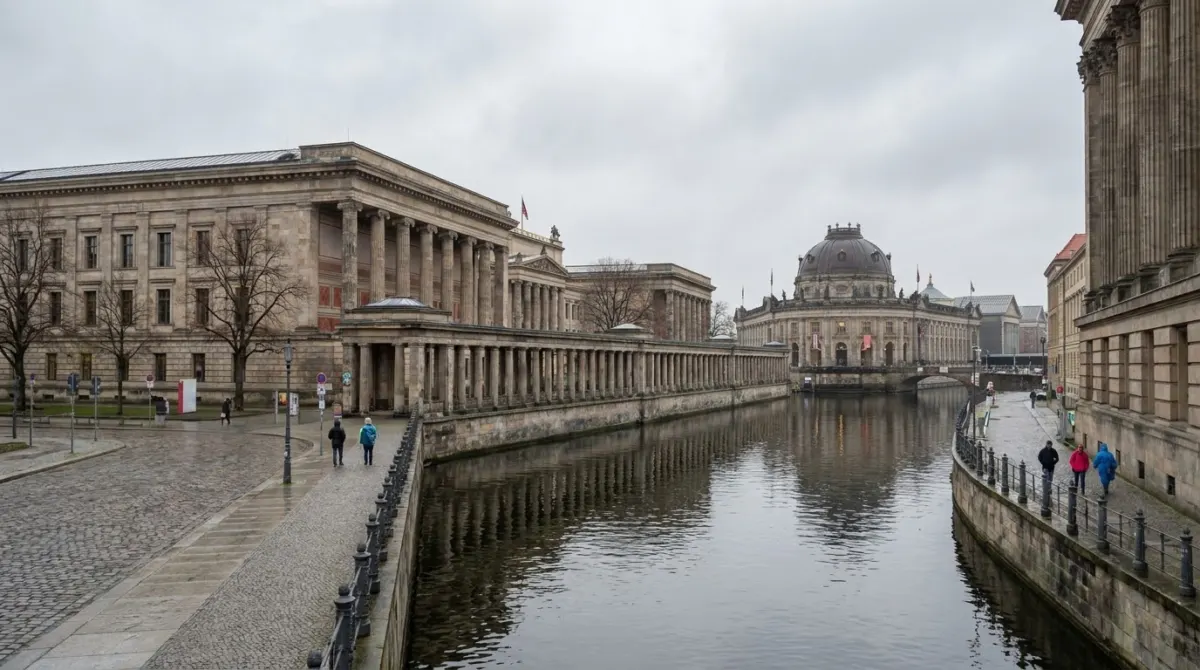
Day 3 — museums and a district. Museum Island in the morning, checking first which museums are actually open, since the complex is in a long-term renovation programme. Then an afternoon in Prenzlauer Berg or Kreuzberg, where the city lives rather than performs.
What the fourth day adds
The fourth day is where Berlin becomes enjoyable rather than instructive.
Options that each fill it: Charlottenburg Palace and the west, which feels like a separate city; the Tiergarten and the zoo; a long afternoon in Kreuzberg and Neukölln for markets and food; or the lakes at Wannsee, which Berliners use as a beach in summer.
Four days is the length most first-time visitors should aim for.
The fifth day: Potsdam
If you have five days, give one to Potsdam, about forty minutes by S-Bahn and the best day trip from the city.
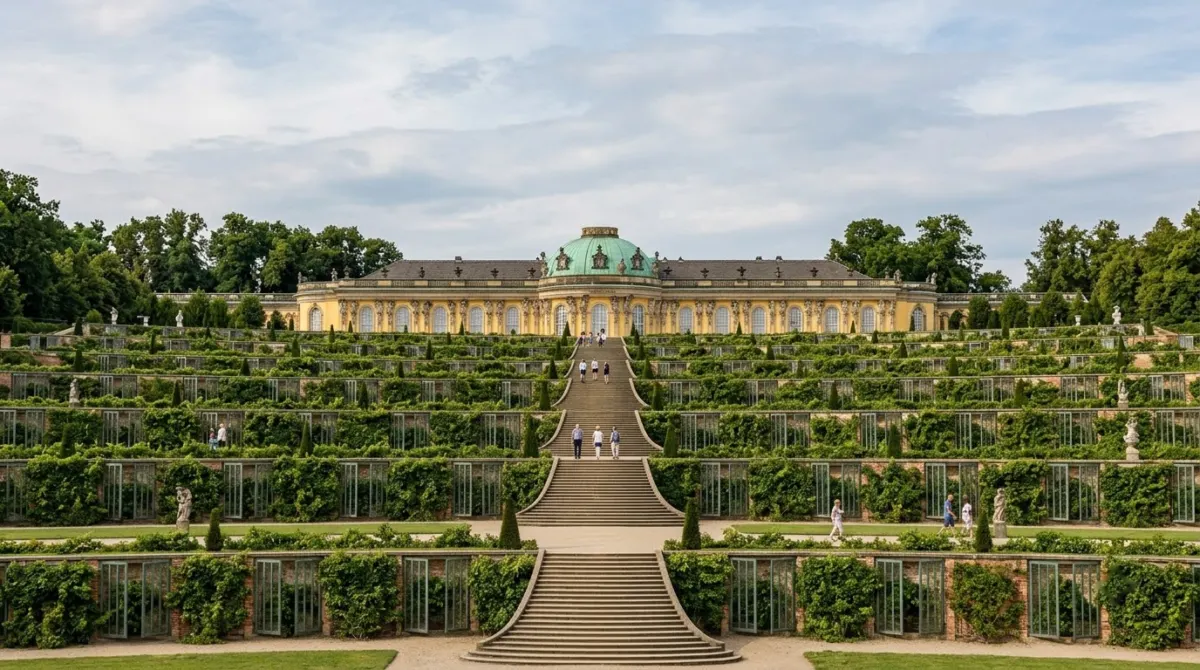
The town holds Sanssouci, the summer palace of Frederick the Great, in a park of terraced vineyards and smaller palaces, along with the Dutch Quarter and the house where the Potsdam Conference divided post-war Germany.
It is a full day, and it needs a zone C transport ticket.
If you only have half a day
If five days is not available but Sanssouci is, the compressed version works: take the S-Bahn out mid-morning, see the palace and the park, walk the Dutch Quarter, and be back in Berlin for the evening.
That turns a full day into about five hours and costs you one afternoon in the city. It is the right trade if palaces interest you more than another district, and the wrong one if this is your only visit to Berlin.
One day in Berlin
One day is a layover or a stop on a rail journey, and it can still be a good day if you accept what it is.
Walk the one line through the centre where the sights do sit close together: the Reichstag (only if you registered for the dome in advance), the Brandenburg Gate, the Holocaust Memorial, then east along Unter den Linden past Bebelplatz to the outside of Museum Island and the cathedral, finishing at Alexanderplatz. That is about three kilometres on foot and a full morning at an unhurried pace.
In the afternoon, take the S-Bahn north to the Berlin Wall Memorial on Bernauer Straße, the single site that explains the divided city best. Spend the evening around Hackescher Markt.
Leave out everything else: the museums, the districts, the East Side Gallery if time is tight. Trying to add them turns one good day into a day of trains.
If you are arriving from the airport, the express train reaches the main station in about twenty-three minutes, which makes even an arrival day usable if you land before noon.
What two days actually covers
If two days is all you have, do not try to see the whole city.
Take Mitte on the first day and the Wall sites on the second, and accept that you are leaving out the museums, the districts and Potsdam entirely. That is a coherent short visit, and it is far better than four half-days of travelling between things.
Two days in Berlin is a stop, not a visit, in a way that two days in Munich is not.
Which days of the week matter
The weekday you arrive on changes how many days you need, because two days of the Berlin week behave differently from the rest.
Monday is a poor museum day. The state museums, including those on Museum Island, close on Mondays, so a three-day trip that starts on a Saturday or ends on a Monday loses its museum day unless you plan around it. Use Monday for the outdoor sites instead: the Wall Memorial, the East Side Gallery, the Topography of Terror and the Holocaust Memorial are all open-air.
Sunday is a poor shopping day and a good everything-else day. Shops and supermarkets close, with exceptions at the main stations, but the museums are open, the parks are full, and the flea market at the Mauerpark in Prenzlauer Berg is at its liveliest.
Saturday is market day in several districts, including the large weekly market at Winterfeldtplatz in Schöneberg, and the best day to see the city’s neighbourhoods at their busiest.
The practical rule: if your stay includes a Monday, put the museums on another day, and if it is only three days, aim for it not to include one at all.
How the season changes the answer
In June it is light until well after nine, the lakes and beer gardens are open, and a day holds a great deal.
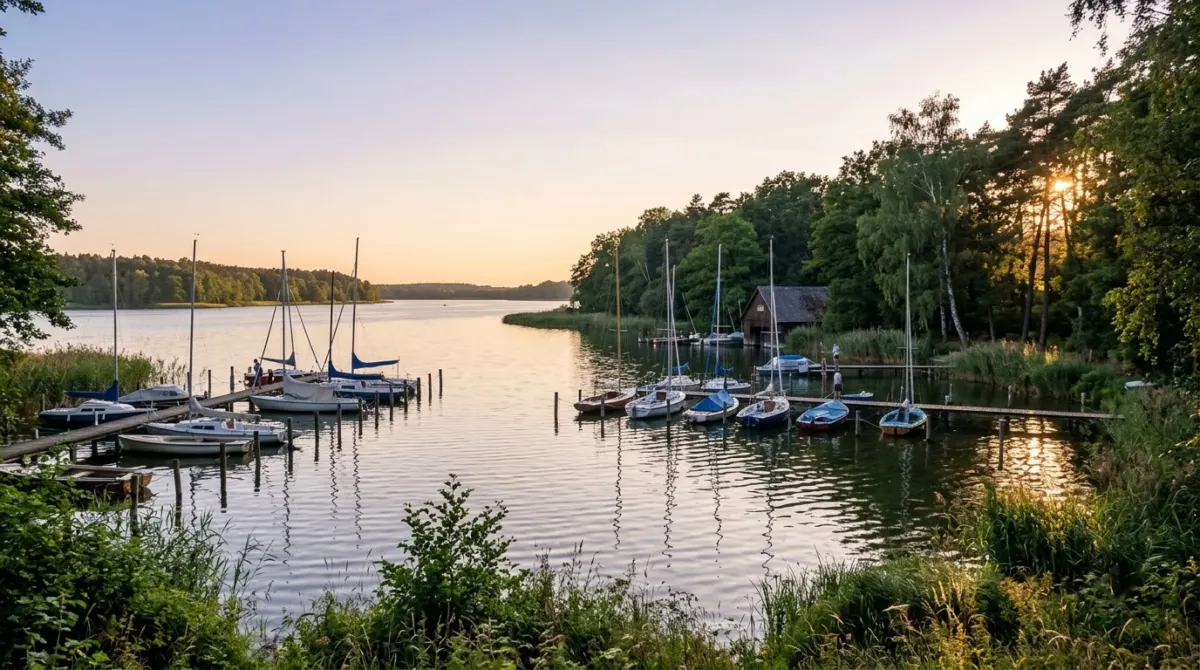
In December it is dark by four, which removes the outdoor parts — the East Side Gallery, the lakes, the long district walks — and leaves the museums and the Christmas markets. Add a day in winter for the same list.
Berlin is also a city that works in bad weather, which is not true everywhere: the museum days and the history sites are largely indoors.
In spring and autumn the answer sits between the two. April, May, September and early October give long enough days for the outdoor sites and mild weather for walking between them, without the summer crowds at the Reichstag and on Museum Island. A four-day plan fits comfortably in those months with time left over in the evenings.
The one autumn adjustment is the clocks. Once they go back at the end of October, the afternoons shorten quickly, and an itinerary that worked in early October starts to feel tight by mid-November.
When you need more than four days
If you are interested in the Cold War, add a day. The Stasi museum and former prison at Hohenschönhausen, the airlift memorial at Tempelhof and the Wall documentation together make a full extra day.
If you are coming for nightlife, add a day for recovery. Berlin’s clubs run on a timetable that makes the following morning theoretical.
If you are travelling with children, add a day and swap one museum for the zoo or the lakes. The distances tire children faster than the sights do.
Fitting Berlin into a German trip
Berlin is about four hours from Munich on the fast train and two from Dresden or Hamburg, which makes it a natural start or end point rather than a middle.
On a week in Germany, three nights here and three in Munich is the standard split. Our Germany itinerary sets out the longer routes, and where to stay in Berlin covers which district suits which kind of trip.
A day-by-day four day plan
Day 1 — Mitte. Brandenburg Gate, the Reichstag dome with a registration booked in advance, the Holocaust Memorial, Unter den Linden and Gendarmenmarkt. Evening around Hackescher Markt.
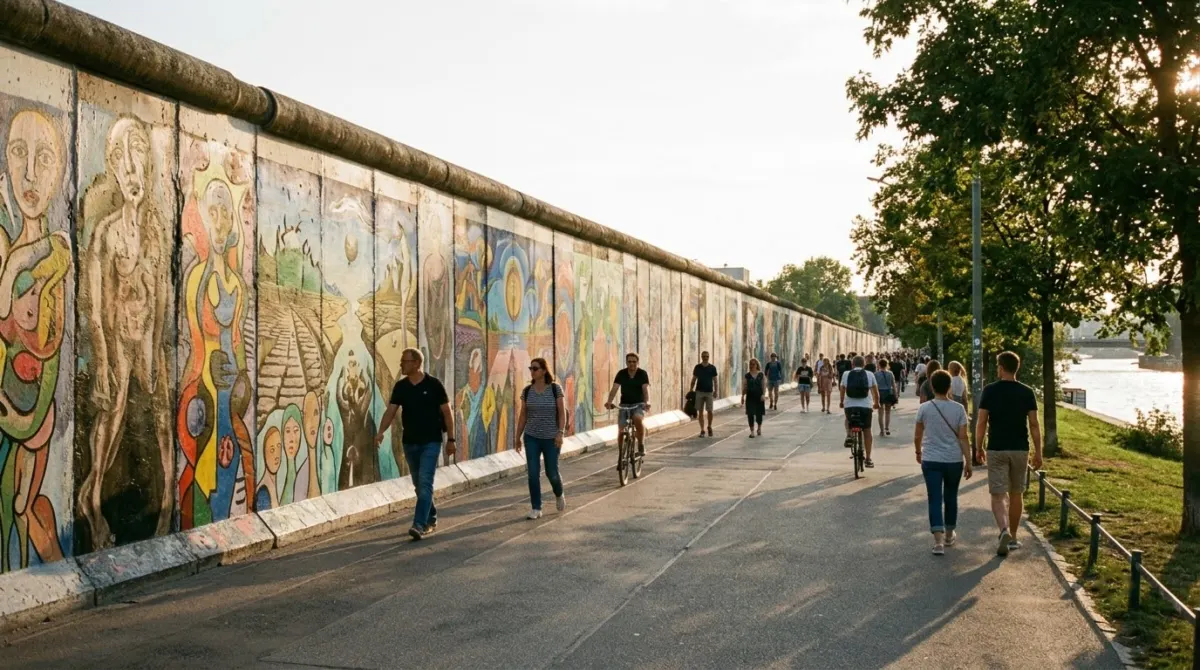
Day 2 — the divided city. The Berlin Wall Memorial on Bernauer Straße in the morning, the Topography of Terror after lunch, the East Side Gallery in the late afternoon.
Day 3 — museums and a district. Museum Island in the morning, checking opening first, then Prenzlauer Berg or Kreuzberg for the afternoon and evening.
Day 4 — your choice. Charlottenburg Palace and the west, Tempelhofer Feld and Neukölln, or the lakes at Wannsee in summer.
That is four days without a wasted morning, and it leaves Potsdam for a fifth.
Arrival and departure days
The number of nights you book is not the number of days you get, and Berlin punishes the difference more than most cities because of the time it takes to get anywhere.
An arrival day with a morning landing is worth about half a day of sightseeing once you have reached the hotel and dropped your bags. With an afternoon arrival it is worth an evening walk and dinner, nothing more.
A departure day with an afternoon flight gives you a morning, but only somewhere near your accommodation or on the way to the airport. Potsdamer Platz and the main station are both on the express line to BER, which makes the Kulturforum or the government quarter good last-morning choices.
So three nights usually means two full days and two partial ones, and four nights means three full days. If you are counting days rather than nights when you read the table above, add a night to be safe.
The same applies if you arrive by train: a long-distance journey from Munich takes about four hours, which uses most of a day.
Getting around, and how much time it costs
Berlin’s transport is excellent and you will spend real time on it regardless.
Typical journeys inside the ring take twenty to thirty minutes door to door, and crossing the city takes closer to forty-five. That is the hidden cost of a Berlin day, and it is why four days covers less than four days in a compact city.
A multi-day travel pass covering zones A and B is almost always worth buying. Add zone C for the airport and for Potsdam.
Berlin on a budget of days, not money
If your time is short, cut by theme rather than by trying to see everything briefly.
If you came for the twentieth century, the Wall Memorial, the Topography of Terror and the Jewish Museum are the three that matter, and they fill two days.
If you came for art and museums, Museum Island and the Gemäldegalerie are two days on their own.
If you came for the city itself, spend the days in Kreuzberg, Neukölln and Prenzlauer Berg, and treat the monuments as things you walk past.
All three are better uses of three days than a tour of everything.
Berlin with a longer stay
Berlin rewards a week more than most European capitals, because the districts are genuinely different from one another and the city is cheap enough to linger in.
A week allows Potsdam, the lakes, a day in the outer east, and the time to go back to somewhere you liked. It also suits apartments, which are strong here and better value than hotels for longer stays — our guide to where to stay in Berlin covers which district suits which length of trip.
A workable shape for the second half of the week: day five in Potsdam, day six at the Sachsenhausen Memorial or in the Spreewald, and day seven left free, which on a long trip is the day people remember. If the weather is good on day seven, go to the lakes; if not, take one museum slowly.
What to book before you arrive
Berlin needs less advance booking than most capitals, with two exceptions.
The Reichstag dome is free and requires registration in advance with passport details. Slots go, particularly in summer, and there is no useful walk-up option.
Specific museums on Museum Island use timed entry, and the complex is in a long renovation programme, so check both opening and ticketing for the museum you actually want rather than for the island as a whole.
Everything else — the Wall sites, the Topography of Terror, the districts — is open access and needs nothing booked.
Day trips that earn an extra day
Potsdam is the obvious day trip, but it is not the only one, and each of the others needs its own day added to the count rather than taken from the city.
Sachsenhausen Memorial, in Oranienburg just north of the city, is the site of a Nazi concentration camp that was later used by the Soviet occupiers as a special camp. Admission is free. It is reached by S-Bahn or regional train to Oranienburg and then about twenty minutes on foot or a short bus ride, and with the journey it takes most of a day. It is a hard visit and an important one, and it belongs in any trip built around the twentieth century.
The Spreewald, south-east of Berlin, is a landscape of forest and hundreds of small canals where the traditional way to get around is by punt. Regional trains run from the main station via the airport to Lübbenau, the usual starting point. It is the best day trip for a summer visit, and an easy one to combine with a flight from BER.
Dresden is about two hours away by train and Leipzig a little over an hour, but both deserve a night rather than a day trip if you can arrange it.
Coming back for a second visit
A return trip changes the answer entirely, because the main thing that makes a first visit long — the monuments and the history sites — is already done.
Three days is enough for a good second visit, and the best way to use them is by district: one day in Kreuzberg and Neukölln for the canal and the food, one in Schöneberg and Charlottenburg for the west, and one in Prenzlauer Berg or Friedrichshain, depending on whether you prefer cafes or clubs.
Add the places a first visit never reaches: Tempelhofer Feld, the lakes at Wannsee, the Stasi sites in Lichtenberg, the Gemäldegalerie at the Kulturforum or one museum on the island that you skipped before.
A second visit is also the time to stay somewhere other than Mitte. Our guide to where to stay in Berlin covers the residential districts that suit a return trip best.
Berlin compared with other European capitals
The useful comparison is not with Munich but with Paris, Rome and Prague, and Berlin is the outlier.
Those cities have a dense historic core where a day’s walking covers most of what you came for. Berlin does not: it is roughly nine times the area of Paris within the city limits, with the sights distributed across it and large stretches of nothing much in between.
The practical consequence is that a three-day Berlin trip covers less ground than a three-day Prague trip, and that the city rewards choosing a theme over attempting a tour.
The short version
Four days for a first visit. Three if that is all you have, covering Mitte, the Wall sites and one museum day. Two is a stopover. Five if you want Potsdam, and six or more if the twentieth century is the reason you came. Add a day in winter, when it is dark by four and the outdoor half of the city disappears.
Frequently asked questions
How many days do you need in Berlin?
Four for a first visit, three at an absolute minimum. The sights are spread across a very large city with no single old town, and the twentieth-century history takes time rather than tickets.
Is 3 days enough for Berlin?
It is the practical minimum: one day for Mitte, one for the Wall and the Nazi-era sites, one for Museum Island and a district. You will leave out Potsdam, Charlottenburg and most of the outer city.
Is 2 days enough for Berlin?
Only as a stopover. Take Mitte on one day and the Wall sites on the other, and accept that the museums and the districts are not happening. Two days in Berlin covers much less than two days in Munich.
Is Potsdam worth a day trip from Berlin?
Yes, if you have five days. Sanssouci and its park are about forty minutes away by S-Bahn and fill a full day. You will need a transport ticket that covers zone C.
How many days in Berlin with kids?
Four or five, with one museum swapped for the zoo, the Tiergarten or the lakes at Wannsee. The distances in Berlin tire children faster than the sights do, so plan fewer things per day than you would elsewhere.
Do I need more days in Berlin in winter?
Yes, roughly one. It is dark by four from late November, which removes the East Side Gallery, the lakes and the long district walks. The museums and the Christmas markets fill the gap, but the days hold less.
Is one day in Berlin worth it?
As a layover, yes, if you keep it to one line: the Reichstag, the Brandenburg Gate, the Holocaust Memorial and Unter den Linden in the morning, the Berlin Wall Memorial in the afternoon. Leave the museums and the districts for a proper visit.
Keep planning Germany
- Where to Stay in Cologne: One Street Back From the Cathedral
- Where to Stay for Oktoberfest: Buy the Walk Home
- Where to Stay in Frankfurt: The City, the Station or the Airport
- Best Hotels in Munich: What the Money Actually Buys
- Where to Stay in Berlin: Pick a District, Not a Hotel
- Where to Stay in Munich: Inside the Ring, or One Stop Out
- How Many Days in Munich? Three, and Four If You Use It as a Base
- 10 Day Germany Itinerary: Five Bases, Four Trains
Written and checked by
Triplarks Editorial
An editorial desk, not an invented persona: research, drafting and fact-checking are done by the same small team. Every number here carries the date it was read.