Quick answer
Stay in the Innenstadt between the cathedral and Neumarkt, or one street back from the old town’s drinking streets if you want to sleep. The Belgisches Viertel is better for food and the Sudstadt is the quieter local alternative. Avoid Carnival week unless that is why you came.
On this page
- Where to stay in Cologne: the short answer
- Altstadt and the cathedral quarter
- The Innenstadt and the Belgisches Viertel
- Südstadt and Deutz
- Ehrenfeld, the Agnesviertel and the Rheinauhafen
- Carnival changes everything
- Trade fair weeks at the Koelnmesse
- What the accommodation is like
- Where not to stay
- What you are here for
- Kölsch, and how it works
- How Cologne fits a longer trip
- Day trips from Cologne
- When to go
- Cologne with children
- Getting around Cologne
- How many nights, and when
- The short version
- Frequently asked questions
Cologne is organised around one building. The cathedral stands directly outside the main railway station, it took more than six hundred years to finish, and it survived a war that flattened most of the city around it. Almost every visitor arrives by train and sees it within thirty seconds of stepping onto the forecourt.
Some links below are affiliate links. We may earn a commission if you book through them, at no extra cost to you. We do not rank hotels, and any prices on the map come live from the booking sites.
That shapes where you stay, because the old town around the cathedral is small, busy and not where most people actually sleep. For the next stop south, see where to stay in Frankfurt.
Where to stay in Cologne: the short answer
| If you are | Stay in | Why |
|---|---|---|
| Here one or two nights | Altstadt or Innenstadt | Cathedral, river and museums on foot |
| Arriving late or leaving early | Near the Hauptbahnhof | Beside the station and the cathedral |
| Wanting bars and restaurants | Belgisches Viertel | The best eating and drinking in the city |
| Wanting quiet and value | Südstadt or Deutz | Residential, short tram ride |
| Here for a trade fair | Deutz, across the river | Walking distance to the Messe |
One answer with no caveats: the Innenstadt between the cathedral and Neumarkt. Everything central is on foot and the trams reach the rest.
Map shows live availability and prices. We may earn a commission on bookings made through it, at no extra cost to you.
Altstadt and the cathedral quarter
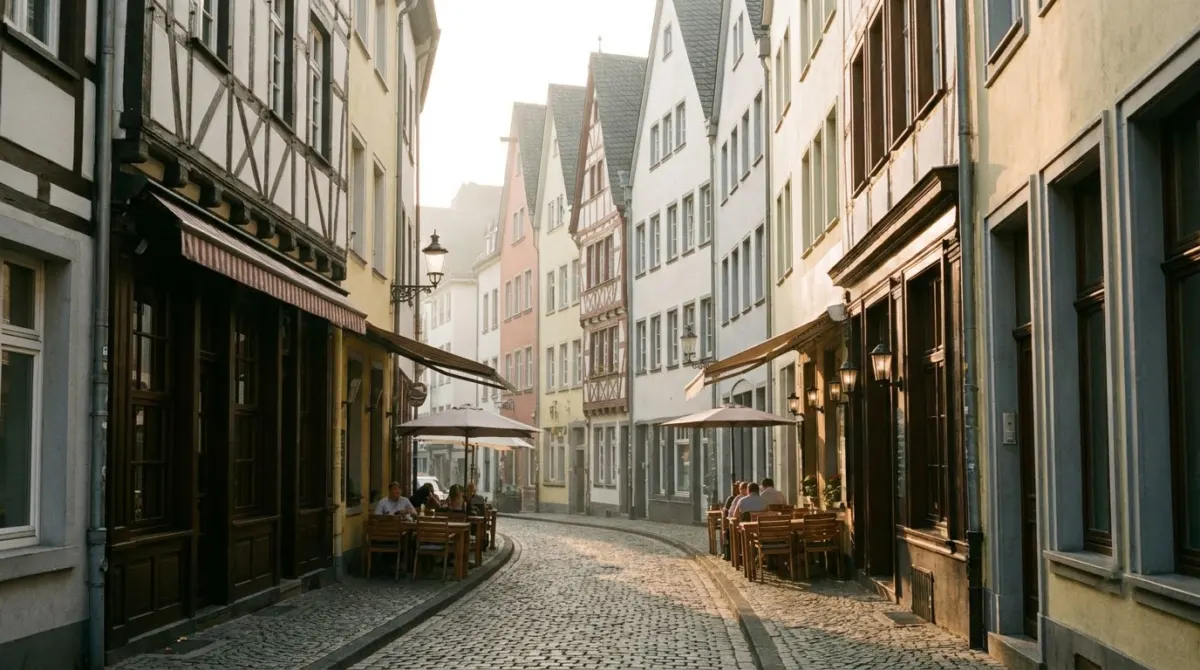
The old town runs from the Dom down to the Rhine: narrow streets, painted gabled houses, and the Brauhaus taverns that serve Kölsch, the local beer, in small 200ml glasses that are replaced until you put a beer mat on top.
Most of this was rebuilt after the war, and the area is tourist-facing in a way the rest of Cologne is not.
Staying here is convenient and loud. The streets between the cathedral and the river are busy into the night, particularly at weekends and during Carnival, when the entire district becomes one event.
The blocks immediately around the Hauptbahnhof are the practical choice for one night between trains, with the cathedral on one side and the old town a few minutes beyond it. The station also has a rear exit onto Breslauer Platz, which avoids the crowds on the cathedral forecourt when you are carrying luggage.
The Innenstadt and the Belgisches Viertel
South-west of the cathedral, the Innenstadt holds the shopping streets and the museums, including the Ludwig Museum beside the cathedral and the Wallraf-Richartz in the old town.
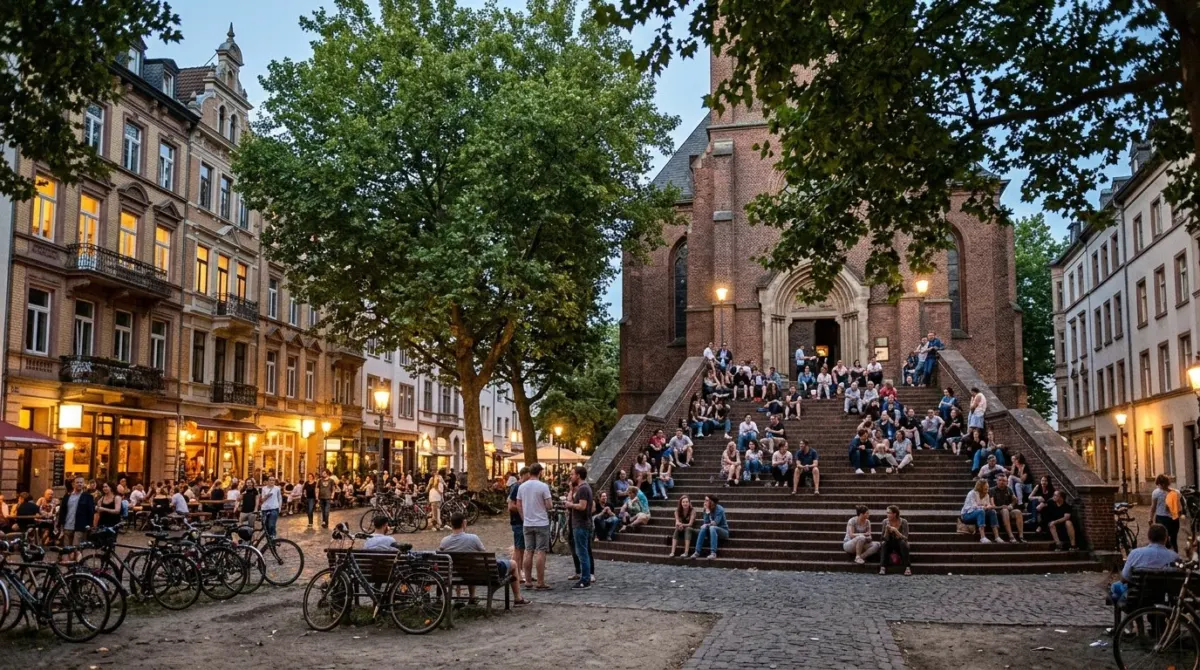
Beyond it, the Belgisches Viertel is where Cologne actually eats and drinks: independent restaurants, bars and shops around Brüsseler Platz, fifteen minutes’ walk from the cathedral.
For a second night, or for anyone who would rather not sleep above a Brauhaus, this is the better area, and it is usually better value.
Südstadt and Deutz
Südstadt, south along the river, is residential, full of cafes and bars used by people who live there, and about ten minutes by tram from the centre. It is the local alternative and the cheapest of the central options.
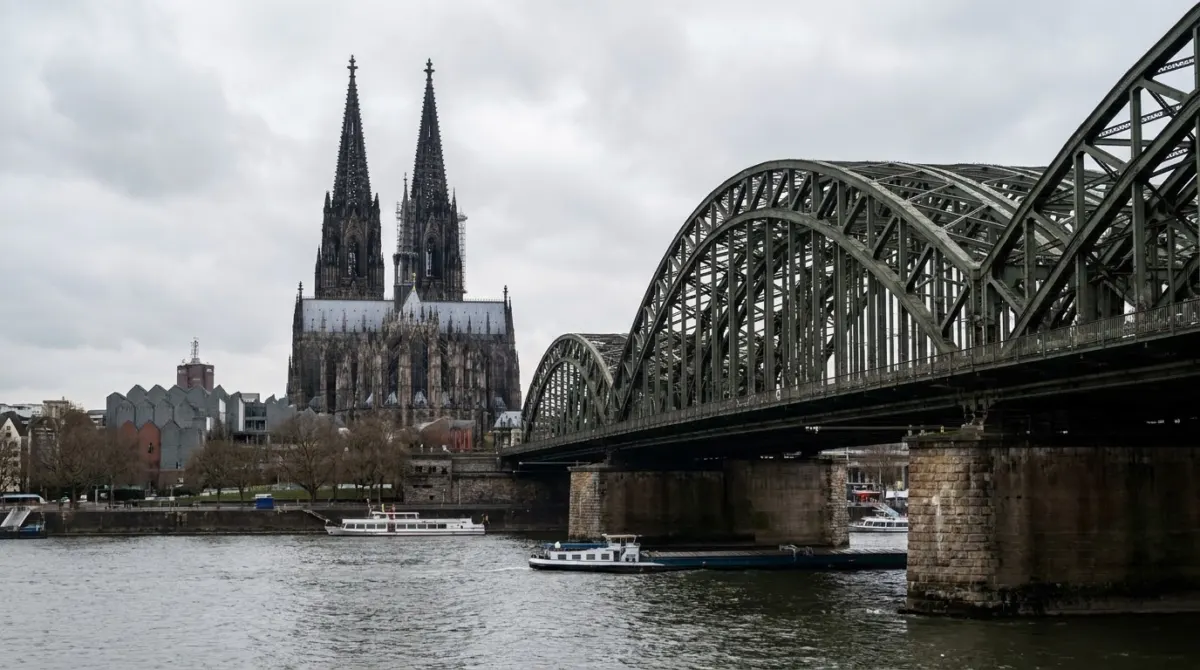
Deutz, across the Rhine, holds the trade fair complex and a cluster of business hotels. The advantage is the view: the classic photograph of Cologne — cathedral, bridge and river — is taken from this side. The disadvantage is that there is little to do here in the evening, and during a fair the rates rise sharply.
Ehrenfeld, the Agnesviertel and the Rheinauhafen
Three more areas come up once you look past the obvious, and each suits a particular kind of stay.
Ehrenfeld, in the west of the city, grew up around nineteenth-century industry, and its old factory buildings now hold bars, clubs, cafes and small shops. Street art covers a good deal of it, and Venloer Straße is its main spine. It is the liveliest district outside the centre after dark, and the place to look if you are in Cologne for a concert or a night out rather than for the cathedral. The trade-off is the journey in: plan on a tram or train to the old town rather than a walk.
The Agnesviertel, north of the centre around the neo-Gothic church of St Agnes, is the opposite: residential, leafy and quiet, with neighbourhood cafes and shops. Ebertplatz, at its southern edge, is a tram hub, so the cathedral is only a few stops away. It suits a longer stay in an apartment more than a one-night stop.
The Rheinauhafen is the old harbour south of the old town, redeveloped as a riverside promenade beneath the three Kranhäuser, the crane-shaped towers that are now a city landmark. The Chocolate Museum sits at its northern tip. It is more a place to walk than to sleep, but it joins the old town to the Südstadt along the water, and a room at the northern end of the Südstadt puts it on your doorstep.
Carnival changes everything
Cologne’s Karneval is one of the largest street festivals in Europe, running in the days before Lent and peaking on the Thursday and the Monday, when the city effectively stops working.
During that week accommodation sells out months ahead, rates multiply, minimum stays appear, and the centre is impassable. If you are coming for it, book very early. If you are not, check the dates, because a normal city break is not possible in Cologne that week.
The Christmas markets from late November have a milder version of the same effect, filling weekends.
Trade fair weeks at the Koelnmesse
After Carnival, the trade fairs are the next biggest thing that moves hotel prices in Cologne, and they are easier to miss because nothing about the city looks different.
The Koelnmesse in Deutz hosts some of the largest fairs in Europe. The ones with the widest effect are gamescom, the video games show in late August, which draws a large public crowd as well as the trade; imm cologne, the furniture fair in January; and Anuga, the food fair held every other October. In 2027, imm cologne is scheduled for 19 to 22 January and Anuga for 9 to 13 October.
During a big fair, Deutz fills first and the centre follows. Before you book any stay, and especially a midweek one, check the Koelnmesse calendar for your dates. If a major fair is on and you are not attending it, moving the trip by a week usually saves more than any choice of area or hotel.
What the accommodation is like
Cologne was heavily bombed and rebuilt, so the stock is mostly modern: lifts, standard rooms, reliable plumbing, and better accessibility than older German cities.
Business travel drives midweek pricing because of the trade fairs, which means weekends are often cheaper — except during Carnival, Christmas markets or a major fair, when nothing is cheap.
Apartments are widespread and suit stays of three nights or more. Hostels cluster near the station and in the Südstadt.
Where not to stay
Directly on the old town’s main drinking streets, unless you intend to be out until they close.
The outer business parks, which look cheap and are a long tram ride from anything worth doing.
Anywhere at all during Carnival without checking what week you have booked — it is the single biggest variable in this city.
What you are here for
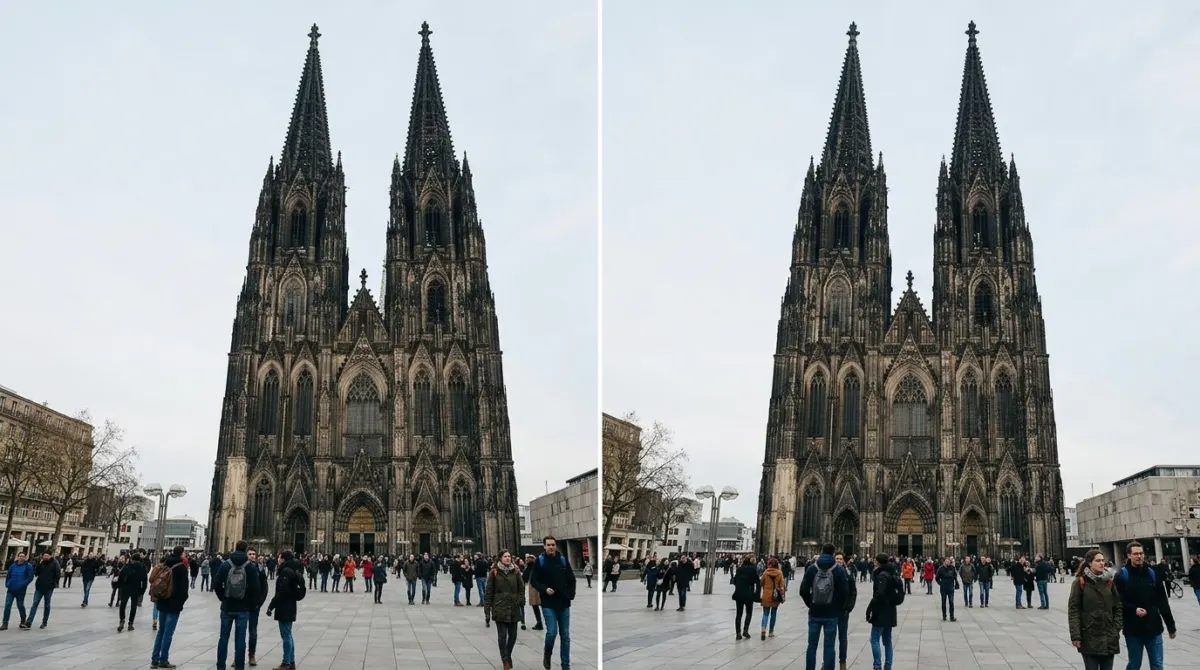
The cathedral is the reason most people stop. It took from 1248 to 1880 to complete, it was the tallest building in the world when it was finished, and it stands almost untouched in a city that was largely destroyed around it. The south tower can be climbed; it is over five hundred steps.
The Ludwig Museum, beside the cathedral, holds one of the strongest twentieth-century collections in Europe, including a large body of pop art and German expressionism.
The Roman-Germanic Museum covers the city’s first incarnation as Colonia, and the Roman remains under the modern streets.
The Rhine promenade and the bridges are where Cologne looks best, particularly from the Deutz side at dusk.
Kölsch, and how it works
The local beer is worth its own section, because the way it is served surprises people.
Kölsch is a pale, light beer served in a Stange, a straight 200ml glass. Waiters in the Brauhaus taverns — traditionally called Köbes — circulate with a tray and replace your glass as soon as it is empty, without being asked, marking each one on your beer mat.
The way to stop is to put the beer mat on top of the glass. Until you do, they keep coming.
This is the single most useful thing to know before your first evening in the old town.
How Cologne fits a longer trip
The city sits on the main line between Frankfurt, Brussels and Amsterdam, which makes it one of the easiest stops in Europe to add.
Frankfurt is about an hour on the fast train, Brussels roughly two, Amsterdam under three, and Paris a little over three. The Rhine Gorge starts about ninety minutes south.
Our 10 day Germany itinerary uses Cologne as the end of the route, and our Germany itinerary covers the alternatives.
Day trips from Cologne
Bonn is twenty minutes by train: the former capital of West Germany, with Beethoven’s birthplace and a good run of museums.
Düsseldorf is half an hour, and the rivalry between the two cities is real enough to be entertaining — its own beer, Altbier, is dark where Kölsch is pale.
Aachen is an hour, with Charlemagne’s chapel at the heart of its cathedral.
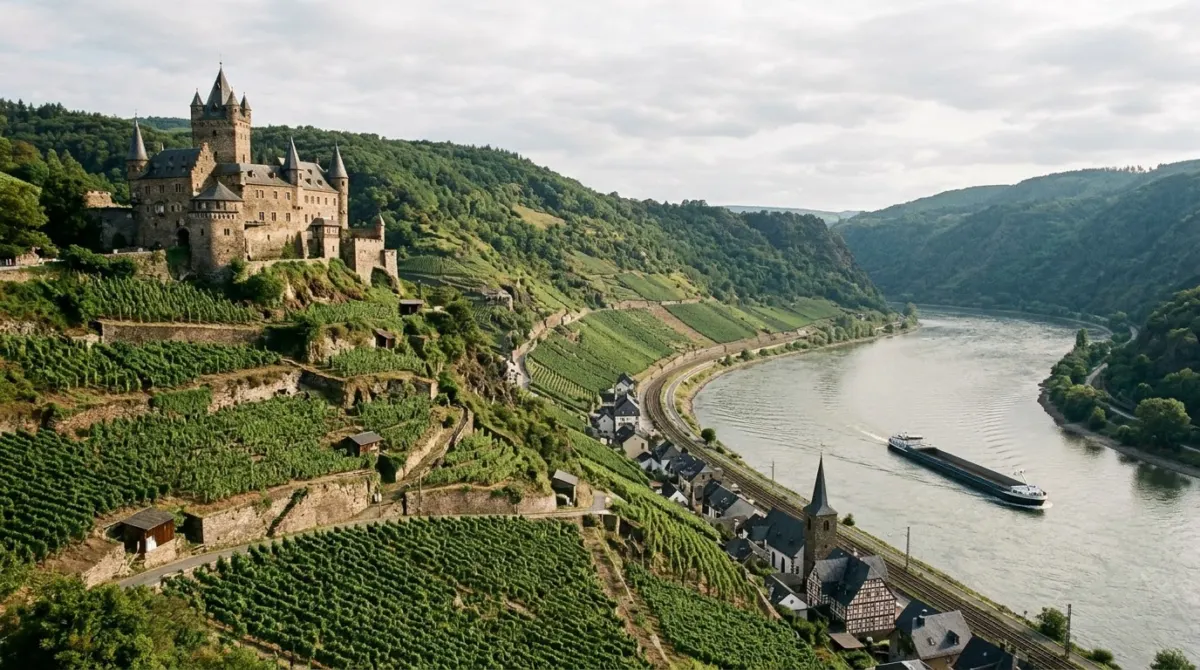
The Rhine Gorge is ninety minutes to Koblenz and the start of the castles.
When to go
May to September for the river and the outdoor tables along the Rhine.
Late November and December for the Christmas markets, of which Cologne has several, the largest beneath the cathedral.
Carnival, in the days before Lent, if you specifically want the largest street party in Germany — and definitely not if you want a quiet city break.
Cologne with children
Better than it sounds, and three things carry a family day.
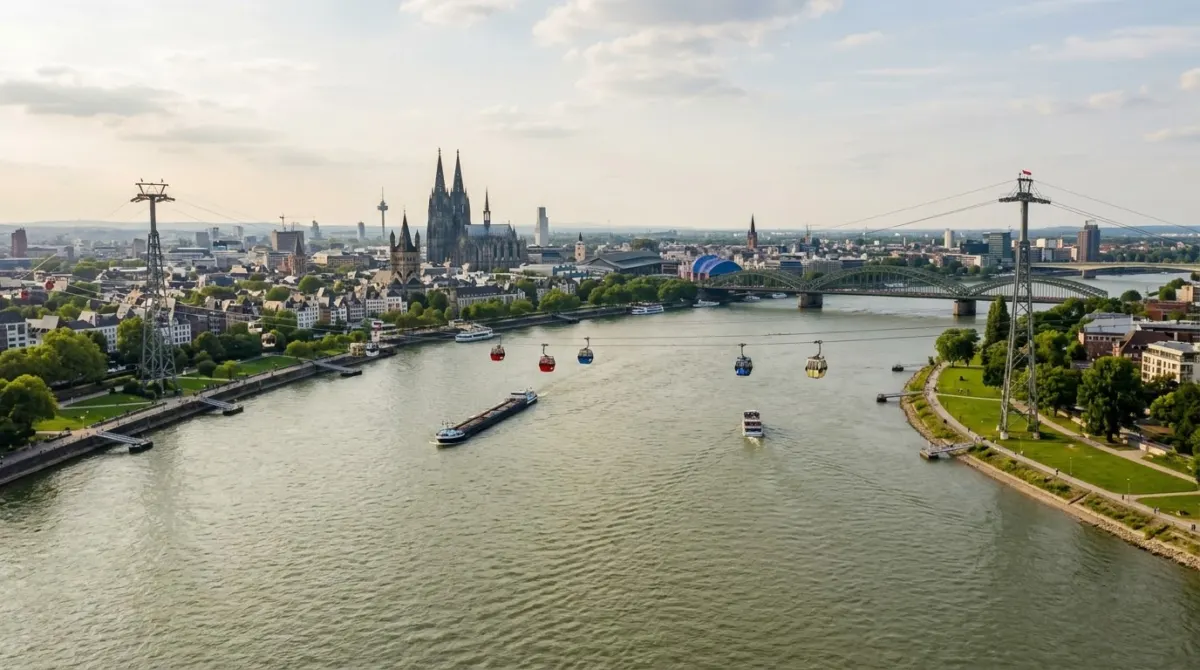
The Chocolate Museum on the river is exactly what it claims to be and is the most popular paid attraction in the city after the cathedral. The cable car across the Rhine gives a view and a short ride for very little effort. And the Rhine boats run short hops along the river, which turns transport into an outing.
For a family stay, the Südstadt or Deutz both give larger rooms and quieter streets than the old town, with a short tram ride into the centre.
Getting around Cologne
The centre is compact: cathedral to Neumarkt is ten minutes on foot and the old town is smaller still.
Beyond that, the tram and U-Bahn network is dense and frequent, with a single ticket covering the city. The Südstadt is about ten minutes by tram and the Belgisches Viertel fifteen on foot.
The airport is around fifteen minutes by train from the Hauptbahnhof, and long-distance trains put Frankfurt an hour away and Brussels about two. Few German cities are easier to reach or to leave.
How many nights, and when
One night is the standard, and it works: arrive by train, see the cathedral, walk the old town, eat in a Brauhaus. Two nights add the Ludwig Museum and the Belgisches Viertel, which is where the city is more itself.
Avoid Carnival week unless that is specifically why you are coming, and book well ahead for the Christmas market weekends. Any other week, Cologne is one of the easier German cities to book at short notice.
The short version
Stay in the Innenstadt between the cathedral and Neumarkt, or one street back from the old town’s drinking streets if you want to sleep. The Belgisches Viertel is better for food, the Südstadt for value, Deutz for the view and the trade fair. Put your beer mat on the glass when you have had enough.
Frequently asked questions
What is the best area to stay in Cologne?
The Innenstadt between the cathedral and Neumarkt for a first visit, since everything central is then on foot. The Belgisches Viertel is better for food and drink, and the Südstadt is the quieter, cheaper local alternative.
Is it worth staying near Cologne Cathedral?
It is convenient — the cathedral is directly outside the main station — and it is loud. The streets between the cathedral and the river are busy into the night, so look one street back if you want to sleep.
How many days do you need in Cologne?
One night covers the cathedral, the old town and a Brauhaus evening. Two adds the museums and the Belgisches Viertel. Three or more if you are using it as a base for Bonn, Düsseldorf or the Rhine Gorge.
What happens in Cologne during Carnival?
The city effectively stops working for several days before Lent. Accommodation sells out months ahead, rates multiply, minimum stays appear and the centre is impassable. Check the dates before booking if a normal city break is what you want.
Is Cologne cheaper than Frankfurt or Munich?
Generally yes, outside Carnival, the Christmas markets and major trade fairs. Like Frankfurt it runs partly on business travel, so weekends are often cheaper than midweek.
How far is Cologne airport from the city?
About fifteen minutes by train from the Hauptbahnhof, which is one of the shortest airport connections of any large German city. Long-distance trains also make Cologne an easy stop between Frankfurt, Brussels and Amsterdam.
Keep planning Germany
- Where to Stay for Oktoberfest: Buy the Walk Home
- Where to Stay in Frankfurt: The City, the Station or the Airport
- Best Hotels in Munich: What the Money Actually Buys
- Where to Stay in Berlin: Pick a District, Not a Hotel
- Where to Stay in Munich: Inside the Ring, or One Stop Out
- How Many Days in Berlin? Four, and Why It Needs More Than Munich
- How Many Days in Munich? Three, and Four If You Use It as a Base
- 10 Day Germany Itinerary: Five Bases, Four Trains
Written and checked by
Triplarks Editorial
An editorial desk, not an invented persona: research, drafting and fact-checking are done by the same small team. Every number here carries the date it was read.