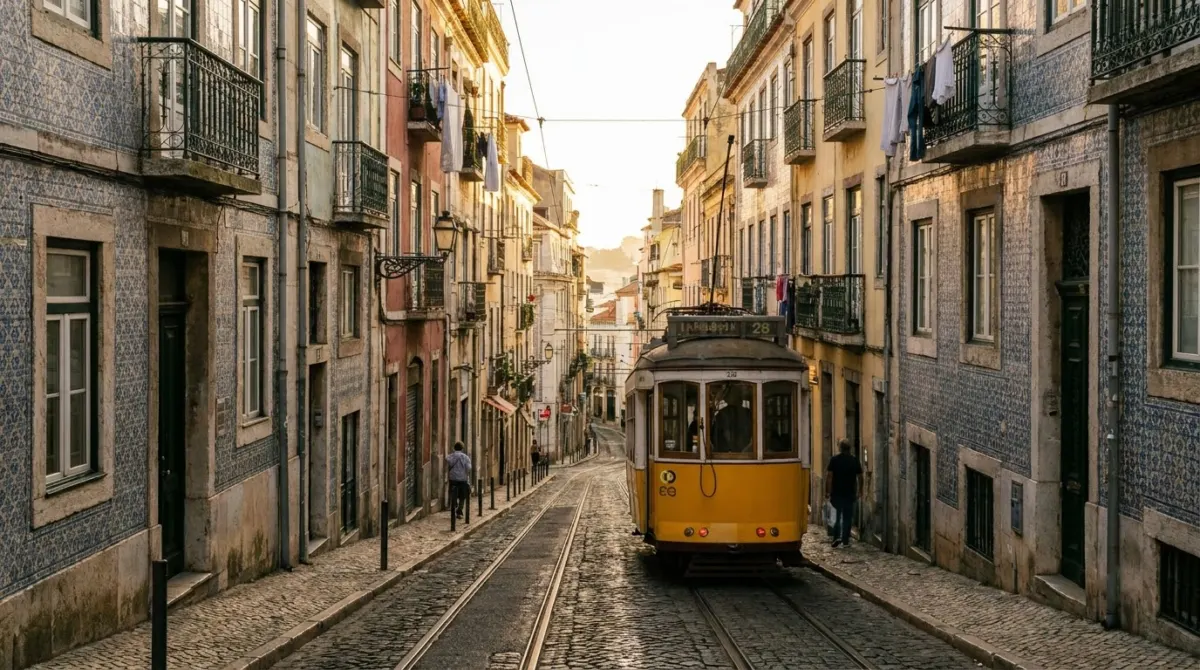
Quick answer
Ask about the stairs before the star rating — much of central Lisbon has no lift and the city is built on hills. Baixa or Chiado for a first visit, Principe Real for quiet, the Avenida for lifts and the airport metro, and not Bairro Alto if you intend to sleep.
On this page
- Best hotels in Lisbon: the five kinds of place to stay
- The hills, which decide more than the stars
- Which district suits which trip
- Four things to check before booking
- What the money buys
- Getting in from the airport
- What the districts feel like
- Trams, lifts and getting uphill
- What to do with three or four days
- When Lisbon fills up and when it is cheap
- What Lisbon costs, relatively
- Getting around
- Lisbon with children
- Rooftops, terraces and views over the city
- Rossio, Belém and the parts people get wrong
- Where not to stay
- How many nights in Lisbon
- The short version
- Frequently asked questions
This is not a ranked list of hotels. Lisbon’s accommodation is shaped by two physical facts that matter far more than any individual property: the city is built on hills, and much of its central housing stock is nineteenth-century buildings without lifts.
Some links below are affiliate links. We may earn a commission if you book through them, at no extra cost to you. We do not rank hotels, and any prices on the map come live from the booking sites.
What follows is what the different kinds of Lisbon accommodation actually get you, which districts suit which trips, and the four things worth checking before booking. For the neighbourhood question first, see where to stay in Lisbon, and for the wider trip our Portugal itinerary.
Best hotels in Lisbon: the five kinds of place to stay
Converted townhouses. Nineteenth-century buildings in the central districts, turned into small hotels or guesthouses. Tiled facades, high ceilings, and often a staircase rather than a lift.
Modern hotels. Mostly along the Avenida da Liberdade and in the newer business districts. Lifts, air conditioning, reliable rooms.
Apartments. Extremely widespread in Lisbon, and the obvious answer for three nights or more.
Pousadas and design hotels in converted palaces and convents, which are the upper end.
Hostels. Lisbon’s are among the best in Europe and routinely offer private rooms.
The hills, which decide more than the stars
Lisbon is built across seven hills, and the difference between a flat ten-minute walk and a steep ten-minute climb is the difference between using your room and dreading it.
Baixa, the grid between the two squares, is flat. Chiado is above it. Alfama and Bairro Alto are steep, with stairs and lanes too narrow for taxis.
If you have luggage, mobility issues or small children, this matters more than the district’s character. Ask specifically how far the nearest vehicle can get and how many steps follow.
Map shows live availability and prices. We may earn a commission on bookings made through it, at no extra cost to you.
Which district suits which trip
Baixa and Chiado for a first visit: central, flat at the bottom, walkable to everything, well served by metro.
Alfama for the oldest part of the city, with the castle above it and fado in the evening. Beautiful and vertical.
Bairro Alto for nightlife, which means noise until three or four at weekends.
Príncipe Real for a quieter, more residential version of central Lisbon, uphill from Chiado.
Avenida for modern hotels, lifts and a straight metro line to the airport.
Belém for the monuments and the river, which is twenty minutes out and not where you want to sleep on a short trip.
Four things to check before booking
A lift. Many central buildings have none, and four flights with a suitcase is a bad introduction to a holiday.
Noise. Bairro Alto and parts of Cais do Sodré are loud until very late; the tiled streets carry sound.
Air conditioning. Lisbon is hot in July and August and older buildings often have none.
How close a vehicle can get, which in Alfama in particular can be a hundred metres of steps away.
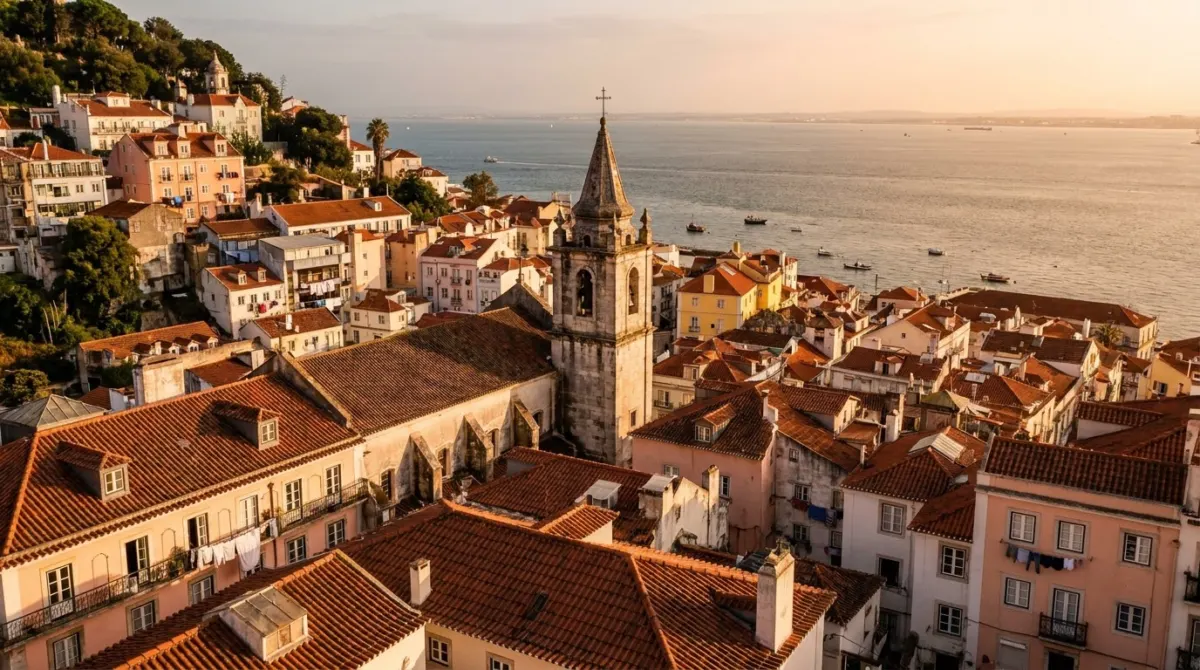
What the money buys
Lisbon is cheaper than most western European capitals, and the curve is gentle.
At the lower end, a guesthouse room up stairs in a central district, usually clean and small, with breakfast as an extra.
In the middle, a lift, air conditioning, a proper breakfast and often a terrace — terraces are common here and are worth more than they would be elsewhere, because of the light.
At the upper end, a converted palace or a design hotel with a view over the river, which is where Lisbon’s upper tier is genuinely good value compared with Paris or Rome.
Getting in from the airport
Lisbon airport is unusually close to the centre: the red metro line runs from the airport into the city, with one change at Alameda for Baixa-Chiado or at São Sebastião for the Avenida.
That makes the Avenida and the northern centre particularly convenient for short stays, and it means an airport hotel is rarely worth it.
What the districts feel like
Lisbon’s character changes sharply between neighbourhoods a few hundred metres apart.
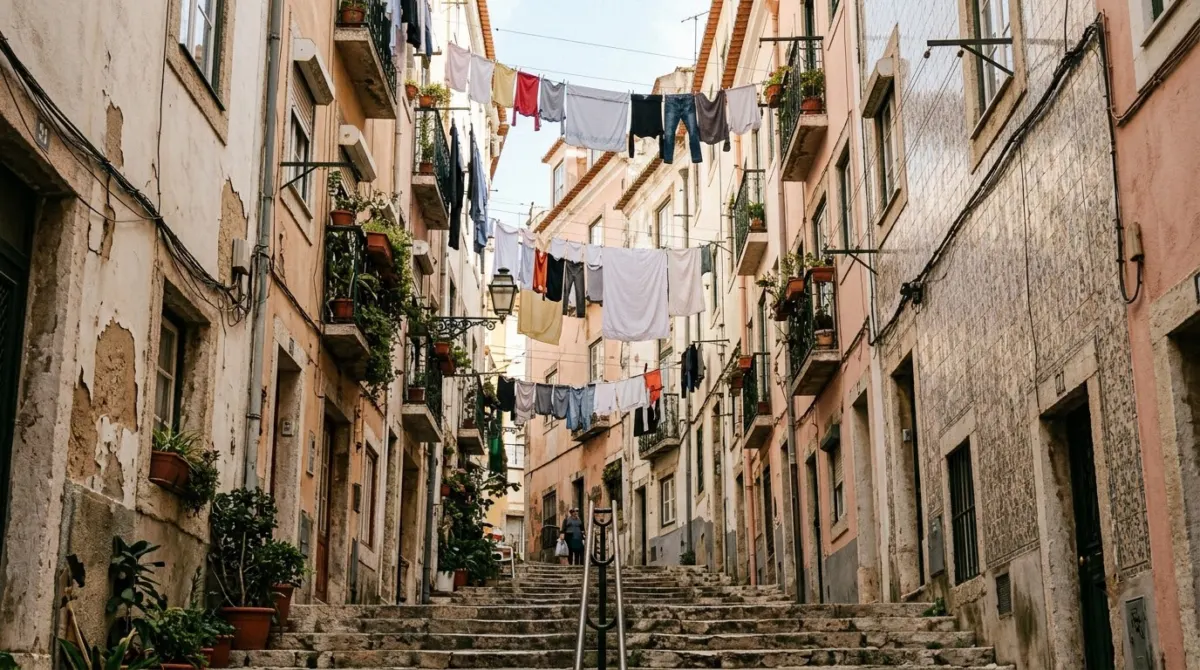
Baixa is the flat grid rebuilt after the 1755 earthquake: wide streets, uniform facades, and tourist-facing at ground level.
Chiado above it is the elegant shopping and theatre district.
Alfama survived the earthquake and is medieval in layout: lanes, stairs, washing lines and fado bars.
Bairro Alto is quiet by day and the centre of the city’s nightlife after ten.
Príncipe Real is residential, leafy and increasingly expensive.
Avenida is the broad boulevard with the international hotels.
Trams, lifts and getting uphill
Lisbon’s hills are served by infrastructure that is itself part of the attraction.
The 28 tram climbs through Alfama and is both a sight and a genuinely useful route, though it is crowded and pickpocketed in equal measure.
The historic funiculars — Glória, Bica and Lavra — and the Santa Justa lift have been closed since the Glória accident in September 2025; Glória is not due back before 2029 and the others have no reopening date.
The trams and buses are on the normal transport ticket, which makes a day pass worth buying if your accommodation is uphill.
What to do with three or four days
Day 1: Baixa, Chiado and Alfama, with the castle above and fado in the evening.

Day 2: Belém, twenty minutes west by tram or train, for the monastery, the tower and the custard tarts that were invented there.
Day 3: Sintra, forty minutes by train, for the palaces in the hills. It is a full day and it is extremely busy, so go early and book the main palace.
Day 4: the coast at Cascais, or the LX Factory and the markets, or simply the city again.
When Lisbon fills up and when it is cheap
The season is long and the peaks are predictable.
April to June and September to October are the busiest and most pleasant.
June has the Santo António festival, when the old districts fill entirely for several nights.
July and August are hot and busy; air conditioning matters.
November to February is mild, quiet and the cheapest, with the museums empty and the light at its best for photographs.
What Lisbon costs, relatively
Lisbon is noticeably cheaper than Paris, Amsterdam or Copenhagen, and it has risen sharply in recent years.
The gap is widest in restaurants and narrowest in central hotels, where demand has pushed prices towards western European levels. Apartments are where the value is, particularly for stays over three nights.
Two practical notes. Couvert — the bread, olives and cheese that arrive unordered — is charged for, and declining it is normal. And a café standing at the counter costs a fraction of the same coffee at an outside table.
Getting around
Lisbon’s transport is a mix of metro, trams, buses and ferries.
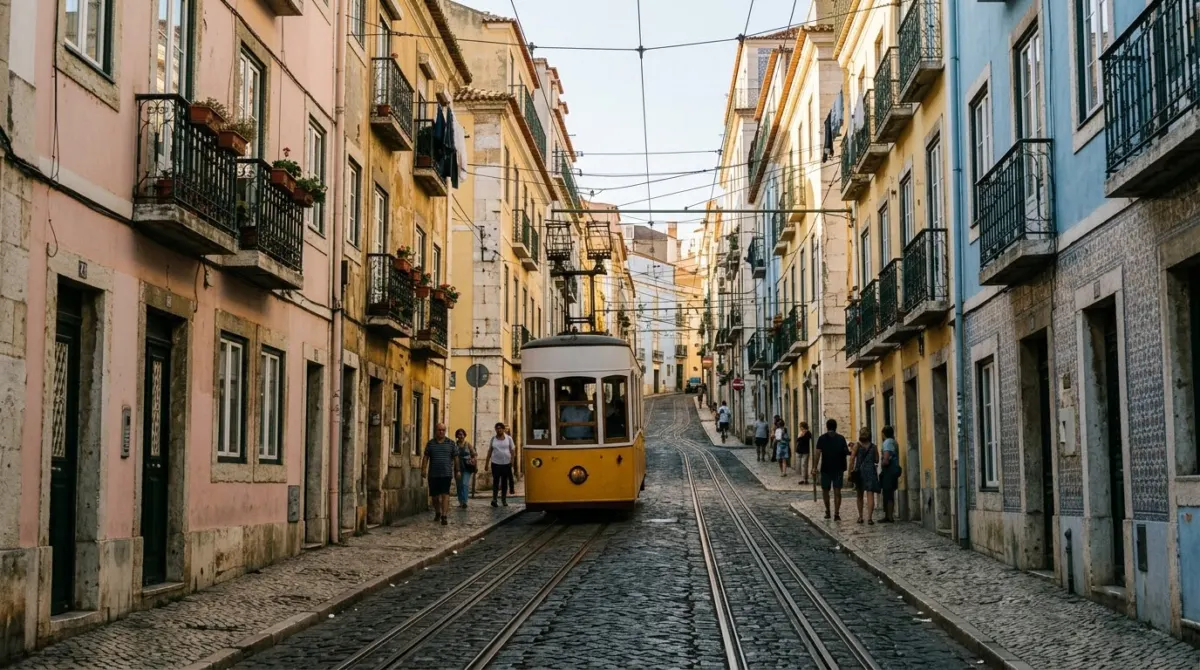
The metro is modern and fast, and the red line from the airport reaches Baixa-Chiado and the Avenida with one change.
The trams are historic and slow, and the 28 in particular is as much an attraction as a service.
Buy a rechargeable card at any station and load it with a day pass if you are staying uphill — the trams and buses are included, which makes the hills manageable.
Lisbon with children
The hills are the obstacle and the transport is the answer: the trams are a ride as far as a child is concerned and are on the normal ticket, though the historic funiculars and the Santa Justa lift have been closed since September 2025.
The Oceanarium at Parque das Nações is one of the largest in Europe and a full day. The castle has walls to walk. And the ferry across the Tagus is twenty minutes and costs almost nothing.
For a family stay, Baixa or the Avenida are flatter and have more lifts than Alfama or Bairro Alto.
Rooftops, terraces and views over the city
Lisbon is built on hills facing a river, which means the view is a product the city sells, and a rooftop is the most common way it is sold.
What a rooftop actually gets you. In Baixa and Chiado it is usually a terrace bar on the sixth or seventh floor looking across the lower town to the Tejo. In Alfama and Graça the buildings are lower but the ground is higher, so the view comes from the street rather than the roof. In Avenida da Liberdade the buildings are tall and the view is of the avenue.
The catch. A rooftop bar is open to the public in most properties, which means the top floor is the loudest part of the building until late. If the terrace is the reason you booked, ask whether your room is under it.
Spas are concentrated in the larger properties on Avenida da Liberdade and in the converted palaces in Chiado and Principe Real, where there was room to build one below ground.
Rossio, Belém and the parts people get wrong
Two place names cause most of the confusion when booking Lisbon.
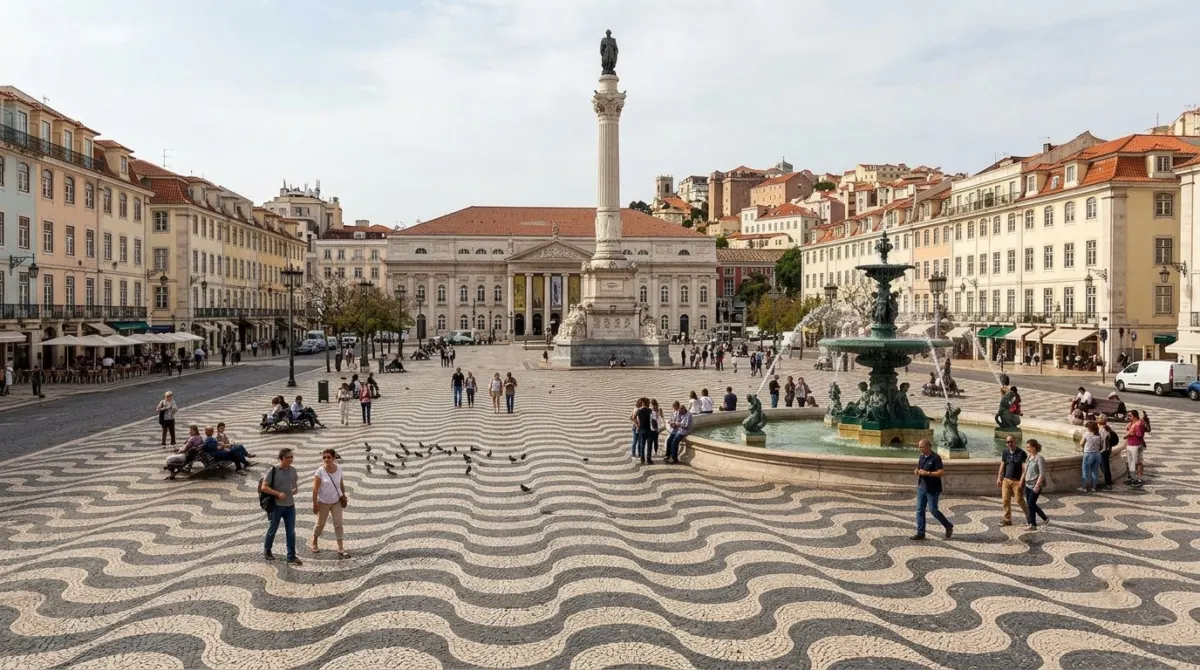
Rossio is the main square of the lower town and also a railway station, which is why listings use it as a location even when the property is some way off. It is central, flat and busy, and a good anchor for a first visit — but check the walking distance rather than trusting the name.
Belém is where the tower, the monastery and the pastries are, and it is six kilometres west of the centre along the river. It is a half day out, not a place to sleep: staying there puts you a tram ride from every evening you came for.
Where not to stay
Directly on Bairro Alto’s bar streets, unless you intend to be out until they close.
Deep in Alfama with heavy luggage, where the nearest vehicle may be a hundred metres of steps away.
Parque das Nacoes, the modern riverside district, which is pleasant and twenty-five minutes from everything historic.
Belém, which has the monuments and almost nothing in the evening.
How many nights in Lisbon
Three nights covers the central districts and Belém without rushing.
Four adds Sintra, which is forty minutes away by train and a full day, and which should be booked and started early because it is one of the busiest sites in Portugal.
Five or more turns Lisbon into a base for Cascais, the coast and the beaches across the river, none of which need a car.
Two nights is a weekend and it works, at the cost of Belém or Sintra.
The short version
Ask about the stairs before the star rating, because much of central Lisbon has no lift and the city is built on hills. Baixa or Chiado for a first visit, Alfama for atmosphere if you travel light, Príncipe Real for quiet, the Avenida for lifts and the airport metro, and not Bairro Alto if you intend to sleep. Three nights for the city, four with Sintra.
Frequently asked questions
What is the best area to stay in Lisbon?
Baixa or Chiado for a first visit — central, walkable and well connected. Alfama for the oldest part of the city if you accept the hills, Príncipe Real for somewhere quieter, and the Avenida for modern hotels with lifts and a direct metro to the airport.
Do Lisbon hotels have lifts?
Many central buildings do not. The housing stock is nineteenth-century and four flights of stairs with luggage is common, so check before booking — it matters more here than the star rating.
Is Alfama a good place to stay?
It is the most atmospheric district and the most vertical, with stairs and lanes too narrow for cars. Beautiful for a short stay without heavy luggage, difficult with either.
Is Bairro Alto noisy?
Yes, until three or four in the morning at weekends. It is the nightlife district and the narrow tiled streets carry sound. Stay a street or two away if you want to sleep.
When is Lisbon cheapest?
November to February, when the city is mild, quiet and noticeably cheaper. April to June and September to October are the peak months, and the Santo António festival in June fills the old districts completely.
How far is Lisbon airport from the centre?
It is a short metro ride on the red line, with one change for Baixa-Chiado or the Avenida, which is unusually close for a European capital and means an airport hotel is rarely worth it.
Keep planning Portugal
- Where to Stay in the Algarve: Three Coasts, Not One
- Where to Stay in Porto: The Question Is Vertical, Not Horizontal
- Where to Stay in Lisbon: Best Areas, and the Hill Problem
- How Many Days in Porto? Add One for the Douro
- How Many Days in Lisbon? Four, and the Hills Are Why
- Portugal Itinerary: A Narrow Country, Not a Small One
Written and checked by
Triplarks Editorial
An editorial desk, not an invented persona: research, drafting and fact-checking are done by the same small team. Every number here carries the date it was read.