
Manuel Antonio is the smallest national park in Costa Rica and the most visited, and both halves of that sentence matter. The famous Manuel Antonio National Park packs sloths, four species of monkey and four beaches into an area you can walk across in an afternoon — which is why roughly 2,500 people a day want in.
Some links below are affiliate links. We may earn a commission if you book through them, at no extra cost to you. We do not rank hotels, and any prices on the map come live from the booking sites.
Quick answer: where to stay in Manuel Antonio. The ridge has the ocean views and pools, but you drive or bus to the beach. Near the park entrance you can walk to Playa Espadilla, at the cost of more noise. Quepos is cheapest, 15 minutes away. Book several months ahead for December to April.
Check hotels in Manuel Antonio →Check Quepos →See them on a map ↓
It is also the place where more visitors get turned away at the gate than anywhere else in the country, for a reason nobody warns them about. That is the first thing in this guide, because getting it wrong costs you the whole day.
Fees, opening days and the ticket system were checked on 16 August 2026.
⚠ Read this first: tickets are online only, and the park shuts on Tuesdays
Three rules decide whether you get in at all.
- Tickets are sold only through the SINAC website. They are not sold at the entrance booth. Turning up without one means you do not go in. Buy at serviciosenlinea.sinac.go.cr.
- The park is closed on Tuesdays. It opens Wednesday to Monday, 7:00 to 15:00.
- Entry is capped at around 2,500 visitors a day and sold as timed slots. In high season these sell out days ahead. Book as soon as your dates are fixed.
Checked against the SINAC park page and the Costa Rican tourism board on 16 August 2026. Opening days have changed more than once in recent years, so confirm before you travel.
One more thing that catches people: men in high-vis vests near the entrance will offer to sell you tickets or guide services. Certified guides exist and are worth hiring — but buy the ticket yourself, online, first.
Where Manuel Antonio, Costa Rica is: Quepos and the village
Manuel Antonio sits on Costa Rica’s central Pacific coast in Puntarenas province, about three hours from San José. The area is really two places joined by one steep ridge road:
- Quepos — a working town at the north end, with the bus terminal, the marina, the supermarkets, the bank and the cheapest food. Not on a beach.
- The village of Manuel Antonio — seven kilometres south along the ridge, ending at the park gate and Playa Espadilla. Where the hotels and the views are.
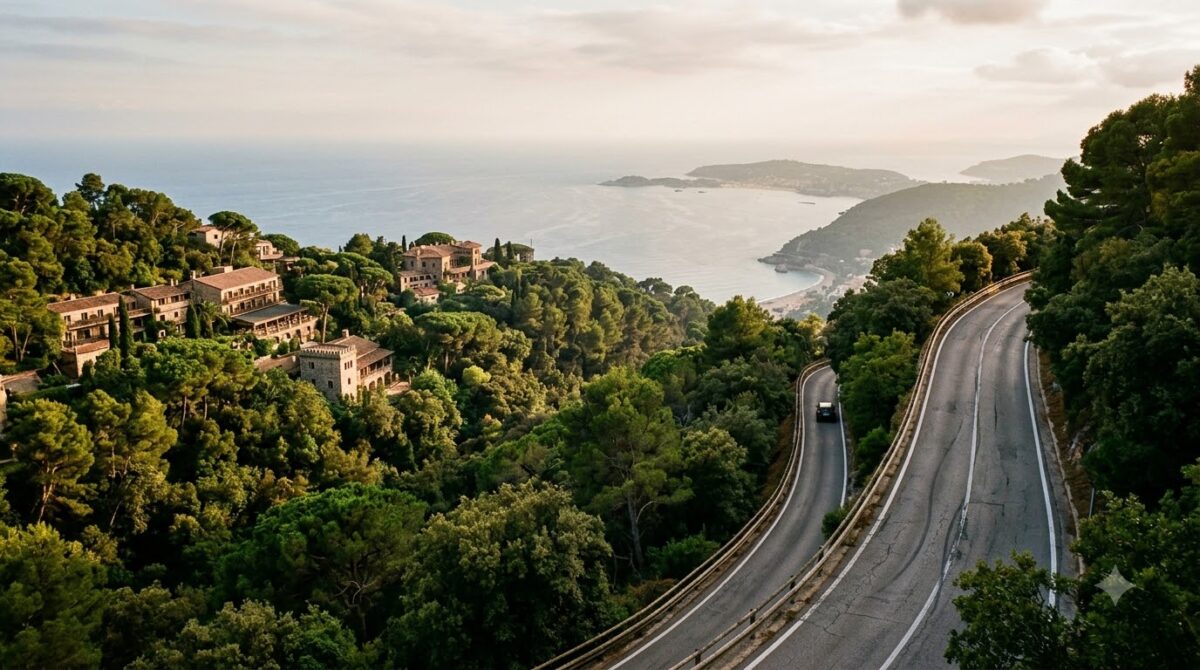
The road between them climbs a headland with the ocean on both sides, which is why so many Manuel Antonio hotels advertise a view and so few are actually on the sand. Getting from Quepos to Manuel Antonio takes 15 minutes by bus or taxi, and the local bus runs every half hour for under a dollar.
Manuel Antonio National Park: the smallest of Costa Rica’s national parks
At just under 1,700 hectares on land, Manuel Antonio is the smallest national park in Costa Rica. It is also, by a wide margin, the most visited. That combination is the whole character of the place: extraordinary wildlife density, and a lot of people looking at it.
- Entry is US$18 for adult non-residents and US$5 for children aged 2 to 12, free under 2.
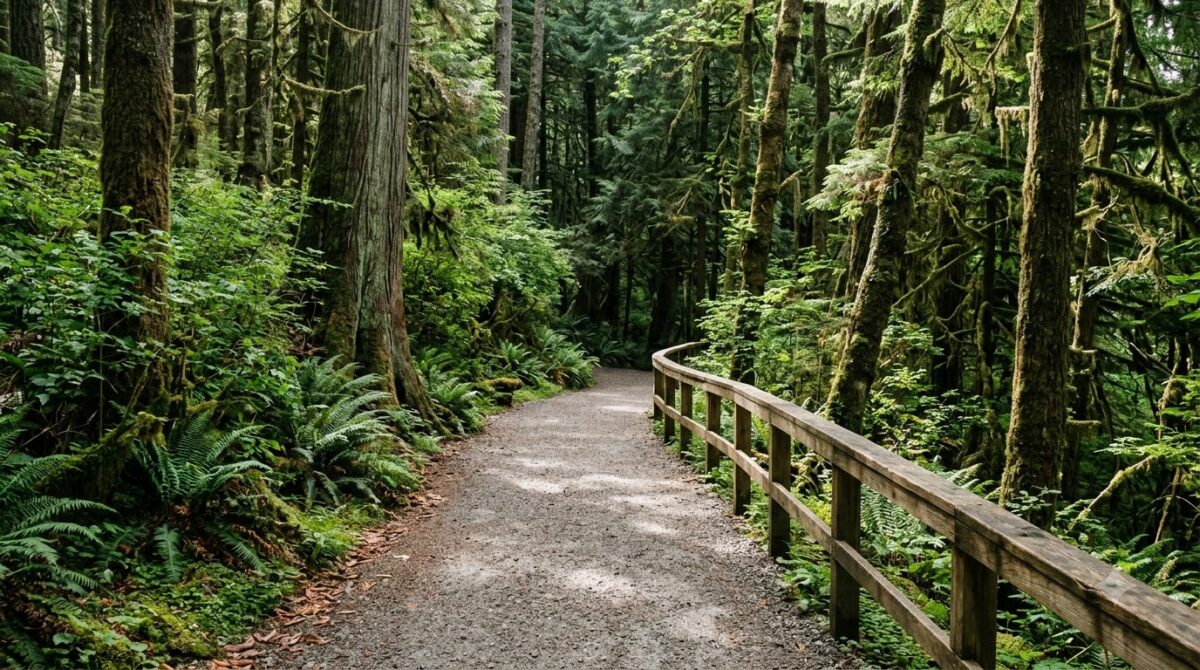
- The main trail is flat, wide and gravelled, running about 1.3 km from the gate to the beaches. Pushchair and wheelchair users manage the main section.
- Side trails give the only real hiking in the park, climbing to Punta Catedral and the Mirador, which are steeper and give the best views over the coast.
- Allow three to four hours for the trails and a swim.
- No outside food is allowed beyond limited items, so a picnic on the sand is not an option, partly because of the monkeys. There are drinking-water points.
Should you hire a guide for a tour of Manuel Antonio?
Yes, for the first visit. A certified naturalist costs around US$25 to US$40 per person in a small group and carries the spotting scope. Sloths sit motionless forty metres up in dense canopy; without someone who knows which tree, you will walk past several.
If you would rather go alone, walk slowly and stop wherever a group has gathered. The guides point things out loudly and the whole trail benefits.
The best beaches of Manuel Antonio, inside the park and outside
Four beaches sit inside the park boundary and several more sit outside it. These are the beautiful beaches the area is known for, and they are genuinely different from each other.
Playa Manuel Antonio: the Manuel Antonio beach itself
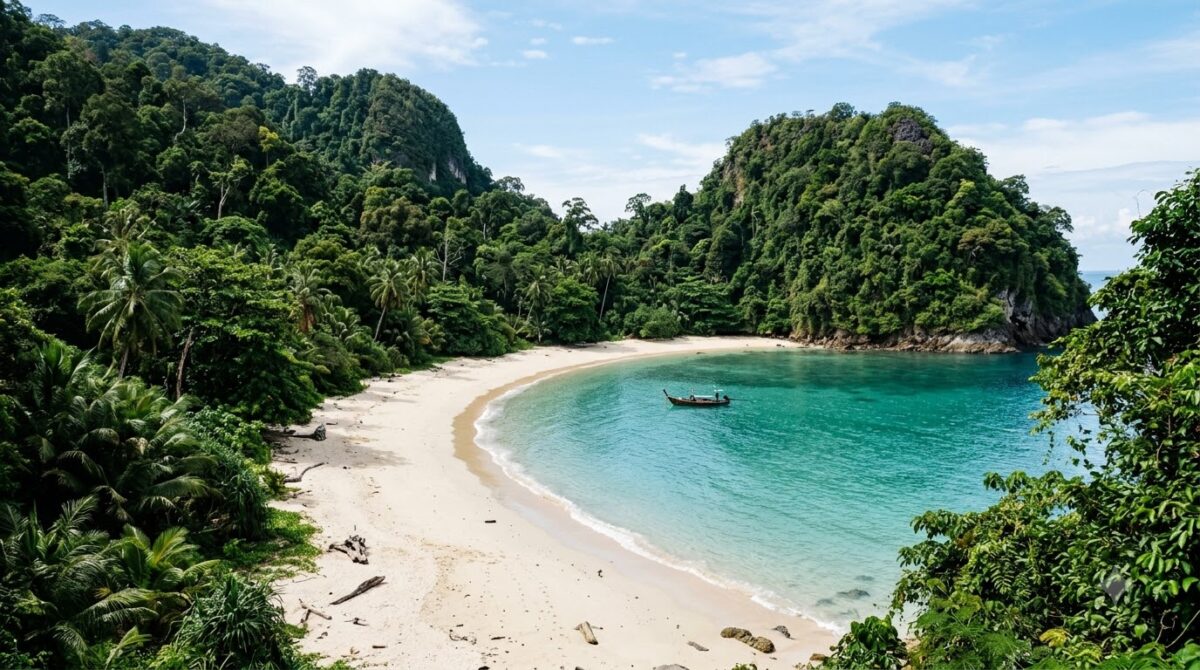
The postcard. A short crescent of pale sand between two jungle headlands, with calm, clear water and the best swimming of any beach in Manuel Antonio. It sits at the far end of the main trail inside the park.
It is also where the capuchins operate. Do not leave a bag unattended, and do not open food on the sand unless you want company.
Playa Espadilla Sur
The long beach inside the park on the other side of the tombolo that joins Punta Catedral to the mainland. Espadilla Sur is wider, wilder and much emptier than Playa Manuel Antonio, with stronger surf and no facilities. Better for walking than swimming.
Playa Espadilla Norte
The main public beach outside the park, running north from the entrance. Free, open all day including Tuesdays, with restaurants, sun loungers and surf schools along it. This is where you go to surf, and where most people spend the afternoon after the park closes at three.
Rip currents are real here. Swim near the lifeguard positions and take the flags seriously.
Playa Biesanz and Biesanz Beach cove
A small sheltered cove reached by a ten-minute walk down through forest from the ridge road. Calm, shallow and one of the few places on this coast where snorkelling is worthwhile. Free to enter, and the best beach in the area on a Tuesday when the park is shut.
Playitas and Playa Rey
Playa Playitas sits just north of Espadilla and is the local sunset spot, with the Playitas beach club at one end. Playa Rey, further north towards Quepos, is a long empty stretch that almost nobody visits.
Wildlife: sloth, monkey and what the rainforest actually shows you
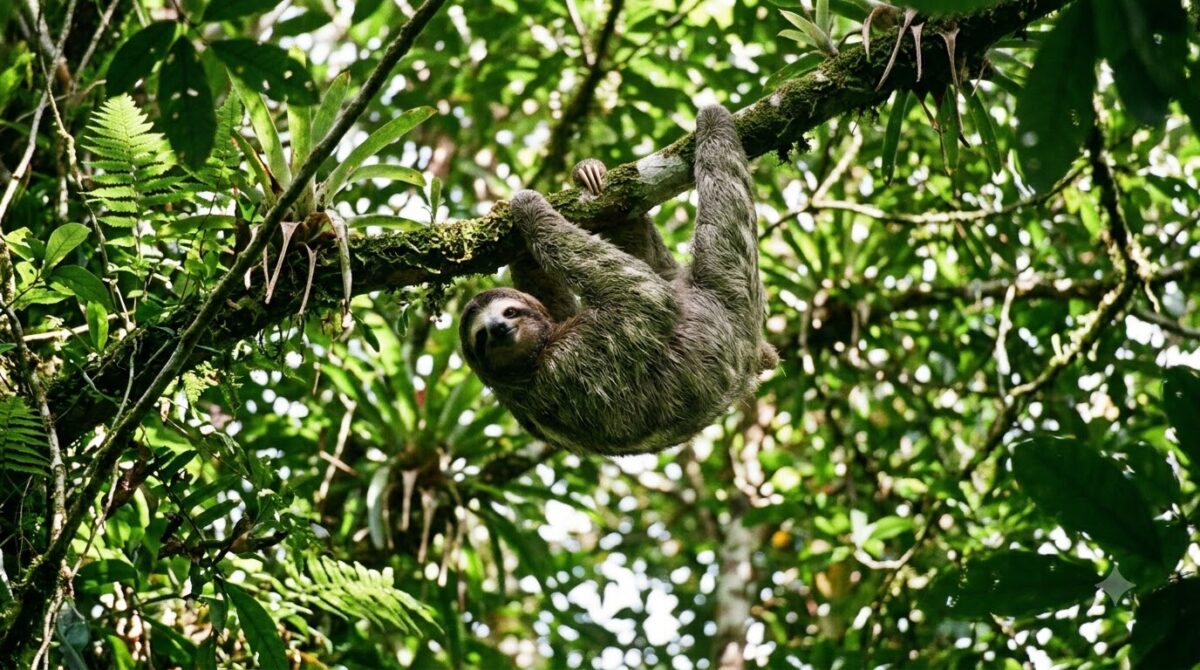
- Sloths — both two-toed and three-toed, and the single most reliable sighting in the country.
- Squirrel monkeys — the small orange ones, endangered and found only on this stretch of the Pacific coast and the Osa. Manuel Antonio is the easiest place to see them.
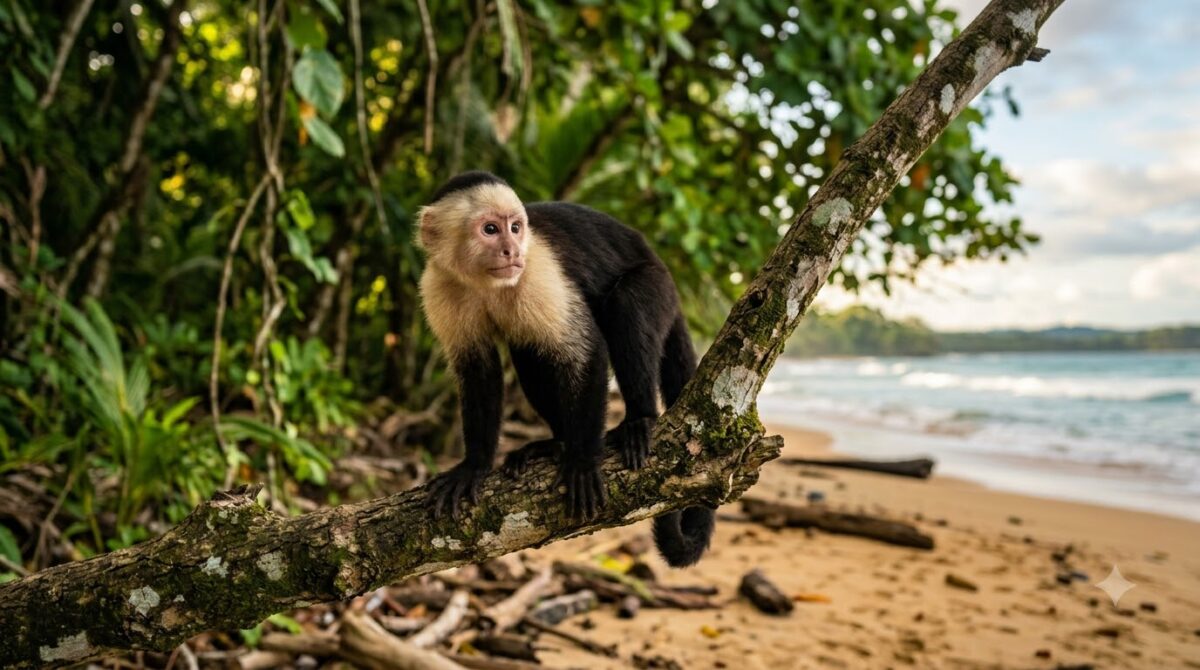
- The white-faced capuchin monkey — abundant, clever and entirely unafraid of people. They will go through a bag.
- Howler monkeys — heard long before seen. They start at dawn.
- Raccoons, coatis, agoutis and iguanas along the trail edges.
- Birds — toucans, trogons and around 180 recorded species.
- Do not feed anything. It is banned, it makes the animals sick, and it is why the capuchins now raid bags.
Things to do in Manuel Antonio beyond the park
The park closes at three and shuts entirely on Tuesdays, so you need a second day of activities in Manuel Antonio.
Surf, snorkel, kayak and the mangrove
- Surf lessons on Playa Espadilla Norte, around US$50 to US$70 for two hours. Gentle, sand-bottomed and good for beginners.
- Snorkel at Playa Biesanz, or on a catamaran trip along the coast at US$85 to US$120 including lunch.
- Kayaking the Damas mangrove at dawn, around US$60 to US$80, with monkeys, crabs and herons in the channels.
- Sport fishing from Marina Pez Vela in Quepos, which is one of the biggest sailfish bases in Central America.
- Parasailing and jet skis off Espadilla, if that is your thing.
Waterfall and jungle day trips
- Nauyaca Waterfalls — about an hour south towards Dominical, reached by 4×4 truck or on horseback. Around US$40 to US$90.
- Whitewater rafting on the Savegre or Naranjo, US$85 to US$110 for a day.
- Zip line and canopy tours in the hills behind the coast, US$60 to US$90.
- Rainmaker Park — hanging bridges over primary rainforest, quieter than the equivalent at Arenal.
Where Manuel Antonio sits among Costa Rica’s beach towns
Manuel Antonio is one of the most famous destinations in Costa Rica, and it is worth knowing what that means relative to the other beaches in Costa Rica before you build a trip around it.
| Manuel Antonio | Other beach towns in Costa Rica | |
|---|---|---|
| Wildlife | The best per hour anywhere in the country | Osa is richer, everywhere else is thinner |
| Beaches | Small, sheltered, and the beaches inside the park are the prettiest | Guanacaste and Nicoya have far longer sand |
| Effort | Three hours from San Jose on paved road | Nicoya and the Osa cost most of a day |
| Crowds | The heaviest on the Pacific coast of Costa Rica | Uvita and the south are far quieter |
| Surfing | Beginner level only | Santa Teresa and Dominical are serious |
Short version: on Costa Rica’s central Pacific coast this is the best experience you can have in a single morning, and it is not where you go for the best beaches in Costa Rica overall. Anyone spending a longer vacation in Manuel Antonio should treat the wider Manuel Antonio area — Quepos, the mangroves, Nauyaca and Marino Ballena National Park an hour south — as part of the stay rather than doing the park twice.
How to get to Manuel Antonio
- From San José — about three hours by car on good road. Public bus from Tracopa takes four hours for around US$10. Shuttles run US$55 to US$75 per person.
- From San José international airport (SJO), Juan Santamaría, the drive is the same three hours; there is no closer international airport.
- Domestic flights from San José to Quepos take about 30 minutes and cost US$90 to US$150 one way, then 15 minutes by taxi.
- From La Fortuna — five to six hours, or a shuttle at US$65 to US$90.
- From Uvita or Dominical — 45 minutes to an hour along the coast.
- Getting around — the Quepos to Manuel Antonio National Park bus runs every 30 minutes for under a dollar. A car is useful but parking near the park entrance costs US$5 to US$10 and is chaotic.
Where to stay in Manuel Antonio: hotels and the best places to stay
The decision is between the ridge, the beach and Quepos. Very few hotels in Manuel Antonio are actually on sand — most are up the hill with a view, which is a different thing.
| Area | Nightly rate | What you get |
|---|---|---|
| Quepos | US$30–80 | Cheapest by far, local restaurants, the marina. No beach, 15 minutes from the park |
| The ridge road | US$90–300 | Ocean views, pools, boutique hotels. You drive or bus to the beach |
| Near the park entrance | US$70–250 | Walk to Playa Espadilla and the gate. Busier and noisier |
| Luxury hotels on the headland | US$300–700 | Arenas del Mar is the one actually on a beach. Hotel Costa Verde and Hotel San Bada sit right next to the park |
| Vacation rental or Airbnb | US$60–350 | Plenty on the ridge, good for families and longer stays |
Book several months ahead for December to April. In September and October you can negotiate.
Map shows live availability and prices. We may earn a commission on bookings made through it, at no extra cost to you.
The best restaurants in Quepos and Manuel Antonio
- On the ridge road — the view restaurants, US$20 to US$40 a head. You pay for the sunset and it is usually worth it once.
- Quepos — where the best value is. Sodas serving typical Costa Rican food at around 4,000 colones for a casado, roughly US$7.50, plus good seafood near the marina.
- Playa Espadilla Norte — beach restaurants and bars, mid-range and convenient rather than special.
- Marina Pez Vela in Quepos has the smartest cluster of restaurants in the area.
- Buy fruit and water in Quepos if you are self-catering. The shops near the park charge tourist prices.
Best time to visit Manuel Antonio on a Costa Rica vacation
- December to April — dry season, most reliable weather, busiest, and park tickets sell out furthest ahead.
- May to July — clear mornings, afternoon rain, green, far fewer people. The best balance.
- August to November — wettest, cheapest, and the trails get muddy. September and October are the wettest weeks.
- Any month, go at 7am. Wildlife is active early, the heat is bearable and the trail is quiet. By ten it is a different park.
Full detail in our month-by-month guide to visiting Costa Rica.
Is this beautiful beaches getaway one of the best places in Costa Rica?
For a short Costa Rica vacation, yes. Nowhere else lets you see sloths, four species of monkey and a swimmable beach on one flat trail in a single morning, three hours from the airport. For families, for a first trip, or for anyone who does not want to drive far, it is the most efficient wildlife experience in Costa Rica. People living in Costa Rica bring visiting family here for exactly that reason.
The honest caveat: it is crowded, it is the most developed stretch of this coast, and the wildlife is habituated to people in a way that some travellers find uncomfortable. If you want wilderness rather than a wildlife getaway, the Osa Peninsula is what you actually want, at four times the effort.
Two nights is right for most people — one for the park, one for a beach or a waterfall. Three if you want to add the mangroves or Nauyaca.
For the wider trip, see our guides to things to do in Costa Rica, the beaches on both coasts and Uvita, an hour south.
For somewhere quieter 45 minutes south, see Dominical — dirt roads, real surf and a fraction of the crowds.
Check hotels in Manuel Antonio →
Frequently asked questions
Do you need to buy Manuel Antonio park tickets in advance?
Yes. Tickets are sold only through the SINAC website and are not available at the entrance booth. Entry is capped at around 2,500 visitors a day in timed slots, and in high season they sell out days ahead.
What day is Manuel Antonio National Park closed?
Tuesday. The park opens Wednesday to Monday from 7:00 to 15:00. Opening days have changed more than once in recent years, so confirm on the SINAC site before travelling.
How much does Manuel Antonio National Park cost?
US$18 for adult non-residents and US$5 for children aged 2 to 12, free under 2. A certified naturalist guide costs a further US$25 to US$40 per person and is worth it on a first visit.
What is the best beach in Manuel Antonio?
Playa Manuel Antonio inside the park for swimming and looks. Playa Espadilla Norte outside the park for surfing and for days when the park is closed. Playa Biesanz is the calm, sheltered option with the best snorkelling.
How long do you need in Manuel Antonio National Park?
Three to four hours covers the flat main trail, a side trail to a viewpoint and a swim. Go at 7am when the park opens, because wildlife is active early and the trail is far quieter.
What animals can you see in Manuel Antonio?
Two-toed and three-toed sloths, endangered squirrel monkeys, white-faced capuchins, howler monkeys, raccoons, coatis, iguanas and around 180 bird species. Do not feed any of them.
Should you stay in Quepos or Manuel Antonio?
Quepos is much cheaper with better local food but is not on a beach and is 15 minutes from the park. The Manuel Antonio ridge has the views, the boutique hotels and easier park access at two to three times the price.
Park fees, opening days, the online-only ticket rule and tour prices read 16 August 2026 from SINAC and the Costa Rican tourism board. Confirm before you travel.