
The south of France is two regions that get treated as one, and the difference between them is not scenery. It is transport.
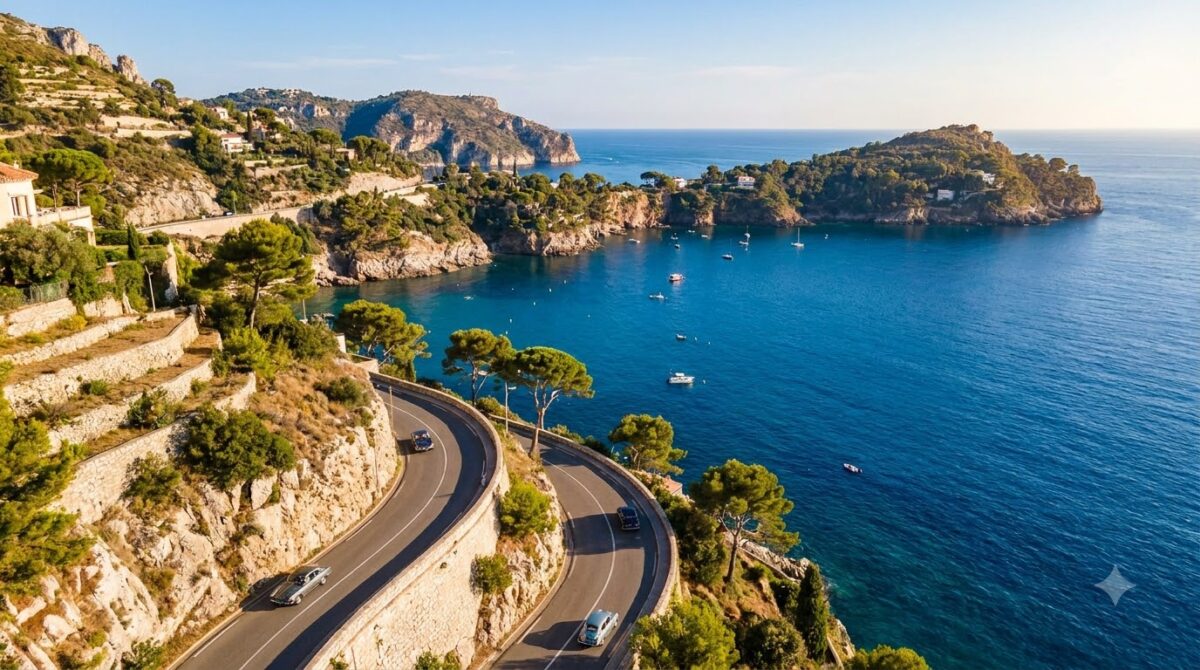
The French Riviera is a single train line. One TER service runs from Cannes through Antibes, Nice, Villefranche-sur-Mer, Monaco and on to Menton, stopping at everything worth stopping at. You can do the entire coast without renting a car, and almost nobody tells you that.
Provence is the opposite. Gordes, Les Baux-de-Provence, the Luberon villages and the lavender fields have no railway anywhere near them. Inland, a rental car is not a convenience, it is the trip.
So the honest answer to whether you need a car in the south of France is: yes, for about half of it. This 10-day south of France itinerary is built on that split, and it works as a French Riviera travel plan on its own if you only have five days.
Train lines, driving times and seasonal patterns checked 8 September 2026.
How many days for a 10-day south of France itinerary, or less?
| Length | Covers | Car? |
|---|---|---|
| 4–5 days | The French Riviera only, based in Nice | No |
| 7 days | Riviera plus two or three days in Provence | Half the trip |
| 10 days | Both regions properly, plus the Verdon | Yes, days 6–10 |
| 14 days | Adds Marseille, Cassis and the Camargue | Yes |
Five days is the minimum for a visit to the south that is not just a beach holiday. A trip to the French Riviera alone works in that time. Ten is where Provence and the French Riviera both get the time they need.
Days 1–5: a French Riviera itinerary with no car
Base yourself in Nice for the whole stretch. It has the airport, the train station, the widest choice of hotels, and everything on the Côte d’Azur is under an hour away by rail.
Day 1: Nice
- Vieux Nice, the old town, a dense grid of ochre lanes and the Cours Saleya flower and produce market.
- The Promenade des Anglais and the pebble beach along it — bring shoes, there is no sand.
- Colline du Château, the hill at the east end, for the view over the bay and the terracotta roofs.
- The Matisse museum in Cimiez, up the hill, alongside the Roman ruins.
Day 2: Èze, Villefranche-sur-Mer and Monaco
The best day on the coast, and all of it by train and one bus.
- Villefranche-sur-Mer, six minutes from Nice by train — a deep natural harbour, a seaside resort with real medieval streets, and the prettiest village on this coast. Explore the old town and its covered Rue Obscure.
- Èze, a medieval village perched on a hilltop 400 metres above the Mediterranean Sea, reached by the 82 bus from Nice. Narrow streets, and the exotic garden at the top sits where the castle used to be, with the best views of the sea on the coast.
- Monaco and Monte Carlo in the late afternoon — the casino, the harbour full of boats, and the old town on the rock. Twenty minutes by train.
Day 3: Antibes and Cannes
- Antibes — a walled old town with the best market in the region, and the Picasso museum in the Château Grimaldi, where he actually worked in 1946.
- Cap d’Antibes for the coastal path, which is a two-hour walk around the headland and free.
- Cannes — twenty minutes further, a proper beach town with the Croisette, the sand the Riviera otherwise lacks, and the Palais des Festivals where the Cannes film festival is held each May. Worth a visit even out of season.
Day 4: Menton, or Saint-Paul-de-Vence
- Menton, the last town before Italy, with lemon groves, pastel houses and far fewer visitors than anywhere west of it. Explore the town on foot in a morning.
- Or Saint-Paul-de-Vence and Vence inland by bus — a fortified medieval village full of galleries, and the Fondation Maeght.
- Or a day hitting the beach, if that is what you came for. Most Riviera beaches are pebble, and a beach club runs sections of them for a fee.
Day 5: a boat tour, or Saint-Jean-Cap-Ferrat
Day 5 is the one to leave loose. A boat tour along the coast from Nice or Villefranche shows you the shoreline the roads hide. Saint-Jean-Cap-Ferrat has a coastal footpath around the whole peninsula, the Villa Ephrussi de Rothschild and its gardens, and the Grand-Hôtel du Cap-Ferrat as its landmark. A day to stroll around the city and do nothing also counts.
Days 6–10: Provence, with a rental car
Pick up a car in Nice or, better, take the train to Avignon and rent there. Driving out of Nice is unpleasant and you gain nothing.
Day 6: Avignon and Les Baux
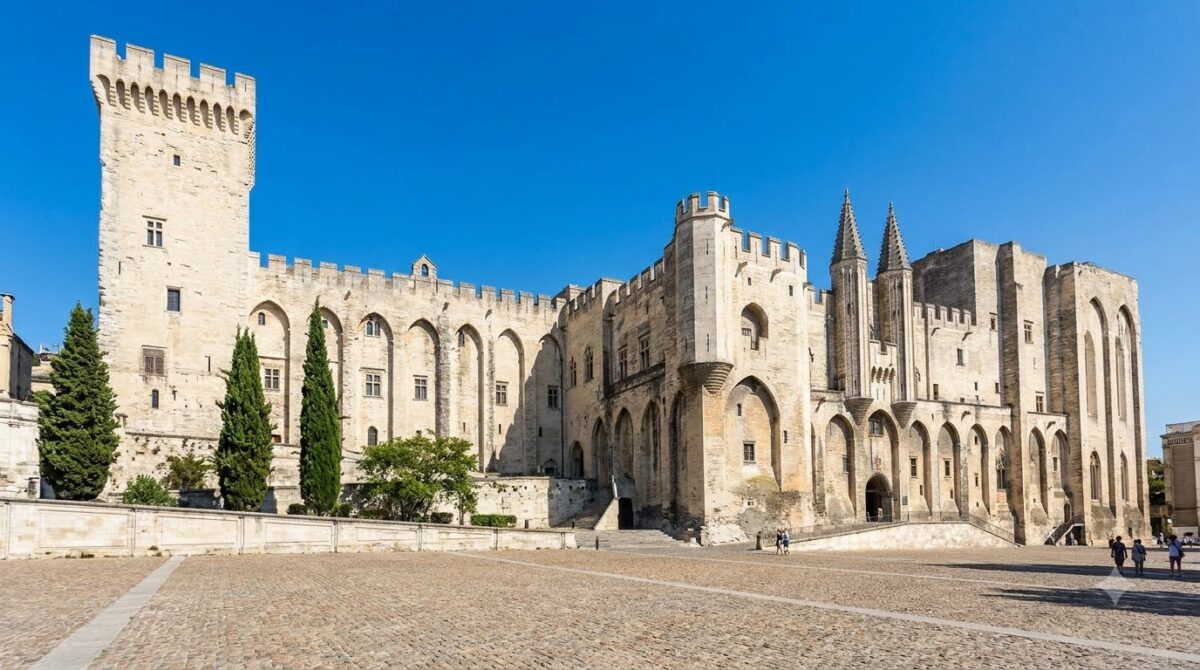
- Avignon — the walled papal city on the Rhône, with the Palais des Papes, the largest Gothic palace in Europe, and the broken bridge everyone sings about. Arles and the Pont du Gard are both under an hour away and are the best places for day trips from here.
- Les Baux-de-Provence, a ruined fortress village on a limestone outcrop, and the Carrières des Lumières light show in the quarry below it.
Day 7: the Luberon villages
Day 7 is the day the car earns its cost. The Luberon is a ridge of hill villages an hour east of Avignon, and there is no way to see them otherwise.
- Gordes, stacked up a hillside in pale stone and one of the small villages that define the charm of Provence, with the Abbaye de Sénanque below it and its lavender fields in front.
- Roussillon, built from red and orange ochre, which looks like nowhere else in France.
- Ménerbes, Bonnieux and Lourmarin, quieter and less photographed than the rest of the Luberon.
- L’Isle-sur-la-Sorgue on a Sunday, for the antiques market along the Sorgue river.

Day 8: Aix-en-Provence
- Aix-en-Provence — a university town of plane-tree boulevards and fountains, and the best place in Provence to simply sit.
- Cézanne’s studio and the Montagne Sainte-Victoire he painted sixty times.
- The Cours Mirabeau and the daily markets, which are the point of the town.
Day 9: the Gorges du Verdon
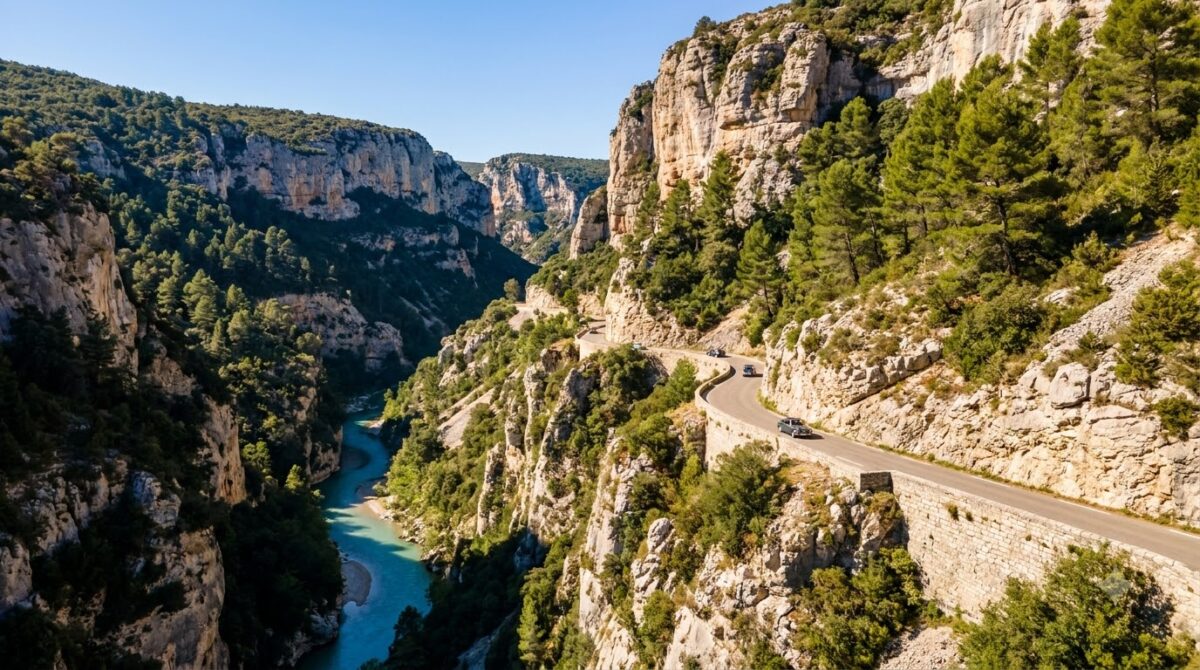
The Verdon Gorge is 700 metres deep with turquoise water at the bottom, and it is the single most spectacular thing in southern France. The Route des Crêtes runs along the rim.
This is a long day of driving and it is the one that justifies the car entirely. Base at Moustiers-Sainte-Marie, a village built into a cleft in the cliff.
Day 10: Marseille and Cassis, or back to the coast
- Marseille — France’s oldest city and its most misunderstood, with the Vieux-Port, the Panier quarter and Notre-Dame de la Garde above it. It is also the gateway to Calanques National Park and the Calanque de Sormiou.
- Cassis, thirty minutes east, for the calanques — limestone inlets with turquoise water, reached by boat tour or on foot.
- Or drop the car and take the train back to Nice Côte d’Azur Airport, which is the simpler ending.
French Riviera travel: do you need to rent a car?
For the coast, no. For Provence, yes. That is the whole answer, and it is worth spelling out because most travel guide advice picks one side.
- The Riviera train line runs Cannes to Menton every 20 to 30 minutes and stops at Antibes, Nice, Villefranche-sur-Mer, Cap d’Ail and Monaco. It costs a few euros a hop.
- Buses reach the hill villages near the coast — Èze, Saint-Paul-de-Vence, Vence — slowly but reliably.
- Nothing serves the Luberon, Les Baux or the Verdon. There is no train and the buses are impractical.
- Parking in the villages is outside the walls and paid. Gordes and Les Baux fill by ten in summer.
- Take a train between regions — Nice to Avignon is around three and a half hours, or under two via Marseille on the TGV. Comparison sites like Discover Cars are worth checking before committing to a road trip across the whole of Provence-Alpes-Côte d’Azur.
The efficient version: five days on the coast car-free, then a train to Avignon and a car rental for the inland half. You pay for five days of car instead of ten and lose nothing.
The best time to visit, and every place to visit by season
- May, June and September are the best months across both regions.
- Lavender flowers from late June to early August, peaking in mid-July. If the lavender fields are the reason you are going, that window is not negotiable.
- July and August are hot, expensive and full. The Riviera is at capacity and the villages have queues for parking.
- The Cannes film festival in May fills the western coast entirely for two weeks.
- Winter is mild on the coast and quiet inland, with many village restaurants closed.
Where to stay: a travel guide to the bases
- Nice as the home base for the entire Riviera, in the Alpes-Maritimes. Vieux Nice for atmosphere, the Carré d’Or for comfort, near the station for price. A stay in Nice of four nights covers the whole coast.
- Villefranche-sur-Mer if you want the same coast at a slower pace, six minutes away by train.
- Antibes for a middle position between Nice and Cannes.
- Avignon or Aix as the base for Provence, both walkable and both well connected.
- A village mas or gîte in the Luberon if you have the car and want the countryside properly.
Building a wider trip? See our where to stay in Paris guide for the other end of the country.
The best places to visit, and what each one is for
If you are currently planning a trip and want the must-see shortlist rather than the route, this is what each stop actually gives you. Everything here is worth a visit; not all of it is worth a night.
| Place | Time | What it is |
|---|---|---|
| Nice | 2 nights+ | The home base. Stay in Nice and everything is an hour away |
| Villefranche-sur-Mer | Half-day | A seaside town with a deep harbour and medieval streets |
| Èze | Half-day | A village perched on a hilltop 400m above the sea |
| Monaco | Half-day | Monte Carlo, the harbour, and the old town on the rock |
| Antibes | 1 day | Old town, market, Picasso museum in the castle |
| Cannes | Half-day | The Croisette and the only real sand beach town |
| Menton | 1 day | Lemon groves, pastel houses, almost no visitors |
| Gordes and Roussillon | 1 day | The charm of Provence in two small villages |
| Aix-en-Provence | 1 day | One of the most beautiful cities in the region |
| Gorges du Verdon | 1 day | The most spectacular landscape in southern France |
Two or three days exploring the coast and two inland is the minimum that does justice to both. Anything shorter and you are choosing one region, which is a perfectly good south of France trip — just be honest with yourself about which.
Practical notes for the trip
- The Riviera beaches are pebble, not sand, except at Cannes and parts of Antibes. A plage privée charges for a lounger; the public stretches between them are free.
- Hiking and kayaking are underrated here — the Calanques National Park near Marseille and the coastal paths at Cap d’Antibes and Saint-Jean-Cap-Ferrat are free and excellent.
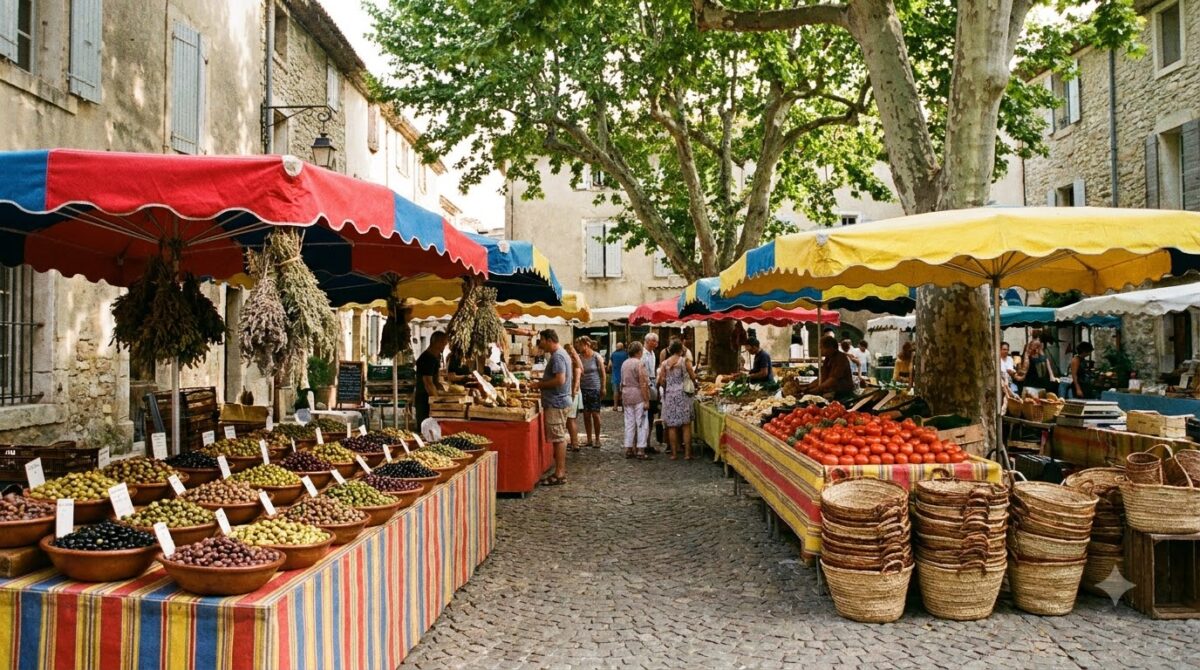
- Provence markets run on fixed weekdays. L’Isle-sur-la-Sorgue on Sunday, Aix most mornings. Build the route around them.
- Wine — the Côtes du Rhône AOC and Châteauneuf-du-Pape north of Avignon, Bandol near the coast. A winery visit is a half-day, and dinner afterwards in the village is the point.
- Roman remains at Arles, Nîmes, the Pont du Gard and Vaison-la-Romaine are as good as anything in Italy and far quieter.
- Book accommodation early for June to August. Apartment and Airbnb supply inland is thin, and the coast sells out.
Basing yourself on the coast? See where to stay in Nice for the areas compared, and why the streets behind the Promenade are the value.
The opposite case: our Switzerland itinerary explains why a rental car is the wrong choice there, when it is essential in Provence.
Heading west? See where to stay in Bordeaux — the tram line matters more than the street.
Coming down from Paris? See where to stay in Lyon for the stop most people rush.
Frequently asked questions
How many days do I need in the south of France?
Five days covers the French Riviera from a base in Nice with no car needed. Ten days covers both the Riviera and Provence properly, with a rental car for the inland half. Seven days is the compromise: four or five on the coast, then two or three around Avignon and the Luberon.
Do I need a car to travel around the south of France?
Only for half of it. The Riviera has a single train line running Cannes to Menton every 20 to 30 minutes, stopping at Antibes, Nice, Villefranche-sur-Mer and Monaco, so the coast is easy without a car. Provence is the opposite — Gordes, Les Baux-de-Provence, the Luberon and the Verdon Gorge have no rail service at all.
What is the best time of year to visit the south of France?
May, June and September. Lavender flowers from late June to early August and peaks around mid-July, so that window matters if the fields are your reason for going. July and August are hot, crowded and expensive, and the Cannes film festival fills the western coast for two weeks in May.
What is the prettiest part of the south of France?
On the coast, Villefranche-sur-Mer and Èze; inland, the Luberon villages of Gordes and Roussillon. The single most spectacular place is the Gorges du Verdon, a 700-metre-deep canyon with turquoise water, though it needs a car and a full day.
What are the top places to visit in the south of France?
Nice, Villefranche-sur-Mer, Èze, Monaco, Antibes and Cannes along the Côte d’Azur; Avignon, Les Baux-de-Provence, Gordes, Roussillon and Aix-en-Provence inland; and the Gorges du Verdon between them. Marseille and Cassis add a third day or two at the western end.
Where are the best places to stay in the south of France?
Nice as the home base for the Riviera, since everything on the coast is under an hour away by train. Avignon or Aix-en-Provence as the base for Provence. Villefranche-sur-Mer is the quieter coastal alternative to Nice, and a village house in the Luberon is worth it if you have the car.
How do I get to the south of France?
Fly into Nice Côte d’Azur Airport for the Riviera or Marseille for Provence, both of which have direct European connections. From Paris, the TGV reaches Avignon in around two and a half hours and Marseille in three, which is competitive with flying once you count airport time.