Quick answer where to stay in the Algarve
Lagos: it has a proper old town, it sits where the wild west coast meets the golden cliffs, and it is the best base for exploring in both directions. Tavira in the east for warm, shallow water and quiet.
On this page
- The best areas to stay in the Algarve at a glance
- The three Algarves: how the Algarve region changes west to east
- Stay in Lagos: the best place to stay in the Algarve for a first visit
- Albufeira: the biggest choice, and two different towns
- Carvoeiro, Ferragudo and Praia da Rocha: the central alternatives
- Vilamoura, the Golden Triangle and the luxury end
- Faro, Olhão and Tavira: the eastern towns
- Do you need to rent a car in the Algarve?
- Deciding where to stay: which Algarve base suits which traveller
- The best restaurants in the Algarve, and where the food actually is
- The best towns in the Algarve, ranked by what they are actually for
- The Algarve inside a trip to Portugal
- Should you split your stay?
- The beaches, and what to know before booking one
- Hotels in the Algarve: the best hotels, and what each type costs you
- Plan your Algarve vacation: when to go, and how it changes where you stay
- Checking current rates in the Algarve
- Frequently asked questions
The Algarve is about 150 kilometres of coast and it does not look the same along its length. It changes character three times, and the changes are geological rather than a matter of taste.
Some links below are affiliate links. We may earn a commission if you book through them, at no extra cost to you. We do not rank hotels, and any prices on the map come live from the booking sites.
West of Lagos the cliffs face the open Atlantic Ocean. It is windy, the surf is serious, the water is cold and the landscape is bare. Between Lagos and Faro the coast turns to golden sandstone, carved into coves, arches and sea stacks. That middle stretch is the photograph that sells the region. East of Faro the cliffs stop altogether. The coast becomes flat sandbar islands and the Ria Formosa lagoon, with shallow warm water, salt pans and no cliffs at all.
So you are not really choosing a town to stay in. You are choosing one of three coastlines, and each part of the Algarve gives a different holiday. The most common way to get this trip wrong is to book Albufeira and expect the calm shallow water of Tavira, or the drama of Sagres, and get neither.
Geography, town positions and driving times checked 10 September 2026. Rates move enormously between June and August, so check current prices yourself.
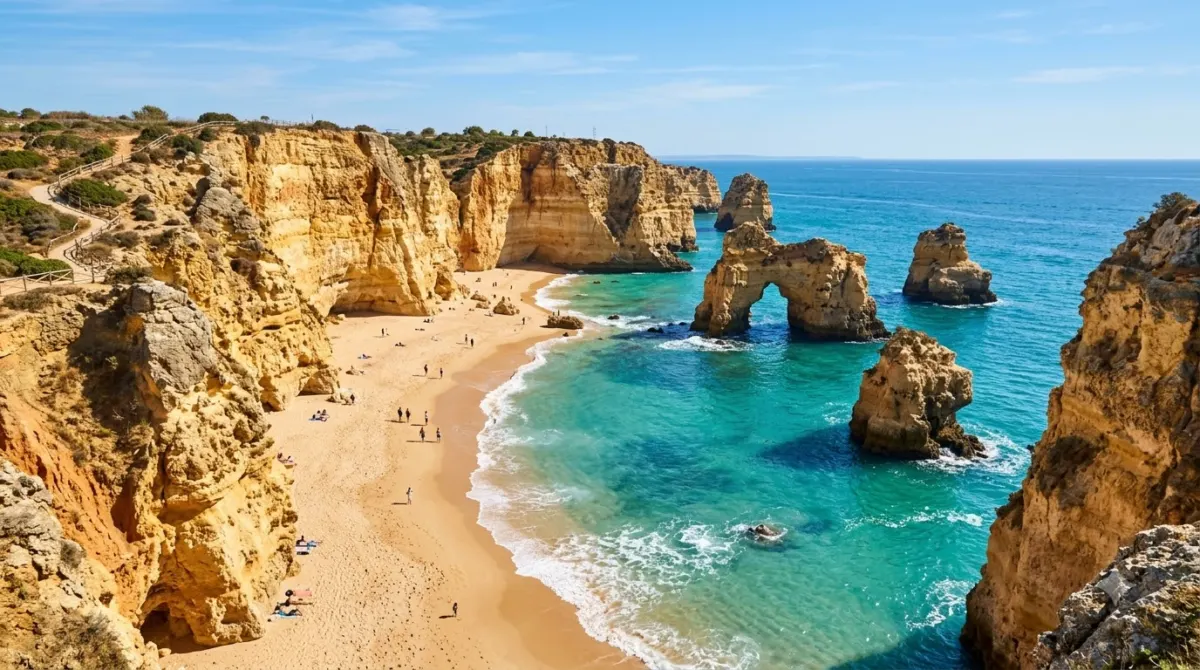
The best areas to stay in the Algarve at a glance
| Base | Coast | Best for |
|---|---|---|
| Lagos | Western edge of the golden cliffs | First visits, a real old town |
| Sagres and the far west | Exposed Atlantic | Surfing, wind, emptiness |
| Carvoeiro and Ferragudo | Central cliffs | Couples, quieter coves |
| Albufeira | Central | Nightlife, families, choice |
| Vilamoura | Central, marina | Golf, boats, resort hotels |
| Faro | Lagoon, the capital | Arrivals, no car, city life |
| Tavira and Olhão | Eastern lagoon | Warm shallow water, quiet |
| Inland, around Loulé | Hills | Golf, spa, a luxury stay |
If you want one answer: Lagos. It has a proper old town, it sits at the point where the wild west coast meets the golden cliffs, and it is the best Algarve base for exploring in both directions. It is the safest choice if you want to stay close to everything.
Book by area
The three Algarves: how the Algarve region changes west to east
Before any town names, get the geography straight, because it decides everything else.
The western Algarve: Atlantic and empty
- From Lagos west to Sagres (Vila do Bispo) and up the west coast, this is the end of the Algarve and where the land runs out. The Lighthouse of Ponta de Sagres marks the south-western corner of Europe.
- The Atlantic is cold and rough here, which is why the surfing is good and the swimming is not, for most people.
- It is windy almost every day, and that is not a detail. A beach day in Sagres is a different activity from a beach day in Albufeira.
- Development is limited because much of it is inside a natural park, so the landscape is scrub, cliffs and very few buildings. There is a coastal trail, the Rota Vicentina, running the length of it.
- Best for surfing, hiking and people who dislike resorts. Wrong for a family with small children.
The central Algarve: the golden cliffs
- From Lagos east to Faro, the coast is soft golden sandstone, eroded into coves, arches and stacks. Ponta da Piedade outside Lagos and the Benagil sea cave are the famous examples.
- The beaches are at the bottom of cliffs. This is the practical catch: a hotel described as being on a beautiful beach is often on top of a cliff above it, reached by a long staircase or a lift.
- The water is calmer and warmer than the west, because the coast faces south rather than into the ocean.
- This is where almost all the resorts, golf courses and nightlife are. Western and central Algarve together hold the great majority of hotels in the region, and tourism here is the main industry.
- Best for a first trip, and for anyone who wants the postcard version.
The eastern Algarve: lagoon and sandbars
- East of Faro the cliffs simply end. The coast becomes the Ria Formosa, a lagoon behind a chain of low sandbar islands, protected as a natural park.
- The beaches are on the islands, reached by a short ferry, which sounds like a chore and turns out to be the nicest part of the day.
- The water is shallow and noticeably warmer, and the sand goes on for kilometres rather than sitting in a cove.
- The towns of the East Algarve are Portuguese first: Tavira, Olhão, Fuseta, with markets, salt pans and fishing rather than resorts.
- Best for families, for a quieter vacation in the Algarve, and for anyone who has been to the middle and found it busy.
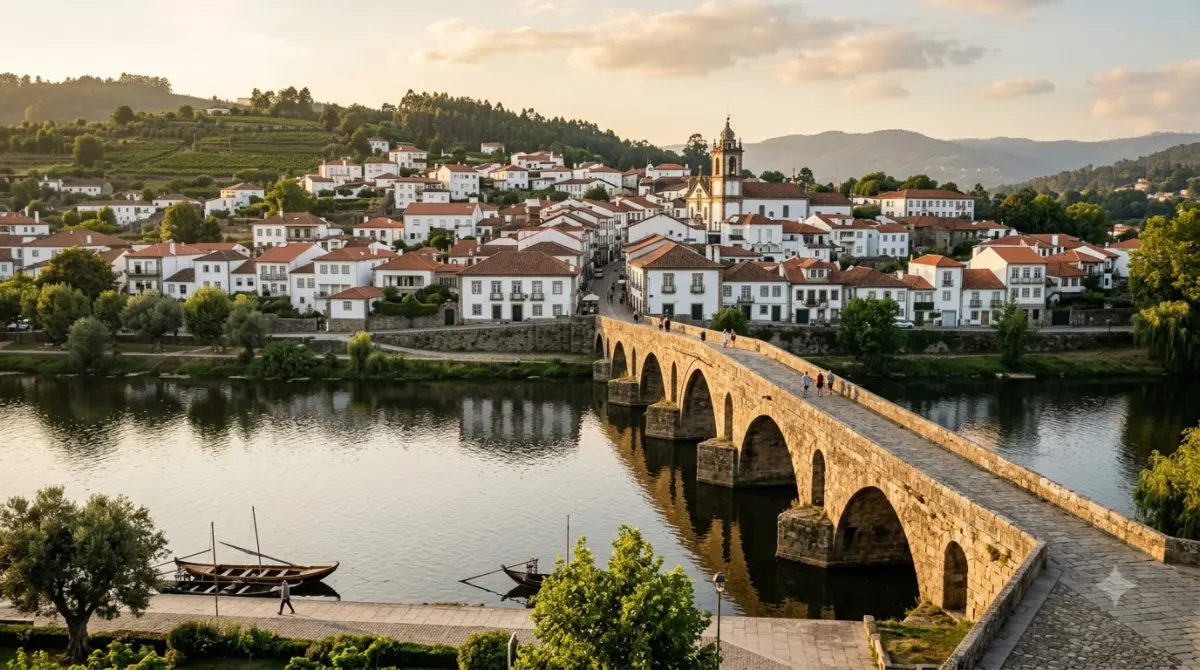
Stay in Lagos: the best place to stay in the Algarve for a first visit
Lagos, Portugal sits exactly on the hinge between the wild west and the golden middle, which is why it works as a single base.
- It has a real old town inside sixteenth-century walls, with cobbled streets, squares and churches. Most Algarve resort towns do not have this at all.
- Ponta da Piedade, a headland of stacks and arches, is twenty minutes on foot from the centre and is the single best piece of coast in the region.
- Praia Dona Ana and Praia do Camilo are the cove beaches; Meia Praia is the long flat one across the river, and one of the few genuinely long sandy beaches on this part of the coast.
- The best restaurants of any Algarve town for their size, and a busy but not overwhelming nightlife.
- Half an hour to Sagres, half an hour to Portimão, so the rest of the Algarve is reachable on a day out in either direction.
- Best for couples, first-timers and anyone without a fixed plan.
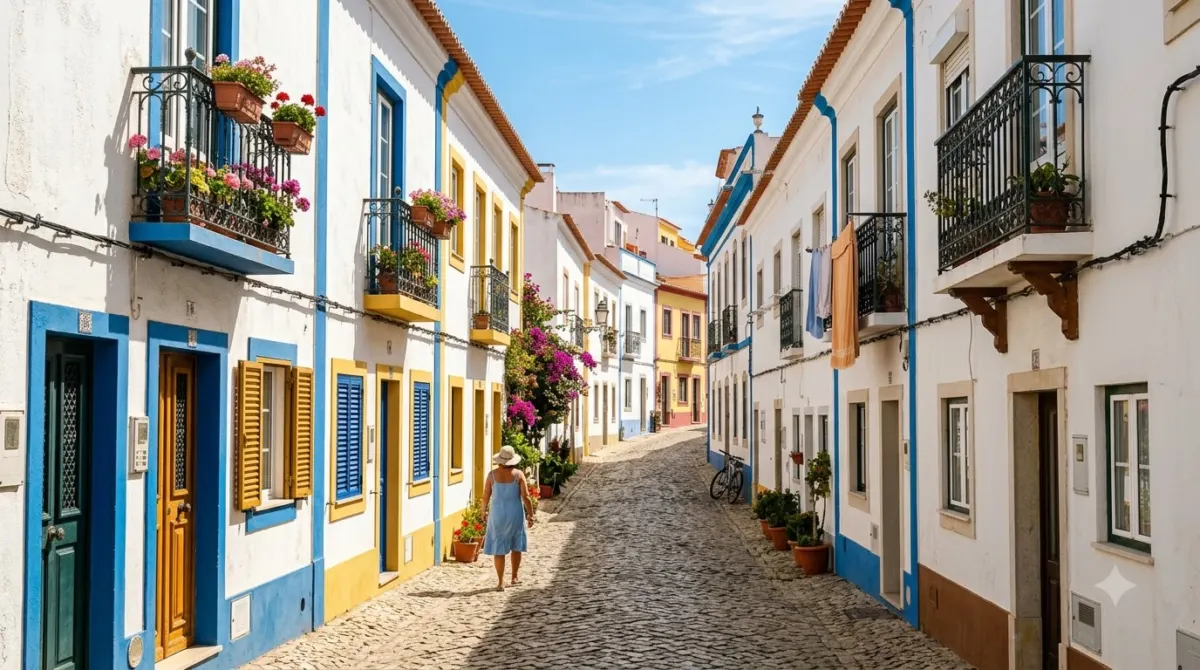
Map shows live availability and prices. We may earn a commission on bookings made through it, at no extra cost to you.
Albufeira: the biggest choice, and two different towns
Albufeira has a reputation, and the reputation is only half the town. It is worth being precise, because people book the wrong half.
- The Old Town is a whitewashed hillside above a cove beach, with narrow streets and a square. To stay in the old town is pleasant, busy and family-friendly.
- The Strip, at Praia da Oura, is a separate area a couple of kilometres east, built for nightlife. Muthu Clube Praia da Oura is one of the landmark properties along it.
- These are not the same place, and a booking that says Albufeira could be either. Check the map before you pay.
- It has the widest range of hotels in the Algarve, from apartments to large resort hotels, and the most direct transfers from Faro Airport.
- Falésia beach, east of town, is the long red-cliff beach that appears on most Algarve postcards. EPIC SANA Algarve Hotel sits on that stretch.
- Best for families in the Old Town, and for a young crowd on the Strip. Avoid if you want quiet.
Carvoeiro, Ferragudo and Praia da Rocha: the central alternatives
- Carvoeiro (Lagoa) is a small cliff town built around one cove, quieter than Albufeira and the most popular choice for couples who want to stay in the central Algarve.
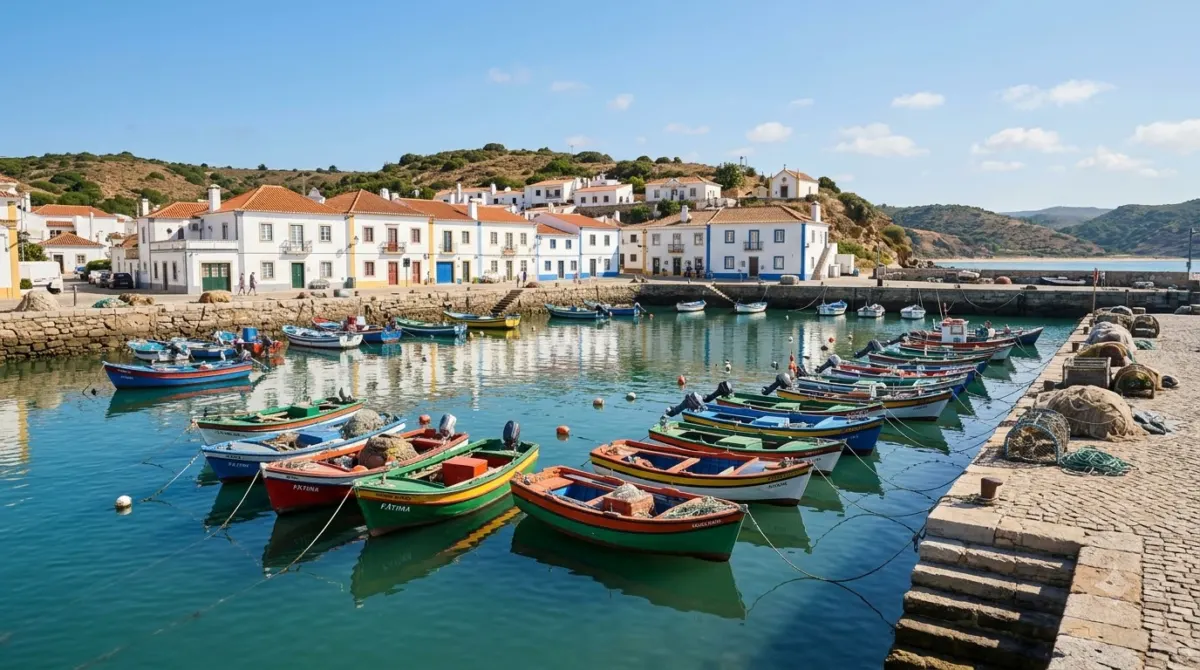
- Ferragudo, across the Arade River from Portimão, is the prettiest fishing village on this stretch and has resisted development almost entirely.
- Praia da Rocha, sometimes written Praia de Rocha, is a long beach backed by a wall of high-rise hotels, which is either convenient or grim depending on your taste. The Bela Vista is the landmark building, an old mansion at one end, and the beach itself is a tourist attraction in its own right.
- Portimão itself is a working town rather than a resort, with a marina, and NH Marina Portimão Resort sits on the water there.
- Best for a quieter central base without giving up the golden cliffs.
Vilamoura, the Golden Triangle and the luxury end
- Vilamoura is a purpose-built marina resort with golf courses, boats and large hotels. Tivoli Marina Vilamoura is the landmark on the harbour.
- The Golden Triangle (Algarve), between Vilamoura, Vale do Lobo and Quinta do Lago, is the expensive area of the Algarve: villas, golf, private clubs.
- Inland around Loulé the hills hold the newer luxury properties, and Viceroy at Ombria Algarve is the landmark for that inland golf-and-spa category.
- You are not in a Portuguese town in any of these places, which some people want and others find strange.
- Best for golf, for a luxury stay, and for anyone travelling with a group and a villa.
These are listed as landmarks, not recommendations. Nobody here has stayed in them and we do not print rates, because Algarve prices roughly double between May and August. Compare the best current prices yourself.
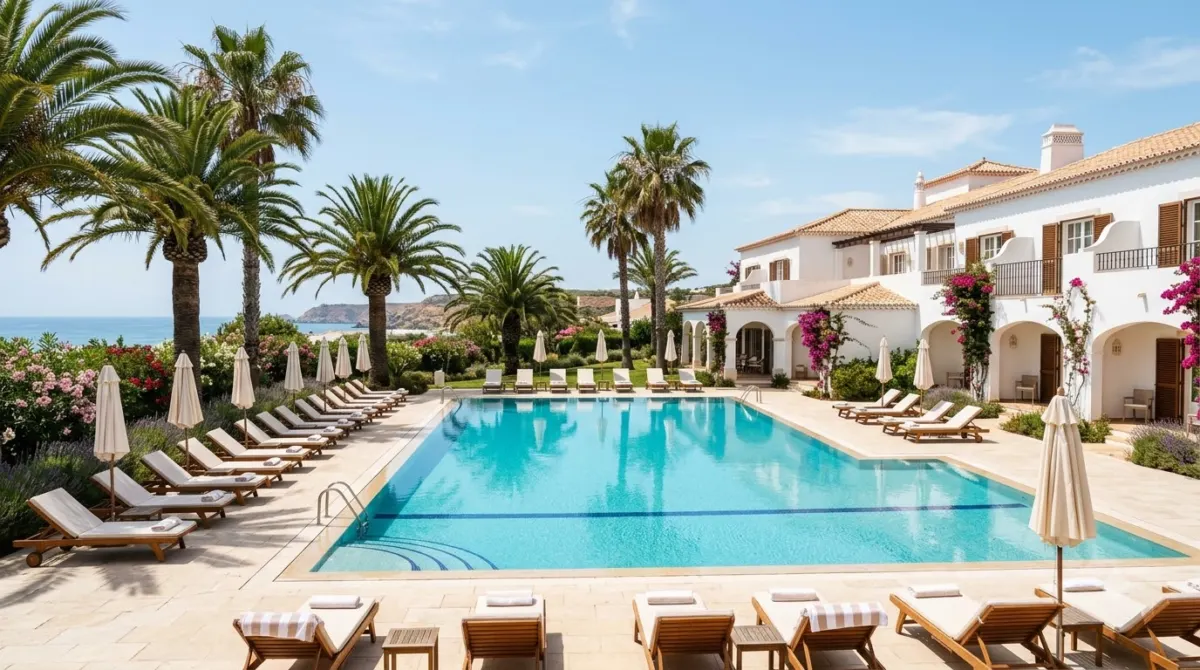
Faro, Olhão and Tavira: the eastern towns
- Faro, Portugal is the capital of the Algarve and the airport city, and it is routinely skipped. It has a small walled old town, a marina, a coffeehouse or two on the square and the boats out into the Ria Formosa.
- Olhão is a working fishing port with the best market in the region and a North African look to its cube houses. It is the least touristy town of any size here.
- Tavira is the pretty one: a river, a Roman bridge, whitewashed houses and a ferry out to Ilha de Tavira, which is a sandbar island with kilometres of sand.
- The eastern Algarve is flat, which makes it the easiest part to cycle and the easiest with a pushchair.
- Best for families, for warmer water, and for a traditional Algarve experience that the middle of the coast lost decades ago.
Do you need to rent a car in the Algarve?
This is the second big decision after which coast, and the answer is not the same everywhere.
- Staying in one town and using its beaches — no car needed. Lagos, Albufeira, Tavira and Faro all work on foot.
- Exploring the Algarve coast properly — rent a car. The best coves are down unmarked lanes with a car park at the end and no bus.
- The train runs the length of the region, Lagos to Faro to the Spanish border, and it is slow, cheap and useful for town-to-town hops.
- Buses connect the resorts but not the beaches between them.
- Doing the Algarve without a car is entirely possible if you stay in a town with a beach attached and accept that you will see less coast.
Deciding where to stay: which Algarve base suits which traveller
| You are | Stay in | Why |
|---|---|---|
| Here for the first time | Lagos | Old town, best coast, both directions |
| A family with young children | Tavira or Albufeira Old Town | Warm shallow water, or sand and facilities |
| A couple | Carvoeiro or Ferragudo | Small, quiet, cliffs on the doorstep |
| Here for nightlife | Albufeira Strip | It is built for exactly that |
| A surfer | Sagres | Atlantic swell and a surf town |
| A golfer | Vilamoura or Loulé | The courses are concentrated there |
| Without a car | Lagos, Faro or Tavira | Beach, town and train in one place |
| Looking for the real Portugal | Olhão | A working port that never became a resort |
The best restaurants in the Algarve, and where the food actually is
Eating well here is largely a question of how far you get from the beach bars, and that varies enormously across the Algarve.
- Grilled fish and shellfish are the point. A plate of sardines, a whole sea bream, or cataplana, the copper-pan seafood stew, is what you go to the Algarve for.
- The eastern towns eat best. Olhão and Tavira have working markets and restaurants aimed at people who live there, and many of the best meals in the region are in that part of the Algarve.
- Ferragudo and Alvor are the two central villages where the fish restaurants are still genuinely local.
- Lagos has the widest choice of any town of its size, from a coffeehouse on a square to serious modern Portuguese cooking.
- Avoid the beachfront strips in the big resorts, where the menus are in six languages and the atmosphere is manufactured.
- Book in July and August. Good restaurants in the Algarve fill by eight and stay full.
The best towns in the Algarve, ranked by what they are actually for
If you would rather pick a town in the Algarve than a coastline, this is the shortlist worth sleeping in. Portugal’s Algarve has perhaps seven towns that genuinely work as a base.
- Lagos — one of the best places to stay anywhere along the Algarve coast, and the only base for exploring the Algarve that combines an old town, cove beaches and easy access to both ends. If you stay in the western Algarve, stay here.
- Tavira — the prettiest town in the east and one of the Algarve’s best for a slow week.
- Carvoeiro (Lagoa) — a small cliff town wrapped around one cove, and the default choice for couples.
- Sagres (Vila do Bispo) — the last town before the edge of the Algarve, and the one for surfers and walkers.
- Ferragudo — a fishing village across the river from Portimão that never became a resort.
- Olhão — the working port, the market, and no tourism industry to speak of.
- Albufeira — the most rooms and the most noise. Stay in Albufeira for choice and facilities rather than charm.
If you are still wondering where to stay, choose where to stay by coast first and by town second. Every one of these is a good place to stay somewhere on the right stretch and a poor one on the wrong stretch.
The Algarve inside a trip to Portugal
Very few people fly to southern Portugal and see nothing else, so it helps to know how the region sits in a wider Portugal itinerary.
- Lisbon and the Algarve are about three hours apart by train or car, which makes them the standard two-stop Portugal trip.
- Porto is much further north, around six hours, so a Portugal travel plan that includes all three needs at least ten days.
- Seville is closer than Lisbon from the eastern Algarve, about two and a half hours, which makes a Spain and Portugal loop easy from Tavira.
- Give the Algarve at least four nights. An Algarve stay shorter than that makes the drive down a poor use of your time, and this part of Portugal deserves better.
- Faro, Portugal is the only airport, and there are direct flights from most of northern Europe, which is why so much of the coast is built around it.
Should you split your stay?
The region is small enough that one base works, and varied enough that two is better on a longer trip.
- Under five nights — choose to stay anywhere central and do not move. Lagos or Carvoeiro.
- A week — split your stay: four nights in the western or central Algarve, three in the east. The two halves feel like different countries.
- Ten nights or more — add Sagres for two nights, or a few nights inland, and you will have seen across the Algarve properly.
- Lisbon and the Algarve together — about three hours by train or car, and a natural pairing on a Portugal itinerary.
- Do not base yourself at one end and drive to the other daily. Sagres to Tavira is over two hours, and that is the whole day gone.
The beaches, and what to know before booking one
- The Algarve beaches are not all the same kind. Coves in the middle, long sandy beaches in the east, wild surf in the west, and many of the best are not near a town at all.
- Cove beaches get crowded because they are small. A famous cove in August is a towel-to-towel affair by eleven.
- Check the access before you book somewhere for its beach. Many of the stunning beaches on this coast are down a hundred steps.
- Praia da Falésia, Meia Praia and Ilha de Tavira are the long ones, and they never feel full.
- Blue flags are common on beaches in the Algarve, and the water quality is generally excellent.
- The Atlantic is cold everywhere, but noticeably less so east of Faro.
Hotels in the Algarve: the best hotels, and what each type costs you
- Large resort hotels dominate the central strip, where the classic seaside resort model still runs, and they are usually the best value for families with half board.
- Apartments and aparthotels are everywhere and make sense for a week or more, especially with children.
- A boutique hotel in an old town is the Lagos, Tavira and Ferragudo option, and there are far fewer of them.
- Villas come into their own in the Golden Triangle and inland, where a pool and a car are assumed.
- Guesthouses in the east are the cheapest way to stay in a town rather than a resort.
- Minimum stay rules of five or seven nights are common in July and August, so check before you plan a two-night stop.
Plan your Algarve vacation: when to go, and how it changes where you stay
- May, June, September and early October are the best months. Warm, quiet enough, and the sea is swimmable by June.
- July and August are hot and very busy, prices peak, and the central Algarve fills with visitors from the United Kingdom and northern Europe.
- Winter is mild and green, many resorts close, and the west coast is spectacular in a storm.
- In peak season, lean east. Tavira in August is busy; Albufeira in August is something else.
- Faro Airport is the only one, and transfer times run from twenty minutes to Albufeira to about ninety to Sagres.
Planning the rest of the country? See our Portugal itinerary, our where to stay in Lisbon guide and where to stay in Porto.
Checking current rates in the Algarve
Everything above is about position — which area suits which kind of trip. What it deliberately does not do is quote prices, because rates in the Algarve move a long way by season, by day of the week and by how far ahead you book, and any figure printed in a guide is out of date the week after it is written.
These searches show live availability and current prices, so you can check them against the areas described above:
These are affiliate links. If you book through one we may earn a commission, at no extra cost to you. It does not affect which areas we recommend above — nobody pays to be listed here.
Check hotels across the Algarve →
Still deciding how long to give it? See how many days you need in Porto.
Frequently asked questions
What is the best area to stay in the Algarve?
Lagos, for most people on a first trip. It sits where the wild western coast meets the golden cliffs, so both are within half an hour, and unlike most Algarve resorts it has a genuine walled old town with restaurants and a nightlife of its own. Ponta da Piedade, the best stretch of coast in the region, is twenty minutes away on foot.
What is the difference between the eastern and western Algarve?
Geology. West of Lagos the cliffs face the open Atlantic, so it is windy, wild and good for surfing rather than swimming. Between Lagos and Faro the coast is golden sandstone cut into coves and arches, and that is where the resorts are. East of Faro the cliffs stop entirely and the coast becomes the Ria Formosa lagoon and sandbar islands, with shallow warm water and quiet Portuguese towns.
Where should I stay in the Algarve with a family?
Tavira in the east if you want warm shallow water, flat ground and a real town, with ferries out to a sandbar island for the beach. Albufeira Old Town if you would rather have facilities, a sandy cove and the widest choice of resort hotels. Avoid the Albufeira Strip at Praia da Oura, which is a separate area built for nightlife.
Do you need a car in the Algarve?
Not if you stay in a town with its own beach. Lagos, Albufeira, Tavira and Faro all work on foot, and a slow train runs the length of the region between them. You need a car to reach the best coves, which sit at the end of unmarked lanes with a car park and no bus, and to explore the west coast at all.
Is Albufeira worth staying in?
It depends which Albufeira. The Old Town is a whitewashed hillside above a cove, busy but pleasant and good for families. The Strip at Praia da Oura, a couple of kilometres east, is a purpose-built nightlife area and a completely different holiday. Both are sold simply as Albufeira, so check the map before booking.
Should I split my stay in the Algarve?
On a week or longer, yes. Four nights in the west or centre and three in the east gives you both kinds of coast, and they feel like different countries. On a shorter trip, pick one base and stay put, because Sagres to Tavira is over two hours each way and a daily drive between the ends wastes the holiday.
Which Algarve town has the best beaches?
Lagos for cove beaches, with Praia Dona Ana and Praia do Camilo within walking distance and Meia Praia for length. Albufeira for Falésia, the long red-cliff beach. Tavira for the island beaches, which are the warmest and emptiest. The cove beaches are more dramatic and much smaller, so they fill early in summer.
When is the best time to visit the Algarve?
May, June, September and early October. The weather is warm, the sea is swimmable from about June, prices are lower and the coast is not crowded. July and August are hot and extremely busy, particularly in the central resorts. Winter is mild and green but many hotels and restaurants close.
Keep planning Portugal
Written and checked by
Triplarks Editorial
An editorial desk, not an invented persona: research, drafting and fact-checking are done by the same small team. Every number here carries the date it was read.