
Costa Rica is home to roughly 5 percent of the planet’s known species on half a percent of its land. That statistic gets repeated everywhere, and on its own it is useless to a traveller. What you actually need to know is which animals in Costa Rica you have a real chance of seeing, where, and in which month.
Some links below are affiliate links. We may earn a commission if you book through them, at no extra cost to you. We do not rank hotels, and any prices on the map come live from the booking sites.
Quick answer: where to stay for wildlife. The easiest base on a first trip is Manuel Antonio, where sloths and monkeys live in a small park beside the beach. The deepest wildlife trip is the Osa Peninsula around Corcovado, reached from Drake Bay.
Check hotels in Manuel Antonio →Check lodges in Drake Bay →See them on a map ↓
Costa Rica animals are the whole reason many people come, and this guide is organised that way. Each species gets an honest likelihood — not a wish list — and a named place to go. It also covers the animals nobody writes about: the ones that can hurt you.
Details checked 16 August 2026.
Costa Rica wildlife in numbers: biodiversity on half a percent of the land
- Around 500,000 species recorded, of which most are insects.
- Over 900 bird species including parrots and a long list of tropical birds — more than the United States and Canada combined.
- Around 200 mammal species, half of them bats.
- Over 175 amphibian species and about 225 reptiles.
- More than 1,200 butterfly species and some 1,300 orchids.
- About 28 percent of the country is protected in national parks and reserves, which is why so much of this survives.
The biodiversity comes from geography: two oceans, a mountain spine, and a land bridge where North and South American species met. Twelve distinct life zones in a country the size of West Virginia.
What makes the wildlife of Costa Rica different
Two things explain the incredible wildlife here, and neither is luck.
- It is a land bridge. North and South American species met here three million years ago, so you get animals from both continents in one small place. That is why Costa Rica is home to species found nowhere else in the region.
- It has twelve life zones. Dry forest in Guanacaste, cloud forest on the ridges, lowland Costa Rican rainforest on both coasts, mangrove, páramo above 3,000 metres. Each holds a different set of animal and plant species.
Practically this means one park is not enough. The exotic Costa Rica people picture — parrots, tropical birds, frogs, monkeys — is spread across habitats. A trip that visits one rainforest, one cloud forest and one coast sees three or four times the species of a trip that stays in one place.
Some of the best places to see wildlife are not national parks at all. Private reserves and each wildlife refuge along the coasts — Curú, Gandoca-Manzanillo, Curi-Cancha — are quieter, cheaper and often better than the famous parks next door.
The animals in Costa Rica you actually came for: mammals, birds and amphibians
Ranked by how likely you are to see one, not by how famous it is.
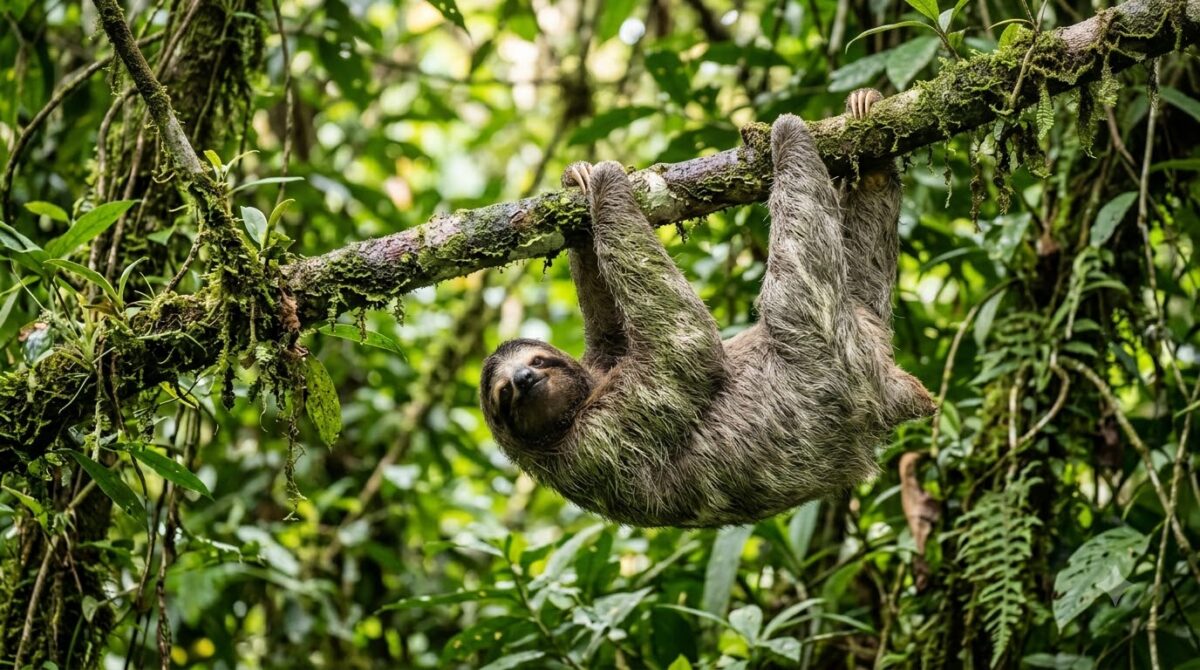
Sloths — near certain
Both the brown-throated three-toed sloth and the Hoffmann’s two-toed sloth live here. The three-toed is the one with the fixed smile; the two-toed sloth is larger, shaggier and strictly nocturnal.
- Where: Manuel Antonio National Park, the Caribbean coast around Cahuita and Puerto Viejo, La Fortuna.
- Odds: very high with a guide, moderate alone. They do not move, which is exactly why you walk past them.
- Tip: look for a dark clump in a cecropia tree. Guides find them by shape, not movement.
Monkeys: the four monkey species in Costa Rica
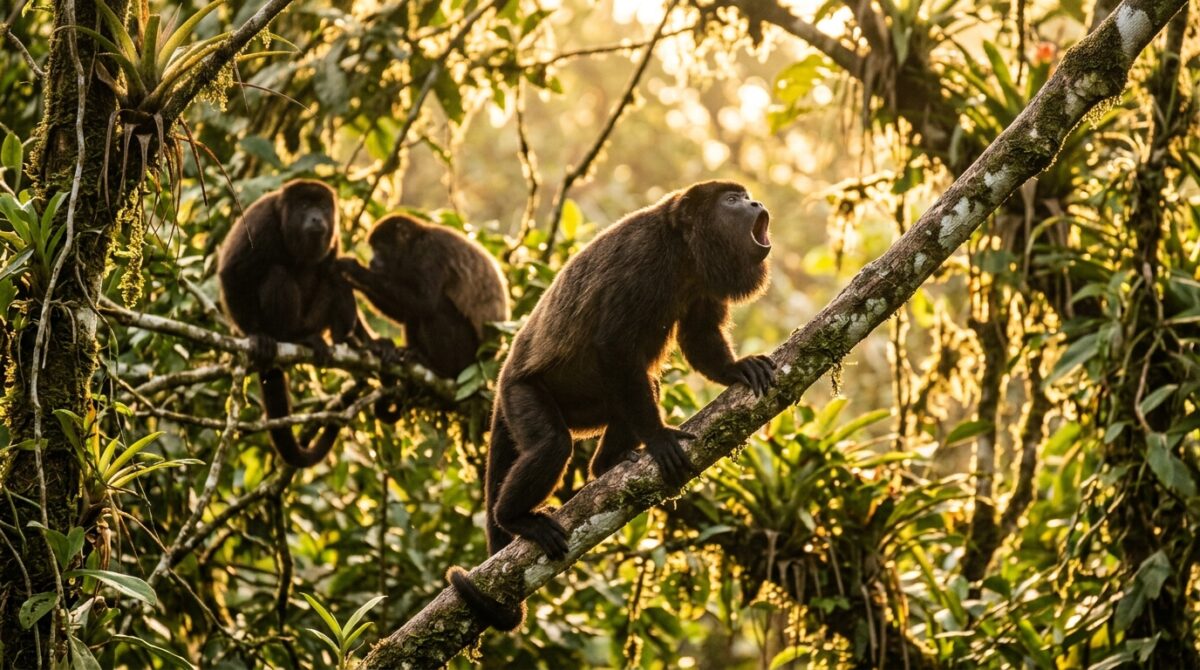
Costa Rica has four species of monkeys and you can see all four in one country, which is unusual.
- Mantled howler monkey — the loudest land animal in the Americas, audible three kilometres away. Everywhere with forest.
- Panamanian white-faced capuchin monkey — the clever one that raids bags. Manuel Antonio, Cahuita, Guanacaste.
- Spider monkey — long-limbed, shy, needs unbroken forest. Corcovado, Tortuguero.
- Squirrel monkey — small, orange, endangered, and found only on the central and south Pacific coast. Manuel Antonio and the Osa Peninsula.
Toucans — likely
Six species, of which two are the ones people picture: the keel-billed toucan with the rainbow bill, and the yellow-throated toucan, formerly called the chestnut-mandibled toucan. Both are common in lowland forest on either coast, and both are noisy.
Scarlet macaws — likely in the right place
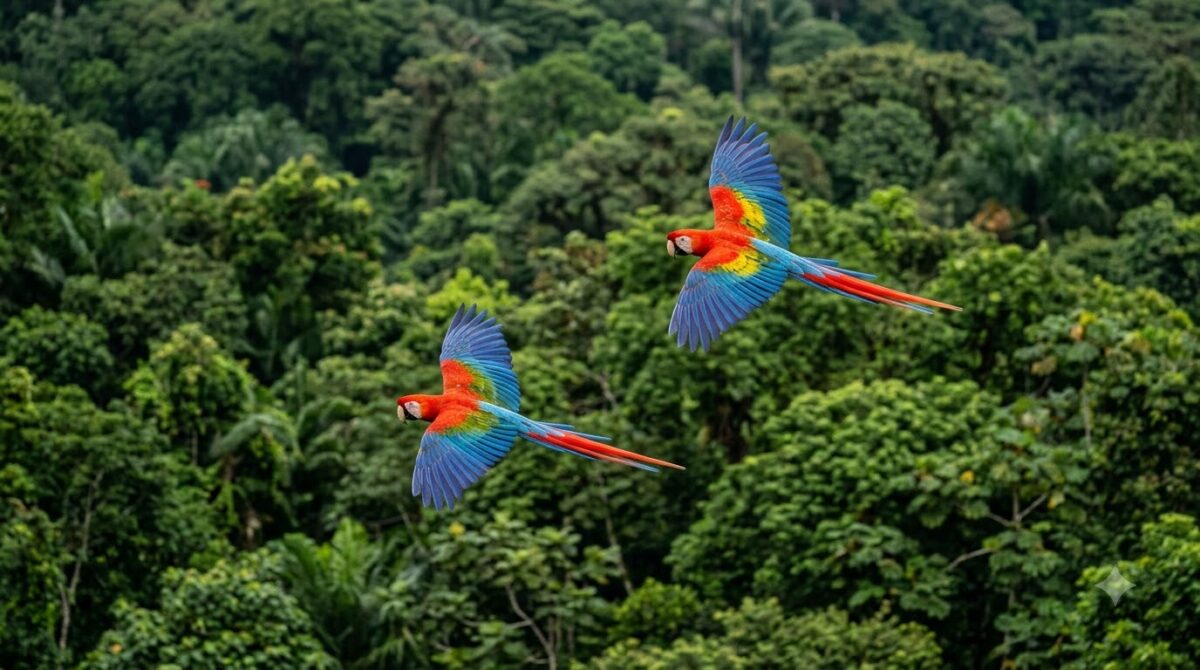
Wild scarlet macaw populations crashed nationally but two strongholds remain, and in both of them sightings are close to routine.
- Carara National Park near Jaco, at dawn and dusk.
- The Osa Peninsula, which holds the largest population in Central America.
- The great green macaw is rarer and lives on the Caribbean side around Sarapiquí and Tortuguero.
Frogs and amphibians in Costa Rica
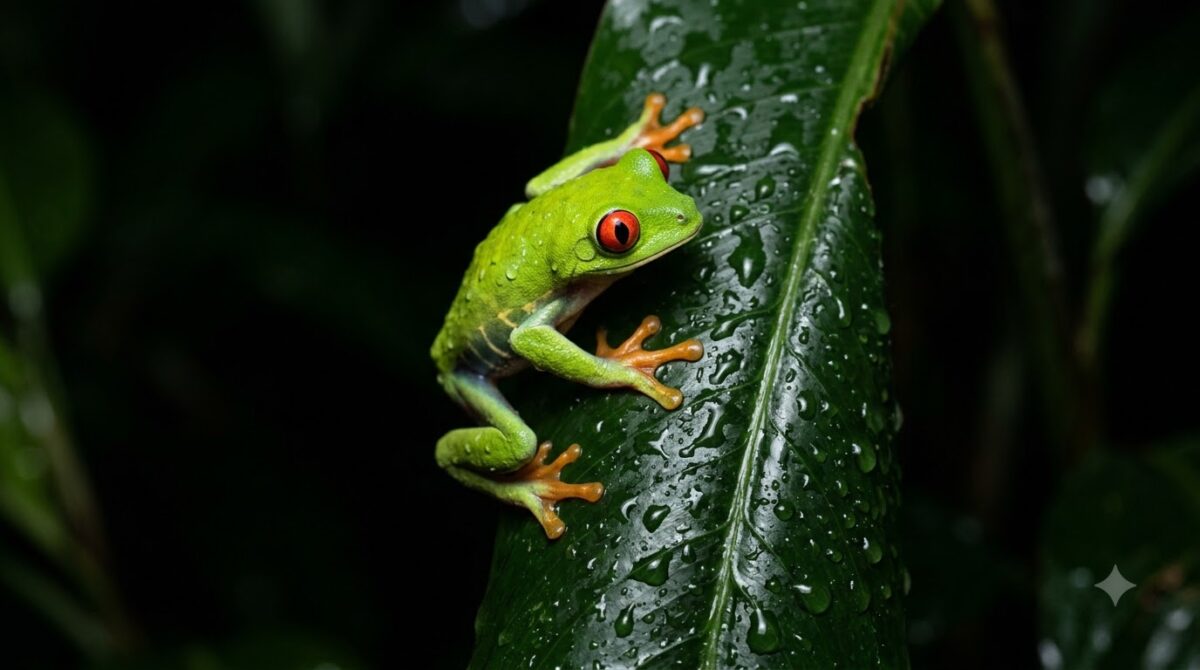
Costa Rica has around 175 species of frogs, and the amphibians here are as much of a draw as the mammals. The famous ones:
- Red-eyed tree frog (Agalychnis callidryas) — the national poster animal. Nocturnal, so a night tour is the only realistic way to see one.
- Poison dart frogs — the blue jeans frog on the Caribbean side, the green-and-black on the Pacific. Small, active by day, and genuinely toxic to touch.
- Glass frogs — translucent underneath, so you can see the organs. Monteverde and Sarapiquí.
- ⚠ The golden toad of Monteverde is extinct, last seen in 1989. Any tour offering to show you one is lying.
Sea turtles — likely if you time it
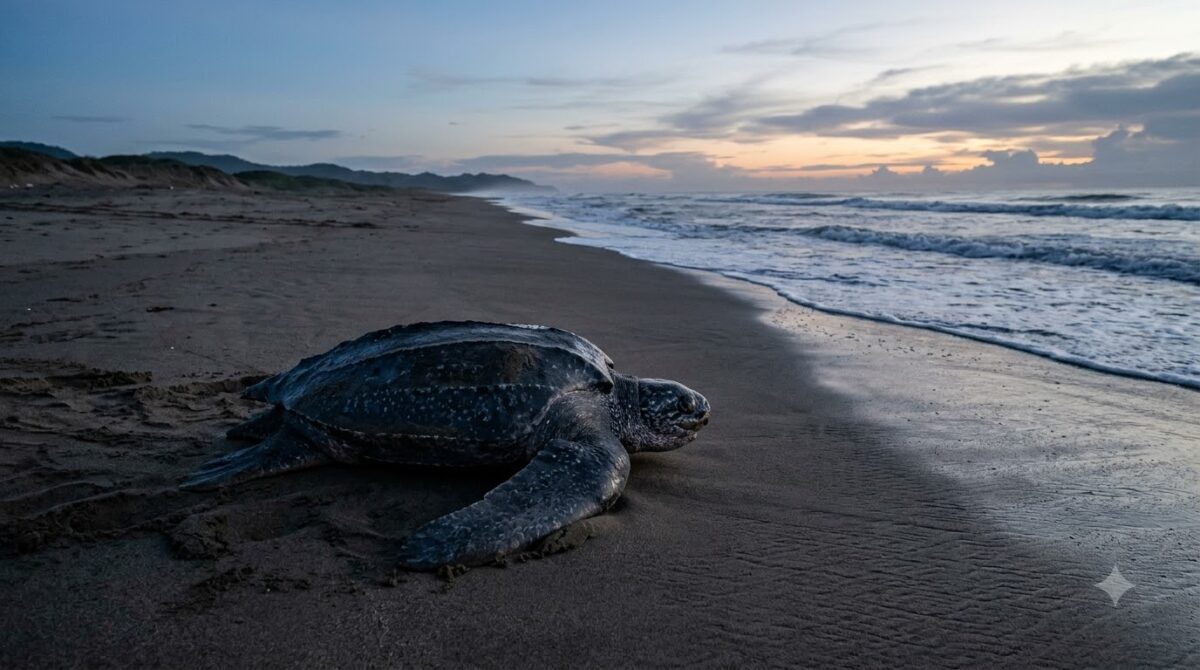
Five of the world’s seven sea turtle species nest in Costa Rica. Turtle nesting is entirely seasonal, so this is a calendar problem rather than a luck problem.
| Species | Where | Season |
|---|---|---|
| Green sea turtle | Tortuguero National Park, Caribbean coast | July to October |
| Olive ridley sea turtle (arribada) | Ostional, Nicoya Peninsula | July to December, largest around the last quarter moon |
| Leatherback sea turtle | Playa Grande, Guanacaste | October to February, and numbers have collapsed |
| Hawksbill sea turtle | Cahuita and Gandoca reefs | March to October |
Humpback whales and dolphins — likely in season
The south Pacific coast around Uvita and Drake Bay has one of the longest humpback whale seasons anywhere, because two separate populations use the same water at different times: July to October from the southern hemisphere, December to March from the north. Bottlenose and spotted dolphins turn up on almost any boat trip.
Tapirs and anteaters — possible
Baird’s tapir is the largest land mammal in Central America and the Sirena ranger station in Corcovado National Park is the most reliable place in the country to see one. Anteaters and coatis turn up along trail edges almost anywhere.
Wildcats — unlikely, and be honest about it
Six wild cat species live here: jaguar, puma, ocelot, margay, jaguarundi and oncilla. Sightings are rare. Camera traps in Corcovado record jaguars regularly; visitors almost never see one.
If an operator promises a jaguar, that is a reason not to book with them. Ocelots are occasionally seen on night tours in the Osa. Treat any cat as a bonus, never as a plan.
The best places to see wildlife: national parks from the Osa Peninsula to the rainforest coast
The single biggest factor is not luck. It is going to the right place.
| Place | Best for | Effort |
|---|---|---|
| Corcovado, Osa Peninsula | Tapir, all four monkey species, scarlet macaws, peccary. The richest rainforest in the country | High — a guide is mandatory and Sirena books out months ahead |
| Manuel Antonio National Park | Sloths, squirrel monkeys, capuchins. The easiest wildlife day anywhere | Low — flat trail, but tickets are online only |
| Tortuguero | Green turtle nesting, caimans, river wildlife | Medium — boat access only |
| Monteverde cloud forest | Resplendent quetzal, hummingbirds, glass frogs | Medium — timed entry slots |
| Carara National Park | Scarlet macaws, and a wheelchair-accessible trail | Low — 20 minutes from Jaco |
| Cahuita, Caribbean coast | Sloths, howlers, reef fish. Entry by donation | Low — flat coastal trail from town |
| Palo Verde, dry forest | Waterbirds in huge numbers, crocodiles | Medium — boat trip on the Tempisque |
| Uvita and Marino Ballena | Humpback whales, dolphins | Low — boat from the beach |
Map shows live availability and prices. We may earn a commission on bookings made through it, at no extra cost to you.
The best time to see wildlife in Costa Rica
- Dawn and dusk beat any month. Being on a trail at 6am matters more than which week you visit.
- December to April — dry season, easier trails, animals concentrate near water in the dry forest.
- May to November — breeding season for many species, forest at its loudest, and far fewer people on the trails.
- July to October — turtle nesting and the main humpback whale season together.
- February to May — quetzal nesting in the cloud forest.
- November to April — northern migrant birds arrive on top of the residents.
Full month-by-month detail in our guide to when to visit.
How to actually see animals rather than leaves
- Hire a naturalist guide for at least one park. This is the single highest-return decision. They cost US$25 to US$40 per person, know which tree, and carry the scope.
- Go at opening time. Most parks open at 7am and the first two hours are worth the rest of the day combined.
- Take a night tour. Two thirds of Costa Rican mammals are nocturnal, and the frogs are entirely so. Around US$25 to US$45.
- Stop walking. Stand still for five minutes and the forest resumes around you.
- Bring binoculars. Everything is high up and further away than you expect.
- Wear dull colours and no scent.
- Follow the noise. Howlers, macaws and toucans announce themselves.
⚠ Dangerous animals, and the rules nobody explains
Most guides skip this. It is short and it matters.
- Fer-de-lance (Bothrops asper) — the snake responsible for most serious bites in Central America. Present nationwide in lowland forest. Closed shoes on trails, never put hands where you cannot see, and do not step over logs blindly.
- American crocodiles live in river mouths, notably the Tárcoles and the Tamarindo estuary. Do not swim where a river meets the sea.
- Poison dart frogs are toxic to touch. Look, do not handle.
- Bullet ants in lowland rainforest deliver the most painful insect sting recorded. Do not lean on tree trunks.
- Capuchins and coatis bite when fed. This is the most common animal injury among visitors.
Do not feed anything
Feeding wildlife is illegal in Costa Rican national parks, and the reason is practical rather than sentimental. Fed animals lose their foraging behaviour, cluster around people, spread disease among themselves and become aggressive. The bag-raiding capuchins at Manuel Antonio are a direct product of decades of tourists sharing crisps.
The same applies to touching sloths for photographs, which stresses them badly, and to flash photography at night.
Conservation, ecotourism and endangered species
Habitat destruction is the thing that decides whether these animals survive, and the reason this flora and fauna still exists is a deliberate policy choice. Costa Rica lost a large share of its forest to cattle by the 1980s, then reversed the deforestation — forest cover roughly doubled from its low point through protected areas, payments to landowners for keeping trees, and an economy rebuilt around visitors coming to see animals.
That is worth knowing because it means your park entry fee is the mechanism. The system works because the forest earns more standing than felled.
A route through the Costa Rican rainforest that works
For a first trip built around seeing animals rather than beaches:
- La Fortuna, 2 nights — sloths, howlers, a night tour, hanging bridges over the canopy.
- Monteverde, 2 nights — quetzals, hummingbirds, cloud forest species you get nowhere else.
- Manuel Antonio, 2 nights — squirrel monkeys, sloths, an easy park day.
- Add the Osa Peninsula, 4 nights, if you have two weeks. That is where the serious wildlife is.
See our guides to Manuel Antonio, Monteverde, the Osa Peninsula and things to do in Costa Rica.
For the easiest wildlife viewing in the country, see Tortuguero and its canals.
Check hotels across Costa Rica →
Frequently asked questions
What animals is Costa Rica known for?
Sloths, four species of monkey, scarlet macaws, toucans, the red-eyed tree frog and nesting sea turtles. Jaguars and other wildcats live here but are almost never seen.
Where is the best place to see wildlife in Costa Rica?
Corcovado on the Osa Peninsula is the richest but the hardest to reach. Manuel Antonio National Park is the easiest, with sloths and squirrel monkeys on a flat trail. Tortuguero for turtles, Monteverde for quetzals, Carara for scarlet macaws.
How many monkey species are in Costa Rica?
Four: howler, white-faced capuchin, spider and squirrel monkey. Manuel Antonio and the Osa Peninsula are the only places you have a realistic chance of all four.
Can you see sloths in Costa Rica?
Yes, and it is close to guaranteed with a guide. Both three-toed and two-toed sloths live here. Manuel Antonio and the Caribbean coast around Cahuita are the most reliable places.
Are there dangerous animals in Costa Rica?
The fer-de-lance snake is the main one, present in lowland forest nationwide. American crocodiles live in river mouths, poison dart frogs are toxic to touch, and fed capuchins bite. Closed shoes on trails and never swim where a river meets the sea.
When is the best time to see animals in Costa Rica?
Dawn matters more than the month. December to April is easier for trails; May to November is breeding season with fewer people. July to October covers turtle nesting and humpback whales together.
Do you need a guide to see wildlife in Costa Rica?
Not legally except in Corcovado, but practically yes for at least one park. A naturalist costs US$25 to US$40 per person and is the difference between seeing animals and walking through green corridors.
Species counts, seasons and park details read 16 August 2026. Nesting seasons shift year to year — confirm locally before booking a turtle tour.