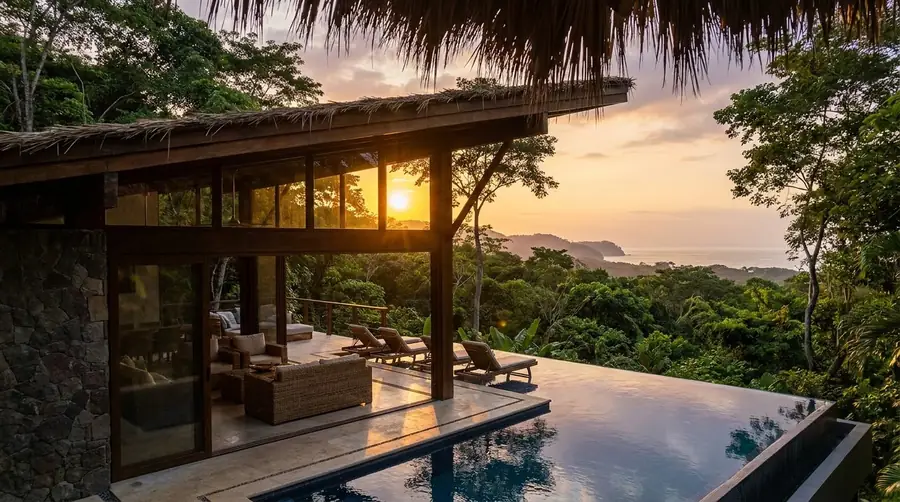
Quick picks not a ranking · only villas in this guide
Choose the area first. Guanacaste for easy beaches, Nosara or Santa Teresa for surf, Arenal for the volcano.
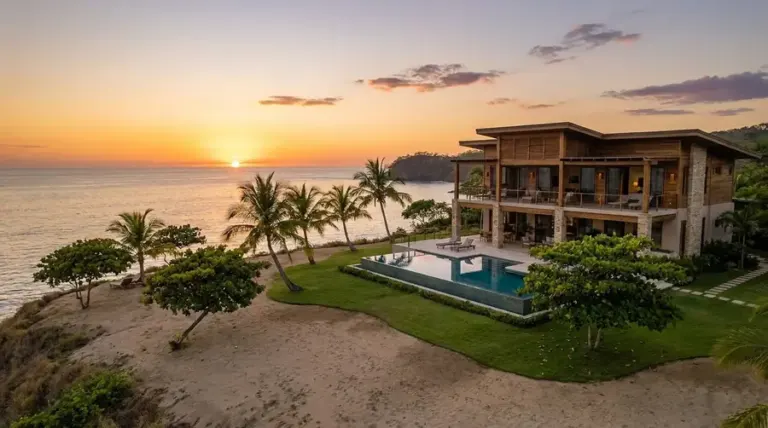
Illustration · see real photos on Booking.com Check availability on Booking.comBest for families
Casa Royal
Seven bedrooms on the beach, a private pool and a cook included.
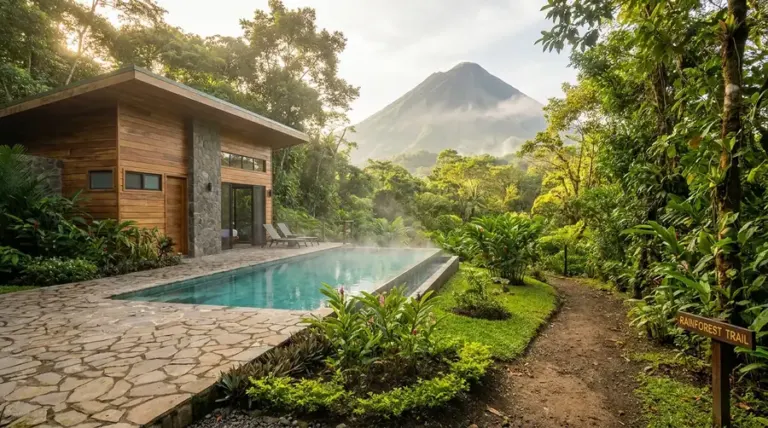
Illustration · see real photos on Booking.com Check availability on Booking.comBest for couples
Arenal Keljá Luxury Villa Charajtoc
Two bedrooms and a heated pool facing Arenal Volcano.
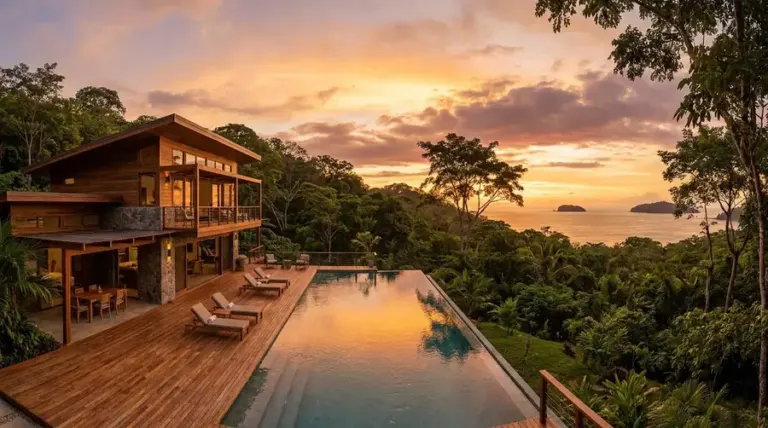
Illustration · see real photos on Booking.com Check availability on Booking.comBest ocean view
Casa Aliki, Luxury Beach Home with THE VIEW
A private pool and a terrace looking straight out over the Pacific.
On this page
- Eight villa areas
- Tamarindo & Hacienda Pinilla: the easy Guanacaste base
- See live prices for your dates
- Flamingo & Potrero: calm bays and big ocean-view houses
- Nosara: surf, yoga and jungle lanes
- Santa Teresa & Montezuma: the southern tip of Nicoya
- Manuel Antonio: rainforest meets the beach
- Uvita & Dominical: whales and jungle-clad hills
- La Fortuna & Arenal: a volcano in the garden
- Puerto Viejo & the Caribbean coast
- Villa or hotel in Costa Rica?
- Before you book a villa in Costa Rica
- When to book a Costa Rica villa
- More on Costa Rica
- Villas in Costa Rica: FAQ
In Costa Rica, the road to the villa matters as much as the villa. The country is small on a map, but the drives are slow, many of the best houses sit at the end of gravel roads, and the weather changes completely between the Pacific coast, the mountains and the Caribbean. A villa in the wrong place can mean a white-knuckle drive up a muddy hill every evening, or a week of rain when the other coast is sunny. This guide sorts villas into eight areas first, so you can choose where you want to wake up before you choose a pool. For each area you will find what it suits, what the roads are like, how far it is from the nearest airport, and two or three real villas listed on Booking.com, with bedrooms, guest numbers and pool details as the listing gives them. Where a listing does not state something, we leave it blank rather than guess. We do not rank the villas and we do not quote prices, which change by the day; the map lets you see live prices for your dates. If you have not planned the route yet, start with our Costa Rica itinerary, then come back to choose your bases.
Some links below are affiliate links. We may earn a commission if you book through them, at no extra cost to you. We do not rank hotels, and any prices on the map come live from the booking sites.
Step 1 · Pick the area
Eight villa areas
- 1Tamarindo & Pinilla
Restaurants and surf lessons · paved roads · about 1 hr 15 min from Liberia airport
See 3 villas ↓Villas in Guanacaste → - 2Flamingo & Potrero
Calm water and big groups · paved roads · about 1 hr from Liberia airport
See 3 villas ↓Villas in Playa Flamingo → - 3Nosara
Surf and slow mornings · gravel roads, 4×4 advised · about 2 hrs 30 min from Liberia
See 3 villas ↓Villas in Nosara → - 4Santa Teresa & Montezuma
Surf and sunsets · rough side roads, 4×4 advised · about 5 hrs or more from San José, ferry included
See 3 villas ↓Villas in Mal País & Santa Teresa → - 5Manuel Antonio
Wildlife and beaches · paved but steep, hilly roads · about 3 hrs from San José
See 3 villas ↓Villas in Manuel Antonio → - 6Uvita & Dominical
Whales, waterfalls, views · steep gravel to many villas, 4×4 advised · about 3 hrs 30 min from San José
See 3 villas ↓Villas in Uvita → - 7La Fortuna & Arenal
Volcano, hot springs, adventure · paved main roads · about 3 hrs from San José
See 3 villas ↓Villas in La Fortuna → - 8Puerto Viejo & the Caribbean
Caribbean beaches and culture · paved coast road · about 4 hrs 30 min from San José
See 3 villas ↓Villas in Puerto Viejo →
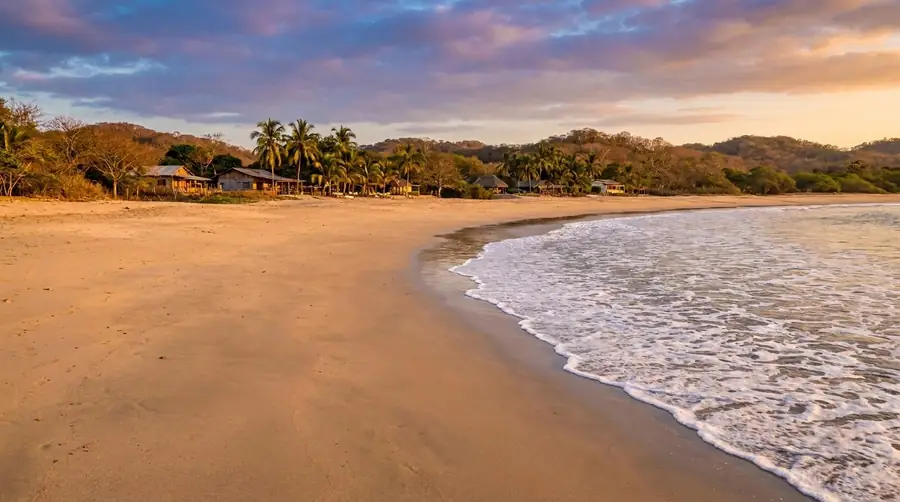
Area 1 of 8
Tamarindo & Hacienda Pinilla: the easy Guanacaste base
Good for a first trip and familiesPaved roads, car optional in townAbout 1 hr 15 min from Liberia airport
Tamarindo is the busiest beach town in Guanacaste, and for a first villa trip that is mostly a good thing. The main road is paved, there are supermarkets, pharmacies, surf schools and dozens of restaurants, and Liberia’s international airport is roughly an hour and a quarter away by car. The beach is long and gentle at the north end, which is why it is the classic place to take a first surf lesson, and the estuary at the north tip is part of Las Baulas National Marine Park. Playa Langosta, just south over a small river mouth, is quieter, and further south again Hacienda Pinilla is a large gated estate with a golf course, a beach club and big houses, about 20 minutes’ drive from town and close to the surf at Avellanas. Most villas here sit in gated communities on the edges of town or on the hills behind it, so you get a private pool and a garden without being far from dinner. The trade-off is that Tamarindo is busy, built up and noisy at night on the main strip, and it is not the place for jungle and wildlife on your doorstep. Our Tamarindo guide covers the town and the beaches in more detail.
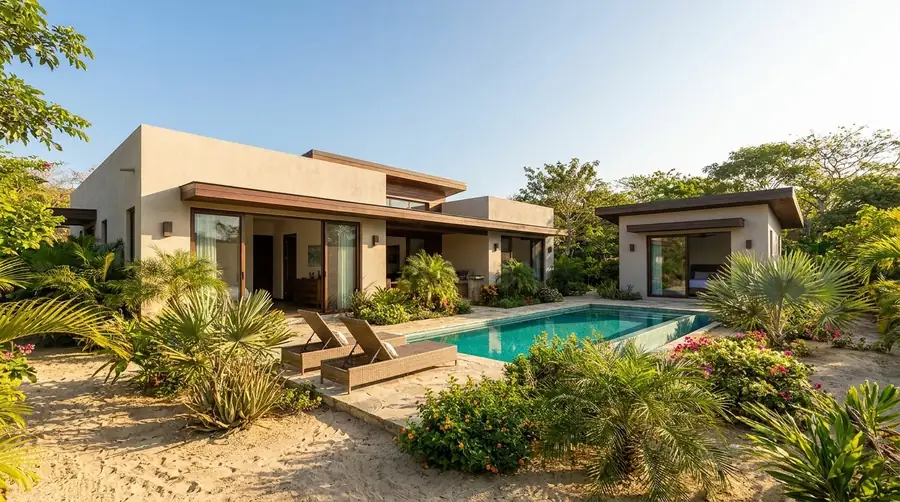
CU20 Modern Beach Home
Why it is here: Four bedrooms split between the main house and a guest house, with a private pool and garden, about a 17-minute walk from Tamarindo beach.
Live prices on the map ↓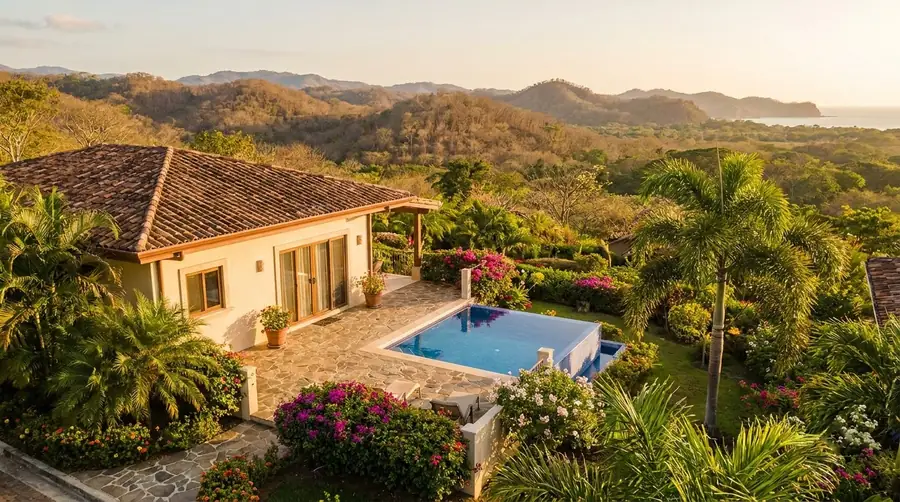
Villa Estrella del Mar
Why it is here: Two bedrooms and a private pool with a terrace and garden in Hacienda Pinilla, the gated golf and beach estate about 20 minutes south of Tamarindo.
Live prices on the map ↓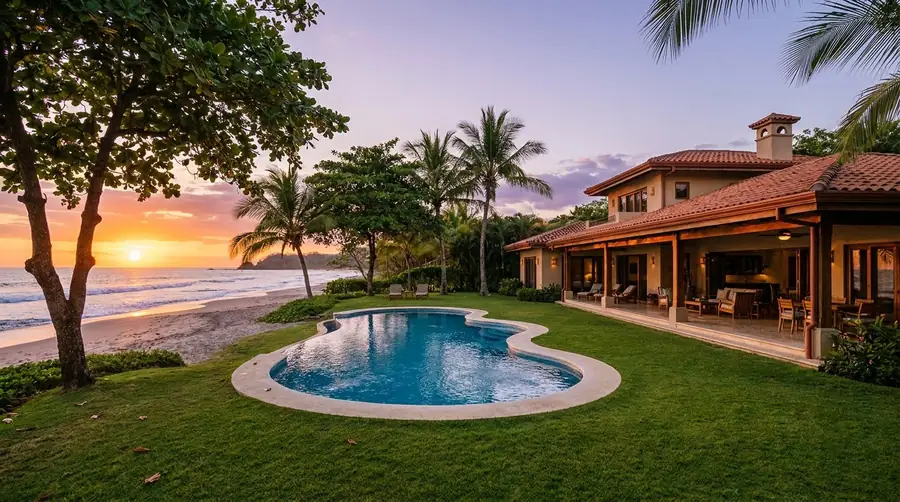
Xanadu Luxury Villa
Why it is here: Five bedrooms and five bathrooms on the beach at Hacienda Pinilla, with a saltwater pool and a sun terrace, about 2.5 km from Avellanas beach.
Live prices on the map ↓Live prices
See live prices for your dates
Prices appear on the pins once dates are set. We pre-fill a week about a month ahead; change the dates on the map to see yours.
Area 2 of 8
Flamingo & Potrero: calm bays and big ocean-view houses
Good for families and big groupsPaved roads, car neededAbout 1 hr from Liberia airport
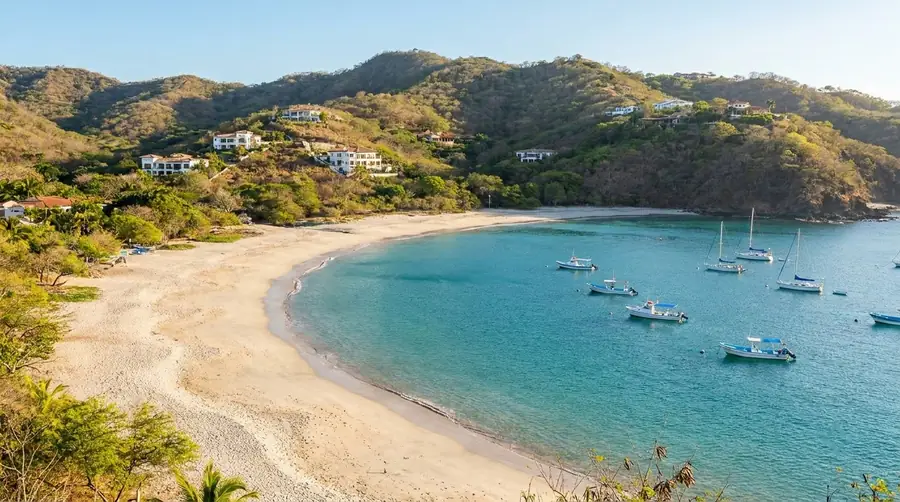
North of Tamarindo, the coast turns into a series of calmer bays, and this is where many of the largest villas in Costa Rica are. Playa Flamingo has a white-sand beach, a marina and a hill covered in ocean-view houses, many with infinity pools facing the sunset. Playa Potrero, across the bay, is a small, low-key village with a long beach, a few restaurants and a more local feel, while Brasilito and Playa Conchal, famous for its crushed-shell sand, are a few minutes south. The water here is usually calmer than at Tamarindo, which suits small children and swimmers more than surfers. The main roads are paved and the drive from Liberia airport is about an hour, so this area works well for short trips and for groups who want to spend most of their time at the villa. You will want a car: the villages are spread out, and some hillside houses are reached by steep driveways. If you are planning beach days, our guide to Costa Rica beaches compares the Guanacaste bays.
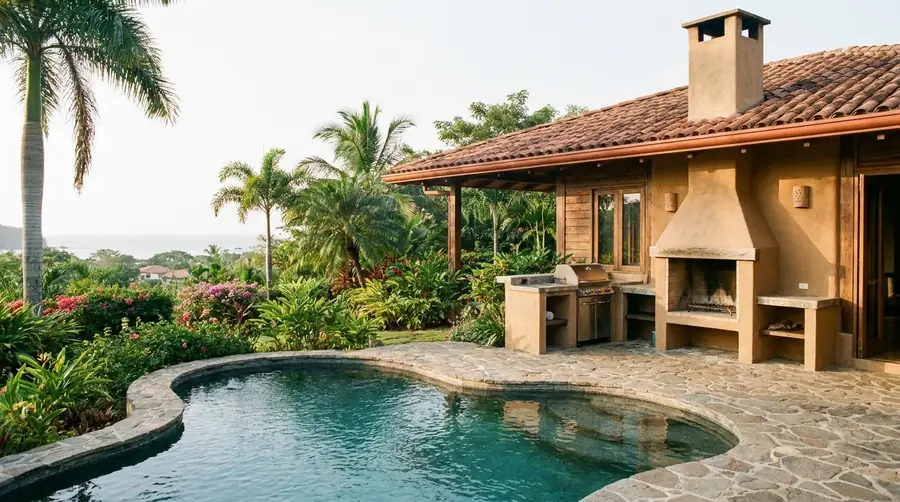
Villa Harmonia
Why it is here: Three bedrooms, a saltwater pool, a barbecue and an outdoor fireplace in Potrero, about a 19-minute walk from the beach.
Live prices on the map ↓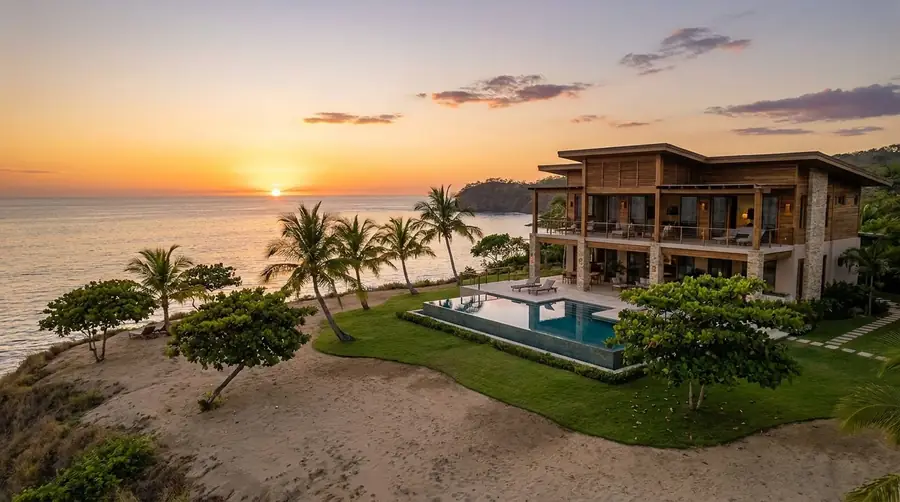
Casa Royal
Why it is here: A seven-bedroom beachfront house in Potrero with a private pool and sea views, and a private cook included according to the listing: one for big family reunions.
Live prices on the map ↓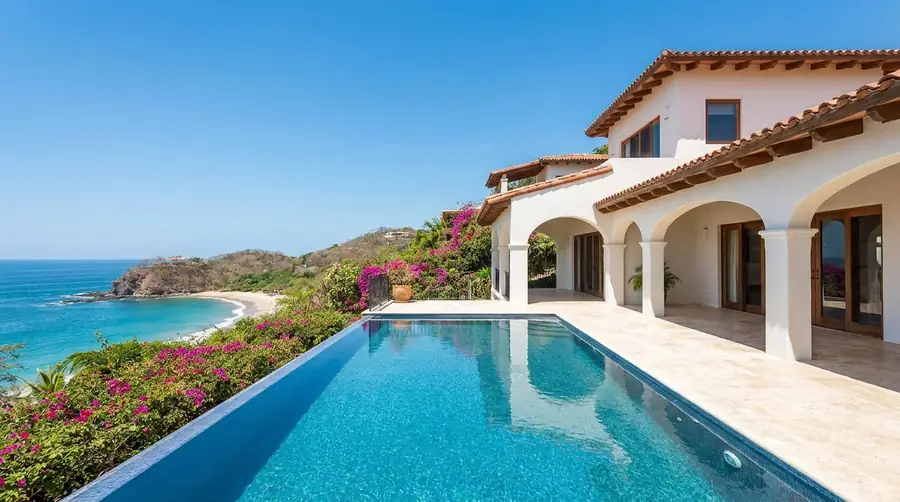
Dreamy Spanish-Style Villa with Sweeping Ocean Views
Why it is here: Four bedrooms and six bathrooms on the hill at Playa Flamingo, with an infinity pool and sweeping ocean views in a Spanish-style house.
Live prices on the map ↓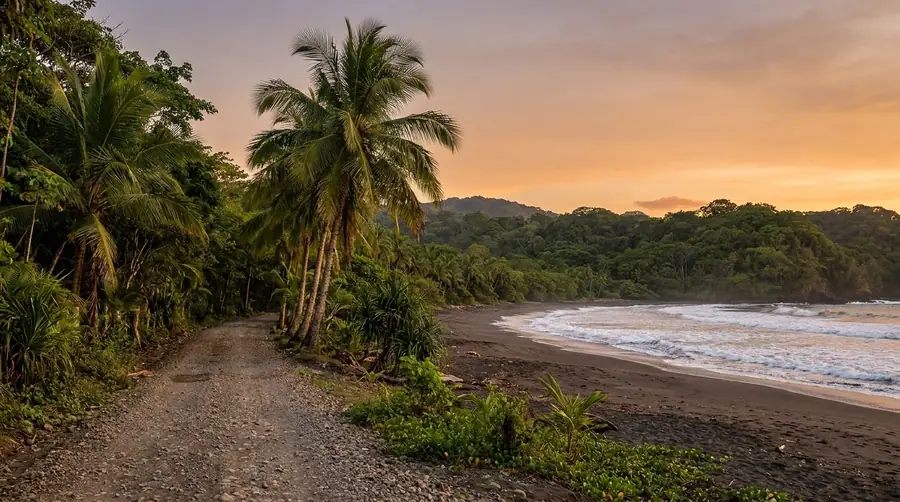
Area 3 of 8
Nosara: surf, yoga and jungle lanes
Good for surf, yoga and couplesGravel roads, SUV or 4×4 advisedAbout 2 hrs 30 min from Liberia
Nosara is not really a town but a group of small neighborhoods spread through the forest behind Playa Guiones and Playa Pelada, on the Pacific side of the Nicoya Peninsula. Building close to the beach is restricted here, so the shore stays wild and the houses sit back in the trees, with howler monkeys in the canopy and dirt lanes between them. Guiones is one of the most consistent surf beaches in the country, and the area is known for yoga retreats, healthy cafés and early nights. That same lack of development is the main practical point: many of the roads around Nosara are gravel, dusty in the dry season and muddy and potholed in the rainy months. An SUV with good clearance is the minimum, and a 4×4 is the sensible choice from September to November. Many people stay put and use bikes, golf carts or quads to get to the beach. There is a small domestic airstrip if you would rather fly than drive. Read our Nosara guide before you pick a street.
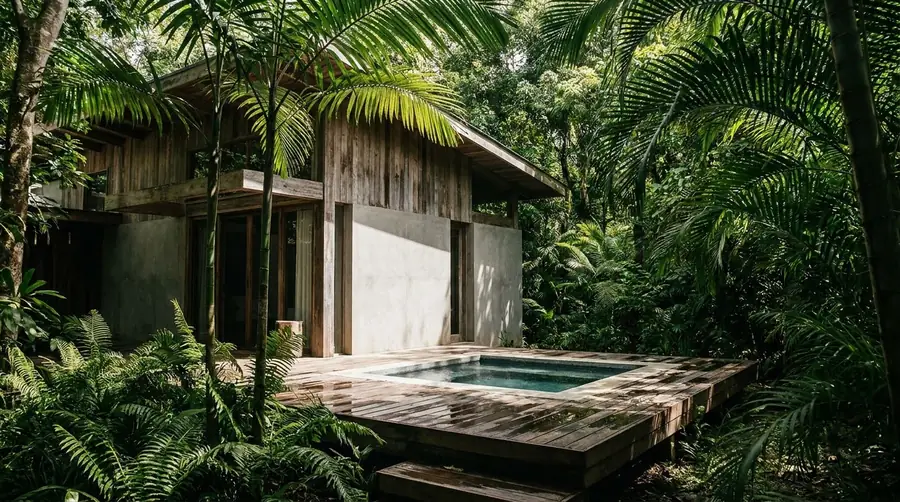
Nalu Nosara Pool Villa Sol
Why it is here: A two-bedroom pool villa in the forest, about an eight-minute walk from Guiones beach, with a gym on site and air-conditioning throughout.
Live prices on the map ↓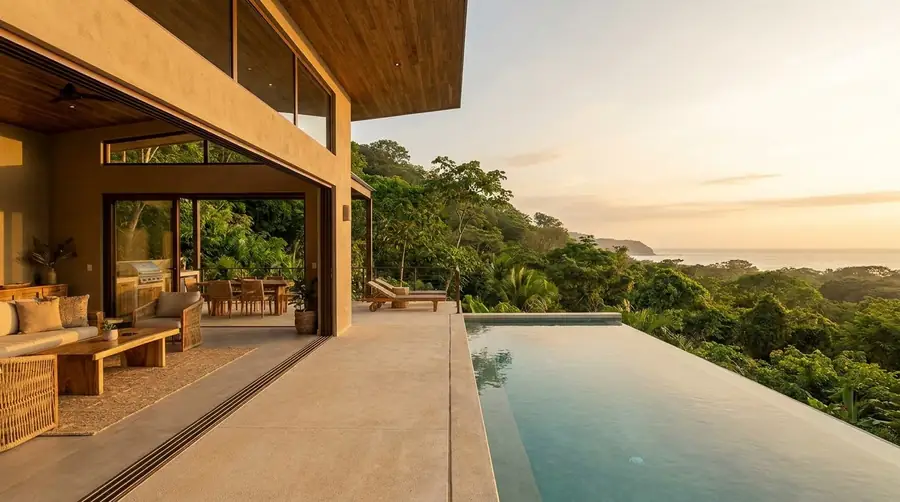
Ohana Villa
Why it is here: Four bedrooms and five bathrooms with an ocean view and a pool, less than 1 km from Guiones beach, near the yoga center and the artisan market.
Live prices on the map ↓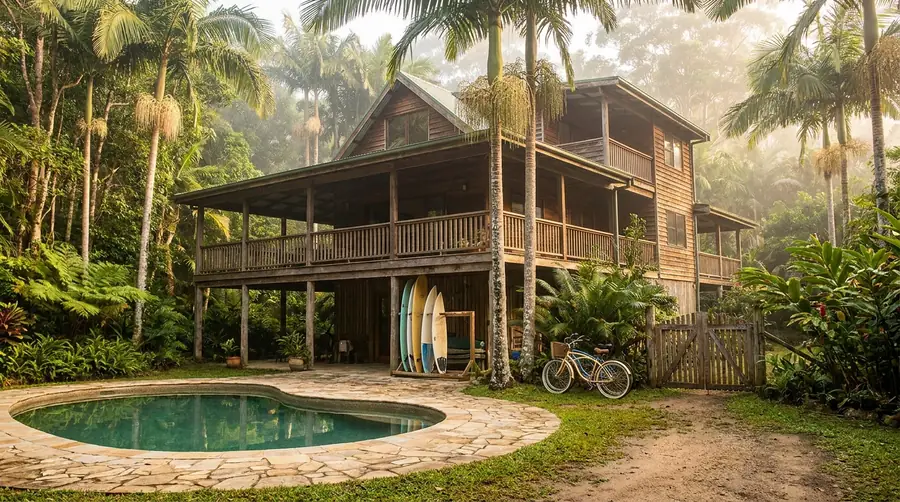
Four Winds Properties
Why it is here: Houses with a garden and a year-round pool a short walk from the beach at Guiones, with free bikes and an airport shuttle offered on the listing.
Live prices on the map ↓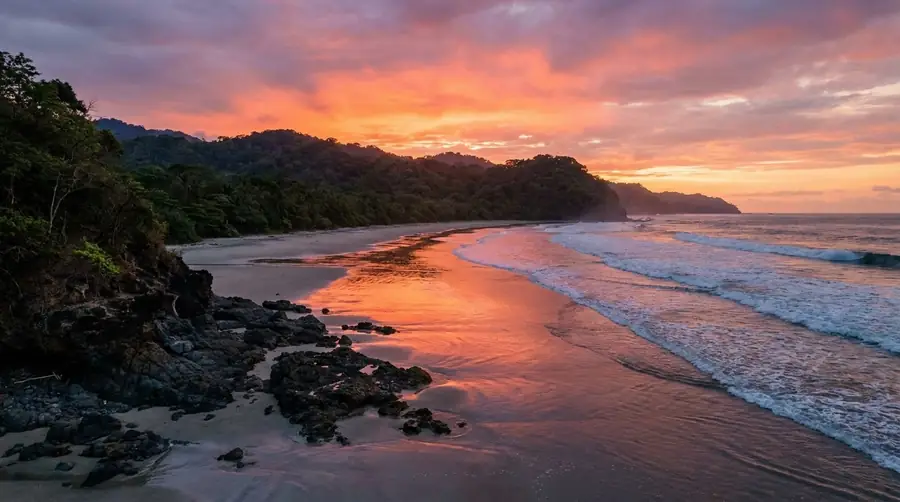
Area 4 of 8
Santa Teresa & Montezuma: the southern tip of Nicoya
Good for surfers and couplesRough side roads, 4×4 advisedFerry or small plane to reach it
Santa Teresa and Mal País run together along one long road at the southern tip of the Nicoya Peninsula, with surf breaks, beach bars and a busy strip of restaurants and boutiques. The sunsets are the main event: almost every hillside villa here is built to face west over the Pacific. Montezuma, on the other side of the peninsula, is smaller and greener, with waterfalls and a calmer, older backpacker feel; the drive between the two takes about half an hour through Cóbano, the local service town. Getting here is part of the trip. Most people take the car ferry from Puntarenas to Paquera and drive on, or fly into the small airstrip at Tambor. Parts of the main approach have been paved in recent years, but many side streets and hillside driveways are still dirt and gravel, steep in places and rutted after rain, so book an SUV or 4×4. Dust is a fact of life in the dry season. Our Santa Teresa guide and Montezuma guide cover each village.
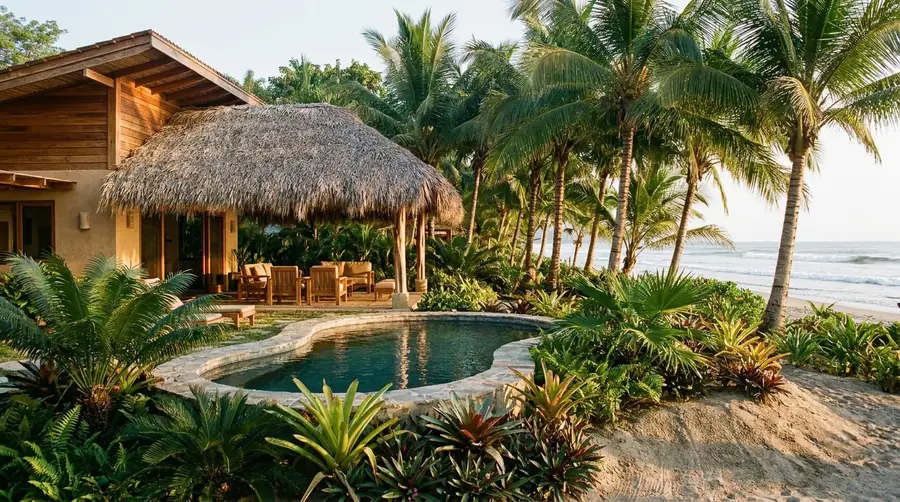
CasaMAR Santa Teresa on the Beach
Why it is here: Four bedrooms and five bathrooms right by the beach at the end of Calle Banana, with a saltwater pool, a barbecue and a garden.
Live prices on the map ↓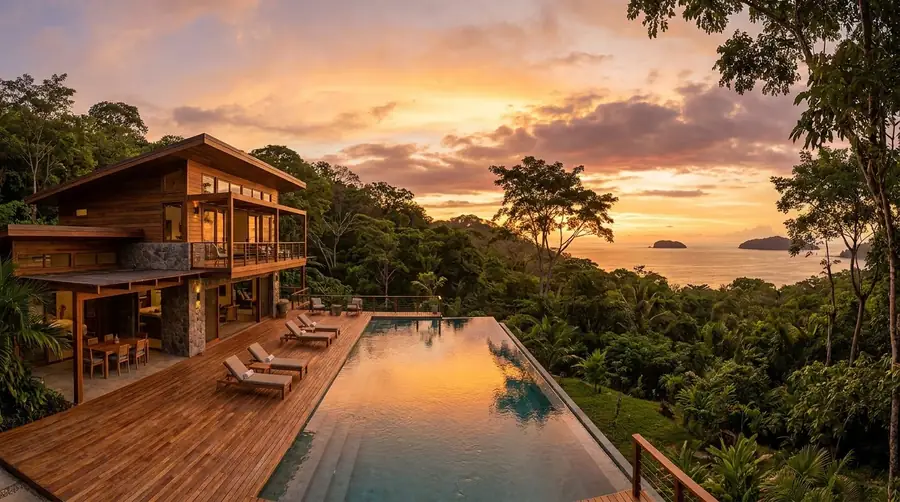
Casa Aliki, Luxury Beach Home with THE VIEW
Why it is here: Four bedrooms and five bathrooms with a private pool and a sea-view terrace, about a five-minute walk from Santa Teresa beach.
Live prices on the map ↓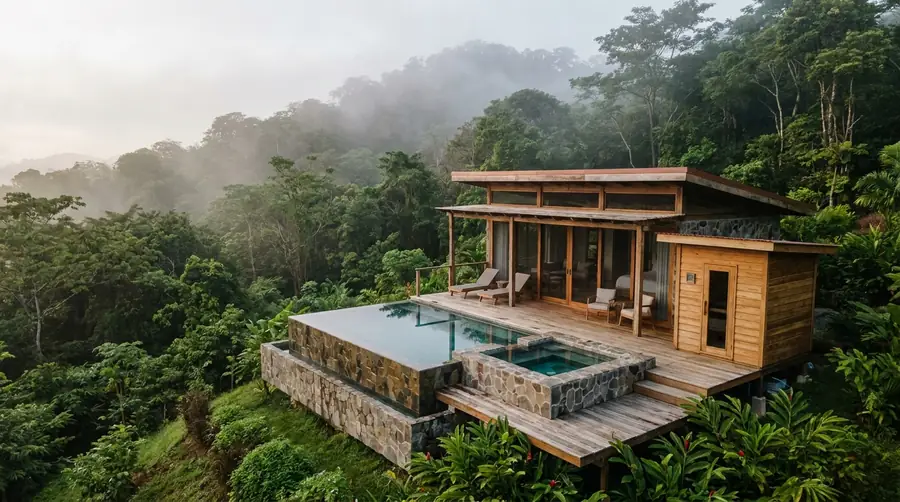
Villa Kalapiti
Why it is here: A two-bedroom villa in the hills inland from Santa Teresa and Montezuma, with a private pool, a hot tub and a sauna: quiet, but you will drive to the beach.
Live prices on the map ↓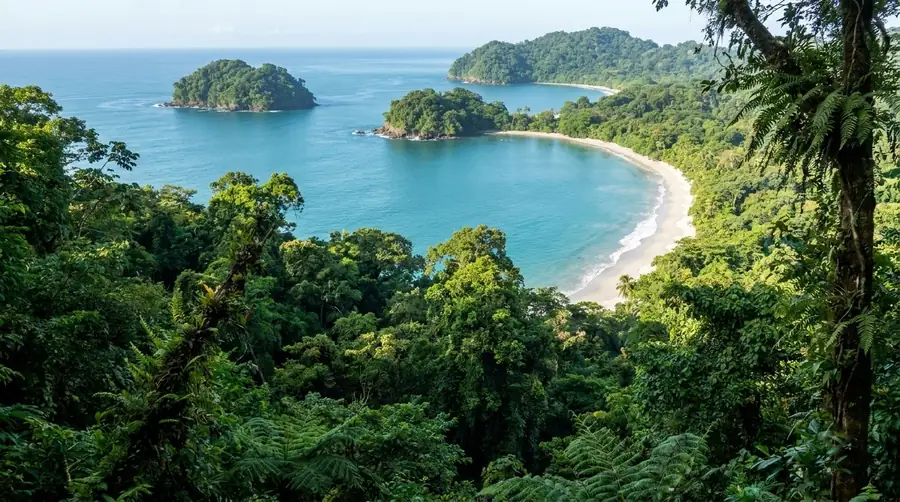
Area 5 of 8
Manuel Antonio: rainforest meets the beach
Good for wildlife and familiesPaved, steep and winding roadsAbout 3 hrs from San José
Manuel Antonio is where the rainforest comes right down to the sand, and it is the most popular stop on the central Pacific coast. The national park protects a string of white-sand coves full of sloths, capuchin and squirrel monkeys, and it is small enough for a family to walk in a morning; it is closed on Tuesdays, and tickets are sold online only, through SINAC. Outside the park, a single road climbs and twists along a forested ridge between the town of Quepos and the public beach at Playa Espadilla, lined with hotels, restaurants and villas with ocean views. The road is paved, but driveways off it are often steep, and the views come from height: most villas are up on the hills, not on the beach. Quepos has a marina, a supermarket and a small domestic airport, and the drive from San José is about three hours. Villas in the Manuel Antonio Estates area sit further inland and higher up, quieter and greener but more reliant on a car. Our Manuel Antonio guide covers the park and the beaches.
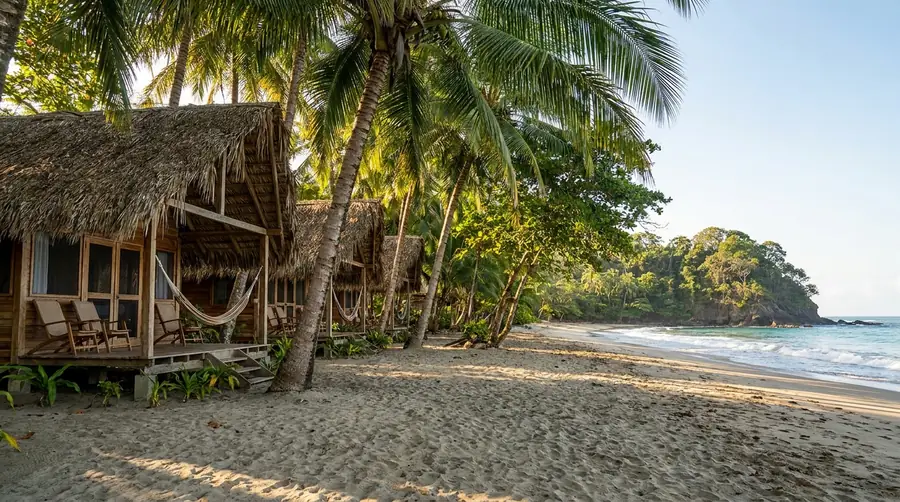
Mar y Sombra Villas
Why it is here: Small villas directly on the beach close to the park, with terraces facing the sea and a kitchenette in each: the rare Manuel Antonio stay where you hear the waves.
Live prices on the map ↓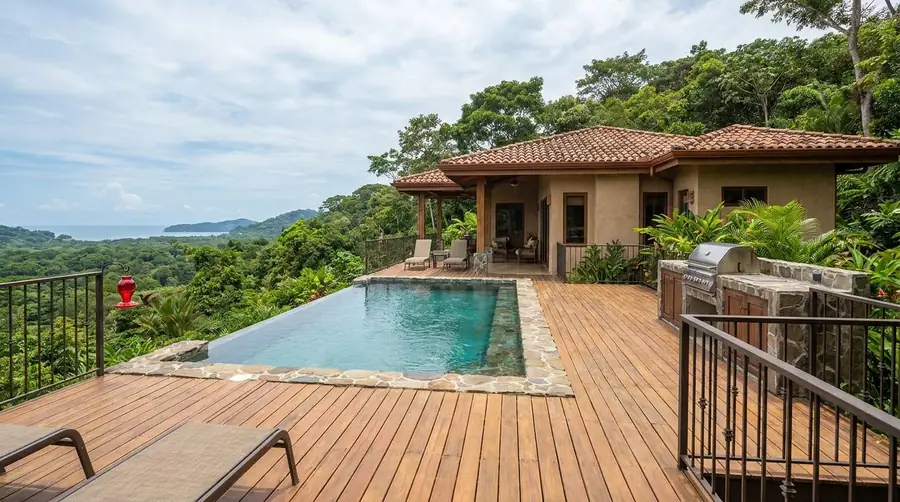
Secret Mountain Top 3BR Casa Colibrí
Why it is here: Three bedrooms on a hilltop in Manuel Antonio Estates, with a private pool, a barbecue and wide jungle views.
Live prices on the map ↓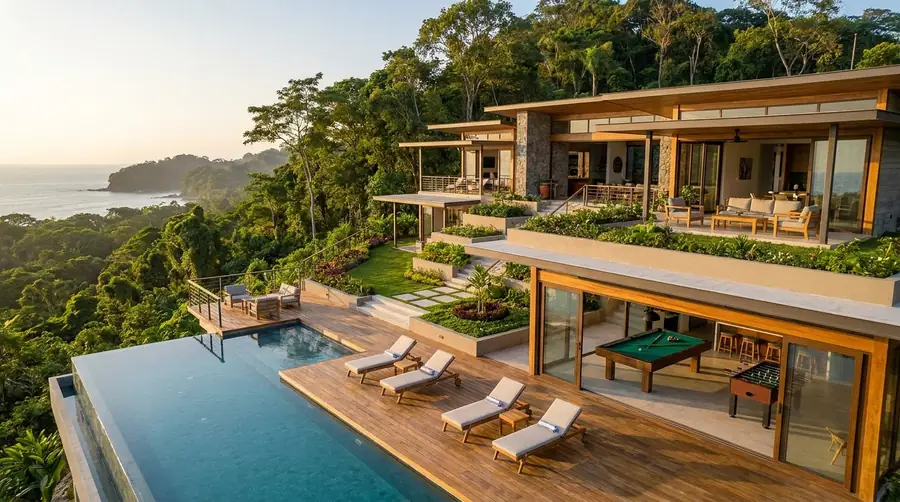
Villa Buddha Belly
Why it is here: Five bedrooms and seven bathrooms with a pool, a games room and even a lift, high in the hills about 6 km from the Quepos airstrip.
Live prices on the map ↓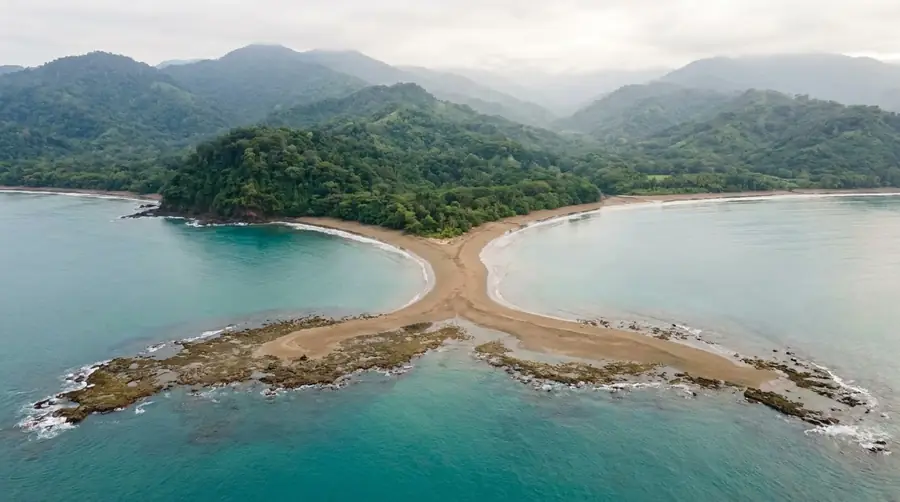
Area 6 of 8
Uvita & Dominical: whales and jungle-clad hills
Good for views and natureSteep gravel driveways, 4×4 advisedAbout 3 hrs 30 min from San José
South of Manuel Antonio, the coast gets wilder. Dominical is a laid-back surf village at the mouth of a river, and Uvita, about 20 minutes further south, is the gateway to Marino Ballena National Park and its sandbar shaped like a whale’s tail. Humpback whales pass this coast in two seasons, roughly from late July to October and again from December to April, and boat trips leave from Uvita. Between the two towns, the mountains rise straight from the beach, and the villas here are mostly up on those hills, in areas such as Escaleras and Ojochal, with huge views over the ocean. That is where the practical warning matters most: many of these hillside roads are steep, unpaved and slippery after rain, and some villa owners say outright that a 4×4 is required. Check the access road before you book, especially from September to November. The coastal highway itself is paved and fast. Our Uvita guide and Dominical guide cover each town.
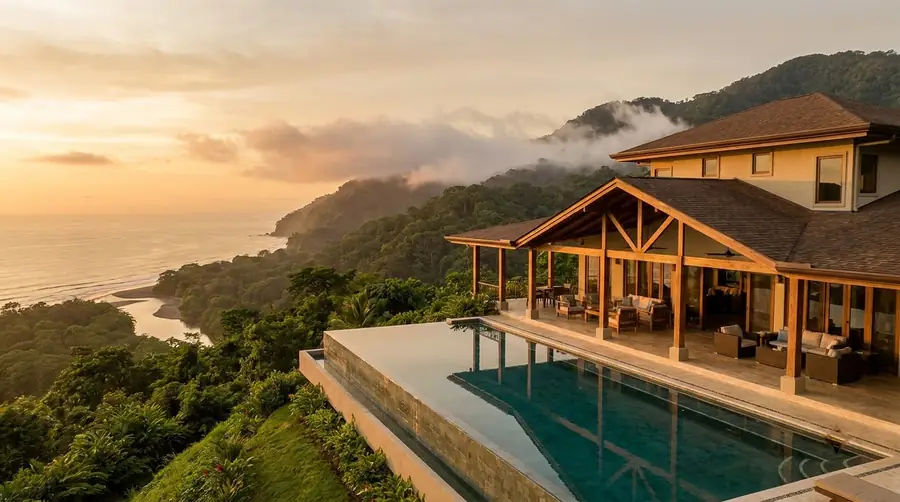
Casa Bella Vina
Why it is here: Five bedrooms and five bathrooms for up to 14 guests, with a pool with a view on the San Martín road above Dominical.
Live prices on the map ↓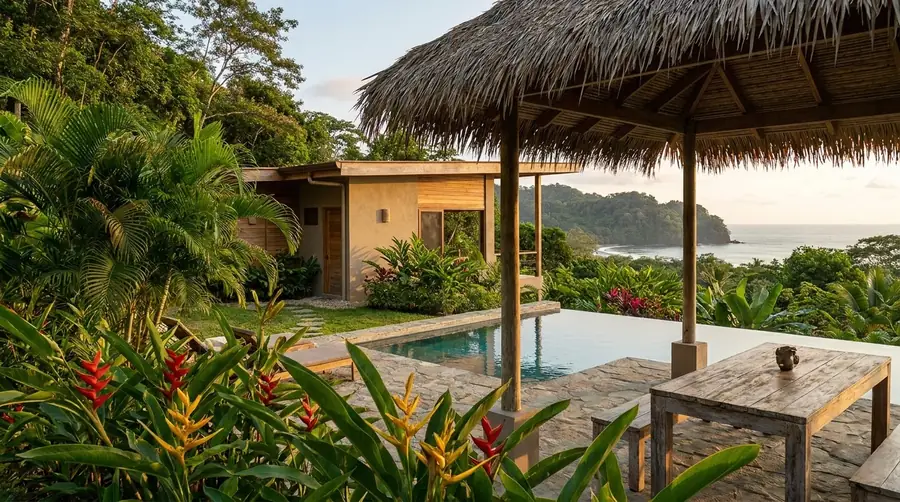
Casa Ker Lumar
Why it is here: Three bedrooms with a pool with a view, about a 19-minute walk from Playa Hermosa, just north of Uvita.
Live prices on the map ↓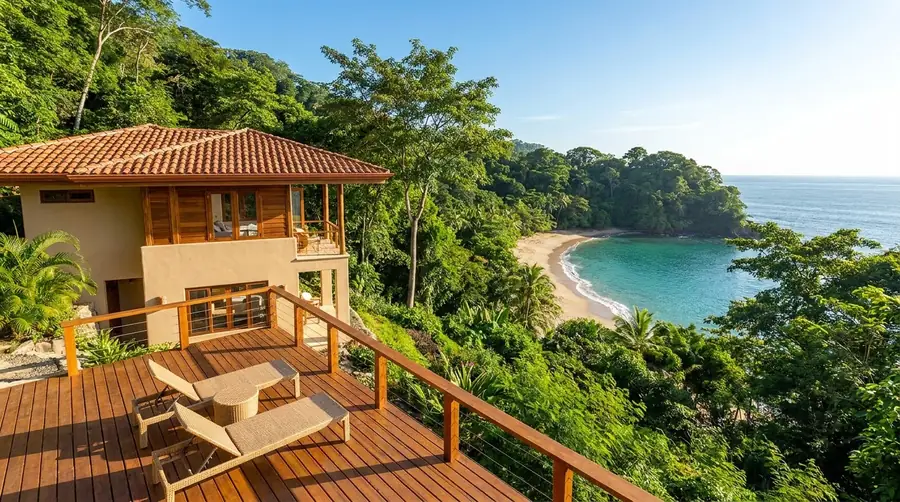
Villa Amor del Mar
Why it is here: A two-bedroom villa with ocean and jungle views from a sun terrace, about eight minutes on foot from the small beach at Dominicalito; no pool is listed.
Live prices on the map ↓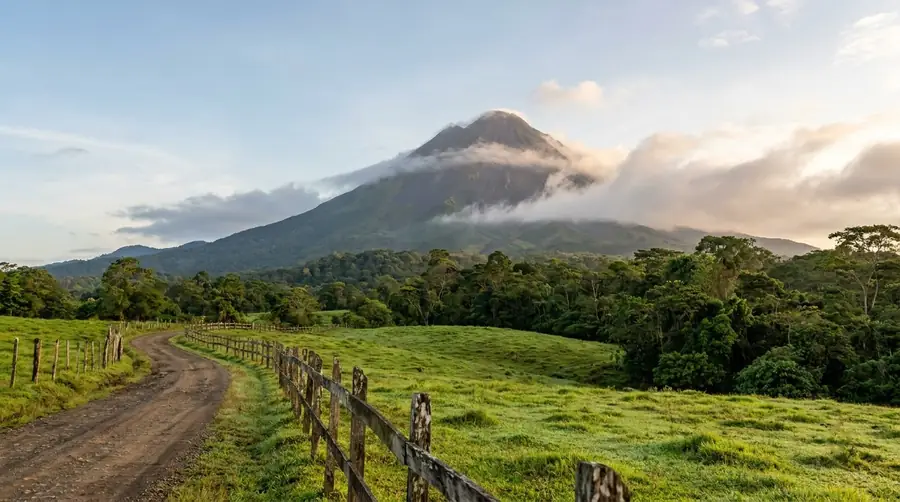
Area 7 of 8
La Fortuna & Arenal: a volcano in the garden
Good for adventure and familiesPaved main roads, car neededAbout 3 hrs from San José
La Fortuna is the inland half of most Costa Rica trips: a busy small town at the foot of Arenal Volcano, surrounded by hot springs, hanging bridges, waterfalls and zip lines. It has no beach, so villas here sell something different: a pool or a hot tub with a view of the volcano’s cone, and a garden where toucans are more likely than iguanas. The main roads around La Fortuna and towards the lake are paved, and a standard car is fine for most villas, though a few driveways are gravel. It rains a lot here in every season, more than on the Guanacaste coast, and the summit is often in cloud, so a villa with a covered terrace is worth more than it sounds. Evenings are mild rather than hot, which is why heated pools and hot tubs appear on many listings. Most people stay two or three nights between the beaches. Our La Fortuna guide covers what to do.
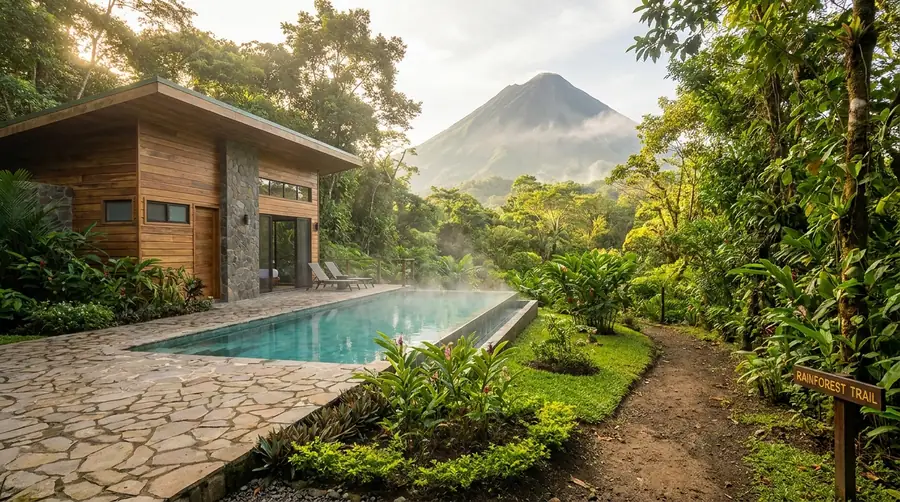
Arenal Keljá Luxury Villa Charajtoc
Why it is here: Two bedrooms, a heated pool with a view of Arenal Volcano and its own forest trails: a warm pool matters here, where evenings are cooler than on the coast.
Live prices on the map ↓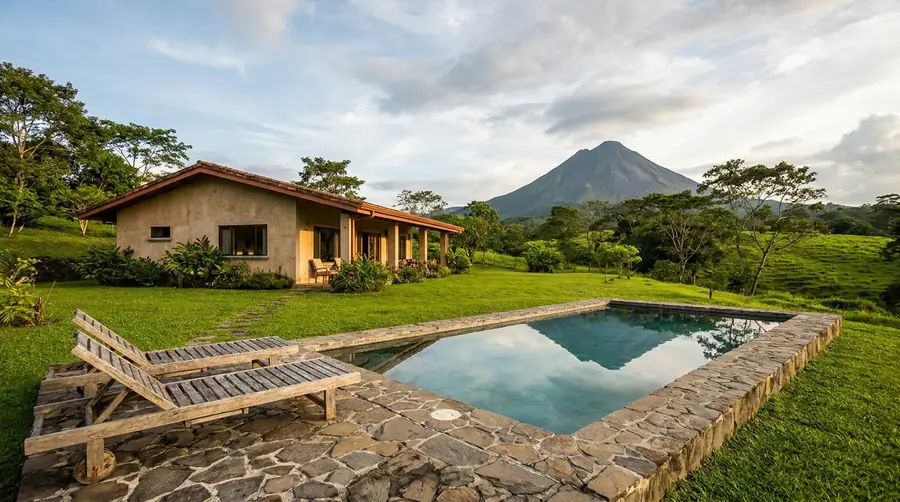
Villa Shambala Arenal Volcano View Private Pool
Why it is here: Two bedrooms and a private pool with a view of the volcano, in a small residential area about 4 km from the La Fortuna airstrip.
Live prices on the map ↓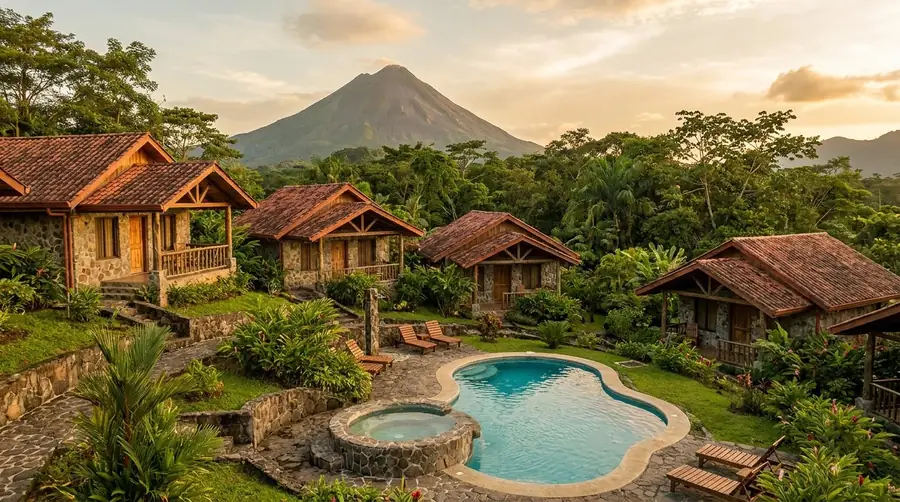
Villas Jawara
Why it is here: Small villas around a courtyard with a year-round pool and a hot tub; the listing name promises a volcano in your garden, and guests rate the view.
Live prices on the map ↓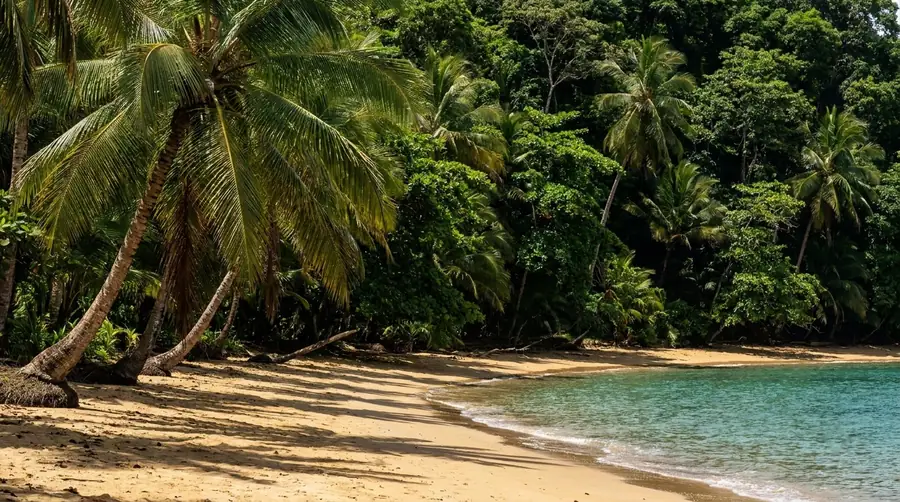
Area 8 of 8
Puerto Viejo & the Caribbean coast
Good for September and OctoberPaved coast road, bikes for short hopsAbout 4 hrs 30 min from San José
The Caribbean coast feels like another country: Afro-Caribbean food, reggae, palm-lined beaches and jungle right to the sand. Puerto Viejo de Talamanca is the main village, with Playa Negra and its dark sand to the north, and a paved road running south past Cocles, Playa Chiquita and Punta Uva to Manzanillo and its wildlife refuge. Everyone rides bikes here, and many villas are set in the forest just off that road. The big reason to look at a Caribbean villa is the weather. This coast has its own rhythm, and September and October, the wettest months on the Pacific side, are usually among the driest and sunniest here. On the other hand it can rain at any time of year, and the sea is rougher at some beaches than it looks. Search for ‘Puerto Viejo’ rather than the full name of the village on booking sites, which can return no results. Our Puerto Viejo guide covers the beaches one by one.
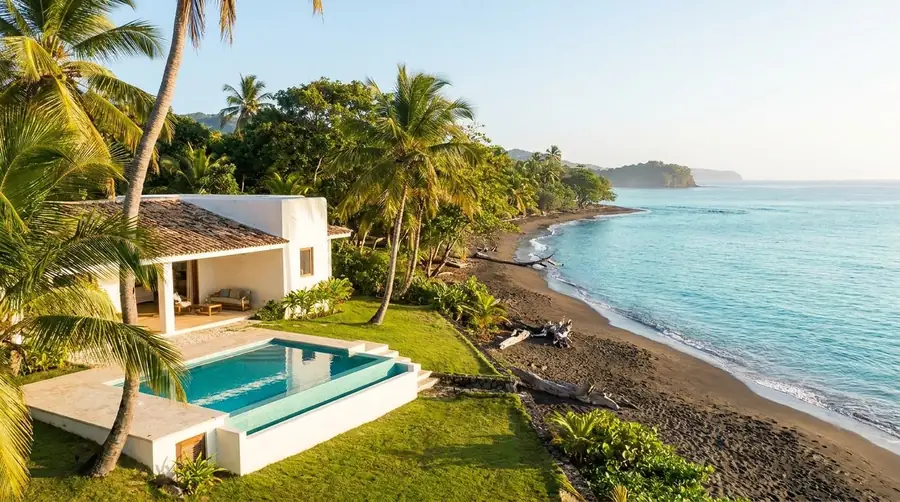
Beachfront Villa Casa Blanca with Private Pool
Why it is here: Three bedrooms and three bathrooms right on the beach at Playa Negra, with a private pool, sea views and parking.
Live prices on the map ↓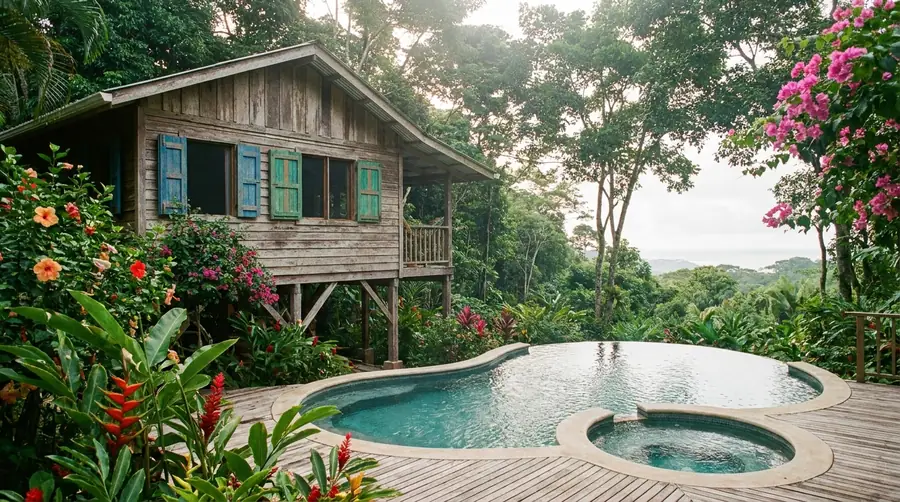
Villas Roca del Caribe
Why it is here: Villas with a pool with a view, a hot tub and a garden about a 13-minute walk from Playa Negra; the listing is pet-friendly.
Live prices on the map ↓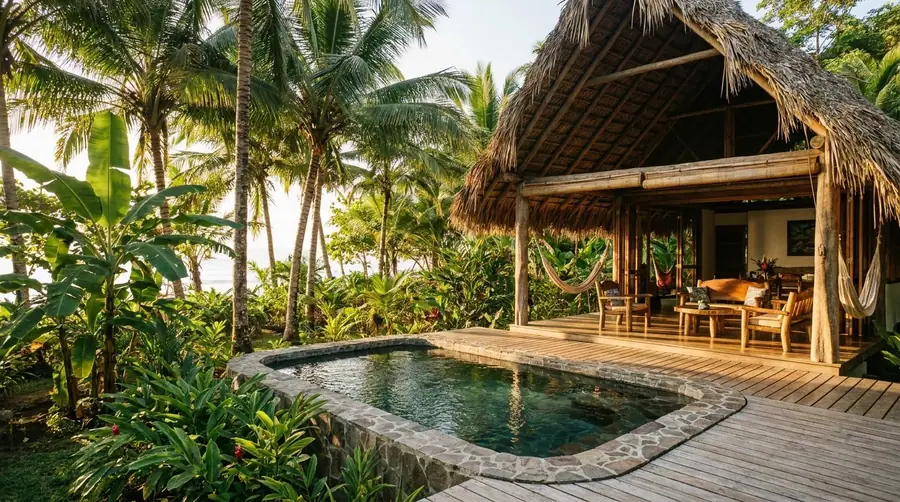
Anusara Dream Villa with Pool & AC
Why it is here: A two-bedroom villa with a pool, a garden and air-conditioning, which matters in Caribbean humidity, near Playa Negra.
Live prices on the map ↓Villa or hotel in Costa Rica?
Costa Rica has excellent small hotels and eco-lodges, so a villa is a choice rather than the default. A villa gives you space, a private pool and a kitchen, which matters in a country where you often eat early and spend evenings at home. A hotel or lodge gives you breakfast, guides and someone to fix the problem when the power goes out in a storm. Here is the honest split.
A villa makes sense if
- You are a family or a group sharing the cost, the pool and the kitchen
- You stay four nights or more in one place, often the minimum for houses
- You are renting a car anyway and are happy to drive to dinner and to the beach
- You want monkeys in the garden and a quiet evening by your own pool
A hotel makes more sense if
- You are moving every two or three nights around the country
- You do not want to drive gravel roads after dark
- You want guided wildlife walks, a restaurant and a front desk on site
- You are traveling as a couple on a shorter trip
Many places listed as villas in Costa Rica are a few houses on one property, with a shared pool or a shared driveway and an on-site manager. That is why some cards above leave the number of guests blank: the listing covers several houses of different sizes. If you want a whole property to yourselves, look for “entire villa” and “private pool” in the unit you are actually booking.
Before you book a villa in Costa Rica
Villa terms are set by each owner, and the details that cause trouble in Costa Rica are mostly about roads, weather and power. Read these eight things on the listing itself.
- Access roadAsk whether the last stretch is paved, gravel or dirt, how steep it is, and whether the owner recommends a 4×4. This matters most in Nosara, Santa Teresa and the hills around Uvita and Dominical.
- Rental carBook the car before the villa is confirmed, and match it to the road: an SUV with high clearance at least for gravel, a real 4×4 for steep hills and the rainy months. Our driving guide explains the rules.
- Private or shared poolCheck whether the pool belongs to your house alone or is shared with other villas on the same property.
- Air-conditioningCheck which rooms have it. Many houses cool the bedrooms only and leave living areas open to the breeze.
- Power and water cutsStorms can cut power in rural areas. A backup generator or water tank is a real plus, especially from September to November.
- Insects and wildlifeOpen-plan jungle houses let in insects and the odd gecko. Look for screens and mosquito nets if that matters to you.
- Deposit and extrasCheck the security deposit, how it is taken, and any charges for cleaning, a cook, airport transfers or pool heating.
- Check-in after darkIt is dark by about 6 p.m. all year. Plan to arrive in daylight, or ask for clear directions and a meeting point.
When to book a Costa Rica villa
The dry season, from December to April, is the most popular time on the Pacific coast: sunny days, dry roads, and the highest prices, with Christmas, New Year and Easter weeks often booked many months ahead, especially for villas that sleep ten or more. The green season, from May to November, brings afternoon rain, lush forest, fewer people and lower prices. July and August usually bring a drier spell on the Pacific side and North American summer holidays, so book those weeks early too. September and October are the wettest months on the Pacific coast, when some unpaved roads wash out and some villas close, but they are often the best months on the Caribbean side around Puerto Viejo. Our month-by-month guide to the best time to visit Costa Rica has the details, and the Costa Rica itinerary shows how to split your nights between the coast and Arenal. To check prices for your own dates, use the map above or open any villa on Booking.com; we do not show prices here because they change daily.
Planning on Pinterest?
Save the eight areas for later
This card is the whole guide in one image: the villa areas of Costa Rica and what each one suits. Save it now and come back to the villas when your dates are fixed.
Save to PinterestMore on Costa Rica
- Costa Rica itinerary: how to combine the coast, Arenal and the south
- Driving in Costa Rica: rental cars, 4x4s, river crossings and road rules
- Best time to visit Costa Rica: dry season, green season and the Caribbean exception
- Costa Rica beaches: which coast and which bay
- Costa Rica packing list: what to bring for rain, jungle and beach
Villas in Costa Rica: FAQ
Which area of Costa Rica is best for a villa?
It depends on the trip. Tamarindo and Flamingo in Guanacaste are easiest for a first visit and for families, Nosara and Santa Teresa suit surfers, Manuel Antonio combines wildlife and beaches, Uvita and Dominical have the biggest ocean views, La Fortuna puts you next to Arenal Volcano, and Puerto Viejo is the pick for September and October.
Do you need a 4×4 to stay in a Costa Rica villa?
Not always. Tamarindo, Flamingo, La Fortuna and the main road at Manuel Antonio are paved. In Nosara, Santa Teresa and the hills above Uvita and Dominical, many villas are on gravel or dirt roads, and a 4×4 or a high-clearance SUV is strongly advised, especially in the rainy season.
When is the rainy season in Costa Rica?
The green season runs from May to November on the Pacific side, with September and October the wettest months. The dry season is from December to April. The Caribbean coast follows its own pattern and is often driest in September and October.
Are Costa Rica villas with a private pool common?
Yes, most villas on the Pacific coast have a pool, often an infinity pool facing the ocean. Some listings are a few houses on one property sharing a pool, so check the wording for the unit you book.
How far ahead should I book a villa in Costa Rica?
For Christmas, New Year and Easter, and for villas that sleep ten or more, book as early as you can, often six to twelve months ahead. For the green season a few weeks to a couple of months ahead usually leaves a good choice.
Which airport is closest to the Costa Rica villas?
Liberia airport is closest to Tamarindo, Flamingo and, at a longer drive, Nosara. San José airport is better for Manuel Antonio, Uvita, Dominical, La Fortuna and the Caribbean coast. Small domestic airstrips serve Nosara, Tambor near Santa Teresa, and Quepos near Manuel Antonio.
Keep planning Costa Rica
- 5 Day Costa Rica Itinerary: Two Bases, No Wasted Days
- Costa Rica Itinerary: 10 Perfect Days for a First Trip
- 7 Day Costa Rica Itinerary: Volcano, Cloud Forest and Coast
- Things to Do in San José, Costa Rica: One Day Well Spent
- Things to Do in Costa Rica: The Three Regions and What Each Costs
- The Best Time to Visit Costa Rica: A Month-by-Month Guide
- Is Costa Rica Worth Visiting? The Honest Case For and Against
- Costa Rica Packing List: What Actually Matters, and What to Leave
Written and checked by
Triplarks Editorial
An editorial desk, not an invented persona: research, drafting and fact-checking are done by the same small team. Every number here carries the date it was read.