
La Fortuna is where most Costa Rica trips begin, and with good reason. It sits at the foot of the Arenal Volcano, three hours from San José, and packs a waterfall, a national park, dozens of thermal pools and every adventure activity in the country into a radius of about twenty minutes.
Some links below are affiliate links. We may earn a commission if you book through them, at no extra cost to you. We do not rank hotels, and any prices on the map come live from the booking sites.
Quick answer: where to stay in La Fortuna. The centre of town has the restaurants and the price. The road west towards the volcano has the views and the thermal pools, but you will drive for dinner. The edge of town gives you the best of both.
Pura vida is the local shorthand and the hospitality here is genuine. It is also the most heavily marketed town in Costa Rica, which means a fair amount of what gets recommended is either overpriced or, in one well-known case, illegal. This guide to La Fortuna covers what is worth your time and money, what to skip, and the free version of the thing everyone pays most for.
Prices and access status were read on 16 August 2026.
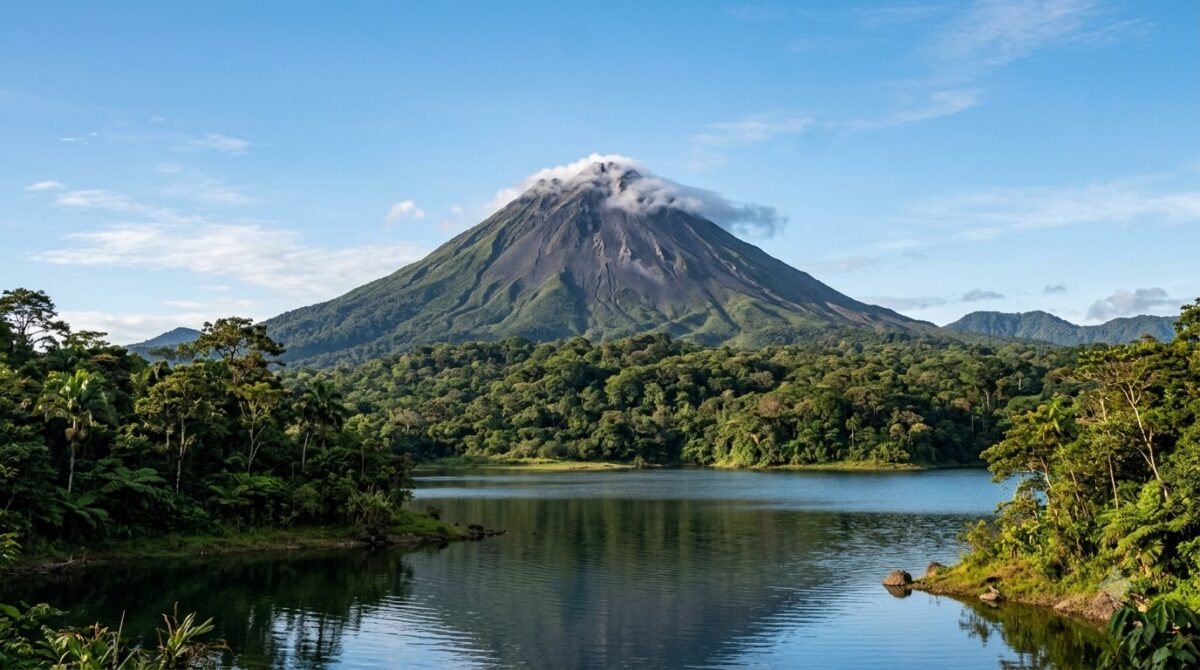
Where La Fortuna, Costa Rica is, and what to expect
La Fortuna, properly La Fortuna de San Carlos, is a small town in Alajuela province in the northern highlands of Costa Rica. It is about three hours from San José international airport (SJO) and three to four hours from Liberia (LIR), which makes it the natural first stop after landing.
The town itself is compact — a church, a park, and a grid of streets full of tour operators, restaurants and hotels. The Arenal area proper spreads west along the road towards Lake Arenal, where most of the hot springs and the better volcano views are.
⚠ Arenal is dormant. There is no lava.
Arenal Volcano erupted continuously from 1968 until 2010 and was, for four decades, one of the most reliably active volcanoes on Earth. It has been dormant since 2010. You will not see glowing lava, and no tour can show you any.
What you get instead is a near-perfect cone that is genuinely striking when the cloud clears. Which brings up the second thing to expect: the summit is frequently in cloud. Mornings are clearest. Two nights gives you a fair chance of one good view; a single night is a coin toss.
⚠ Cerro Chato is closed — and hiking it is illegal
This needs flagging because a great many older guides and blog posts still recommend it. Cerro Chato, the extinct cone next to Arenal with a crater lagoon at the top, was closed by the Costa Rican authorities in 2017 and remains closed indefinitely. Climbing it is illegal.
- The closure was made for a mix of visitor safety, erosion and protecting access routes near Arenal itself.
- It is actively enforced. Staff turn people back at the entry points, and adjacent trails that once linked to it have also been closed.
- Trail databases list it as CLOSED / PRIVATE PROPERTY. Checked 16 August 2026 against AllTrails, Tripadvisor and The Outbound.
If a tour operator offers you Cerro Chato, that is a reason to book with somebody else.
Arenal Volcano National Park
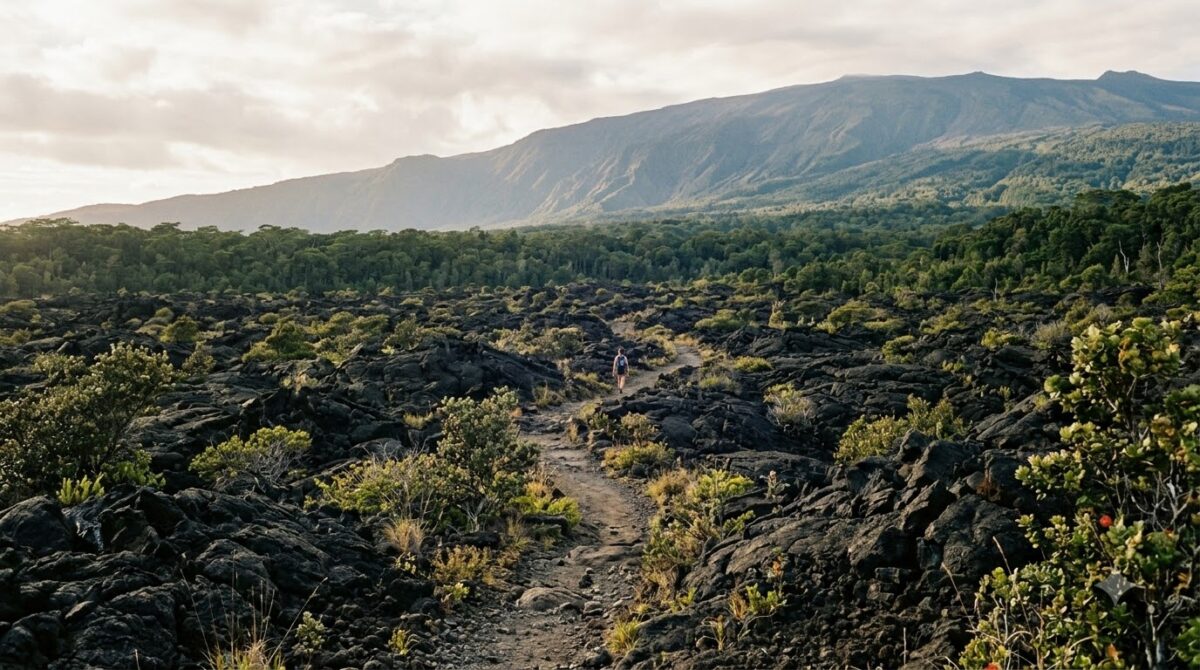
The park sits about 20 minutes west of town and protects the volcano and the forest around its base.
- Entry is around US$15 for non-residents. The main sector has several short trails, the best of which crosses an old lava flow with views up at the cone.
- The 1992 lava field trail on the north side is free and outside the paid sector. It is the single best value thing in the Arenal area and most itineraries do not mention it.
- Arenal Observatory Lodge is inside the park boundary and gets you the closest legal look at the cone, with the most beautiful views in the Arenal area plus its own trail network. Day passes for non-guests run about US$12 to US$15.
- Go in the morning. Cloud builds through the day and the trails get busy.
Hiking to La Fortuna Waterfall
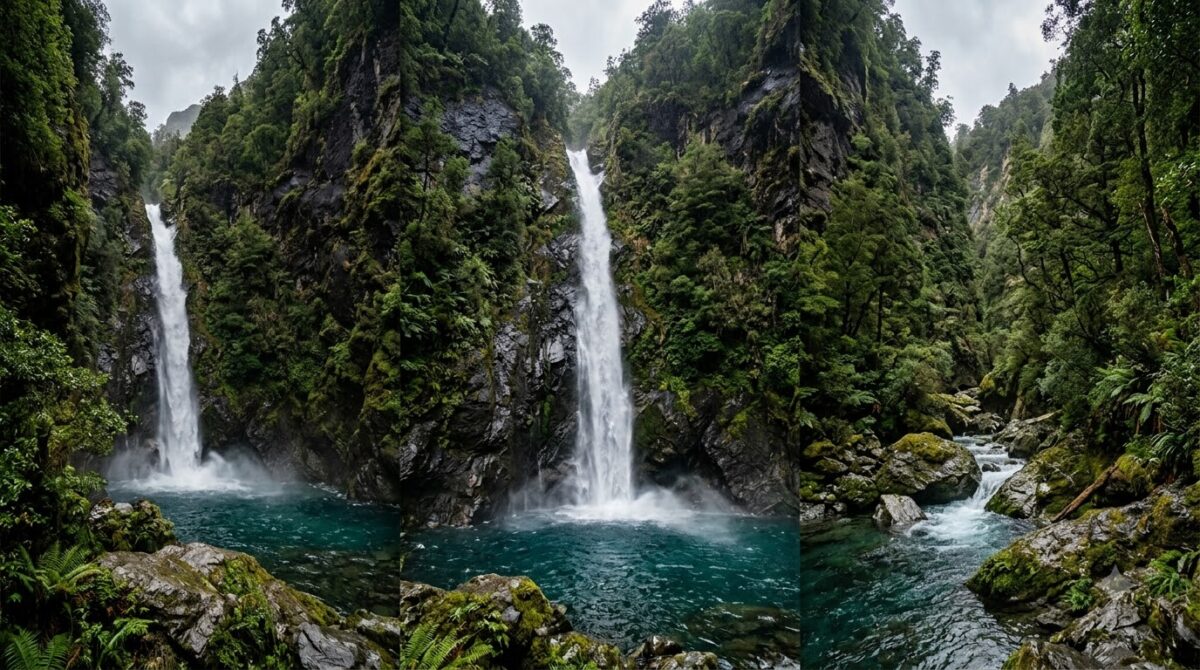
The La Fortuna waterfall drops about 70 metres into a blue-green pool at the bottom of a gorge, ten minutes from town. It is the most photographed thing here and it is worth doing.
- Entry is around US$18 for non-residents, paid at the top.
- There are roughly 500 steps down to the pool. The descent is easy. Hiking back up to La Fortuna waterfall car park in the heat is what people underestimate, and there is no other way out.
- You can swim, but the current at the base is strong. There is a calmer pool downstream.
- Go at opening, around eight. By ten it is genuinely crowded, and the light in the gorge is better early.
- Not suitable for anyone with knee or heart problems. Be honest with yourself about the climb.
Hot springs in the area: the full price range
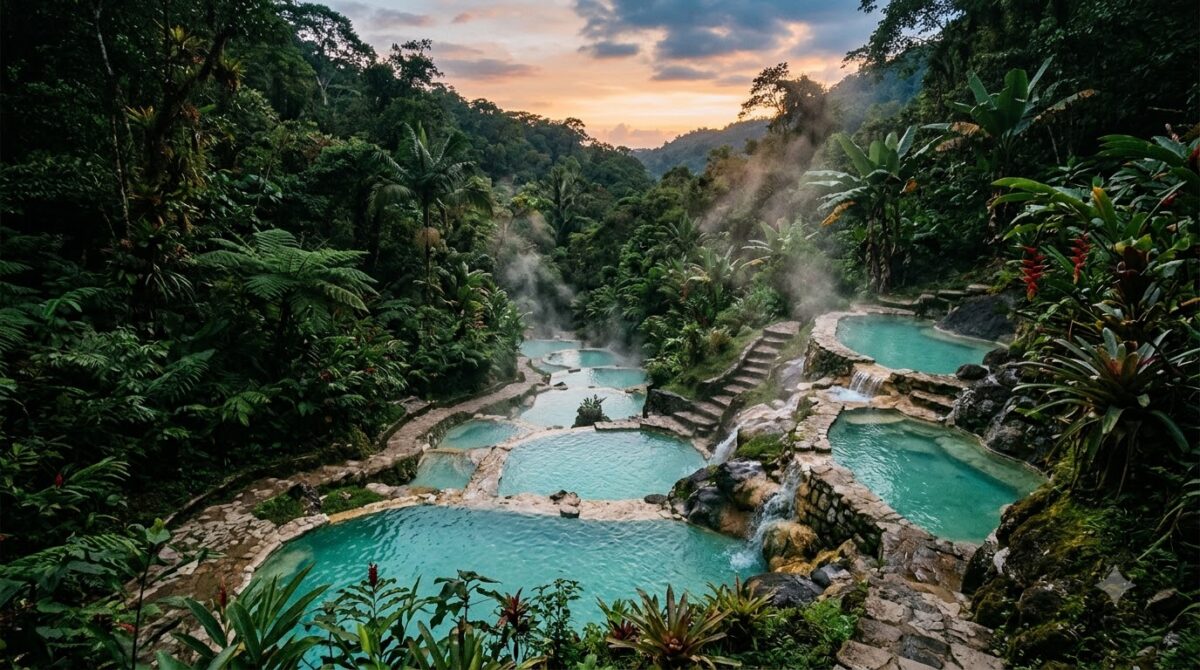
Geothermal water from Arenal feeds a whole industry along the road west of town, and the spread between the cheapest and dearest option is enormous. All of it is the same volcano.
| Option | Cost | What you get |
|---|---|---|
| El Chollín (free river) | Free | A natural hot spring river beside the road, downstream of the resorts. No facilities, no lockers, no security. Where Ticos go |
| Ecotermales | US$45–60 | Small, limited entry per session, no day-trippers. The quietest of the paid options |
| Los Lagos | US$35–50 | Family-oriented, slides, busy |
| Baldi Hot Springs | US$40–70 | The biggest, 25 pools, slides and swim-up bars. Loud |
| Tabacón | US$85–135 | The famous one. A landscaped thermal river through jungle, with a spa attached. Genuinely beautiful and genuinely expensive |
| Hotel thermal pools | Included | Many hotels and resorts in the Arenal area have their own, free to hotel guests |
The free natural hot springs
El Chollín, sometimes called the free Tabacón, is a stretch of the Tabacón river where the same geothermal water runs under a road bridge before it reaches the resort. Locals have swum there for decades and it is open to anyone.
- Take nothing valuable. There are no lockers and cars parked on the verge do get broken into.
- Go in daylight and preferably not alone.
- The rocks are slippery and the current is stronger than it looks after rain.
- It is not a facility. It is a river. Judge accordingly.
If you want the experience with towels, lockers and a bar, pay for one of the others. If you just want to sit in hot water looking at jungle, this is the same water for nothing.
Activities in La Fortuna and around Arenal Volcano
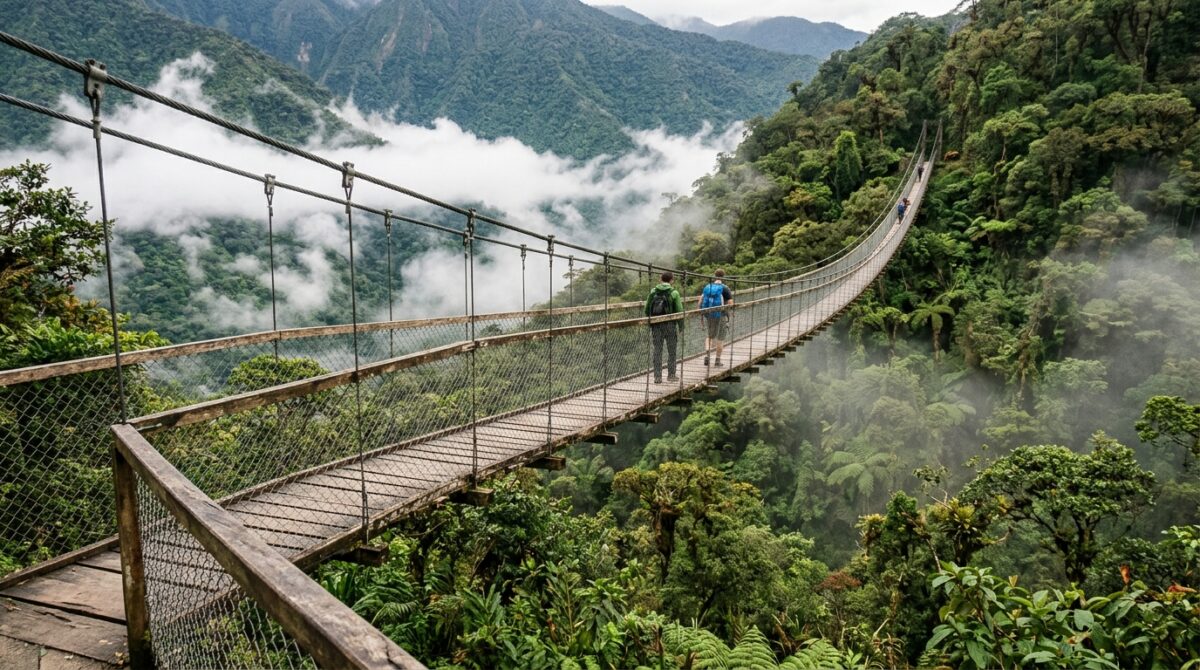
- Hanging bridges — Mistico Park is the best known, a loop of suspension bridges over the canopy with volcano views. Around US$26 to US$40 self-guided, more with a naturalist. Good in rain, which matters here.
- Zip line and canopy tours — several operators, US$55 to US$95. Ziplining in Costa Rica started in this part of the country.
- Whitewater rafting on the Balsa (class II–III, family-friendly) or the Sarapiquí (class III–IV). River rafting runs US$65 to US$110 for a half day.
- Lake Arenal water activities — kayaking, stand-up paddle and windsurfing, plus the drive around it, which is one of the better roads in the country.
- Horseback riding to viewpoints and waterfalls, US$60 to US$90.
- Night walk in the rainforest — frogs, snakes and insects, about US$45 to US$60 with expert travel guides, and better value than most daytime tours.
- Sloth, monkey and toucan spotting on the Bogarín trail at the edge of town, roughly US$28, where sloths are close to guaranteed and howler monkeys are common.
- Río Celeste at Tenorio Volcano National Park — a long day trip, about two hours each way, to the river that turns turquoise where two streams meet.
- Coffee and chocolate tours around town, US$35 to US$55.
A guide to La Fortuna: information to plan your trip
This is the information to plan your trip around, gathered in one place. Most of what goes wrong on a La Fortuna and Arenal stop is a scheduling problem rather than a choice problem.
- Put La Fortuna first on a Costa Rica travel itinerary. It is three hours from SJO, so you can land and be here the same afternoon, and it acclimatises you before the harder drives.
- Start early to avoid the crowds. Everything — the waterfall, the bridges, the park — is calm at eight and heaving by ten. This one habit changes your whole time in La Fortuna.
- Keep afternoons loose. Rain arrives in the afternoon in most months. Book activities for mornings and leave the hot springs for after dark, which is when they are best anyway.
- Do not try to pair it with beach cities in the same two days. Guanacaste is three to four hours away and Manuel Antonio is four and a half. One move per day.
- Book a rental car through a company that quotes insurance up front. Adobe Rent A Car and the other local operators tend to be clearer about the mandatory cover than the international aggregators, which quote a rate that does not exist.
- Two nights minimum. The views of Arenal depend entirely on cloud and one night is a gamble you do not want to miss out on.
La Fortuna also works as a base for a wider loop: Río Celeste, Lake Arenal and the crossing to Monteverde all start here, so a vacation in Costa Rica built around this town and surrounding area rather than around a single hotel gets more out of it.
Where to stay in La Fortuna
The decision is between the centre of town and the road west towards the volcano. Hotels and resorts along that road have the views and the thermal pools; the town has the restaurants and the price.
| Area | Nightly rate | Notes |
|---|---|---|
| Centre of town | US$25–90 | Hostels and small hotels, walk to everything, no volcano view |
| Edge of town | US$80–180 | Best of both worlds — views and a short drive in. Hotel El Silencio del Campo is a long-standing option here |
| Road towards Arenal | US$150–400 | Resorts with their own hot springs. You will drive for dinner |
| Lake Arenal / El Castillo | US$70–250 | Quiet, best views of the volcano, 40 minutes from town |
| Vacation rental | US$60–300 | Plenty around, useful for families |
Map shows live availability and prices. We may earn a commission on bookings made through it, at no extra cost to you.
Getting there from San Jose, and whether to rent a car
- From San José — about three hours by car. Shuttles cost US$50 to US$70 per person, public bus about US$8 and four to five hours via Ciudad Quesada.
- From Liberia — three to four hours by road.
- From Monteverde — the jeep-boat-jeep across Lake Arenal takes about three hours and costs US$30 to US$40. It is far better than the four-hour road route and the crossing itself is pleasant.
- Rent a car if you want the free lava trail, the free hot springs and Río Celeste. Everything else is bookable with hotel pickup. Budget the mandatory insurance at US$30 to US$45 a day on top of the advertised rental rate — this catches almost everyone out.
- Taxis around town cost US$5 to US$15, and to the waterfall or hot springs US$10 to US$25.
The natural next stop is Monteverde, three hours away across Lake Arenal.
How much time in La Fortuna, and a plan that works
Two nights is the minimum and three is better, because the volcano may be in cloud on any given day and because there is genuinely more here than one day holds.
- Day 1 — arrive, walk the free lava field trail in the late afternoon when the cloud sometimes lifts, then hot springs in the evening. Thermal pools are better after dark.
- Day 2 — La Fortuna Waterfall at opening, hanging bridges or a zip line after lunch, Bogarín sloth trail late afternoon.
- Day 3 — rafting, Lake Arenal, or the long day out to Río Celeste.
If you are short on time and only have one full day: waterfall early, free lava trail late afternoon, hot springs after dark. That covers the three things La Fortuna is actually for.
Where to eat
- Sodas around the centre of town, the best value spots in town, serve a casado for around 4,000 colones, roughly US$7.50. This is where the traditional Costa Rican food is.
- Restaurants on the main strip run US$15 to US$30 a head, with a good range including several genuinely good restaurants doing Costa Rican food properly rather than as a theme.
- Hotel restaurants along the Arenal road charge resort prices. Driving into town for dinner is normal.
- The Saturday farmers market is worth an hour.
Best time to visit
- December to April — the driest months and the best odds of a clear volcano. Busiest and most expensive.
- May to July — clear mornings, afternoon rain, much greener, far fewer people.
- August to November — wettest, and the waterfall is at its most dramatic. Cloud sits on the cone more often.
La Fortuna is a rainforest town, so it rains here in every month, including the dry season. Plan mornings and keep afternoons flexible. Full detail in our month-by-month guide to visiting Costa Rica.
Practical notes to plan your trip to Costa Rica
- Book activities in La Fortuna in town, not online, if you are flexible. Operators on the main street are often 20 to 30 percent cheaper than the same tour booked ahead, and they will check availability for the next morning while you wait.
- Everything gets busy from about ten. Early starts are the single best trick here.
- Bring a rain jacket rather than an umbrella.
- Bring water shoes if you plan to use the free river.
- The tap water is drinkable.
La Fortuna is one of Costa Rica’s most popular destinations and it earns it, provided you avoid the two traps: paying resort prices for water that runs free down the road, and taking trail advice from guides written before 2017.
For the rest of the trip, see our guides to things to do in Costa Rica, the beaches on both coasts and Costa Rican food.
Frequently asked questions
Can you see lava at Arenal Volcano?
No. Arenal erupted continuously from 1968 to 2010 and has been dormant since. There is no visible lava and no tour can show you any. What you get is the cone itself, which is often in cloud — mornings are clearest.
Is the Cerro Chato hike open?
No. Cerro Chato was closed by the Costa Rican authorities in 2017 and remains closed indefinitely. Hiking it is illegal and the closure is actively enforced at the entry points. Many older guides still recommend it.
Are there free hot springs in La Fortuna?
Yes. El Chollín is a stretch of the Tabacón river beside the road where the same geothermal water runs before it reaches the resort, and it is free. There are no facilities or security, so take nothing valuable, go in daylight and watch the slippery rocks.
How much does La Fortuna Waterfall cost?
Around US$18 for non-residents. There are roughly 500 steps down to the pool and the same back up, which is the part people underestimate. Go at opening around eight to avoid the crowds.
How many days do you need in La Fortuna?
Two nights minimum, three if you can. The volcano is often in cloud so more days improve your odds of a clear view, and there is more to do here than one day holds.
How do you get from Monteverde to La Fortuna?
The jeep-boat-jeep across Lake Arenal takes about three hours and costs US$30 to US$40. It is faster and far more pleasant than the four-hour road route around the lake.
Do you need a rental car in La Fortuna?
Not strictly — almost every tour includes hotel pickup. A car is worth it if you want the free lava field trail, the free hot spring river and a day trip to Río Celeste. Budget the mandatory insurance at US$30 to US$45 a day on top of the advertised rate.
Entry fees, tour prices and the Cerro Chato closure status read 16 August 2026. Prices change — confirm before booking.