Quick answer
Three themed days work better than three geographic ones, because Berlin’s sights are kilometres apart. Stay in eastern Mitte to keep day one on foot, and pick accommodation by its U-Bahn station rather than by how central it looks.
On this page
- Berlin itinerary at a glance
- Before day one
- Day 1 — the monumental centre
- Day 2 — the divided city
- Day 3 — museums, then real life
- Variant: three days for the twentieth century
- Variant: three days for museums
- Variant: three days with children
- Getting around
- Passes for a three-day trip
- If you have a fourth day
- Practical notes
- Where to eat, roughly
- Evenings on this itinerary
- Three days on a budget
- What the seasons change
- If it rains
- Common mistakes
- Berlin beyond the centre
- How Berlin compares to other capitals
- If you only have two days
- The short version
- Frequently asked questions
Berlin does not arrange itself the way other European capitals do. There is no compact old town to walk around, the sights are kilometres apart, and the most important of them are not buildings but places where something happened.
Some links below are affiliate links. We may earn a commission if you book through them, at no extra cost to you. We do not rank hotels, and any prices on the map come live from the booking sites.
So this is a three-day itinerary organised by theme rather than by geography, with variants for history, museums and families. For the question of length, see how many days in Berlin; for districts, where to stay in Berlin. If Berlin is one stop of several, see our Germany itinerary.
Berlin itinerary at a glance
| Day | Theme | Where |
|---|---|---|
| 1 | The monumental centre | Mitte, on foot |
| 2 | The divided city | Bernauer Straße, Niederkirchnerstraße, Friedrichshain |
| 3 | Museums and a district | Museum Island, then Prenzlauer Berg or Kreuzberg |
Map shows live availability and prices. We may earn a commission on bookings made through it, at no extra cost to you.
Where to sleep on this route
Before day one
Three things to settle before you land, because each of them can cost you a morning if you leave it.
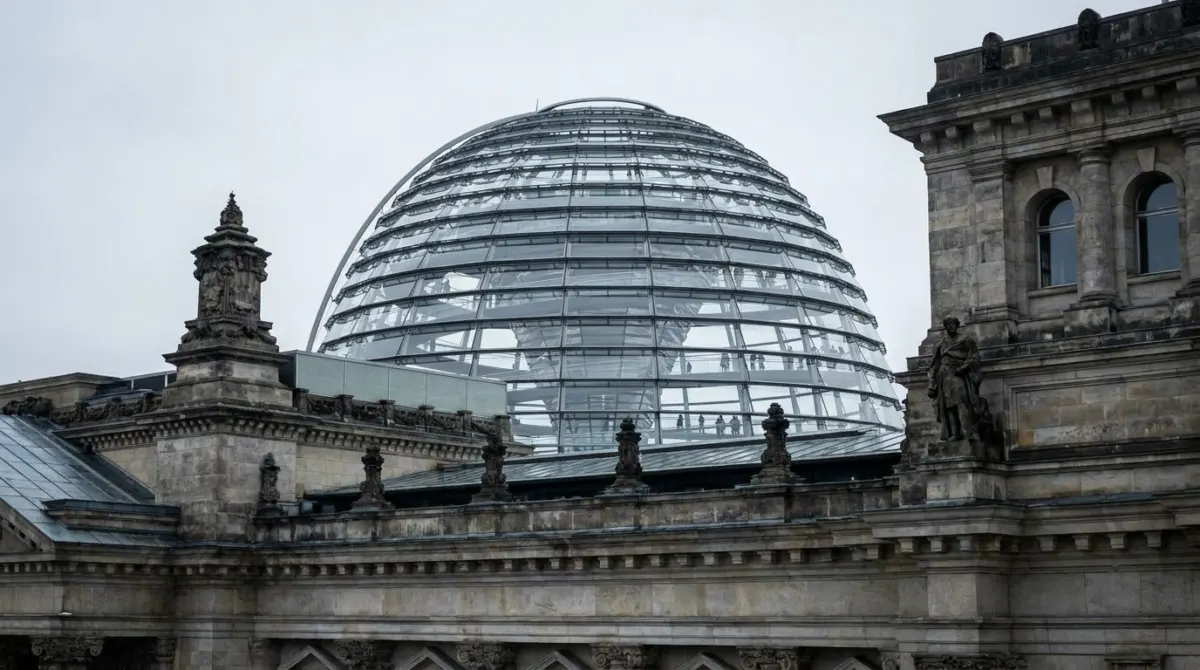
Register for the Reichstag dome. The day-one plan starts there, and the slots are allocated in advance. If you cannot get a morning slot, an evening one works just as well: move the Reichstag to the end of day one and walk the rest of the route in reverse.
Decide on a ticket or pass before you reach the airport. BER is in fare zone C, so the ride into the city needs an ABC ticket, and paper tickets must be validated before you board. The airport express reaches the main station in about twenty-three minutes and also stops at Potsdamer Platz and Südkreuz.
Check the day of the week. The state museums close on Mondays, so if your three days include a Monday, make it day one or day two, which are almost entirely outdoors, and keep Museum Island for another day.
Day 1 — the monumental centre
Morning. Start at the Reichstag. The glass dome above the parliament chamber is free to visit and requires registration in advance with passport details — do this weeks before you travel, because slots go.
Walk through the Brandenburg Gate to the Memorial to the Murdered Jews of Europe, a field of 2,711 concrete blocks on uneven ground, with an information centre underneath it.
Afternoon. East along Unter den Linden past the opera house and the university to Bebelplatz, where the book burning of 1933 is marked by a window in the pavement looking down at empty shelves. Then Gendarmenmarkt, the most complete square in the city.
Evening. Around Hackescher Markt and the courtyards of the Scheunenviertel, which is the liveliest part of Mitte after dark.
Day 2 — the divided city
Morning. The Berlin Wall Memorial on Bernauer Straße. This is the one Wall site that explains the Wall: a preserved section with the death strip, watchtower and documentation, on the street where people jumped from windows in 1961 to reach the West.
Skip Checkpoint Charlie unless you are passing it. The original is long gone and what stands there now is a photo opportunity.
Afternoon. The Topography of Terror, built on the site of the Gestapo and SS headquarters, with a surviving stretch of Wall along its northern edge. It is free, outdoors and indoors, and it is the hardest two hours in the city.
Late afternoon. The East Side Gallery in Friedrichshain, 1.3 kilometres of Wall painted by artists in 1990 and the longest surviving section.
Day 3 — museums, then real life
Morning. Museum Island, five museums on an island in the Spree. Check which are actually open on your dates: the complex is in a long renovation programme and major parts close for years at a time.
The best known of them, the Pergamon Museum, has been closed for refurbishment since 2023, with a first section not expected back until 2027. Its famous Pergamon panorama is shown in a temporary building opposite the island in the meantime. The Neues Museum, with the bust of Nefertiti, is the strongest single choice while the Pergamon is shut.
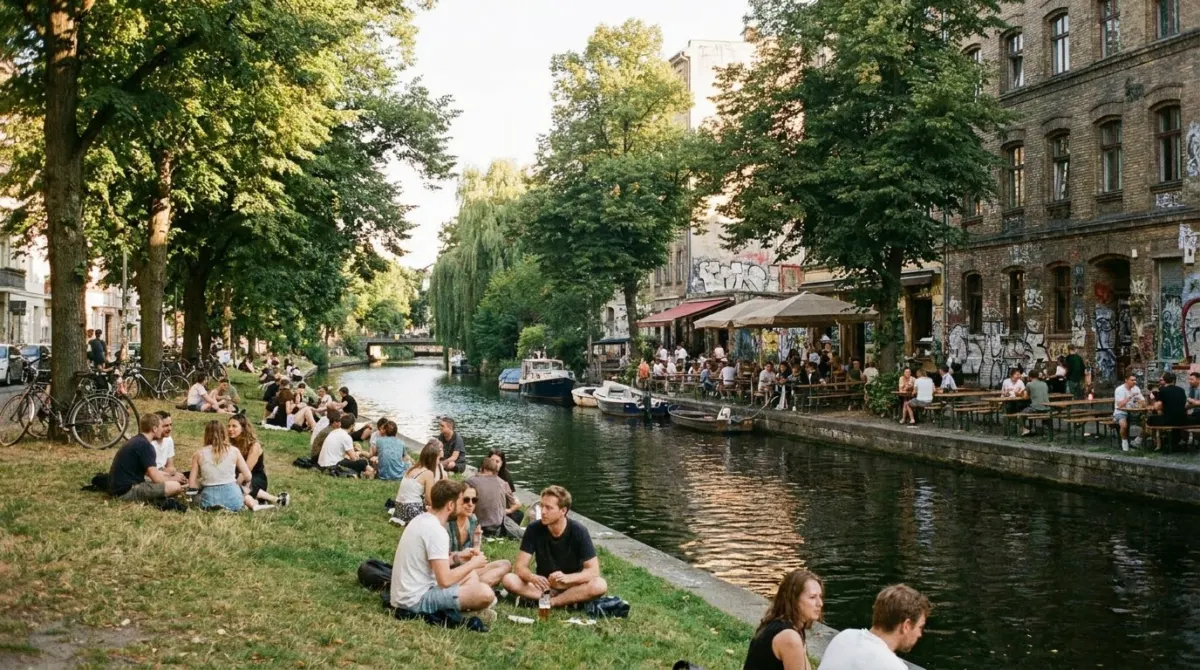
Afternoon. Leave the centre. Prenzlauer Berg for restored streets, cafes and the Mauerpark flea market on Sundays, or Kreuzberg for the canal, the Turkish market and the best food in the city.
This is the day that stops Berlin being a history lesson, and it is the one people most often skip.
Variant: three days for the twentieth century
If the history is why you came, the city has more than three days of it.
Replace day 3 with the Stasi Museum in the former ministry at Lichtenberg and the Hohenschönhausen memorial, the Stasi remand prison, where the guides include former inmates. Add the German Resistance Memorial Centre in the Bendlerblock if you have the time.
The Jewish Museum in Kreuzberg belongs in any version of this variant, and it needs half a day.
Variant: three days for museums
Berlin’s collections are spread across three clusters rather than one.
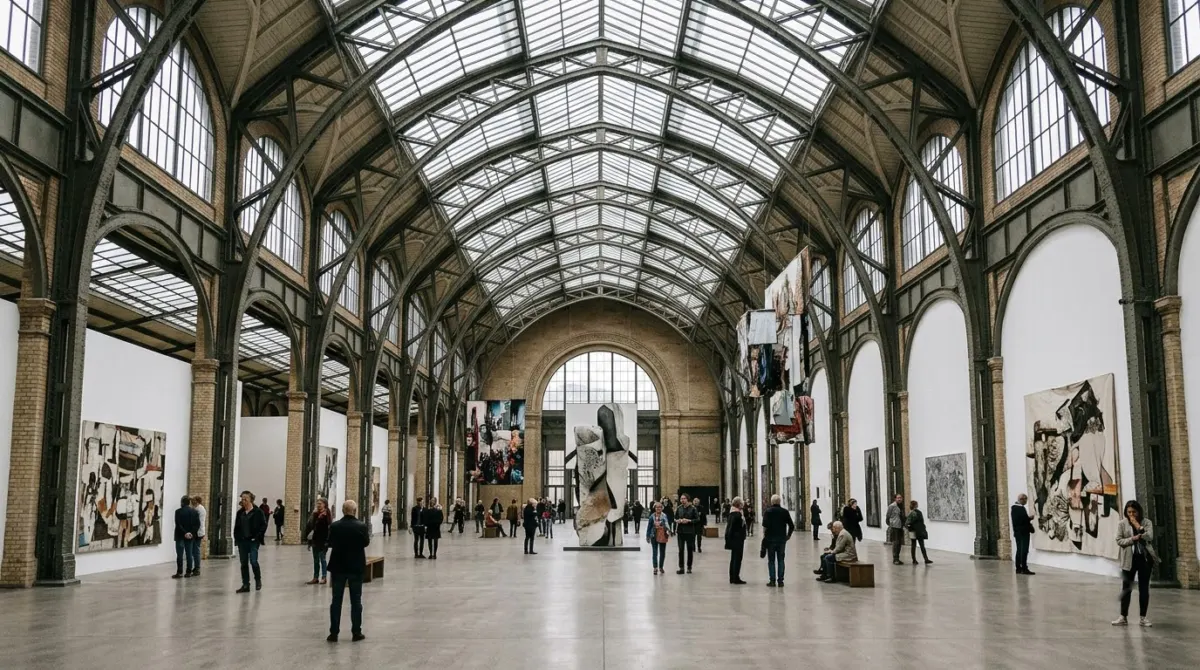
Museum Island for antiquity and nineteenth-century art. The Kulturforum near Potsdamer Platz for the Gemäldegalerie, which holds the old master paintings. The Hamburger Bahnhof for contemporary art in a converted railway station.
A museum pass covering several days is worth it if this is your version of the trip.
Variant: three days with children
Day 1: the Reichstag dome, then Tempelhofer Feld, a disused airport turned park where children cycle on the runways.
Day 2: the Tiergarten and the zoo at its western end, or the aquarium next door.
Day 3: the Natural History Museum, which holds the largest mounted dinosaur skeleton in the world, then the lakes at Wannsee if it is summer.
The Wall sites work for older children and are heavy going for younger ones.
Getting around
You will use the U-Bahn and S-Bahn constantly, because the distances are real: journeys inside the ring take twenty to thirty minutes and crossing the city takes closer to forty-five.
Buy a travel pass covering zones A and B for the days you are there, adding zone C for the airport or Potsdam. Trams run in the east, buses everywhere, and the 100 and 200 bus routes pass most of the day-one sights if you want a cheap tour.
Passes for a three-day trip
Berlin sells two kinds of pass, and which one suits you depends on how many museums are in your version of the itinerary.
The Berlin WelcomeCard is primarily a transport ticket. The standard version covers public transport in zones AB, or ABC if you need the airport and Potsdam, for periods from forty-eight hours to six days, and adds discounts at more than a hundred and seventy attractions. A Museum Island version adds free entry to the island’s museums for seventy-two hours, and an all-inclusive version adds free admission to more than twenty-five of the main sights.
The Museum Pass Berlin covers admission only: more than thirty museums, Museum Island included, on three consecutive days. It does not include transport.
For the standard itinerary above, with one museum morning, a simple transport ticket is enough, because day one and day two are almost free. For the museum variant, the Museum Pass or the Museum Island WelcomeCard pays for itself quickly. Either way, plan the three days so that none of the museum days falls on a Monday, when the state museums are shut.
If you have a fourth day
Potsdam, forty minutes out on the S-Bahn, for Sanssouci and its park. Charlottenburg Palace and the west of the city. Or simply another district: Neukölln, Wedding, or the lakes.
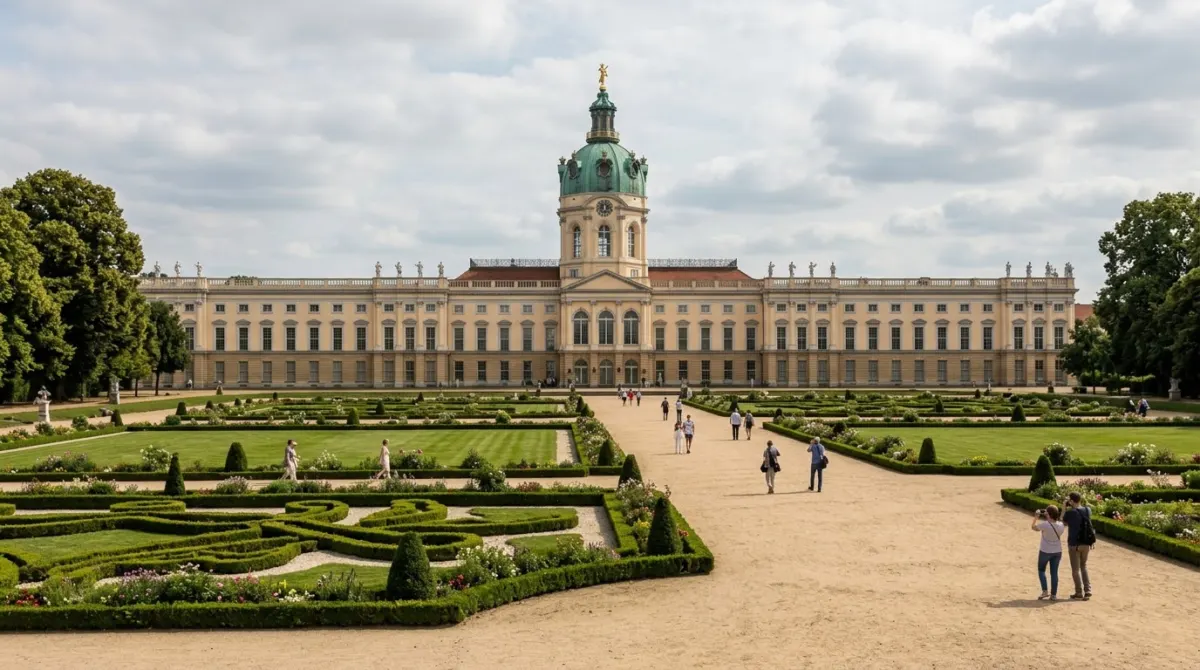
A fourth day in Berlin is better spent somewhere new than going back for a second museum.
Practical notes
Register for the Reichstag dome weeks ahead. It is free and it is the one thing that needs advance planning.
Carry cash. Card acceptance is worse here than in most western European capitals, particularly in small bars and bakeries.
Shops close on Sundays. Buy food on Saturday; station supermarkets are the exception.
Where to eat, roughly
Berlin’s food is in the districts rather than in the centre, which is another reason day three matters.
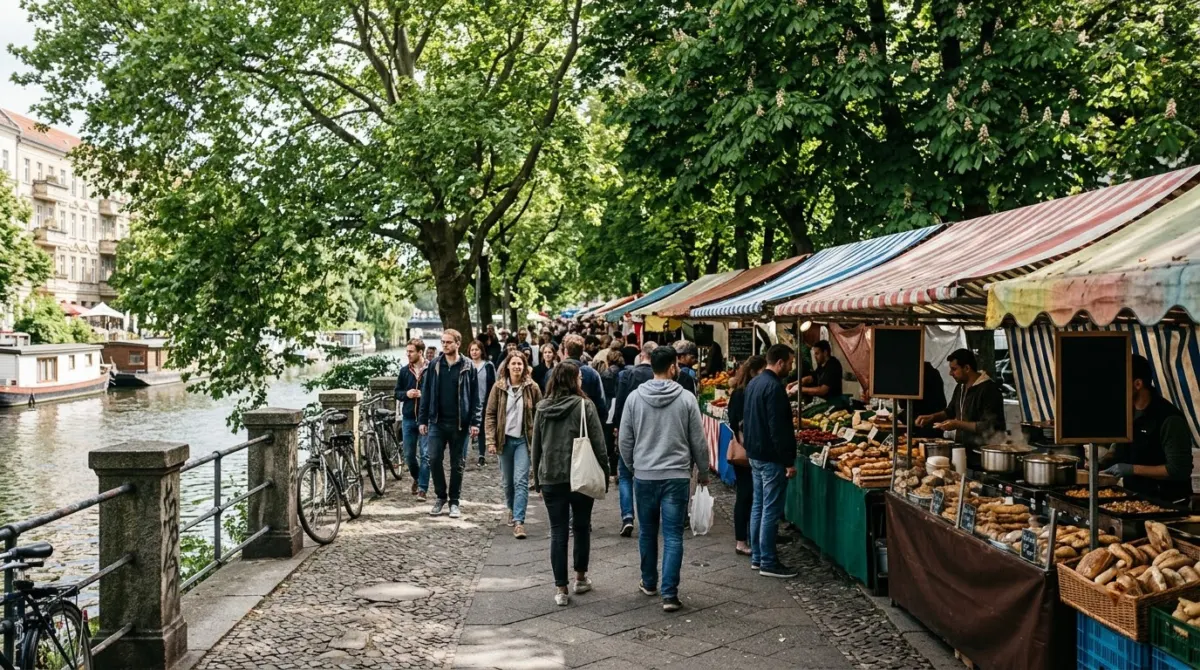
Kreuzberg, particularly around Kottbusser Tor and along the canal, has the Turkish and Middle Eastern food the city is known for, including the market on the canal bank twice a week.
Prenzlauer Berg is cafes and brunch, which Berlin takes seriously and serves late.
Neukölln is where the newer places open.
In Mitte, the area around Hackescher Markt and the Scheunenviertel is the one part of the centre that stays alive after work.
Evenings on this itinerary
Each day above ends somewhere with a good evening close by, which is deliberate.
Day one finishes in Mitte. If you did not visit the Reichstag dome in the morning, it is open late into the evening, and the view over the lit government quarter is arguably better than the daytime one. Otherwise, walk on to Hackescher Markt.
Day two finishes at the East Side Gallery. Cross the Oberbaum Bridge into Kreuzberg, or stay in Friedrichshain around Boxhagener Platz, which is where the district’s bars and restaurants concentrate.
Day three finishes in Prenzlauer Berg or Kreuzberg, which are already the evening districts.
For something other than eating and drinking, the Philharmonie at the Kulturforum is one of the great concert halls of Europe, and a riverboat on the Spree passes the government quarter and Museum Island in an hour or so. Berlin’s clubs start very late and are a separate project from this itinerary: do not plan a club night before day two.
Three days on a budget
Berlin is unusually generous to visitors who are not spending much.
The Reichstag dome is free. The Berlin Wall Memorial, the Topography of Terror and the East Side Gallery are all free and open air. The Holocaust Memorial is free, and its information centre too.
That means a full day two costs nothing but transport. Combine it with a day ticket for the U-Bahn, a bakery breakfast and a market lunch in Kreuzberg, and the only real expense is Museum Island.
What the seasons change
Summer turns Berlin outdoors: the lakes at Wannsee, Tempelhofer Feld, beer gardens along the canal and the parks full in the evening. It is light until after nine in June.
Winter is dark by four, which removes the open-air half of day two and the district walks of day three. In exchange there are Christmas markets spread across the districts rather than concentrated in one square, and the museums are empty.
If you are coming between November and February, plan an extra day for the same list.
October has its own reason to plan the evenings: the Festival of Lights projects installations onto the Brandenburg Gate, the cathedral and other landmarks every night for about ten days. It is free, and it fits naturally onto the end of day one.
If it rains
Berlin handles rain better than most cities, because so much of what you came for is indoors. The plan only needs one swap.
Day one survives: the Reichstag dome is under glass, the Holocaust Memorial has its information centre underneath, and Unter den Linden is a short walk between doorways. Day three is mostly indoors already.
Day two is the problem, because the Wall Memorial, the outdoor exhibition at the Topography of Terror and the East Side Gallery are all open-air. On a wet day, swap the order: take the indoor exhibitions at the Topography of Terror and the documentation centre at the Wall Memorial, then go to the Jewish Museum in Kreuzberg instead of the East Side Gallery, and move the Gallery to whichever day is dry.
For a second wet day, the Natural History Museum, the Gemäldegalerie and the Hamburger Bahnhof are each a long morning under one roof.
Common mistakes
Three things that waste time on a short Berlin trip.
Booking a hotel because it looks central on a map. What matters is the U-Bahn or S-Bahn station, because almost every day involves a ride.
Trying to see all of Museum Island in one morning. Several of the museums are closed for long-term renovation anyway, and one done properly beats three rushed.
Treating Checkpoint Charlie as a destination. Fifteen minutes away there is a preserved stretch of the Wall with a watchtower and a death strip, and it explains everything the reconstruction does not.
Berlin beyond the centre
Three places that are not on any three-day plan and are the reason people come back.
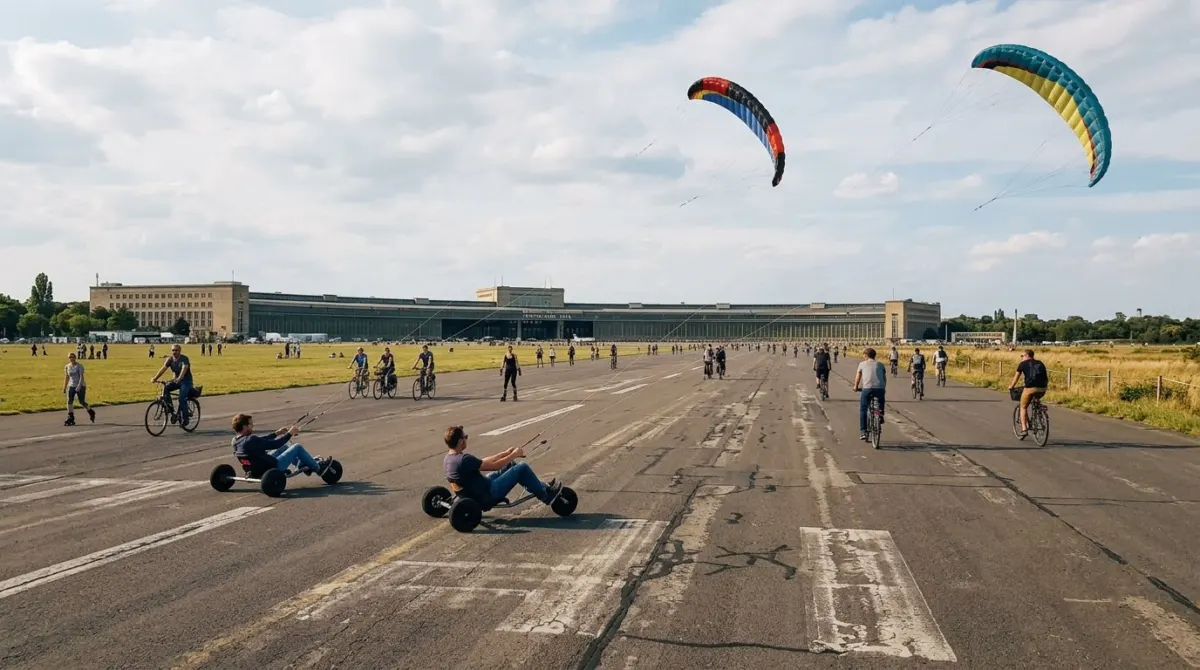
Tempelhofer Feld is a disused airport in the middle of the city, now a public park where the runways are used by cyclists and kite-buggies and the terminal building still stands. It is the most Berlin thing in Berlin.
The Spreepark and the eastern lakes sit at the edge of the city and are reachable on the S-Bahn.
Wedding and Moabit, north-west of Mitte, are the districts that have not yet been renovated, and they look like the Prenzlauer Berg of twenty years ago.
How Berlin compares to other capitals
The useful comparison is with Paris or Prague, where a dense historic core means a day’s walking covers most of what you came for.
Berlin is the opposite: roughly nine times the area of Paris inside the city limits, with its sights distributed and large stretches of ordinary city in between. Nothing is wrong with your plan if a day feels thin — you are simply covering more ground for the same number of stops.
The practical fix is the one this itinerary uses: group by theme, accept one major area per day, and use the U-Bahn without resenting it.
If you only have two days
Take days one and two of the plan above and leave the museums out entirely.
That gives you the monumental centre on the first day and the divided city on the second, which is a coherent short visit and far better than four half-days spread across a city this large. The districts and Museum Island are what you come back for.
The short version
Three days by theme: the monumental centre, the divided city, then museums and a district. Register for the Reichstag dome weeks ahead, skip Checkpoint Charlie in favour of Bernauer Straße, buy a zone A and B travel pass, and carry cash. Four days is better, and the fourth belongs in Potsdam or another district rather than a second museum.
Frequently asked questions
What is the best 3 day Berlin itinerary?
Organise it by theme rather than geography: the monumental centre in Mitte on day one, the divided city on day two, and museums plus a living district on day three. The sights are kilometres apart, so grouping by subject saves more time than grouping by map.
Do I need to book the Reichstag dome?
Yes. It is free but requires registration in advance with passport details, and slots fill weeks ahead in summer. There is no reliable walk-up option.
Is Checkpoint Charlie worth visiting?
Not as a destination. The original checkpoint is long gone and what stands there now is a photo opportunity. The Berlin Wall Memorial on Bernauer Straße explains the Wall properly, with a preserved death strip and watchtower.
How do you get around Berlin in three days?
On the U-Bahn and S-Bahn, with a travel pass for zones A and B. Journeys within the inner city take twenty to thirty minutes and crossing the city takes closer to forty-five, so budget travel time into every day.
Is three days enough for Berlin?
It is the practical minimum and it works if you use themed days. Four is better, and a fourth day is best spent on Potsdam, Charlottenburg or another district rather than on a second museum.
What should I skip in Berlin?
Checkpoint Charlie, the Wall souvenir stalls, and any attempt to see all five Museum Island museums in one visit. Several of them are closed for long-term renovation in any case, so check before building a day around them.
Which pass should I buy for three days in Berlin?
For the standard plan with one museum morning, a transport ticket for zones A and B is enough, since most of days one and two are free. If museums are the point of the trip, the three-day Museum Pass Berlin or the Museum Island version of the WelcomeCard pays for itself. Avoid putting a museum day on a Monday, when the state museums close.
Keep planning Germany
- Where to Stay in Cologne: One Street Back From the Cathedral
- Where to Stay for Oktoberfest: Buy the Walk Home
- Where to Stay in Frankfurt: The City, the Station or the Airport
- Best Hotels in Munich: What the Money Actually Buys
- Where to Stay in Berlin: Pick a District, Not a Hotel
- Where to Stay in Munich: Inside the Ring, or One Stop Out
- How Many Days in Berlin? Four, and Why It Needs More Than Munich
- How Many Days in Munich? Three, and Four If You Use It as a Base
Written and checked by
Triplarks Editorial
An editorial desk, not an invented persona: research, drafting and fact-checking are done by the same small team. Every number here carries the date it was read.