Things to do
Things to Do in Lisbon: The Best of the City, by Area
By Nora Castell Checked
Hotel links open Stay22 (Booking.com and Agoda) and tour links open GetYourGuide. We may earn a commission at no extra cost to you.
Our top choice
First trip? Stay in Baixa and Chiado.
Central and walkable, and you can roll a suitcase to your door.
Quick answer where to stay
Baixa or Chiado for a first trip: central, walkable, and you can roll a suitcase to your door. Alfama for atmosphere, if you do not mind constant hills. Two or three days covers the city and Belém; a fourth is for Sintra.
On this page
- Top things to do in Lisbon: the short answer
- Alfama, the castle and the oldest part of Lisbon
- Baixa, Chiado and the rebuilt city
- Bairro Alto, Príncipe Real and the viewpoints
- Belém: the monastery, the tower and the pastry
- Tram 28 and getting around the hills
- Day trips around Lisbon: Sintra, Cascais and the coast
- Museums, markets and where to eat
- Best time to visit Lisbon
- Getting to Lisbon and getting around
- Where to stay, and how many days
- The short version
- Frequently asked questions
2 areas: where to sleep
First trip
Baixa and Chiado
Central and walkable, and you can roll a suitcase to your door.
- €€
- My Story Hotel FigueiraPraça da Figueira, Baixa and Chiado
- €
- Liberator RossioRua Dom Antão de Almada, Baixa and Chiado
Atmosphere
Alfama
For atmosphere, if you do not mind constant hills.
- Stay
- Hotels in Alfama
- €€
- Pousada AlfamaRua de São Tomé, Alfama
- €€
- Vincci AlfamaCalçada de São Vicente, Alfama
Hotels shortlisted by location and recent guest reviews on Booking.com; we have not stayed in them. Affiliate links.
Timed entry · via GetYourGuide
Book these before you go
- São Jorge Castle entry with audio guideThe Moorish citadel at the top of Alfama has walkable ramparts with the view over the lower city; an e-ticket avoids the ticket queue.See times ↗
- Jerónimos Monastery entryThe cloister is the part worth queueing for, and an advance ticket shortens the wait in Belém.See times ↗
- Pena Palace and Park entry, SintraSintra is forty minutes by train and is the day trip; Pena Palace entry is tied to a date and time slot.See times ↗
- Alfama walk with live fado and dinnerFado began in Alfama, and the small houses there still run it in the evenings.See times ↗
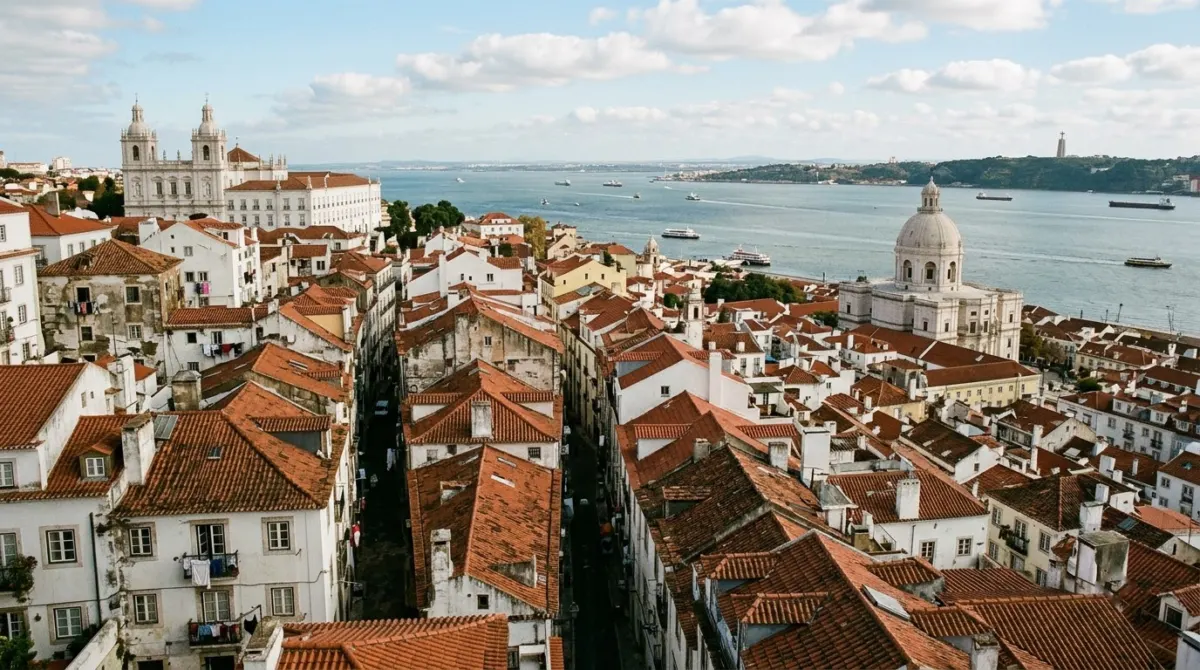
Lisbon is built on hills above a river, which means the city reveals itself in viewpoints rather than in a single centre. Walk ten minutes in any direction and you are either climbing or looking down at terracotta roofs.
Some links below are affiliate links. We may earn a commission if you book through them, at no extra cost to you. Where we name hotels, we shortlist them by location and recent guest reviews, and we have not stayed in them. Any prices on the map come live from the booking sites.
This travel guide groups the best things to do in Lisbon by area, with the viewpoints, the day trips and the tram rides set out separately.
Top things to do in Lisbon: the short answer
Alfama, the old Moorish quarter, which is free and is the Lisbon people picture.
One viewpoint at sunset — the city sells itself on these and they cost nothing.
Belém for the monastery, the tower and the pastry, as a half day.
Tram 28, early, before it becomes a queue.
Sintra as a day trip, which for many visitors is the best day of the trip.
Book your stay
Alfama, the castle and the oldest part of Lisbon
Alfama survived the 1755 earthquake that flattened the rest of the city, which is why it is the one district with a medieval street plan: lanes too narrow for cars, washing between the windows, and stairs everywhere.
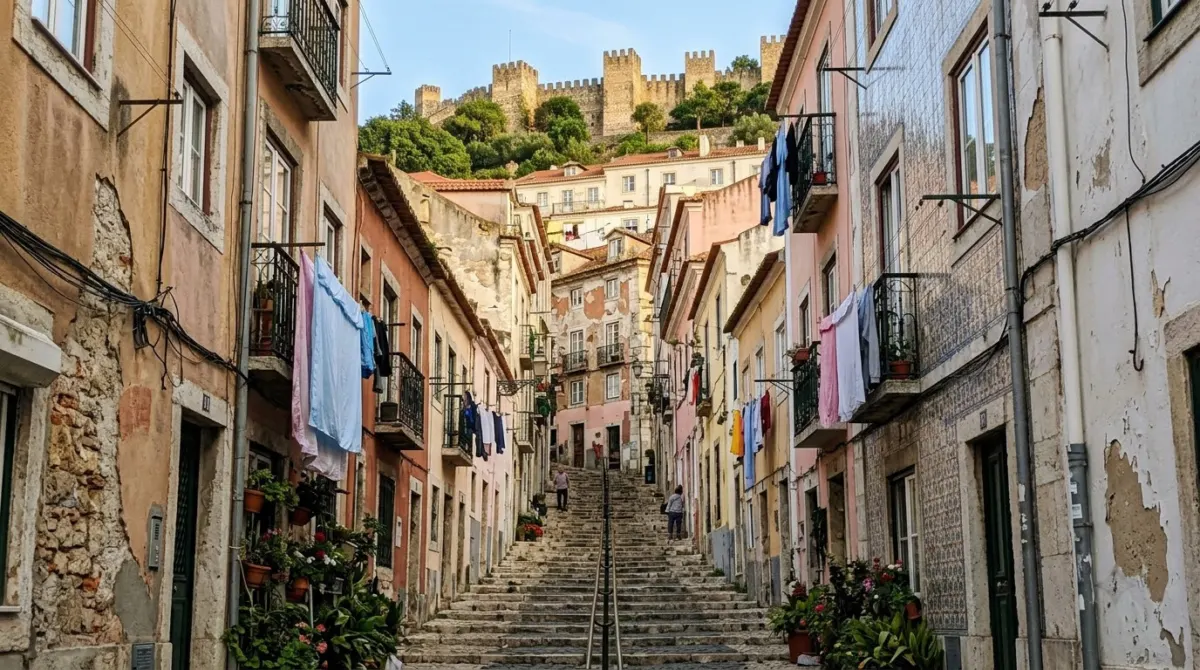
São Jorge Castle sits at the top, a Moorish citadel with ramparts you can walk and peacocks in the grounds. The view from the walls covers the whole lower city and the river.
Lisbon Cathedral, the Sé, is at the bottom of the hill — a fortress-like Romanesque building that has survived three major earthquakes.
The Miradouro de Santa Luzia and the Miradouro das Portas do Sol are the two terraces everyone photographs, a minute apart, looking over Alfama’s roofs to the Tagus.
Fado began in these streets. The small houses in Alfama still run it in the evenings, and the Fado Museum nearby explains what you are listening to before you hear it.
Baixa, Chiado and the rebuilt city
Everything between the castle hill and Bairro Alto was rebuilt on a grid after the earthquake, which makes it the flattest part of central Lisbon.
Praça do Comércio opens straight onto the river on three arcaded sides, and is where the royal palace stood until the sea took it.
The Santa Justa Lift is a wrought-iron elevator from 1902 connecting Baixa to Chiado. It has been closed since September 2025 with no confirmed reopening date, so walk up through Chiado to the Carmo square instead.
The Carmo Convent is a gothic church left roofless by the earthquake and never rebuilt, which is the most affecting thing in the lower city.
Chiado, above it, is the bookshop and café quarter, including Bertrand, the oldest operating bookshop in the world.
Bairro Alto, Príncipe Real and the viewpoints
Bairro Alto is quiet by day and the centre of Lisbon’s nightlife after ten, when the bars open their doors and people drink in the street.
Príncipe Real, uphill again, is calmer, with a garden built around a vast spreading cedar and the best independent shops in the city.
The viewpoints are the thing to plan around. Miradouro de São Pedro de Alcântara looks across at the castle. Miradouro da Senhora do Monte is the highest. Miradouro de Santa Catarina faces the river and the bridge, and is where people gather for sunset with a beer from the kiosk.
All of them are free, and the sunset over the Tagus from any of them is the single best thing to do in Lisbon that costs nothing.
Belém: the monastery, the tower and the pastry
Belém is six kilometres west along the river, where the ships left for the Age of Discovery, and it is a half day.
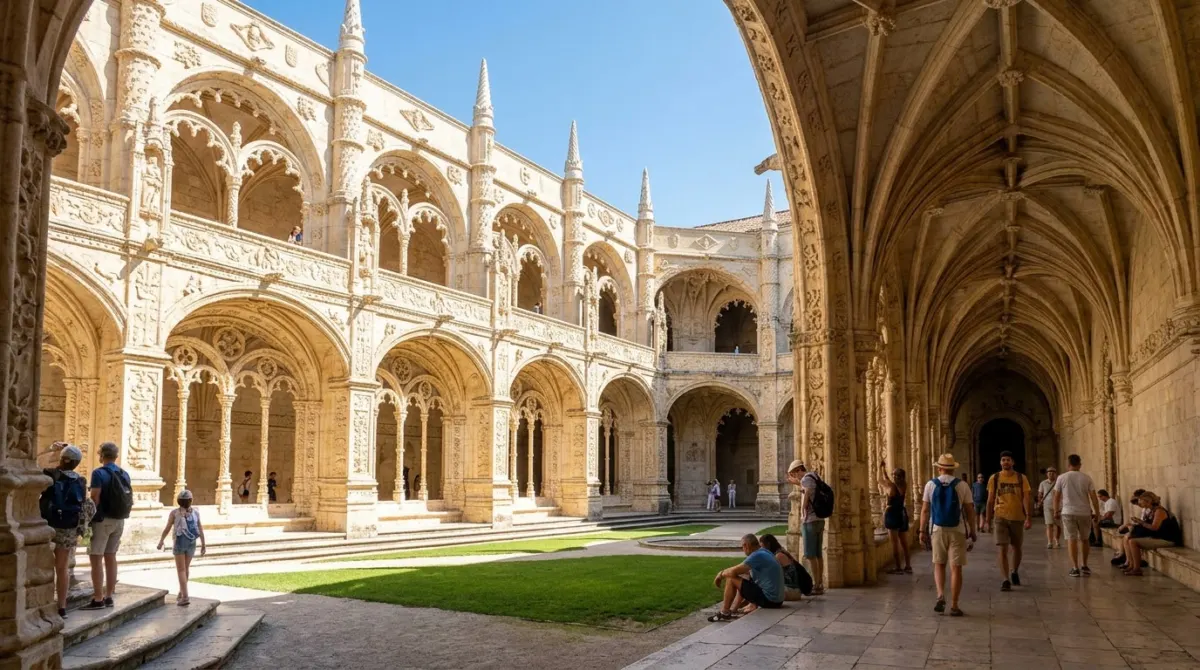
The Jerónimos Monastery is a UNESCO World Heritage site and the finest Manueline building in Portugal — stone carved to look like rope, coral and seaweed. The cloister is the part worth queueing for.
Belém Tower, a small fortified lighthouse in the river, is the other half of the World Heritage listing. It is prettier from the outside than it is inside.
The Monument to the Discoveries stands between them, with a lift to a viewing deck.
Pastéis de Belém has been making the custard tarts to a monastery recipe since 1837. The takeaway queue moves fast; the seated rooms behind are enormous and usually have space.
The MAAT, a wave-shaped museum of art and architecture on the waterfront, is the modern counterweight and you can walk over its roof.
Tram 28 and getting around the hills
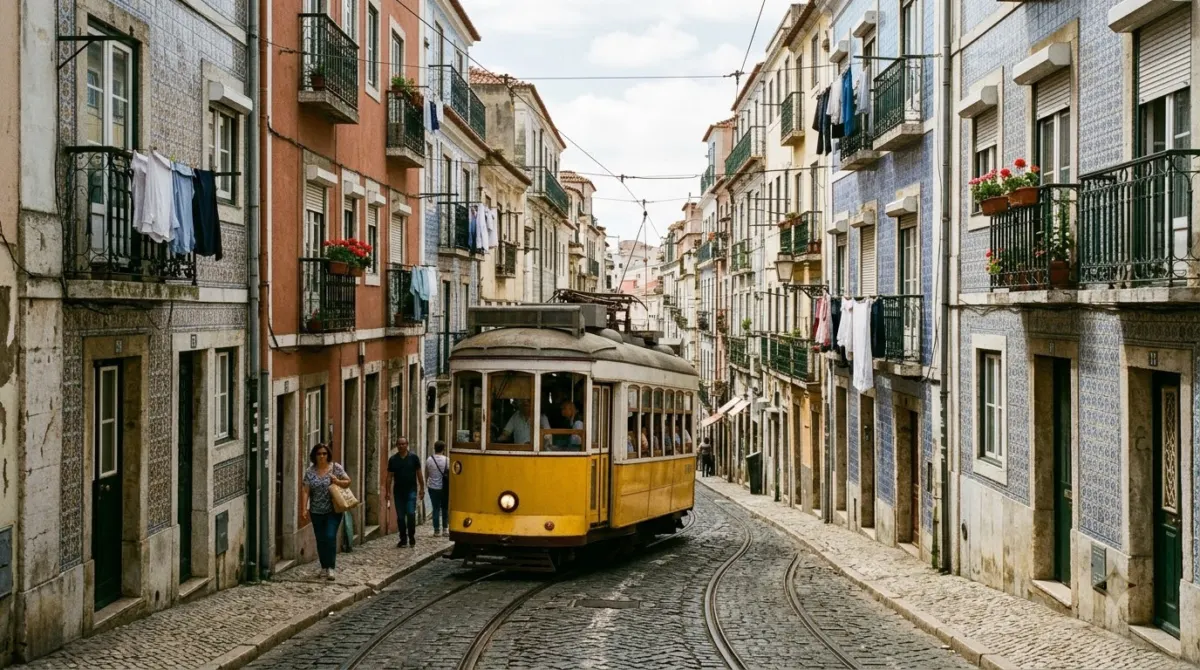
Tram 28 is a 1930s wooden tram that grinds through Graça, Alfama, Baixa and Estrela on the steepest, narrowest route in the city. It is a genuine attraction and also a normal service.
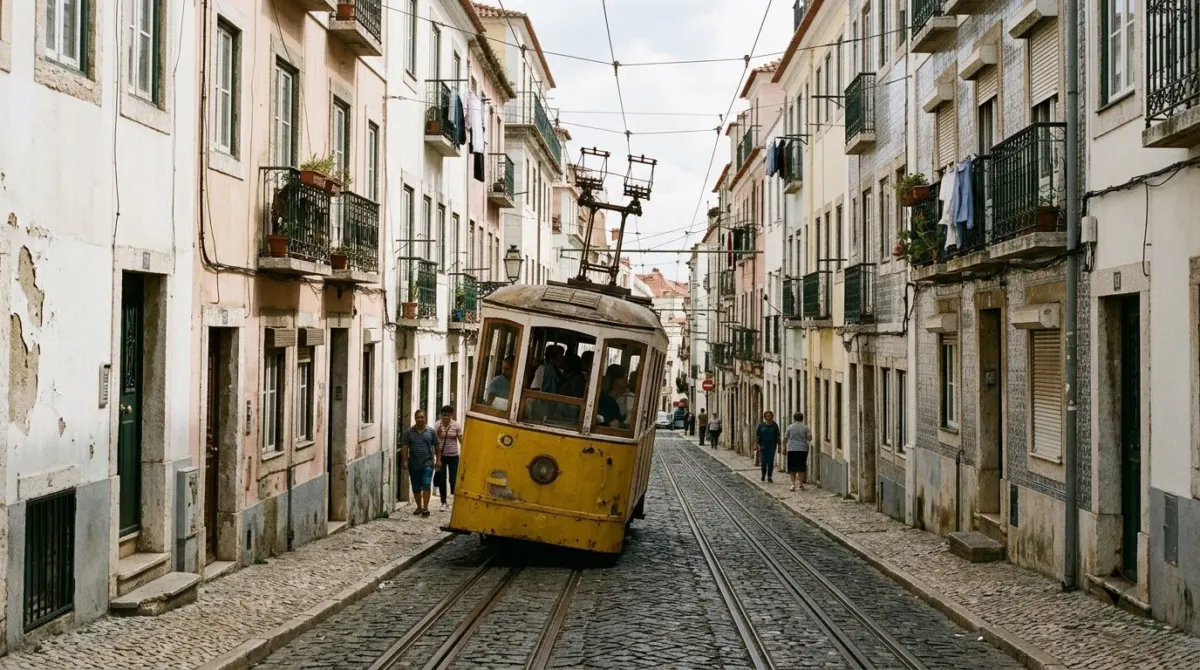
Ride it early. From about nine in the morning the queue at Martim Moniz is long and the carriage is packed, which is also when pickpockets work it. Boarding at an intermediate stop, or riding at seven, gets you the same tram with a seat.
The Glória, Bica and Lavra funiculars have been closed since the Glória crash in September 2025, with no confirmed reopening date. The Bica’s terraced street, running down to the river, is still the photograph.
Tuk tuks are everywhere and are a tourist product rather than transport. They do solve the hills, which for some visitors is the whole argument.
Walking tours leave from Praca do Comercio and Rossio most mornings, and on these hills a guide who knows which lane goes up and which goes nowhere earns their fee. Walking is otherwise the answer, in shoes with grip — the calçada portuguesa pavement is beautiful, polished by centuries of feet, and lethally slippery in the rain.
Day trips around Lisbon: Sintra, Cascais and the coast
Sintra is forty minutes by train and is the day trip. A wooded hill scattered with palaces: Pena Palace, painted red and yellow on the summit; Quinta da Regaleira, a romantic estate with an initiation well spiralling down into the rock; and the Moorish castle walls along the ridge. Book Pena Palace ahead, go early, and pick two sites rather than four.
Cascais is a half hour west along the coast on the train from Cais do Sodré — a former fishing town turned seaside resort, with beaches and a walk along the cliffs to the Boca do Inferno.
Cabo da Roca, the westernmost point of mainland Europe, sits between the two and is reached by bus from either.
Setúbal and the Arrábida coast, south across the bridge, have the clearest water near the city.
Museums, markets and where to eat
The Gulbenkian Museum is the best museum in Portugal, an oil magnate’s private collection running from Egyptian art to Lalique glass, set in its own garden.
The National Tile Museum covers five centuries of azulejos in a former convent, and explains the blue tiles you have been walking past.
The Time Out Market at Cais do Sodré gathers Lisbon chefs under one roof. It is busy, it works, and it is not where locals eat.
What to eat: Portuguese food here is coastal and plain, and better for it. Bacalhau, salt cod, in any of its hundreds of preparations; grilled sardines in summer; bifana, a pork sandwich; and a pastel de nata with cinnamon. A tasca — a small family restaurant with a written-up daily menu — is the thing to look for.
Best time to visit Lisbon
Lisbon has one of the mildest winters of any capital in Europe, which widens the calendar considerably.
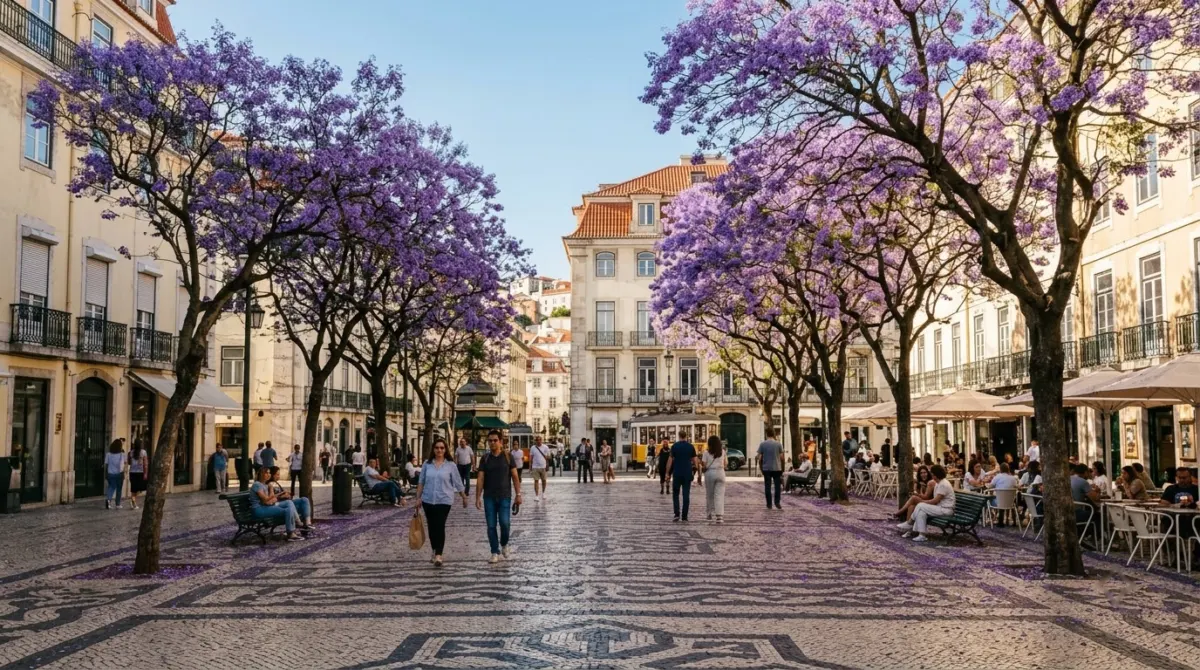
March to June is the best window: warm, long days, jacaranda trees in flower through May, and the sea still cold enough to keep the beach crowds down.
June is the month of the Festas de Lisboa, when Alfama and Graça fill with street parties, grilled sardines and paper decorations for Saint Anthony on the thirteenth. It is the single best time to be in the city and the hardest to find a room.
July and August are hot and full. The hills are punishing in the afternoon, and the city centre empties of residents.
September and October are the quiet reward: warm sea, warm evenings, lower prices, and the light that photographers come for.
November to February is grey and wet in bursts, but rarely cold, and the museums and fado houses are at their best when there is no queue. The polished pavement is at its most slippery in the rain.
Getting to Lisbon and getting around
From the airport, the red metro line runs to the centre in about twenty minutes with one change. Lisbon airport sits inside the city, so a taxi or ride-hail is short and cheap.
Buy a navegante occasional card at any metro station and load it. The same card covers the metro, the trams and the buses, and a day pass costs less than three single tram rides.
The train stations divide by direction. Rossio serves Sintra, Cais do Sodré serves Cascais and the coast, Oriente serves Porto and the north, and the ferries to the south bank leave from Cais do Sodré as well.
The Lisboa Card covers transport plus the Jerónimos Monastery, Belém Tower and the main museums. It pays for itself on a day where you do Belém properly and not otherwise.
Walking remains the main mode. The city is small, the hills are the obstacle, and the funiculars, closed since September 2025, were built precisely because the locals did not want to walk up them either.
Where to stay, and how many days
Two or three days covers the city centre and Belém. A fourth day is for Sintra, and it is worth it.
Our guide to where to stay in Lisbon compares the districts, how many days you need in Lisbon sets out what each length gets you, and the Portugal itinerary continues from here to Porto and the Algarve.
Map shows live availability and prices. We may earn a commission on bookings made through it, at no extra cost to you.
The short version
Walk Alfama and the castle in a morning, ride tram 28 before nine, and keep a sunset for one of the viewpoints. Give Belém a half day and the monastery cloister in particular. Take the train to Sintra and choose two palaces rather than four. Eat in a tasca one street off anywhere famous, and wear shoes that grip.
Frequently asked questions
What should I not miss in Lisbon?
Alfama and Sao Jorge Castle, which are the oldest part of the city and survived the 1755 earthquake; one viewpoint at sunset, which costs nothing; and Belem for the Jeronimos Monastery cloister. Most visitors also take the train to Sintra.
Is 3 days in Lisbon too long?
No. Two days covers the city centre and Belem comfortably, and a third day gives you Sintra, which for many visitors is the best day of the trip. Beyond four days Lisbon becomes a base for the coast rather than a city break.
Is tram 28 worth it?
Yes, if you ride it early. It is a 1930s wooden tram on the steepest route in Lisbon and a genuine attraction. From about nine in the morning the queue is long and the carriage is packed, which is also when pickpockets work it.
How do you get from Lisbon to Sintra?
Take the train from Rossio station, about forty minutes, running frequently through the day. Book Pena Palace online before you go, arrive early, and plan for two sites rather than four – the hill is steeper and larger than it looks.
What is the best free thing to do in Lisbon?
The viewpoints. Sao Pedro de Alcantara, Senhora do Monte and Santa Catarina are all free and all face the river. Walking Alfama costs nothing either, and the Carmo Convent ruins are among the cheapest tickets in the city.
Where should you eat in Lisbon?
Look for a tasca, a small family restaurant with the day’s menu written up outside, one street back from any main square. The Time Out Market is good and busy but is not where people in Lisbon eat.
Keep planning Portugal
- Best Hotels in Lisbon: Ask About the Stairs First
- Where to Stay in the Algarve: Three Coasts, Not One
- Where to Stay in Porto: The Question Is Vertical, Not Horizontal
- Where to Stay in Lisbon: Best Areas, and the Hill Problem
- How Many Days in Porto? Add One for the Douro
- How Many Days in Lisbon? Four, and the Hills Are Why
- Portugal Itinerary: A Narrow Country, Not a Small One
- Best Restaurants in Lisbon 2026: Where to Eat, Neighbourhood by Neighbourhood
Written and checked by
Nora Castell is the pen name of the Triplarks editorial desk and the editor of its Costa Rica and Central America guides. Each guide is built from national park, transport and tourism sources, operator rate cards and recent traveller reports, then fact-checked, with every figure dated to the day it was read. Triplarks uses AI tools to help draft; nothing goes live until it has been edited and checked. Where we have not been somewhere, we do not write as though we have.