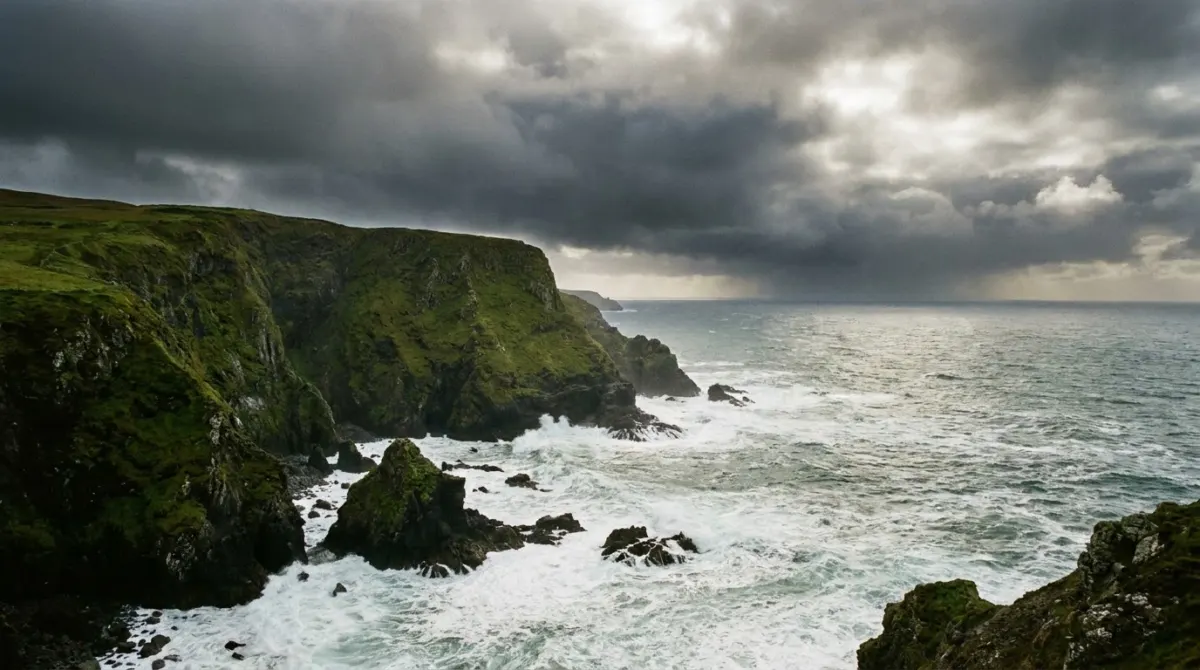
Quick answer
Five or six bases over fourteen nights. Book the Galway and Kerry nights first because the west coast fills months ahead, then Belfast, then the rest. Keep the day trips unbooked so the Ring of Kerry and Connemara land on the clear mornings.
On this page
- Two week Ireland itinerary at a glance
- Days 1 and 2 — Dublin
- Days 3 and 4 — north to Belfast and the Causeway
- Days 5 and 6 — the north-west
- Days 7 to 9 — Galway and the west
- Days 10 to 12 — Kerry
- Days 13 and 14 — the south, and home
- The slower variant: five bases instead of six
- What still does not fit in two weeks
- Driving the fortnight
- When to go
- What two weeks changes compared with one
- Doing a fortnight without a car
- What to book before you fly
- Budgeting your days, not your money
- When a fortnight should become two trips
- The short version
- Frequently asked questions
Two weeks is the length at which Ireland stops being a highlights tour. Fourteen days fits both coasts, both Kerry peninsulas, the Causeway Coast in the north and the food and harbours of the south — with nights long enough in each base to see them at the hours the coaches are not there.
Some links below are affiliate links. We may earn a commission if you book through them, at no extra cost to you. We do not rank hotels, and any prices on the map come live from the booking sites.
This is the full loop, day by day, with a slower variant and a list of what still will not fit. If Scotland is part of the same trip, see our Ireland and Scotland itinerary.
Two week Ireland itinerary at a glance
| Days | Base | Doing |
|---|---|---|
| 1–2 | Dublin | The city on foot, no car |
| 3 | Belfast | Brú na Bóinne on the way north |
| 4 | Belfast | The Causeway Coast |
| 5–6 | Donegal or Sligo | Slieve League, Glencolmcille, the north-west |
| 7–9 | Galway | Connemara, the Cliffs of Moher, the Burren |
| 10–12 | Killarney or Kenmare | Ring of Kerry, Dingle, the national park |
| 13 | Kinsale or Cork | Cobh, the harbour, west Cork |
| 14 | — | Kilkenny or Cashel on the way back, or fly from Cork |
Six bases over fourteen nights, which is the most you should attempt. Every transfer has something worth stopping for built into it.
Where to sleep on this route
Days 1 and 2 — Dublin
On foot, with no car. Trinity College and the Book of Kells, the Georgian squares, the free National Museum of Ireland, and the two cathedrals on day one. Kilmainham Gaol and the Guinness Storehouse on day two, with music in the evening.
Collect the car on the morning of day three. Our Dublin itinerary covers these two days in full.
Days 3 and 4 — north to Belfast and the Causeway
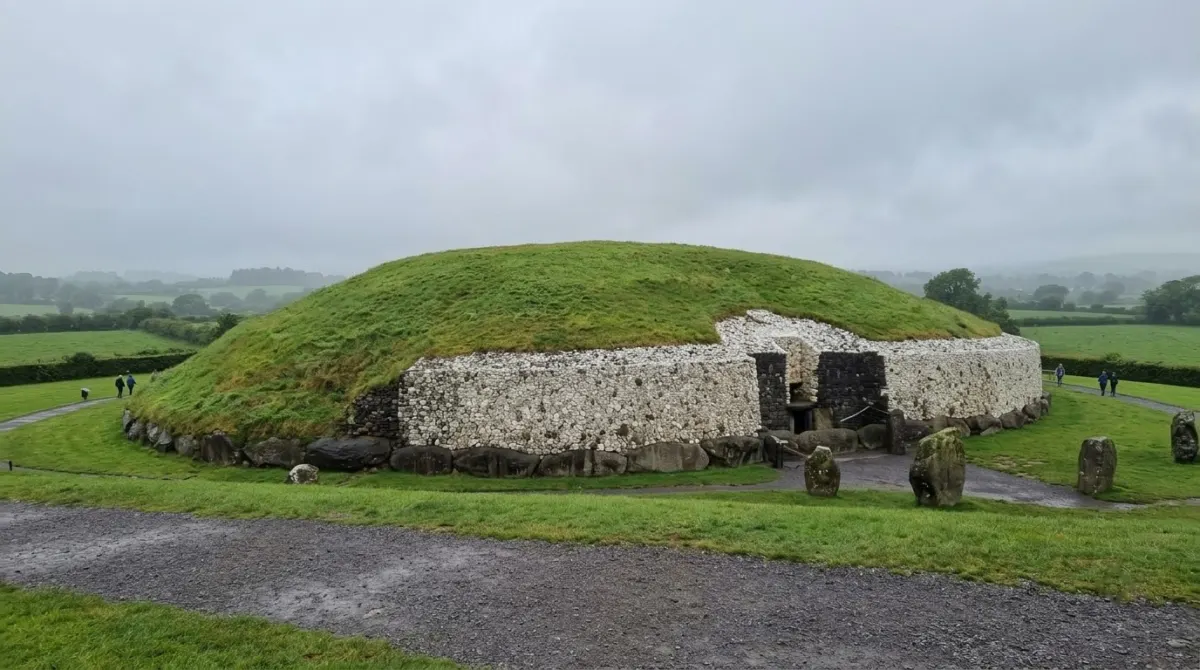
Dublin to Belfast is about two hours on motorway. Break it at Brú na Bóinne, where the passage tombs at Newgrange and Knowth were built around 3200 BC, older than the pyramids at Giza. Access is by guided tour from the visitor centre.
Day 4 is the Causeway Coast: the Giant’s Causeway, the rope bridge at Carrick-a-Rede, Dunluce Castle and the Glens of Antrim. A full day from Belfast.
Remember that Northern Ireland uses pound sterling, and that your car hire must permit cross-border driving. See where to stay in Belfast.
Days 5 and 6 — the north-west
West into Donegal, which is the part of Ireland that most itineraries skip and the part that repays a fortnight.
Slieve League has sea cliffs nearly three times the height of the Cliffs of Moher and a fraction of the visitors. Glencolmcille, the Glenveagh national park and the Inishowen peninsula fill as much time as you give them.
If two nights here feels like a stretch, Sligo is the compromise: Yeats country, Benbulben and the coast, an hour closer to Galway.
Map shows live availability and prices. We may earn a commission on bookings made through it, at no extra cost to you.
Days 7 to 9 — Galway and the west
Three nights in Galway, which is the right number because the two great day trips run in opposite directions.
Connemara one day: Kylemore Abbey, the fjord at Killary Harbour and the coast road through Clifden. The Cliffs of Moher and the Burren another, with lunch in Doolin. The third day is for the Aran Islands, or for Galway itself.
See where to stay in Galway for why a street back from the Latin Quarter is the right address.
Days 10 to 12 — Kerry
Three nights, which is what the region actually needs.
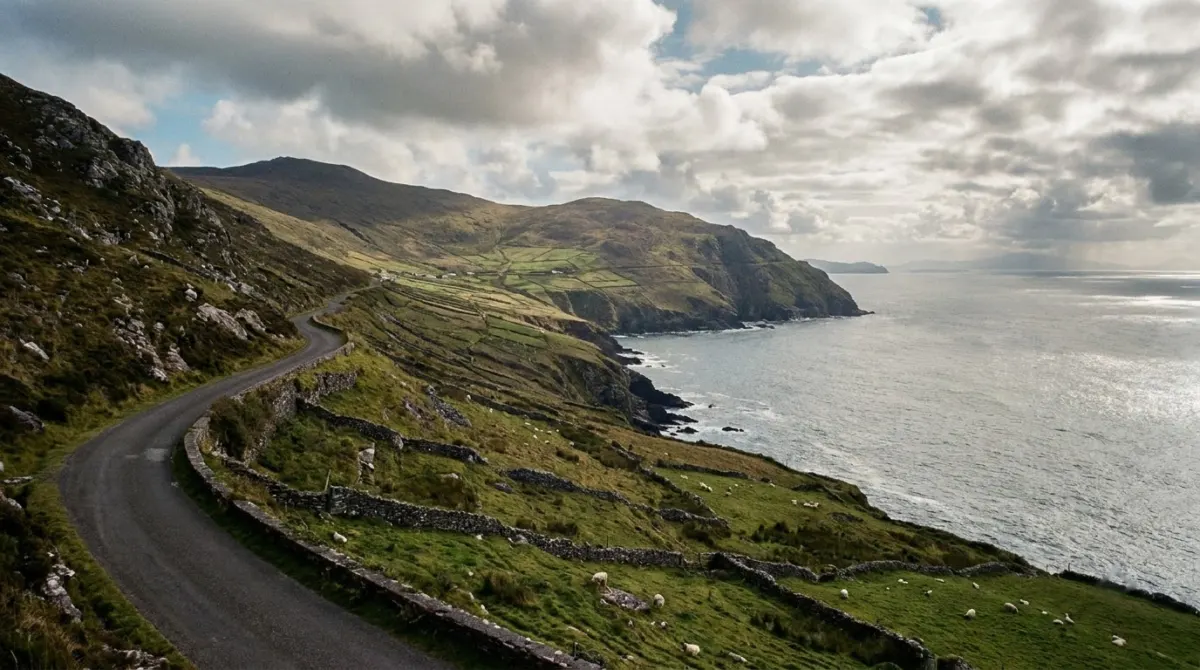
One day for the Ring of Kerry, counter-clockwise and starting early. One for the Dingle Peninsula and Slea Head. One for Killarney National Park and the Gap of Dunloe, which is a half day by boat and on foot rather than a drive.
Base in Killarney for choice and tours, or Kenmare for quiet and food — where to stay in Killarney covers the difference.
Days 13 and 14 — the south, and home
East to Kinsale or Cork: a harbour town of painted houses with an unusual number of good restaurants, or a working city with the English Market at its centre and Cobh, the Titanic’s last port of call, twenty-five minutes away by train.
On the last day, fly from Cork, or drive back to Dublin by way of the Rock of Cashel and Kilkenny. Our southern Ireland itinerary covers this half of the island properly.
The slower variant: five bases instead of six
If six moves in fourteen nights sounds like a lot, drop the north-west.
Dublin 2, Belfast 2, Galway 4, Kerry 4, Cork 2. You lose Donegal and Slieve League, and you gain a fourth night in both Galway and Kerry, which is enough to add the Aran Islands and the Beara Peninsula.
For most first-time visitors this is the better fortnight. Donegal rewards a trip built around it rather than a passing visit.
What still does not fit in two weeks
The Aran Islands overnight and Donegal, in the same trip.
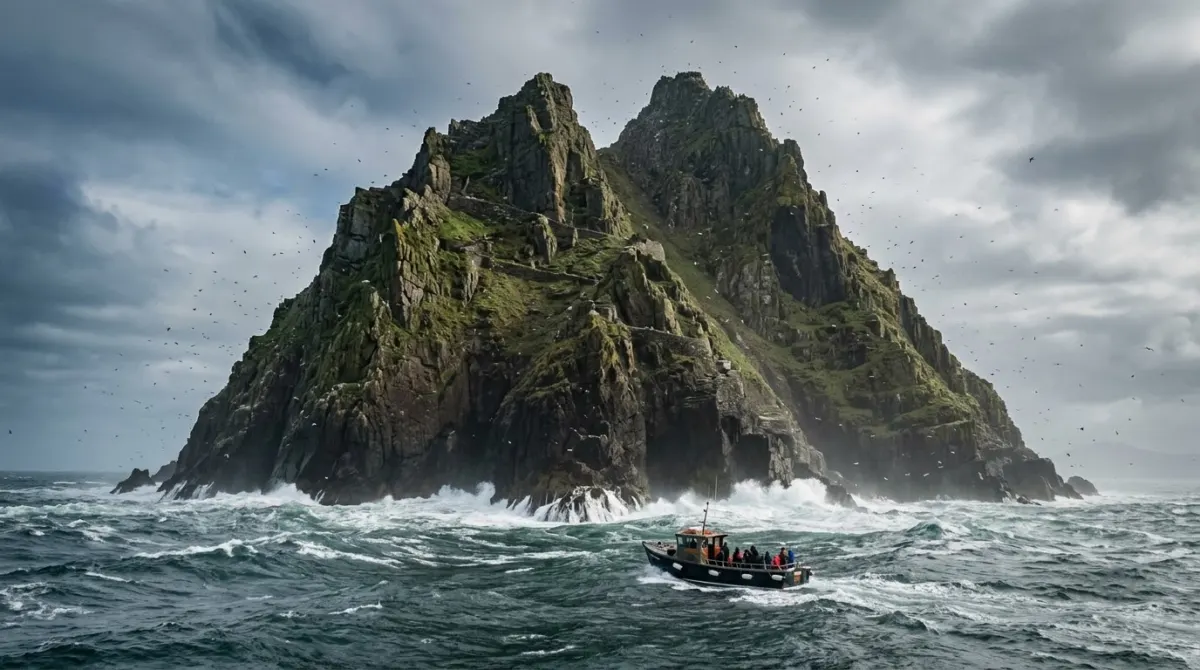
The Skellig Islands. Landings run only in summer, depend entirely on the sea, are limited by permit and book out months ahead.
The far south-west — Beara, Sheep’s Head and Mizen — beyond a single day.
Any of it slowly. Fourteen days with six bases is still a moving trip.
Driving the fortnight
This route covers roughly 2,000 kilometres. Motorways link Dublin to Belfast, Galway and Cork; everything else is national and regional roads through towns, and in Donegal and Kerry the roads narrow to a single lane with stone walls at the edge.
Allow about two-thirds of the speed your navigation app predicts off the motorway, expect sheep on open ground, and note that signs in Gaeltacht areas — parts of Donegal, Connemara and west Kerry — may give place names in Irish only.
When to go
May, June and September are the best weeks for a fortnight: long days, everything open, and fewer coaches than midsummer. July and August give the longest evenings and the heaviest traffic, and accommodation on the west coast sells out months ahead. October to March shortens the day enough that six bases no longer works; drop to four.
What two weeks changes compared with one
The difference is not twice as many places. It is nights per base, and that changes what you actually see.
With three nights in Galway you can visit the Cliffs of Moher early in the morning rather than at noon with every coach in the west. With three in Kerry you can drive the Ring of Kerry on the clear day instead of the day it happens to fall on. With two in Belfast you get the Causeway Coast as a day rather than a dash.
That flexibility is worth more than the extra regions. If weather forced a choice, a fortnight with five bases and a spare day in each beats a fortnight with eight bases and none.
Doing a fortnight without a car
More of this route works on public transport than people expect, though not all of it.
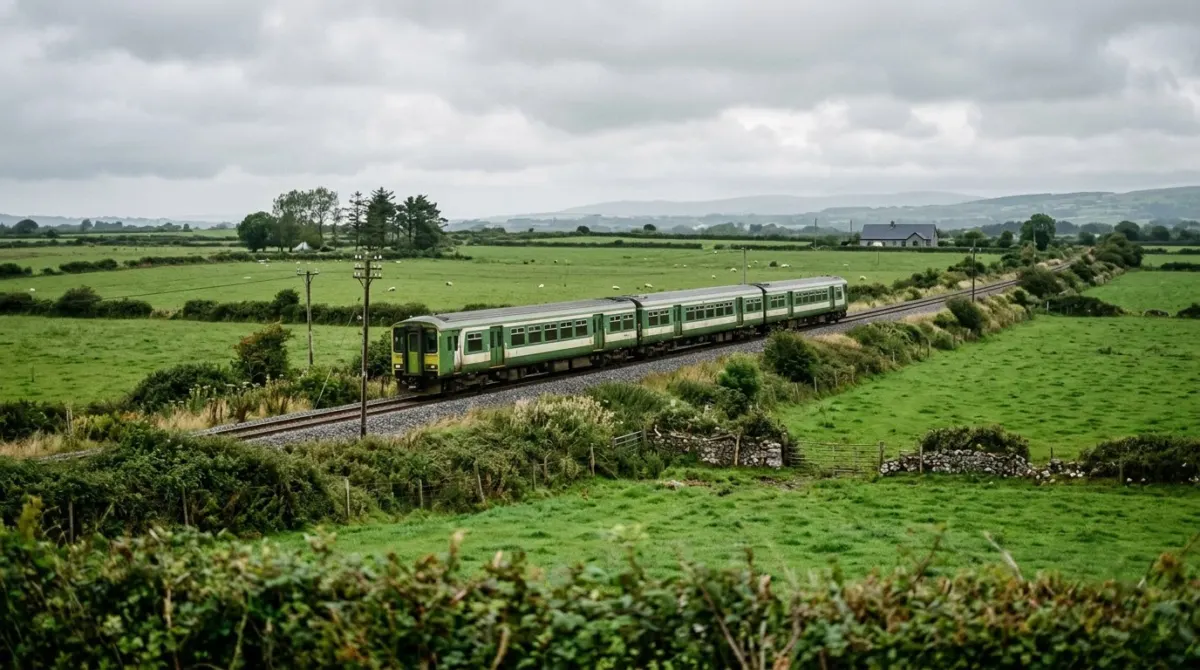
Trains link Dublin to Belfast, Galway, Killarney, Waterford, Kilkenny and Cork. Coaches fill the west-coast gaps. From Galway, full-day tours cover Connemara and the Cliffs of Moher; from Killarney, the Ring of Kerry and the Gap of Dunloe; from Belfast, the Causeway Coast.
What you cannot reach without a car is Donegal in any depth, the Dingle Peninsula beyond the town, and west Cork. A car-free fortnight therefore runs Dublin, Belfast, Galway, Killarney and Cork, with organised days from each — which is the five-base variant above, minus the driving.
What to book before you fly
- Kilmainham Gaol — the only sight in Ireland that reliably sells out weeks ahead.
- Brú na Bóinne — access to Newgrange and Knowth is by guided tour from the visitor centre only.
- Your Galway and Kerry nights — the west coast fills months ahead in summer.
- An automatic car, if you need one — manual is the default in Ireland and automatics are a limited, more expensive subset.
Everything else on a fortnight can be left flexible, and should be: the point of two weeks is being able to move a day trip to the clear morning.
Budgeting your days, not your money
The common failure on a fortnight is not overspending but over-scheduling.
Fourteen days with six bases leaves roughly eight full days of actual sightseeing once arrival, departure and transfers are counted. Plan eight good days rather than fourteen, and treat anything extra as a bonus.
In practice that means one major thing per day. The Causeway Coast is a day. The Ring of Kerry is a day. Connemara is a day. None of them combine with anything else, and trying to pair them is how a fortnight starts to feel like a week.
When a fortnight should become two trips
Two weeks covers the island at a steady pace. It does not cover it slowly, and for some travellers that is the wrong trade.
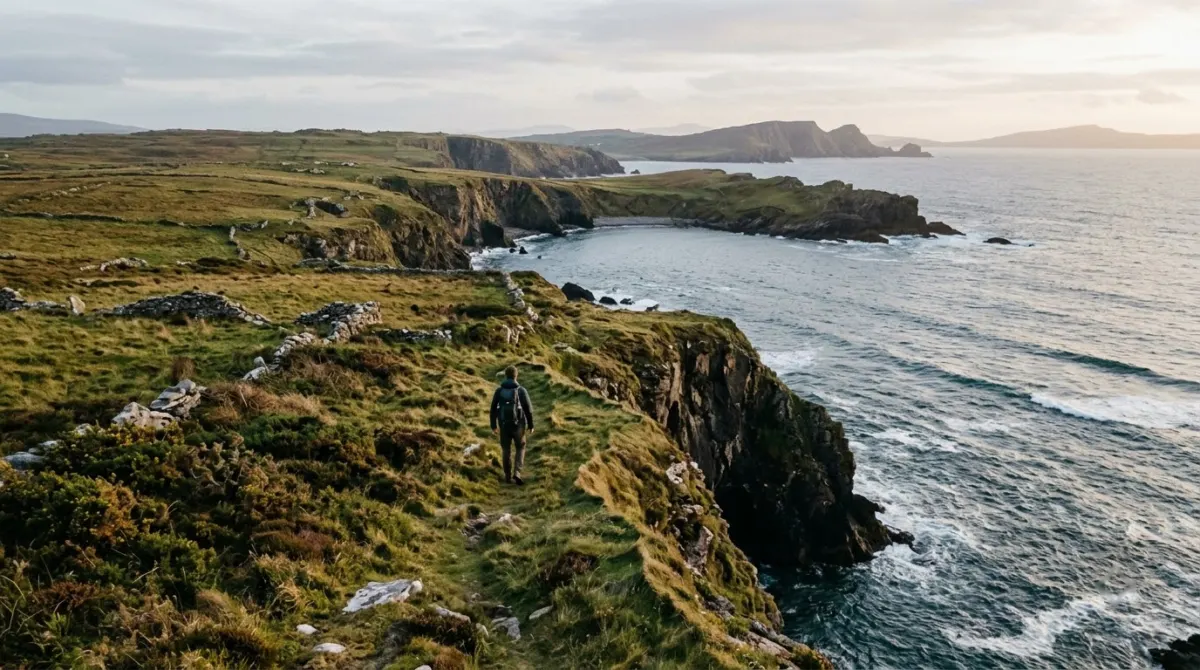
If what you want is to walk, to sit in the same pub twice, or to wait out weather for a boat to an island, a fortnight split across two visits gives you more than one continuous loop does: a week in the west in one year, a week in the north and south in another.
The argument for doing it in one go is the flight and the car hire, which are the fixed costs of an Irish trip. If those are the constraint, take the fortnight and use the five-base variant, which leaves the most room to stand still.
The short version
Six bases over fourteen nights: Dublin, Belfast, the north-west, Galway, Kerry and Cork. Five is better for most first-time visitors, dropping Donegal in exchange for a fourth night in Galway and in Kerry.
Build a stop into every transfer, plan one major thing per day rather than two, and keep the day trips flexible so the Ring of Kerry and Connemara land on the clear mornings rather than the ones the schedule picked.
Frequently asked questions
Is two weeks enough to see all of Ireland?
Two weeks covers both coasts, both Kerry peninsulas, the Causeway Coast and the south, which is as much as the island gives up without rushing. It does not cover Donegal slowly, the Aran Islands overnight, or the far south-west peninsulas.
What is the best 14 day Ireland itinerary?
Dublin two nights, Belfast two for the Causeway Coast, Donegal or Sligo two, Galway three, Kerry three, and Cork or Kinsale two. Six bases is the maximum worth attempting in a fortnight.
How many places should I stay on a two week Ireland trip?
Five or six. Five is the better fortnight for most first-time visitors: Dublin, Belfast, Galway, Kerry and Cork, with four nights each in Galway and Kerry instead of a stop in the north-west.
Should I include Northern Ireland in a two week trip?
Yes. Belfast is two hours from Dublin and the Causeway Coast is one of the best days on the island. Remember the currency changes to pound sterling and your car hire must allow cross-border driving.
Is Donegal worth visiting on a two week itinerary?
If you are willing to spend two nights there. Slieve League has sea cliffs nearly three times the height of the Cliffs of Moher with a fraction of the visitors. If two nights is too much, Sligo is the closer compromise.
How much driving is a two week Ireland itinerary?
Roughly 2,000 kilometres. Motorways link Dublin to Belfast, Galway and Cork, but most of the rest is national and regional roads through towns, where you should allow about two-thirds of the speed your navigation app predicts.
Keep planning Ireland
- Where to Stay in Kilkenny: On the Mile, or Beside the Station
- Where to Stay in Doolin: Book a Room You Can Walk Home To
- Where to Stay in Belfast: Four Quarters, Four Different Trips
- Where to Stay in Killarney: The Town, or the Lakes
- Where to Stay in Dingle: In Town, or Out Where the View Is
- Where to Stay in Ireland: Pick Three Bases, Not Seven
- Where to Stay in Galway: The Noise Decides It, Not the Distance
- Best Hotels in Dublin: What Each Kind of Building Gives You
Written and checked by
Triplarks Editorial
An editorial desk, not an invented persona: research, drafting and fact-checking are done by the same small team. Every number here carries the date it was read.