Quick answer
Add up the nights by region rather than guessing the trip: Edinburgh two or three, the west Highlands two, Skye two or three, Inverness one or two. Book the Highland nights first, because the supply there is small and goes months ahead in summer.
On this page
- How many days in Scotland: what each length covers
- Why Scotland takes longer than the map suggests
- Five days
- Seven days
- Ten days
- Without a car
- The islands that fit a shorter trip
- When you need an extra day
- Three days, in practice
- How the seasons change the numbers
- What an extra day buys you, by length
- If you skip the cities
- Common mistakes
- Fourteen days, and the three ways to use them
- How many days per region
- Scotland alongside the rest of Britain
- The short version
- Frequently asked questions
Seven days for the cities and the west Highlands. Ten if you want Skye. Fourteen if you want the far north or the islands. Below five days, stay in the central belt and treat the Highlands as a separate trip, because the roads will eat your holiday.
Some links below are affiliate links. We may earn a commission if you book through them, at no extra cost to you. We do not rank hotels, and any prices on the map come live from the booking sites.
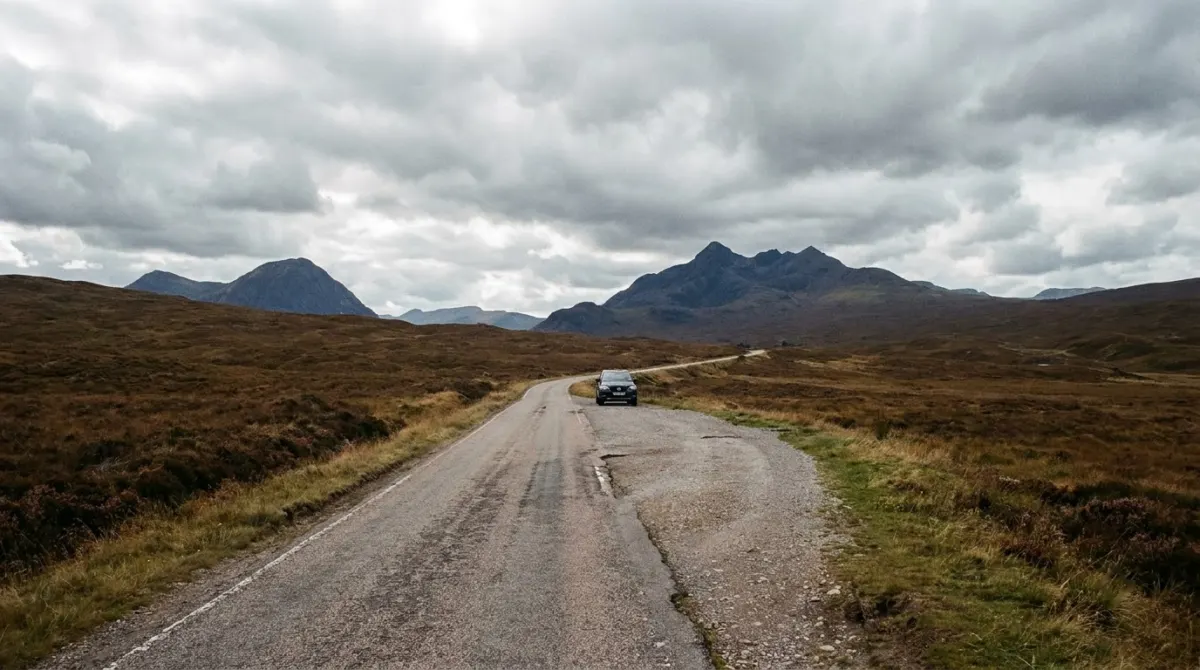
The reason is geography rather than size. Scotland is about 440 kilometres from the border to the north coast, but the roads that reach the places worth seeing are slow, and in the north-west they are single track.
How many days in Scotland: what each length covers
| Days | Realistic plan | What you miss |
|---|---|---|
| 3 | Edinburgh, or Edinburgh and Glasgow | Everything north |
| 5 | Edinburgh plus Glencoe and Loch Lomond | Skye, the north, the islands |
| 7 | Edinburgh, the west Highlands, Inverness | Skye, the islands |
| 10 | The above plus Skye | The far north, the Hebrides |
| 14 | Adds the North Coast 500 or the islands | Orkney and Shetland |
Where to sleep on this route
Why Scotland takes longer than the map suggests
Three reasons, and they compound.
The roads. Highland A-roads are two lanes and winding, and the roads to Skye, the far north-west and the islands are often single track with passing places. Allow about two-thirds of the speed your navigation app predicts once you leave the central belt.
The weather. It changes within the hour, and the thing you drove three hours to see may be in cloud. A second night in a region is a second chance at the view, which is why two-night minimums matter here more than in most countries.
The ferries. Any island beyond Skye involves a sailing with a timetable, and the timetable, not your plan, decides the day.
Five days
Two bases. Three nights in Edinburgh, then two in the west — Glencoe, Fort William or Loch Lomond.
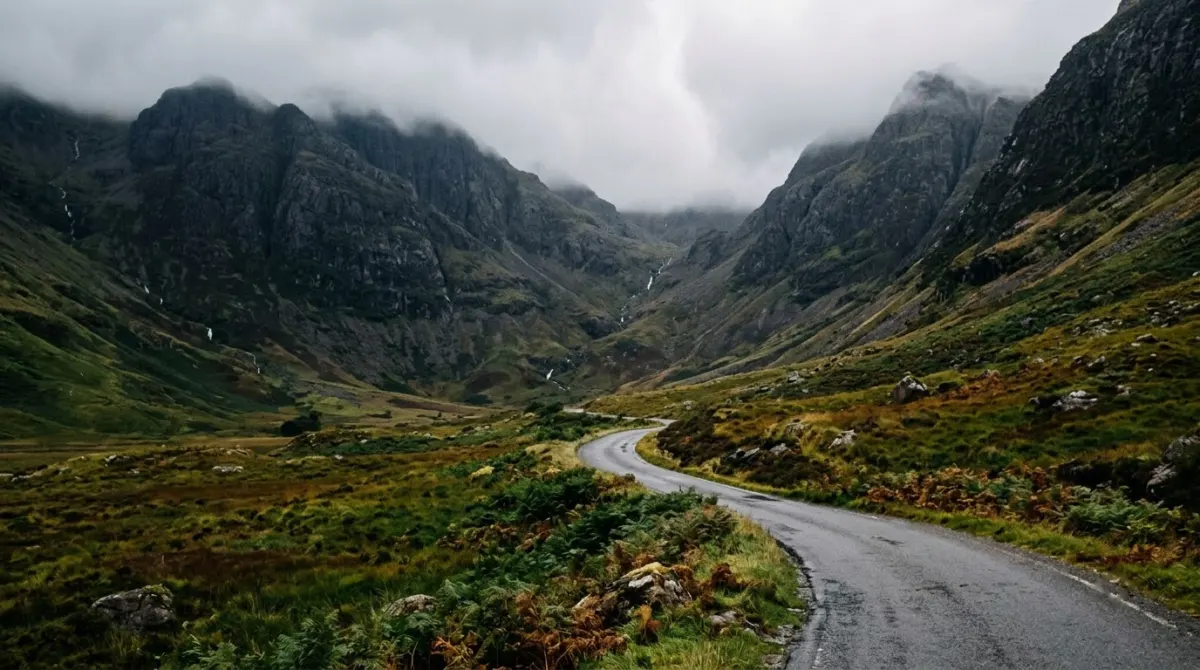
That gives you the capital and one genuine Highland region, with one transfer of about three hours. It is the shortest trip that includes real Highland landscape without being a drive.
What does not fit is Skye, which is another three hours beyond Glencoe and needs two nights of its own.
Map shows live availability and prices. We may earn a commission on bookings made through it, at no extra cost to you.
Seven days
Three bases. Edinburgh three nights, Glencoe or Fort William two, Inverness two — with Loch Ness and Culloden at the northern end and the option of the Jacobite steam train or Ben Nevis in the middle.
This is the standard week and it works. Our 7 day Scotland itinerary sets it out day by day.
Ten days
Four bases, adding Skye for two nights between the west Highlands and Inverness.
Ten days is the length at which Scotland stops feeling compressed: each region gets two or three nights, the transfers are under four hours, and the weather has room to be unhelpful on one day without ruining a region.
Our 10 day Scotland itinerary covers it, and the Scotland itinerary explains the bases.
Without a car
The numbers change if you are not driving, and mostly for the better at the short end.
Edinburgh, Glasgow, Stirling and St Andrews are all connected by frequent trains, so a five-day city trip needs no car at all. Trains also reach Fort William, Mallaig and Inverness, and the West Highland Line is one of the great railway journeys in Europe.
What needs a car or a tour is Skye, the north-west and the glens between the stations. Multi-day small-group tours from Edinburgh and Inverness cover those, and they are a well-established way to see the Highlands without driving.
The islands that fit a shorter trip
Not every island needs a fortnight. Three fit inside a week or ten days, and the deciding factor is the crossing rather than the distance.
Skye is joined to the mainland by a bridge at Kyle of Lochalsh, so it needs no ferry reservation at all — only the drive to reach it, which is the real cost.
Mull is about 45 minutes from Oban on CalMac’s crossing to Craignure, which runs all year. Two nights in Oban or on Mull adds the island and, by a second short crossing from Fionnphort, Iona and its abbey. CalMac strongly recommends reserving vehicle space in advance, and in summer that advice is not optional.
Arran, in the Firth of Clyde, is reached by ferry from the Ayrshire coast and works as a two-night add-on to a Glasgow trip, with mountains in the north of the island and gentler farmland in the south.
The rule for all three: book the ferry before the accommodation on the island, check CalMac’s service status the day before you sail, and never put a crossing on the last day before a flight.
When you need an extra day
In August, if Edinburgh is in your plan. The festivals turn the city into something that takes four or five days rather than two or three.
In winter, when daylight in the Highlands runs to about seven hours and a long drive no longer fits into one.
If you are walking. Ben Nevis, the Cairngorms or a section of the West Highland Way each need a day that is not a driving day.
If any island is involved, because ferries are weather-dependent and a cancelled sailing needs somewhere to go.
Three days, in practice
Three days in Scotland is a city trip, and the honest version is Edinburgh with a day in Glasgow.

Edinburgh takes two days properly — the castle, the Royal Mile and the museums on one, Holyrood, Arthur’s Seat and the New Town on the other. Glasgow is fifty minutes away by train and is a genuinely different city, with the free Kelvingrove gallery and the best live music in the country.
Stirling is the alternative third day: the castle on its crag, the Wallace Monument and Bannockburn, all within forty-five minutes by train.
What does not work is a Highland coach day, which costs ten to twelve hours for about ninety minutes at a loch.
How the seasons change the numbers
Daylight decides how much a Highland day holds, and the swing in Scotland is large.
In June it is light from four in the morning until past ten at night in the north, which means a single day can hold a long drive and two stops.
In December the Highlands get about seven hours of light. A three-hour drive then consumes most of the usable day, which is why winter trips need either more days or fewer regions.
The cities are unaffected: Edinburgh and Glasgow work year-round, and their best museums are indoors and free.
What an extra day buys you, by length
From three to five: one Highland region. This is the biggest single jump in the list.
From five to seven: a third base, usually Inverness, and with it Loch Ness and Culloden.
From seven to ten: Skye, with two nights rather than a rushed day.
From ten to fourteen: one of the far north, the Outer Hebrides or Orkney.
Each step adds a region rather than a sight, which is the right way to think about planning here.
If you skip the cities
Every length above assumes Edinburgh is in the plan. Many returning visitors leave it out, and that changes the count more than any other choice.
Without a city, the trip starts in the landscape. Fly into Glasgow for the west Highlands and Skye, or into Inverness for Loch Ness, the Cairngorms and the north, and you are in Highland scenery on the first afternoon rather than the third day.
The arithmetic: five days without a city is Glencoe or Fort William for two nights and Skye for three. Seven covers the west Highlands, Skye and Inverness with no rushed nights. Ten reaches the north-west coast or an island group. In each case you gain the two or three nights a first-time itinerary spends in Edinburgh.
The trade-off is the weather. A city gives a wet day something to do; a Highland-only trip needs a plan for the day the cloud sits on the hills, whether that is a distillery, a castle or a long lunch.
Common mistakes
Treating distances as European-average. Scotland’s roads in the north-west are single track; the map lies by about a third.
One night per base. With weather this changeable, a single night in a region is a coin toss on the view.
Driving back to the airport you flew into. An open-jaw booking into Edinburgh and out of Inverness is usually barely more expensive and saves three hours.
Adding Skye to a week that already has Loch Ness. It is the most common over-reach on any Scottish plan.
Fourteen days, and the three ways to use them
Two weeks is where the choice becomes genuinely interesting, because three very different trips fit the same fortnight.
The grand tour: Edinburgh, Glasgow, Glencoe, Skye, Inverness and the north coast, which covers the famous route and the empty one.
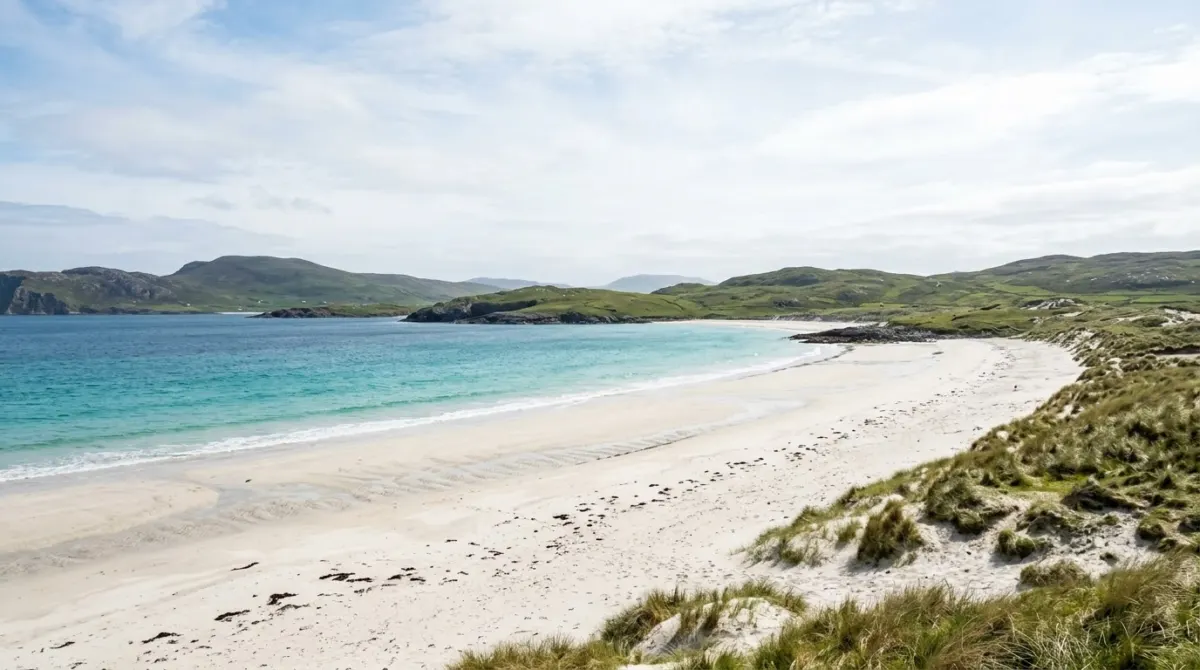
The islands: Edinburgh, Oban, Mull and Iona, then the Outer Hebrides from Skye, which trades the mainland for ferries and beaches.
The slow version: four bases with three or four nights each, walking from them rather than driving between them, which is how people who have been before tend to return.
How many days per region
A simpler way to plan than counting the trip as a whole.
Edinburgh: two or three nights, four or five in August.
Glasgow: one or two.
The west Highlands around Glencoe and Fort William: two.
Skye: two at minimum, three to do it properly.
Inverness and Loch Ness: one or two.
The north-west and the NC500: five.
The Outer Hebrides: three or four. Orkney: two or three.
Add the nights for the regions you want, add a travel day at each end, and the length of your trip answers itself.
Scotland alongside the rest of Britain
A good share of Scottish trips are part of a longer British one, and that changes the arithmetic.
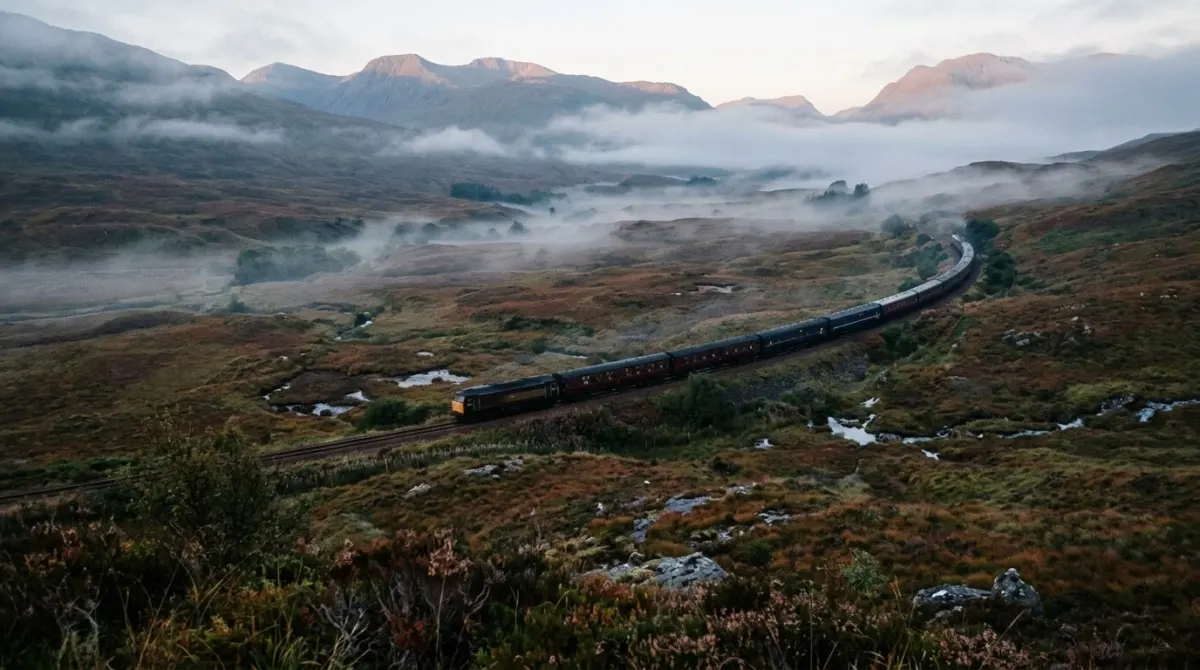
London to Edinburgh is about four and a half hours by train, city centre to city centre, which is competitive with flying once airports are counted. The Caledonian Sleeper runs overnight from London to Edinburgh, Glasgow, Fort William and Inverness, and it buys you a day.
If Scotland is four or five days of a two-week British trip, treat it as the cities plus one Highland region and leave Skye and the north for a trip of their own.
If the wider trip includes Ireland, the ferries from Cairnryan in the south-west cross to Northern Ireland, and our Ireland and Scotland itinerary sets out how to split the time between the two.
The short version
Three days: the cities. Five: Edinburgh plus one Highland region. Seven: three bases, Skye or Loch Ness but not both. Ten: four bases including Skye. Fourteen: add the far north or an island group. Add a day for August in Edinburgh, and a day per region in winter.
Working with fewer days? Follow our 5-day Scotland itinerary or the 6-day Scotland itinerary.
Frequently asked questions
How many days do you need in Scotland?
Seven for the cities and the west Highlands, ten if you want Skye, fourteen for the far north or the islands. Below five days, stay in the central belt — the Highland roads will take more of the trip than the Highlands give back.
Is 5 days enough for Scotland?
For two bases: three nights in Edinburgh and two in Glencoe or Fort William. That covers the capital and one genuine Highland region. Skye does not fit, because it is another three hours beyond and needs two nights of its own.
Is one week enough for Scotland?
Yes, for Edinburgh, the west Highlands and Inverness on three bases. It is the standard week and it works. Adding Skye to the same seven days turns it into a driving holiday.
How long does it take to drive across Scotland?
Edinburgh to Inverness is about three hours on the fast road, but Edinburgh to Skye is closer to six because the last stretch is slow. Off the central belt, allow roughly two-thirds of the speed your navigation app predicts.
Can you see Scotland without a car?
The cities, yes — trains link Edinburgh, Glasgow, Stirling and St Andrews, and run to Fort William and Inverness. Skye, the glens and the north-west need a car or an organised tour, and multi-day small-group tours exist for exactly that.
Do you need more days in Scotland in winter?
Yes, roughly one per Highland region. Daylight runs to about seven hours in the north in midwinter, which removes a long drive and a sight from the same day, and some Highland attractions close.
Keep planning Scotland
- Where to Stay in Glencoe: Inside the Glen, or Twenty Minutes Away
- Where to Stay on Skye: Portree, or Closer to What You Came For
- Where to Stay in Glasgow: Centre for Convenience, West End for Everything Else
- Where to Stay in Inverness: A Base, Not a Destination
- Where to Stay in Edinburgh: Two Cities, Five Minutes Apart
- How Many Days in Edinburgh? Three, and the Hills Count
- 6 Day Scotland Itinerary: Three Bases, or Two Done Properly
- 5 Day Scotland Itinerary: Two Bases, and What Will Not Fit
Written and checked by
Triplarks Editorial
An editorial desk, not an invented persona: research, drafting and fact-checking are done by the same small team. Every number here carries the date it was read.