Things to do
Things to Do in Florence: The Best of the City, by Area
By Nora Castell Checked
Hotel links open Stay22 (Booking.com and Agoda) and tour links open GetYourGuide. We may earn a commission at no extra cost to you.
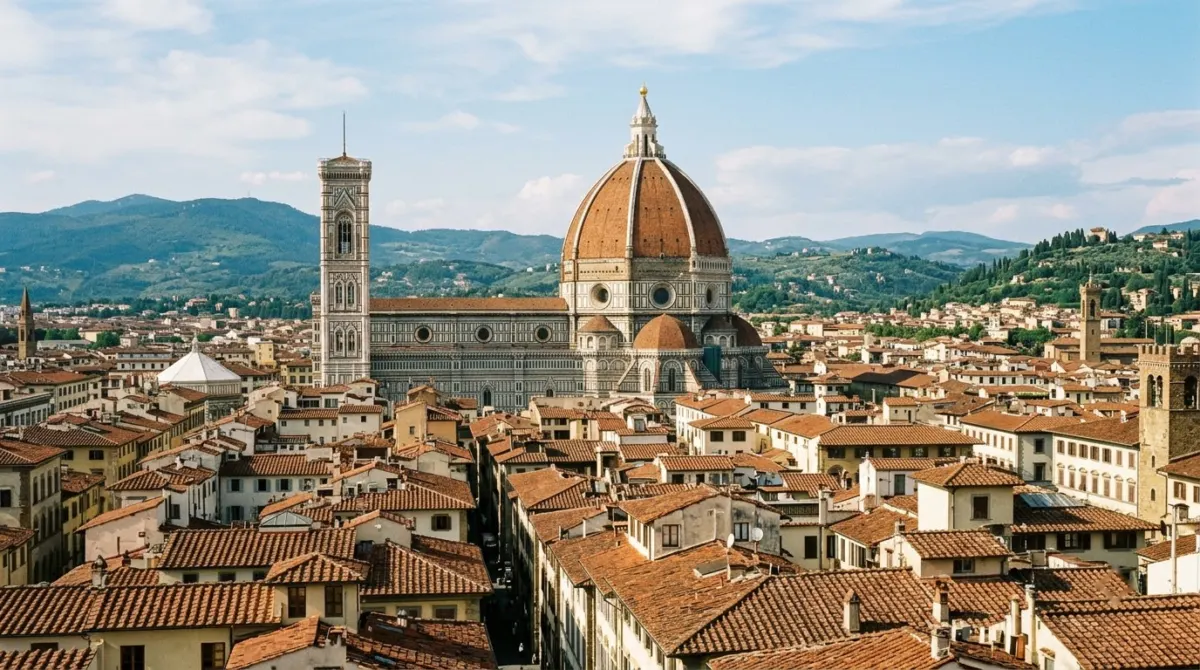
Our top choice
Short visit? Stay in Centro storico.
Between the Duomo and the Arno, the best choice for a short visit.
Quick answer where to stay
Everything is within twenty-five minutes’ walk, so choose by atmosphere: the centro storico between the Duomo and the Arno for a short visit, Santa Croce for food, Santo Spirito in the Oltrarno for the local side.
On this page
- Top things to do in Florence: the short answer
- The Duomo: Santa Maria del Fiore, the dome and the bell tower
- Piazza della Signoria and the Palazzo Vecchio
- The Uffizi Gallery and Renaissance art
- The Accademia and Michelangelo’s David
- San Marco, Santissima Annunziata and the Innocenti
- Santa Croce, San Lorenzo and the churches
- Oltrarno: the Pitti Palace, the Boboli Garden and the workshops
- Ponte Vecchio and the river
- Views of Florence: Piazzale Michelangelo and San Miniato
- Fiesole: the hill town above the city
- Mercato Centrale and what to eat in Florence
- Day trips from Florence into Tuscany
- Planning a trip to Florence: when to visit Florence and what to book
- Florence’s festivals: Easter, St John’s Day and the lantern night
- The Bargello, the Palazzo Medici Riccardi and the quieter museums
- Free things to do in Florence
- A rainy day in Florence
- Gelato, wine windows and coffee in Florence
- Leather, paper and shopping in Florence
- Guided tours, tickets and how to book
- Tourist traps to avoid in Florence
- Getting around Florence
- How many days in Florence: one, two, three or four
- Visiting Florence with children
- Where to stay in Florence
- The short version
- Frequently asked questions
2 areas: where to sleep
Short visit
Centro storico
Between the Duomo and the Arno, the best choice for a short visit.
- €€€
- Hotel Duomo FirenzePiazza Duomo, Centro storico
- €€
- Granduomo Charming AccomodationPiazza Del Duomo, Centro storico
Food
Santa Croce
The food side of the centre, still within a short walk of everything.
- €€
- Bob W Florence Santa CroceLungarno della Zecca Vecchia, Santa Croce
- €
- Hotel BodoniVia Martiri Del Popolo, Santa Croce
Hotels shortlisted by location and recent guest reviews on Booking.com; we have not stayed in them. Affiliate links.
Timed entry · via GetYourGuide
Book these before you go
- Uffizi Gallery timed entryThe most oversubscribed museum in Italy outside the Vatican; book a timed slot weeks ahead, as the standby queue can run for hours in summer.See times ↗
- Accademia Gallery and Michelangelo's DavidTwenty minutes to an hour is enough inside, but the queue without a reservation is the worst in Florence.See times ↗
- Brunelleschi's Dome climb and Duomo passThe 463-step climb must be booked with a timed slot and sells out; book it at the same time as the Uffizi and the Accademia.See times ↗
- Uffizi and Vasari Corridor reserved entryThe Vasari Corridor is open again, but only as a reserved, named add-on to an Uffizi ticket.See times ↗
- Siena, San Gimignano and Chianti day tripSan Gimignano pairs with Siena on one long day, and Chianti needs a car or a tour.See times ↗
Florence is small. The historic centre is barely a kilometre across, you can walk between every major sight in fifteen minutes, and that compactness is exactly why it overwhelms people — the Renaissance is stacked three deep in every street.
Some links below are affiliate links. We may earn a commission if you book through them, at no extra cost to you. Where we name hotels, we shortlist them by location and recent guest reviews, and we have not stayed in them. Any prices on the map come live from the booking sites.
This travel guide groups what to see in Florence by area, with the museums, the viewpoints and the day trips from Florence set out separately. The best things to do in Florence are listed by district below, and the top attractions in Florence are all within a twenty-five minute walk of one another — which means the order you see them in matters more than the distance between them.
Top things to do in Florence: the short answer
The Duomo complex — climb either the dome or the bell tower, not both.
The Uffizi Gallery for Renaissance art, booked ahead.
The Accademia for Michelangelo’s David, which takes twenty minutes and is worth them.
Piazzale Michelangelo at sunset for the view of Florence everyone knows.
The Oltrarno, across the river, where the city still works.
The Duomo: Santa Maria del Fiore, the dome and the bell tower
The cathedral of Santa Maria del Fiore dominates the city in a way photographs do not convey — it is simply too large for the square it stands in, and you meet it suddenly at the end of a narrow street.
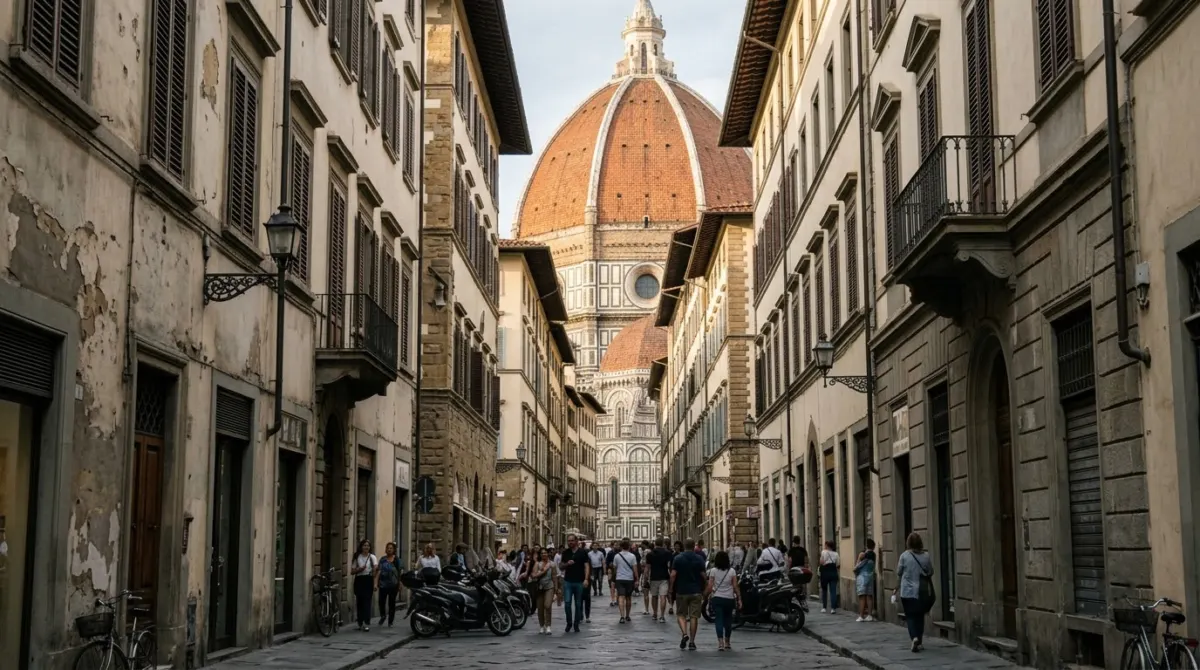
The cathedral itself is free to enter and surprisingly bare inside, because its treasures were moved to the museum. The queue moves steadily.
Brunelleschi’s dome is the thing. Designed by Filippo Brunelleschi and raised without centring in the 1420s using a double shell and a herringbone brick pattern, it was the largest masonry dome in the world and still is. Climbing it means 463 steps, including a stretch between the two shells where the staircase leans with the curve, and it must be booked with a timed slot.
Giotto’s bell tower is the other tower in Florence worth climbing: 414 steps, open-air at the top, and gives you the view of the dome, which the dome climb cannot. If you only do one, most people prefer the tower for the photograph and the dome for the engineering.
The Baptistery opposite has the gilded bronze doors Michelangelo called the Gates of Paradise — the originals are in the Duomo Museum and these are casts — and a ceiling of thirteenth-century gold mosaic.
The Duomo Museum holds the original doors, Donatello’s Mary Magdalene and Michelangelo’s late unfinished Pietà, and is the quietest of the five sites on one combined ticket.
Piazza della Signoria and the Palazzo Vecchio
The civic heart of Florence, five minutes south of the cathedral.
The Palazzo Vecchio is the fortified town hall with the tower, and it is still the town hall. Inside, the Salone dei Cinquecento is a vast council chamber painted by Vasari, and the secret passages tour takes you through the hidden staircases the Medici used.
The Loggia dei Lanzi on the square is an open-air sculpture gallery, free and always open, holding Cellini’s Perseus and Giambologna’s Rape of the Sabine Women.
The David in the square is a copy. The original was moved indoors to the Accademia in 1873, and the marble copy here has stood in its place since 1910.
The Uffizi Gallery and Renaissance art
The Uffizi holds the greatest collection of Renaissance art in the world, in a building the Medici built as offices — uffizi means offices.
What not to miss: Botticelli’s Birth of Venus and Primavera in the same room; Leonardo’s Annunciation; Michelangelo’s Doni Tondo; Caravaggio’s Medusa; and the corridor views down to the Arno that people walk past while looking at paintings.
Book a timed entry well ahead. The Uffizi is the single most oversubscribed museum in Italy outside the Vatican, and the standby queue can run for hours in summer.
Allow two to three hours. It is arranged chronologically, which means walking from the thirteenth century to the eighteenth in a single long U, and most people flag before the end. Start at the far end and work backwards if the Renaissance is what you came for.
The Vasari Corridor, the elevated private passage running from the Uffizi over the Ponte Vecchio to the Pitti Palace, is open again, but only as a reserved, named add-on to an Uffizi ticket.
The Accademia and Michelangelo’s David
The Galleria dell’Accademia exists for one statue, and it earns it.
David stands at the end of a purpose-built tribune under a skylight, seventeen feet of marble carved when Michelangelo was twenty-six. The thing nobody tells you is the hands — deliberately too large, because it was designed to stand on the cathedral roofline.
The Prisoners line the approach: four unfinished figures apparently struggling out of the raw block, and for many visitors more affecting than the David itself.
Twenty minutes to an hour is enough. The rest of the collection is modest. Book ahead; the queue without a reservation is the worst in Florence.
San Marco, Santissima Annunziata and the Innocenti
The Accademia sits in the north-east corner of the centre, and most visitors see the David and turn straight back towards the Duomo. That is a mistake. The three sights around it make up the quietest Renaissance district in Florence, all within five minutes’ walk of the Accademia door, and none of them has a queue worth the name.
The Museo di San Marco is the Dominican convent that Michelozzo rebuilt for Cosimo de’ Medici between 1436 and 1446, and it is the place in the world to see Fra Angelico. Climb the stairs to the dormitory and his Annunciation is waiting at the top, facing you as you arrive. Along the corridors beyond it, forty-four friars’ cells each hold a fresco of the life and Passion of Christ, painted for the one man who slept there to contemplate alone. Walking from cell to cell is one of the most quietly affecting hours in Italy.
The same floor holds Michelozzo’s library, opened in 1444 with the books Cosimo bought from the humanist Niccolò Niccoli and often described as the first public library of the Renaissance. At the end of the novices’ corridor are the rooms where Girolamo Savonarola lived, before he was hanged and burned in Piazza della Signoria in 1498. Downstairs, Ghirlandaio painted a Last Supper in the small refectory.
Piazza della Santissima Annunziata, a short walk east, is the most harmonious square in the city. Its eastern side is Brunelleschi’s loggia for the Ospedale degli Innocenti, the foundling hospital begun in 1419 and generally counted as the first building of the Renaissance, with blue-and-white della Robbia roundels of swaddled infants along its front. Most of those on the facade are nineteenth-century copies; the originals are inside the Museo degli Innocenti, which tells the story of the children the hospital took in over six centuries and is one of the most humane museums in Florence.
How to fit them in: book the Accademia for the first slot of the morning, walk to San Marco straight afterwards, and finish in the square with a coffee under the loggia. Check opening days before you go, because San Marco keeps shorter and more irregular hours than the Uffizi.
Santa Croce, San Lorenzo and the churches
Florence’s churches hold more art than most national galleries.
Santa Croce is the Franciscan basilica and the burial place of Michelangelo, Galileo and Machiavelli, with Giotto frescoes in the chapels and Brunelleschi’s Pazzi Chapel in the cloister. It is the single richest church in the city.
The Basilica di San Lorenzo was the Medici parish church, with a facade Michelangelo designed and nobody ever built — it is still raw brick. Behind it, the Medici Chapels hold the family tombs with Michelangelo’s Night and Day, and the Laurentian Library has his extraordinary vestibule staircase.
Santa Maria Novella, by the train station, has a green-and-white marble front by Alberti and Masaccio’s Trinity, the painting that introduced linear perspective to Western art.
The Brancacci Chapel across the river holds Masaccio’s frescoes, which every Renaissance painter afterwards came to study.
Oltrarno: the Pitti Palace, the Boboli Garden and the workshops
South of the river is where Florence still feels like a working city rather than a museum.
The Pitti Palace is the Medici’s later residence, enormous and austere from the front, holding the Palatine Gallery with its Raphaels hung floor to ceiling in the old manner.
The Boboli Garden behind it is a sixteenth-century Italian garden of terraces, grottoes and avenues of cypress, and the best place in central Florence to sit down. The Bardini Garden next door is smaller, quieter and has the better view.
Santo Spirito is Brunelleschi’s last church, plain outside and perfectly proportioned inside, on a square that holds a morning market and fills with people in the evening.
The artisan workshops along Via Maggio and the lanes behind it still do leather, gilding, marbled paper and restoration. Most will let you look in.
Ponte Vecchio and the river
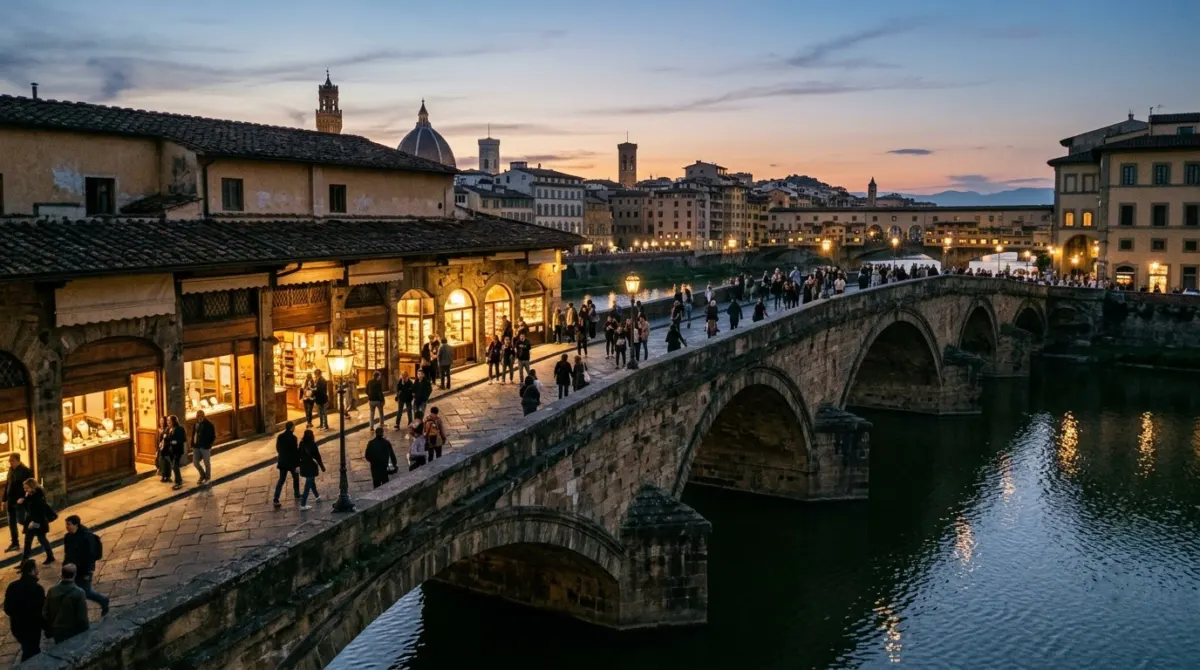
The Ponte Vecchio is the only bridge in Florence the retreating German army did not destroy in 1944, and it has carried shops since the thirteenth century — butchers originally, goldsmiths since the Medici decided butchers smelled.
It is crowded in the middle of the day and it is still worth crossing. The better photograph of the Ponte Vecchio in Florence is from the next bridge along, Ponte Santa Trinita, especially at dusk.
The Arno walk along the Lungarni on either bank is flat, free and almost empty in the early morning.
Views of Florence: Piazzale Michelangelo and San Miniato
Piazzale Michelangelo is the terrace above the south bank with the view of Florence that appears on every cover — the dome, the tower, the river and the hills behind. It is free, it is twenty minutes uphill from the Ponte Vecchio, and bus 12 does the climb if you would rather not.
San Miniato al Monte is five minutes higher, and it is the better stop. An eleventh-century Romanesque church with a geometric marble front and an inlaid zodiac floor, with Gregorian chant sung by the monks most late afternoons. The view from its terrace is the same one without the crowd.
Fiesole, a hill town twenty minutes by bus, gives you the whole valley and a Roman theatre.
Fiesole: the hill town above the city
Fiesole was an Etruscan hill town long before the Romans laid out Florence on the plain below, and it is still the easiest half-day escape from the crowds in the centre. It is cooler in summer, greener all year, and it looks down on Florence rather than up at it.
Getting there. Bus 7 runs from Piazza San Marco to the main square in Fiesole in about twenty-five minutes. San Marco is one end of the line and Fiesole the other, so there is no wrong direction to board. The walk up takes about an hour and climbs the whole way; it makes far more sense as the walk back down, through olive groves and villa walls, at the end of the afternoon.
The archaeological area, a few minutes from the square, holds a Roman theatre with its stone tiers still in place, the remains of the baths below it and a stretch of Etruscan wall, with a small museum of finds from the excavations. In summer the theatre is used again: the Estate Fiesolana festival has staged music, theatre, dance and film there every summer since the early 1960s, and an evening performance with the hills behind the stage is one of the best things to do near Florence in July.
The climb to San Francesco, a steep lane from the square up to the friary on the crest of the hill, is the reason most people come. The terraces on the way up look out over the whole valley of the Arno, with the dome sitting in the middle of the view.
How long: half a day, ideally the afternoon, with the bus back down at dusk. The cathedral on the main square, with the shrine of St Romulus, takes ten minutes, and the cafés around the square are a calmer place for lunch than anywhere near the Duomo.
Mercato Centrale and what to eat in Florence
The Mercato Centrale near San Lorenzo is a nineteenth-century iron market hall: produce and butchers downstairs, a food hall upstairs. The ground floor is the real one.
The Mercato di Sant’Ambrogio, east of the centre, is smaller and is where people shop.
What Florence is known for: bistecca alla fiorentina, a thick T-bone grilled rare and sold by weight; lampredotto, the tripe sandwich sold from street carts; ribollita, a bread and bean soup; and schiacciata, the flatbread the sandwich shops build on.
Where not to eat: the restaurants on Piazza della Signoria and around the Duomo, and anywhere with a photographed menu. Central Florence is small enough that walking five minutes solves this entirely.
Day trips from Florence into Tuscany
Florence is the obvious base for Tuscany, and the train does most of the work. Every day trip from Florence below is a return journey of under two hours, and two of them are among the most visited cities in Italy in their own right.
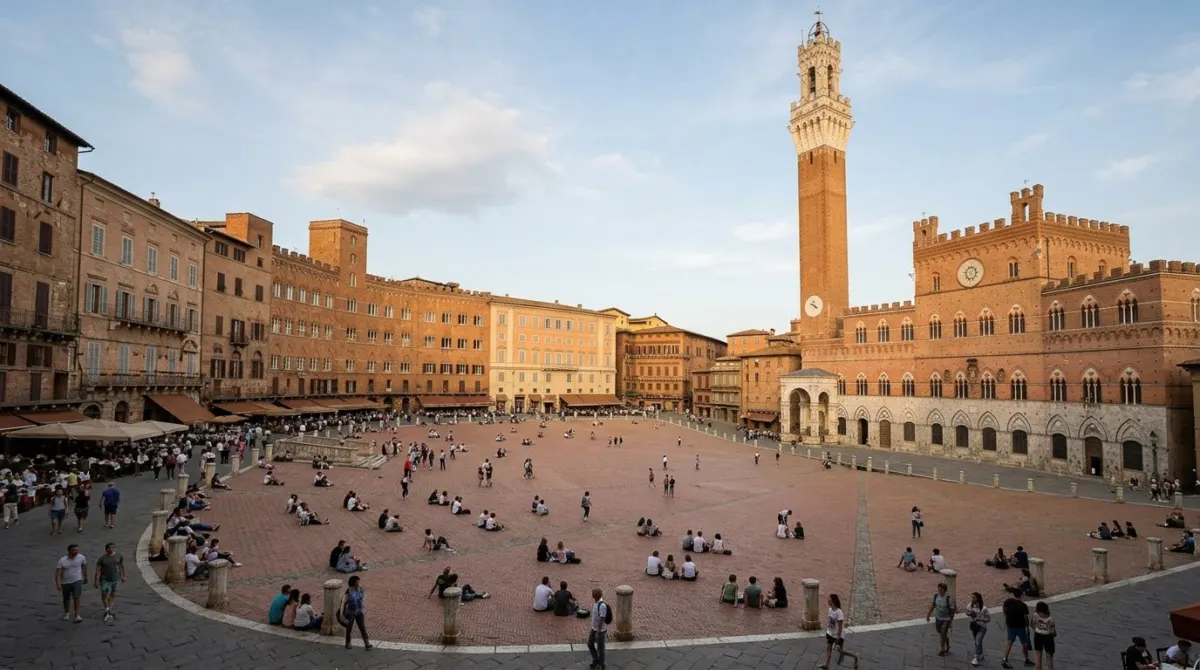
Siena is ninety minutes by bus: a complete medieval city built around a shell-shaped square, with a striped cathedral that rivals Florence’s.
Pisa is an hour by train from Florence train station, and the tower takes an hour of that.
San Gimignano, the town of medieval tower houses, pairs with Siena on one long day.
Lucca is ninety minutes, walled and flat, and the best of the four for walking or cycling.
Chianti needs a car or a tour, and is the one that justifies hiring one.
Planning a trip to Florence: when to visit Florence and what to book
Book three things before you fly: the Uffizi, the Accademia, and the dome climb. Everything else can be decided on the day.
Most museums close on Mondays, and the state museums are free on the first Sunday of the month, which is also when they are impossible.
The centre is a limited traffic zone. Driving into it earns an automatic fine that arrives months later. Florence airport is twenty minutes out by tram; the train station, Santa Maria Novella, is a ten-minute walk from the cathedral.
The best time to visit is April to early June and September to October. July and August are hot and full.
Florence’s festivals: Easter, St John’s Day and the lantern night
Three dates in the Florentine calendar change what the city is like for a day, and each is worth either planning a trip around or knowing about in advance.
Scoppio del Carro, Easter Sunday. A towering decorated cart, the Brindellone, is drawn by oxen through the streets to the space between the Duomo and the Baptistery. During the Easter Mass a mechanical dove is sent along a wire from the altar, out through the cathedral door, to set off the fireworks packed on the cart. A clean flight is taken as a good omen for the year. The square fills by mid-morning, so arrive early or watch the procession on its way in.
Calcio storico and San Giovanni, June. The four historic quarters of the city play a brutal, costumed form of football in a sand arena laid out in Piazza Santa Croce, and the tournament final falls on 24 June, the feast of St John the Baptist, the patron saint of Florence. Every match is preceded by a parade in Renaissance dress through the streets, which is the part anyone can see. The day ends with the fochi, the fireworks display over the city.
The Rificolona, 7 September. On the evening before the feast of the Nativity of Mary, children carry coloured paper lanterns through the streets and the processions gather in Piazza Santissima Annunziata. It is small, local and one of the nicest evenings of the Florentine year.
Other dates: the Cavalcata dei Magi, a costumed procession of the Three Kings on 6 January, and the first Sunday of every month, when the state museums are free and the queues are at their worst.
Hotels around Santa Croce fill early for the June matches and Easter week is busy across the whole centre, so book those dates further ahead than you otherwise would.
The Bargello, the Palazzo Medici Riccardi and the quieter museums
Three major collections in Florence have no queue at all, because the Uffizi and the Accademia absorb everyone.
The Bargello is the sculpture museum, in a thirteenth-century barracks and prison, and it is the one serious art lover’s answer to the Accademia. Donatello’s bronze David is here, the first free-standing nude cast since antiquity and a far stranger object than Michelangelo’s; so are the two competition panels by Brunelleschi and Ghiberti that effectively started the Renaissance in 1401. You can walk in.
The Palazzo Medici Riccardi was the Medici family’s first palace and set the template every Florentine palazzo copied afterwards. Inside, the Magi Chapel holds Gozzoli’s frescoes of the Medici themselves painted into a procession of the three kings, in a room small enough that visits are timed and uncrowded.
The Museo Galileo on the riverfront holds the Medici scientific instruments, Galileo’s own telescopes and, in a reliquary, his finger. It is the best museum in Florence for anyone tired of saints.
The Museo Novecento covers twentieth-century Italian art, which Florence otherwise entirely ignores.
Free things to do in Florence
Florence has a reputation for being expensive, and a good day here can cost nothing at all.
The cathedral nave is free, as is the whole of Piazza del Duomo, where the outside of the buildings is the better half.
The Loggia dei Lanzi is an open-air sculpture gallery on the main square, never closed and never ticketed.
San Miniato al Monte and Piazzale Michelangelo cost nothing, including the Gregorian chant in the late afternoon.
Santo Spirito, the nave of San Lorenzo, Santa Trinita and Orsanmichele are all free to enter, and Orsanmichele’s exterior niches hold statues by Donatello, Ghiberti and Verrocchio at street level.
The Rose Garden below Piazzale Michelangelo is free and has its own view, with sculpture scattered through the terraces.
State museums are free on the first Sunday of the month, which includes the Uffizi and the Accademia. They are also unbearable that day, and you cannot reserve a slot, so this is a saving that costs hours.
A rainy day in Florence
Florence is a city of indoor art, so a wet day costs you less here than almost anywhere else in Italy. It does change the order you do things in.
Swap the outdoor items for the covered ones. Piazzale Michelangelo, the Boboli Garden and both climbs lose most of their point in rain, because the climbs end on open terraces and the view is the reward. The Uffizi, the Bargello, the Palazzo Vecchio, the Medici Chapels and the churches are unaffected, and Santa Croce alone can fill a wet morning.
Use the long museums. A rainy morning is the right time for the Uffizi at full length rather than the edited version, or for the Pitti Palace, which is large enough to fill most of a day on its own. The Museo Galileo and San Marco are good shorter options for the afternoon.
Eat under cover. The upper floor of the Mercato Centrale is a food hall with seating, which makes it the obvious wet-weather lunch, and the bars of the Oltrarno are a far better use of a grey afternoon than a queue outside a museum you have not booked.
Watch your footing. The stone paving turns slippery in rain, the pavements are narrow enough that umbrellas collide, and umbrella sellers appear on every corner within minutes. Pack a proper raincoat for late autumn, the wettest part of the year, and shoes with some grip.
Gelato, wine windows and coffee in Florence
Gelato was arguably invented here, and the good places share three signs: it is kept in covered metal tins rather than piled high in colourful mounds, the flavour list is short and seasonal, and there is no photograph of a cone outside. Fluorescent blue is not a flavour.
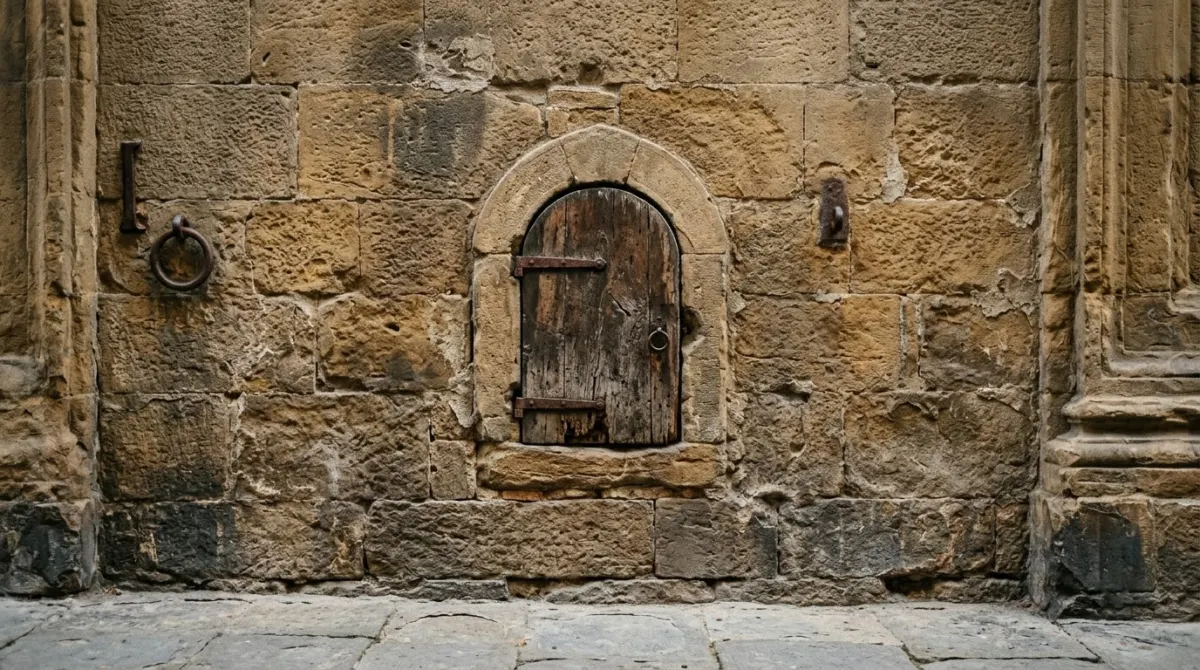
The wine windows, buchette del vino, are the Florentine curiosity worth hunting. Small arched hatches at waist height in palazzo walls, cut in the sixteenth century so noble families could sell wine from their estates directly to the street without a shopfront. Several have reopened recently and serve through the hatch again.
Coffee is drunk standing at the bar, where it costs a fraction of the seated price. A cappuccino is a morning drink; ordering one after lunch marks you out instantly and nobody will mind.
Aperitivo runs from about seven, and in Florence it often comes with enough food on the counter to replace dinner.
Leather, paper and shopping in Florence
Florence has been a luxury manufacturing city since the wool guilds, and two crafts survive in a form worth buying.
Leather is the famous one, and the famous one is also where the counterfeits are. The San Lorenzo street market sells mostly imported goods at tourist prices; the Scuola del Cuoio behind Santa Croce is a working leather school in a convent cloister where you can watch the craft and buy from it.
Marbled paper and hand-bound books are the other, concentrated in the Oltrarno workshops around Via Maggio and Santo Spirito.
The Officina Profumo-Farmaceutica di Santa Maria Novella has been making soaps and colognes in a Dominican pharmacy since 1612, in rooms that are worth entering whether or not you buy anything.
Via de’ Tornabuoni is the designer street, with Ferragamo’s museum in the basement of its own palazzo.
Guided tours, tickets and how to book
Three bookings matter, and all three sell out: the Uffizi, the Accademia, and the dome climb. Book them direct from the official sites weeks ahead, pick your days around the slots you get, and treat everything else as flexible.
The combined Duomo ticket covers five sites — dome, bell tower, baptistery, crypt and museum — on one pass valid for several days, and the dome slot is chosen when you buy.
A walking tour is the one booking to make on the first morning, and of the paid experiences in Florence it is the one that changes the rest of the trip, because the city is small and dense and a guide turns a confusing tangle of palazzi into a sequence you can navigate afterwards.
Skip-the-line resellers charge a markup over the official reservation fee for the same timed ticket. That is sometimes worth paying for convenience, and never worth paying twice, so check whether a tour already includes entry.
The Firenze Card covers most museums for seventy-two hours at a high flat price. It pays only for a very intensive three days and does not remove the need to reserve the Uffizi.
Tourist traps to avoid in Florence
Florence’s traps are unusually easy to avoid, because the city is small enough that five minutes of walking fixes nearly all of them.
Restaurants on Piazza della Signoria and around the Duomo charge a view premium for reheated food. Anywhere with a photographed menu, a tout at the door, or a laminated card in six languages is the same answer.
The leather stalls at San Lorenzo sell imported goods as Florentine, and the “genuine leather” label means nothing.
The same-day ticket queue outside the Uffizi and the Accademia can consume a morning and is entirely avoidable with a reservation, which is the most commonly wasted hours in the city.
The David in the square is a copy, and people photograph it believing otherwise.
Rubbing the boar’s nose at the Mercato Nuovo is harmless, and the market around it sells nothing of interest.
Driving into the centre is the expensive one. The limited traffic zone is camera-enforced and the fine reaches your home address months later, with an administrative fee from the rental company on top.
Getting around Florence
Walk. The historic centre is about one kilometre across and almost entirely flat, every major sight is within twenty-five minutes of every other, and the streets are too narrow for anything else to be faster.
From the airport, the T2 tram runs to Santa Maria Novella station in about twenty minutes. From Pisa airport, a train and a connecting shuttle take roughly ninety minutes.
Santa Maria Novella station is a ten-minute walk from the cathedral and is where the fast trains to Rome, Milan, Venice and Bologna leave. Booking those ahead is much cheaper than buying on the day.
Buses matter for exactly two trips: bus 12 up to Piazzale Michelangelo, and bus 7 to Fiesole.
Do not hire a car for Florence itself. Hire one at the edge of the city on the morning you leave for Chianti, and return it before you come back in.
How many days in Florence: one, two, three or four
One day. The Duomo complex and one climb in the morning, the Uffizi in the afternoon with a booked slot, and Piazzale Michelangelo at sunset. Tight but complete.
Two days. A weekend in Florence is the most common trip and it works. Add the Accademia, Santa Croce and the Bargello, and cross to the Oltrarno for dinner.
Three days. Add the Pitti Palace and the Boboli Garden, San Lorenzo and the Medici Chapels, and an unplanned afternoon, which in a city this dense is the thing people most often say they wish they had kept.
Four days. Keep the fourth for Siena, Lucca or Chianti. A day trip out into Tuscany is usually rated higher than a fourth day of museums.
Visiting Florence with children
Florence is a hard city for small children and a good one for older ones.
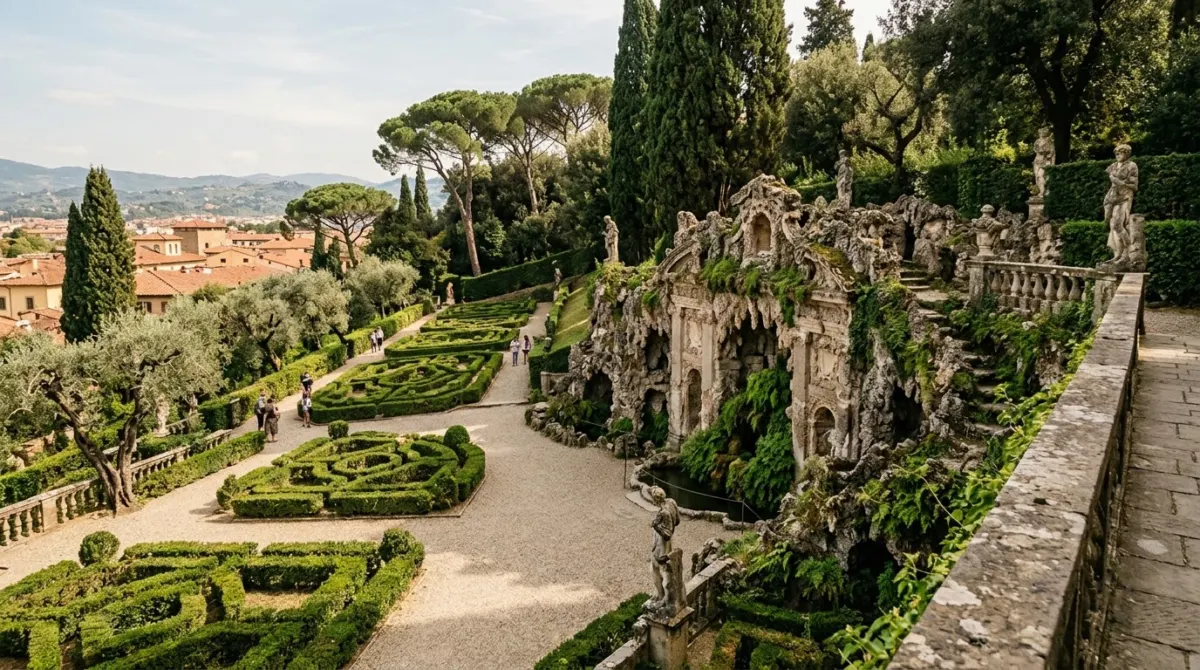
What works: the Boboli Garden, which has space to run and grottoes to find; the Palazzo Vecchio’s secret passages tour, which is a castle with hidden staircases; the dome climb for anyone tall enough to manage 463 steps; and the Museo Galileo, which is full of instruments rather than paintings.
What does not: the Uffizi at full length, and the midday crowds between the Duomo and the Ponte Vecchio.
Practicalities: pavements are narrow and often absent, which makes a pushchair awkward and a carrier easier; and almost every restaurant will serve a plain pasta without being asked twice.
Where to stay in Florence
Everything above is within twenty-five minutes’ walk, so the choice is about atmosphere rather than distance.
Our guides to where to stay in Florence and the best hotels in Florence compare the areas and the kinds of building, how many days you need in Florence sets out the lengths, and the 10 day Italy itinerary puts Florence into a longer trip alongside the rest of our Italy travel guides.
Map shows live availability and prices. We may earn a commission on bookings made through it, at no extra cost to you.
The short version
Book the Uffizi, the Accademia and the dome climb weeks ahead. Climb one of the two towers, not both. See Santa Croce for the art and San Miniato for the view and the chant. Cross to the Oltrarno for an afternoon and eat there. Keep one day for Siena or Lucca, and avoid every restaurant with a photograph of its food.
Frequently asked questions
What should you not miss in Florence?
The Duomo complex with one of its two climbs, the Uffizi Gallery, and Michelangelo’s David in the Accademia. After that, Santa Croce for the art and the sunset view from Piazzale Michelangelo or San Miniato al Monte.
Is 2 days enough for Florence?
Two days covers the Duomo, the Uffizi, the Accademia and one viewpoint, which is the core. A third day adds the Oltrarno, the Pitti Palace and the Boboli Garden, and a fourth is for a day trip to Siena or Lucca.
Should I climb the dome or the bell tower in Florence?
The dome for the engineering, Giotto’s bell tower for the photograph – the tower gives you the view of the dome, which the dome climb cannot. The dome is 463 steps and must be booked with a timed slot; the tower is 414 and open-air at the top.
What food is Florence famous for?
Bistecca alla fiorentina, a thick T-bone grilled rare and sold by weight; lampredotto, the tripe sandwich sold from street carts; ribollita, a bread and bean soup; and schiacciata flatbread. Avoid restaurants around the Duomo and Piazza della Signoria.
What are the best day trips from Florence?
Siena, ninety minutes by bus, for the medieval city and the shell-shaped square; Lucca, walled and flat and best on a bicycle; and Pisa, an hour by train. San Gimignano pairs with Siena on one long day, and Chianti needs a car.
Do you need to book the Uffizi in advance?
Yes. The Uffizi is the most oversubscribed museum in Italy outside the Vatican and the standby queue can run for hours in summer. Book the Accademia and the dome climb at the same time; everything else in Florence can be decided on the day.
Is the David in Piazza della Signoria the real one?
No. The statue in the square is a marble copy: the original was moved indoors in 1873, and the copy has stood in its place since 1910. Michelangelo’s David is in the Galleria dell’Accademia, a ten-minute walk north, with the unfinished Prisoners lining the approach to it.
Keep planning Italy
- Best Hotels in Taormina: The Town Is Up, the Sea Is Down
- Best Hotels on the Amalfi Coast: Pick the Town First
- Best Hotels in Positano: Count the Steps Before the Stars
- Best Hotels in Florence: The ZTL Matters More Than the Stars
- Where to Stay in Verona: Inside the River Loop, or Outside It
- Where to Stay in Tuscany: You Are Choosing a Driving Radius
- Where to Stay in Puglia: Pick the Building, Not the Town
- Where to Stay in Cinque Terre: Ask About the Stairs First
Written and checked by
Nora Castell is the pen name of the Triplarks editorial desk and the editor of its Costa Rica and Central America guides. Each guide is built from national park, transport and tourism sources, operator rate cards and recent traveller reports, then fact-checked, with every figure dated to the day it was read. Triplarks uses AI tools to help draft; nothing goes live until it has been edited and checked. Where we have not been somewhere, we do not write as though we have.