Villas
Villas in Italy: 17 Real Villas by Region
By Nora Castell Checked
Hotel links open Stay22 (Booking.com and Agoda) and tour links open GetYourGuide. We may earn a commission at no extra cost to you.
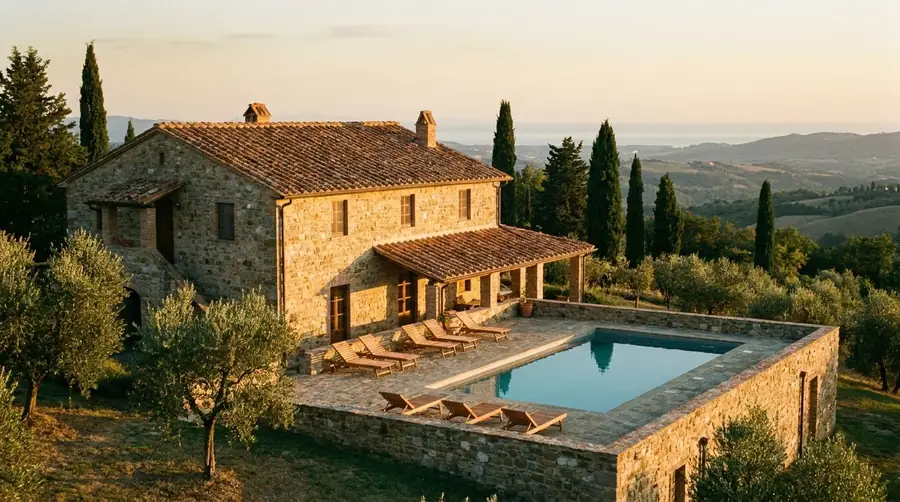
Quick picks not a ranking · only villas in this guide
Choose the region first. Puglia for trulli, Sicily for beaches, Amalfi for views, Como for lakes, Umbria for calm.
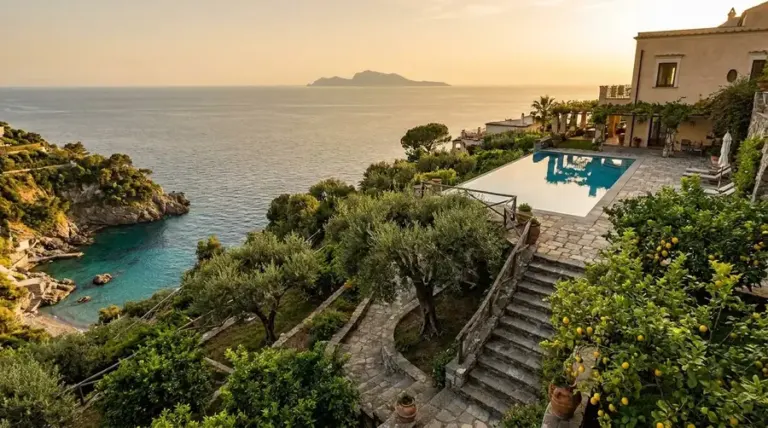
Illustration · see real photos on Booking.com Check availability on Booking.comBest for families
Villa Sorrentina With Panoramic Terrace
Room for 11, a games room and a pool, near Sorrento's ferries.
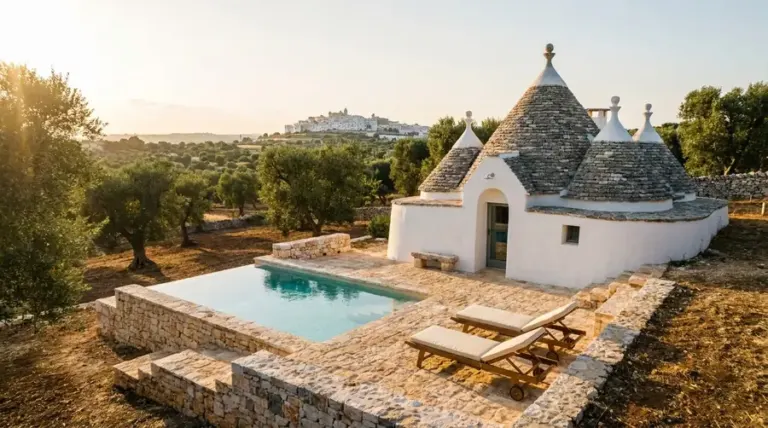
Illustration · see real photos on Booking.com Check availability on Booking.comBest for couples
Trullo di Angela – Ostuni with private pool
A two-bedroom trullo with its own infinity pool near Ostuni.
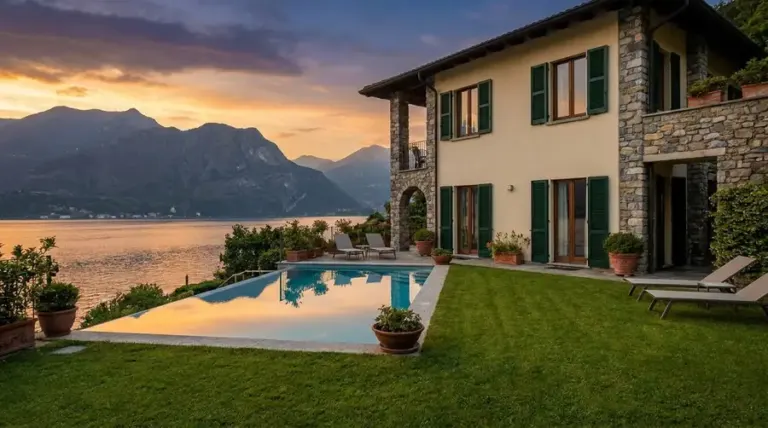
Illustration · see real photos on Booking.com Check availability on Booking.comBest lake view
Villa Lilla Bellagio
A private pool and a garden looking over the lake at Bellagio.
On this page
- Six villa regions
- Puglia: trulli and masserie in the Itria Valley
- See live prices for your dates
- Sicily: baroque towns in the south-east and the hills below Taormina
- Amalfi Coast & Sorrento: cliffs, lemon terraces and sea views
- Lake Como: lake views from Bellagio, Cadenabbia and the upper lake
- Umbria: green hills, hill towns and quieter farmhouses
- Tuscany: two villas here, fifteen in our full guide
- Villa or hotel in Italy?
- Which region suits your trip?
- Before you book a villa in Italy
- When to book a villa in Italy
- More on Italy
- Villas in Italy: FAQ
In Italy, the region decides the holiday more than the villa does. A trullo in Puglia, a stone farmhouse in Umbria and a house on the cliffs above the Amalfi Coast are all called villas, but they give you very different weeks: one is about the pool and the olive trees, one about hill towns and wine, one about the view and the boats. This guide sorts villas by region first, so you can choose the landscape and the pace before you choose a pool. For each region you will find what it suits, how you get around, and two or three real villas listed on Booking.com, with bedrooms, guest numbers and pool details as the listing gives them. Where a listing does not state something, we leave it blank rather than guess. We do not rank the villas and we do not quote prices, which change by the day; the map lets you see live prices for your dates. Tuscany gets only a short section here because it has its own guide with 15 villas.
Some links below are affiliate links. We may earn a commission if you book through them, at no extra cost to you. Where we name hotels, we shortlist them by location and recent guest reviews, and we have not stayed in them. Any prices on the map come live from the booking sites.
Step 1 · Pick the area
Six villa regions
- 1Puglia
Trulli, masserie and two seas · car needed · Bari or Brindisi airport
See 3 villas ↓Villas in Puglia → - 2Sicily
Baroque towns, beaches and Etna · car needed · Catania airport
See 3 villas ↓Villas in Sicily → - 3Amalfi Coast & Sorrento
Sea views and boat days · steep roads, ferries · Naples airport
See 3 villas ↓Villas near Sorrento → - 4Lake Como
Lake views and ferry days · ferries plus a car · Milan airports
See 3 villas ↓Villas on Lake Como → - 5Umbria
Hill towns and calm · car needed · Perugia or Rome airports
See 3 villas ↓Villas in Umbria → - 6Tuscany
Vineyards and hill towns · car needed · Florence or Pisa airport
See 2 villas ↓Villas in Tuscany →
Area 1 of 6
Puglia: trulli and masserie in the Itria Valley
Good for groups and slow summersCar neededBari or Brindisi airport
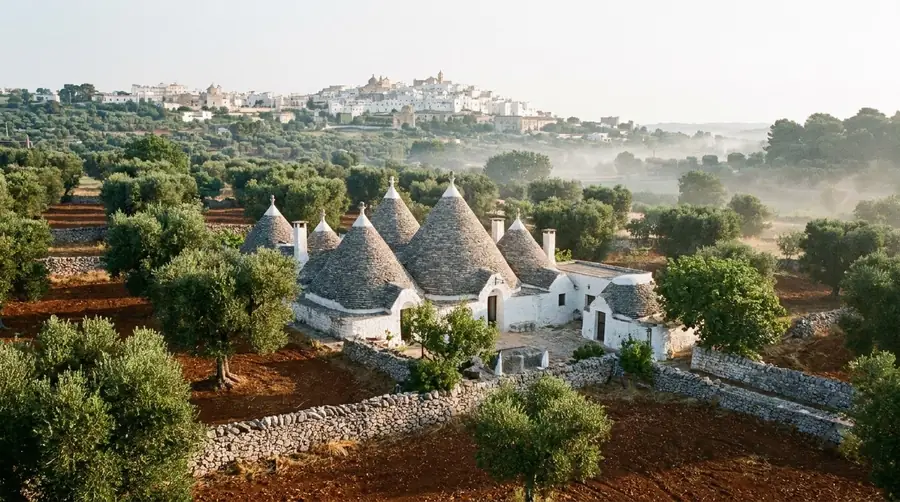
Puglia, the heel of Italy, is where villa holidays feel most different from anywhere else in the country. In the Itria Valley, between Alberobello, Locorotondo, Cisternino and Ostuni, the countryside is dotted with trulli: small round stone houses with conical grey roofs, often joined together into one home and given a pool among the olive trees. Further towards the coast, around Fasano and Ostuni, are the masserie, fortified farmhouses built around a courtyard, which now make some of the largest villas in the south. A trullo suits a couple or a small family; a masseria suits a big group that wants space, a long table and a pool to itself. From most of the valley you can reach the Adriatic beaches in about half an hour, and Polignano a Mare, Monopoli and the white town of Ostuni make easy evening trips. Summers are long and hot, so a pool matters more here than in the north. You will need a car: the villas are reached by country lanes between dry-stone walls, and buses do not serve them. For towns and hotels, see where to stay in Puglia, and for a route, the Puglia itinerary.
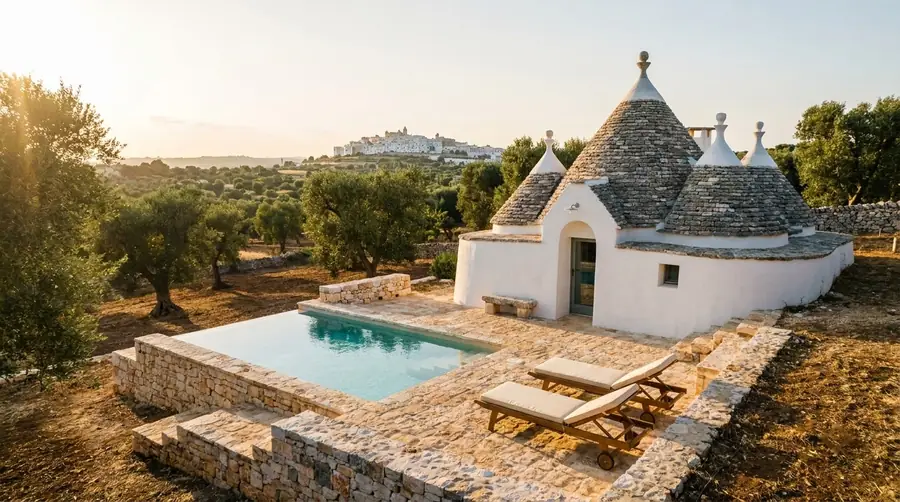
Trullo di Angela – Ostuni with private pool
Why it is here: A two-bedroom trullo near Ostuni with its own infinity pool, a fireplace for cooler nights and free parking: the right size for two, or a couple with a child.
Live prices on the map ↓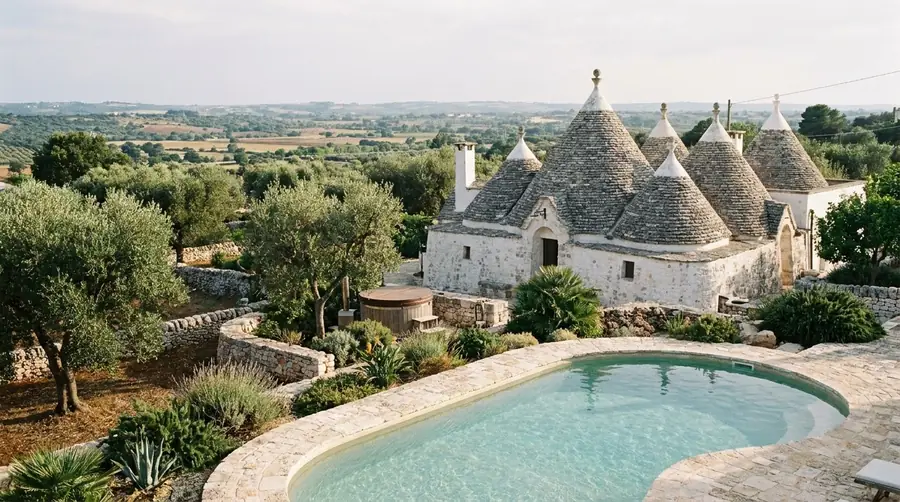
Trulli Santa Croce Luxury Holidays
Why it is here: A group of historic trulli in the Santa Croce countryside outside Locorotondo, with four bedrooms, a pool with a view, a hot tub and an outdoor fireplace.
Live prices on the map ↓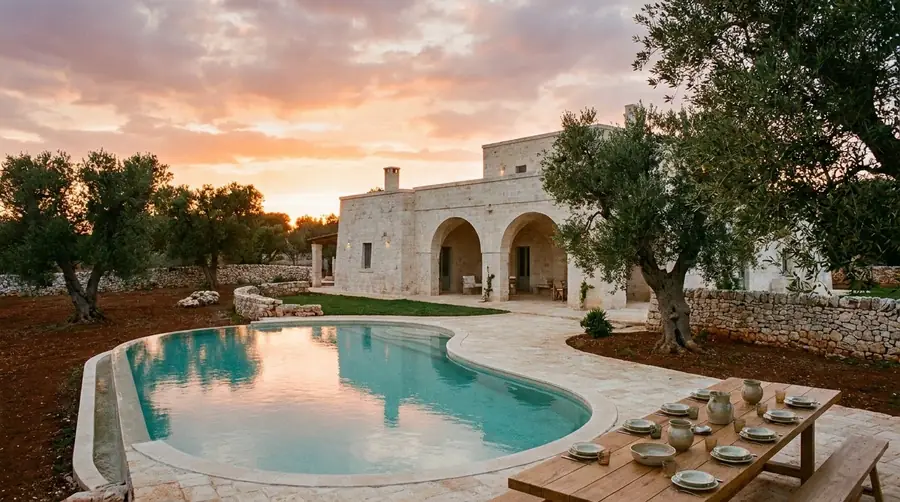
Masseria Tufo Bianco by Raro Villas
Why it is here: A five-bedroom masseria with six bathrooms in the countryside near Fasano, with a private pool, a fireplace and parking; the listing puts San Domenico Golf about 10 km away.
Live prices on the map ↓Live prices
See live prices for your dates
Prices appear on the pins once dates are set. We pre-fill a week about a month ahead; change the dates on the map to see yours.
Area 2 of 6
Sicily: baroque towns in the south-east and the hills below Taormina
Good for culture and beachesCar neededCatania airport
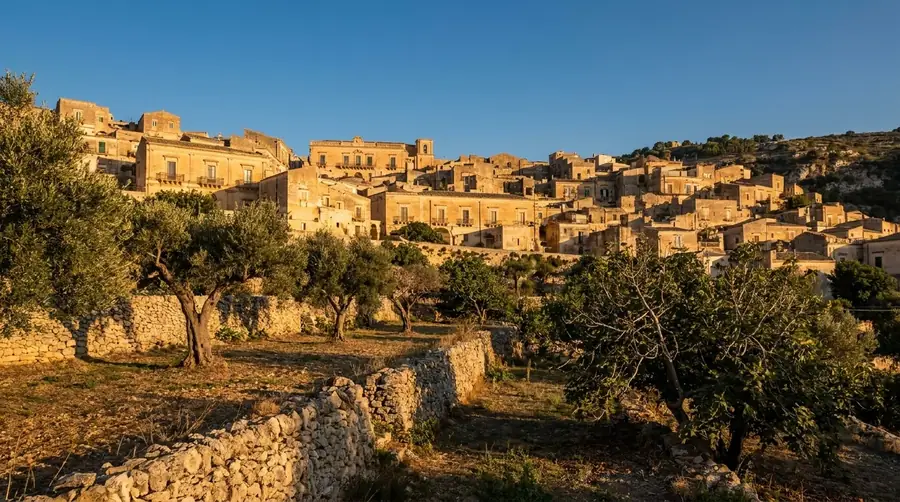
Sicily is big, so pick one corner rather than trying to see the whole island from one villa. The south-east is the best choice for a first villa stay: the baroque towns of Noto, Modica, Ragusa Ibla and Scicli were rebuilt in golden stone after the earthquake of 1693, and the countryside between them is full of old farmhouses and stone walls. Long sandy beaches run along the coast from Marina di Ragusa to Donnalucata and Sampieri, and the Vendicari nature reserve, south of Noto, has some of the island’s finest wild beaches. Catania airport is roughly an hour to an hour and a half away by car. The other classic choice is the hillside around Taormina on the east coast, with views over the Ionian Sea and Mount Etna behind. Villas there are smaller and steeper, and the town is busy in summer, but you can reach Etna, the beaches below at Mazzarò and Giardini Naxos, and the Alcantara gorge in a day. In both areas a car is essential. The Sicily itinerary shows how to combine them, and where to stay in Taormina covers the town itself. For more houses across the island read our Sicily villas guide, and things to do in Taormina fills the days.
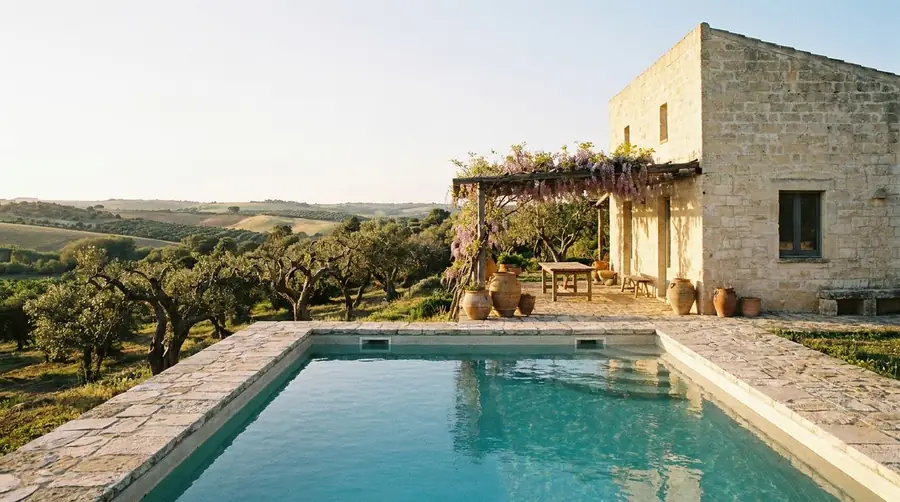
Villa Badessa
Why it is here: Three bedrooms and two bathrooms in the Noto countryside, with a pool with a view, a garden and a large terrace for long dinners outside.
Live prices on the map ↓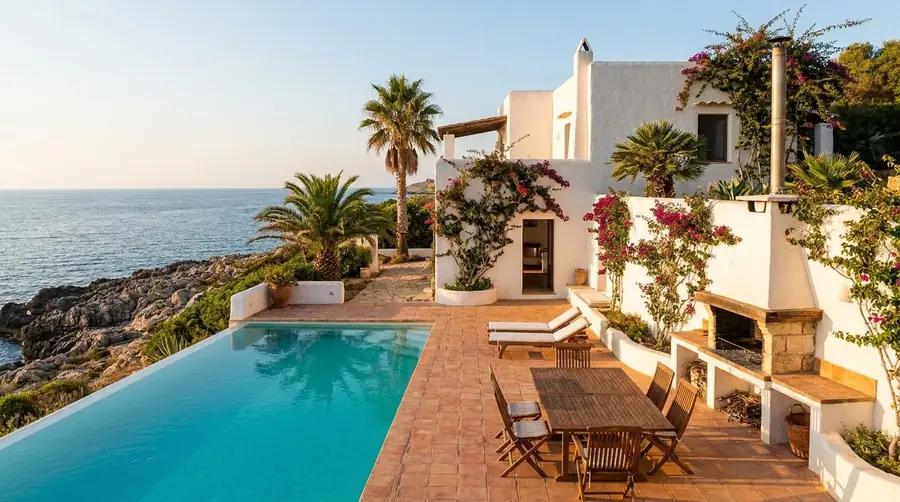
Villa Renzo
Why it is here: Four bedrooms, a private pool and a sea-view terrace at Donnalucata, the fishing village on the coast below Scicli, with a barbecue and an outdoor dining area.
Live prices on the map ↓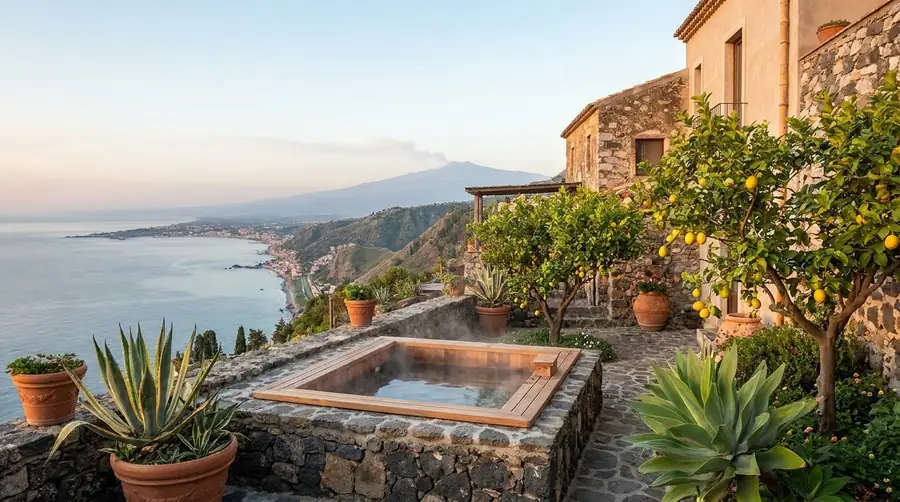
Sea View Villa Taormina
Why it is here: Three bedrooms and three bathrooms on the hillside at Mastrissa, with a hot tub, a garden and a sea-view balcony. No pool is listed, so choose it for the view and the town.
Live prices on the map ↓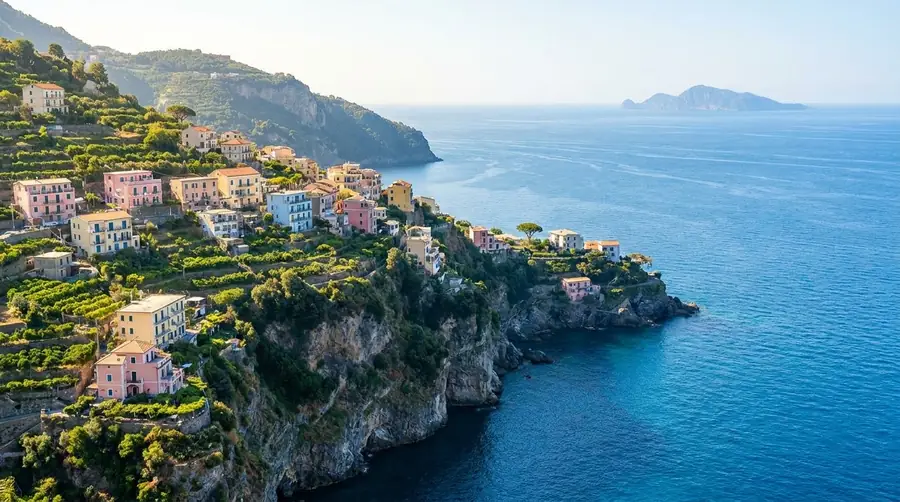
Area 3 of 6
Amalfi Coast & Sorrento: cliffs, lemon terraces and sea views
Good for views and boat tripsFerries, buses or a driverNaples airport
On the Amalfi Coast the villa is mostly about the view. The road from Positano to Amalfi is cut into the cliffs, so houses sit on terraces of lemon trees and vines high above the sea, and a pool, where there is one, often hangs over the drop. Space is tight: many villas are reached by steps rather than a drive, and parking is scarce and expensive. Furore and Praiano, between Positano and Amalfi, are quieter than either and still close to both. The Sorrento peninsula, on the other side of the hills, is easier for a villa holiday. Around Massa Lubrense and Sant’Agata sui Due Golfi there is more land, more olive groves and more pools, with views towards Capri. Sorrento has ferries to Capri, Positano and Amalfi, and trains to Pompeii and Naples, so you can manage without driving the coast road yourself. For hotels, see where to stay on the Amalfi Coast and where to stay in Positano; the Amalfi Coast itinerary helps plan the boat and bus days. Our Amalfi Coast villas guide goes town by town, villas in Positano covers the most famous village, and things to do on the Amalfi Coast explains what to do once you arrive.
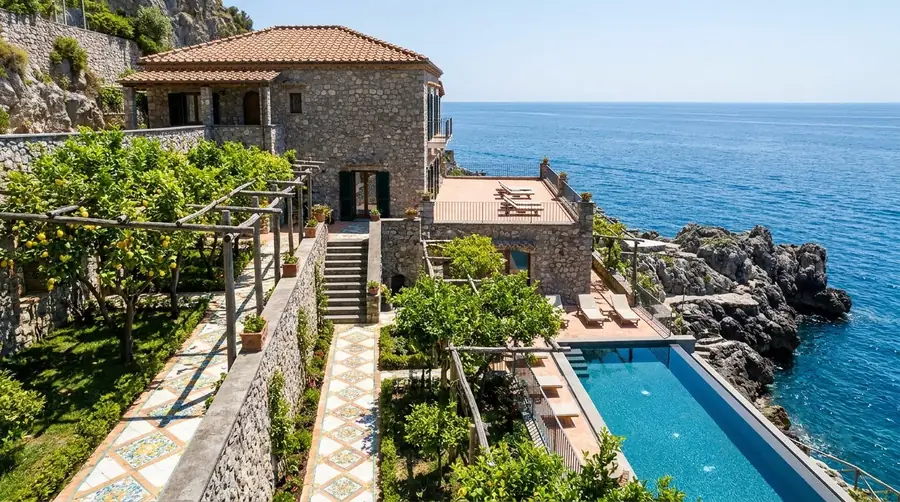
Villa Le Porpore
Why it is here: Five bedrooms on the cliffs at Furore, between Positano and Amalfi, with a pool with a sea view, a hot tub, a solarium and a garden.
Live prices on the map ↓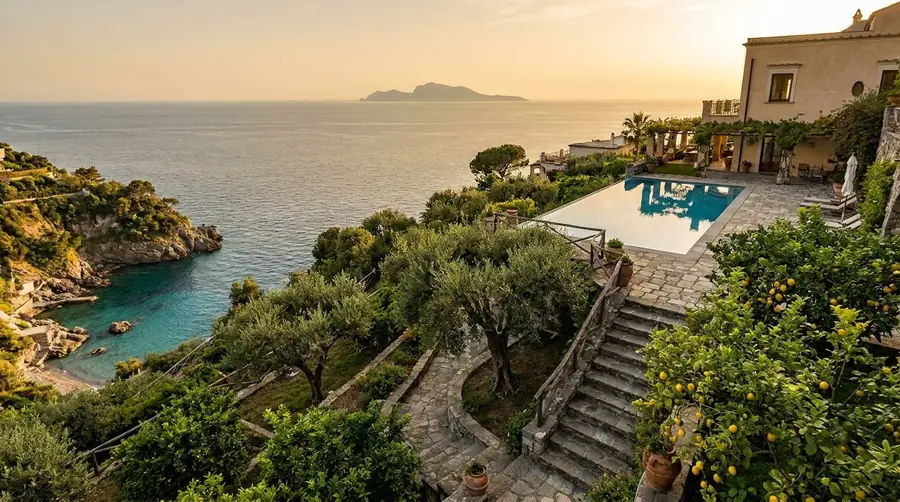
Villa Sorrentina With Panoramic Terrace
Why it is here: Five bedrooms and five bathrooms for up to 11 guests, with a games room, a panoramic terrace, a seasonal pool and a private beach area listed.
Live prices on the map ↓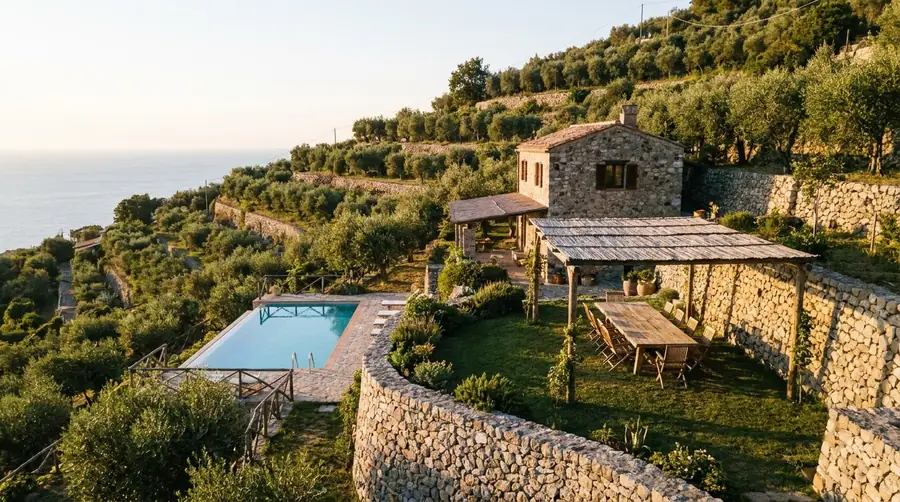
La Villa dell'Olio
Why it is here: Three bedrooms and three bathrooms in the hills of Massa Lubrense, with a pool with a view, a garden and an open-air bath.
Live prices on the map ↓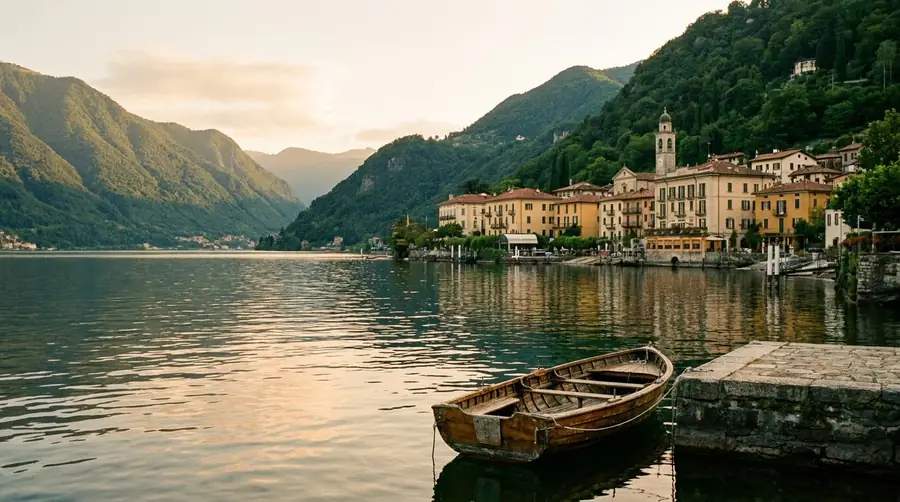
Area 4 of 6
Lake Como: lake views from Bellagio, Cadenabbia and the upper lake
Good for couples and lake viewsFerries, a car helpsAbout 1–1.5 hours from Milan
Lake Como is the only region here where the classic villa is a grand house rather than a farmhouse. The historic villas and gardens, such as Villa Carlotta at Tremezzo and Villa del Balbianello at Lenno, are museums, but the smaller houses on the slopes around them are what you can rent. The central lake is the most practical base: Bellagio, Menaggio, Cadenabbia and Varenna face each other across the water and are linked by frequent ferries, so you can dine in a different village every night without driving. Expect steep lanes, small gardens and few pools; a villa with a pool and a lake view is the exception, not the rule. The upper lake, around Colico and Domaso, is flatter, cheaper and windier, which suits families and anyone who wants to sail or windsurf. The season runs from about April to October, and many houses close in winter. Milan’s airports are about an hour to an hour and a half away. For the villages compared, see where to stay on Lake Como. Our Lake Como villas guide goes village by village.
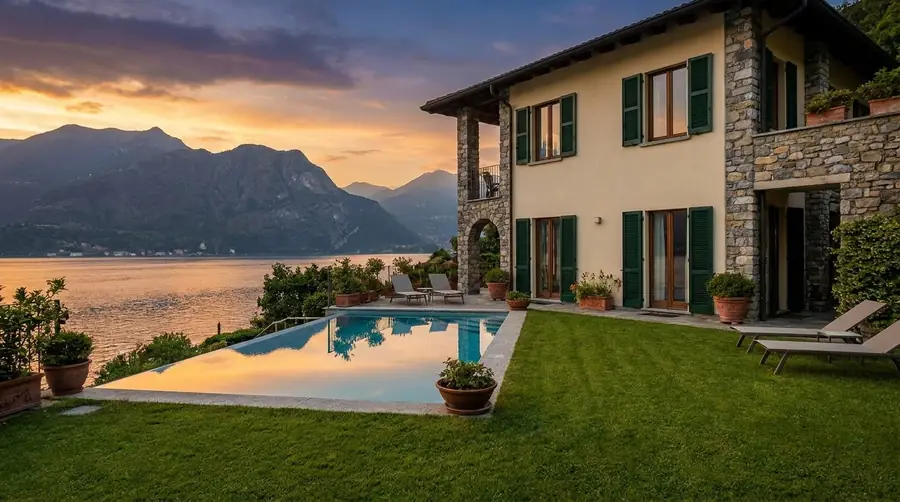
Villa Lilla Bellagio
Why it is here: Three bedrooms, a private pool and a garden with lake views in Bellagio, plus a fireplace for the cooler evenings of spring and autumn.
Live prices on the map ↓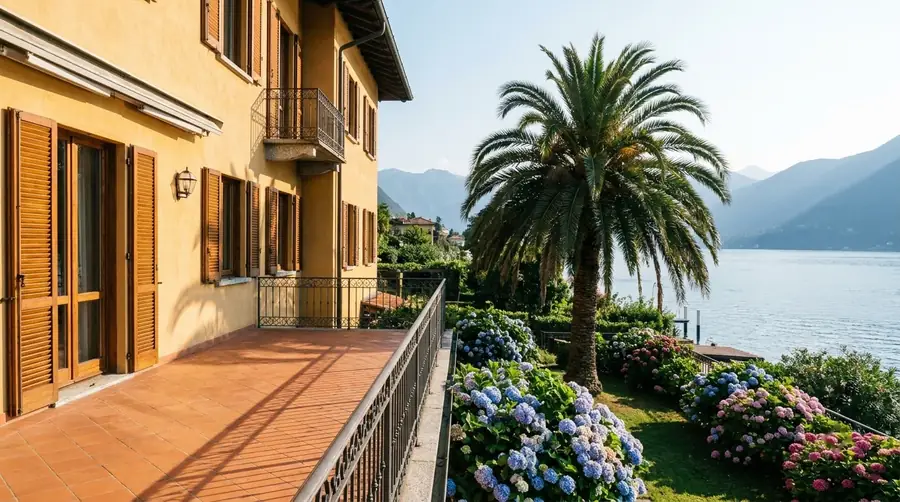
Villa Caterina
Why it is here: Four bedrooms in Cadenabbia on the west shore, with a fireplace, a lake-view balcony and a sun terrace; no pool, but Cadenabbia is a main ferry stop for Bellagio and Varenna.
Live prices on the map ↓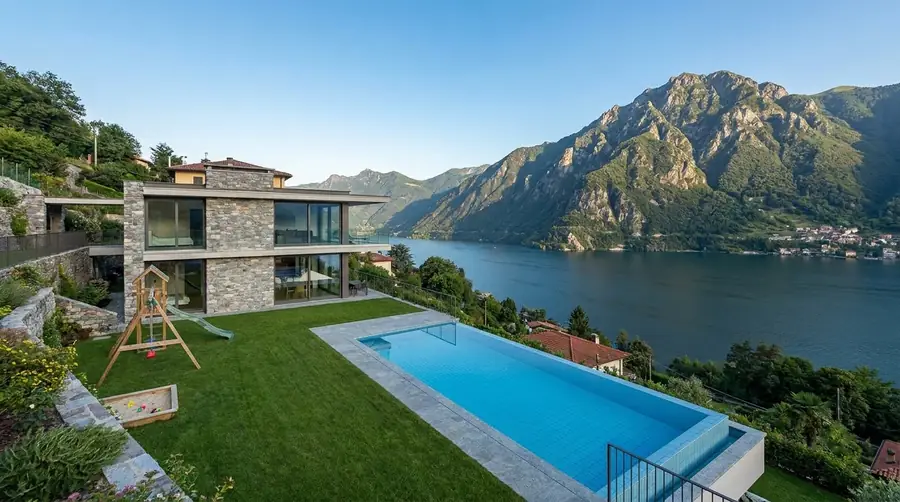
Villa La Corte with amazing pool and garden
Why it is here: Four bedrooms at Colico on the upper lake, with a pool with a view, a garden and a children's playground: an easy base for families.
Live prices on the map ↓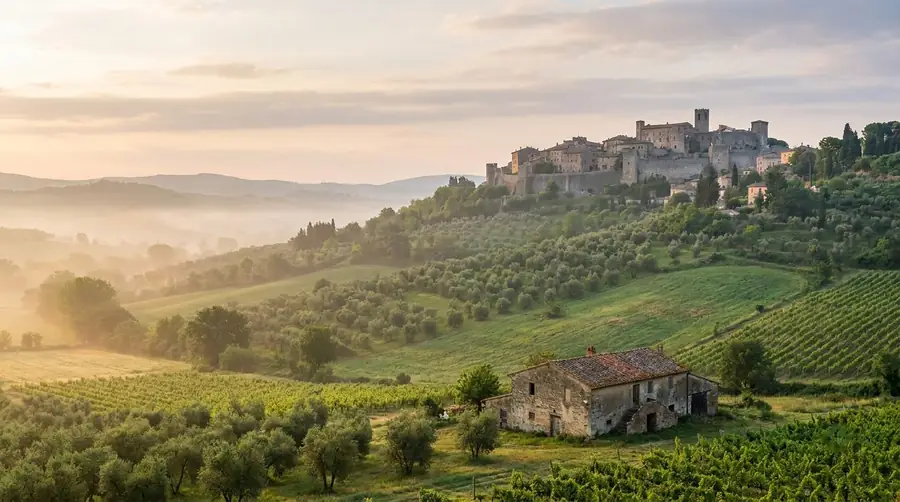
Area 5 of 6
Umbria: green hills, hill towns and quieter farmhouses
Good for a calm, central baseCar neededAbout 2 hours from Rome
Umbria is Tuscany’s quieter neighbour, and for many people it is the better villa choice. The landscape is greener and more wooded, the hill towns of Assisi, Spello, Montefalco, Todi, Spoleto and Orvieto are close together, and the stone farmhouses, or casali, tend to be less crowded around than those in Chianti. Montefalco is the centre of the Sagrantino wine country, Norcia is known for black truffles and cured meats, and Lake Trasimeno, on the Tuscan border, has small beaches for hot afternoons. Umbria is also well placed: Rome is roughly two hours from the south of the region, and Florence and Siena make day trips from the north. As in Tuscany, villas are spread across the countryside, so a car is essential and the last stretch is often a gravel road. Choose Spoleto or Todi if you want Rome within reach, and Spello or Montefalco for Assisi and the wine roads.
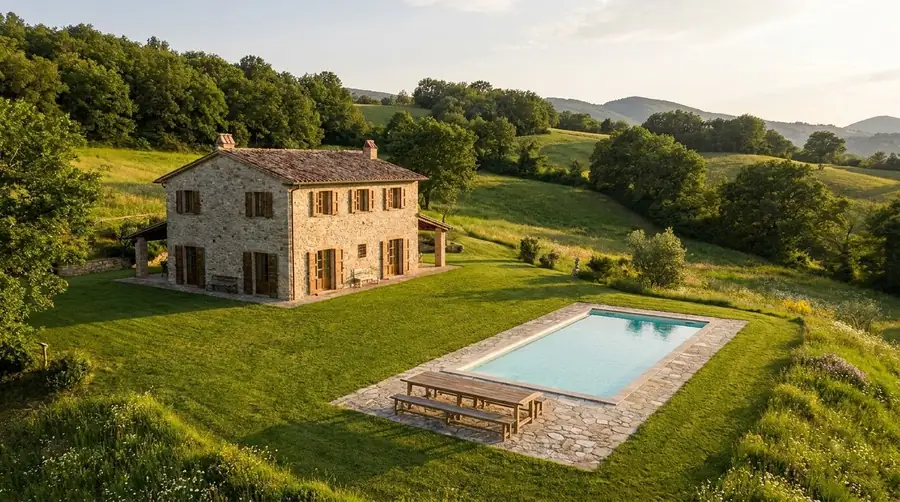
Villa Pulcinella
Why it is here: Four bedrooms and two bathrooms in the countryside outside Spoleto, with a private pool, a garden and a balcony.
Live prices on the map ↓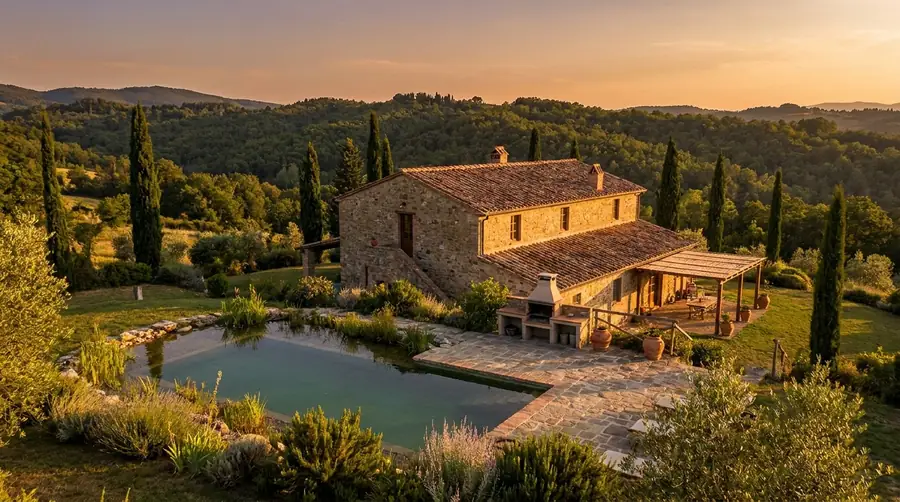
Il casale di Tata
Why it is here: A three-bedroom farmhouse with three bathrooms at Avigliano Umbro, south of Todi, with a seasonal pool, a garden, a terrace and a barbecue area.
Live prices on the map ↓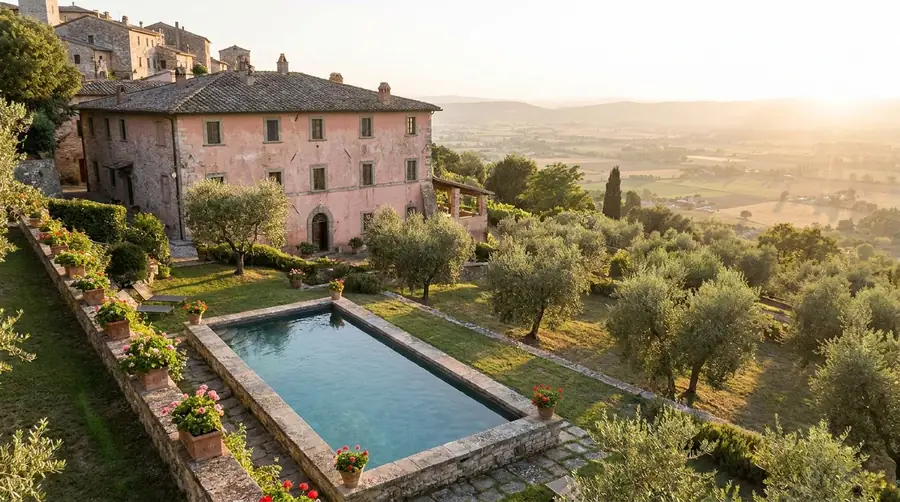
Villa Elisa
Why it is here: A villa in a historic building at Spello, with a year-round outdoor pool, a sauna, a steam room and a hot tub: the one to choose for spring or autumn.
Live prices on the map ↓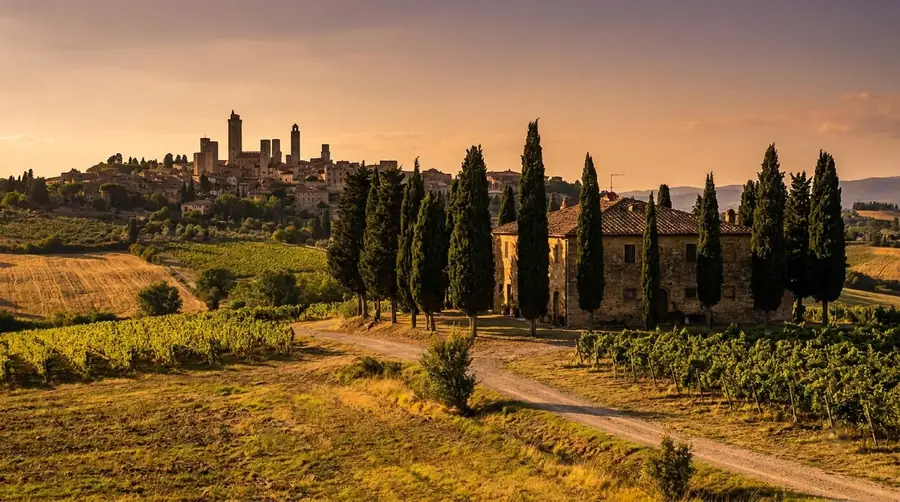
Area 6 of 6
Tuscany: two villas here, fifteen in our full guide
Good for food, wine and artCar neededFlorence or Pisa airport
Tuscany has its own guide: Tuscany villas: 15 real villas, area by area. It covers Chianti, the Val d’Orcia, Lucca, the Maremma and the hills around Florence, area by area, so we will not repeat it here. Below are two villas from parts of Tuscany that guide does not cover: Cortona, the hill town above the Val di Chiana on the Umbrian border, and the countryside between Siena and San Gimignano, near Colle di Val d’Elsa. Both are good bases if you want to combine Tuscany with Umbria, or Siena with Florence. For towns and hotels, see where to stay in Tuscany.
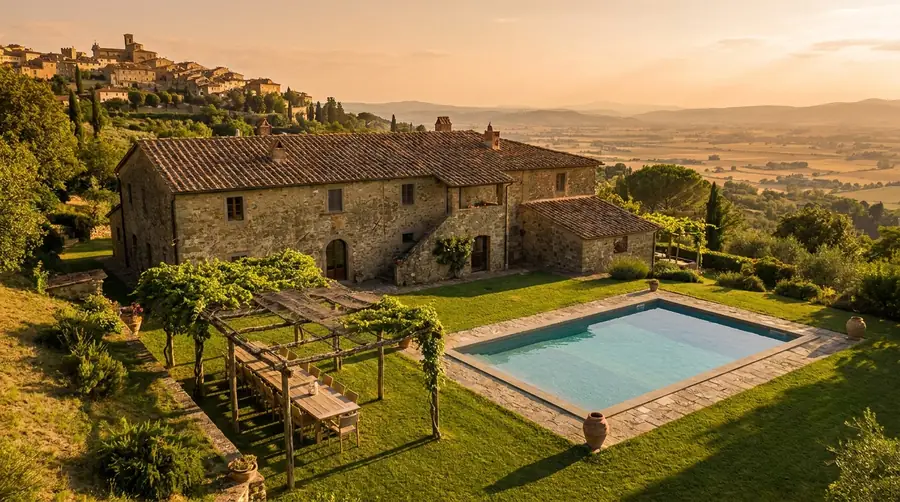
Villa Patrizia
Why it is here: Five bedrooms and four bathrooms for up to 12 guests in the countryside below Cortona, with a seasonal pool, a garden and an outdoor dining area.
Live prices on the map ↓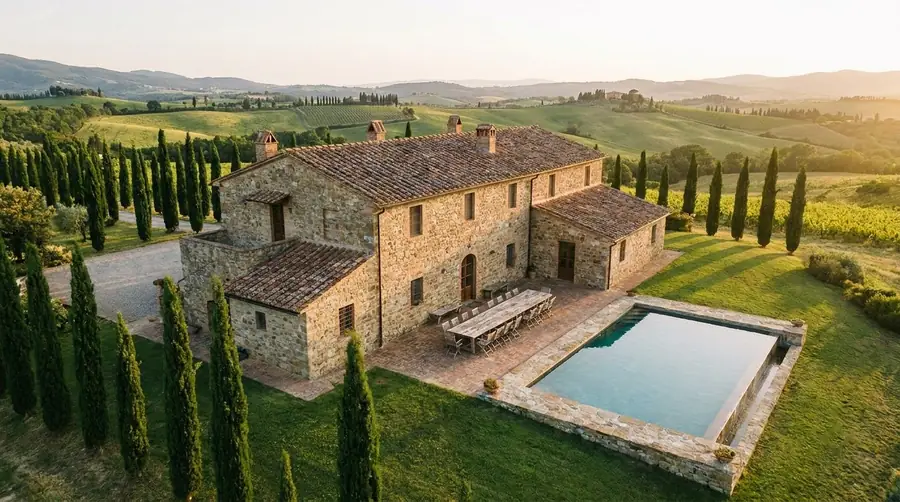
Casale il Timignano
Why it is here: A seven-bedroom country house for up to 14 guests, with a seasonal outdoor pool, a terrace, a garden and a fireplace, in the countryside between Siena and San Gimignano.
Live prices on the map ↓Villa or hotel in Italy?
Italy has excellent small hotels, so a villa is a choice rather than the default. A villa gives you space, a kitchen and usually a pool; a hotel gives you breakfast, a reception desk and, in a town, the ability to walk to dinner. Here is the honest split.
A villa makes sense if
- You are a family or a group sharing the cost, the pool and the kitchen
- You want to cook with local produce and eat outside in the evening
- You are staying a week in one region, which is often the minimum in summer
- You are happy to drive, because most country villas need a car
A hotel makes more sense if
- You are moving every two or three nights between cities
- You want to walk to restaurants, as in Positano, Taormina or Bellagio
- You do not want to drive narrow country lanes or park in hill towns
- You want breakfast, daily cleaning and someone to book boats and tables
Many Italian properties sit between the two. An agriturismo is a working farm that rents rooms or apartments, often with a shared pool and dinners made from its own produce. A borgo is a restored hamlet split into several houses. Both can be lovely, but they are not a private villa: if you want the whole place to yourselves, look for “entire villa” and “private pool” in the room you are actually booking. That is also why some cards above leave the number of guests blank: the listing does not state it, or covers more than one house.
Which region suits your trip?
If you want hot summers, the sea and a pool among olive trees, choose Puglia. If you want history, food and beaches in one place, and do not mind a long drive from the airport, choose south-east Sicily. If the view is the point and you are happy with steps, ferries and small gardens, choose the Amalfi Coast or Sorrento, with Sorrento the easier of the two. If you are a couple who wants elegant villages, gardens and boats rather than beaches, choose Lake Como. If you want the Tuscan kind of holiday with fewer people and Rome within reach, choose Umbria. And if it has to be Tuscany, start with our Tuscany villas guide. For the order to see them in, the 10-day Italy itinerary is a good starting point.
Before you book a villa in Italy
Villa terms are set by each owner, and the details that cause trouble are mostly about access, pools and extra charges. Check these eight things on the listing itself.
- Minimum stay and changeover dayMany villas only take week-long stays from Saturday to Saturday in July and August.
- Private or shared poolCheck whether the pool belongs to your villa alone or is shared with other houses on the estate.
- Pool seasonMany pools open from May or June to September or October; ask whether it is heated if you travel early or late.
- Access roadCountry villas are often reached by gravel roads, and coastal ones by steps. Check the last kilometre and the parking.
- Air conditioningIn Puglia, Sicily and inland Tuscany and Umbria, summer nights are hot. Check which bedrooms have it.
- Tourist tax and extrasMost towns charge a nightly tourist tax, and some villas add final cleaning, linen, heating or a security deposit.
- Distance to shops and restaurantsA remote villa is quiet, but you will drive for every meal out. Check the distance to the nearest village.
- Guest registrationItalian law requires hosts to register guests’ ID documents, so have passports ready at check-in.
When to book a villa in Italy
June and September are the best months for most villa holidays: the pools are open, the sea is warm in the south, and prices and crowds are below their peak. July and August are the hottest and busiest weeks, when many Italians are on holiday too; large villas that sleep ten or more are often taken many months ahead, sometimes the winter before. May and October are lovely in Umbria, Tuscany and on Lake Como, with green hills and harvest time respectively, but the sea is cooler and some pools are not yet open or already closed. From November to March many coastal and lake villas close, while some country houses stay open with fireplaces. For month-by-month detail, see the best time to visit Italy. To check prices for your own dates, use the map above or open any villa on Booking.com; we do not show prices here because they change daily.
Planning on Pinterest?
Save the six regions for later
This card is the whole guide in one image: six villa regions of Italy and what each one suits. Save it now and come back to the villas when your dates are fixed.
Save to PinterestMore on Italy
- Tuscany villas: 15 real villas in Chianti, the Val d’Orcia, Lucca, the Maremma and around Florence
- Where to stay in Puglia: towns and hotels in the Itria Valley and on the coast
- Best hotels in Taormina: if you would rather stay in town
- Best hotels in Positano: hotels with the classic Amalfi view
- Where to stay on Lake Como: Bellagio, Varenna, Menaggio and more
- Italian dishes: what to cook and order in each region
Villas in Italy: FAQ
Which region of Italy is best for a villa holiday?
It depends on the trip. Puglia is best for hot summers, trulli and masserie with pools; south-east Sicily for baroque towns and beaches; the Amalfi Coast and Sorrento for sea views; Lake Como for couples and lake villages; Umbria for quiet hills close to Rome; and Tuscany for food, wine and art.
Do you need a car if you rent a villa in Italy?
Usually, yes. Country villas in Puglia, Sicily, Umbria and Tuscany are reached by small roads with no buses. On the Amalfi Coast, around Sorrento and on Lake Como you can manage with ferries, buses and taxis if the villa is close to a village.
Are Italian villas with a private pool common?
In Puglia, Sicily, Umbria and Tuscany, yes, many country villas have their own pool. On the Amalfi Coast and Lake Como pools are rarer because of the steep ground. Some agriturismi and borghi share one pool between several houses, so check the wording for the room you book.
What is a trullo or a masseria?
A trullo is a traditional round stone house with a conical roof, found in the Itria Valley in Puglia; several are often joined into one villa. A masseria is a fortified farmhouse built around a courtyard, common between Fasano, Ostuni and the Salento, and often converted into a large villa or hotel.
When is the best time to rent a villa in Italy?
June and September give warm weather, open pools and fewer crowds. July and August are the hottest and busiest months, with week-long minimum stays. May and October suit Umbria, Tuscany and Lake Como, but many coastal villas close from November to March.
How far ahead should I book a villa in Italy?
For July and August, and for villas that sleep ten or more, book as early as you can, often the autumn or winter before. For June and September a few months ahead usually leaves a good choice.
Keep planning Italy
- Best Hotels in Taormina: The Town Is Up, the Sea Is Down
- Best Hotels on the Amalfi Coast: Pick the Town First
- Best Hotels in Positano: Count the Steps Before the Stars
- Best Hotels in Florence: The ZTL Matters More Than the Stars
- Where to Stay in Verona: Inside the River Loop, or Outside It
- Where to Stay in Tuscany: You Are Choosing a Driving Radius
- Where to Stay in Puglia: Pick the Building, Not the Town
- Where to Stay in Cinque Terre: Ask About the Stairs First
Written and checked by
Nora Castell is the pen name of the Triplarks editorial desk and the editor of its Costa Rica and Central America guides. Each guide is built from national park, transport and tourism sources, operator rate cards and recent traveller reports, then fact-checked, with every figure dated to the day it was read. Triplarks uses AI tools to help draft; nothing goes live until it has been edited and checked. Where we have not been somewhere, we do not write as though we have.