
There is no road to Tortuguero. You get there by boat or by a small plane, and once you arrive there are no cars, because there is nowhere for a car to go.
Some links below are affiliate links. We may earn a commission if you book through them, at no extra cost to you. We do not rank hotels, and any prices on the map come live from the booking sites.
Quick answer: where to stay in Tortuguero. The lodges across the canal are usually all-inclusive, with transport, meals and tours: the low-effort choice for a first visit. Village guesthouses are far cheaper, let you walk everywhere and let you pick your own guides.
That is the whole character of the place. Accessible by boat or light aircraft only, it sits on the Caribbean coast of Costa Rica: a strip of rainforest between the Caribbean Sea and a network of fresh water canals, a village of about 1,500 people, and the most important green sea turtle nesting beach in the western Caribbean.
People sell it as the Amazon of Costa Rica. That is marketing, but it is one of Costa Rica’s genuinely wild corners — a paradise for research and ecotourism, and the country’s best-known example of conservation paying for itself. The abundant wildlife is the whole point. It is also the one part of Costa Rica where the seasons run backwards from everywhere else, which catches people out. Prices, park rules and boat times checked 18 August 2026.
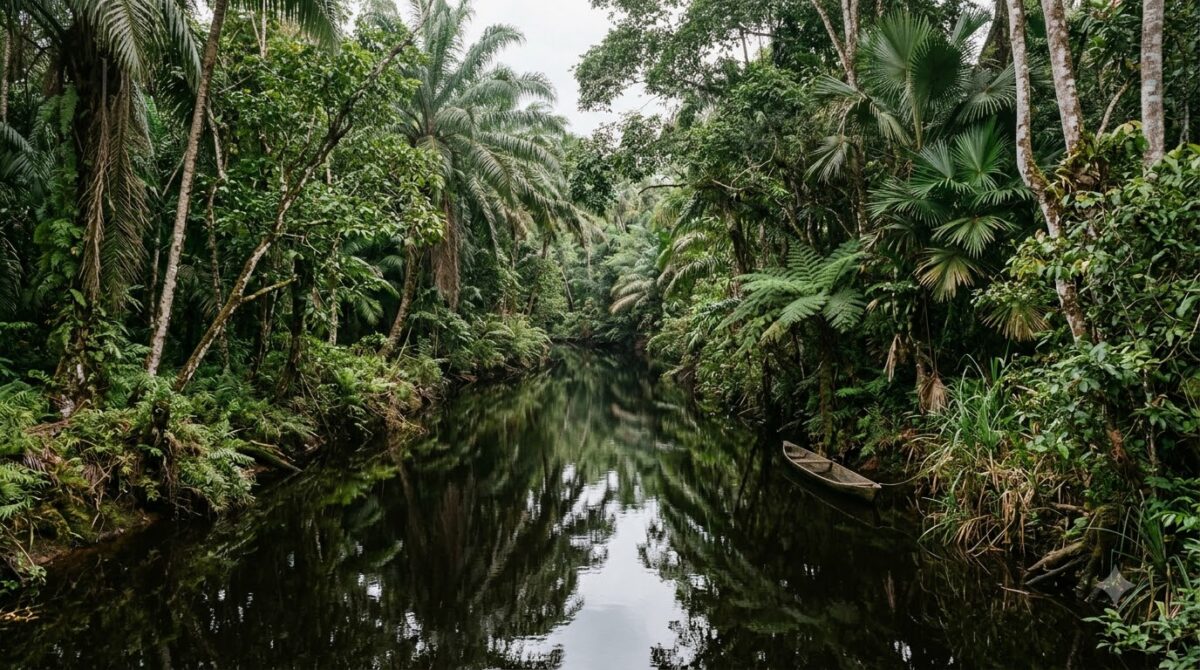
Is Tortuguero, Costa Rica worth visiting?
Yes, if you want wildlife and do not mind rain. No, if you want a beach holiday — and this is the misunderstanding that ruins the visit for people.
Tortuguero is a wetland. It rains here more than almost anywhere else in the country, roughly 5,000mm a year, and it rains in every month. What that buys you is one of the densest concentrations of accessible wildlife in Central America: three species of monkey, sloths, caimans, North American river otter, poison dart frogs, iguanas, more than 300 bird species including the keel-billed toucan and the endangered great green macaw, and turtles. There are few easier places in the country to see wildlife in this kind of abundance.
- Come for: boat trips through jungle canals, turtle nesting between July and October, birds, and somewhere that feels genuinely remote.
- Do not come for: swimming, sunbathing, nightlife, or dry weather.
Most people give it two nights as part of a longer trip. It is not a place to base a holiday.
Getting to Tortuguero: there is genuinely no road
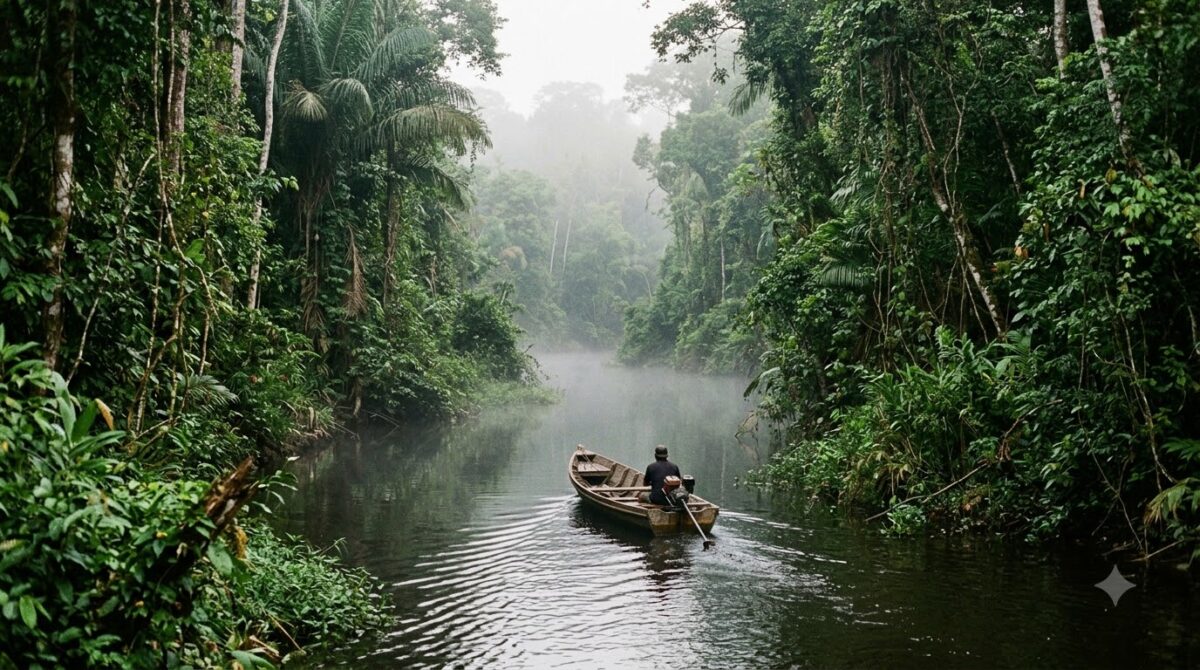
This is the part that needs planning, because you cannot simply drive up. Every route into Tortuguero from San Jose ends with a boat ride, and the boat to Tortuguero runs to its own timetable rather than yours.
| Route | Time from San José | Cost |
|---|---|---|
| Shuttle + boat via La Pavona | 5–6 hr | US$50–70 per person |
| Drive to La Pavona, then boat | 4 hr drive + 1.5 hr boat | Parking US$8–12/day + boat US$5–10 |
| Boat from Moín, near Limón | 4 hr drive + 3 hr boat | US$40–60 boat, more scenic |
| Small plane from San José | 35 min | US$100–160 each way |
| Package with a lodge | Door to door | Usually includes everything |
The practical answer for most people is a lodge package. Tortuguero is one of the few parts of Costa Rica where an all-inclusive vacation package genuinely makes sense: transport, room, meals, guided boat trips and the park fee in one price, because arranging each piece separately from a village with no road is more effort than it is worth.
If you are driving yourself: you leave the car at La Pavona and take the public boat. Do not leave anything in it. Boats run to a timetable of roughly four departures a day in each direction, and if you miss the last one you are staying wherever you are.
See our guide to driving in Costa Rica for what the drive to La Pavona involves — the last section is unpaved and floods.
Tortuguero National Park: hours, fees and what it protects
Tortuguero National Park covers roughly 77,000 hectares of land and a similar area of sea, protecting rainforest, freshwater canals, lagoons, mangrove and 35 kilometres of nesting beach. It was declared a national park in 1970 specifically to stop turtle hunting, and Tortuguero National Park in Costa Rica has been the model for protected-area ecotourism in the country ever since.
Immediately north of Tortuguero lies the Barra del Colorado Wildlife Refuge, a larger and far less visited protected area reaching to the Nicaraguan border. The two together form one of the biggest continuous stretches of protected lowland wetland in Central America. Barra del Colorado sees a fraction of the visitors and is reached the same way — by boat.
| Entry fee | About US$17 for non-residents |
| Hours | Roughly 6am to 4pm for day visits |
| Guided entry | Compulsory for the turtle tours; recommended for everything else |
| Boat access | Motorboats restricted on the smaller canals — those are paddle-only |
The park is one of the wettest protected areas in Costa Rica and one of the most biodiverse. Its lowland rainforest sits at sea level, which is why the species mix differs from Monteverde in the cloud forest or the dry forest of Guanacaste.
The canals and lagoons
The canals of Tortuguero are the reason to come. Fed by the Tortuguero river and several others, they are a natural and partly dug network of freshwater waterways running parallel to the coast, linking lagoons and rivers, walled on both sides by rainforest.
Go at dawn. Boats leave around 5.30 to 6am and that trip is worth more than any other activity here. The water is mirror-flat, the mist sits on it, howler monkeys are calling, and everything is moving before the heat arrives.
- Motorboat tours — cover more ground, roughly US$25–40 for two to three hours with a guide.
- Kayak and canoe — slower, quieter, and allowed on the narrow canals where engines are not. Better for birds and for seeing anything at all.
- Take the guide. They spot things you would pass a hundred times, and they carry a scope.
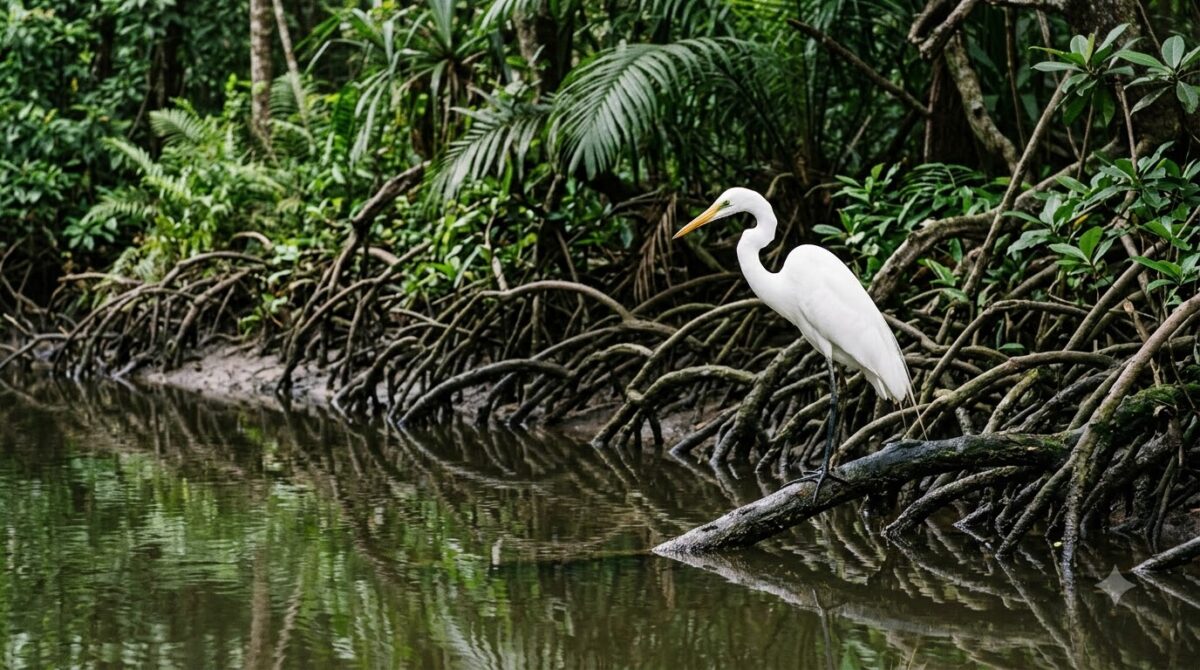
What you can reasonably expect on a morning trip: howler and spider monkeys, caimans, basilisk lizards running across the water, herons, kingfishers and toucans, and crabs and other crustaceans along the banks. Sloths are common. River otters, manatees and jaguars exist here but you will not see them. Our Costa Rica wildlife guide covers what lives where.
Sea turtle season and turtle conservation
Tortuguero means turtle catcher, and the English-speaking Caribbean community here has long called it Turtle Bogue. The village was exactly that until the park was created, and the change from hunting turtles to protecting them is the reason the population recovered.
| Species | Nesting | Hatching |
|---|---|---|
| Green sea turtle | July–October, peak Aug–Sep | Sep–Nov |
| Leatherback | February–May | Apr–Jun |
| Hawksbill | July–October | Sep–Nov |
Three turtle species nest here, and this is among the most important nesting sites in the Atlantic for the green turtle. The leatherback sea turtle — the largest of them, and the one closest to extinction — comes earlier in the year. A female digs a chamber, lays around a hundred eggs, covers them and returns to the sea, and the whole thing takes about an hour.
Nesting season tours are tightly controlled, and rightly so. What that means in practice:
- You go with a licensed guide in a small group, on an assigned section of beach, at an assigned time slot.
- No flash photography and no white light. Guides use red light only. Cameras and phones generally stay in your bag.
- Tours run in two slots, roughly 8pm and 10pm, and cost about US$25–35 plus the park fee.
- Nothing is guaranteed. You may watch a turtle nest for an hour; you may see nothing.
- You cannot walk the nesting beach at night on your own. This is enforced.
Turtle nesting season here supports one of the older and better-documented conservation programmes in the world — research on this beach has run since the 1950s. Book the tour through your lodge or at the village office on arrival; they sell out in peak season.
Things to do in Tortuguero beyond the boat
- Cerro Tortuguero — the hill north of Tortuguero village, an extinct volcanic plug about 119 metres high and the only high ground for miles. Short steep climb, and the view from the top of Cerro Tortuguero takes in the canals, the ocean and the forest all at once.
- The park land trail — a short jungle walk from the park station. Muddy always. Wear boots; lodges lend them.
- The Sea Turtle Conservancy visitor centre — small museum and exhibit in the village explaining the research programme.
- Night walk — frogs, insects, snakes. A completely different set of animals.
- Walk the village — twenty minutes end to end, and worth doing slowly.
Tortuguero village and the Caribbean beach
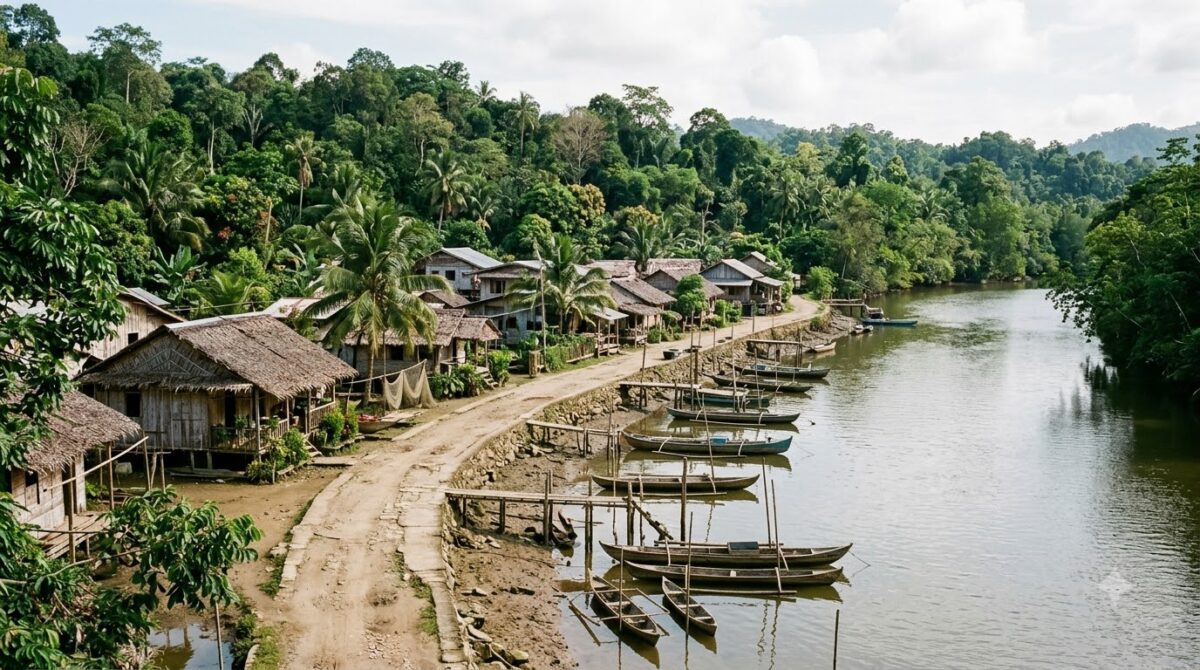
The village of Tortuguero sits on a sand spit between the canal and the sea, and has no cars at all — just footpaths, boats and a few bicycles. About 1,500 people, a school, a church, a football pitch and a row of small businesses along the waterfront. This small town of Tortuguero is Afro-Caribbean, and an encounter with Caribbean culture here — the food, the music, the English-based creole spoken alongside Spanish — is nothing like the Pacific side of the country. The nearest city is Limon, four hours away by road and boat, and this is the heart of Costa Rica’s Caribbean.
The beach is not for swimming. This surprises people who booked a Caribbean beach and arrived at one. The surf is heavy, the current is strong, there is no lifeguard, and bull sharks use the river mouths. The beach is for walking, and at night it belongs to the turtles.
Tortuguero beach runs 35 kilometres, and the beaches of Tortuguero are working nesting grounds rather than resort sand. It is dark grey rather than white, which means it is left in its natural state — driftwood, seaweed and all. If you want Caribbean swimming, that is Puerto Viejo de Talamanca or Cahuita, four hours south, where the ocean is calm enough to get into.
Hotels and lodges in Tortuguero: Mawamba Lodge and the alternatives
Accommodation splits cleanly in two, and the choice matters more here than in most places.
| Lodges across the canal | Village guesthouses | |
|---|---|---|
| Price | US$120–300, usually all-inclusive | US$25–70 room only |
| Includes | Transport, meals, guided tours | Just the room |
| Setting | Gardens, pool, jungle, quiet | In the village, walk everywhere |
| Getting about | Boat shuttle to the village | On foot |
| Suits | Short stays, first visit, families | Budget travel, longer stays |
The lodges sit on the far bank and are reached only by boat — names that recur are Mawamba Lodge, Pachira, Laguna and Manatus, with Manatus at the top end. They are comfortable, the food is fine rather than exciting, and the packages are the low-effort way to do Tortuguero.
The village guesthouses are far cheaper, put you among people who live here, and let you choose your own guides and boats. If you are comfortable arranging things on arrival, this is the better trip and roughly a quarter of the price.
Map shows live availability and prices. We may earn a commission on bookings made through it, at no extra cost to you.
Restaurants in Tortuguero
If you are on a lodge package your meals are included and you will barely see the village restaurants. If you are staying in the village, expect a handful of small places along the main path serving Caribbean food.
- Rice and beans here means something different from the Pacific side — cooked in coconut milk, with thyme and a whole scotch bonnet. It is the local dish and it is very good.
- Whole fried fish, patacones and casado at the small sodas, roughly US$8–14.
- Sit-down restaurants on the waterfront run US$15–25 a head.
- Bring cash. There is an ATM but it is unreliable and card acceptance is patchy.
Our guide to Costa Rican food covers the difference between Caribbean and Pacific cooking.
Best time to visit Tortuguero, and the worst month
This is the thing to get right, because the Caribbean runs on the opposite calendar to the rest of Costa Rica.
The Pacific dry season and the Caribbean dry season are not the same months. September and October are the wettest, most miserable months on the Pacific coast. On the Caribbean they are among the driest and best. If you have been told September is a bad month to visit Costa Rica, that advice does not apply here.
| Period | Weather | Turtles | Verdict |
|---|---|---|---|
| Jul–Oct | Sep–Oct relatively drier | Green turtle nesting, peak Aug–Sep | Best overall |
| Feb–Apr | Second drier spell | Leatherbacks from Feb | Good, quieter |
| May–Jun | Wet | Little | Cheap, green, few people |
| Nov–Dec | Wettest of all | Season over | The worst months here |
The worst month to visit Tortuguero is November or December, when rainfall peaks, boats occasionally cannot run and the turtles have gone. That is precisely when the Pacific coast is at its best — see our guide to the best time to visit Costa Rica for how the two coasts diverge.
It rains every month here. Bring a rain jacket in every season and accept that you will be damp.
How many days do you need in Tortuguero?
Two nights. That gives you a full day, which means a dawn boat trip, an afternoon walk or a second boat, and a turtle tour in the evening if you are there in season.
- One night — the standard package, and it works, but you get one boat trip and a lot of travelling.
- Two nights — the right amount for almost everyone.
- Three or more — only for serious birders or photographers. The activities repeat.
Because of where it sits, Tortuguero does not slot neatly into a Pacific-coast route. It works best combined with the Caribbean coast, or as a two-night detour from San José at the start or end. Our 10 day Costa Rica itinerary explains why crossing between coasts costs more days than people expect.
Tips for visiting Tortuguero: how to plan your trip
- Pack light and pack dry. Boats have luggage limits, and the small planes limit you to around 11kg. Lodges store the rest in San José.
- Everything you own will get damp. Dry bags, or at minimum sealed plastic bags, for electronics and documents.
- Bring cash in colones. The ATM is unreliable and cards are patchy.
- Take insect repellent with a high DEET or picaridin content. This is a wetland.
- Book turtle tours on arrival, or through your lodge before you come in August and September.
- Rubber boots, not hiking boots. Most lodges lend them free.
- Do not expect wifi to work properly. Mobile coverage is patchy in the village and absent on the canals.
Set against the rest of a trip to Costa Rica, Tortuguero is the one place that asks you to give something up — comfort, dryness, convenience — in exchange for the wildlife. That trade is worth making once.
Frequently asked questions
Is Tortuguero in Costa Rica worth visiting?
Yes, if you want wildlife and can accept rain. The canal boat trips give you some of the easiest wildlife viewing in Central America, and between July and October you can watch green sea turtles nest. It is not worth it if you came for a beach holiday: the sea here is dangerous and it rains every month.
How many days do I need in Tortuguero?
Two nights. That gives you one full day, which covers a dawn boat trip through the canals, an afternoon walk or second boat, and an evening turtle tour if you are there in season. One night is the standard package and works but leaves you rushed. Three or more only suits birders and photographers.
What is there to do in Tortuguero, Costa Rica?
Boat trips through the canals at dawn, kayaking the narrow channels, turtle nesting tours from July to October, climbing Cerro Tortuguero for the view, the park land trail, night walks for frogs and insects, the Sea Turtle Conservancy visitor centre, and walking the car-free village.
How do you get to Tortuguero?
Only by boat or small plane, as there is no road. Most people take a shuttle from San Jose to La Pavona then a boat, about five to six hours total for US$50 to US$70. A small plane from San Jose takes 35 minutes and costs US$100 to US$160 each way. Lodge packages include the whole journey.
When is turtle nesting season in Tortuguero?
Green sea turtles nest from July to October with the peak in August and September, and hatchlings emerge from September to November. Leatherbacks nest earlier, February to May. Nesting tours require a licensed guide, run in evening time slots, and allow no flash photography or white light.
Can you swim at Tortuguero beach?
No. The surf is heavy, the currents are strong, there are no lifeguards and bull sharks use the river mouths. The beach is for walking, and at night it is closed to unaccompanied visitors because turtles are nesting. For Caribbean swimming go to Puerto Viejo or Cahuita, four hours south.
What is the worst month to visit Costa Rica?
It depends which coast. On the Pacific, September and October are wettest. On the Caribbean the pattern inverts: those months are among the driest and best at Tortuguero, while November and December are the wettest and worst here, with the turtle season over and boats occasionally unable to run.
Do you need a guide in Tortuguero National Park?
A guide is compulsory for the turtle nesting tours and strongly recommended for everything else. Guides carry a scope and spot animals you would walk straight past. Park entry is about US$17 for non-residents, with day access roughly 6am to 4pm.
Park fees, boat schedules and turtle season dates read 18 August 2026. Boat times change with water levels and park rules are revised periodically — confirm with your lodge or the official parks site before travelling.