Quick answer
Ten days split three, four and three — Vienna takes the extra night because its sights are half days each. Budapest is the cheapest of the three, so if the budget is uneven, give it the longer stay and Vienna the shorter one.
On this page
- How many days in Prague, Vienna and Budapest: what each length gets you
- Why Vienna gets the extra night
- Three days in Prague
- Four days in Vienna
- Three days in Budapest
- The seven day version: drop a city
- The fourteen day version
- How the travel days work
- What changes between the three cities
- How to split uneven trips
- What the travel actually costs you
- Adding a fourth city
- Budgeting across three countries
- When to go on this route
- Doing it in the other direction
- How the three cities sit in a longer European trip
- The short version
- Frequently asked questions
Ten days is the comfortable minimum for Prague, Vienna and Budapest: three nights, four nights and three nights, with two train journeys between them. Seven days means two and a bit days in each, which is a tour rather than a trip.
Some links below are affiliate links. We may earn a commission if you book through them, at no extra cost to you. We do not rank hotels, and any prices on the map come live from the booking sites.
The reason is that these are three full capitals rather than three stops, and one of them — Vienna — has sights that are half days each. For the Vienna leg, see where to stay in Vienna.
How many days in Prague, Vienna and Budapest: what each length gets you
| Days | Realistic split | Verdict |
|---|---|---|
| 7 | Two cities, 4 and 3 | Drop one city |
| 10 | 3 / 4 / 3 | The comfortable minimum |
| 12 | 4 / 4 / 4 | Each city properly |
| 14 | 3 / 4 / 3 plus two additions | Český Krumlov, Bratislava or Salzburg |
Where to sleep on this route
Why Vienna gets the extra night
Because its sights are larger than the other two cities’.
Schönbrunn is a half day with the gardens. The Hofburg is a complex of museums rather than one building. The Kunsthistorisches needs three hours and the Belvedere two. That is two full days before you have walked the Innere Stadt or sat in a coffee house.
Prague and Budapest are more compact in what they ask of you: Prague’s centre is walkable and its major sights cluster, and Budapest’s are spread but individually shorter.
Our how many days in Vienna guide works through that arithmetic.
Three days in Prague
Enough for the Old Town, the Charles Bridge, the castle and the Jewish Quarter, with a half day for a district beyond the centre.
The city’s problem is crowding rather than size: the Old Town Square and the bridge are overwhelmed from mid-morning, so the trick is to do them early and spend the middle of the day elsewhere.
A fourth day would go to Vyšehrad, the Letná and Žižkov districts, or a day trip to Kutná Hora.
Four days in Vienna
One large sight per day plus something small: the Innere Stadt and the Hofburg, Schönbrunn, the Kunsthistorisches and the Belvedere, then a day outside the Ring for the Naschmarkt, Neubau and the Prater.
Add an evening of music, which in Vienna is the point rather than an extra.
Map shows live availability and prices. We may earn a commission on bookings made through it, at no extra cost to you.
Three days in Budapest
Enough for Buda and Pest and one bath.
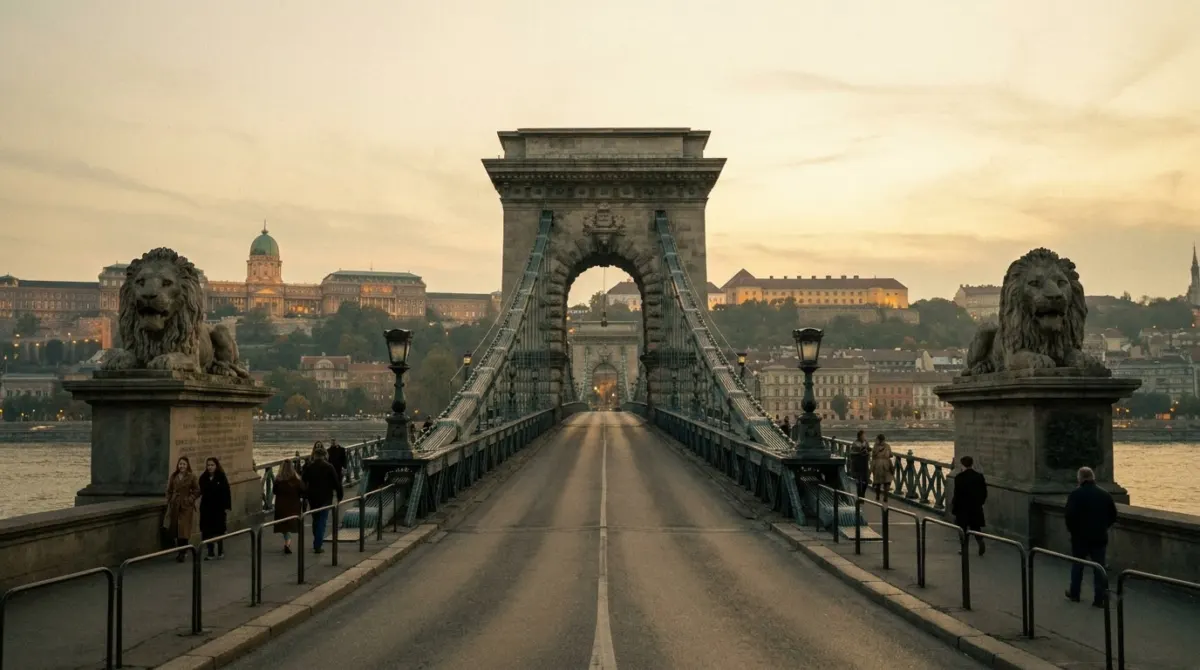
Buda for the castle district, the Fisherman’s Bastion and the Matthias Church, with the view back over the river. Pest for the parliament, Andrássy Avenue, the basilica and the Jewish Quarter with its ruin bars.
And an afternoon at Széchenyi or Gellért, the two best known thermal baths, which is a half day and the thing people remember.
The seven day version: drop a city
Seven days across three capitals gives each of them two days and loses one to travel. That is not enough for any of them, and it is the most common mistake on this route.
Instead, take two:
Prague and Vienna — four and three, with the four-hour train between them. Add Český Krumlov for a night if you can.
Vienna and Budapest — four and three, with the shortest leg of the three at two and a half hours.
Prague and Budapest works least well, because the direct train is seven hours.
The fourteen day version
Do not simply add days to each city. Add places.
Český Krumlov, a medieval town in a river bend in southern Bohemia, between Prague and Vienna.
Bratislava, an hour from Vienna by train or boat, which is a fourth country for a day.
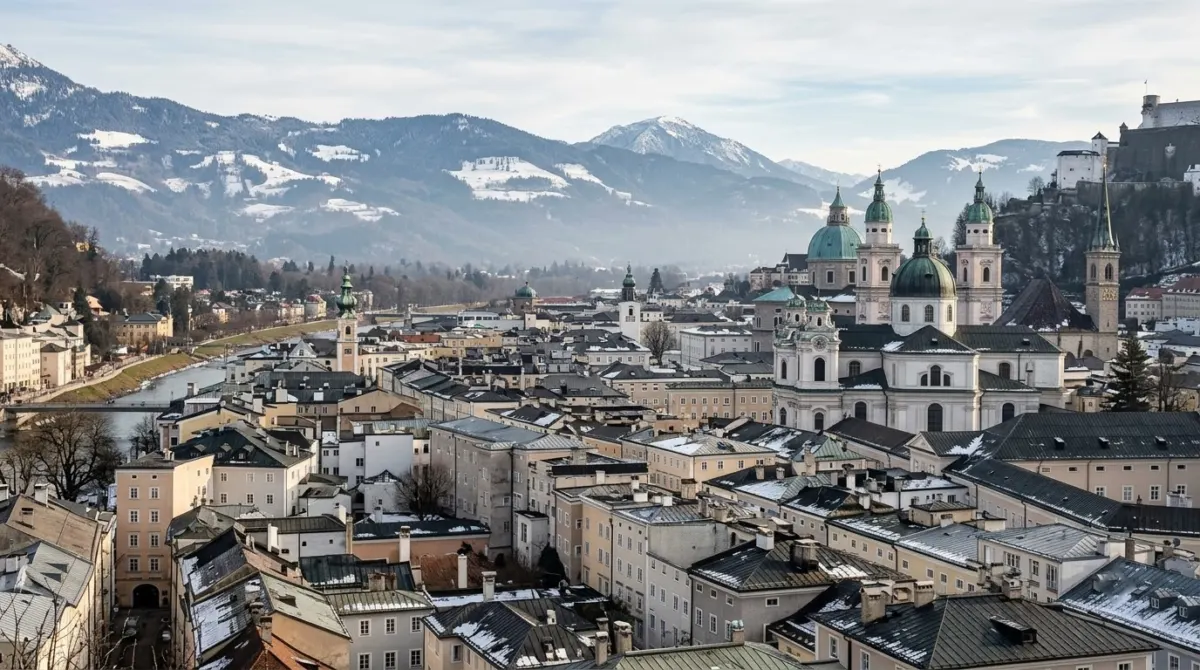
Salzburg, two and a half hours west of Vienna, which adds the Alps.
Eger or Lake Balaton from Budapest, for wine country or the lake.
How the travel days work
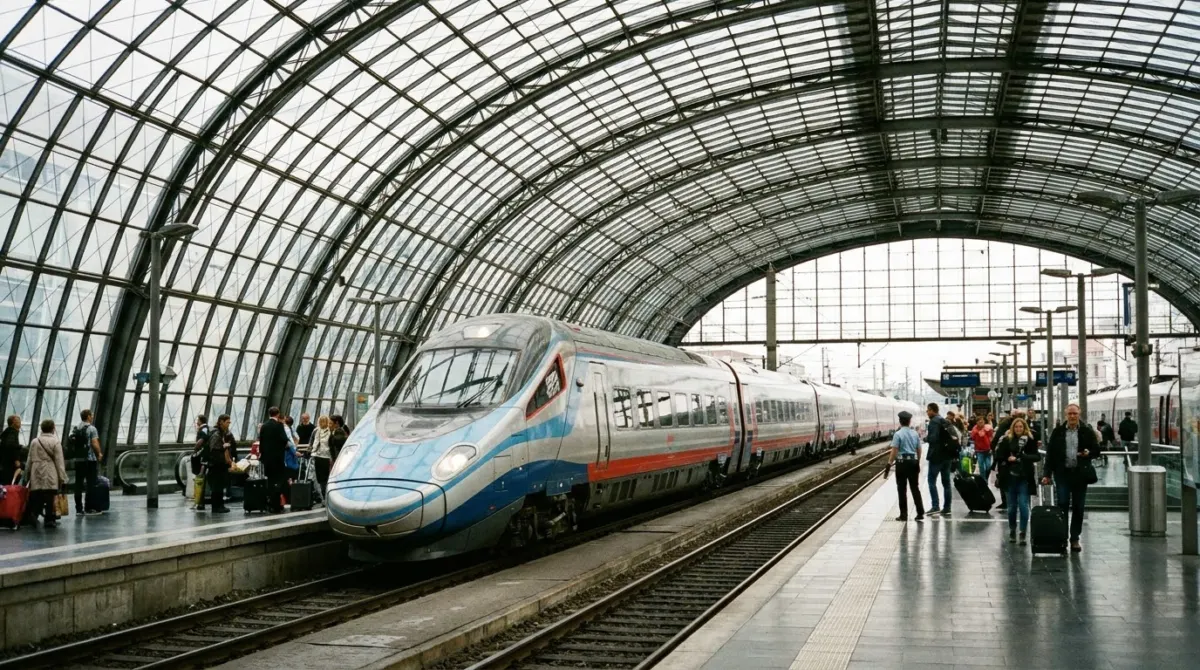
Two train journeys, and neither needs a whole day.
Prague to Vienna is about four hours, so a mid-morning train leaves you the afternoon and evening in Vienna.
Vienna to Budapest is about two and a half, which is a morning.
Book in advance for the saver fares. Count each transfer as costing half a day of sightseeing rather than a whole one, which is why ten days works.
What changes between the three cities
Currency: Czech koruna, euro, Hungarian forint. Cards work almost everywhere.
Price: Budapest is the cheapest, then Prague, with Vienna noticeably more expensive for accommodation and eating.
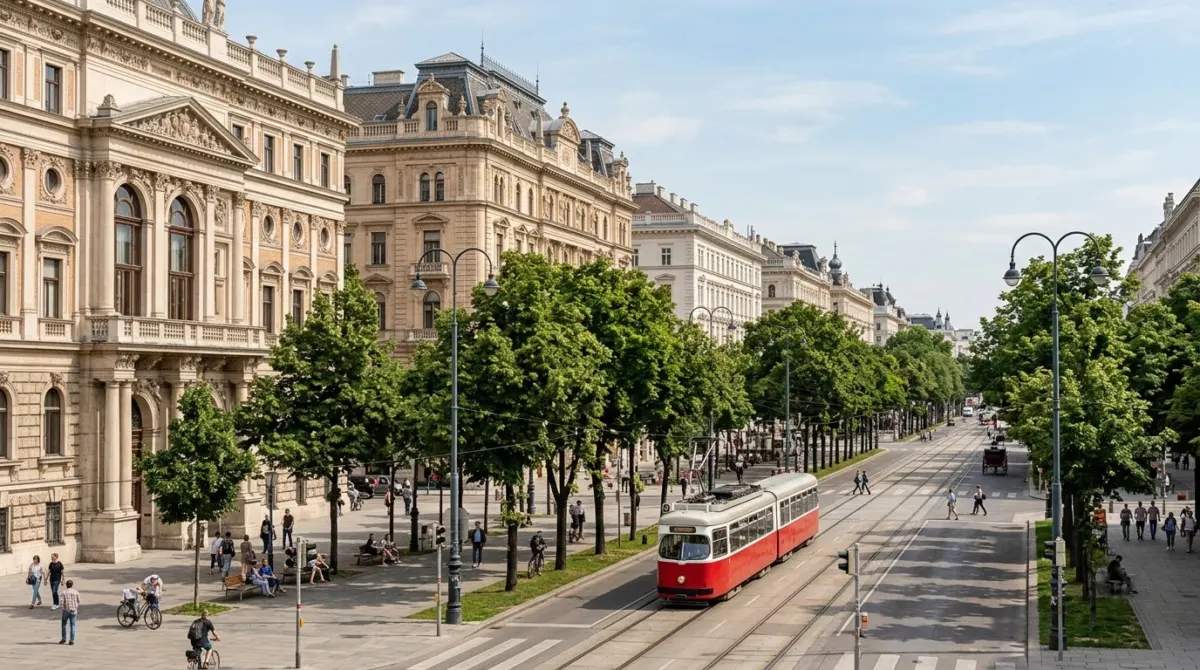
Character: Prague is medieval and crowded, Vienna imperial and ordered, Budapest grand, worn and more relaxed than either. They are far less alike than the joint billing suggests, which is the argument for seeing all three.
Our Prague, Vienna and Budapest itinerary sets out the route day by day.
How to split uneven trips
Not everyone has ten clean days, so three common shapes.
Eight days: three, three, two, with Budapest shortened — or better, drop Prague and give Vienna four and Budapest four.
Nine days: three, four, two. Budapest suffers least from a short stay because its sights are individually shorter.
Eleven or twelve: four each, which is the version where nobody feels rushed and you can take a bath afternoon in Budapest and an evening of music in Vienna without losing a sight.
The principle in all of them: Vienna needs the most time, Budapest tolerates the least, Prague sits between.
What the travel actually costs you
Two transfers, and the way you book them decides whether they cost half a day or a whole one.
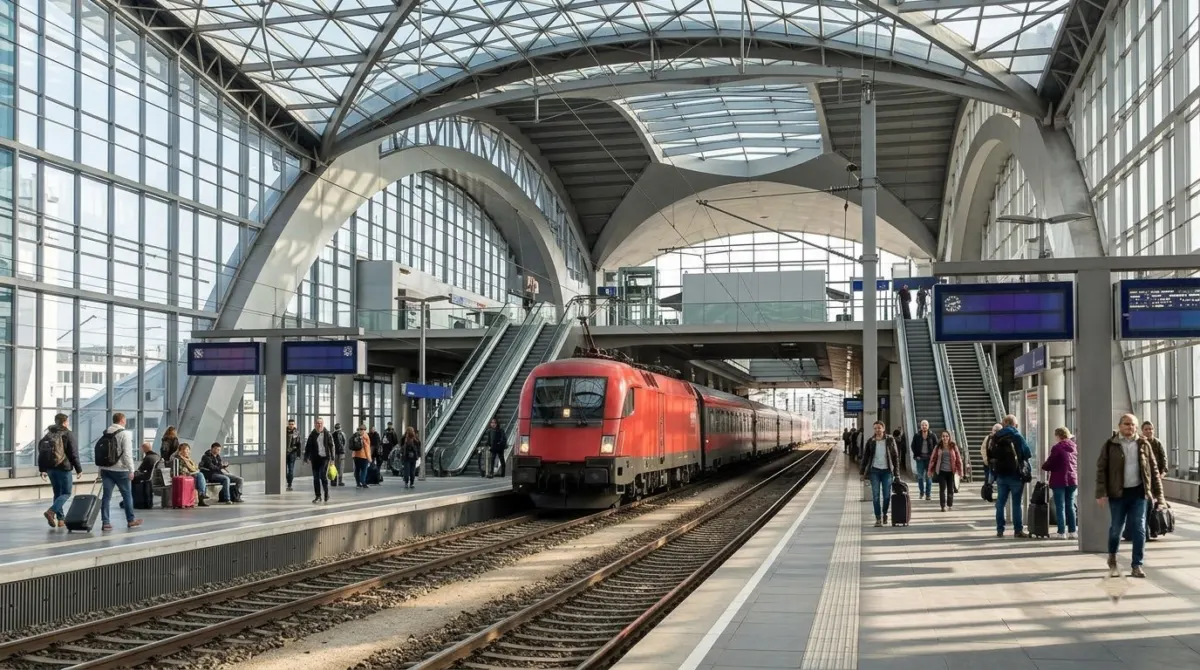
A mid-morning train from Prague arrives in Vienna in the mid-afternoon, leaving an evening. A morning train from Vienna reaches Budapest before lunch, leaving most of a day.
What wastes time is an afternoon departure, which turns a four-hour journey into a lost day. Book the earlier train even if it costs a little more.
Seat reservations are cheap and worth taking in summer, when these routes are busy.
Adding a fourth city
Four candidates, in order of how easily they fit.
Bratislava — an hour from Vienna by train or boat, and a day is enough. The easiest addition on the route.
Český Krumlov — between Prague and Vienna, a night, and the one most people are glad they added.
Salzburg — two and a half hours west of Vienna, and the only way to get mountains into this trip.
Kutná Hora — an hour from Prague, for the ossuary and the cathedral, as a day trip rather than a stay.
Budgeting across three countries
The price difference is large enough to shape the trip.
Budapest is the cheapest for accommodation, food and transport. Prague is cheaper than western Europe but no longer cheap in its centre. Vienna is a western European capital and priced like one.
Two consequences. If the budget is tight, give Vienna three nights and Budapest four rather than the other way round. And eat outside the tourist centres in all three, where the difference is sharpest in Prague.
When to go on this route
May, June and September suit all three cities: warm, long days and manageable crowds.

July and August are hot in all three, air conditioning is less common than visitors expect, Prague is at its most crowded and the Vienna opera is closed for the season.
Late November and December swaps the weather for Christmas markets, which are strong in all three and are evening affairs.
January and February are cold, cheap and quiet, with the Vienna ball season running and the Budapest baths at their best when it is freezing outside.
Doing it in the other direction
Budapest to Vienna to Prague works identically, and there are two reasons to prefer it.
Flights. If the cheaper long-haul arrival is Budapest, take it; the route has no built-in preference.
Money. Starting in the cheapest city and ending in the most expensive means your spending rises as the trip goes on, which some people prefer to the reverse.
The one argument for Prague first is that it is the most crowded and the most tiring, and doing it with fresh legs helps.
How the three cities sit in a longer European trip
This route is often part of something bigger, and the connections are good in every direction.
From Prague: Berlin and Dresden are four and two hours north, Krakow about seven east.
From Vienna: Salzburg two and a half, Munich four, Venice around seven, Ljubljana six.
From Budapest: Zagreb six, Belgrade eight, and Transylvania overnight.
If you have two weeks and want to keep going rather than fly home, the natural extensions are Berlin at the Prague end and Croatia or Slovenia at the Budapest end.
The short version
Ten days split three, four and three, with Vienna taking the extra night because its sights are half days. Seven days means two cities rather than three. Twelve gives four each and room to sit still. Book the morning trains so a transfer costs half a day, carry little cash across three currencies, and add Cesky Krumlov or Bratislava if you have a fourteenth day.
Frequently asked questions
How many days do you need for Prague, Vienna and Budapest?
Ten is the comfortable minimum: three nights in Prague, four in Vienna and three in Budapest, with two train journeys. Twelve gives each city four days, and fourteen lets you add Český Krumlov, Bratislava or Salzburg.
Is 7 days enough for Prague, Vienna and Budapest?
No. Seven days across three capitals leaves about two days each after travel, which is not enough for any of them. Take two cities instead — Prague and Vienna, or Vienna and Budapest.
Why does Vienna need more days than Prague or Budapest?
Because its main sights are half days each: Schönbrunn, the Hofburg complex, the Kunsthistorisches and the Belvedere. Prague's centre is more compact and Budapest's sights are individually shorter.
How long are the trains between the three cities?
Prague to Vienna is about four hours and Vienna to Budapest about two and a half. Prague to Budapest direct is around seven, which is why the route runs through Vienna rather than around it.
Which city should I spend the most time in?
Vienna, if you are visiting the palaces and museums. If you would rather walk, eat and sit in baths or beer halls, give the extra nights to Budapest, which is also the cheapest of the three.
Can you add a fourth city?
On fourteen days, yes. Bratislava is an hour from Vienna, Český Krumlov breaks the Prague to Vienna leg, and Salzburg is two and a half hours west of Vienna and adds mountains to a route that otherwise has none.
Keep planning Austria
- Where to Stay in Salzburg: Five Minutes Either Side of the River
- Where to Stay in Vienna: Just Outside the Ring
- How Many Days in Salzburg? Two, and Three for the Lakes
- How Many Days in Vienna? Four, Because the Palaces Are Half Days
- Austria and Switzerland Itinerary: Cities First, Mountains Last
- Vienna 2 Day Itinerary: Pick Two of the Four Big Things
- Prague, Vienna, Budapest: Ten Days, Two Trains, Three Currencies
- Three Day Vienna Itinerary: One Large Thing a Day
Written and checked by
Triplarks Editorial
An editorial desk, not an invented persona: research, drafting and fact-checking are done by the same small team. Every number here carries the date it was read.