Quick answer
The Neustadt around the Mirabell gardens is five minutes’ walk from the old town over a footbridge, flat, and cheaper than the Altstadt. Stay inside the old town if waking up in it is worth the premium — and check the Festival dates before booking anything in summer.
On this page
- Where to stay in Salzburg: the short answer
- The Altstadt
- The Neustadt
- Near the Hauptbahnhof
- Nonntal, behind the fortress
- Mülln, at the brewery end of the Mönchsberg
- Outside the city
- The Festival changes everything
- What the accommodation is like
- How many nights
- Where not to stay
- What there is to do in Salzburg
- Sound of Music, honestly
- Getting here and away
- December and the Christmas markets
- Booking windows
- Salzburg with children
- Where this fits in a trip
- Salzburg city centre, luggage and the Salzburg Card
- The short version
- Frequently asked questions
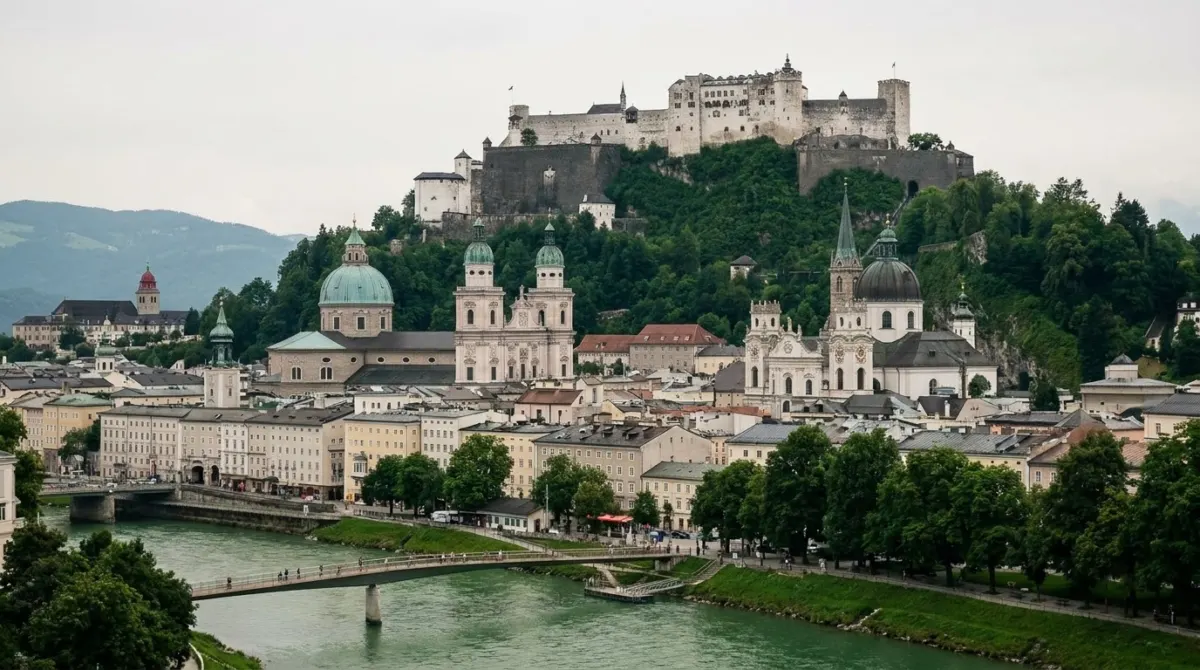
Salzburg is a small city split by a river. The Altstadt sits on the left bank beneath a fortress on a rock; the Neustadt faces it across the Salzach with the Mirabell gardens and the railway station behind. You can walk between them in five minutes over a footbridge.
Some links below are affiliate links. We may earn a commission if you book through them, at no extra cost to you. We do not rank hotels, and any prices on the map come live from the booking sites.
That makes the choice simple in one way and sharp in another: both sides are central, and they cost very different amounts. If you are coming from Vienna or Munich, see where to stay in Vienna and where to stay in Munich.
Where to stay in Salzburg: the short answer
| If you are | Stay in | Why |
|---|---|---|
| Here one or two nights | Altstadt | Everything on the doorstep |
| Wanting value five minutes away | Neustadt, around Mirabell | Cheaper, flat, same walking distance |
| Arriving by train | Neustadt, near the Hauptbahnhof | Ten minutes’ walk to the river |
| Driving, or touring the lakes | Edge of the city, or Salzkammergut | Parking, and the lakes on the doorstep |
| Here during the Festival | Anywhere you can book | The city sells out for weeks |
| With family | Neustadt or the outskirts | Larger rooms, gardens, parking |
One answer with no caveats: the Neustadt between the Mirabell gardens and the river. You are five minutes’ walk from the old town over a bridge, the streets are flat, and the rooms cost less than the equivalent on the other bank.
The Altstadt
The old town is a dense grid of narrow streets and arcaded courtyards between the river and the cliff, with the Hohensalzburg fortress on the rock above it — one of the largest surviving medieval castles in Europe, reached by funicular or a steep walk.
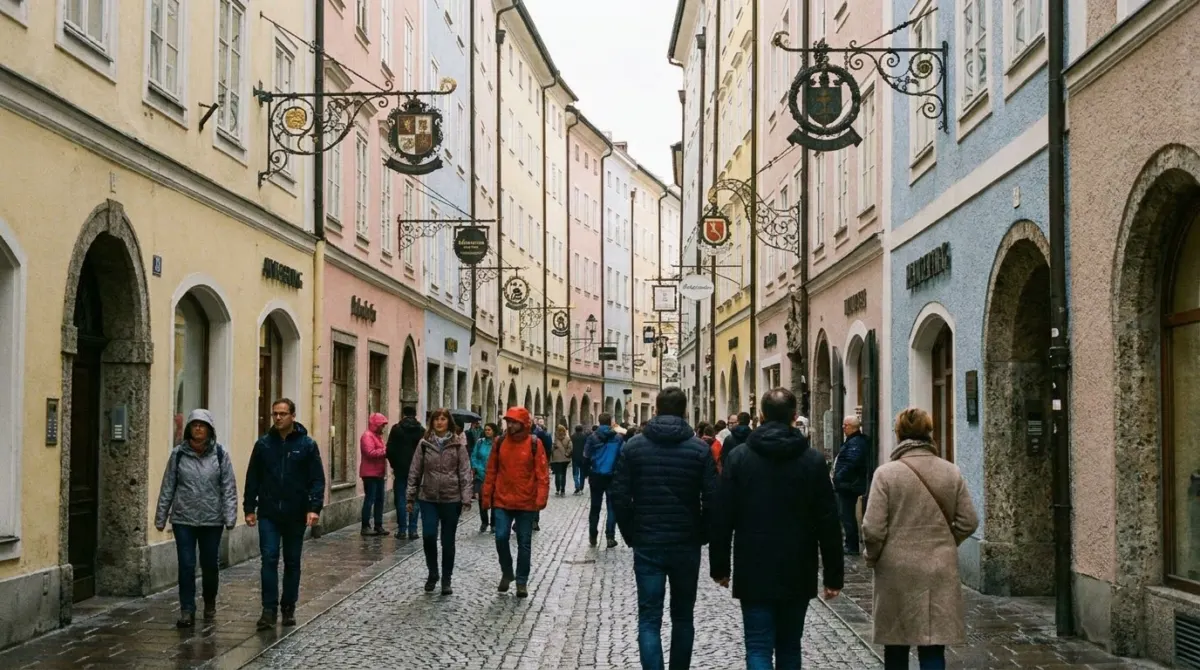
Getreidegasse, the main street, has the wrought-iron shop signs and Mozart’s birthplace. The cathedral, the Residenz and the abbey of St Peter are within two minutes of each other.
Staying here means stepping out into all of it. It also means paying the most in the city, accepting small rooms in old buildings, and sharing the streets with day visitors from Munich and Vienna between ten and five.
Map shows live availability and prices. We may earn a commission on bookings made through it, at no extra cost to you.
The Neustadt
Across the river, the right bank holds the Mirabell Palace and gardens, the Mozart residence, Linzergasse with its shops, and most of Salzburg’s mid-range accommodation.
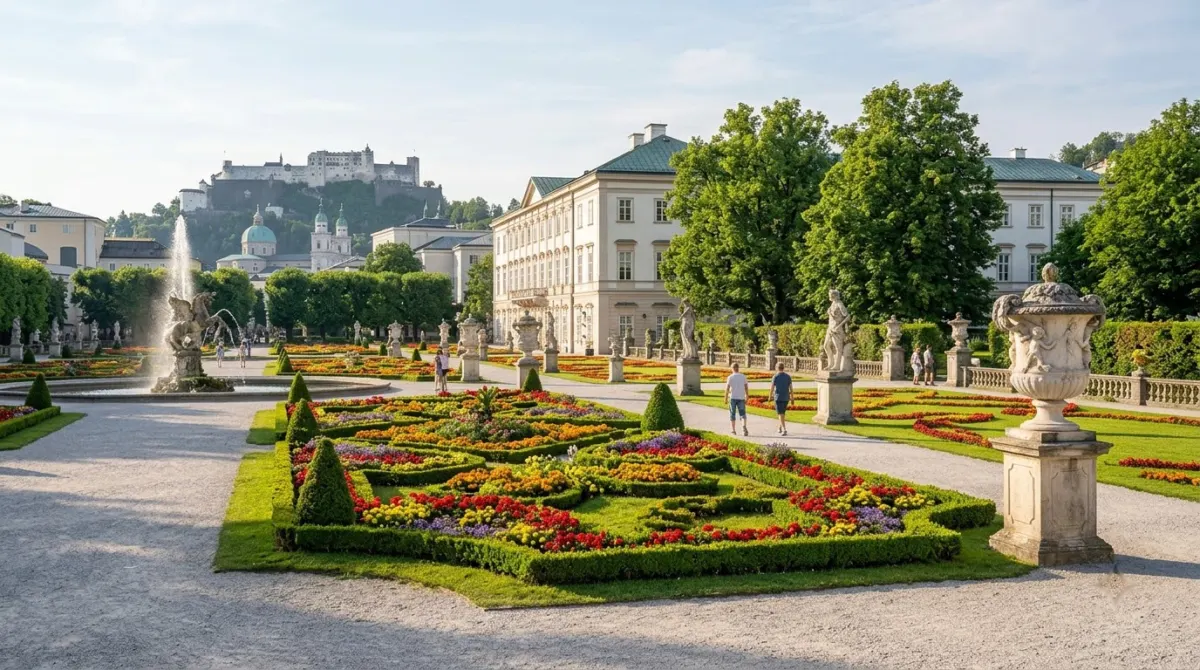
It is five minutes on foot from the old town over the Makartsteg footbridge, the streets are flat, and the railway station is ten minutes north.
For almost everyone except those who specifically want to wake up in the Altstadt, this is the better choice.
Near the Hauptbahnhof
Salzburg’s main station is in the northern Neustadt, about ten minutes’ walk from the river and fifteen from the old town.
The streets immediately around it are ordinary rather than attractive, and the rooms are the cheapest central option. For a single night, an early train or a late arrival, it is perfectly sensible.
Trains from here reach Munich in about an hour and a half and Vienna in two and a half. Hallstatt is around two hours or a little more by public transport, with at least one change, and the 150 bus to Lake Wolfgang and Bad Ischl leaves from the station.
Nonntal, behind the fortress
Nonntal is the district on the far side of the fortress hill, south of the old town. It takes its name from Nonnberg Abbey, the Benedictine convent on the slope above it, which Salzburg’s tourist board describes as the oldest convent north of the Alps in continuous existence.
It is green and residential: the university’s glass Unipark building, a small cluster of cafes and bakeries in Inner Nonntal, and the Almkanal stream and the open meadows of Freisaal at its back. The old town is a short walk round the foot of the hill, and Hellbrunner Allee runs south from here to the Hellbrunn palace.
Accommodation is thinner than across the river, more guesthouses and apartments than hotels, and the evenings are quiet. That suits a longer stay, cyclists, and anyone who has done Salzburg before and wants to see it from the residential side.
Mülln, at the brewery end of the Mönchsberg
Mülln sits at the northern end of the Mönchsberg, the long wooded cliff behind the old town, a walk downriver from the Altstadt. It is known above all for the Augustiner Bräu brewery in the former Mülln monastery, founded by Augustinian monks in 1621, whose Bräustübl is the largest beer hall of its kind in Austria, with the country’s largest beer garden.
Beyond that it is a quiet quarter of old houses with a path from the Mülln church up onto the Mönchsberg. Along the top of the cliff it leads to the Museum der Moderne and the lift that drops you into the old town in about thirty seconds.
Choose Mülln for a second visit, or if you would rather walk into the Altstadt each morning than sleep in it. Riedenburg, on the western side of the Mönchsberg and linked to the old town by the rock-cut Sigmundstor tunnel, is another residential option of the same kind.
Outside the city
Two reasons to sleep outside Salzburg.
Parking and space. The old town is largely pedestrianised with expensive garage parking, so drivers often do better on the outskirts, particularly with a family.
The Salzkammergut. The lake district begins half an hour east, and villages such as St Gilgen and Mondsee are both cheaper and more beautiful than anywhere in the city. If you have a car and two or more nights, this is a genuinely better base.
The Festival changes everything
The Salzburg Festival runs for about five or six weeks from late July into the end of August, and it is one of the major classical music events in the world.
During it, accommodation across the whole city rises steeply in price and sells out months ahead, restaurants need booking, and the old town is full from morning to night.
If you are coming for the Festival, book as early as you can. If you are not, check the dates before fixing flights, because the same room in June or September costs a fraction of the August price.
Smaller peaks: Mozart Week in late January, the Christmas markets from late November, and Easter.
What the accommodation is like
Salzburg has a high proportion of family-run hotels and guesthouses, which is unusual for a city this visited.
Altstadt properties are conversions of old buildings: small rooms, uneven floors, lifts not guaranteed.
Neustadt hotels are a mix of nineteenth-century buildings and modern ones, generally with lifts and larger rooms.
Gasthof and Pension accommodation on the edges and in the surrounding villages is the best value in the area, usually with breakfast included.
Air conditioning is not universal and July and August can be warm, so check if that matters.
How many nights
Two nights covers the old town, the fortress and the Mirabell gardens without rushing.
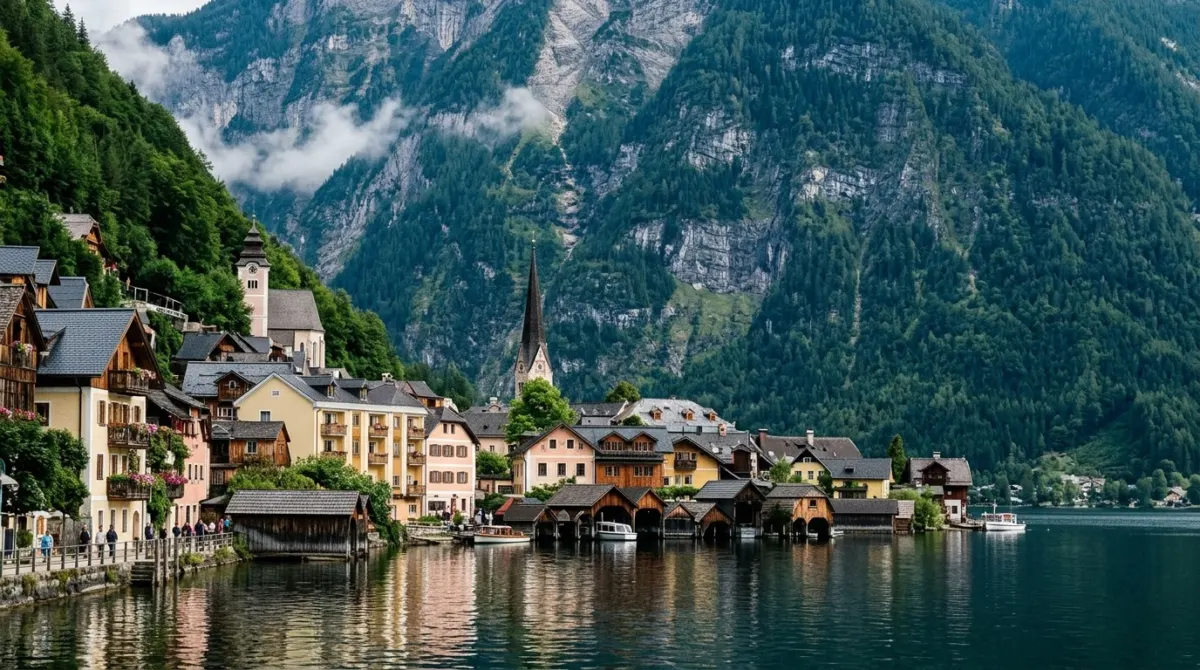
Three is the right number for a first visit, adding either Hallstatt and the lakes or Berchtesgaden across the German border.
Four or more makes Salzburg a base for the Salzkammergut, which is a genuinely good use of a week — see how many days in Salzburg.
Where not to stay
The airport hotels, for anything other than a very early flight; the airport is twenty minutes from the centre by bus.
The far suburbs, which look cheap and put you on a bus for a city you could otherwise walk across.
Anywhere at all in August without checking the Festival dates first, which is the single most expensive mistake available here.
What there is to do in Salzburg
The honest list is short and good.
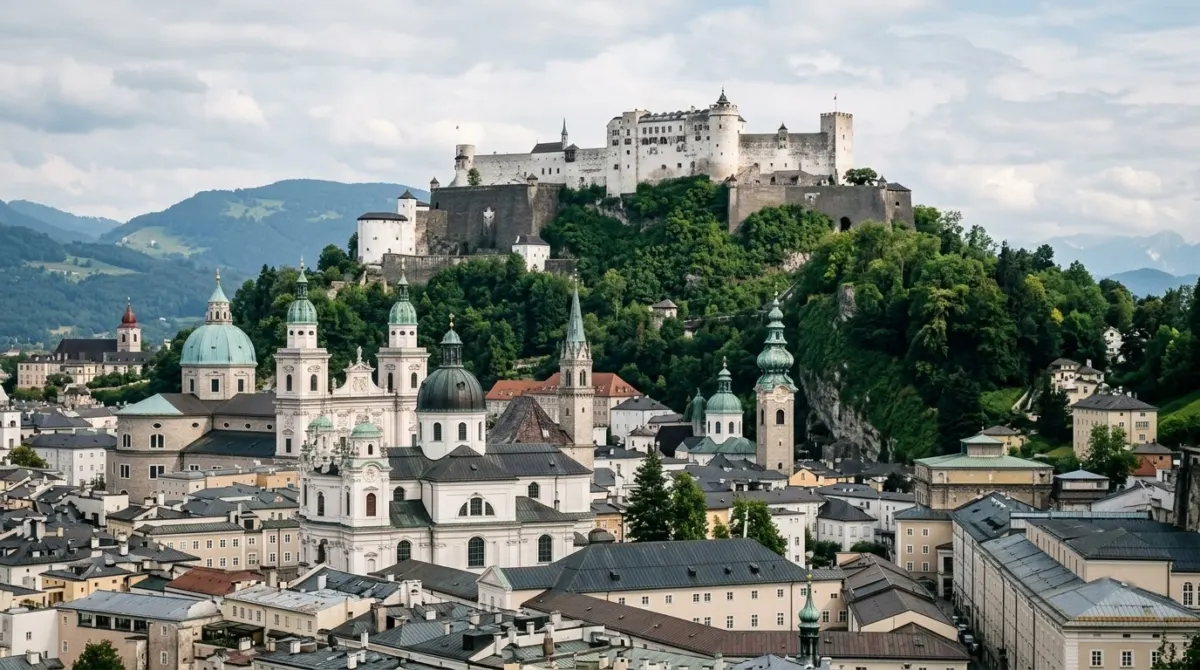
Hohensalzburg fortress, one of the largest surviving medieval castles in Europe, reached by funicular from the old town or on foot up the hill. The views reach the Alps on a clear day.
The cathedral and the Residenz, the archbishops’ seat, which is why a town this size has architecture on this scale — Salzburg was an independent church state for centuries.
St Peter’s Abbey and its cemetery, cut into the cliff face, with catacombs in the rock above.
Mozart’s birthplace on Getreidegasse and the Mozart residence across the river.
Hellbrunn, fifteen minutes south, with trick fountains built in the seventeenth century to soak the archbishop’s dinner guests, and still working.
Sound of Music, honestly
A large share of Salzburg’s visitors come for the film, and the city has an entire industry built on it.
The locations are real and scattered: the Mirabell gardens where the do-re-mi sequence was filmed, Leopoldskron and Hellbrunn for the house exteriors, the gazebo moved to Hellbrunn, and Mondsee church, half an hour east, for the wedding.
Two practical notes. The bus tours cover the scattered sites efficiently and are the only sensible way to see them in a day. And the film is far less known in Austria than visitors assume, so do not expect local enthusiasm.
Getting here and away
Salzburg is unusually well connected for a city of 150,000.
Munich is about an hour and a half by train, Vienna two and a half, Innsbruck two, and Hallstatt around two hours by train and bus, with at least one change.
The airport is twenty minutes from the centre by bus, with flights mostly from within Europe. Many visitors arrive instead through Munich, which has far more connections and a direct train.
That makes Salzburg easy to slot into a German or Austrian route, and it is why so many people see it as a day trip rather than a stay.
December and the Christmas markets
Advent is Salzburg’s second high season, and it shapes where you stay more than the Christmas markets of larger cities do, because the main one is in the middle of the old town.
The Christkindlmarkt fills the Domplatz and Residenzplatz from 19 November 2026 to 1 January 2027, open from morning into the evening every day. The Hellbrunn Advent market runs in the palace courtyard from 19 November to 24 December, in the afternoons and evenings, and is closed on Mondays.
An Altstadt room in December puts the stalls under your window, which is either the point or the problem, depending on how you feel about crowds and mulled wine at the door. The Neustadt, five minutes away over the river, gives you the markets without the noise.
Weekends fill first on both banks. Midweek dates in early December are the better choice: the markets are open, rooms are easier to find, and the old town is less crowded.
Booking windows
Outside the Festival, Salzburg is not a hard city to book: a few weeks is usually enough midweek, a month for a summer weekend.
The exceptions are absolute. The Festival, late July to late August. Mozart Week in late January. The Christmas markets from late November, which fill weekends. And Easter, which has its own festival.
If rates look strange for your dates and it is not one of those, check whether a large conference is in town.
Salzburg with children
The city works better with children than its classical reputation suggests.
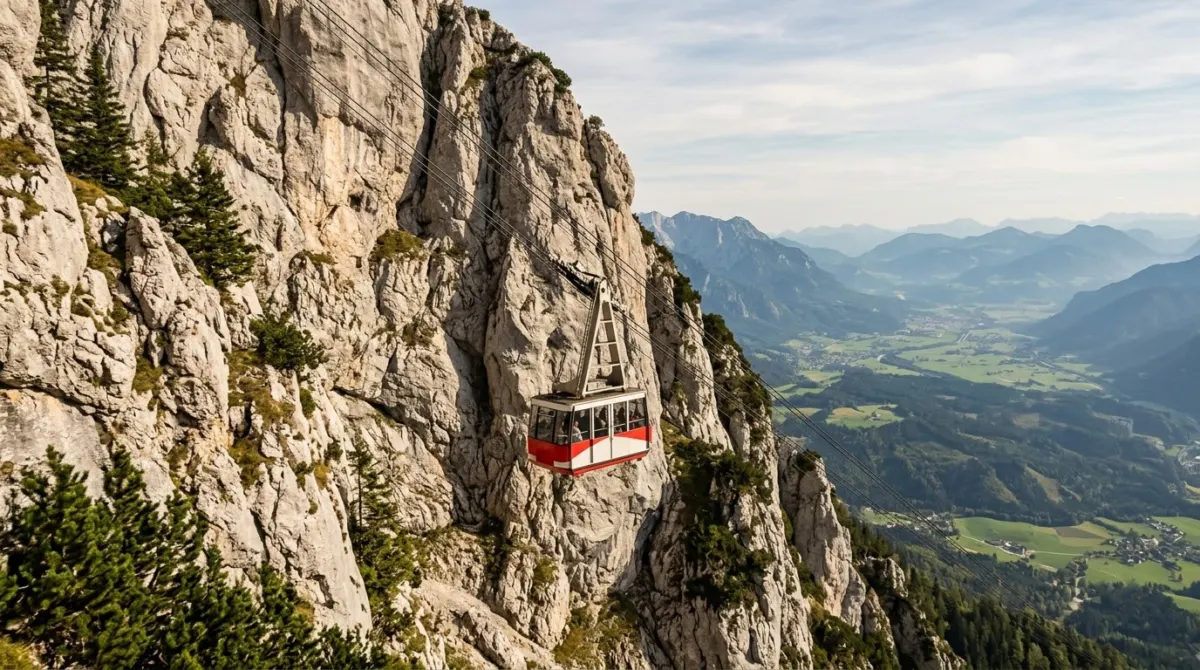
The fortress funicular is a short ride with a castle at the top, which is an easier sell than a museum. Hellbrunn’s trick fountains are designed to soak visitors and do, which children find far funnier than adults do. The Untersberg cable car climbs to 1,800 metres in about ten minutes with a view across the Alps.
For a family stay, the Neustadt or the outskirts give larger rooms and parking, both of which the Altstadt mostly does not.
Where this fits in a trip
Salzburg sits almost exactly between Munich and Vienna, an hour and a half from one and two and a half from the other, which makes it a natural middle stop on a German or Austrian route rather than a destination in itself.
It also connects south to Innsbruck and the Tyrol in two hours, and east into the Salzkammergut lakes in under an hour.
Two nights fits a ten-day Austria or Bavaria trip without strain, and the city is small enough that two nights is genuinely enough.
Salzburg city centre, luggage and the Salzburg Card
Three practical things decide more about a Salzburg stay than the choice of district does.
The city centre is split by the river and both halves are walkable. The Altstadt side is the postcard, pedestrianised and awkward for cars; the Neustadt side across the Staatsbrücke is five minutes away, flatter, and cheaper for the same walk.
Luggage is the recurring problem. The old town is cobbled and partly closed to vehicles, so a taxi may stop some distance from the door, and the older buildings often have no lift. Ask how far the drop-off is before booking, particularly if you are arriving from the station.
The Salzburg Card covers the fortress funicular, the museums, Hellbrunn and public transport for a fixed period. Whether it pays depends on how much you intend to do in a day — two major attractions plus transport is roughly the break-even point, and the fortress alone is not enough.
The Guest Mobility Ticket matters even more than the card for where you stay. Since May 2025 every overnight guest in the province of Salzburg receives it at check-in, as a PDF or a phone wallet pass, and it covers city buses, regional buses, the S-Bahn and regional and long-distance trains within the province for the whole stay, arrival and departure included. It is funded by a small mobility levy charged per night alongside the city tax. It does not cover the Mönchsberg lift. If you arrive by public transport, ask your host to send it in advance so the ride in from the station is covered too.
One thing this changes about where you stay: with free buses for the length of the stay, a room a few stops out costs nothing extra to reach, which widens the search considerably.
The short version
Neustadt around Mirabell for value and flat streets five minutes from the old town, Altstadt if waking up inside it is worth the premium, near the station for an early train, and the Salzkammergut lakes if you have a car and three nights. Two nights for the city, three with the lakes. Check the Festival dates before you book anything in summer.
For what to see once you are there, read things to do in Salzburg.
Frequently asked questions
What is the best area to stay in Salzburg?
The Neustadt between the Mirabell gardens and the river: five minutes' walk from the old town over a footbridge, flat streets, and cheaper than the Altstadt. Stay in the Altstadt itself if waking up in the old town is worth the premium.
Is it better to stay in the old town in Salzburg?
Only if the atmosphere matters more than the price. The Altstadt is the most expensive part of the city, the rooms are small and the streets are full of day visitors between ten and five. The other bank is five minutes away.
How many nights do you need in Salzburg?
Two for the old town, the fortress and the gardens. Three if you want Hallstatt and the lakes or Berchtesgaden across the German border. Four or more if you are using it as a base for the Salzkammergut.
When does Salzburg get booked out?
During the Salzburg Festival, which runs for five or six weeks from late July into late August and fills the city at steeply higher prices. Mozart Week in January, the Christmas markets and Easter are smaller peaks.
Is Salzburg walkable?
Entirely. The old town and the Neustadt are five minutes apart over a footbridge and both are compact and flat, apart from the climb or funicular to the fortress.
Should I stay in Salzburg or by the lakes?
In the city for one or two nights, by the lakes if you have a car and three or more. Villages such as St Gilgen and Mondsee are half an hour east, cheaper, and more beautiful than anywhere in Salzburg itself.
Keep planning Austria
- Where to Stay in Vienna: Just Outside the Ring
- How Many Days for Prague, Vienna and Budapest? Ten, Split 3-4-3
- How Many Days in Salzburg? Two, and Three for the Lakes
- How Many Days in Vienna? Four, Because the Palaces Are Half Days
- Austria and Switzerland Itinerary: Cities First, Mountains Last
- Vienna 2 Day Itinerary: Pick Two of the Four Big Things
- Prague, Vienna, Budapest: Ten Days, Two Trains, Three Currencies
- Three Day Vienna Itinerary: One Large Thing a Day
Written and checked by
Triplarks Editorial
An editorial desk, not an invented persona: research, drafting and fact-checking are done by the same small team. Every number here carries the date it was read.