Quick answer
Neubau or Mariahilf just outside the Ring suits most visitors: ten to fifteen minutes’ walk from the cathedral, better streets, and rooms noticeably cheaper than the Innere Stadt. Check whether your dates collide with the Christmas markets or the ball season.
On this page
- Where to stay in Vienna: the short answer
- The Innere Stadt
- Neubau and Mariahilf
- Wieden and the Naschmarkt
- Leopoldstadt
- Landstrasse and the 3rd district
- Around the Hauptbahnhof
- Josefstadt, Spittelberg and the quieter inner districts
- Alsergrund, the university quarter
- Hietzing, at the gates of Schönbrunn
- Grinzing and the wine villages
- Day trips, and whether they change where you stay
- Getting around
- Picking a hotel by its U-Bahn line
- What the accommodation is like
- How many nights
- What Vienna costs, and where the value is
- Addresses that look central and are not
- When Vienna fills up
- Getting in from the airport
- Vienna with limited mobility
- Coffee houses, and why they matter to a stay
- If evenings out matter most
- Vienna with children
- A summer stay
- Staying a week or longer
- The short version
- Frequently asked questions
Vienna is laid out in rings. The Innere Stadt sits inside the Ringstrasse, the boulevard built where the city walls were, and the districts spiral outwards from it in numbered order. Almost everything a visitor wants is inside the Ring or in the first ring of districts beyond it.
Some links below are affiliate links. We may earn a commission if you book through them, at no extra cost to you. We do not rank hotels, and any prices on the map come live from the booking sites.
That makes the decision less about distance — the U-Bahn crosses the city in minutes — than about what kind of street you want, and what you are willing to pay to be inside the Ring. If Vienna is one stop on a longer rail trip, see where to stay in Munich and where to stay in Zurich.
Where to stay in Vienna: the short answer
| If you are | Stay in | Why |
|---|---|---|
| Here two or three nights, first visit | Innere Stadt (1st) | Everything on foot |
| Wanting value near the centre | Neubau or Mariahilf (7th, 6th) | Shops, cafes, ten minutes in |
| Here for the museums | Museumsquartier edge (7th) | The big galleries at the door |
| Arriving by train | Landstrasse or Wieden (3rd, 4th) | Hauptbahnhof and the airport train |
| Wanting bars and markets | Wieden, by the Naschmarkt (4th) | The market and the restaurants |
| Here with family | Leopoldstadt (2nd) | The Prater, larger rooms, one stop out |
One answer with no caveats: Neubau or Mariahilf, the 7th and 6th districts, just outside the Ring. You walk into the centre in ten to fifteen minutes, the streets have the city’s best shops and cafes, and the rooms cost noticeably less than inside.
The Innere Stadt
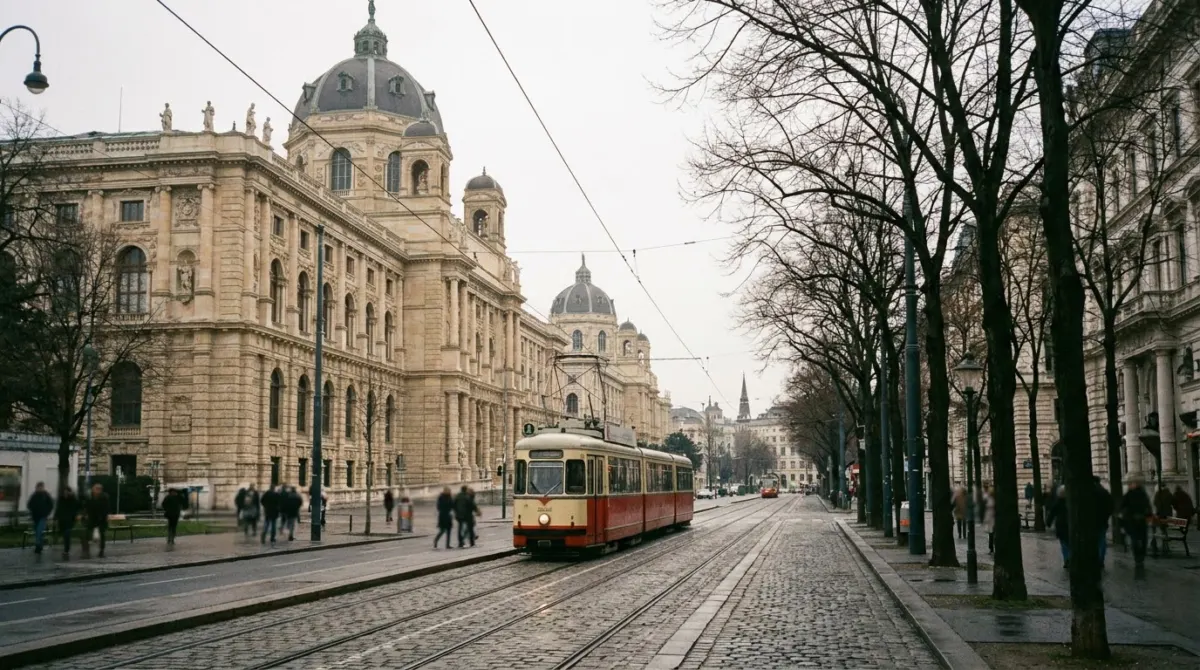
The first district is the old city: St Stephen’s Cathedral at its centre, the Hofburg palace complex, the state opera, and the grand buildings of the Ringstrasse around the edge.
Staying here means walking out into imperial Vienna, and it means paying for it — this is the most expensive district in the city by a wide margin.
It is also quiet at night in a way that surprises people. The first district empties after the restaurants close, because few people live there. If you want life in the evening, it is outside the Ring.
Which corner of the first district
The first district is small but not uniform, and the corner you pick changes the stay.
Around Stephansplatz and the Graben is the centre of the centre: the cathedral, the main shopping streets and the heaviest daytime crowds. Convenient for everything, and the hardest place to find a quiet room.
Around the Hofburg, Herrengasse and the Freyung is the old aristocratic quarter of palaces and traditional coffee houses. It is calmer in the evening and a few minutes from the museums on the Ring.
Towards Schwedenplatz and the Danube Canal the lanes are older and narrower, the U1 and U4 meet at the corner, and the small bar quarter around Seitenstettengasse keeps this end awake later than the rest.
Along the Ring itself are the grand hotels in nineteenth-century palaces, with trams outside the door. You pay for the facade as much as the room.
Map shows live availability and prices. We may earn a commission on bookings made through it, at no extra cost to you.
Neubau and Mariahilf
The 7th and 6th districts, immediately west of the Ring, are where Vienna is most enjoyable to walk around.
Neubau has the independent shops, the design studios and the cafes, with the Museumsquartier and the two great art museums on its eastern edge.
Mariahilf has Mariahilfer Strasse, the main shopping street, and runs down to the Naschmarkt.
Both are ten to fifteen minutes’ walk from the cathedral and on several U-Bahn lines. This is the answer for most visitors.
The Westbahnhof end of Mariahilfer Strasse
Mariahilfer Strasse runs west from the MuseumsQuartier to the Westbahnhof, and the further west you go, the plainer and cheaper it gets. Rooms near the station suit a late arrival or an early regional train, with the U3 and U6 at the door.
For a first visit, stay at the eastern end, between Neubaugasse and the MuseumsQuartier, where the Hofburg and the big museums are a walk rather than a ride. The central stretch of the street is a pedestrian and shared-traffic zone, so a room on it is quieter than the shopping crowds suggest.
Wieden and the Naschmarkt
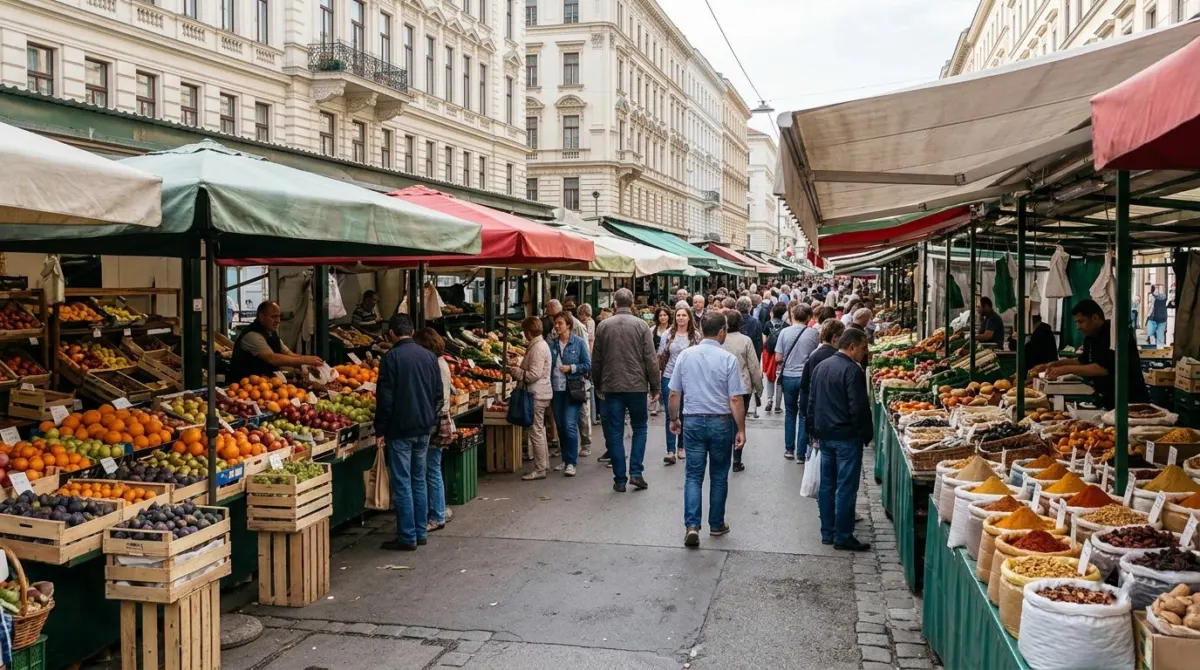
The 4th district, south of the Ring, holds the Naschmarkt — a long market of food stalls and restaurants — and the streets around it are the best eating in the city.
It is also convenient for the Belvedere, where Klimt’s The Kiss hangs, and for the Hauptbahnhof.
Good for a second visit, for food, and for anyone who wants a residential district five minutes from the centre.
The Karlsplatz edge
Wieden’s northern boundary is Karlsplatz, and the streets just south of it are as central in practice as the first district. The baroque Karlskirche is here, the Musikverein concert hall is just across the line, the Wien Museum tells the city’s history in a permanent exhibition that is free to enter, and Otto Wagner’s two gilded railway pavilions stand in the square.
A room between Karlsplatz and the top of the Naschmarkt puts the opera five minutes away on foot and three U-Bahn lines at the corner. If you want one address that works for music, food and the museums at once, this is it.
Leopoldstadt
The 2nd district, across the Danube Canal, holds the Prater — a vast public park with the Riesenrad ferris wheel at one corner — and is the practical family choice.
Rooms are larger and cheaper, the park is on the doorstep, and the centre is one or two U-Bahn stops away. The area around the canal has become the city’s casual nightlife district.
The Karmeliterviertel and the Augarten
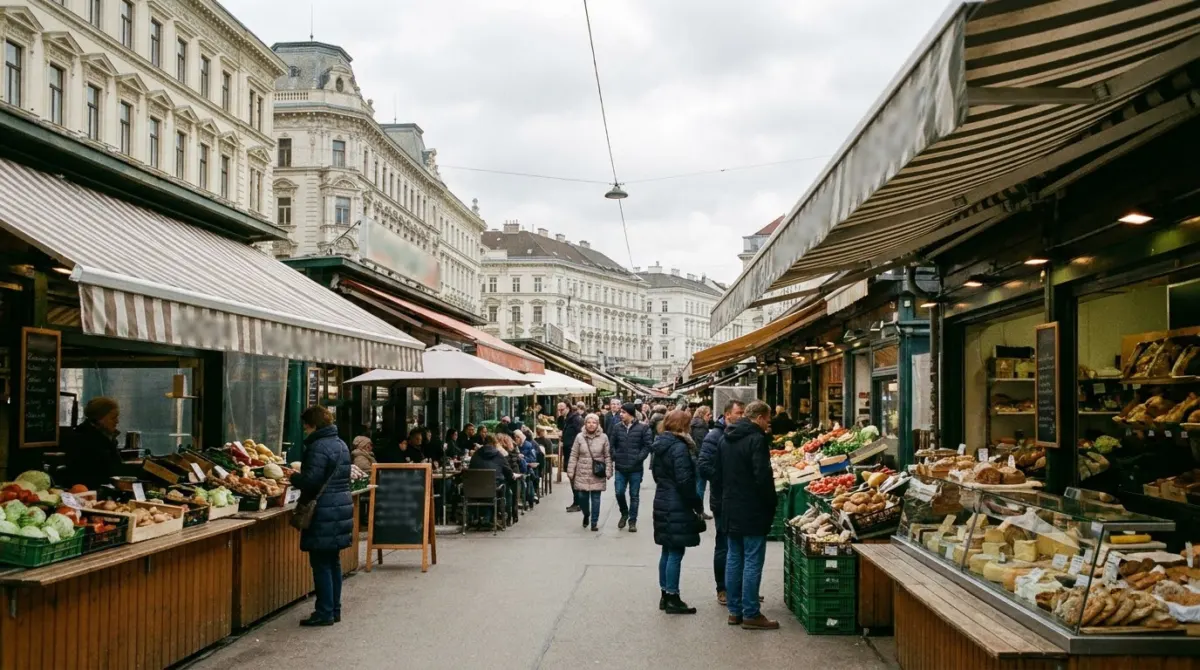
Two parts of the 2nd district are worth naming when you search. The Karmeliterviertel, around the Karmelitermarkt, is a short walk over the canal from Schwedenplatz: a market square with a farmers’ market on Saturdays, small restaurants and a strongly local feel.
North of it is the Augarten, the city’s oldest baroque garden, open to the public since 1775. The Vienna Boys’ Choir lives and rehearses in the palace there, the porcelain manufactory has its workshop and museum on site, and two concrete wartime flak towers stand among the trees.
Stay near these and the canal rather than out by the trade fair grounds at the far end of the Prater, which suits a congress and very little else.
Landstrasse and the 3rd district
The 3rd district runs south-east from the Ring between the Stadtpark and the Belvedere, and it is the most underrated base in the city.
It holds more than visitors expect. Both Belvedere palaces and the garden between them are inside its boundary. The Konzerthaus stands at its edge by the Stadtpark. The Hundertwasser House, which can only be seen from outside, and the Kunst Haus Wien, the museum Hundertwasser designed, are in the Weissgerber quarter by the Danube Canal. And Wien Mitte, the interchange for the U3, the U4 and the S-Bahn, is at its northern tip.
The streets are residential and mostly unremarkable, and rooms cost less than in the 1st, 6th or 7th districts. The trade-off is the walk: about ten minutes to the cathedral from Wien Mitte, and twice that from the far side of the Belvedere.
Stay near Wien Mitte or the Rochusmarkt if you want to walk into the centre, near the Belvedere if the art is why you came, and by the canal in summer for the waterside bars. Avoid the outer reaches towards Erdberg and St Marx, which are a long way from anything a visitor needs.
One thing has changed for now: Wien Mitte is the City Airport Train terminal, and until the end of October 2027 that link runs as a coach rather than a train. The airport section below has the details.
Around the Hauptbahnhof
Vienna’s main station is in the 10th district on the southern edge of the centre, and the area around it is modern, functional and unremarkable.
Its argument is transport: long-distance trains to Prague, Budapest, Munich and Venice, and nonstop railjets to the airport in about fifteen minutes, every half hour. While the inner-city rail line is closed for rebuilding, until the end of October 2027, that makes it the best-connected address in Vienna.
If you are arriving late, leaving early, or using Vienna as a hub for central Europe, it earns its place. Otherwise the districts above are more pleasant for the same money.
Which side of the tracks matters. The north side, towards the Belvedere, is a new quarter of offices and hotels a few minutes’ walk from the Upper Belvedere gardens and on the tram towards the Ring. The south side opens into the residential 10th district, where there is little reason for a visitor to go deeper. Choose a room on the north side.
Josefstadt, Spittelberg and the quieter inner districts
Two small areas just outside the Ring that keep coming up, and are easy to miss because neither is a tourist name.
Josefstadt, the 8th district, is the smallest in Vienna: Biedermeier houses, the Theatre in der Josefstadt, and a street life of bookshops and coffee houses rather than souvenir stands. It is ten minutes from the city centre on foot or two stops on the U2, and it is where a lot of Viennese would tell you to stay.
Spittelberg is a pocket of cobbled lanes behind the MuseumsQuartier, technically part of Neubau. In December it holds one of the better Christmas markets; the rest of the year it is quiet, low-built and full of small restaurants.
Both put you within walking distance of the main attractions without paying Innere Stadt rates, and both are a short tram ride from the Hauptbahnhof.
Alsergrund, the university quarter
The 9th district lies north of the Ring between the university and the Danube Canal. It is the choice for anyone who wants a residential Vienna with the centre fifteen minutes away on foot.
Its sights are the quieter kind. Berggasse 19, where Freud lived and worked from 1891 until he emigrated in 1938, is now the Sigmund Freud Museum. The Liechtenstein Garden Palace holds the princely family’s art collection, shown only on guided tours that have to be reserved. The Strudlhofstiege, an Art Nouveau staircase from 1910, links the streets above and below it. And the Servitenviertel, a few streets around Servitengasse, has the cafes and small restaurants that make an evening walk worthwhile.
The university and the large hospital keep the district busy in term time, and it is well served: the U2 at Schottentor on its southern corner, the U4 along the canal and the U6 at its western edge.
Pick the streets near Schottentor or the Servitenviertel. Rooms facing the Gürtel, on its western edge, are another matter, for reasons covered further down.
Hietzing, at the gates of Schönbrunn
The 13th district begins at the western wall of the Schönbrunn park. It is the most peaceful base in Vienna that still has a U-Bahn line straight into the centre.
It is a district of villas, gardens and old village streets, with the palace park, the zoo and the Gloriette effectively a back garden. Otto Wagner’s private railway pavilion for the imperial court still stands beside the Hietzing U4 station.
The U4 reaches Karlsplatz in around a quarter of an hour, and that is the whole calculation: the palace at opening time before the tour groups, quiet evenings, and a ride for everything else.
Choose Hietzing for a long stay, a return visit, or a family that wants green space more than nightlife. On a first trip of three or four nights the ride costs more than the peace is worth, and a room on the U4 in Wieden or Mariahilf reaches the palace almost as fast.
Grinzing and the wine villages
Vienna grows wine inside its own city limits, and the old wine villages on the north-western edge of the 19th district are an unusual but real option for a stay.
Grinzing is the famous one; Nussdorf, Sievering and Neustift am Walde are smaller and quieter. All of them are lined with Heurigen, the family wine taverns, and backed by vineyards climbing towards the Kahlenberg and the Vienna Woods. Tram 38 connects Grinzing with Schottentor on the edge of the first district, and Nussdorf is the end of the D tram line from the Ring.
What you get is green streets, walks straight out into the vineyards, and an evening glass in a garden a few minutes from your door. What you give up is time: every sight is at the far end of a tram ride of twenty minutes or more, and the villages go to sleep early.
It is the right base for a second visit, a week-long stay, or a summer trip that is more about the city’s life than its palaces. On a first visit of three or four nights, stay central and ride out to the villages for one evening instead.
Day trips, and whether they change where you stay
Vienna is a good base, and that is worth factoring in before you book.
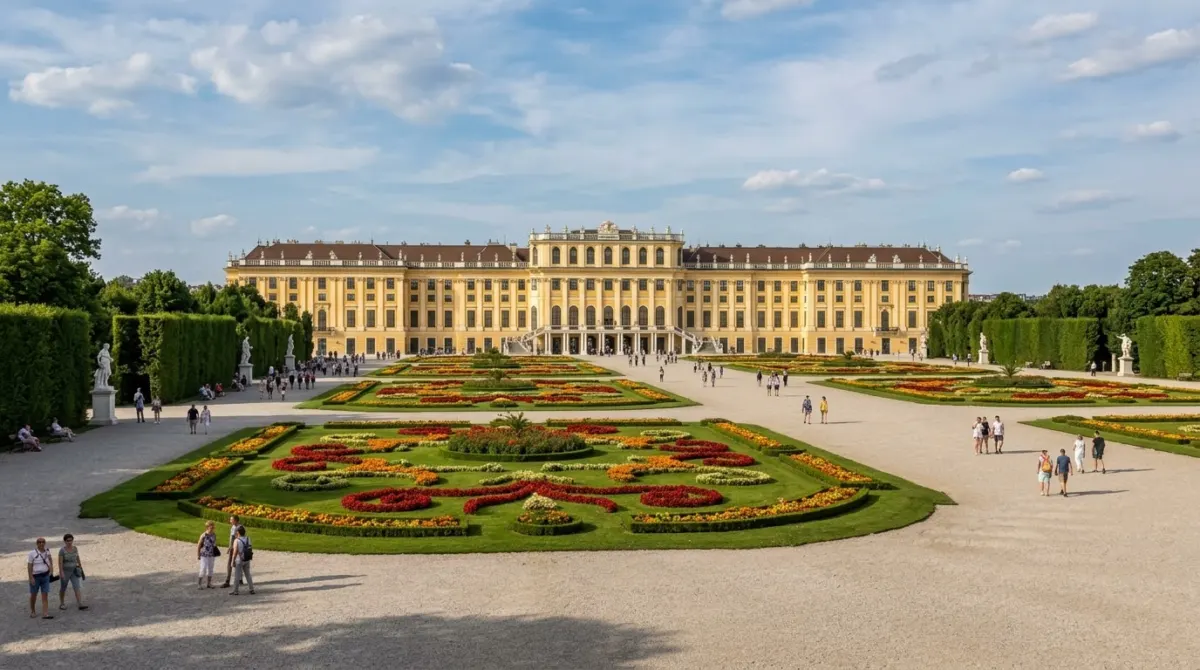
Schönbrunn is inside the city on the U4, so it needs no planning at all — but if the palace and its gardens are the reason you came, the western districts shorten the journey.
Bratislava is about an hour by train or boat, Melk and the Wachau valley about ninety minutes, and Salzburg two and a half hours on the railjet. All of them leave from the Hauptbahnhof or Westbahnhof, which is the argument for staying near one of the two if you plan more than one day trip.
For a single day out, any central district works and the station matters less than the walk home at the end of the day.
Getting around
Vienna’s public transport is one of the best systems in Europe: five U-Bahn lines, trams on the Ring and across the city, and buses filling the gaps, all on one ticket.
A 24, 48 or 72 hour ticket is almost always worth buying, and tram lines 1 and 2 between them run along most of the Ring past the grand buildings for the price of a normal fare.
The airport is normally fifteen minutes from Wien Mitte by the City Airport Train, but the inner-city rail line is closed for rebuilding until the end of October 2027. The airport section below covers what runs instead.
The Vienna City Card, or a plain ticket
The Vienna City Card combines 24, 48 or 72 hours of public transport, or a full week, with discounts at more than two hundred museums, attractions and shops, and it can be bought with the airport transfer included. If you will not use the discounts, a plain Wiener Linien ticket of the same length does the transport on its own. Either way, stamp it before the first ride.
Picking a hotel by its U-Bahn line
Within the districts above, the nearest U-Bahn line matters more than the exact distance from the cathedral. Five lines cover the centre, and each favors a different kind of trip.
- U1 (red) runs through Stephansplatz and Karlsplatz to the Hauptbahnhof, and north across the canal to Praterstern and the Danube Island. Best if you arrive by long-distance train.
- U2 (purple) runs along the western side of the Ring past the MuseumsQuartier, the Volkstheater and Schottentor, then out to Praterstern and the Prater. Best for the museums.
- U3 (orange) crosses the centre from the Westbahnhof under Mariahilfer Strasse, through Neubaugasse and the Volkstheater to Stephansplatz and Wien Mitte. The most useful single line for a stay in Neubau or Mariahilf.
- U4 (green) runs west to Schönbrunn and Hietzing, past the Naschmarkt at Kettenbrückengasse, and through Karlsplatz to Schwedenplatz. Stay near it if the palace matters.
- U6 (brown) follows the Gürtel round the west of the inner districts, linking the Westbahnhof and Meidling. Useful, but its stations are outside the walkable centre.
Karlsplatz, where the U1, U2 and U4 meet, is the best-connected point in the city. A room within five minutes of it, in Wieden or the first district, reaches almost everything without a change.
What the accommodation is like
Vienna’s stock is grander and older than most European capitals, with a strong supply of nineteenth-century apartment buildings converted into hotels and apartments.
That usually means high ceilings and large rooms, which is a genuine difference from Amsterdam or Edinburgh. Lifts are common but not universal in the older buildings, and air conditioning is less common than you would expect for a city that gets hot in July and August.
Apartments are widespread and good value for stays over three nights.
Two things to check in an older building. First, the floor: Viennese buildings often have a raised ground floor and a mezzanine before the first floor, so a room on the third floor can be higher up than the number suggests, and that matters if there is no lift. Second, cooling: for a trip between June and August, filter for air conditioning rather than assuming it.
How many nights
Three nights covers the Hofburg, one or two museums and a day at Schönbrunn. Four is the right number for a first visit, adding the Belvedere, the Naschmarkt and a concert or a coffee house afternoon.
Five or more makes Vienna a base for the Wachau valley, Bratislava — an hour away by train or boat — and the Vienna Woods.
Whatever the length, notice whether a Sunday falls in the middle. Shops close across Austria on Sundays, apart from those in the big railway stations and at the airport, which matters more for an apartment stay than a hotel one: shop on the Saturday.
Our guide to how many days in Vienna works through each length.
What Vienna costs, and where the value is
Vienna is expensive inside the Ring and reasonable immediately outside it, and the gap is larger than the ten-minute walk between them suggests.
The first district carries a premium for the address. The 6th, 7th and 4th districts give you larger rooms in nineteenth-century buildings for noticeably less, and the 2nd and the outer districts less again.
Two further points. Weekends are cheaper than midweek in Vienna, because the city carries a lot of business and conference travel. And August is quieter and cheaper than you would expect for a European capital, because the Viennese leave and the opera season is over.
Addresses that look central and are not
The mistakes in Vienna are about distance and noise rather than safety, and they are easy to make from a map.
Rooms facing the Gürtel. The Gürtel is the multi-lane road that rings the inner districts. A hotel on it can truthfully say it is near the centre, and a street-facing room on it is loud all night. Book inside it, or ask for a courtyard room.
Across the Danube. The modern districts on the far bank, around the United Nations complex at Kaisermühlen and beyond, suit a conference. For sightseeing, every day starts and ends with the U-Bahn.
Deep in Favoriten. The Hauptbahnhof is a sensible base; the residential 10th district south of it is not, simply because every trip into the centre begins with a ride back past the station.
Directly on Praterstern. The square around the station is a busy transport hub with a rough edge at night, enough that the city banned public drinking there in 2018. The streets a few minutes away in Leopoldstadt are a different and much better proposition.
The outer districts in general. Anything well beyond the Gürtel to the west or south is cheaper, and on a three-night trip the saving goes on time spent underground.
When Vienna fills up
Three predictable periods.
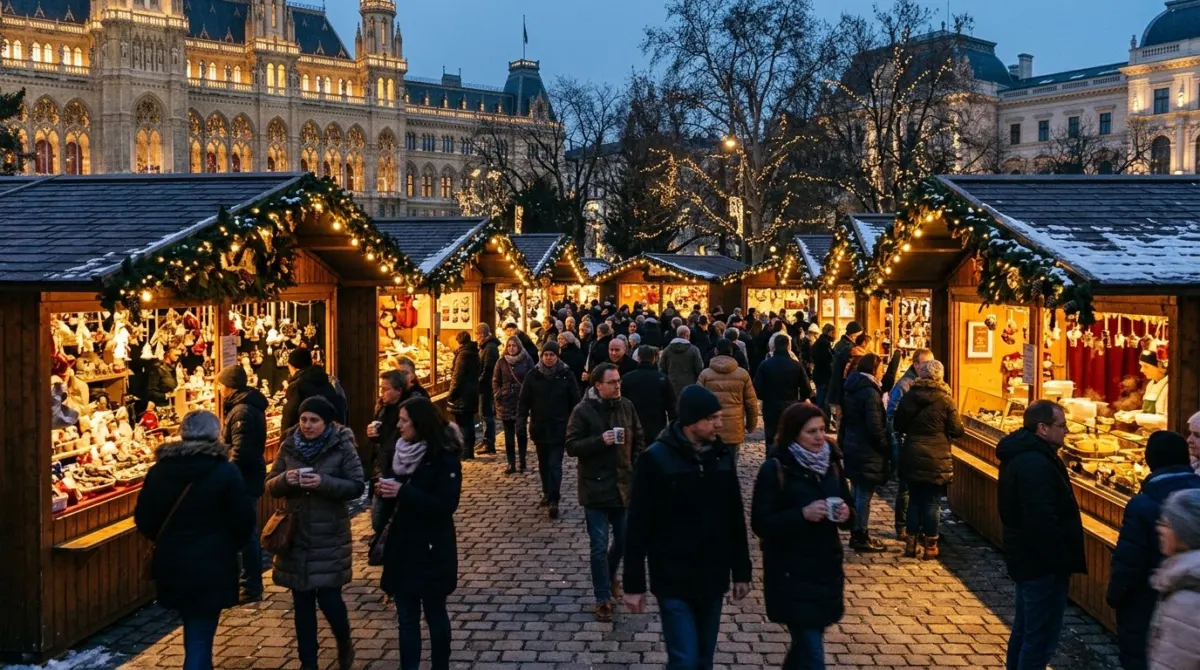
The Christmas markets, from mid-November to Christmas, which fill weekends across the whole city.
The ball season in January and February, when the city holds hundreds of formal balls and the grand hotels sell out.
Major conferences and congresses, which Vienna hosts constantly and which are invisible from outside — if rates look strange for your dates, this is usually why.
Outside those, a few weeks’ notice is generally enough, which is unusual for a capital of this size.
Getting in from the airport
Vienna International is about twenty kilometres south-east, with three ways in.
Normally the City Airport Train reaches Wien Mitte in about fifteen minutes and the cheaper S7 S-Bahn takes a little longer. Neither works that way at the moment. The inner-city rail line between the Hauptbahnhof and Praterstern is closed for rebuilding from 7 September 2026 until the end of October 2027, and during the closure:
- Railjets run nonstop from the Hauptbahnhof to the airport in about fifteen minutes, every half hour. This is now the fastest rail link.
- The City Airport Train runs as a coach service between the airport and Wien Mitte.
- The S7 runs only between the airport and St Marx, where you change to a tram.
- The Vienna Airport Bus runs to several points in the city, with extra routes from Karlsplatz and Praterstern while the line is closed.
For as long as the closure lasts, a room near the Hauptbahnhof or anywhere on the U1, which runs straight to it, makes the airport easiest. Wherever you stay among the districts above, you are still within about three quarters of an hour of the plane.
Vienna with limited mobility
Better than most historic European capitals.
The U-Bahn is almost entirely step-free with lifts at nearly every station, trams are increasingly low-floor, and the city centre is flat. Nineteenth-century apartment buildings usually have lifts, though not always to every floor.
What to check is the building rather than the district: the older conversions in the first district can have steps at the entrance and lifts that start on the first floor, exactly as in other imperial cities.
The same applies to the sights. The cathedral’s north tower has a lift to its viewing platform, with a short flight of steps at the end, while the south tower is stairs only. And some historic venues, the Spanish Riding School among them, have no lift at all, with the galleries reached by stairs.
Coffee houses, and why they matter to a stay
The Viennese coffee house is a listed element of the country’s cultural heritage, and it functions as a public living room: you buy one coffee, you are given a glass of water, and you stay as long as you like with a newspaper.
Practically, this changes how you use the city. An afternoon is not wasted in a coffee house; it is the intended use. If your accommodation is near one of the traditional houses — most of the famous ones are in the first, fourth, sixth and ninth districts — you will use it daily.
It is also the cheapest way to spend two hours indoors on a cold day, which in a Viennese January is worth knowing.
If evenings out matter most
The first district empties at night, so if bars and late dinners are part of the plan, the choice of district shifts.
Neubau is the safe answer: the densest spread of bars and restaurants within walking distance of the centre, around Spittelberg and the streets behind the MuseumsQuartier.
The Gürtel arches are the live music strip. Otto Wagner’s railway viaduct, now carrying the U6, runs along the Gürtel, and the arches between Thaliastrasse and Nussdorfer Strasse hold music bars and clubs, which can play loud because the traffic above drowns them out. Stay a few streets inside the Gürtel in Josefstadt or Alsergrund and walk out to them.
The Danube Canal is lined with bars and outdoor terraces in summer, between the first and second districts. A room in Leopoldstadt near the water, or at the Schwedenplatz end of the Innere Stadt, puts you minutes away.
Wherever you stay, the U-Bahn runs through the night on Fridays and Saturdays and before public holidays, with night buses on the other nights, so getting home late is rarely a problem.
Vienna with children
Leopoldstadt is the district, and the reason is the Prater: a vast public park with an old funfair at one corner, free to walk into, with the Riesenrad ferris wheel that has been turning since 1897.
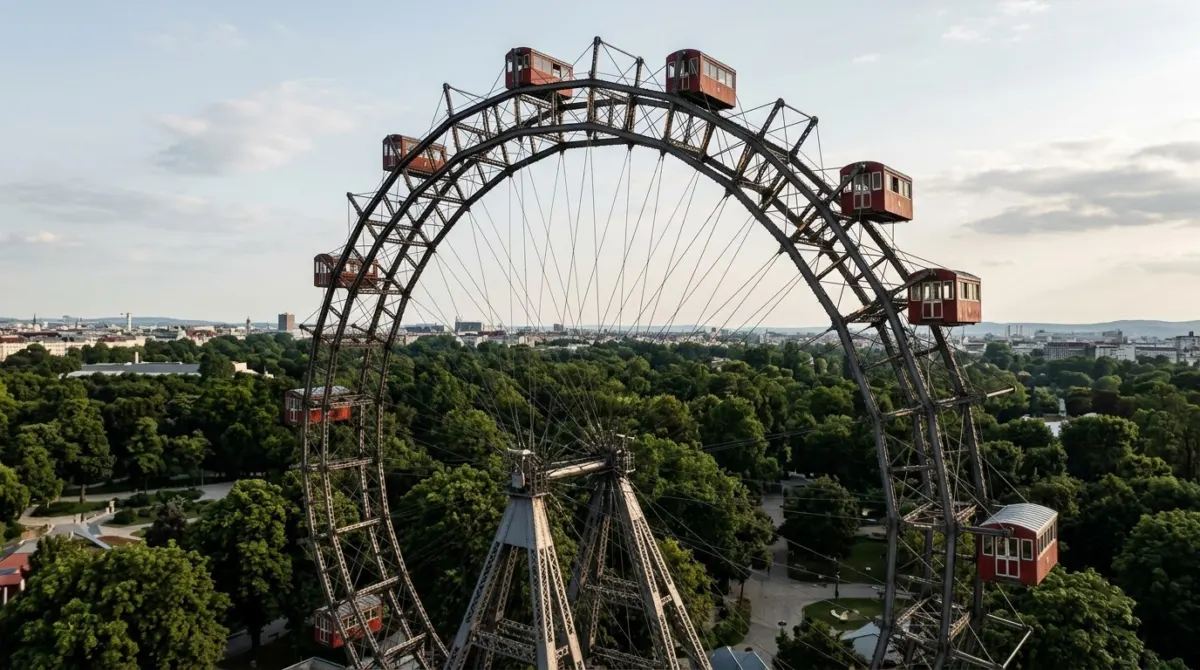
Beyond that, the zoo at Schönbrunn is the oldest in the world and genuinely good, the Natural History Museum opposite the Kunsthistorisches has the dinosaurs, and the Haus des Meeres aquarium occupies a converted wartime flak tower in the sixth district.
Rooms in Leopoldstadt and the outer districts are larger and cheaper than inside the Ring, and the U-Bahn makes the distance irrelevant.
A summer stay
Vienna in July and August is hot, quieter than you would expect, and a different city from the one in the brochures.
The opera house closes for its summer break, the concert season winds down, and much of the city’s social life moves outdoors: to the bars along the Danube Canal, to the Prater, and above all to the Danube Island, a 21-kilometer strip of beaches, meadows and swimming spots on the New Danube, reached from the centre in minutes on the U1 or the U6. Several of its city beaches are free to use.
That changes the calculation on where to stay. Leopoldstadt, between the canal and the Danube, becomes the most convenient district rather than just the family one. A courtyard-facing room and air conditioning matter more than the address. And the late summer evenings make the districts outside the Ring, where people actually sit outside, more attractive than the first district.
Staying a week or longer
Past five nights, the logic of where to stay in Vienna turns round. Being inside the Ring stops being worth the premium, because you will walk the first district several times anyway, and what matters is a neighbourhood you enjoy coming back to.
Look at Josefstadt, Alsergrund or Wieden: residential, with bakeries, a market and a coffee house on the corner, and fifteen minutes from the cathedral. An apartment with a kitchen pays for itself over a week, and the city’s street markets make cooking part of the stay rather than a chore.
A week also makes the day trips realistic without moving bases: Bratislava, the Wachau valley and the Vienna Woods all leave from the city’s stations or the end of a tram line. A seven-day transport ticket covers everything inside the city.
The short version
Neubau or Mariahilf just outside the Ring for most visitors: ten to fifteen minutes’ walk to the cathedral, the best streets in the city, and rooms that cost noticeably less than inside. Innere Stadt if you want imperial Vienna on the doorstep and will pay for it. Wieden for the Naschmarkt and the food, Leopoldstadt for families and the Prater, the Hauptbahnhof for early trains. Buy a multi-day transport pass and check the Christmas market and ball-season dates.
Planning the days as well? See the best things to do in Vienna.
Frequently asked questions
What is the best area to stay in Vienna?
Neubau or Mariahilf, the 7th and 6th districts just outside the Ring: ten to fifteen minutes' walk from the cathedral, with the best shops and cafes and rooms noticeably cheaper than inside the Innere Stadt.
Is it worth staying inside the Ring in Vienna?
For a short first visit, if the budget allows — everything is on foot and you wake up in imperial Vienna. Be aware that the first district is expensive and quiet at night, because very few people live there.
Where should I stay in Vienna with family?
Leopoldstadt, the 2nd district across the canal. The Prater park with its ferris wheel is on the doorstep, rooms are larger and cheaper, and the centre is one or two U-Bahn stops away.
Is the area around Vienna Hauptbahnhof good?
Functional rather than pleasant, and very convenient: long-distance trains to Prague, Budapest and Munich, plus the airport train in about fifteen minutes. Worth it for an early departure, otherwise look at the inner districts.
How many nights do you need in Vienna?
Three for the Hofburg, a museum and Schönbrunn. Four for a first visit, adding the Belvedere and the Naschmarkt. Five or more if you want the Wachau valley or a day in Bratislava, which is an hour away.
Do I need public transport in Vienna?
The centre is walkable, but the U-Bahn and trams are excellent and a 24, 48 or 72 hour ticket is usually worth buying. Tram lines 1 and 2 between them run along most of the Ring past the grand buildings for a normal fare.
How do I get from Vienna airport to the city in 2026 and 2027?
Until the end of October 2027 the inner-city rail line is closed for rebuilding. The fastest option is the railjet to the Hauptbahnhof, nonstop in about fifteen minutes every half hour. The City Airport Train runs as a coach to Wien Mitte, and the S7 stops at St Marx, where you change to a tram.
Keep planning Austria
- Where to Stay in Salzburg: Five Minutes Either Side of the River
- How Many Days for Prague, Vienna and Budapest? Ten, Split 3-4-3
- How Many Days in Salzburg? Two, and Three for the Lakes
- How Many Days in Vienna? Four, Because the Palaces Are Half Days
- Austria and Switzerland Itinerary: Cities First, Mountains Last
- Vienna 2 Day Itinerary: Pick Two of the Four Big Things
- Prague, Vienna, Budapest: Ten Days, Two Trains, Three Currencies
- Three Day Vienna Itinerary: One Large Thing a Day
Written and checked by
Triplarks Editorial
An editorial desk, not an invented persona: research, drafting and fact-checking are done by the same small team. Every number here carries the date it was read.