Quick answer
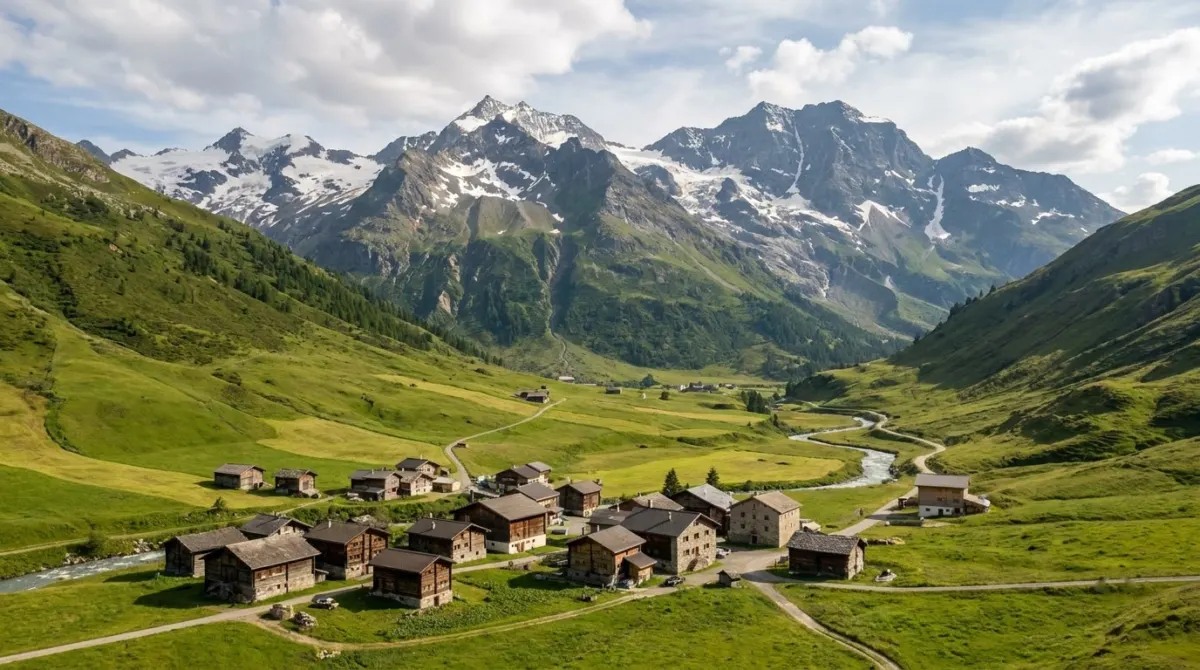
Five bases over twelve days, all reached by train: Vienna, Salzburg, Innsbruck, Lucerne and one high Alpine village. Book the Austrian nights cheaply and the Swiss ones carefully, and keep the mountain days at the end where the weather can move them.
On this page
- Austria and Switzerland itinerary: the twelve day route
- Why this order
- Days 1 to 3 — Vienna
- Days 4 and 5 — Salzburg
- Days 6 and 7 — Innsbruck
- Day 8 — crossing into Switzerland
- Days 8 and 9 — Lucerne
- Days 10 to 12 — the high Alps
- The ten day version
- The two currencies
- The price difference, honestly
- Booking the Austrian legs
- Swiss trains, and whether to buy a pass
- Scenic trains worth planning around
- When to go
- Where to stay on this route
- Swiss accommodation, honestly
- Mountain weather, and how to plan around it
- Getting between the two countries
- Breaking the transfer day at Lake Constance
- If you drive part of it
- Moving luggage across five bases
- What this route leaves out
- What to eat on the way west
- Common mistakes
- Flights, and the open jaw that helps
- The short version
- Frequently asked questions
Austria and Switzerland look like one trip and behave like two countries with a shared mountain range. They are joined by good trains, they have very different prices, and they use different money — Austria the euro, Switzerland the franc.
Some links below are affiliate links. We may earn a commission if you book through them, at no extra cost to you. We do not rank hotels, and any prices on the map come live from the booking sites.
This is a twelve-day route across both, with a ten-day version and the practical differences that catch people out.
Austria and Switzerland itinerary: the twelve day route
| Days | Base | Country |
|---|---|---|
| 1–3 | Vienna | Austria |
| 4–5 | Salzburg | Austria |
| 6–7 | Innsbruck | Austria |
| 8–9 | Lucerne | Switzerland |
| 10–12 | Interlaken or Zermatt | Switzerland |
Five bases, all reached by train, with the longest leg about four hours.
Where to sleep on this route
Why this order
West to east or east to west both work; what matters is that the cities come first and the mountains last.
Vienna, Salzburg and Innsbruck are city stops with sights and timetables. The Swiss section is weather-dependent, and putting it at the end means you can shuffle days according to what the mountains are doing.
If your flights force the reverse, nothing breaks — just keep the flexible days in the Alps.
Days 1 to 3 — Vienna
Three nights: the Innere Stadt and the Hofburg, Schönbrunn and its gardens, the Kunsthistorisches or the Belvedere, and an evening of music.
Our three day Vienna itinerary covers this section, and where to stay in Vienna the districts.
Days 4 and 5 — Salzburg
Two and a half hours west by train. Two nights covers the Altstadt, the fortress and the Mirabell gardens, with a day for Hallstatt or Berchtesgaden if you want the lakes.
See where to stay in Salzburg.
Days 6 and 7 — Innsbruck
Two hours further west, and the first proper mountain stop: a small baroque city in a valley with peaks directly above it.
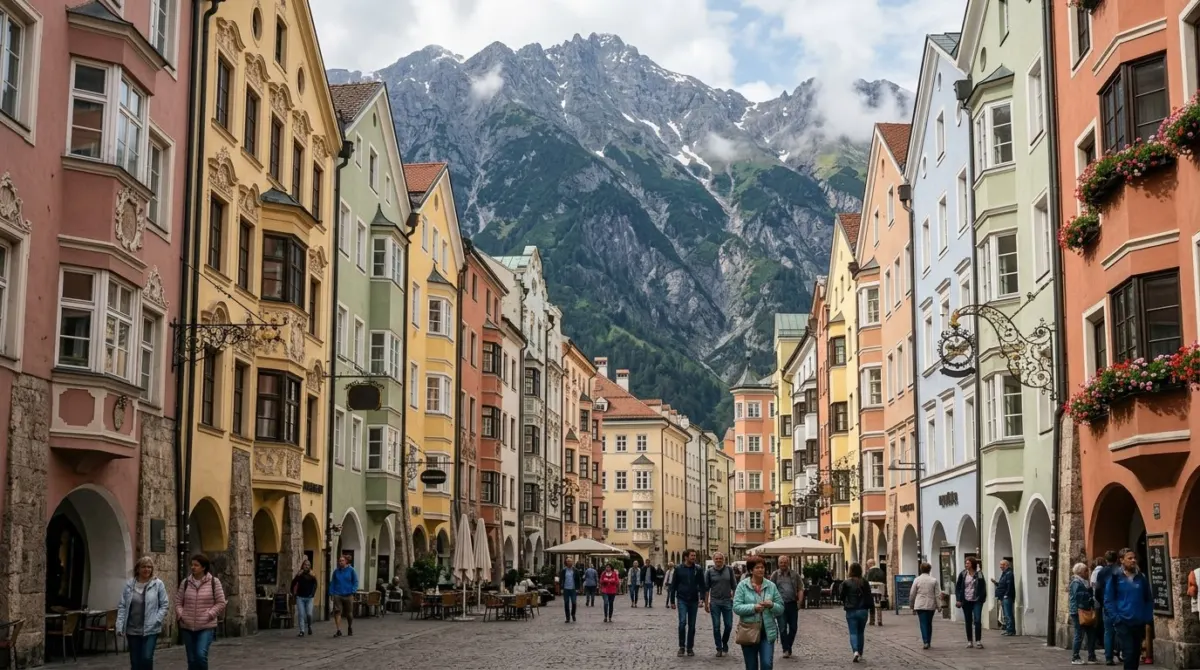
The Nordkette cable car climbs from the centre to 2,300 metres in about twenty minutes, which is the fastest city-to-summit transition in the Alps. The old town, the Golden Roof and the Hofburg fill the rest.
Day 8 — crossing into Switzerland
Innsbruck to Zurich is about three and a half hours by train, and on to Lucerne another fifty minutes.
This is where the trip changes. Prices rise sharply, the currency changes to the franc, and the trains become the attraction rather than the transport.
Map shows live availability and prices. We may earn a commission on bookings made through it, at no extra cost to you.
Days 8 and 9 — Lucerne
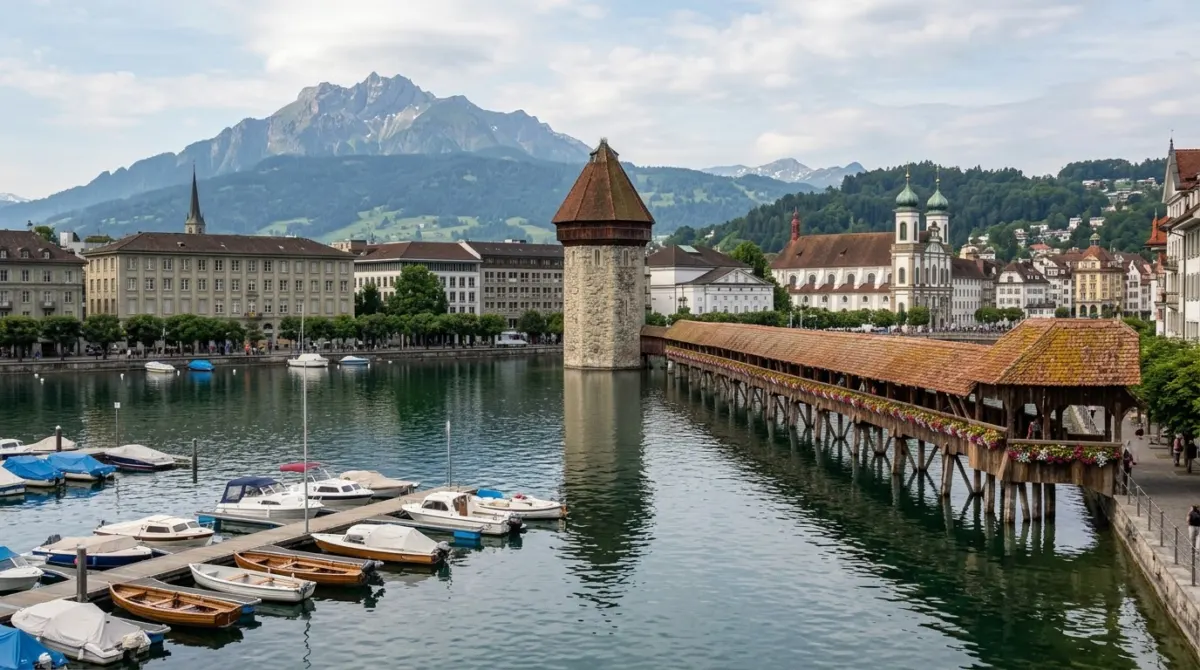
A lake town with a covered wooden bridge, a medieval centre and two mountains above it: Pilatus, reached by the steepest cogwheel railway in the world, and Rigi, which is gentler and less busy.
Boats cross the lake from the town, and the lake steamers are part of the Swiss transport network rather than a separate excursion.
Days 10 to 12 — the high Alps
Two choices, and they are different trips.
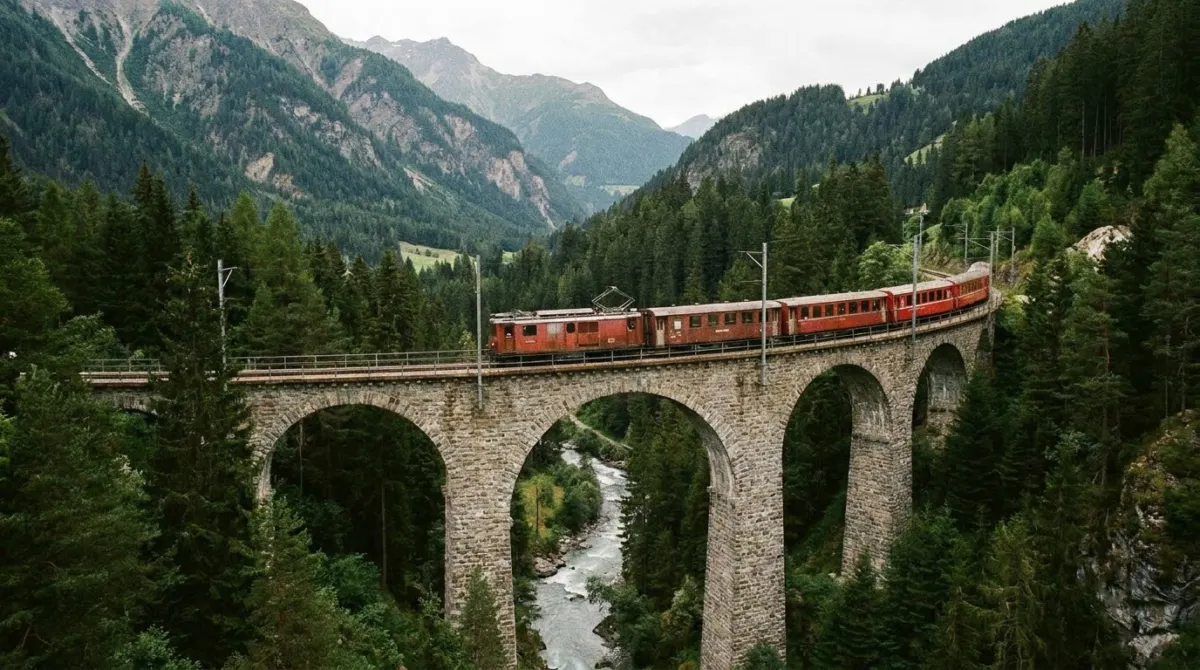
Interlaken and the Bernese Oberland, two hours from Lucerne on the GoldenPass line: the villages of Grindelwald, Wengen and Mürren, the Jungfraujoch railway to 3,450 metres, and walking at every level.
Zermatt, about four hours from Lucerne: a car-free village under the Matterhorn, with the Gornergrat railway and the highest cable car station in Europe.
Take Interlaken for variety and walking, Zermatt for one unmistakable mountain. If the Swiss half grows into a trip of its own, our Switzerland itinerary covers the country in full.
The ten day version
Drop Innsbruck and shorten the Swiss section.
- Days 1–3: Vienna.
- Days 4–5: Salzburg.
- Days 6–7: Lucerne.
- Days 8–10: Interlaken or Zermatt.
Four bases, two countries, and one long train day in the middle.
The two currencies
Austria uses the euro; Switzerland uses the Swiss franc. Cards work everywhere in both, so carry very little cash.
Many Swiss businesses accept euros and give change in francs at a poor rate. Pay by card and avoid the conversion entirely, and decline any machine that offers to charge you in your home currency.
Tipping differs a little too. In Switzerland service is included in the price, so a tip is a gesture rather than an obligation: round up, or add a little for good service. In Austria a tip of around five to ten percent is customary in restaurants and cafes. In both, when paying by card, tell the server the total you want charged rather than leaving coins.
The price difference, honestly
Switzerland is substantially more expensive than Austria for accommodation, eating out and transport. This is not a small gap, and it should shape the trip.
Two practical responses. Give Austria the longer half, since it is cheaper and the cities are the sightseeing. And in Switzerland, use supermarkets for lunch, which is normal rather than cheap behaviour and what many Swiss do.
Booking the Austrian legs
The Austrian half of the route is three train journeys — Vienna to Salzburg, Salzburg to Innsbruck, Innsbruck on to Zurich — and all of them run on ÖBB’s railjets.
The way to keep them cheap is Sparschiene, ÖBB’s limited-availability advance fares. They go on sale up to six months ahead, are sold online and in the ÖBB app, are valid only on the train you choose, and cannot be refunded. Each train has a fixed allocation, so the price climbs as the cheap seats sell.
There is also a Comfort version that includes a seat reservation and can be refunded free of charge up to fifteen days before travel, which is the safer buy if your dates might move.
On a trip built around mountain weather, the logic is simple: book the fixed city legs early and cheaply, and keep the flexibility for the Swiss end, where the weather decides the days. ÖBB also sells Sparschiene fares into Switzerland, so the cross-border leg can be bought the same way.
Swiss trains, and whether to buy a pass
Swiss rail is the best in Europe and priced accordingly. The Swiss Travel Pass covers trains, buses, boats and most mountain railways for a number of consecutive days.
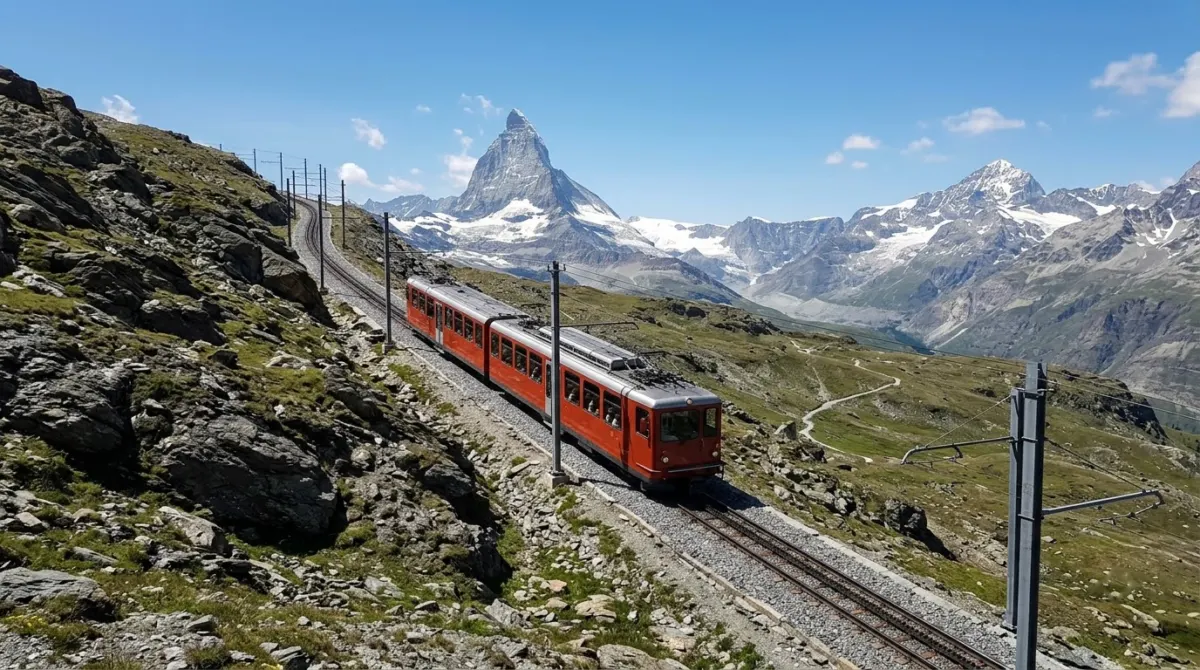
Whether it pays depends on how many mountain excursions you take — the big cog railways and cable cars are expensive individually. For three or four days including Jungfraujoch or Gornergrat, it usually does.
Austria has its own regional tickets, and point-to-point fares there are much lower.
The Half Fare Card instead
For a short Swiss section, price the pass against the Swiss Half Fare Card: one month of half-price travel on trains, buses, boats and most mountain railways. It suits a route like this one, where the Swiss days are few and the big costs are the mountain railways, which the Travel Pass covers in full only on some lines and otherwise discounts. Add up your actual journeys under both before buying. And on short routes the half-fare saving can come out smaller, because a minimum fare applies.
Scenic trains worth planning around
The GoldenPass between Lucerne and Interlaken, and on to Montreux.
The Glacier Express between Zermatt and St Moritz, eight hours and the slowest express train in the world.
The Bernina line over the pass into Italy, which is a UNESCO site.
These are journeys rather than transport, and they need seat reservations in summer.
When to go
June to September for the mountains: the high passes and cable cars are open, the walking is possible and the days are long.
Late September and October for fewer people and autumn colour, with some mountain services closing from mid-October.
December to March for skiing, with the cities still working and the Christmas markets in Vienna and Salzburg.
April and May are the awkward months: too late for snow, too early for the high trails.
Where to stay on this route
Vienna: just outside the Ring in Neubau or Mariahilf, which is ten minutes’ walk from the cathedral and cheaper than the first district.
Salzburg: the Neustadt around Mirabell, five minutes over the footbridge from the old town.
Innsbruck: the old town, which is small and walkable, or near the station for the cable cars.
Lucerne: near the lake and the covered bridge, which is also where the boats leave. See where to stay in Lucerne.
Interlaken or Zermatt: in the mountain villages rather than the towns if you are walking — Wengen, Muerren and Grindelwald are car-free or nearly so, and the railways reach them.
Swiss accommodation, honestly
Switzerland is expensive and the rooms are generally good: clean, warm, well run, with reliable heating and genuinely comfortable beds. What you are paying for is the country, not a premium product.
Three ways to reduce it. Half board in mountain hotels is often good value because eating out separately costs more. Apartments with kitchens in the resort villages suit stays of three nights or more. And hostels in Switzerland are unusually good, often in excellent positions, with private rooms available.
In Austria the Gasthof and Pension formats fill the same role at considerably lower prices.
Mountain weather, and how to plan around it
A high mountain excursion in cloud is an expensive view of fog, and this is the single most common disappointment on an Alpine trip.
Two rules. Keep the big cable cars flexible rather than booking them for a fixed day, and check the mountain webcams in the morning. And have a valley plan for each base: a lake boat, a gorge walk, a town, so a cloudy day is not a lost one.
Three nights in a mountain base rather than two exists mainly to give you a second chance at the summit.
Getting between the two countries
There is no passport control between Austria and Switzerland in practice, since both are in the Schengen area, although Switzerland is not in the EU customs union and random customs checks exist.
Trains cross at Buchs or Feldkirch, and direct trains between Innsbruck and Zurich take about three and a half hours. There are also direct trains from Vienna to Zurich, which take around eight hours and are worth taking overnight if you want to save a hotel night.
Breaking the transfer day at Lake Constance
Innsbruck to Lucerne is the longest day on the route, over the Arlberg and down the Rhine valley, and it does not have to be done in one go.
Feldkirch, the last Austrian town before the border, sits right on the line: a medieval old town of arcades and fountains under the Schattenburg castle, and an easy two or three hours off the train.
Bregenz, on Lake Constance, is a short detour north. The Pfänder cable car climbs above the town in about six minutes to a view over the lake and the Alps, and in July and August the Bregenz Festival stages opera on a floating stage on the lake. From Bregenz, trains continue into Switzerland along the shore via St. Margrethen.
A night in Bregenz turns the transfer into a lake day, at Austrian rather than Swiss prices. On the twelve-day route it is a fair trade for one of the Innsbruck days, particularly in summer.
If you drive part of it
The trains are the better way to do this route, but if you rent a car for the Salzkammergut or an Alpine valley, both countries charge for motorway use through a vignette, and the two systems differ.
Austria sells a digital vignette tied to the number plate, for one day, ten days, two months or a year. The one-day and ten-day versions are valid immediately. The two-month and annual versions bought online only become valid after an eighteen-day waiting period, so a visitor wants one of the short ones.
Switzerland has no short-stay option at all. The only vignette is annual, sold as a windshield sticker or as an e-vignette registered to the plate and valid from purchase.
A car registered in Switzerland will normally carry the Swiss vignette already; ask the rental company either way, and check the Austrian one before you join the motorway. One-way rentals across the border can carry a steep return fee, which is another reason to keep any car to a loop from one base.
Moving luggage across five bases
Five bases in twelve days means four days of carrying bags onto trains, and the Swiss half has a service that helps.
SBB’s luggage service moves cases from station to station, or from door to door, anywhere in Switzerland and Liechtenstein, usually arriving two days later, with a same-day express option to selected places. You need a valid ticket covering the whole route, which a Swiss Travel Pass counts as, and each piece has a weight limit.
The two-day transit is the catch. It works if you send the big bags ahead from Lucerne to the mountain village while living out of a small one, and it is most worth doing for car-free villages such as Zermatt and Wengen, where the walk from the station is the hard part.
The service runs only inside Switzerland and Liechtenstein, so the leg from Austria into Switzerland is the one where you carry everything. Pack with that day in mind.
What this route leaves out
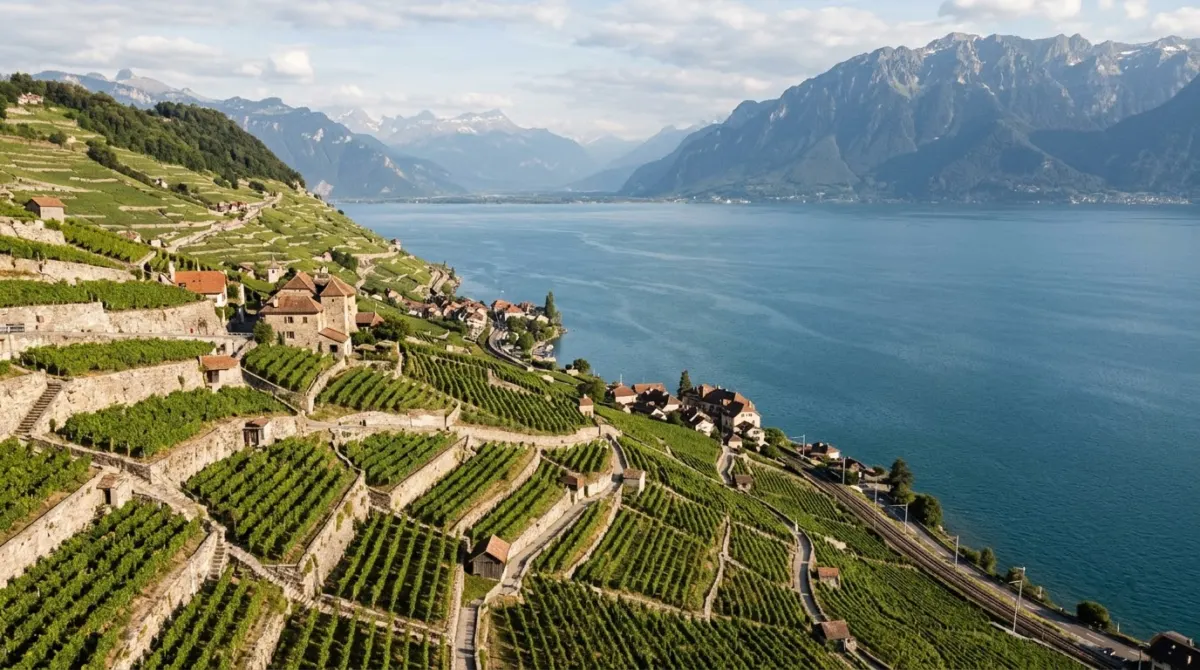
Geneva and the French-speaking west, including Montreux and the Lavaux vineyards above Lake Geneva.
Graz and southern Austria, which almost no visitor reaches.
Ticino, the Italian-speaking south of Switzerland around Lugano, which feels like northern Italy with Swiss trains.
The Dolomites, which are in Italy but close enough to Innsbruck to tempt people off this route entirely.
Any of them would make a good fourteen-day version of this trip rather than a twelve-day one.
What to eat on the way west
The route crosses several food regions, and eating the local dish at each stop is half the point of moving.
Vienna: Wiener schnitzel, boiled beef as Tafelspitz, and cake in a coffee house. Salzburg: Salzburger Nockerl, the baked soufflé dessert shaped like the hills around the city, and beer from the monastery brewery in Mülln. Innsbruck and the Tyrol: dumplings — Kaspressknödel, flattened cheese dumplings served in broth or with salad — and Tiroler Gröstl, a pan of fried potatoes, meat and onion with an egg on top.
Switzerland: rösti, raclette and cheese fondue, and in the German-speaking mountain huts Älplermagronen, macaroni baked with potatoes, cheese and cream, usually with apple sauce on the side.
In the Swiss mountain villages, half board, covered above, solves dinner. At lunch, a supermarket picnic on a bench with a view is both the cheap option and frequently the best meal of the day.
Common mistakes
Treating Switzerland like Austria on price. The gap is large and it shapes how long you can stay.
Booking the mountain excursions for fixed days. Weather decides whether they are worth doing at all.
Renting a car for the whole trip. Both countries have superb trains, and in Switzerland the trains reach places cars cannot.
One night per base. In the Alps that is a coin toss on the view.
Flights, and the open jaw that helps
This route starts in Vienna and ends in the Swiss Alps, which are a long way apart.
An open-jaw booking — into Vienna and out of Zurich or Geneva — removes a day of backtracking and usually costs little more than a return. Zurich is about two hours from Interlaken and three from Zermatt; Geneva is closer to Zermatt and to the French-speaking west.
If you must return to Vienna, add a day: the direct train from Zurich takes around eight hours, and the overnight version saves a hotel night.
The short version
Three nights in Vienna, two in Salzburg, two in Innsbruck, two in Lucerne and three in the high Alps. Travel by train throughout, buy point-to-point tickets in Austria and consider a Swiss pass for the mountain days, carry little cash across two currencies, and keep the Alpine days at the end where the weather can move them.
Frequently asked questions
How many days do you need for Austria and Switzerland?
Ten is the minimum that does both justice and twelve is comfortable: three in Vienna, two in Salzburg, two in Innsbruck and four or five in Switzerland. Fewer than ten means choosing one country.
Do Austria and Switzerland use the same currency?
No. Austria uses the euro and Switzerland the Swiss franc. Cards work everywhere in both, so carry very little cash and decline any card machine that offers to charge you in your home currency.
Is Switzerland much more expensive than Austria?
Substantially, for accommodation, restaurants and transport. Give Austria the longer half of the trip, and in Switzerland use supermarkets for lunch, which is normal behaviour rather than a budget tactic.
Is the Swiss Travel Pass worth it?
It depends on how many mountain railways you use, since those are expensive individually. For three or four Swiss days including Jungfraujoch or Gornergrat it usually pays; for a city-only visit it usually does not.
Should I visit Interlaken or Zermatt?
Interlaken and the Bernese Oberland for variety, villages and walking at every level. Zermatt for one unmistakable mountain and a car-free village. With four Swiss days you can do one properly, not both.
When is the best time for an Austria and Switzerland trip?
June to September for the mountains, when the cable cars and high trails are open. Late September and October for colour and fewer people. December to March for skiing and the Christmas markets in the Austrian cities.
Keep planning Austria
- Where to Stay in Salzburg: Five Minutes Either Side of the River
- Where to Stay in Vienna: Just Outside the Ring
- How Many Days for Prague, Vienna and Budapest? Ten, Split 3-4-3
- How Many Days in Salzburg? Two, and Three for the Lakes
- How Many Days in Vienna? Four, Because the Palaces Are Half Days
- Vienna 2 Day Itinerary: Pick Two of the Four Big Things
- Prague, Vienna, Budapest: Ten Days, Two Trains, Three Currencies
- Three Day Vienna Itinerary: One Large Thing a Day
Written and checked by
Triplarks Editorial
An editorial desk, not an invented persona: research, drafting and fact-checking are done by the same small team. Every number here carries the date it was read.