Quick answer
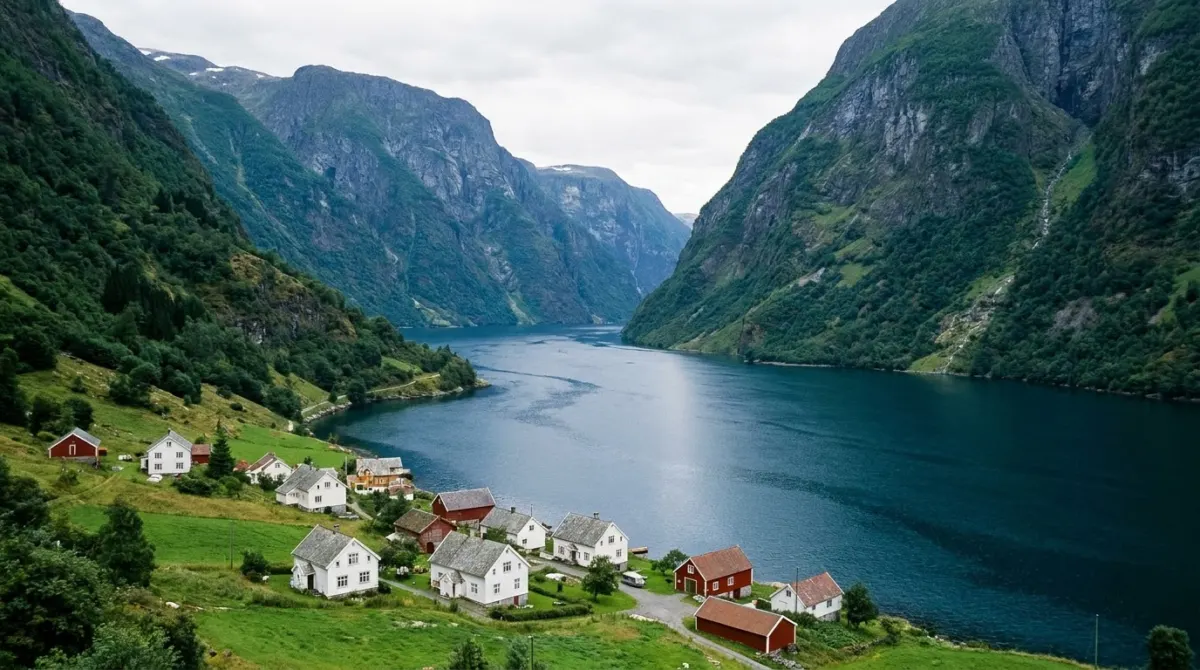
Five days is one city and one fjord. Fly into Bergen, take two nights there and two on the Sognefjord — or stay five nights in Bergen and day-trip, which removes the transfer entirely and lets the weather pick each morning.
On this page
- Norway 5 day itinerary at a glance
- Route 1 — Oslo and the Sognefjord
- Route 2 — Bergen and the fjords
- What does not fit in five days
- The one-base version
- Travelling without a car
- When to go on five days
- Where to stay
- Where the five days actually go
- What to book before you travel
- Five days with a car
- Five days in winter
- Five days with children
- Arriving and leaving
- How five days compares with seven
- The best compromise on five days
- What five days leaves out
- The short version
- Frequently asked questions
Five days in Norway means one city and one fjord. The country is long, the transport is scenic rather than fast, and the classic week has two travel days in it — so compressing seven days into five removes the fjord, which is the part you came for.
Some links below are affiliate links. We may earn a commission if you book through them, at no extra cost to you. We do not rank hotels, and any prices on the map come live from the booking sites.
This guide gives you two five-day routes that work and says plainly what each one drops.
Norway 5 day itinerary at a glance
| Route | Shape | Flights |
|---|---|---|
| Oslo and the Sognefjord | Oslo 2, Flåm 2, back to Oslo | In and out of Oslo |
| Bergen and the fjords | Bergen 2, Flåm 2, back to Bergen | In and out of Bergen |
The second is the better five days for landscape, because it removes the long rail transfer from the capital.
Where to sleep on this route
Route 1 — Oslo and the Sognefjord
Day 1: arrive in Oslo. The waterfront, the opera house and the fortress.
Day 2: the ferry to Bygdøy for the Viking ships and the Fram, then the Vigeland park.
Day 3: the Bergen railway to Myrdal and the Flåm line down to the fjord. Night at Flåm or Aurland.
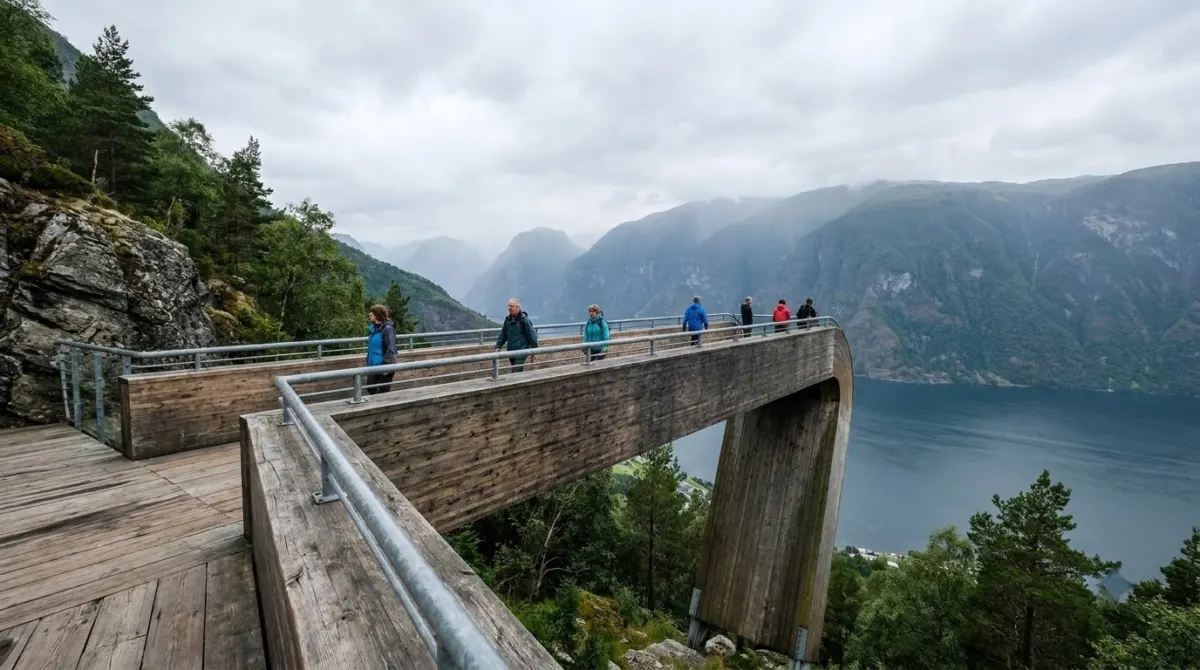
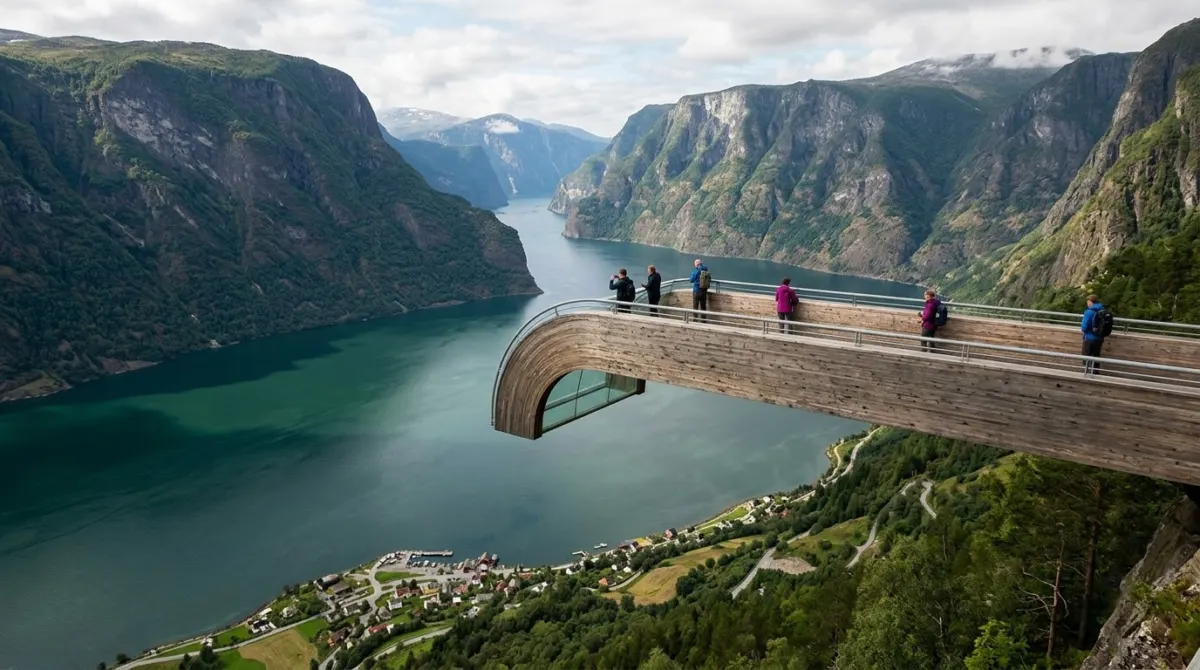
Day 4: the Nærøyfjord by boat, and the Stegastein viewpoint.
Day 5: the train back to Oslo, which is most of the day, and fly out.
What this drops is Bergen. The last day is a long train ride, which is scenic and still a travel day.
Map shows live availability and prices. We may earn a commission on bookings made through it, at no extra cost to you.
Route 2 — Bergen and the fjords
Day 1: fly into Bergen, which has direct flights from several European cities. Afternoon on Bryggen and up the funicular.
Day 2: Bergen — the fish market, KODE, and a short fjord boat from the harbour.
Day 3: train or boat to Flåm, about three to five hours depending which you take.
Day 4: the Nærøyfjord boat and the Stegastein viewpoint.
Day 5: the Flåm railway up to Myrdal and back to Bergen, then fly.
What this drops is Oslo. For a first trip focused on the fjords, that is the right thing to drop.
What does not fit in five days
Oslo, the fjords and Bergen. That is the seven-day route, and squeezing it into five means one night on the fjord and two long travel days.
Lofoten or Tromsø. Each needs a flight and at least three nights.
Geiranger and the northern fjords, which need a car and more driving than five days allows.
The northern lights, which are a separate trip to a different part of the country.
The one-base version
Rarely suggested and often the best five days, particularly outside summer.
Five nights in Bergen, using it as a base: the city on two days, a fjord boat from the harbour on a third, a day trip to Flåm and the Nærøyfjord on the fourth, and the Hardangerfjord or Voss on the fifth.
No packing, no transfers, and every day chosen on the morning according to the weather — which in Norway is worth more than an extra sight.
Travelling without a car
All three options above work entirely on public transport, which is unusual for a landscape trip.
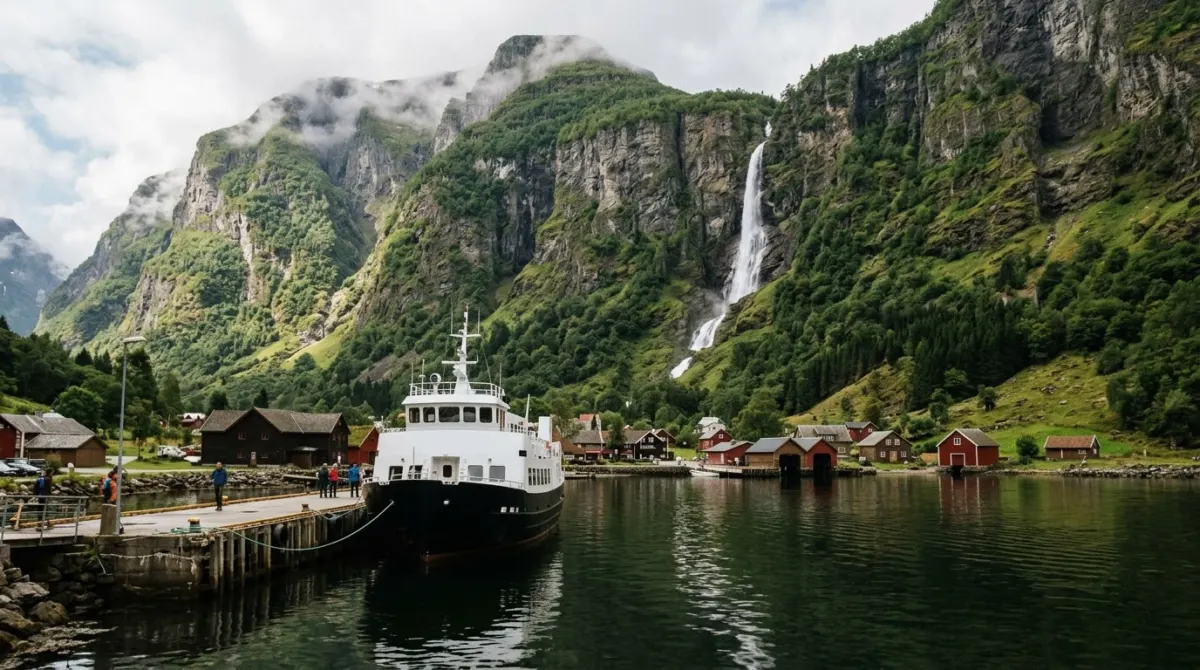
Trains, buses and fjord boats connect Oslo, Flåm, Gudvangen, Voss and Bergen on timetables that are published well in advance. Services are infrequent, so the timetable shapes the day rather than the other way round.
A car only becomes necessary for Geiranger, the smaller fjords and the north, none of which fit into five days.
When to go on five days
May to September for the fjord boats, the long days and the open attractions.
June and July for the longest light, with the most visitors and the highest prices.
October to April is a different trip: the fjord boats reduce or stop, daylight shortens sharply, and five days is better spent in the cities or in the Arctic for the aurora.
Where to stay
Two bases, both booked before you leave. Oslo central or Bergen near the harbour, and Aurland rather than Flåm on the fjord if you can, because it is quieter and the viewpoint is above it.
Fjord village accommodation is scarce and seasonal, so that is the booking to make first.
Where the five days actually go
Worth being honest about, because the arithmetic surprises people.
Day one is arrival and perhaps half a day. Day five is departure and perhaps half a day. Of the three days in between, one is usually a transfer.
That leaves roughly two and a half days of actual sightseeing, which is why five days holds one city and one fjord rather than three regions.
The single-base version exists precisely to recover that transfer day.
What to book before you travel
- Accommodation on the fjord, which is scarce and seasonal — this is the first booking to make.
- The Bergen railway and Flåm line for the saver fares in summer.
- The Nærøyfjord boat in July and August.
Everything else can wait, and the city days should stay flexible so the clear morning goes to the fjord.
Five days with a car
A different trip, and a good one if you are confident driving.
From Bergen: the Hardangerfjord loop with the Vorings waterfall and the fruit villages, two nights, then north towards the Sognefjord and back. Roughly four hours of driving a day at most, with ferries included in the route.
What a car buys is the smaller fjords and the viewpoints the buses do not reach. What it costs is parking in Bergen, the ferry charges and the concentration.
On five days, most visitors do better on trains and boats.
Five days in winter
The fjord route stops working as written: boats reduce or stop, daylight runs to six or seven hours, and the mountain roads become weather-dependent.
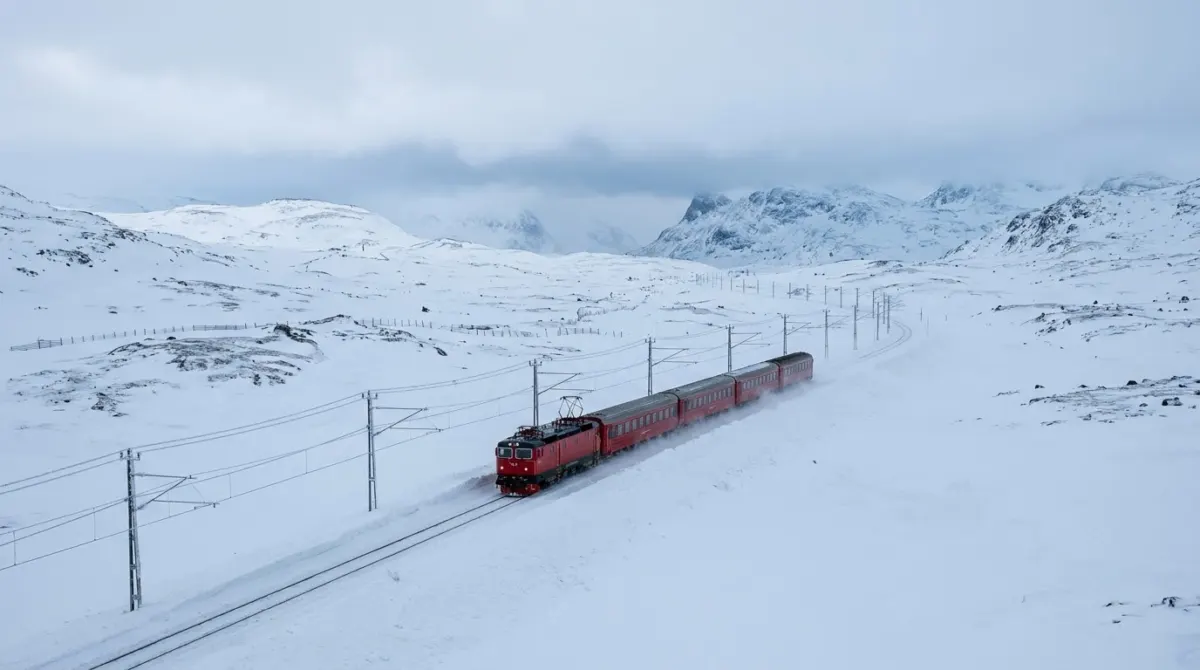
Two alternatives for five winter days. Oslo and Bergen as a two-city trip with the railway between them, which is spectacular in snow. Or fly north to Tromsø for four nights and the aurora, which is a far better use of five winter days than a dormant fjord.
Five days with children
The single-base version is the one that works.
Five nights in Bergen gives you the funicular, the fish market, the aquarium and a short fjord boat, all without packing. The Flåm railway can be done as a long day trip if the children will take it.
What does not work with young children is the two-base version with a three-hour transfer in the middle, followed by a four-hour transfer back.
Arriving and leaving
On five days, the flights decide the route.
Direct to Bergen is the better arrival for a fjord trip and removes the long rail transfer entirely.
Oslo has far more connections, which is often why people start there, and the railway west is a genuine highlight rather than a chore.
An open-jaw booking — into Oslo and out of Bergen — is the best of both, and it turns the two-base route into a one-way trip with no backtracking at all. On five days that saves most of a day.
How five days compares with seven
The honest difference is one city and one layer of comfort.
Seven days holds Oslo, the fjord and Bergen with two nights in each of the cities and two on the water. Five holds two of those three, with the same two fjord nights if you plan it properly.
What five days does not do is leave slack. On seven days a cloudy fjord morning is inconvenient; on five it can be the fjord. That is the strongest argument for the single-base version, which recovers a day and lets the weather pick the order.
The best compromise on five days
If you cannot decide between the two routes, there is a third shape that often beats both.
Fly into Bergen, spend one night, take the train or boat to the fjord for two nights, then continue by rail to Oslo for the last two and fly out from there.
It is a one-way trip with no backtracking, it includes both cities and the fjord, and the only cost is that each stop is short. On an open-jaw ticket it works well.
What five days leaves out
Lofoten and the Arctic, which need a flight and three nights.

Geiranger and the northern fjords, which need a car and two more days.
Stavanger and Preikestolen, south of Bergen.
Oslo or Bergen, depending on which route you take — five days cannot hold both cities and the fjord.
Our 7 day Norway itinerary is the version where the cities and the fjord all fit.
The short version
One city and one fjord. Bergen and the Sognefjord if the landscape is the point, Oslo and the Sognefjord if the capital matters, or five nights in Bergen using it as a base if you would rather not pack twice. Book the fjord nights first, keep the flexible days for the weather, and leave Lofoten and the aurora for a separate trip.
Frequently asked questions
Is 5 days enough for Norway?
For one city and one fjord. Oslo and the Sognefjord, or Bergen and the Sognefjord. It is not enough for Oslo, the fjords and Bergen together, which is the seven-day route.
What is the best 5 day Norway itinerary?
Fly into Bergen, spend two nights there, two on the Sognefjord at Flåm or Aurland, and return to Bergen to fly out. It removes the long rail transfer from Oslo and gives the fjord two full days.
Can you see the fjords in 5 days?
Yes, one of them properly. The Sognefjord and the Nærøyfjord are reachable from either Oslo or Bergen by train and boat, and two nights there is enough to see them in decent weather.
Do you need a car for 5 days in Norway?
No. Trains, buses and fjord boats connect Oslo, Flåm, Gudvangen, Voss and Bergen on published timetables. A car only becomes necessary for Geiranger, the smaller fjords and the north.
Can you see the northern lights in 5 days?
Only as a separate trip to Tromsø or Alta, not alongside the southern fjords. If the aurora is the point, fly north and spend three or four nights there rather than splitting five days.
Is one base better than two for five days in Norway?
Often, yes. Five nights in Bergen with day trips to the fjords removes all the packing and lets you choose each day by the weather, which in Norway matters more than an extra destination.
Keep planning Norway
- Where to Stay in Tromso: Central, Because the Tours Leave From There
- Where to Stay in Bergen: Close to the Harbour, Because of the Rain
- Where to Stay in Oslo: Sentrum First, Then the Districts
- Best Hotels in Oslo: The Pricing Runs Backwards Here
- How Many Days in Norway? Seven for the Fjords, Ten for the Arctic
- How Many Days in Oslo? Two, and Three If You Like Museums
- How Many Days in Bergen? Two, and the Rain Is the Reason
- 7 Day Norway Itinerary: Two Cities, One Railway, One Fjord
Written and checked by
Triplarks Editorial
An editorial desk, not an invented persona: research, drafting and fact-checking are done by the same small team. Every number here carries the date it was read.