Quick answer
Stay in the city centre: aurora chase tours collect from there, the restaurants are there, and in an Arctic winter the walk from your door matters more than the view from your window. Three nights minimum for the lights, four if you can.
On this page
- Where to stay in Tromso: the short answer
- The city centre
- Tromsdalen, across the bridge
- What the accommodation is like
- Why the centre beats a remote cabin for the aurora
- When Tromsø fills up
- Polar night and midnight sun
- Getting here
- How many nights
- What there is to do
- Eating and the cost of an Arctic city
- What to pack
- How Tromsø compares with Lofoten
- Booking windows in Tromso
- What a winter day looks like
- Where Tromso fits in a trip
- The short version
- Frequently asked questions
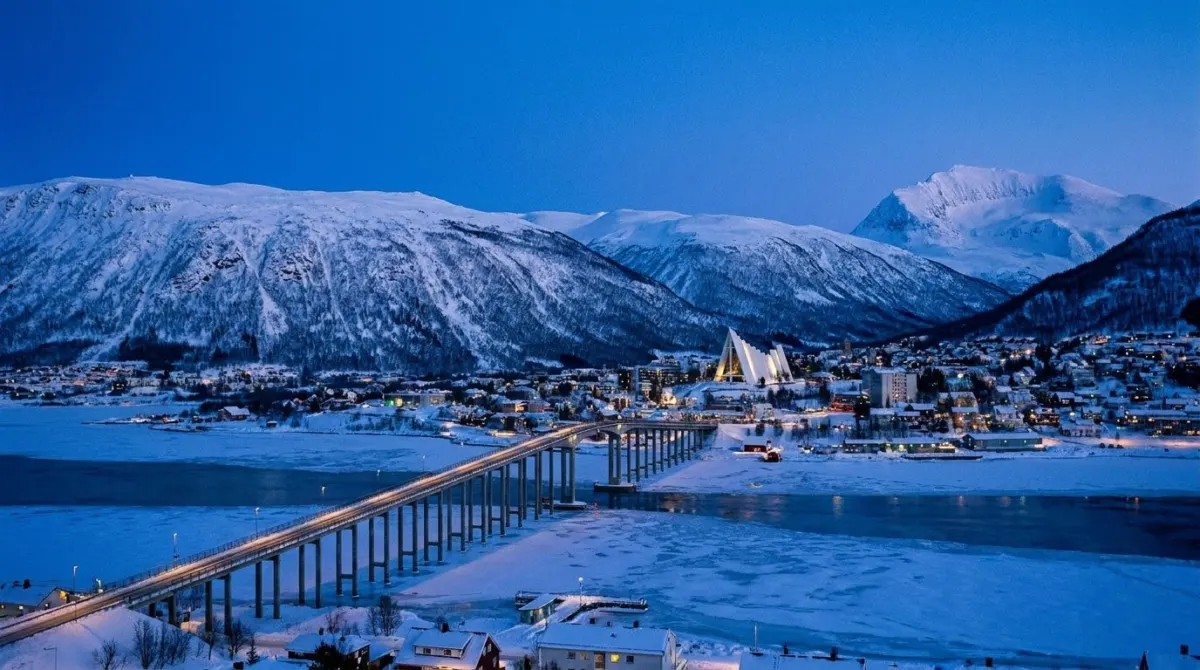
Tromsø sits on an island 350 kilometres inside the Arctic Circle, with mountains on both sides of the sound and a bridge to the mainland. The city centre is small enough to walk across in fifteen minutes, which means the accommodation question here is less about area than about season.
Some links below are affiliate links. We may earn a commission if you book through them, at no extra cost to you. We do not rank hotels, and any prices on the map come live from the booking sites.
In the aurora months the city is full and rooms are scarce. In summer it is busy for a different reason. And in the shoulder weeks it is half empty. For the rest of the country, see our Norway itinerary and where to stay in Oslo.
Where to stay in Tromso: the short answer
| If you are | Stay | Why |
|---|---|---|
| Here for the northern lights | City centre | Tours collect from the centre |
| Here in summer | City centre or the harbour | Everything on foot, long evenings |
| Wanting the classic view | Tromsdalen, across the bridge | Looks back at the city and the mountains |
| Driving | Edge of the island | Parking, and the road north |
| On a budget | Guesthouses north of the centre | Ten minutes’ walk |
One answer with no caveats: the city centre, between the harbour and the cathedral. Aurora tours pick up here, the restaurants are here, and in winter the walk from your door matters more than the view from your window.
Map shows live availability and prices. We may earn a commission on bookings made through it, at no extra cost to you.
The city centre
Tromsø’s centre occupies a few streets on the eastern side of the island, with a wooden cathedral, a harbour and a run of bars and restaurants that is disproportionate to the population.
Staying here means walking to dinner in a place where walking in January is a decision. It also means being where the tour operators collect, which in the aurora season is the single most practical consideration.
Tromsdalen, across the bridge
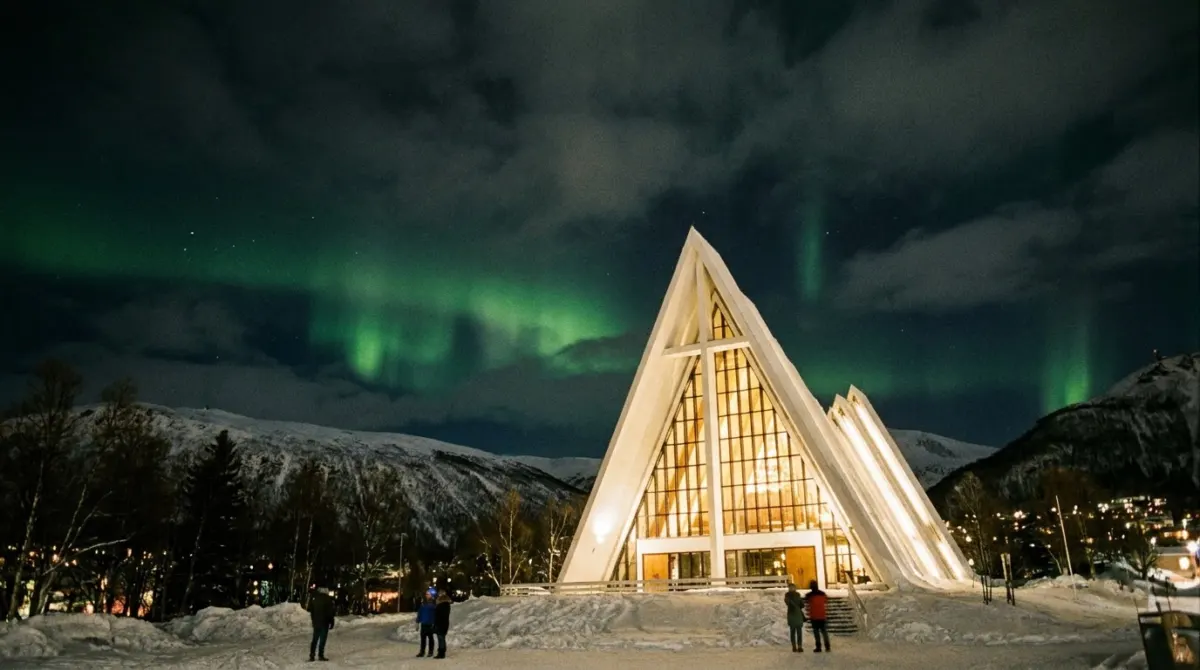
The mainland side holds the Arctic Cathedral, with its white triangular profile, and the Fjellheisen cable car to a viewpoint above the city.
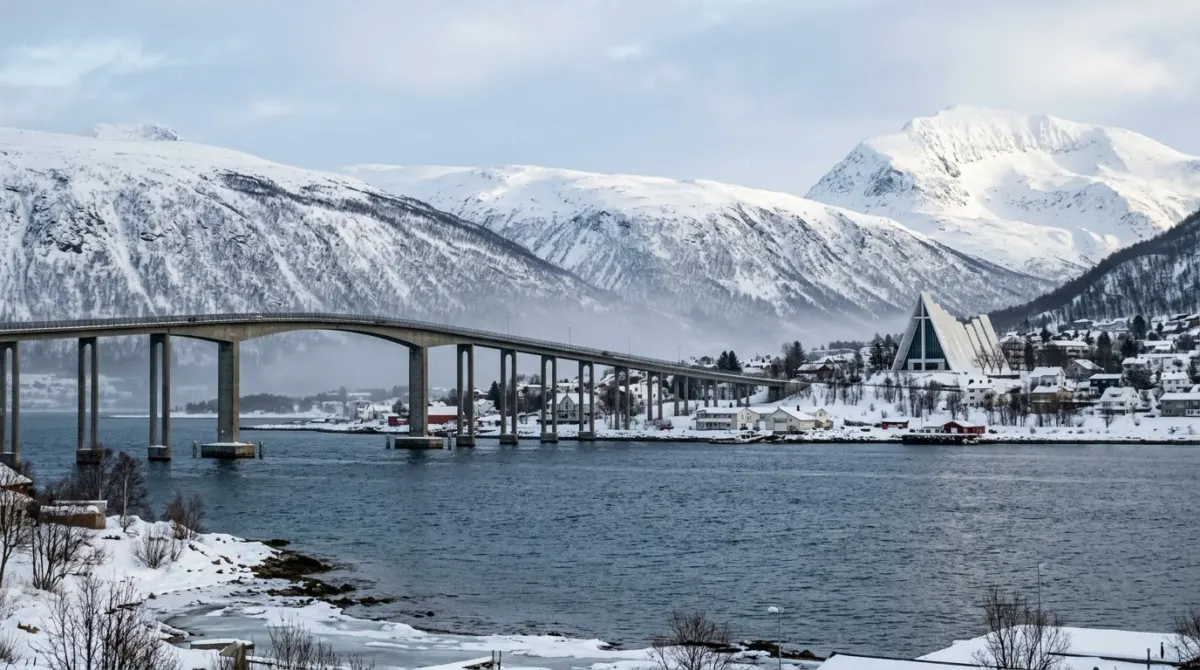
Staying here gives you the classic view back across the water to Tromsøya and the mountains behind it, and a quieter night. It costs a twenty-minute walk over the bridge or a short bus ride each way.
Good for a photographer, awkward in deep winter.
What the accommodation is like
Tromsø has a small number of hotels, a reasonable number of apartments and guesthouses, and demand that outstrips all of it between November and March.
Hotels are modern, warm and functional, with substantial breakfasts included at most rates.
Apartments are the better value for three nights or more, which most aurora trips are.
Cabins and lodges outside the city are marketed for aurora watching. They are beautiful and they tie you to one patch of sky, which is a real disadvantage when the weather decides everything.
Why the centre beats a remote cabin for the aurora
This is counter-intuitive and worth explaining.
The lights need clear sky, and northern Norway in winter is cloudy more often than not. Successful sightings usually come from chase tours, which drive two or three hours — sometimes into Finland — to find a gap in the cloud.
Those tours leave from the city centre. A cabin forty minutes out gives you one fixed view of whatever sky is above it, and no transport.
Stay central, book a chase tour, and treat the cabin as a different kind of holiday.
When Tromsø fills up
Late September to late March is the aurora season, and from December to February the city is genuinely full. Rooms and tours both sell out weeks ahead, and prices rise accordingly.
Mid-May to late July is the midnight sun, with hiking, whale-free but long days and a different kind of visitor.
April, May and early September are the quiet weeks, with reasonable prices and a reasonable chance of either daylight or darkness depending on the end you pick.
Polar night and midnight sun
Two facts that shape a stay more than any hotel feature.
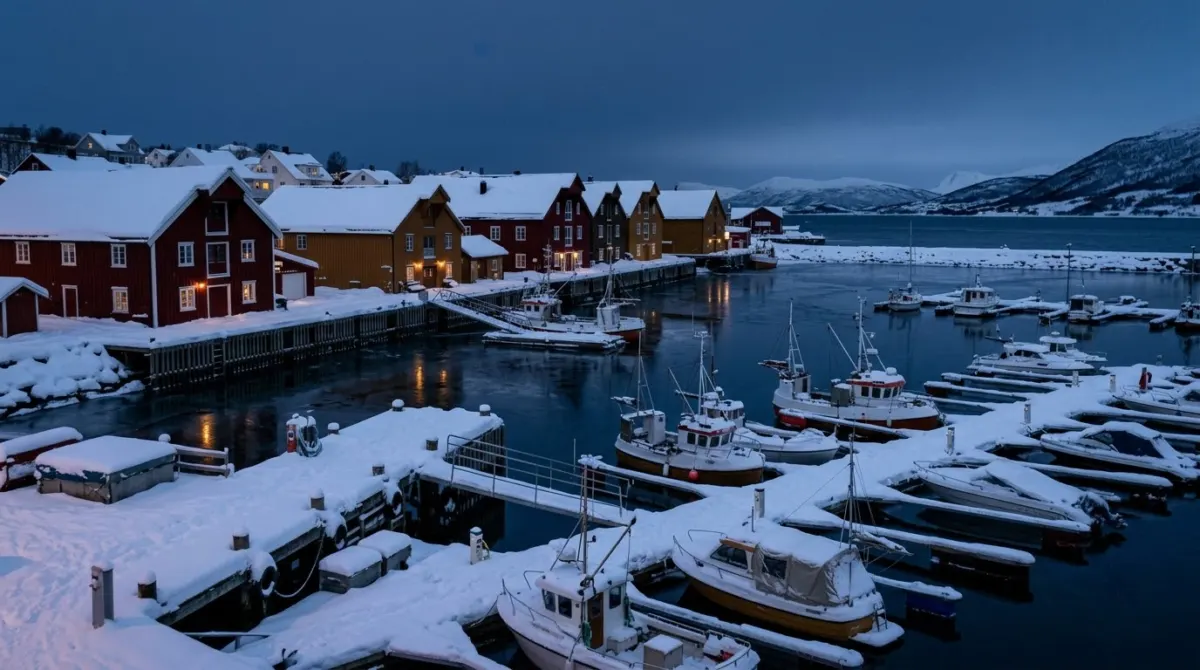
From roughly late November to mid-January, the sun does not rise. There is several hours of blue twilight in the middle of the day, which is beautiful, and no daylight.
From roughly mid-May to late July, the sun does not set at all. Blackout curtains matter, and so does a watch, because at one in the morning it looks like six in the evening.
Getting here
Tromsø airport is about ten minutes from the centre by bus or taxi, with direct flights from Oslo in under two hours and some international services.
There is no railway. Buses run along the coast and the coastal ferry calls here on its way north, which is a slower and more scenic arrival.
How many nights
Three nights is the minimum for an aurora trip, four is better, and one is a lottery.
Two nights is enough for the city itself in summer: the cable car, the Arctic Cathedral, the polar museum and a boat trip.
Our guide to how many days in Norway covers where Tromsø fits in a longer trip.
What there is to do
Tromsø has more to it than the aurora, which matters because half your nights will be cloudy.
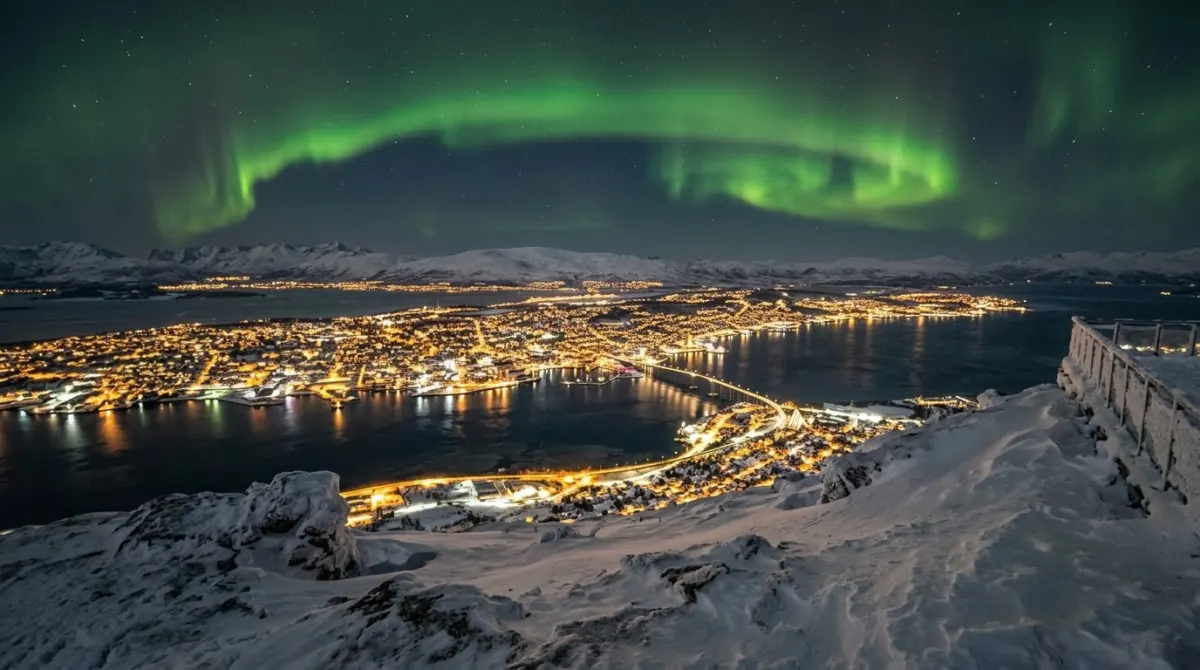
The Fjellheisen cable car climbs to a viewpoint above the city in four minutes, and in winter it is one of the easier places to watch for the lights without a tour.
The Arctic Cathedral, across the bridge, with its white triangular profile and a huge stained glass window.
The Polar Museum and the Fram-era exhibits, which cover the hunting and exploration history of a city that was the launching point for most Arctic expeditions.
Whale watching from November to January, when herring move into the fjords and the whales follow.
Dog sledding and reindeer visits, both run as half-day trips from the city.
Eating and the cost of an Arctic city
Tromsø is expensive even by Norwegian standards, because everything arrives from a long way away.
Restaurant dinners are the main cost, and the usual answers apply: a hotel breakfast that replaces lunch, supermarkets, and accommodation with a kitchen if you are staying four nights.
For its size the city has an unusually good food scene, built around Arctic ingredients, so one proper dinner is worth budgeting for rather than avoiding.
What to pack
More specific here than anywhere else in this guide.
Aurora watching means standing still outdoors for two or three hours in temperatures well below freezing, which is colder than any amount of walking. Thermal base layers, an insulated outer layer, proper boots with grip, a hat and gloves are not optional.
Most tour operators lend thermal suits and boots, which is worth checking when you book, because it changes what you need to carry.
Ice grips for shoes are cheap, widely sold locally, and make the city walkable in February.
How Tromsø compares with Lofoten
Both are Arctic Norway and they suit different trips.
Tromsø is a city with restaurants, museums, tour operators and an airport. It is the easier winter base and the better one for the aurora, because of the chase tours.
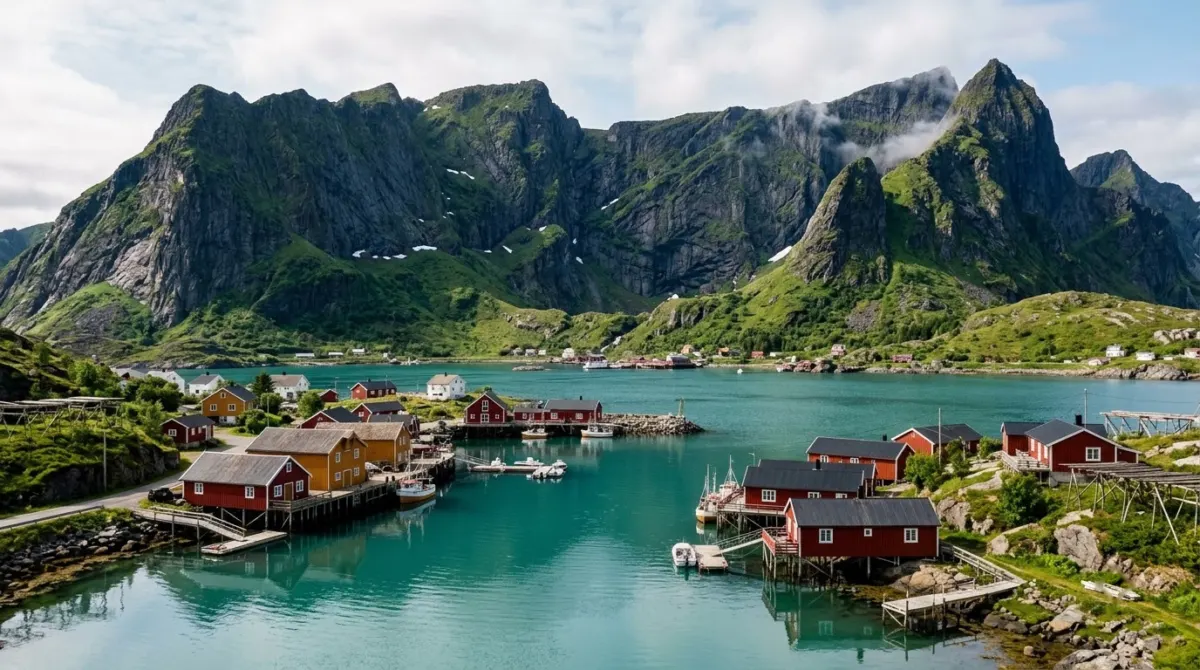
Lofoten is an archipelago of fishing villages and mountains, far better in summer, and harder work in winter when the roads and daylight are limited.
If you are going in winter for the lights, choose Tromsø. If you are going in summer for the landscape, choose Lofoten.
Booking windows in Tromso
The city has a small number of rooms and a large seasonal swing, which makes timing unusually important.
December to February is the peak: book two or three months ahead, and expect the best-placed central properties to go first.
Late September to November and March are shoulder aurora months with better availability and lower prices, and the darkness is sufficient in all of them.
June and July fill with summer visitors and cruise calls.
April, May and early September are the quiet weeks, when the city is cheapest and half empty.
What a winter day looks like
Worth knowing because it shapes what you book.
In December and January there is no sunrise. The sky lightens to a deep blue around ten and darkens again by two, which is enough to walk the city, take the cable car and see the cathedral but not much more.
That leaves the day short and the evening long, which is why most winter visitors do one activity in the twilight hours and an aurora tour at night.
Plan one thing per day rather than three, and book the tours for consecutive nights to improve the odds.
Where Tromso fits in a trip
Tromsø is almost always a trip of its own rather than a stop, because it is two hours by air from Oslo and two days by road.
The two shapes that work: a short winter trip of three or four nights flown directly for the aurora, or a northern leg added to a Norwegian itinerary after the fjords, which means one internal flight.
What does not work is treating it as a day trip or a single overnight, because the thing you came for happens at night and needs several attempts.
The short version
Stay in the city centre, because the tours leave from there and winter walking distances matter. Three nights minimum for the aurora and four if you can. Book early for December to February, favour an apartment for longer stays, and treat a remote cabin as a different holiday rather than a better aurora plan.
Frequently asked questions
Where is the best place to stay in Tromsø?
The city centre between the harbour and the cathedral. Aurora tours collect from there, the restaurants are there, and in an Arctic winter the walk from your door matters more than the view from your window.
Is it better to stay in a cabin outside Tromsø for the northern lights?
Usually not. The sky is cloudy more often than not, and successful sightings mostly come from chase tours that drive hours to find clear sky. Those leave from the city centre; a cabin gives you one fixed patch of sky and no transport.
How many nights do you need in Tromsø for the aurora?
Three at minimum and four is better. The lights need darkness, clear sky and solar activity at the same time, so one night is a coin toss.
When is the northern lights season in Tromsø?
Roughly late September to late March. The city is fullest from December to February, when rooms and tours both sell out weeks ahead.
What is the polar night?
From about late November to mid-January the sun does not rise in Tromsø. There are several hours of blue twilight around midday and no actual daylight, which is beautiful and not suited to sightseeing.
Is Tromsø worth visiting in summer?
Yes, for a different trip: the midnight sun, hiking, boat trips and long light evenings. Two nights covers the city, the cable car and the Arctic Cathedral. Bring something to block the light at night.
Keep planning Norway
- Where to Stay in Bergen: Close to the Harbour, Because of the Rain
- Where to Stay in Oslo: Sentrum First, Then the Districts
- Best Hotels in Oslo: The Pricing Runs Backwards Here
- How Many Days in Norway? Seven for the Fjords, Ten for the Arctic
- How Many Days in Oslo? Two, and Three If You Like Museums
- How Many Days in Bergen? Two, and the Rain Is the Reason
- 5 Day Norway Itinerary: One City and One Fjord
- 7 Day Norway Itinerary: Two Cities, One Railway, One Fjord
Written and checked by
Triplarks Editorial
An editorial desk, not an invented persona: research, drafting and fact-checking are done by the same small team. Every number here carries the date it was read.